
- Pair15
- Reports3


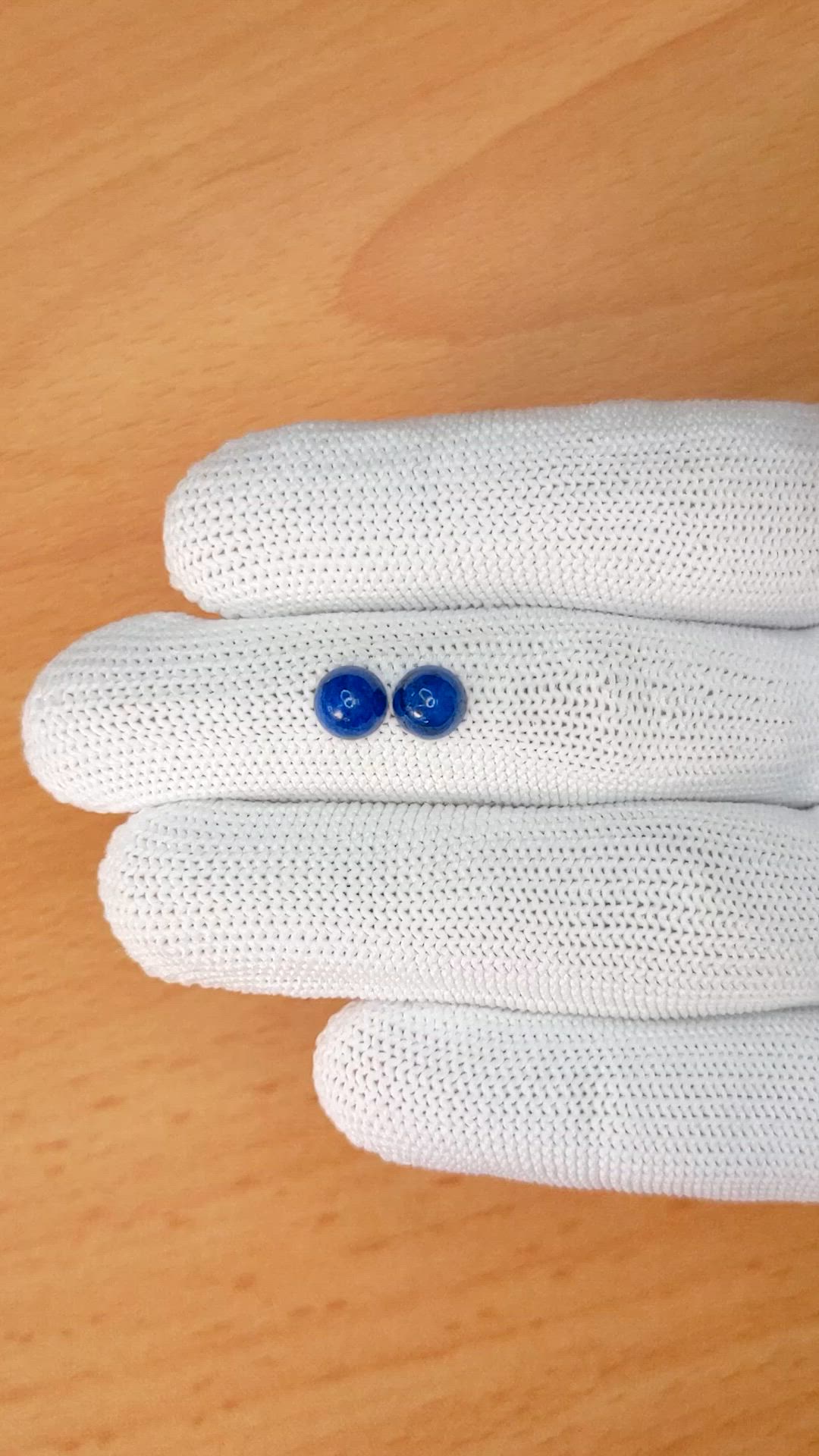
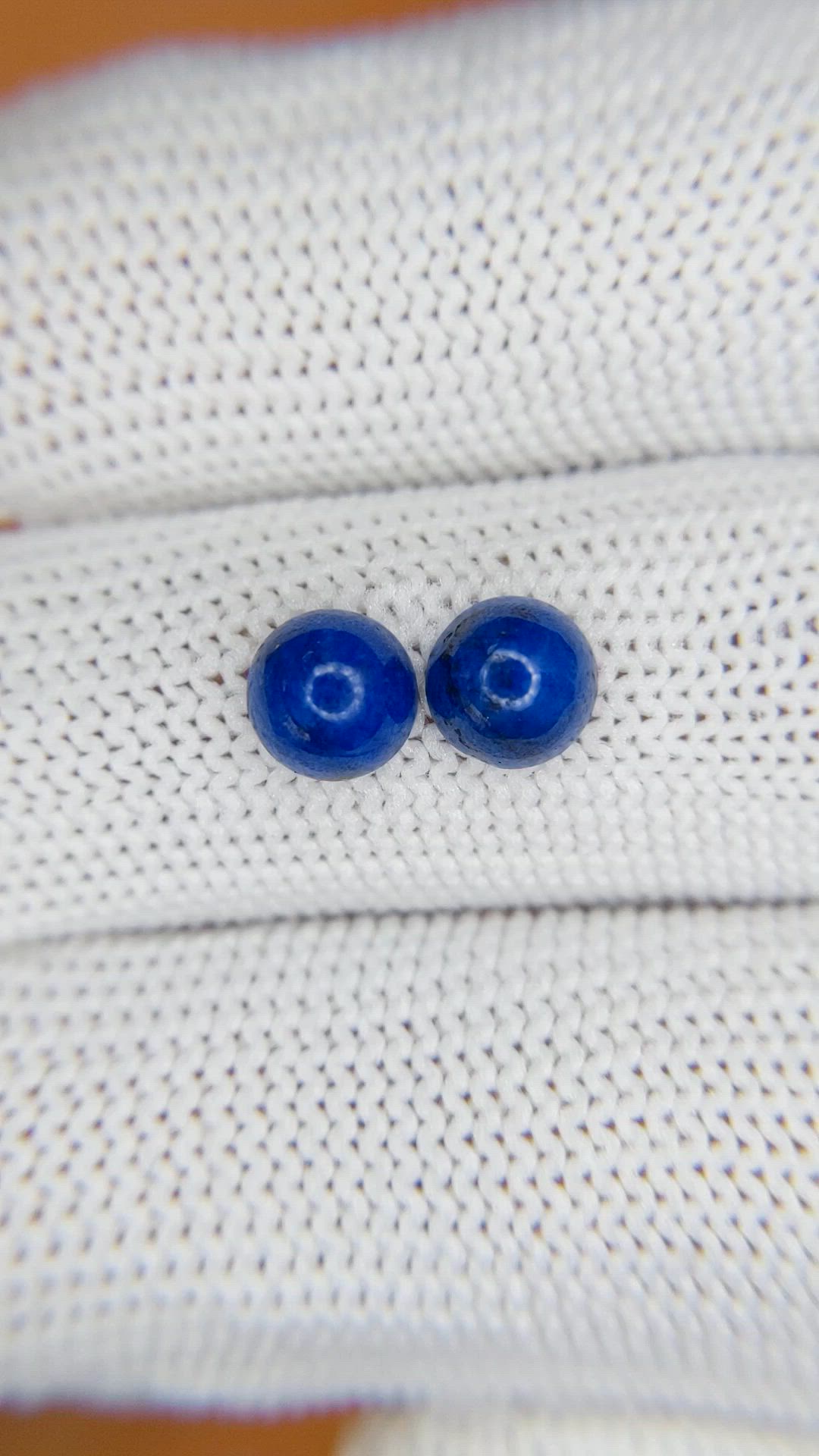
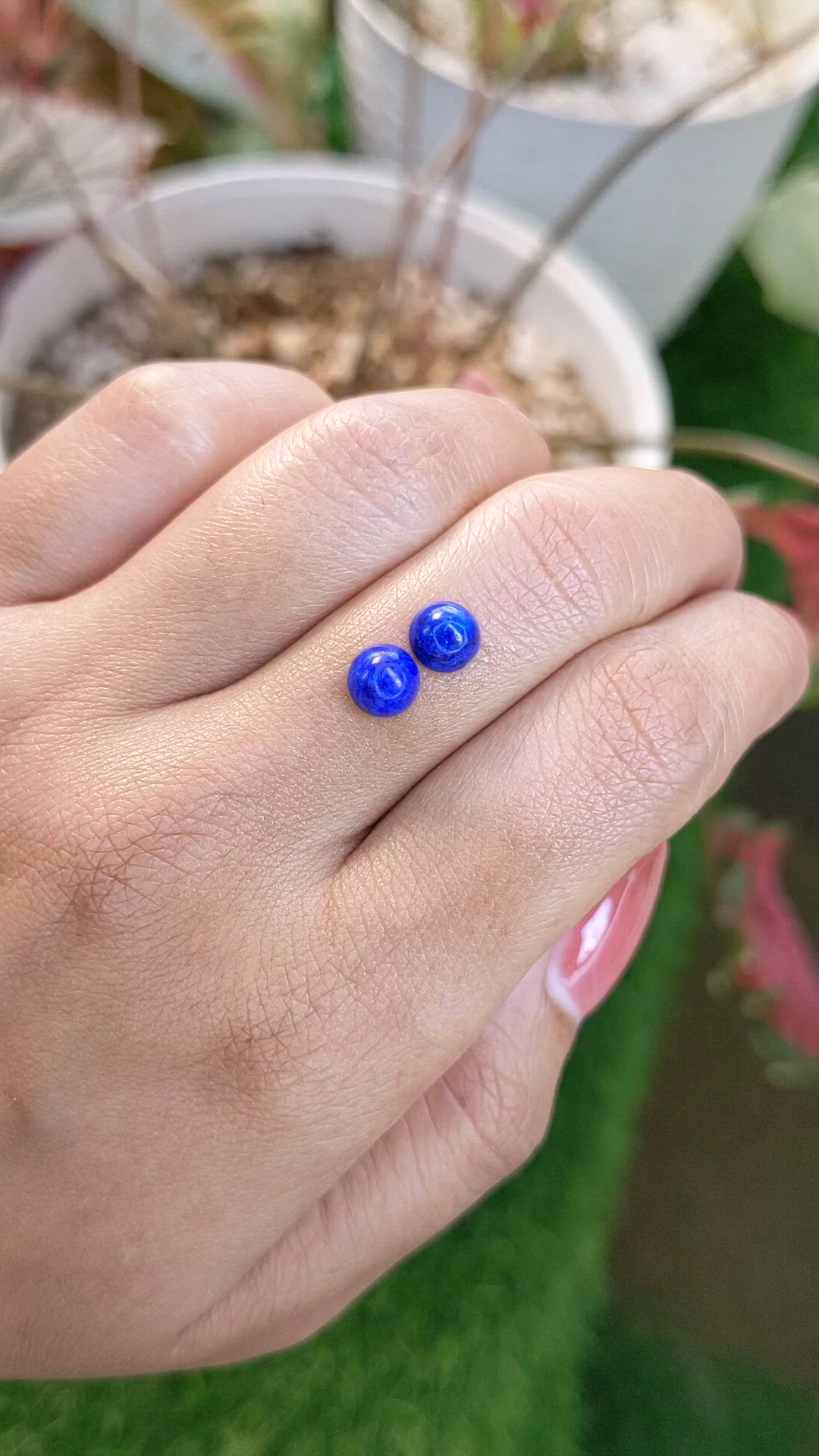
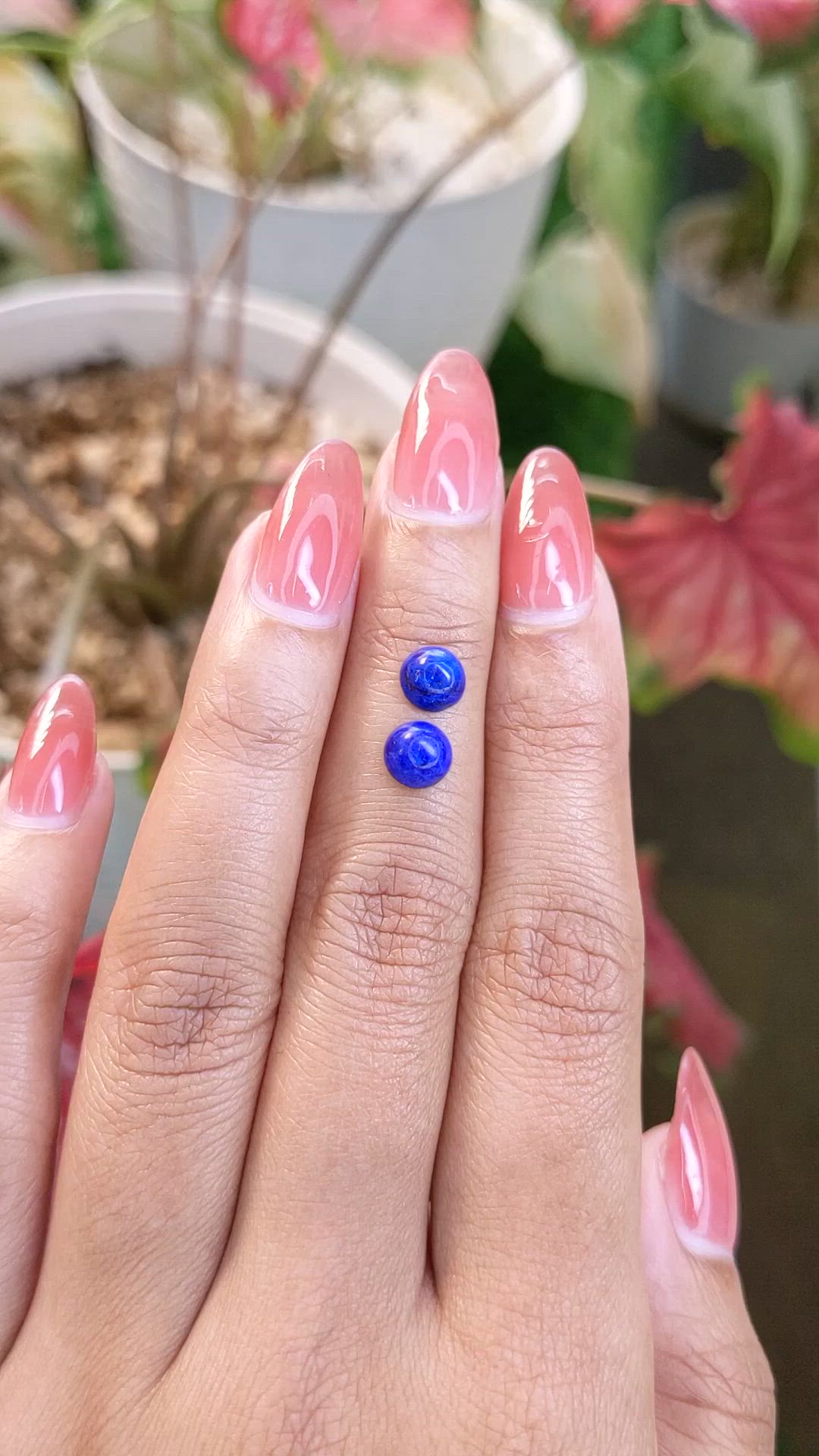
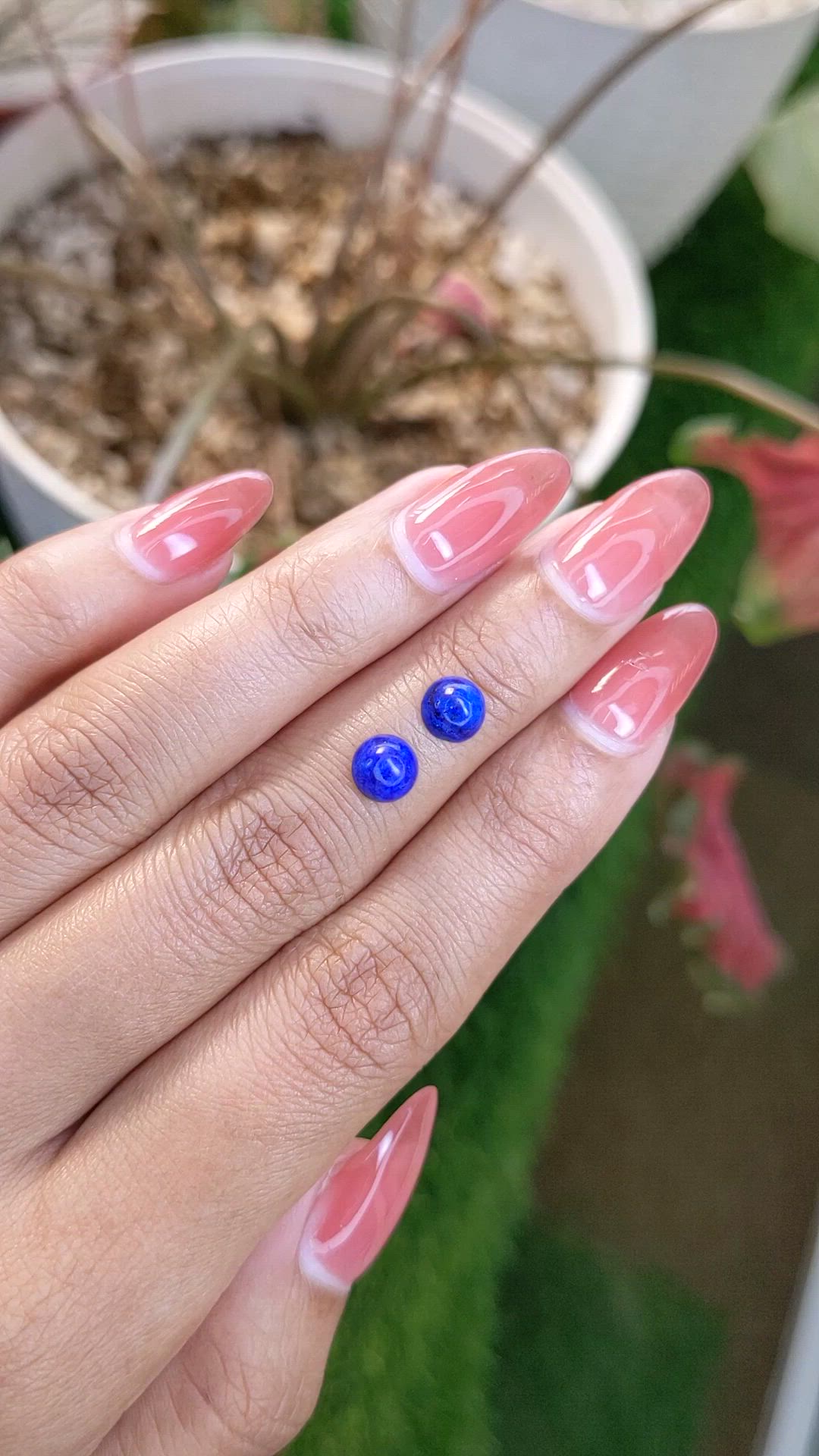
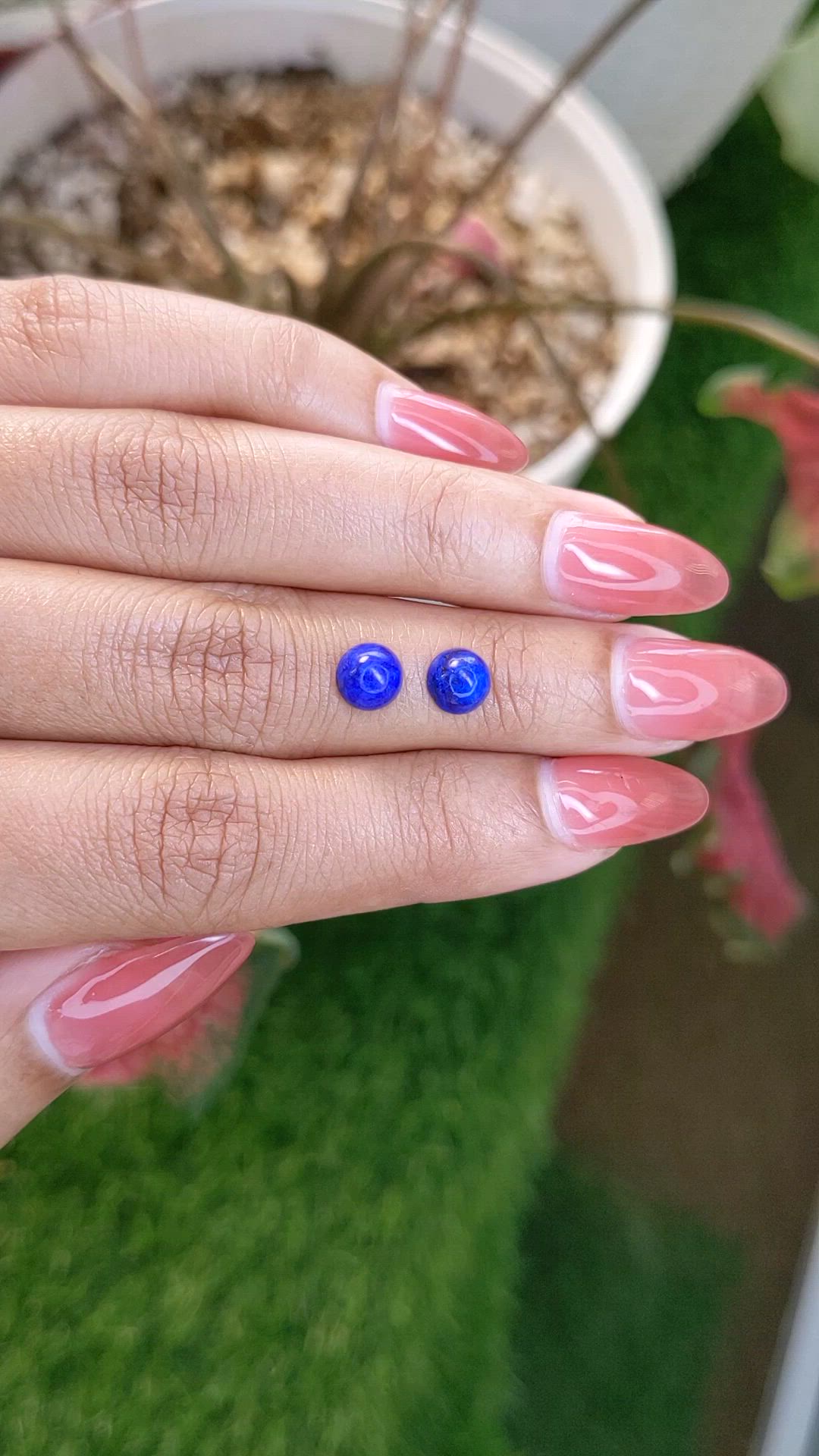


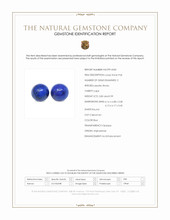



1.84 Ct.Tw.Total Carat Weight Cabochon Lapis Pair from Afghanistan
This pair of stones is available to ship now
Stone type: | Lapis | Lapis |
|---|---|---|
Item ID: | PR14500 | PR14500 |
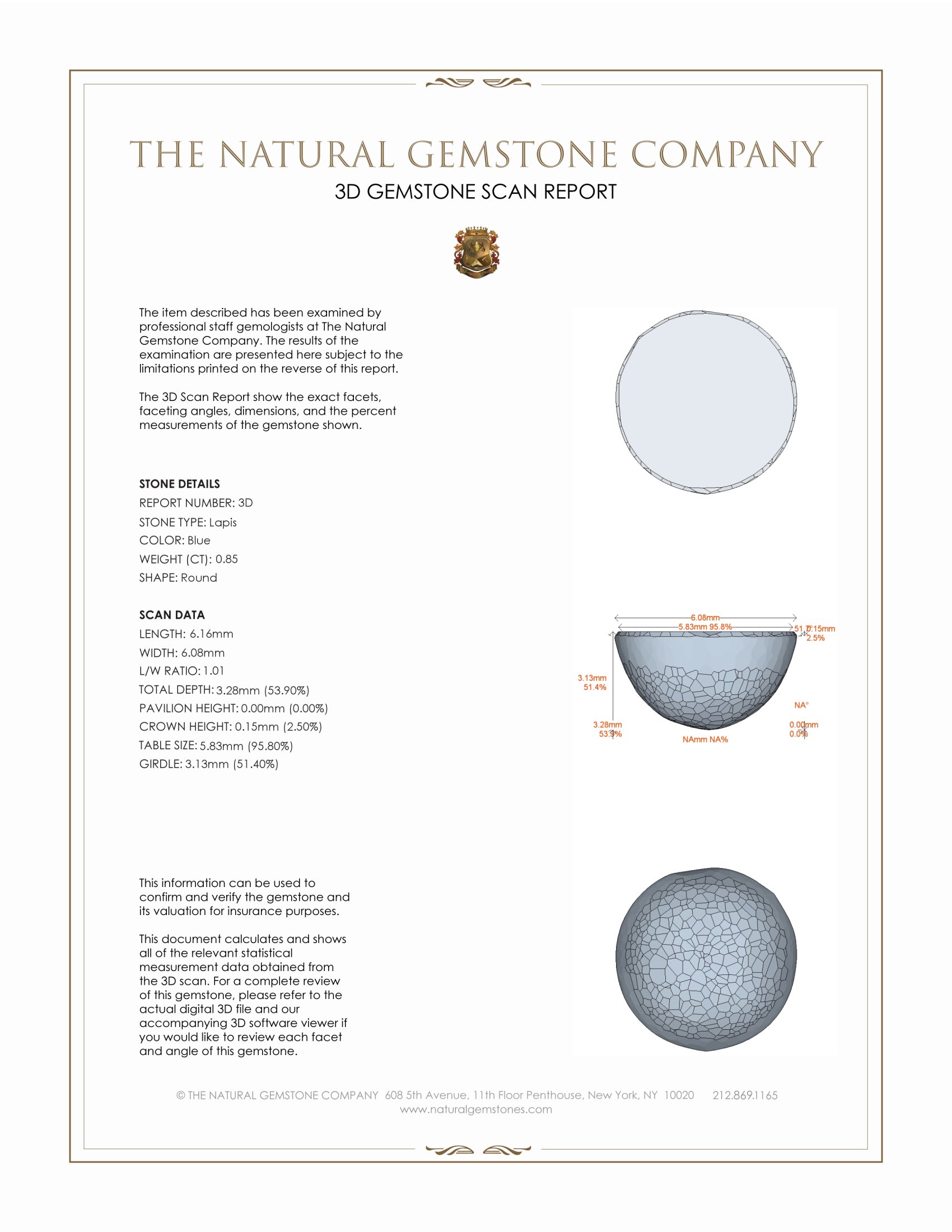
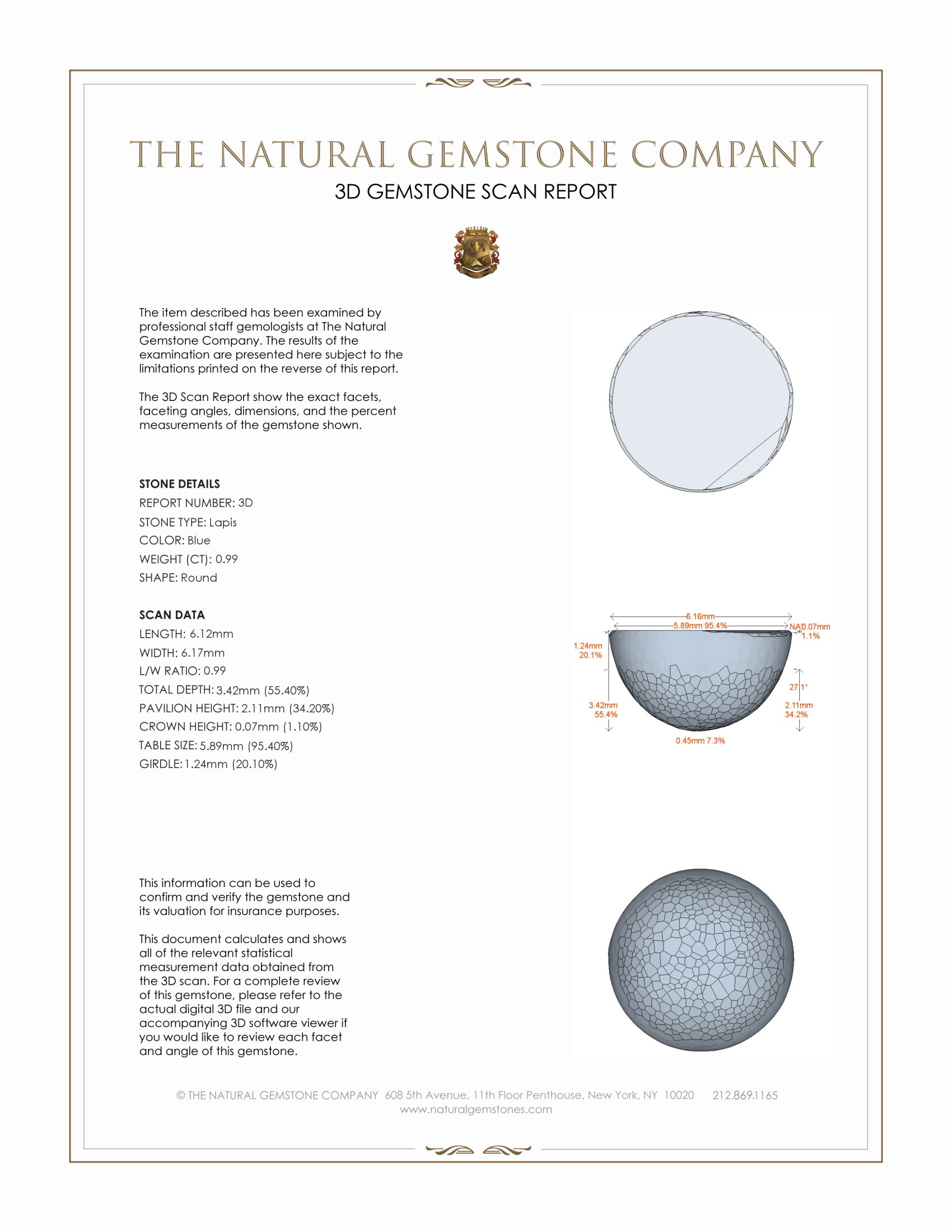
Dimensions (MM): help | Length: 6.16 Width: 6.08 Height: 3.28 | Length: 6.12 Width: 6.17 Height: 3.42 |
Weight: | 0.85 Ct. | 0.99 Ct. |
Color: help | Blue | Blue |
Color intensity: help | N/A | N/A |
Clarity: help | Not Applicable | Not Applicable |
Shape: help | Round | Round |
Cut: | Cabochon | Cabochon |
Cutting style: | Cabochon | Cabochon |
Enhancements: help | No Enhancement | No Enhancement |
Origin: help | Afghanistan | Afghanistan |
Per carat price: help | $20 | $20 |
This pair of opaque blue lapiss presents as two well matched round cabochons, weighing 0.85 carats and 0.99 carats respectively, and measuring 6.16 x 6.08 x 3.28 millimeters and 6.12 x 6.17 x 3.42 millimeters. The cutting style is Cabochon, the finish is an excellent polish, the stones are natural with no enhancement, and the recorded color intensity is n slash a. Origin is Afghanistan, a region with some of the most historically significant deposits of blue lapiss. These stones display a uniform, saturated blue that is typical of high quality material from that provenance, and the cabochon form emphasizes the depth and consistency of tone while preserving an even tactile surface and stable profile for setting and long term wear.
The narrative of formation begins millions of years ago, when sedimentary basins and carbonate platforms accumulated limestone and related materials in a marine environment. Over geological time, these carbonate beds were intruded and influenced by igneous activity and by chemically active fluids. The blue mineral phases that define lapiss formed as a result of metasomatic and contact metamorphic processes, where sulfur and sodium bearing fluids permeated calcium rich carbonate hosts. Under elevated temperatures and pressures, and in the presence of these sulfur rich fluids, complex sodium aluminum sulfosilicate phases crystallized and aggregated into the deep blue mineral masses that would become lapiss. The characteristic blue color arises from trace sulfur species incorporated into the crystal structure, and the host rock often retains associated phases such as calcite and pyrite, which contribute to the appearance and textural complexity of the material.
Over the subsequent millions of years, tectonic uplift and erosional processes exposed these mineralized horizons. In northern Afghanistan, longstanding mining traditions located and extracted coherent masses of blue lapiss from metamorphosed limestone lenses. Natural fracturing and weathering concentrated the more resistant blue material, while matrix and accessory minerals remained intergrown in many specimens. The formation environment produces material that is commonly opaque, with color and texture distributed in aggregates rather than as isolated transparent crystals. The pieces selected for this pair were sourced from that context, where experienced field graders identified nodules with uniform tone and minimal disruptive veining. The result is material well suited to cabochon cutting, because the aggregate structure yields a consistent color plane when shaped and polished, and the opacity helps mask internal heterogeneities that can otherwise interrupt the visual field.
The transformation from rough to finished gem is a controlled process of assessment, sawing, shaping, and careful polishing, executed to preserve weight and to maximize surface integrity. Each rough blank was evaluated for orientation that best displays the intrinsic blue hue, then shaped into a round profile and refined to the specified dimensions, 6.16 x 6.08 x 3.28 millimeters and 6.12 x 6.17 x 3.42 millimeters, with final weights of 0.85 carats and 0.99 carats respectively. The cabochon cut was chosen to provide a smooth domed face, enhancing the perception of color depth and ensuring a consistent surface reflection, while the excellent polish indicates meticulous lap work that produces uniform light return without abrasions. The stones are untreated, with no enhancement, and their physical characteristics reflect natural formation and careful material handling. The Natural Gemstone Company affirms these specifications and the documented origin, and the presentation of this matched pair supports applications where paired symmetry and material provenance are priorities.


