
- Stone16
- Reports3


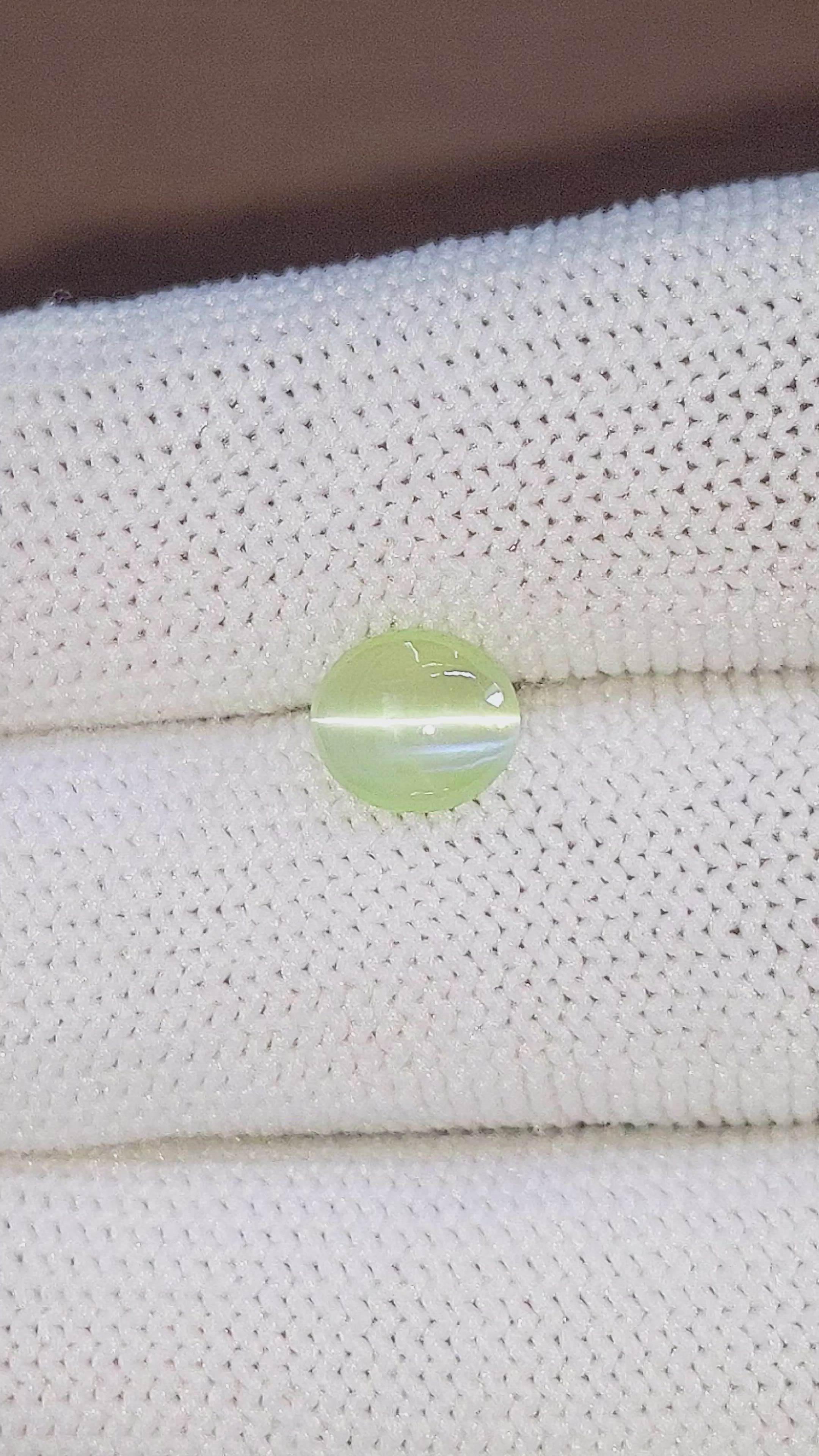
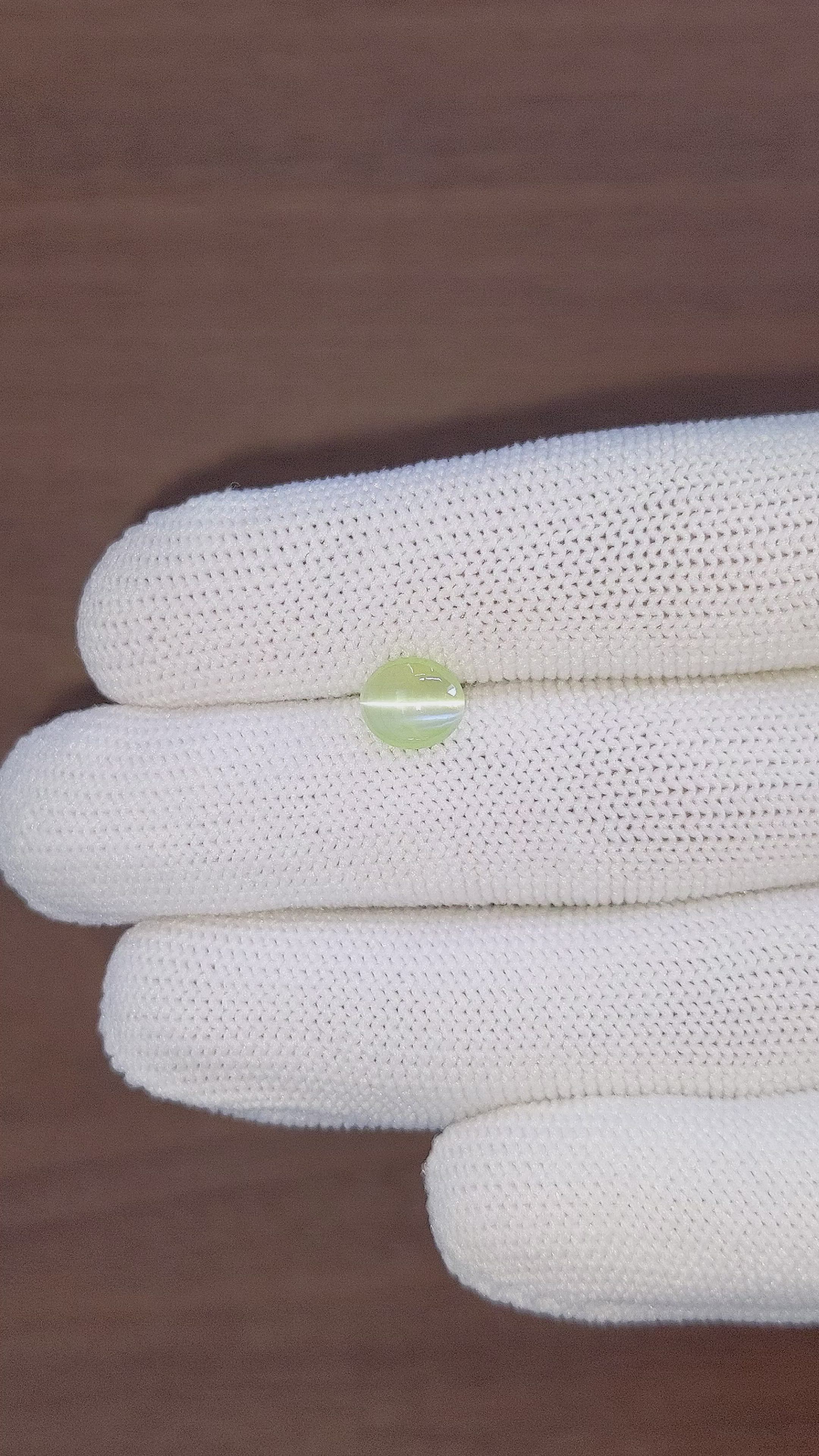
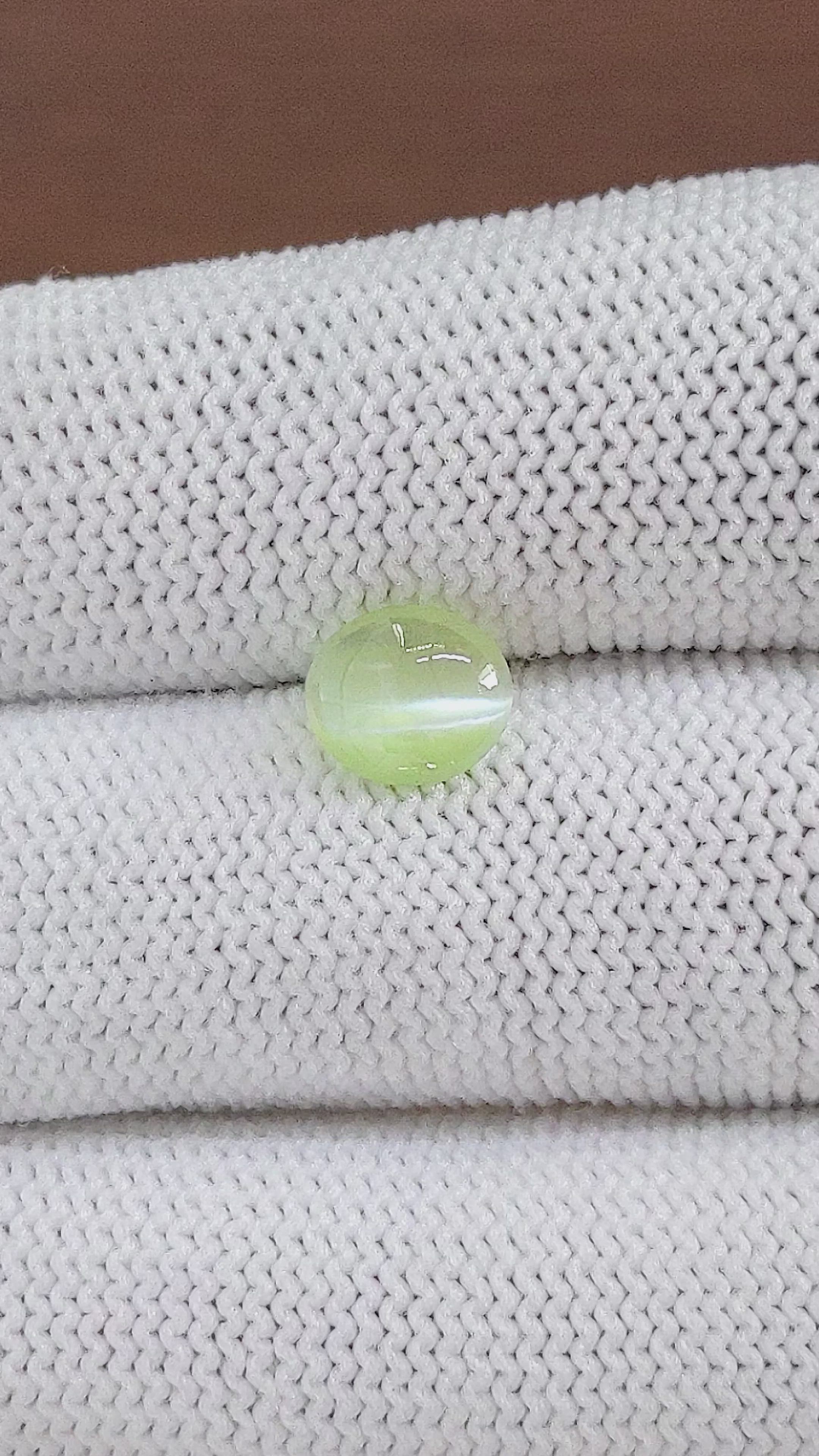
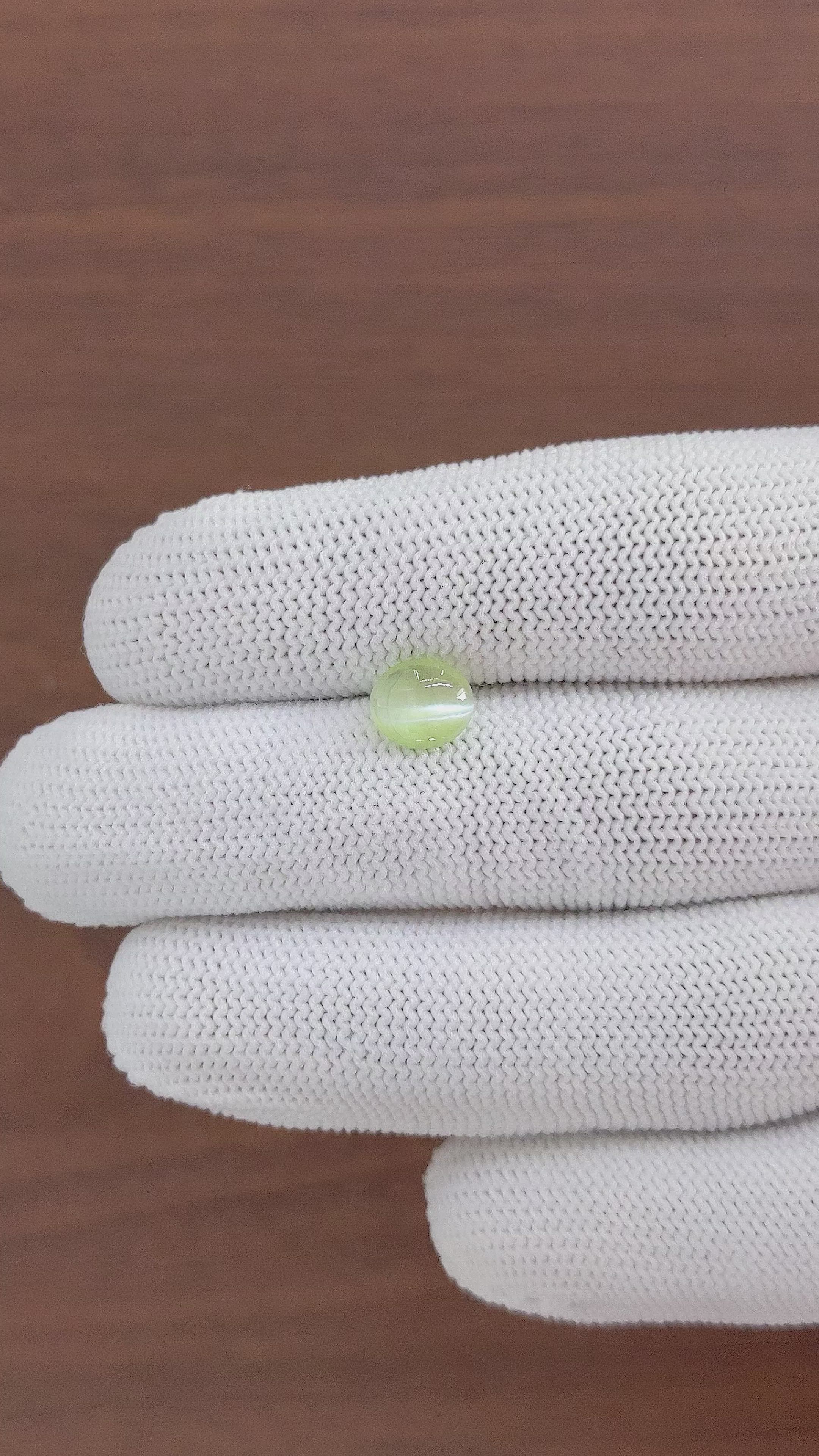
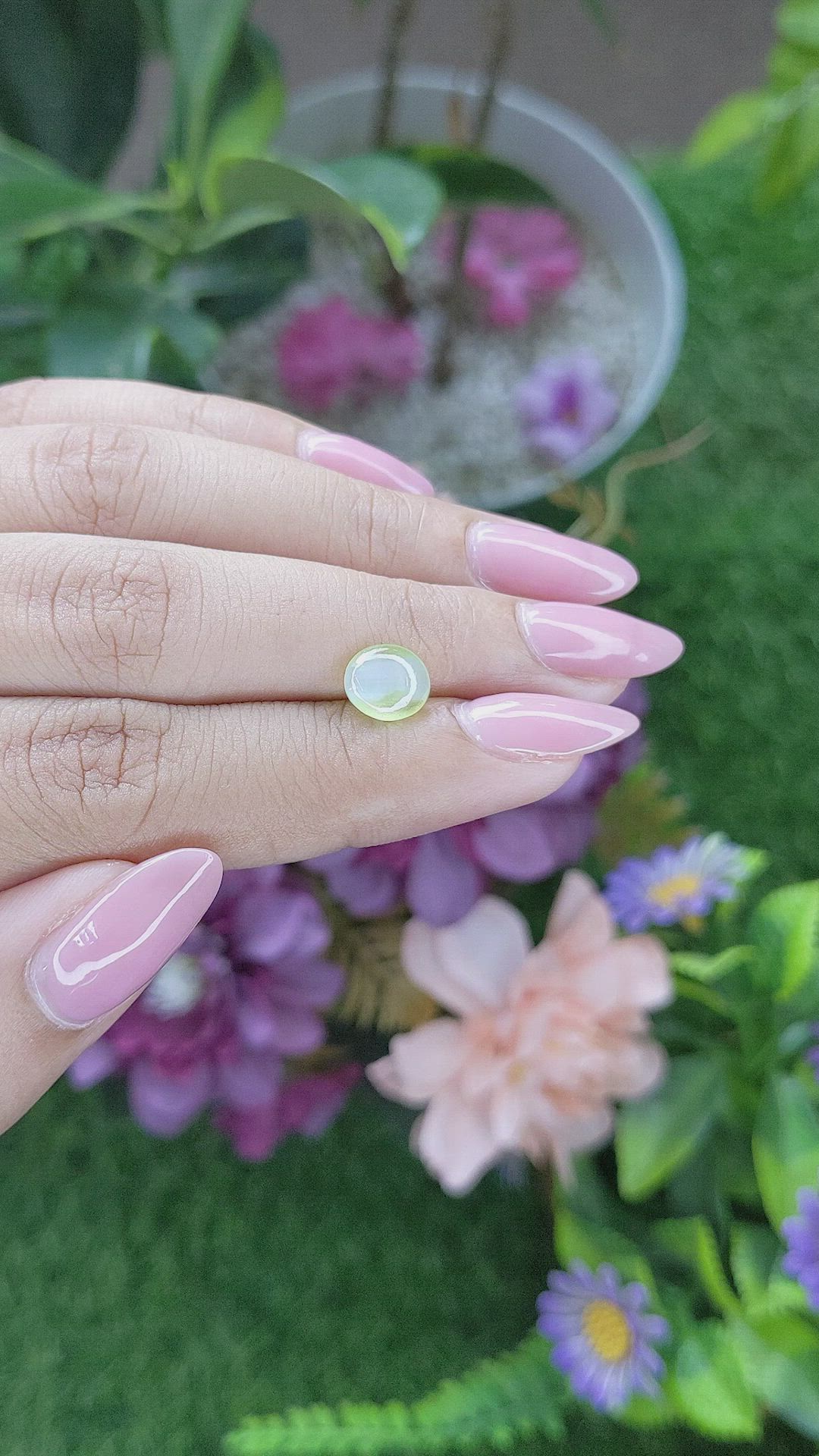
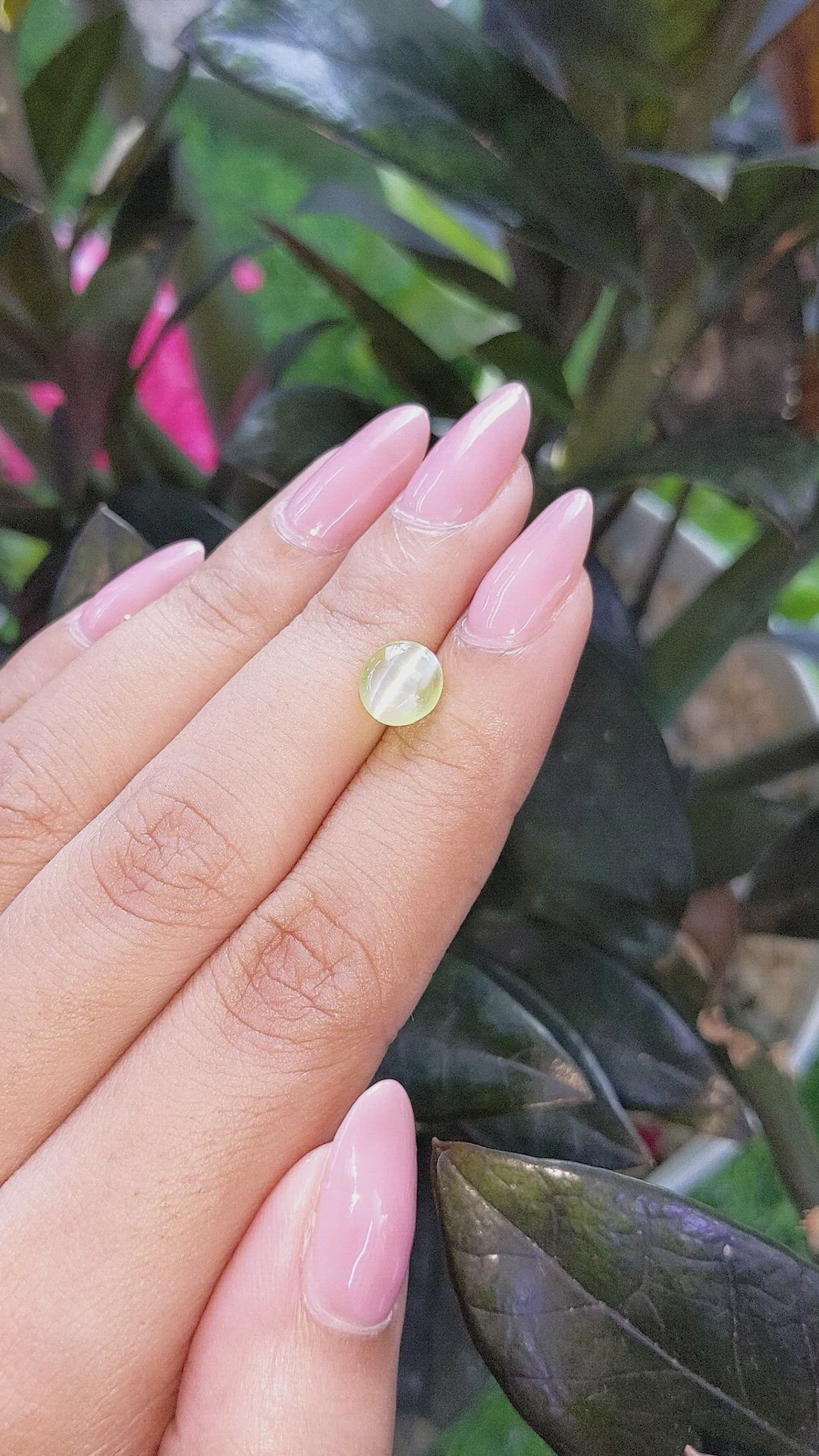
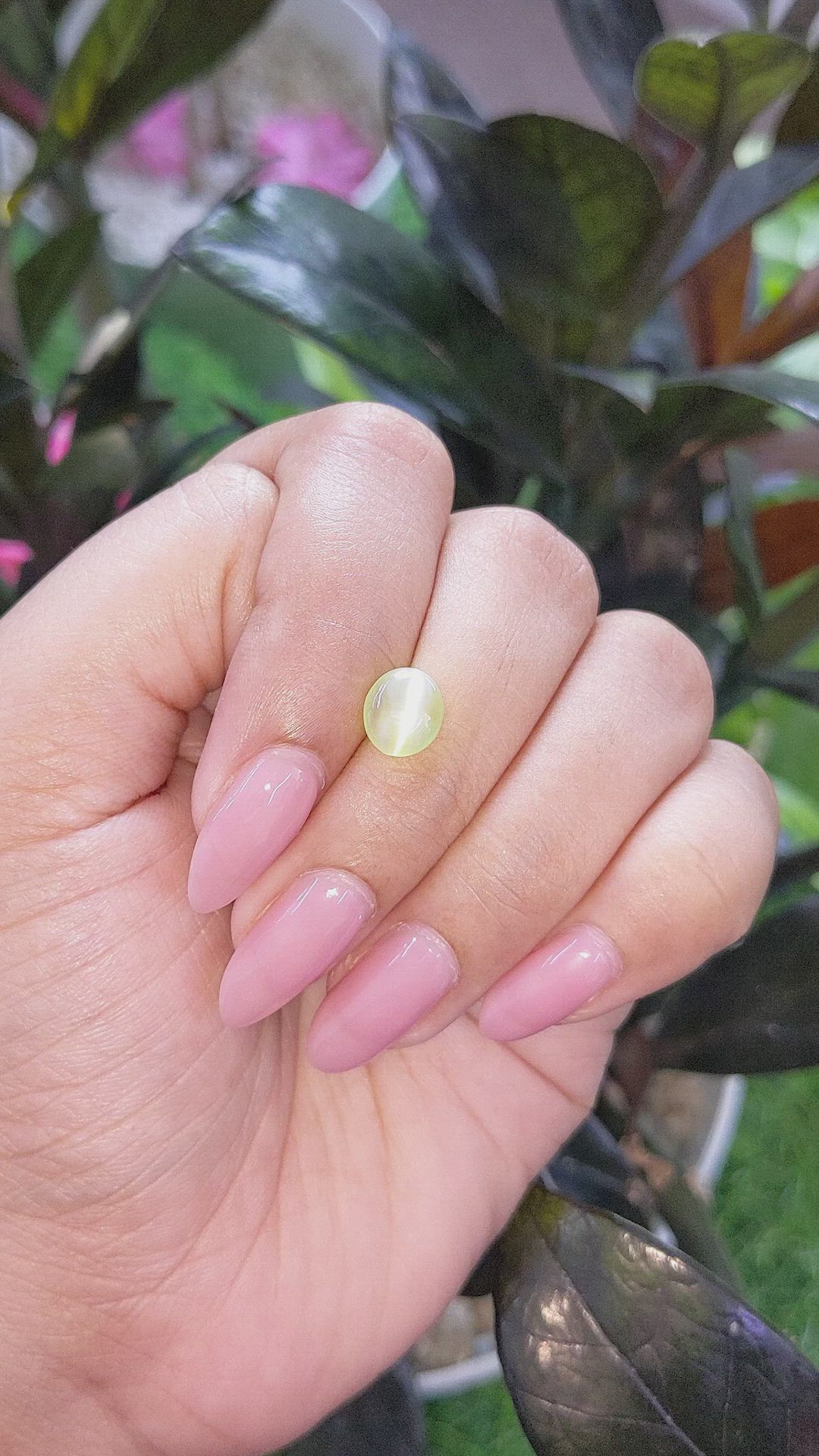




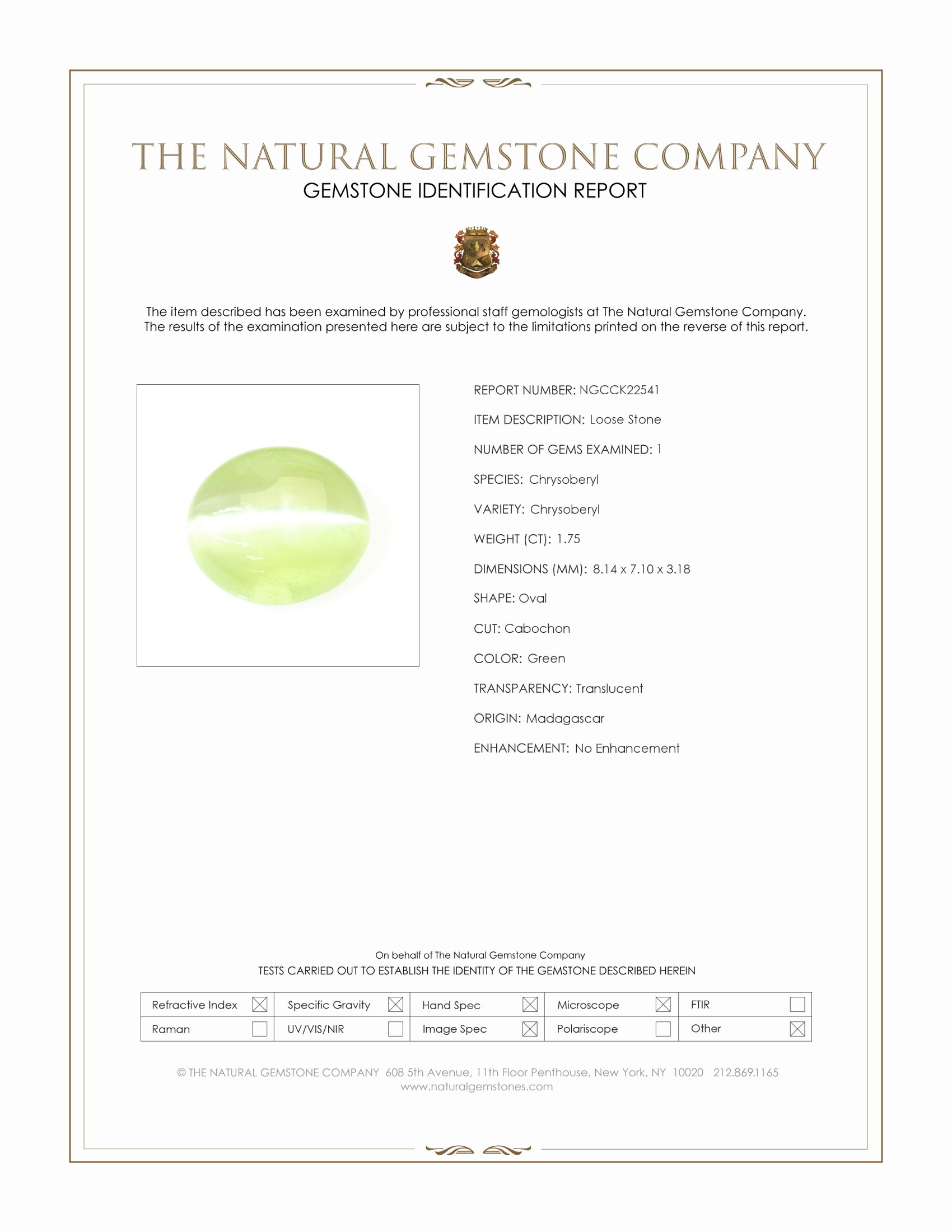
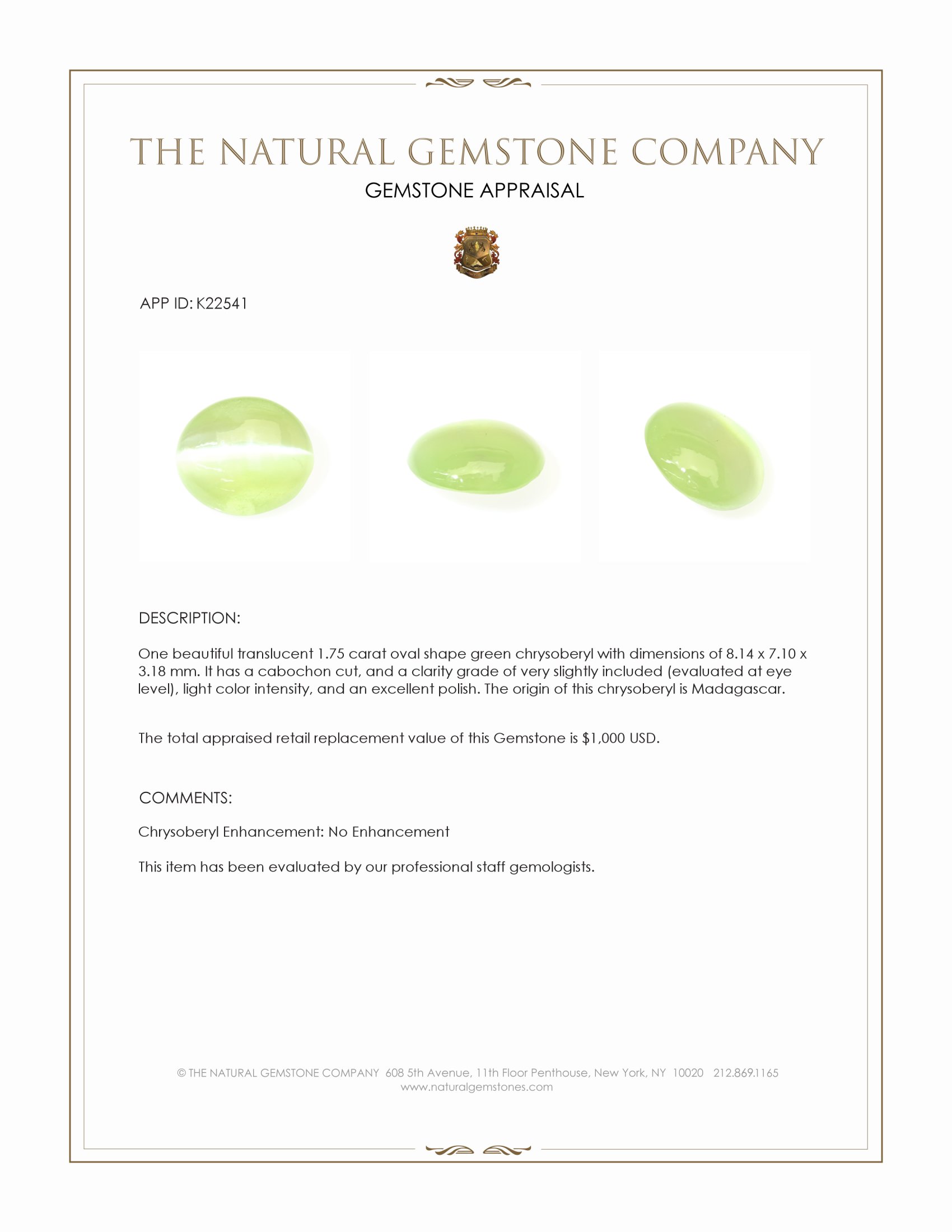
1.75 Ct. Green Cabochon Chrysoberyl from Madagascar
This loose stone ships by Jul 3
Item ID: | K22541 |
|---|---|
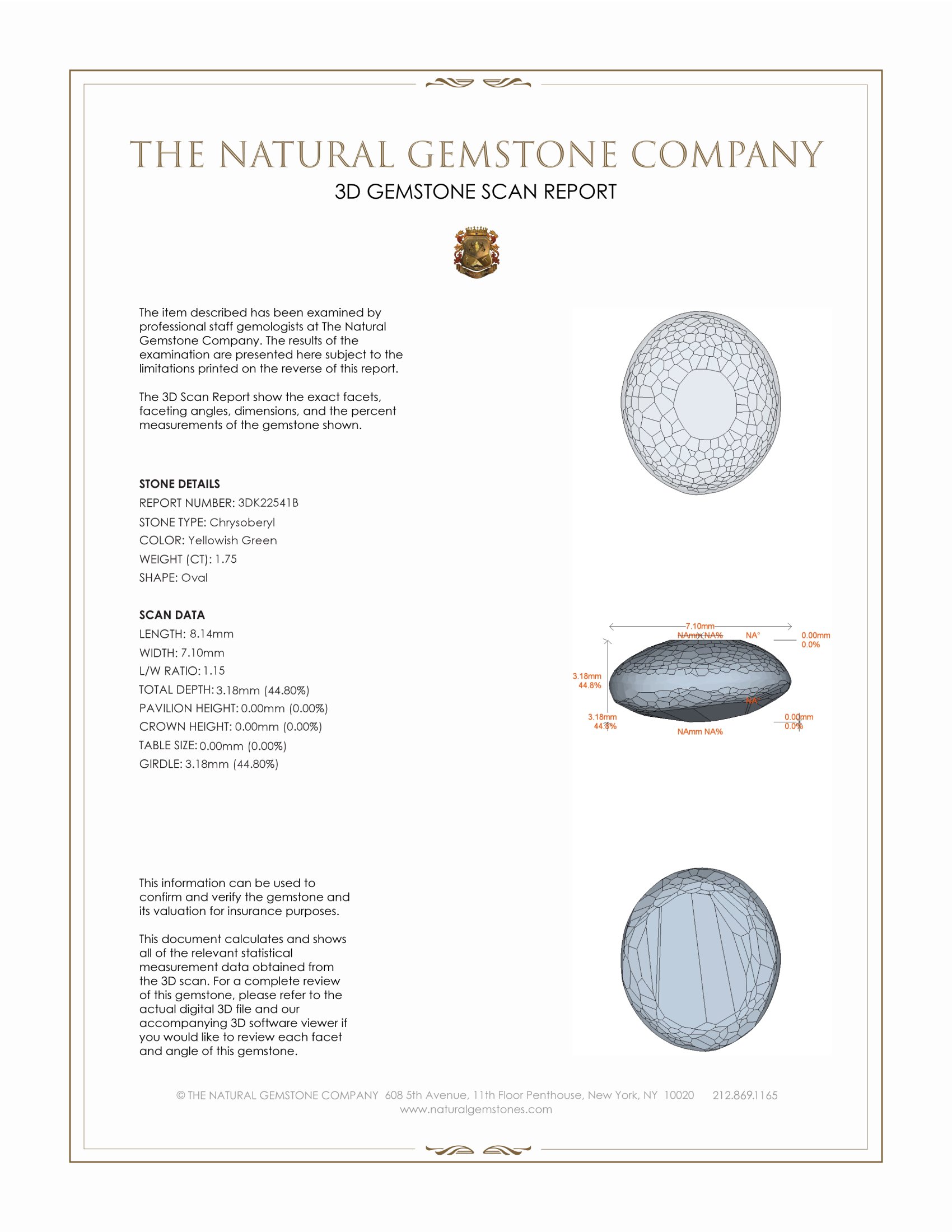
Dimensions (MM): help | Length: 8.14 Width: 7.1 Height: 3.18 |
Weight: | 1.75 Ct. |
Color: help | Green |
Color intensity: help | Light |
Clarity: help | Very Slightly Included |
Shape: help | Oval |
Cut: | Cabochon |
Cutting style: | Cabochon |
Enhancements: help | No Enhancement |
Origin: help | Madagascar |
Per carat price: help | $571 |
This 1.75 carat oval green chrysoberyl offers a precise and studied combination of proportions and finish, presented as an 8.14 by 7.10 by 3.18 millimeter cabochon, with translucency and a light color intensity that together define its visual presence. The choice of a cabochon profile rather than a faceted pavilion was deliberate, to preserve and reveal internal structure as an identifying characteristic while maintaining optimum durability. Clarity grade is very slightly included evaluated at eye level, which in this specimen corresponds to discrete internal features that are visible only under close inspection and which do not compromise the structural integrity or overall transparency. The polish is excellent, executed to yield a smooth domed surface that permits controlled light transmission and specular reflection, thereby enhancing the stone body color and the interplay of internal textures. There has been no enhancement to this chrysoberyl, its color and surface finish are entirely natural, and its documented origin is Madagascar, a source known for producing chrysoberyl with distinctive inclusion suites.
The most compelling aspect of this gem is the suite of internal inclusions that constitute an unmistakable signature, both for identification and for aesthetic interest. At modest magnification the dominant inclusion type presents as oriented rutile silk, composed of fine needle arrays aligned along crystallographic directions, forming linear banding and filament networks that traverse the cabochon interior. These fine needles are interspersed with minute negative crystals and isolated two phase inclusions, the latter containing both a gas bubble and a liquid component, which catalogues the conditions of late stage fluid entrapment during crystal growth. In localized areas healed fractures and fingerprint type veils are apparent, the former displaying recrystallized surfaces that refract light diffusely, the latter producing lace like internal textures. Growth zoning is also perceptible as faint tonal banding orthogonal to the needle sets, indicating subtle changes in trace element incorporation during formation. The aggregate effect of these inclusions is not cloudiness, but a layered internal architecture that scatters light in a controlled manner, producing a soft satiny lustre and a faint directional sheen under focused illumination.
From a cutting and finishing perspective this piece demonstrates deliberate orientation and controlled material removal to accentuate both color and inclusion patterning while preserving weight. The cutter oriented the cabochon axis relative to the dominant needle alignment to produce gentle chatoyant response when light is directed across the dome, without creating a full asterism, thus maintaining translucency while offering dynamic internal texture. The 3.18 millimeter thickness provides an optimal compromise between depth for color saturation and thinness for translucency, allowing the light path to interact with the internal silk and two phase inclusions. Surface preparation employed progressive laps and fine grit polishing to eliminate micro abrasion, resulting in an excellent polish that minimizes surface scattering and allows the internal inclusion network to be read cleanly. The absence of any treatments means that these inclusion patterns are intrinsic to the crystal, and because chrysoberyl has a Mohs hardness of 8.5, the stone is resistant to everyday wear, the inclusions do not represent structural weakness but rather act as diagnostic and aesthetic features.
For the experienced buyer and collector who values provenance and natural internal signatures, this Madagascar chrysoberyl from The Natural Gemstone Company represents a specimen that is simultaneously scientific and wearable. The inclusion ensemble serves as a fingerprint for identification, useful to gemologists verifying origin and natural state, and to the connoisseur who appreciates microscopic narratives embedded within the crystal. Settings that provide backlighting or a thin metal bezel will maximize the perceptibility of the internal silk and two phase inclusions, while retaining the cabochon silhouette that showcases the domed surface and the satiny sheen. Routine care requires standard precautions against thermal shock and harsh chemical exposure, and while the material is robust, occasional professional inspection is recommended to confirm mounting integrity. This cabochon is accompanied by our internal documentation noting its unenhanced status and measured parameters, and it embodies the intersection of precise lapidary control and geological history that clients of The Natural Gemstone Company seek when selecting a piece with both technical interest and everyday practicality.


