
- Pair16
- Reports4


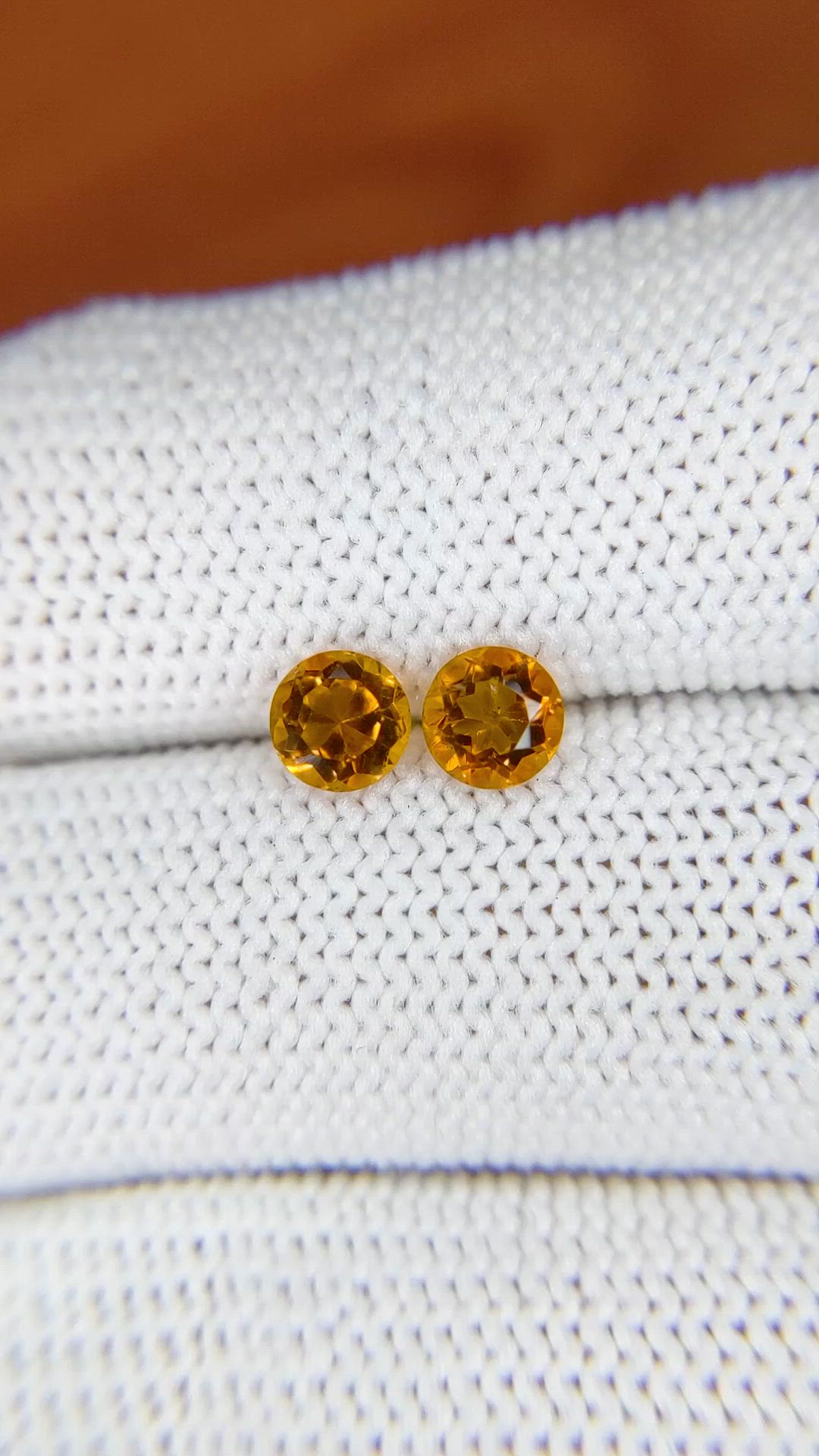
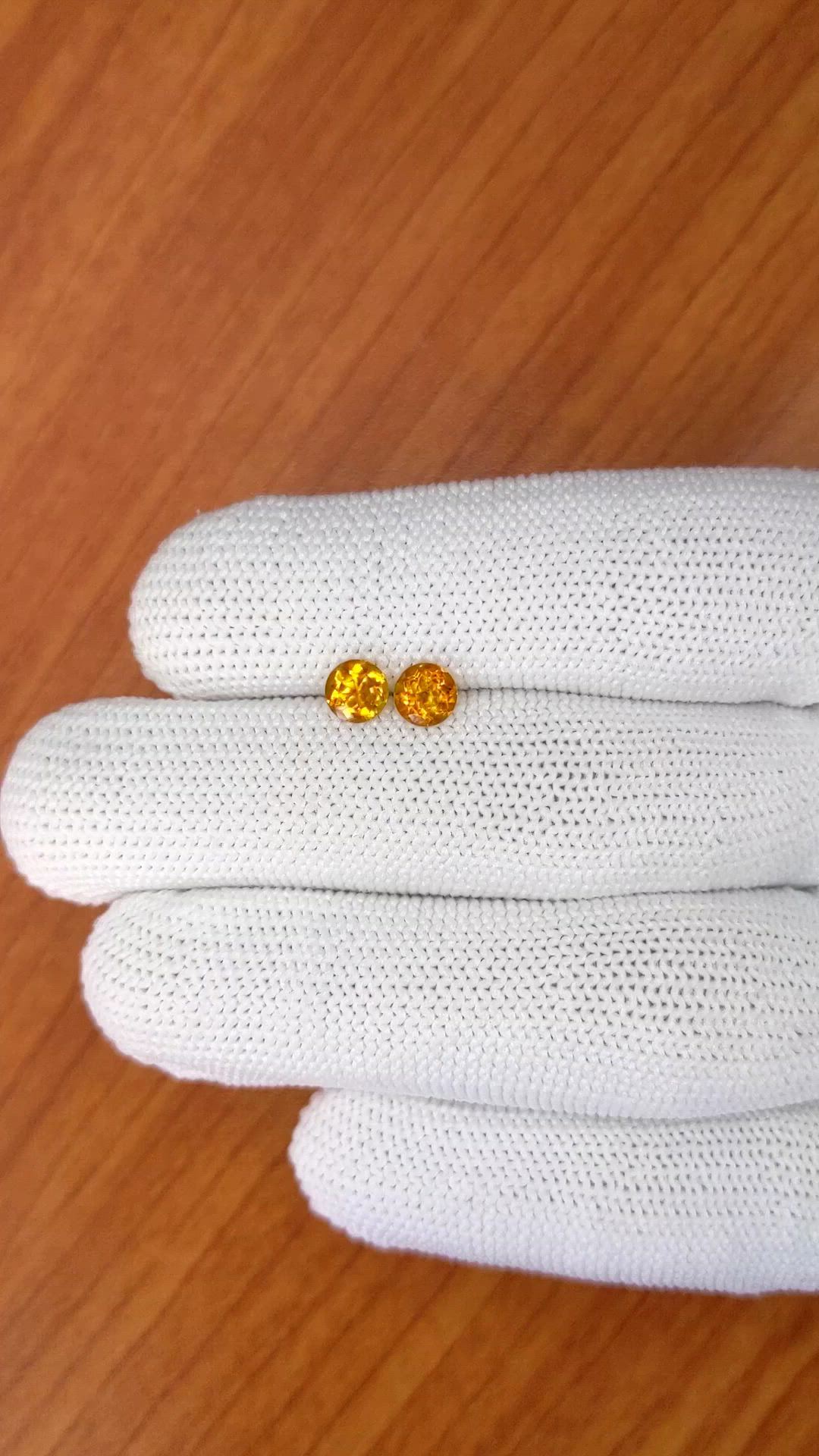
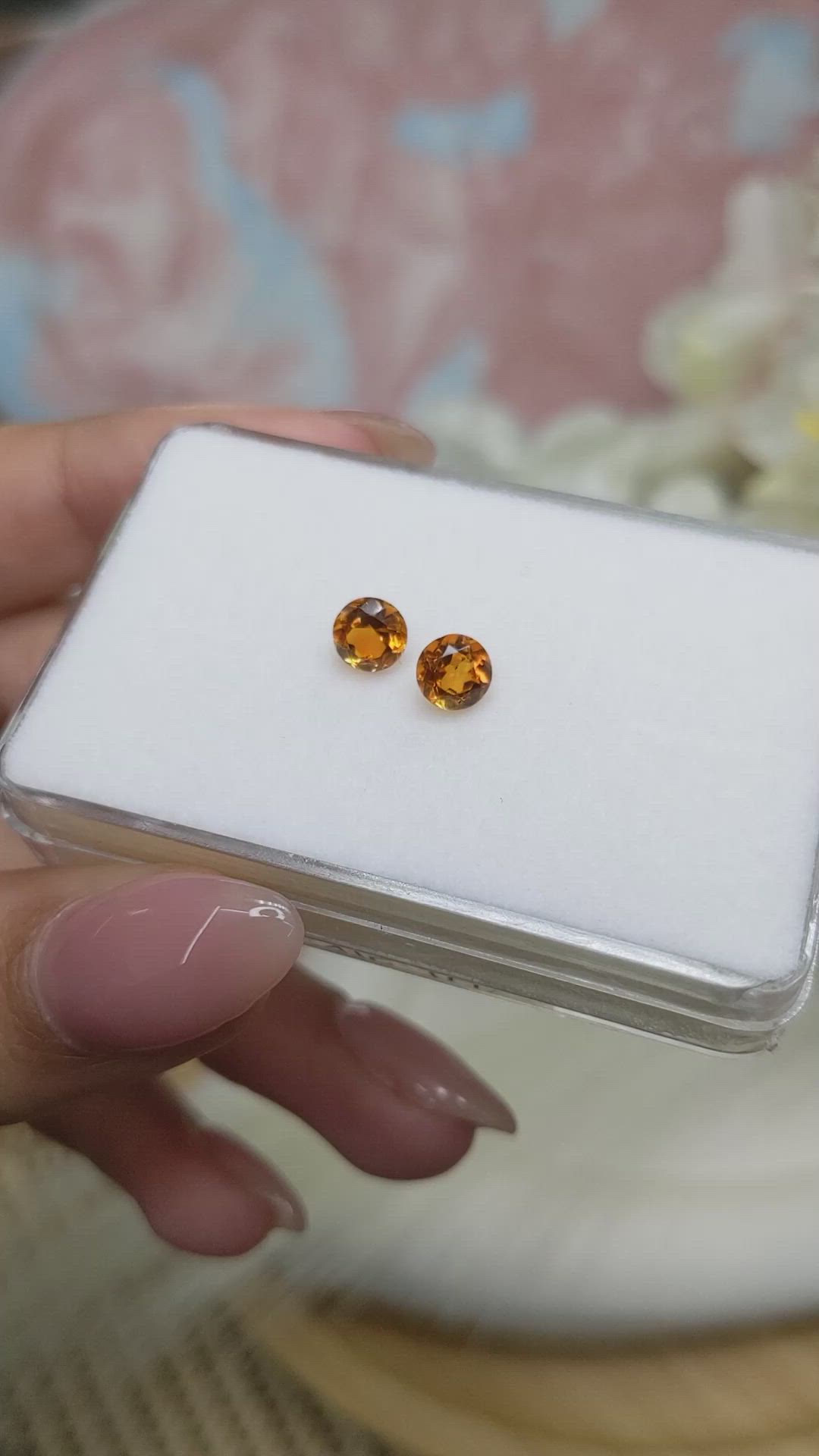
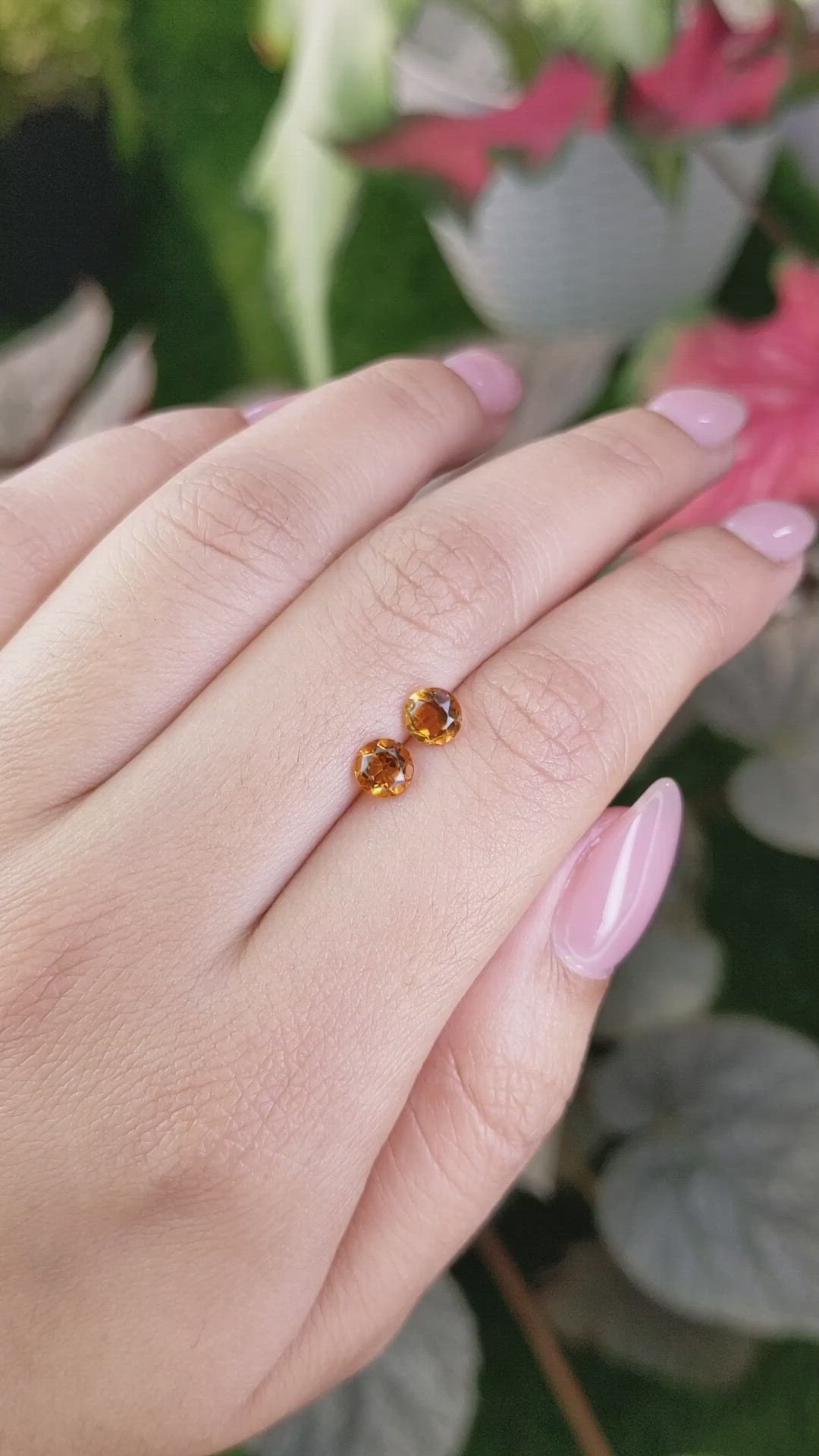
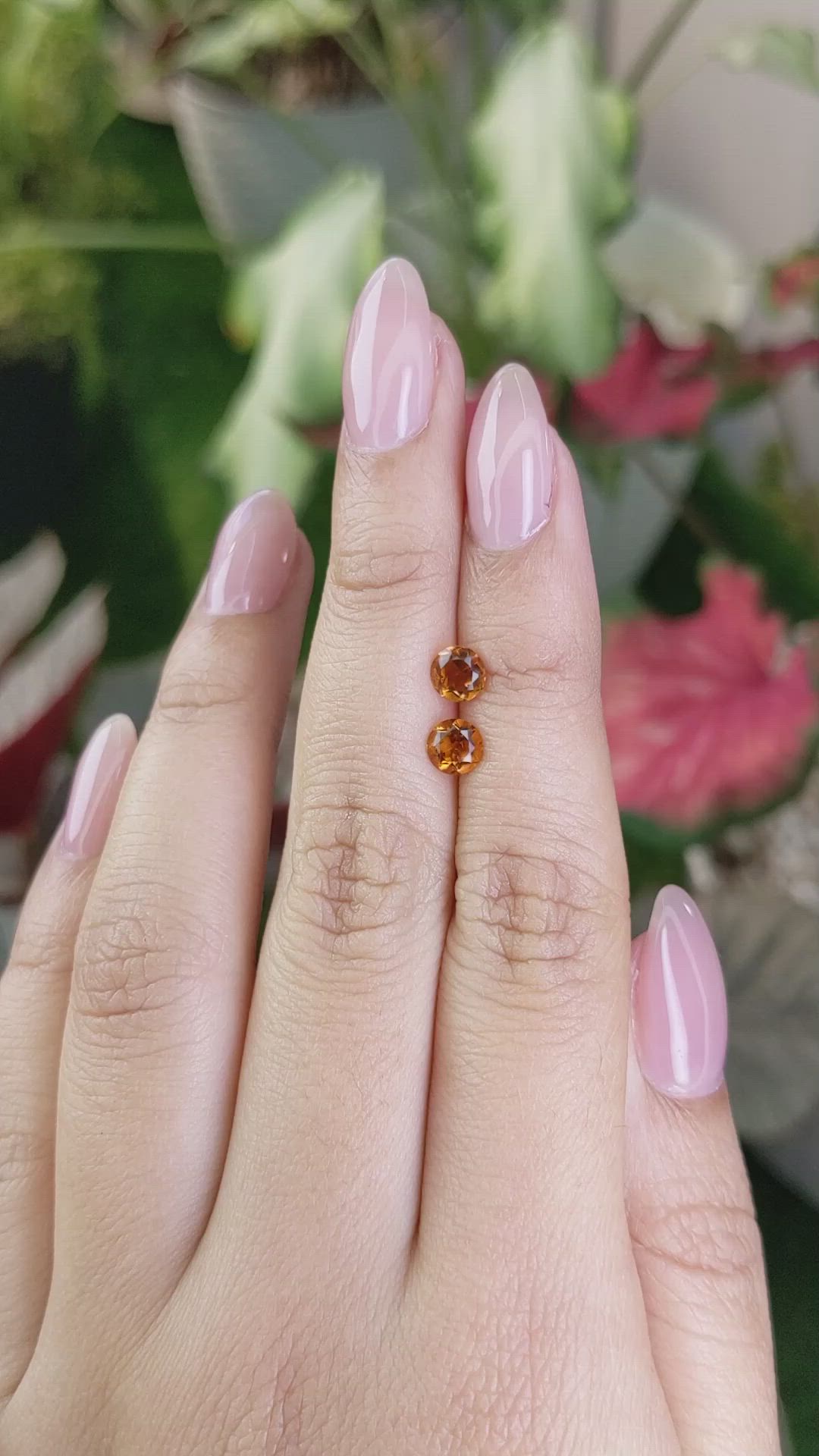
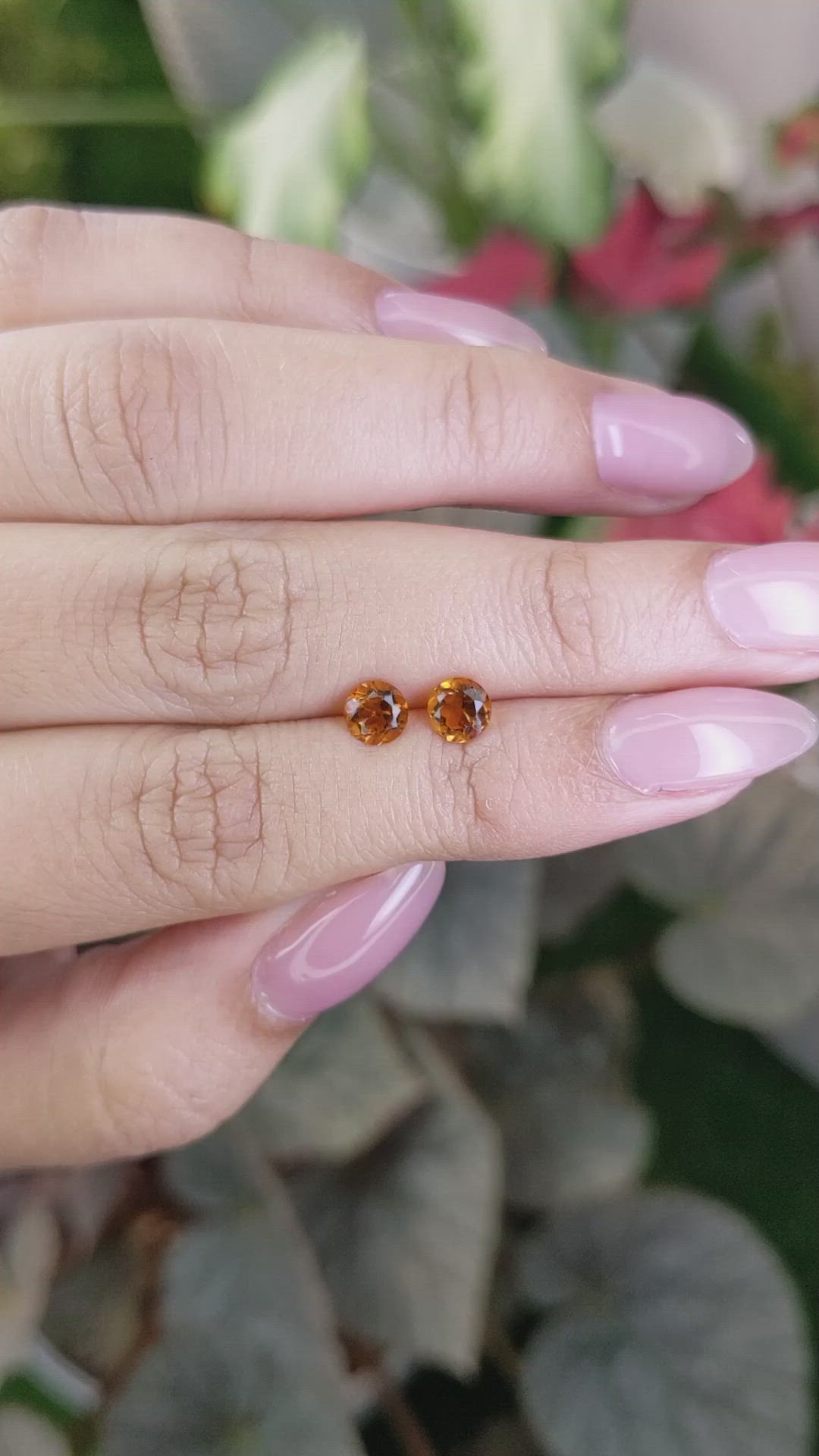




0.95 Ct.Tw.Total Carat Weight Yellowish Orange Citrine Pair from Brazil
This pair of stones is available to ship now
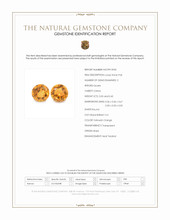
Stone type: | Citrine | Citrine |
|---|---|---|
Item ID: | PR13920 | PR13920 |
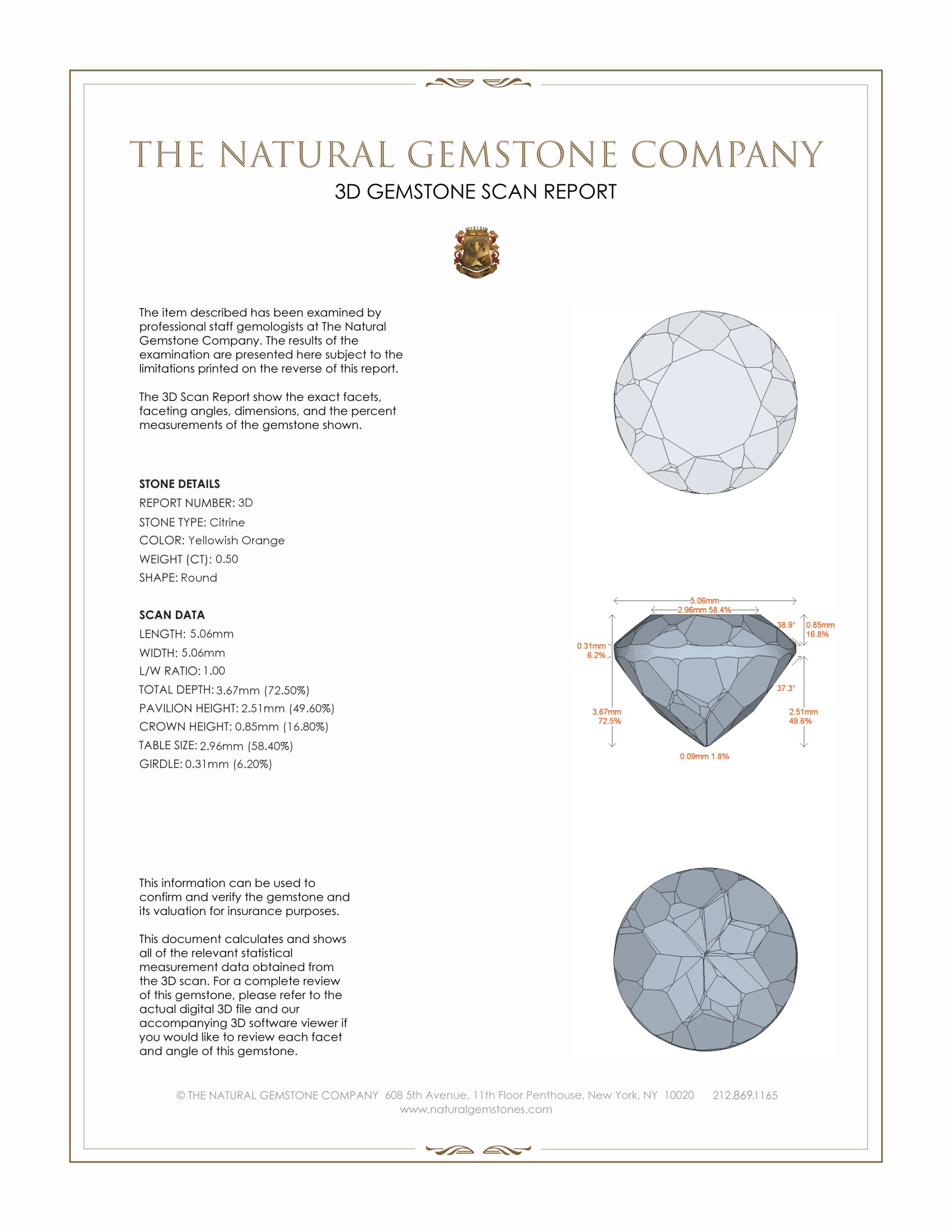
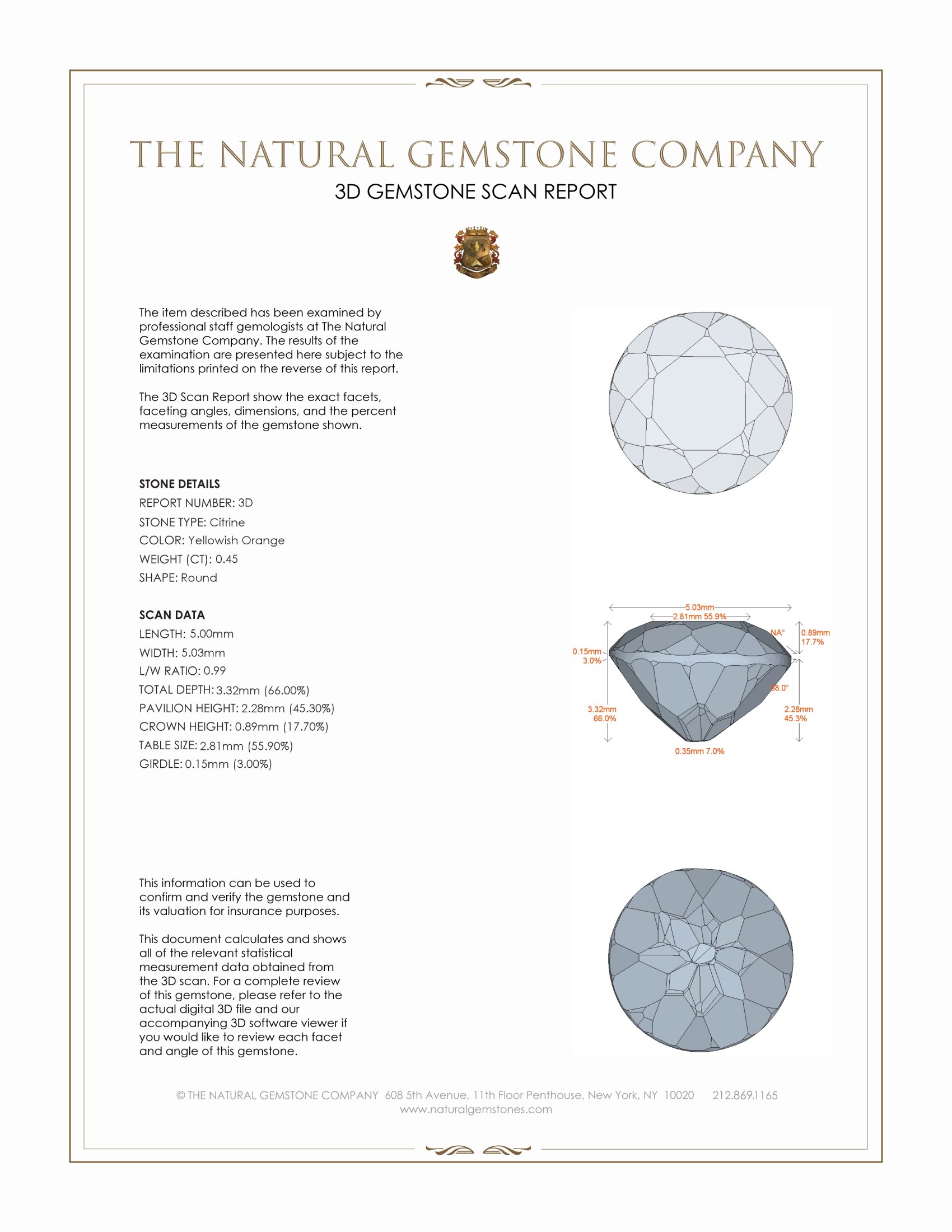
Dimensions (MM): help | Length: 5.06 Width: 5.06 Height: 3.67 | Length: 5 Width: 5.03 Height: 3.32 |
Weight: | 0.50 Ct. | 0.45 Ct. |
Color: help | Yellowish Orange | Yellowish Orange |
Color intensity: help | Intense | Intense |
Clarity: help | Very Very Slightly Included | Very Very Slightly Included |
Shape: help | Round | Round |
Cut: | Mixed Brilliant Cut | Mixed Brilliant Cut |
Cutting style: | Faceted | Faceted |
Enhancements: help | Heat Treated | Heat Treated |
Origin: help | Brazil | Brazil |
Per carat price: help | $40 | $40 |
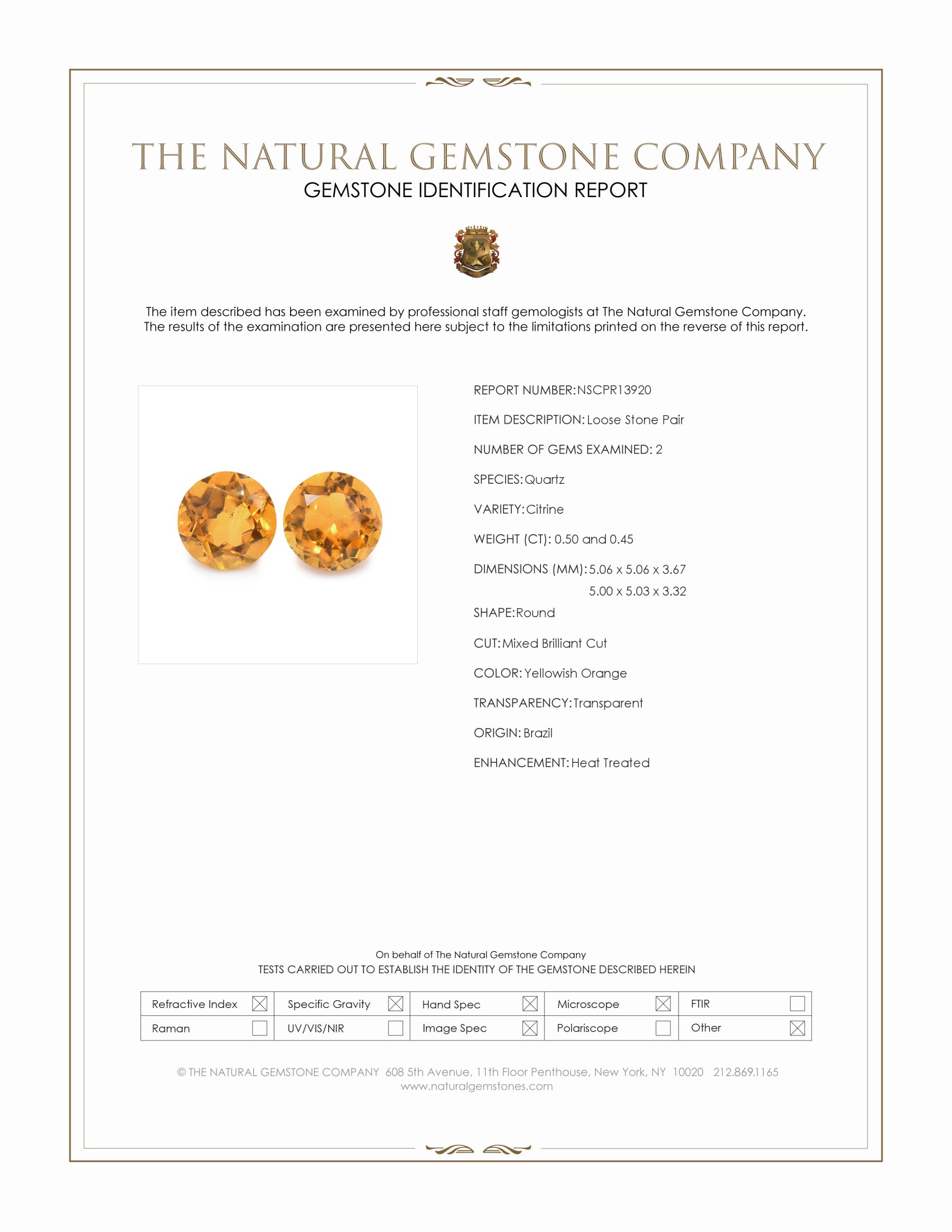
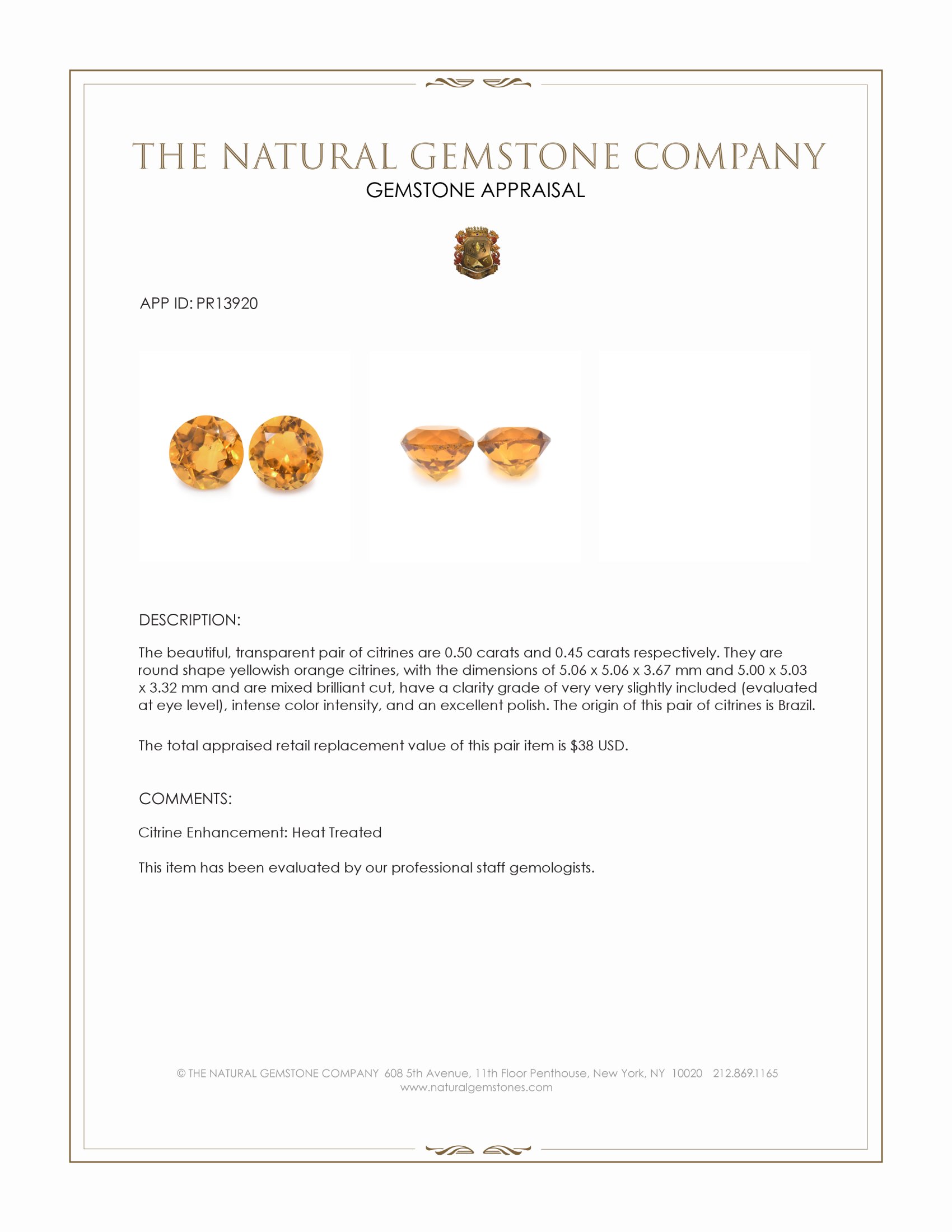
This pair of citrines from Brazil presents a precise and well matched example of faceted quartz. The stones weigh 0.50 carats and 0.45 carats respectively, and are round in outline with dimensions of 5.06 x 5.06 x 3.67 millimeters and 5.00 x 5.03 x 3.32 millimeters. Both stones are executed in a mixed brilliant cut, with a facet arrangement that emphasizes face up brightness and controlled light return. The color is a yellowish orange with intense saturation, the clarity grade is very very slightly included when evaluated at eye level, and the polish is excellent. The material has been heat treated to enhance tone and uniformity, and the documented origin is Brazil. The Natural Gemstone Company supplied and inspected this pair, and these technical attributes reflect our standard grading practice.
Optically, these citrines display the expected properties of natural quartz, including a vitreous luster and strong transparency that allow for clear viewing through the pavilion. Quartz has a refractive index in the range of approximately 1.544 to 1.553, and that index is responsible for the moderate level of scintillation and light return observed in these gems. The mixed brilliant cut used here optimizes the crown facet geometry for lively scintillation, while the pavilion geometry preserves an even color distribution and minimizes windowing. The excellent polish contributes to sharp facet junctions and crisp internal reflections, and the very very slightly included clarity at eye level means that light transmission is largely unobstructed for most standard viewing conditions.
When compared to other gemstones that occupy a similar jewelry role, these citrines exhibit reflective qualities consistent with the quartz family, and they differ in predictable ways from higher index or higher dispersion species. Within the quartz group, amethyst and smoky quartz show comparable refractive indices and vitreous luster, so the overall brilliance and face up brightness of this Brazilian citrine are similar to those stones when cut to equivalent proportions. Compared with topaz, which has a higher refractive index and therefore a greater potential for brilliance and contrast, citrine appears somewhat softer in scintillation and shows less pronounced flash at facet junctions. Against gemstones such as peridot or many garnet varieties that have higher refractive indices and stronger internal reflections, citrine offers a more restrained but consistent light performance. In relation to diamond, which has a vastly higher refractive index and dispersion, citrine presents low dispersion and therefore minimal spectral fire, but it compensates with appealing color saturation and even surface reflection when well cut and polished.
From a practical standpoint the reflective behavior of these stones makes them well suited to paired settings and designs that emphasize color stability and even brightness, rather than extreme flash or fire. The closely matched dimensions and cut style produce symmetrical light return between the two stones, which is especially important for earring pairs or matched accents. The hardness of quartz, about 7 on the Mohs scale, provides adequate durability for everyday wear when set responsibly, and the heat treatment applied to these pieces is a stable enhancement that does not compromise the stone surface. Consideration of setting style will influence perceived reflectivity, with open backed and white metal settings tending to enhance apparent brightness, and deep closed settings tending to restrict light intake and reduce lively reflection.
In summary this pair of Brazilian citrines offers a technically consistent example of polished quartz, with weights of 0.50 carats and 0.45 carats, round mixed brilliant cutting, intense yellowish orange color, very very slightly included clarity at eye level, excellent polish, and heat treatment for color enhancement. The reflective qualities align with expectations for the quartz family, yielding moderate brilliance, a clean vitreous surface sheen, and restrained dispersion relative to higher index gem species. For further information on measured optical parameters, documentation, or viewing recommendations please contact The Natural Gemstone Company.


