
- Pair17
- Reports5


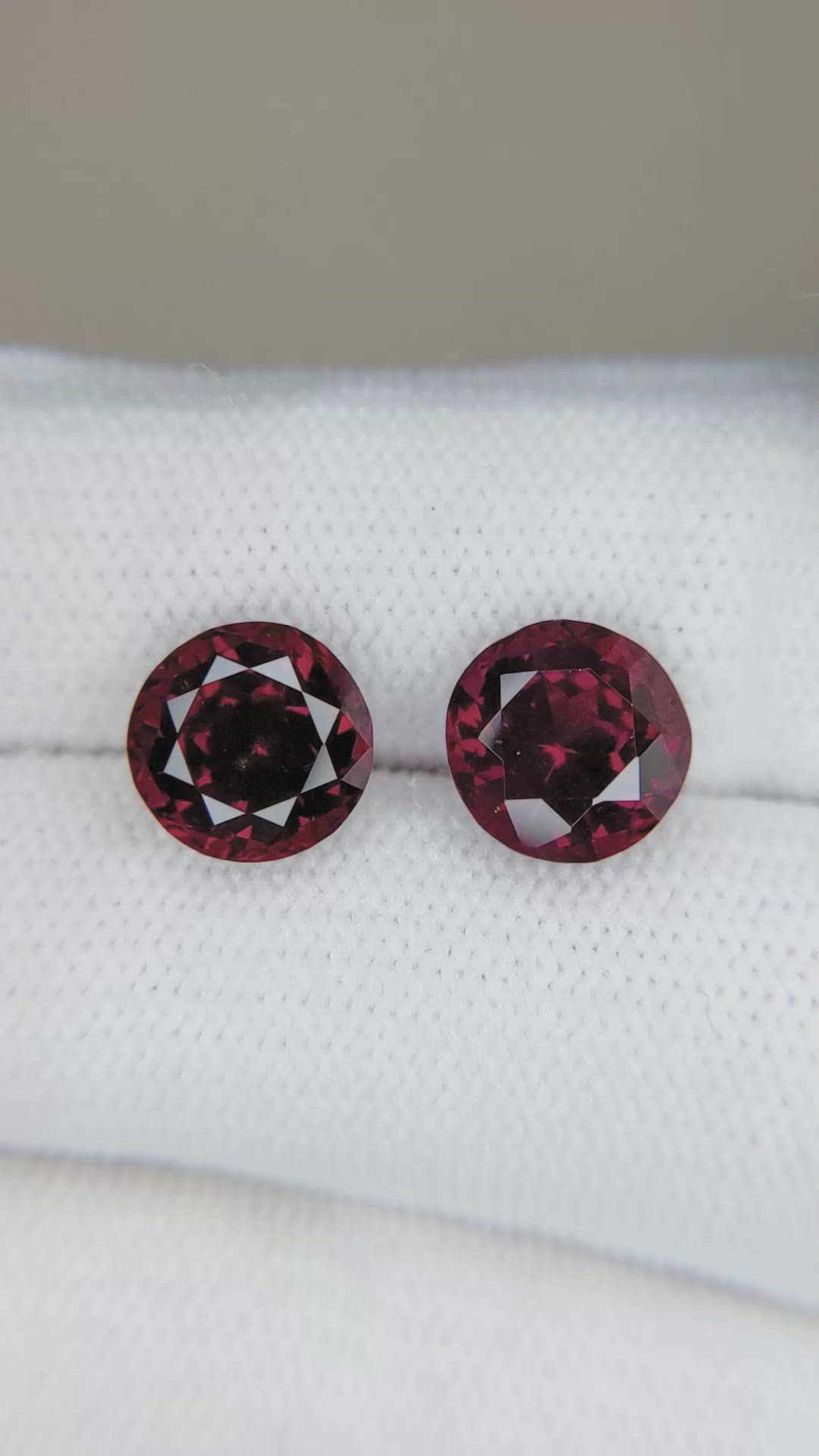
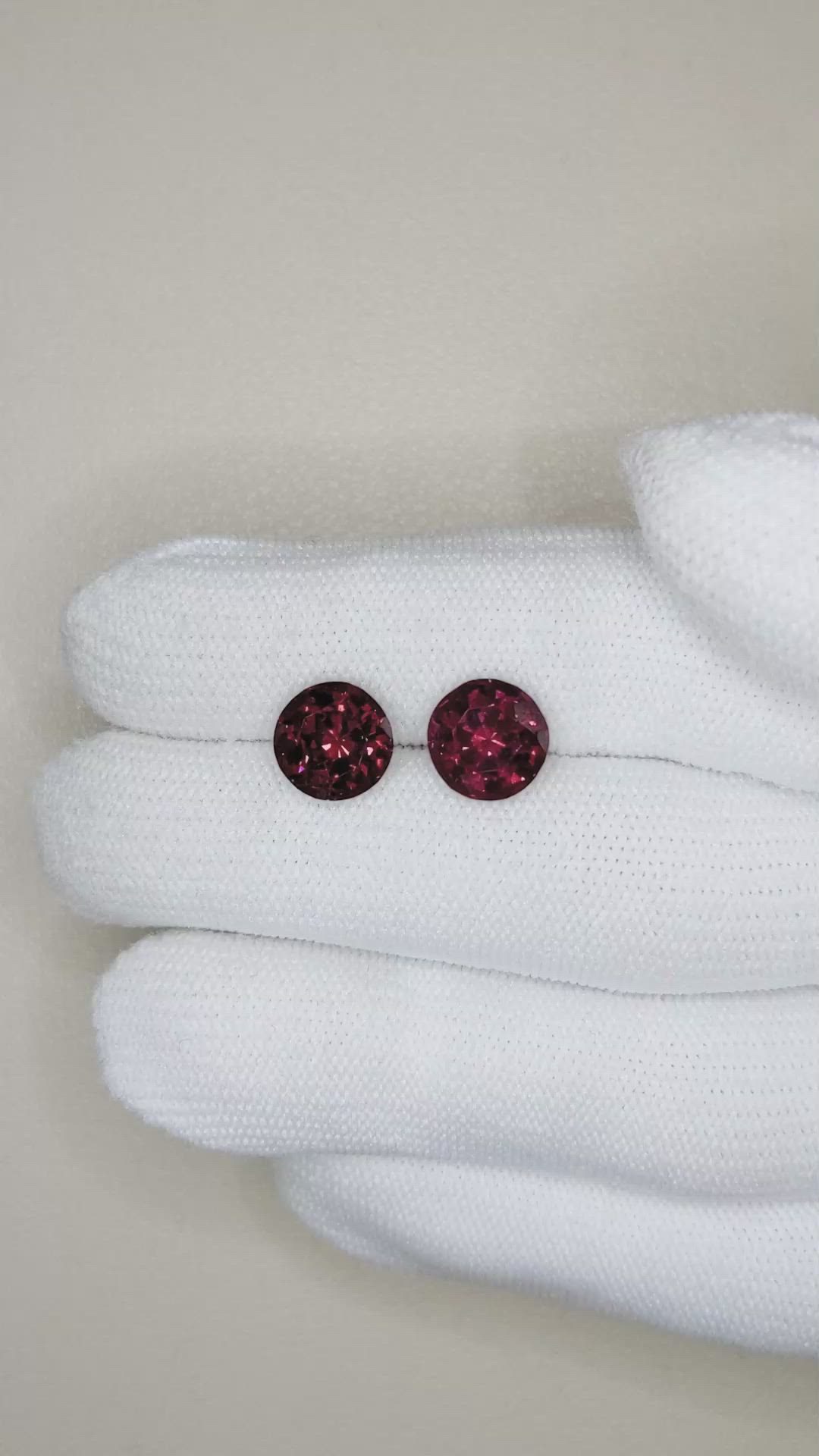
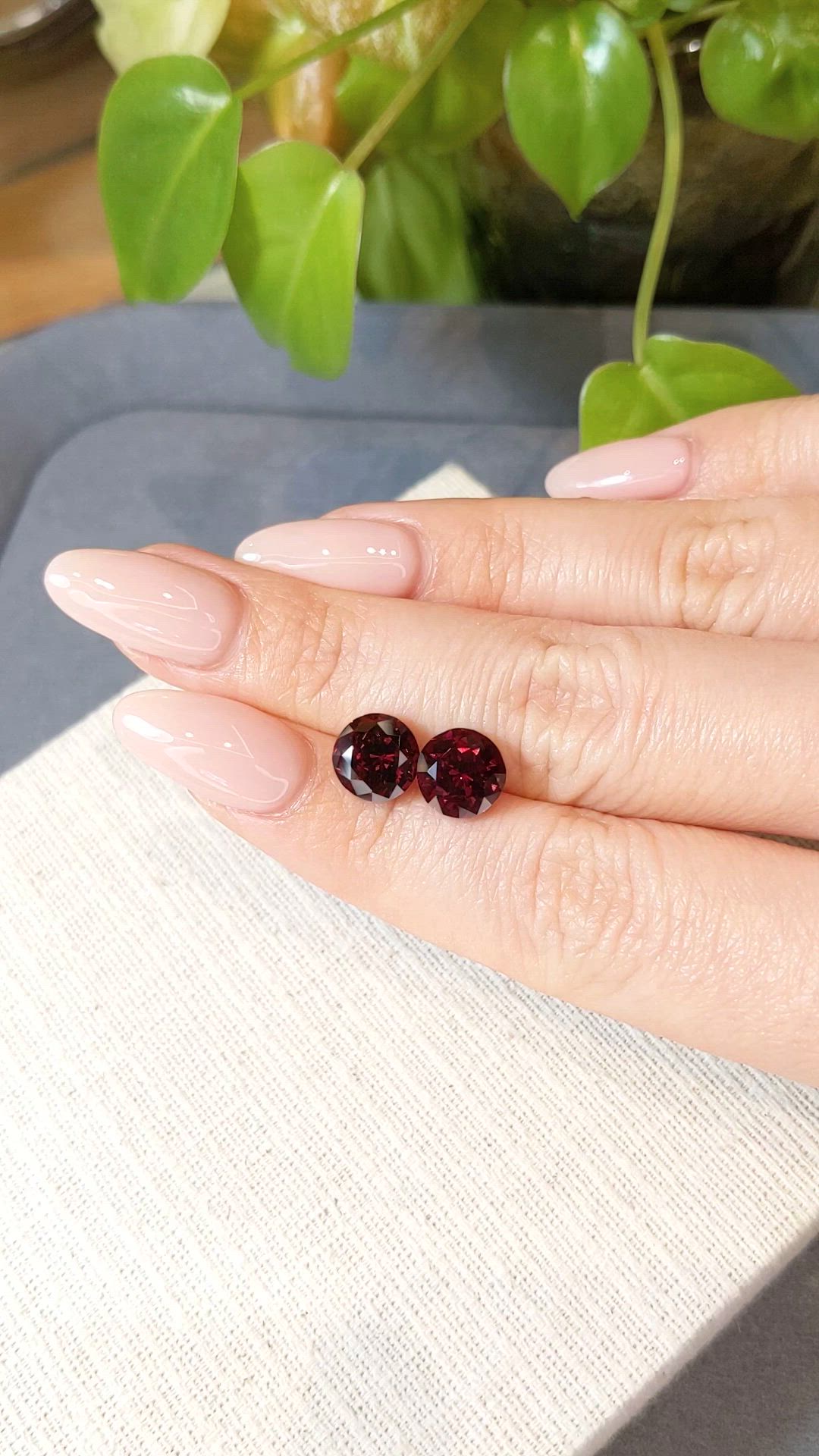
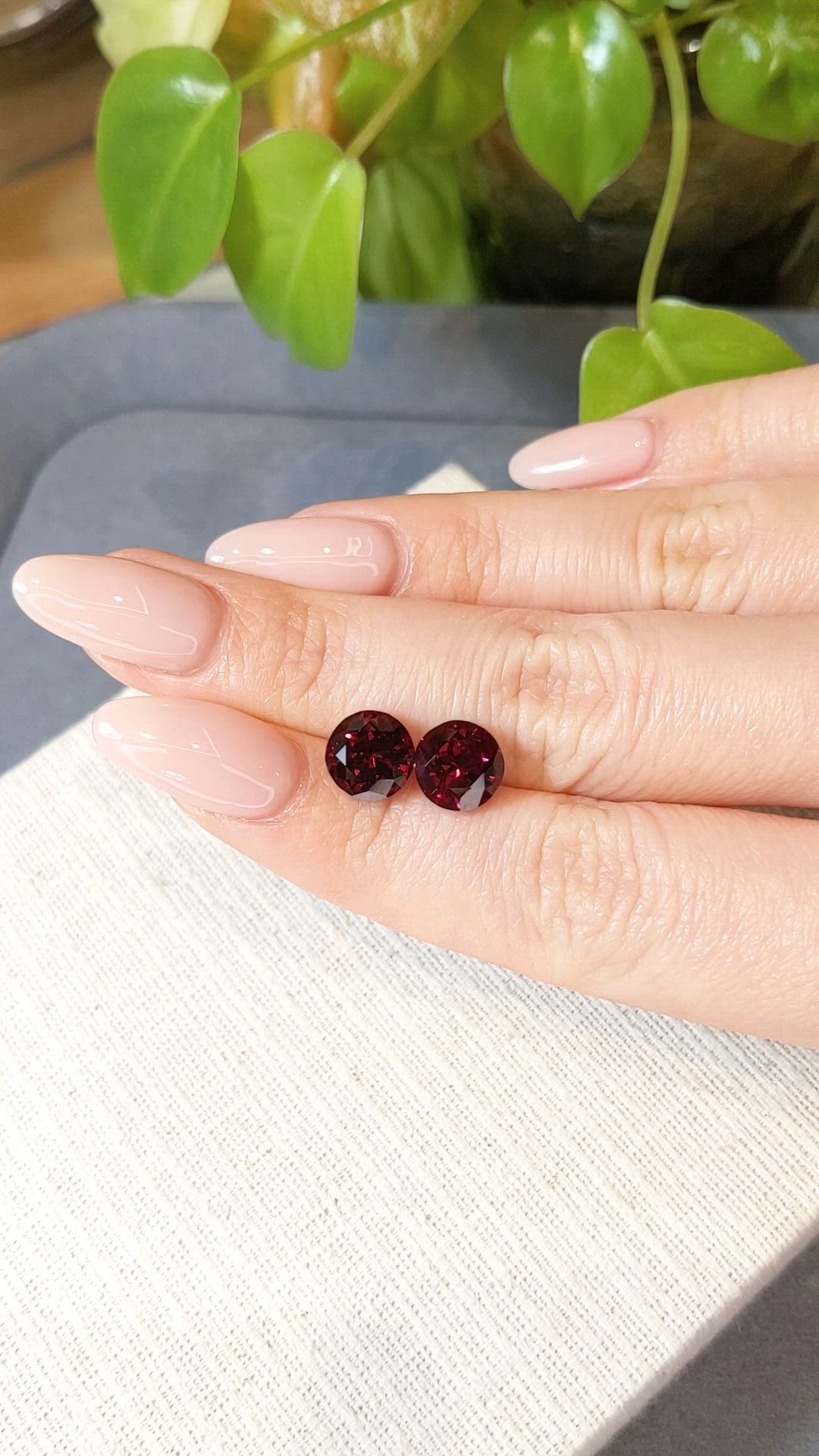
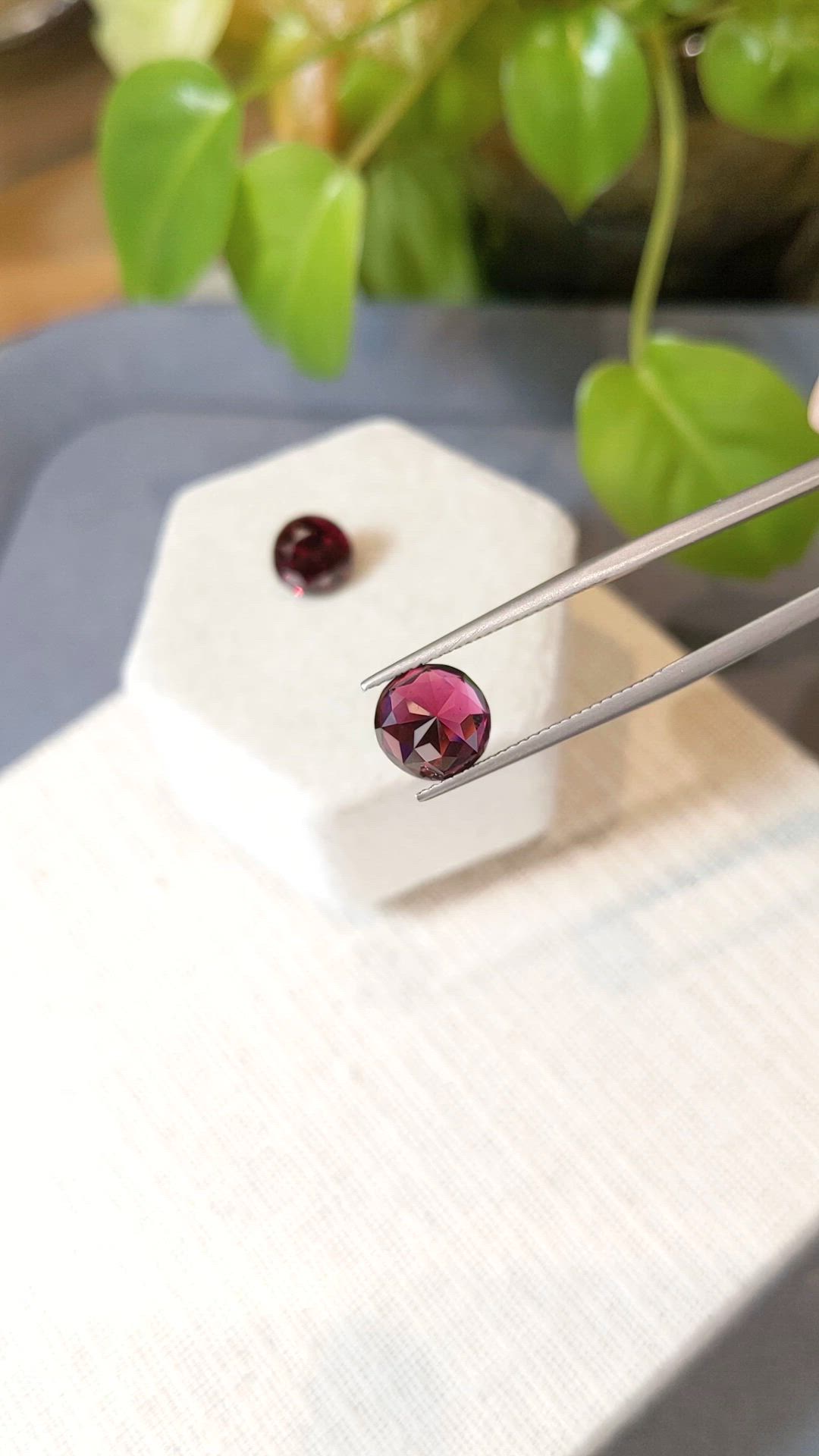
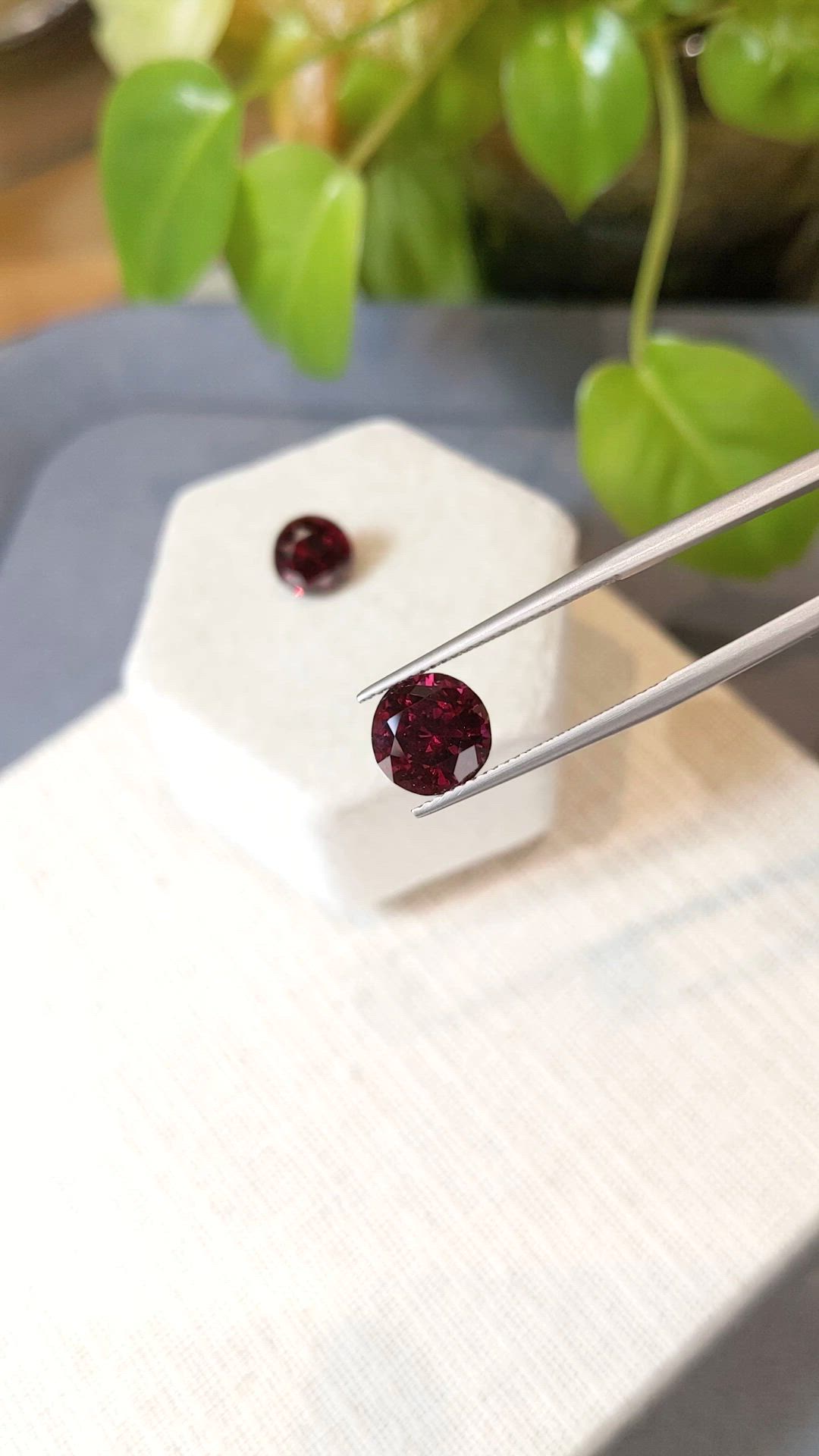






7.14 Ct.Tw.Total Carat Weight Purplish Red Rhodolite Garnet Pair from Tanzania
This pair of stones ships by Oct 8
Stone type: | Rhodolite Garnet | Rhodolite Garnet |
|---|---|---|
Item ID: | PR13822 | PR13822 |
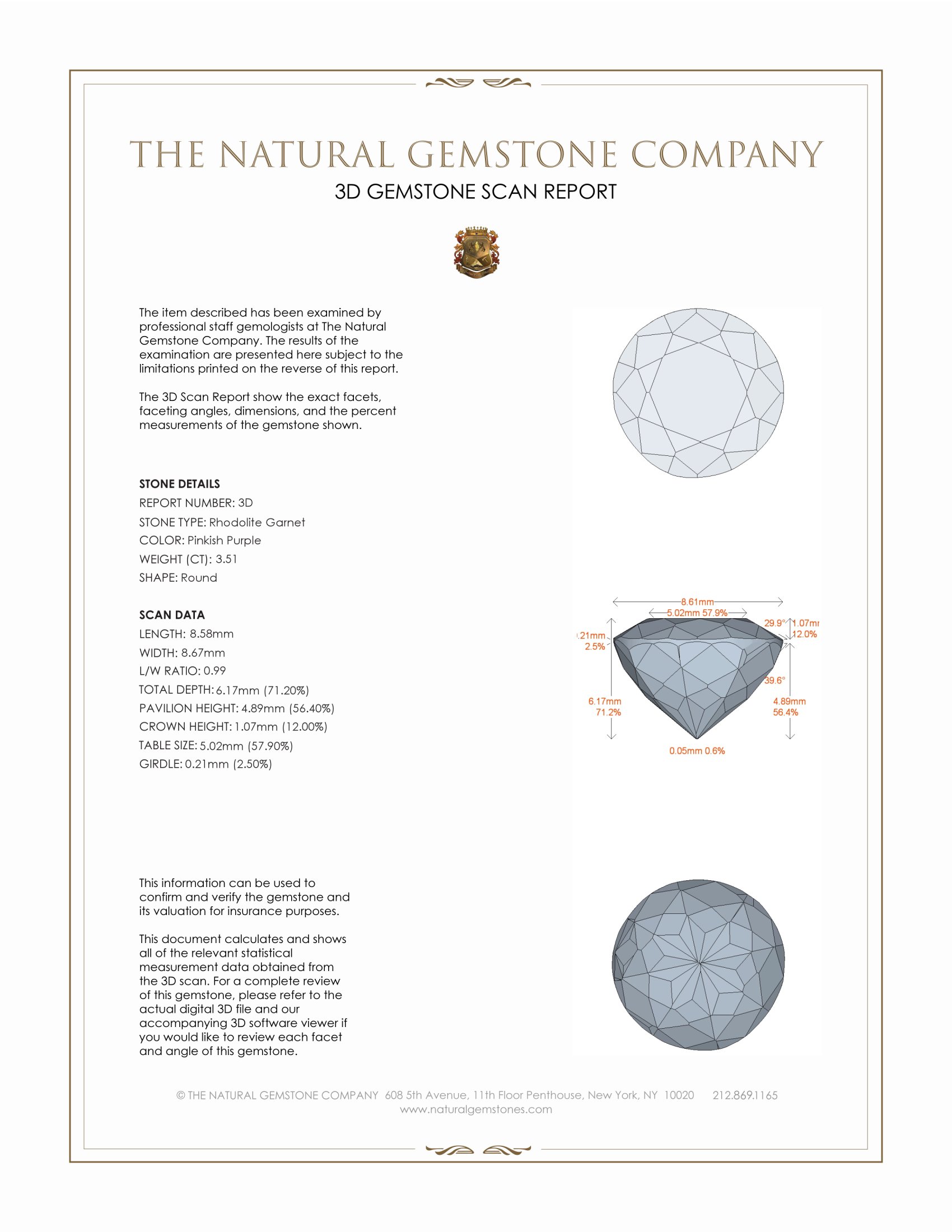
Dimensions (MM): help | Length: 8.58 Width: 8.67 Height: 6.17 | Length: 8.69 Width: 8.68 Height: 6.25 |
Weight: | 3.51 Ct. | 3.63 Ct. |
Color: help | Purplish Red | Pinkish Purple |
Color intensity: help | Intense | Intense |
Clarity: help | Very Very Slightly Included | Very Very Slightly Included |
Shape: help | Round | Round |
Cut: | Mixed Brilliant Cut | Mixed Brilliant Cut |
Cutting style: | Faceted | Faceted |
Enhancements: help | No Enhancement | No Enhancement |
Origin: help | Tanzania | Tanzania |
Per carat price: help | $84 | $84 |
The pair of IGI certified rhodolite garnets offered by The Natural Gemstone Company present a rare combination of color clarity and proportions, suitable for discerning collectors and bespoke jewelers, each stone weighing 3.51 carats and 3.63 carats respectively. Both stones are round in shape and display a purplish red hue that is characteristic of fine rhodolite from Tanzania. The dimensions are closely matched, the first stone measuring 8.58 by 8.67 by 6.17 millimeters, the second measuring 8.69 by 8.68 by 6.25 millimeters, reflecting careful selection and natural consistency. Each gem has been faceted in a mixed brilliant cut, a choice that balances scintillation and depth, and both stones exhibit excellent polish, supporting strong light return and a lively overall appearance. These attributes are documented and verifiable through the accompanying IGI certification, creating a transparent record of origin and quality.
The visual and gemological characteristics of these rhodolites speak to their quality and suitability as enduring gemstones, the clarity grade is very very slightly included when evaluated at eye level, a standard that indicates minimal visible inclusions under normal viewing conditions and supports both aesthetic appeal and durability. The color intensity is described as intense, which denotes a deep, saturated purplish red that remains vivid under a variety of lighting conditions, a desirable trait for pieces intended to be both statement making and versatile. There has been no enhancement to these stones, they are natural and untreated, and their Tanzanian origin contributes to their profile, as that locale is respected for producing rhodolites with a pleasing balance of color and clarity. Mixed brilliant cutting has been applied with attention to symmetry and angles, enhancing optical performance while preserving weight, which is a key consideration for those seeking stones that combine presence with proportion.
Owning this matched pair represents an investment in beauty and craftsmanship, the market for fine colored gemstones values natural untreated material, consistent pairing, and professional documentation, and these rhodolites meet those criteria. Beyond intrinsic aesthetic appeal, the stones embody craftsmanship at multiple stages, from careful rough selection through precision cutting and finishing, to independent laboratory verification, each step contributing to their long term desirability. A matched pair of this size and color intensity lends itself to refined applications, such as a pair of elegant earrings or a coordinated suite of jewelry, and such use enhances the perceived and realized value of the stones, because well matched pairs are inherently more difficult to assemble from natural material than single stones. The combination of weight, intense color, and excellent polish in a natural, unenhanced state supports potential value retention over time, particularly when paired with quality mounting and appropriate care.
Practical considerations for integration into a jewelry collection are straightforward, these stones are well suited to a variety of settings, from classic four prong designs that maximize light exposure, to halo or bezel treatments that offer alternative aesthetic and protective options, and the near identical dimensions and complementary weights facilitate balanced design. Maintenance is uncomplicated, routine professional cleaning and periodic inspections of the setting will preserve beauty and structural stability, and standard gem insurance practices apply for documented, certified stones of this caliber. The Natural Gemstone Company provides the IGI certification and can assist with additional documentation and provenance needs, and the company stands behind the accuracy of the described attributes. In summary, these Tanzanian rhodolite garnets combine natural color clarity and expert finishing, and represent a thoughtful investment in enduring beauty and skilled craftsmanship.


