
- Stone15
- Reports3


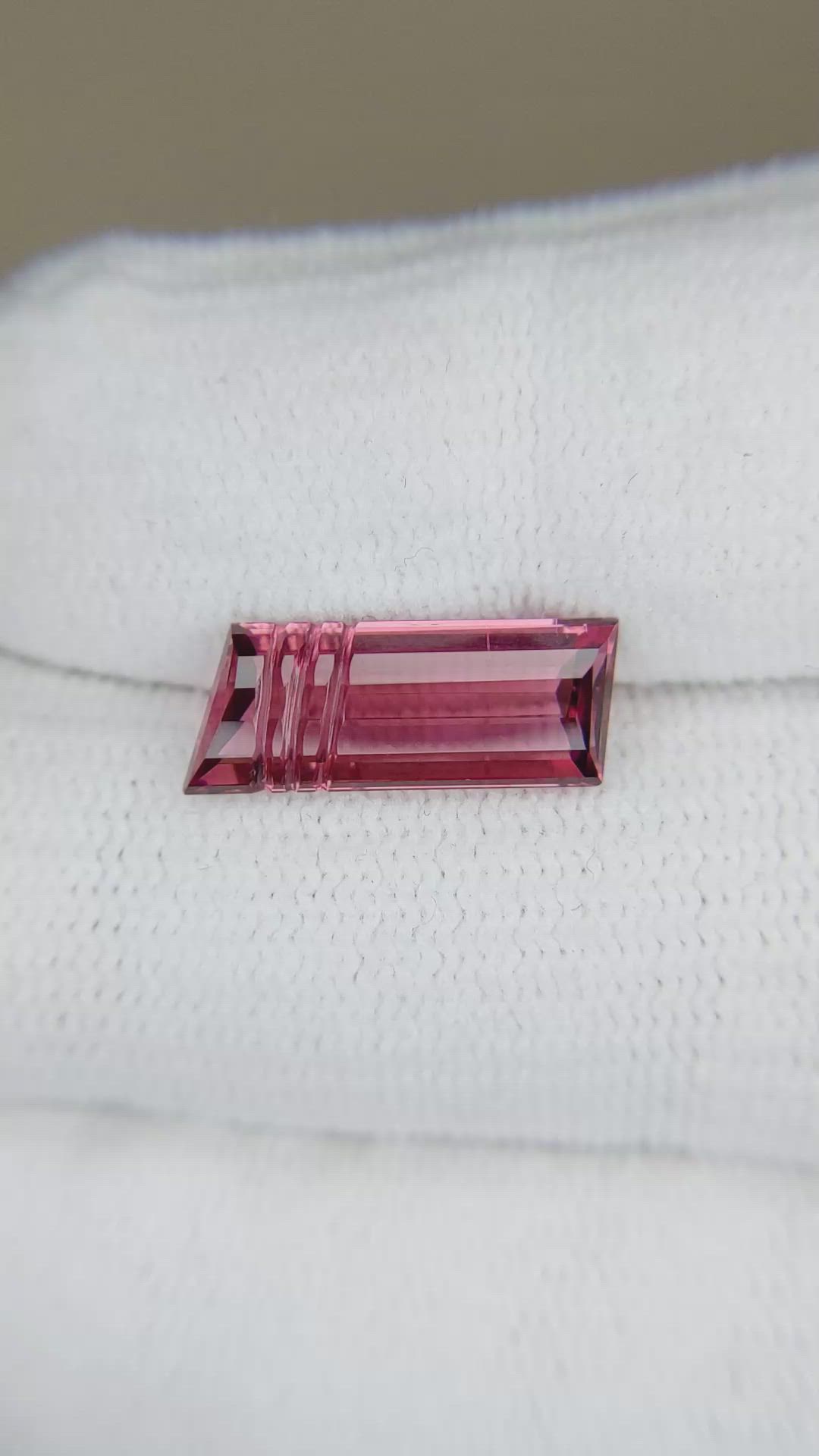
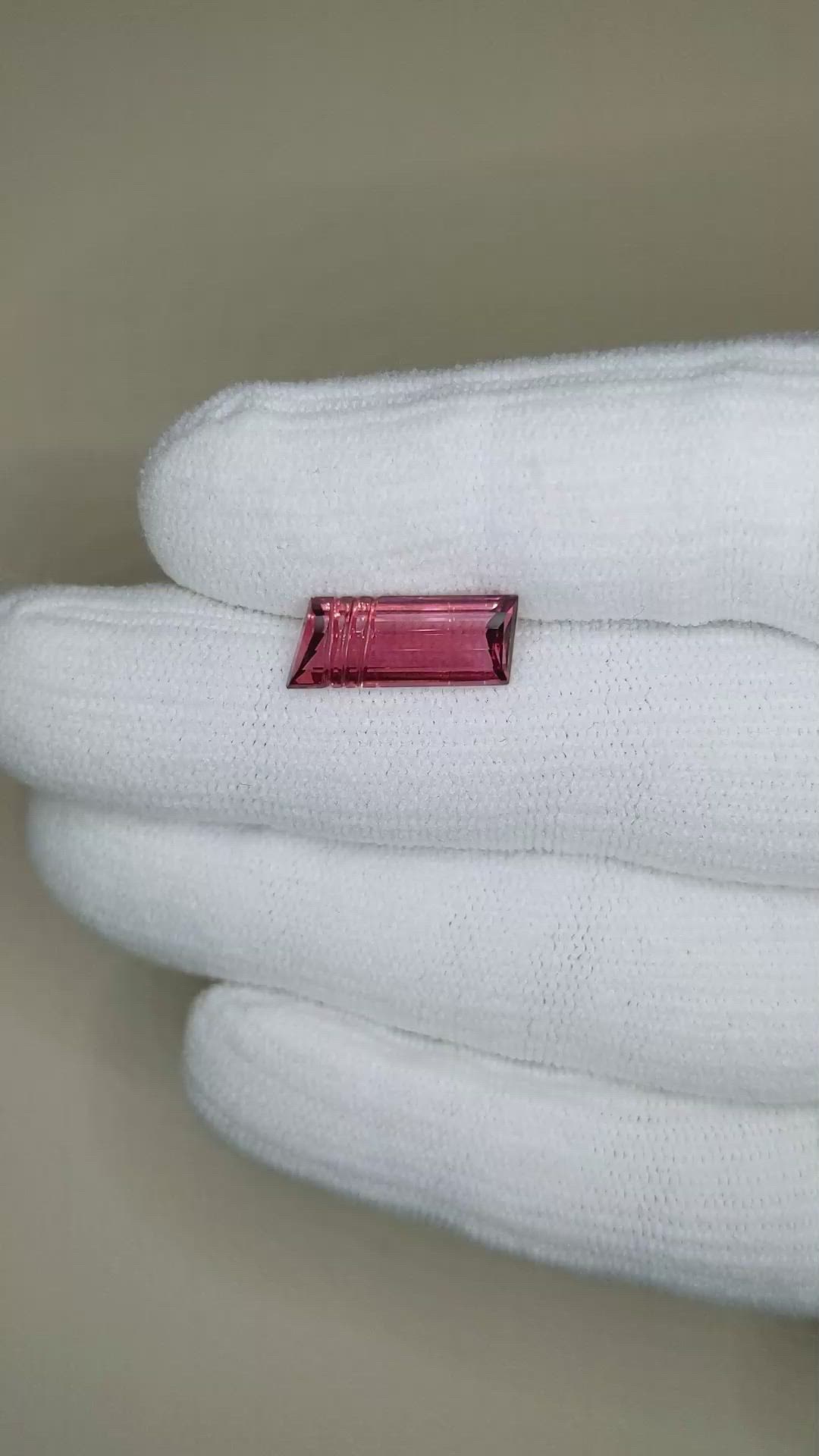
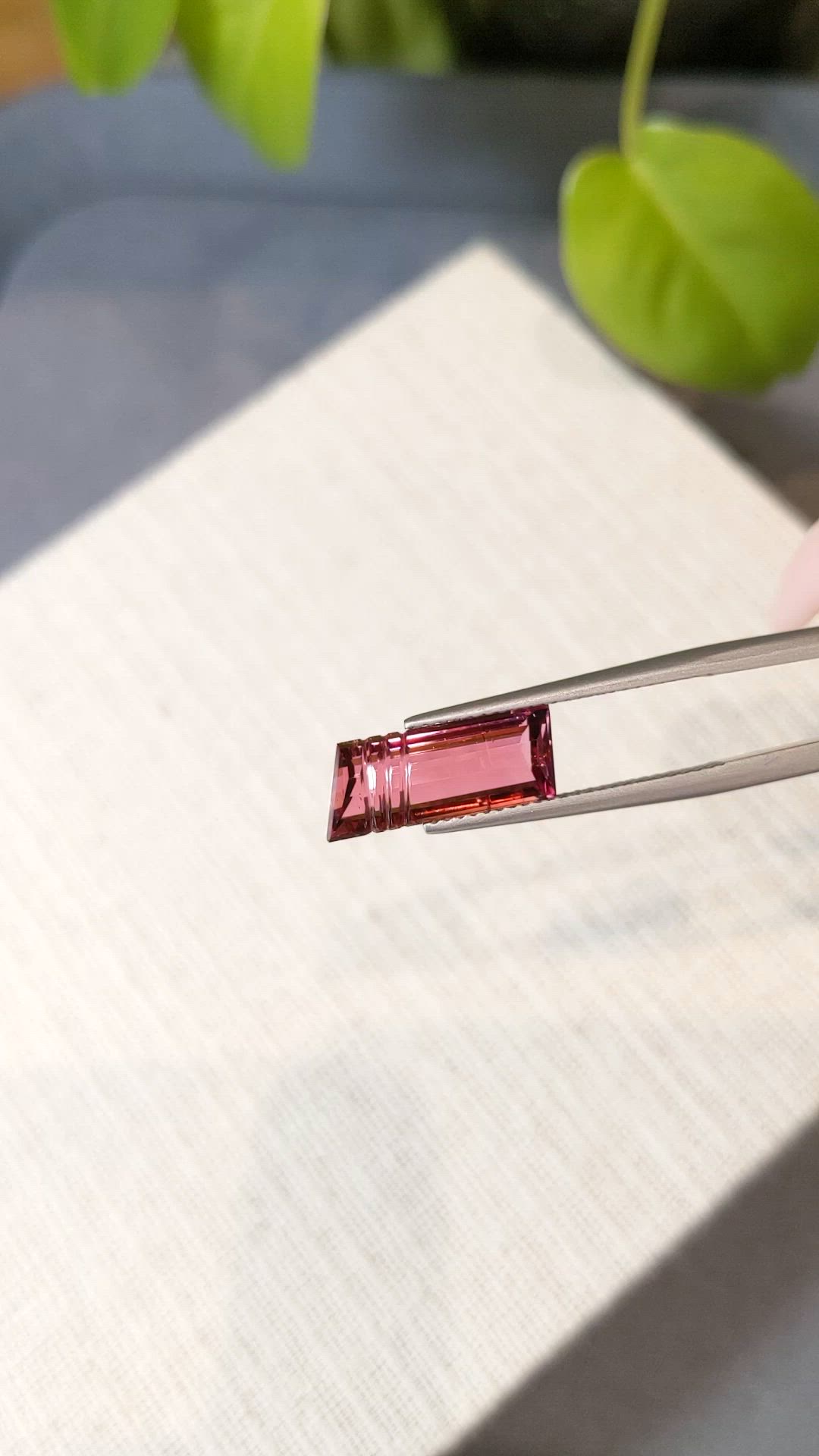
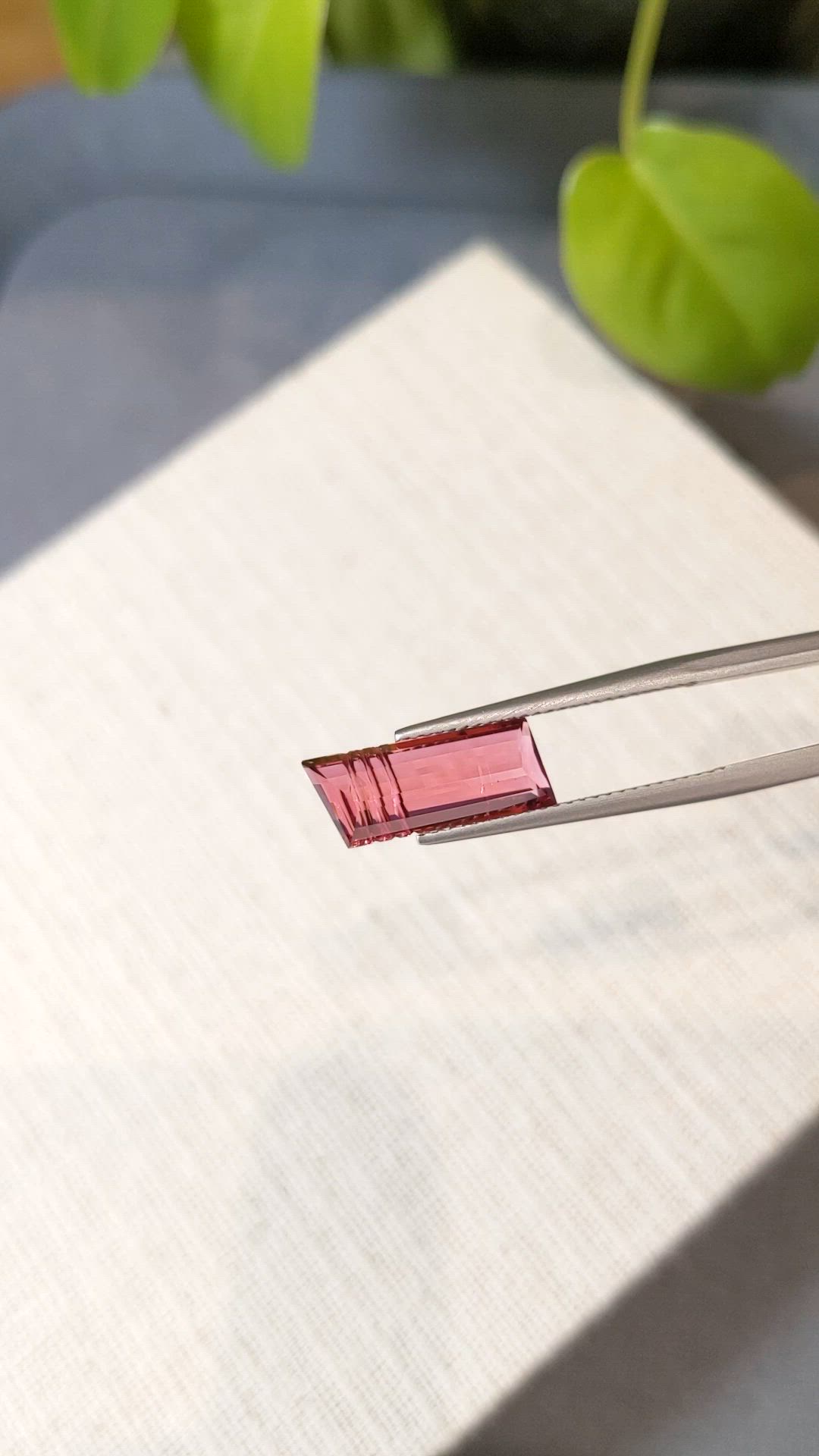
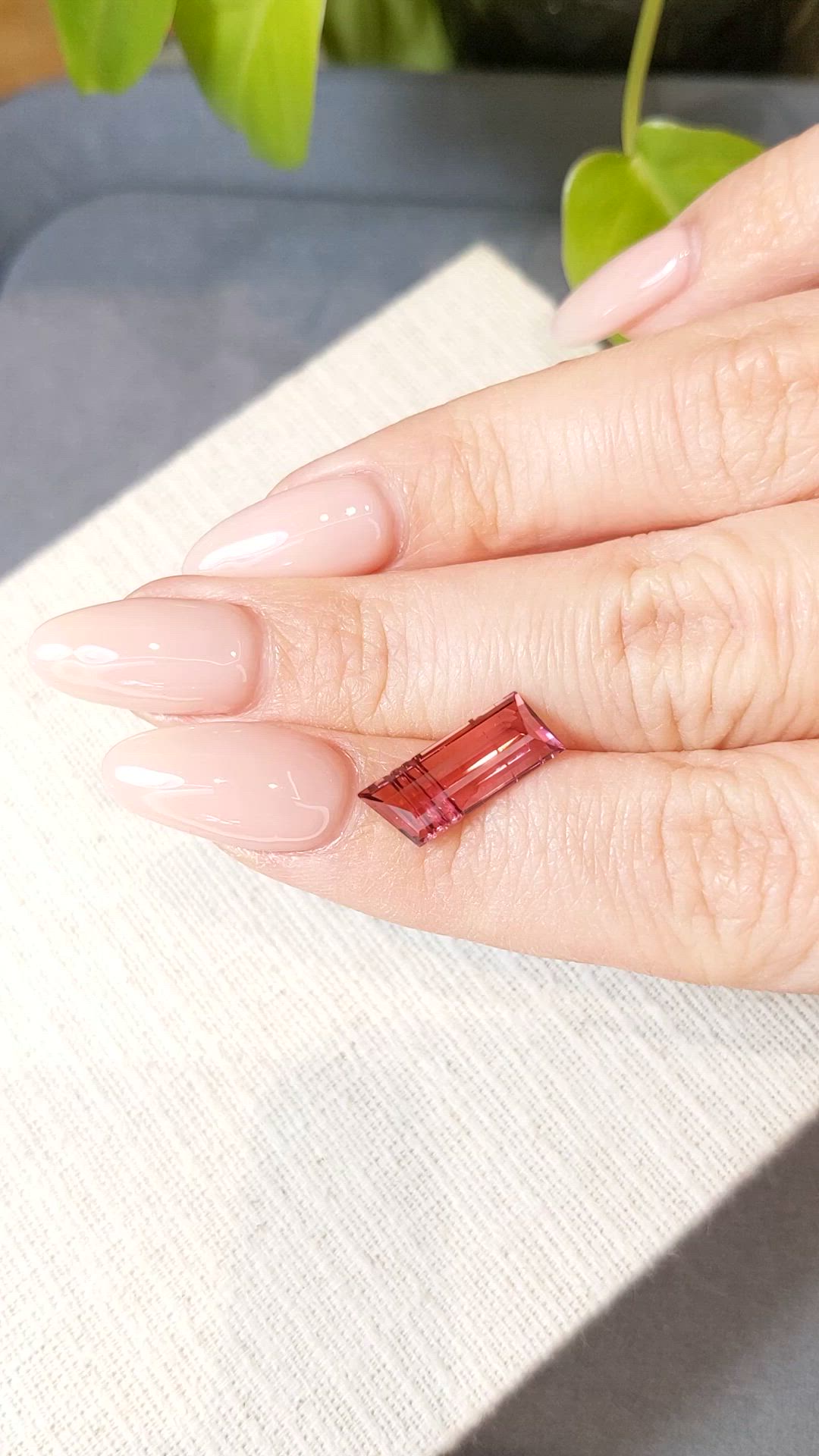



3.26 Ct. Pinkish Red Rubellite Tourmaline from Mozambique
This loose stone is available to ship now
Item ID: | K23459 |
|---|---|
Dimensions (MM): help | Length: 15.44 Width: 11.08 Height: 3.85 |
Weight: | 3.26 Ct. |
Color: help | Pinkish Red |
Color intensity: help | Intense |
Clarity: help | Very Slightly Included |
Shape: help | Fancy |
Cut: | Carving |
Cutting style: | Carving |
Enhancements: help | Heat Treated |
Origin: help | Mozambique |
Per carat price: help | $400 |
This 3.26 carat rubellite tourmaline presented by The Natural Gemstone Company is a finely proportioned fancy shaped stone, measuring 15.44 by 11.08 by 3.85 millimeters, that demonstrates deliberate material selection and expert lapidary execution. The gem has been given a carving cut that preserves a broad, elongated table and a low pavilion depth, producing a sleek profile that emphasizes the stone span and color saturation. Color is described as pinkish red with intense saturation, the hue being concentrated across the central pavilion and table, while the controlled thinness toward the terminations maintains lively transmission rather than excessive darkening. The specimen is heat treated, a common and stable enhancement for tourmaline that enhances color uniformity without obscuring the natural internal features, and the surface finish is of excellent polish, exhibiting clean facet junctions and a glass like luster that optimizes light return from the elongated geometry.
In terms of facet architecture and craftsmanship, the carving cut on this piece employs a combination of broad, parallel facet planes along the crown and elongated step like facets on the pavilion, with a trio of shallow, deliberately carved grooves near one terminus that serve both as a decorative motif and as a lapidary signature. These grooves add micro contrast when the stone is rotated under light, creating ribbon like flashes that enhance apparent movement without disrupting the overall color field. The proportions, with a 3.85 millimeter thickness relative to the length and width, are carefully balanced to maximize color intensity while preserving sufficient material for strong light return typical of gem quality rubellite. From an optical properties standpoint, rubellite tourmaline typically exhibits measurable pleochroism, and this piece displays distinct color separation on different viewing axes, a trait that lapidaries exploit when orienting the table to the crystallographic axis to present the most saturated face up color. Expected refractive index values for tourmaline fall in the mid 1.62 to 1.64 range with moderate birefringence, and the carving and polish here are executed to minimize optical disturbance from facet junctions, ensuring that the stone reads as a unified, intensely colored field to the unaided eye.
Clarity and internal features in this piece should be regarded as characterizing fingerprints rather than flaws, the stone being graded as very slightly included at eye level, indicating inclusions are minimal and do not materially detract from face up appearance or structural integrity. Under magnification the internal features present as fine, planar growth indicators, sporadic needle like prisms, and occasional two phase inclusions aligned parallel to the crystallographic c axis, along with minor healed fissures that are typical of natural tourmaline growth and which in many instances create attractive light scattering and subtle chatoyance. These inclusions are diagnostic, they tie the material to natural crystallization processes and to Mozambique provenance, and they permit confident identification when compared to the internal signatures of material from other localities. For practical handling and setting, the heat treated nature and the carving cut recommend secure bezel or stepped prong settings that protect the low pavilion edges and the carved grooves, while allowing the elongated table to present its saturated hue. The Natural Gemstone Company stands behind the material and its description, offering detailed photographic documentation and condition reporting, and we will gladly advise on setting orientations and mounting techniques to preserve the optical performance and unique inclusion pattern that make this rubellite a distinct and collectible gem.


