
- Stone12
- Reports3


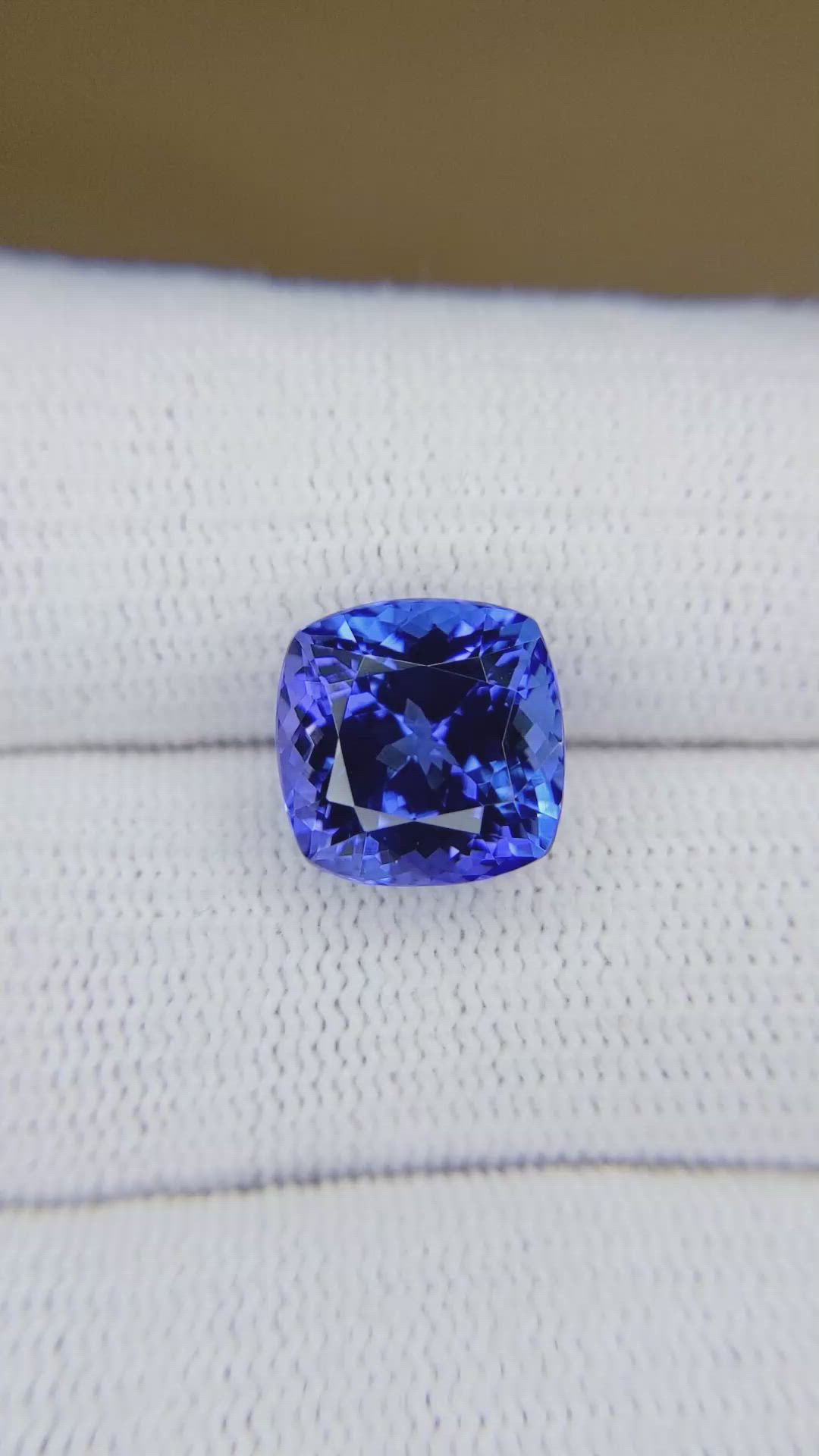
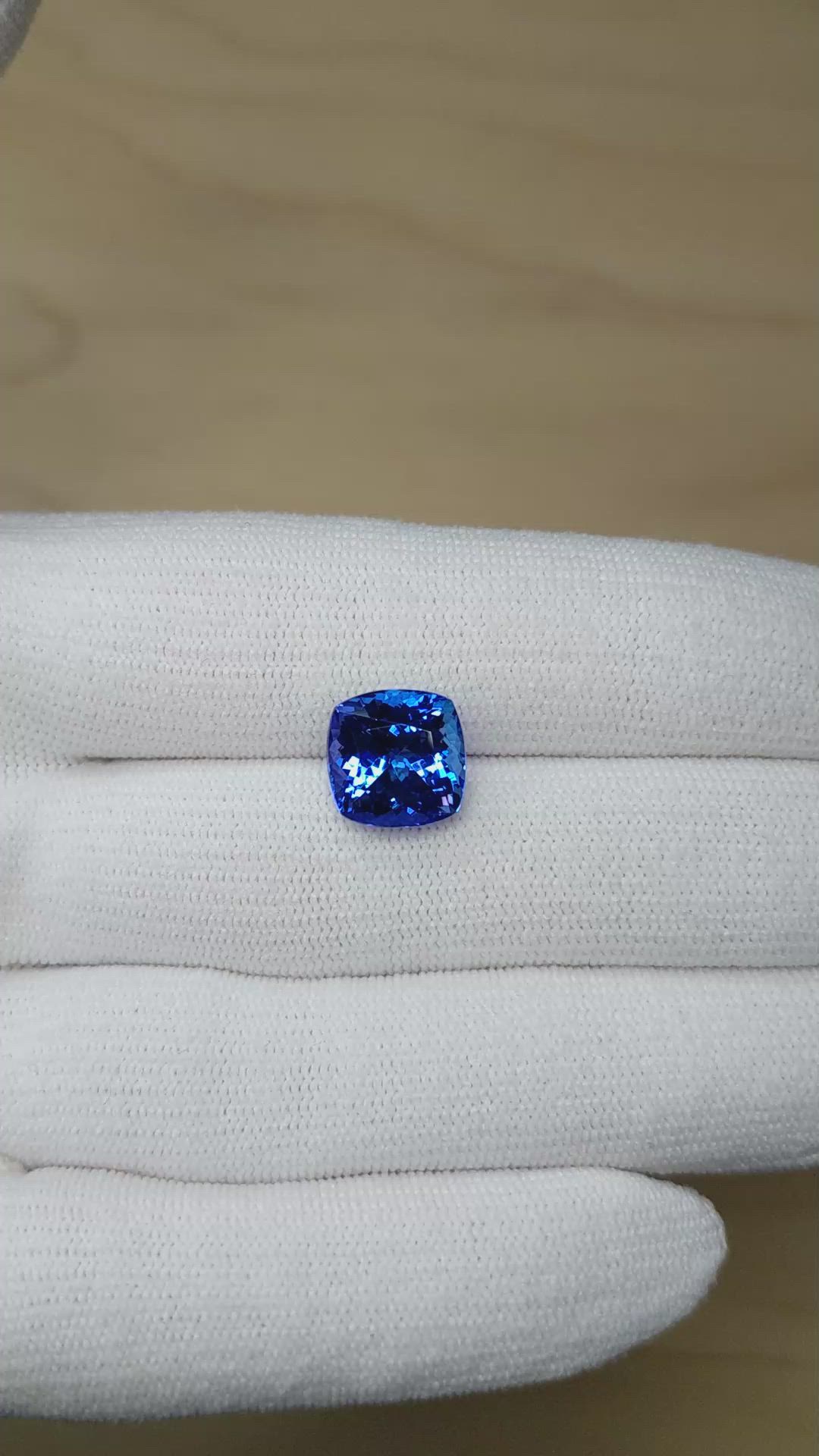
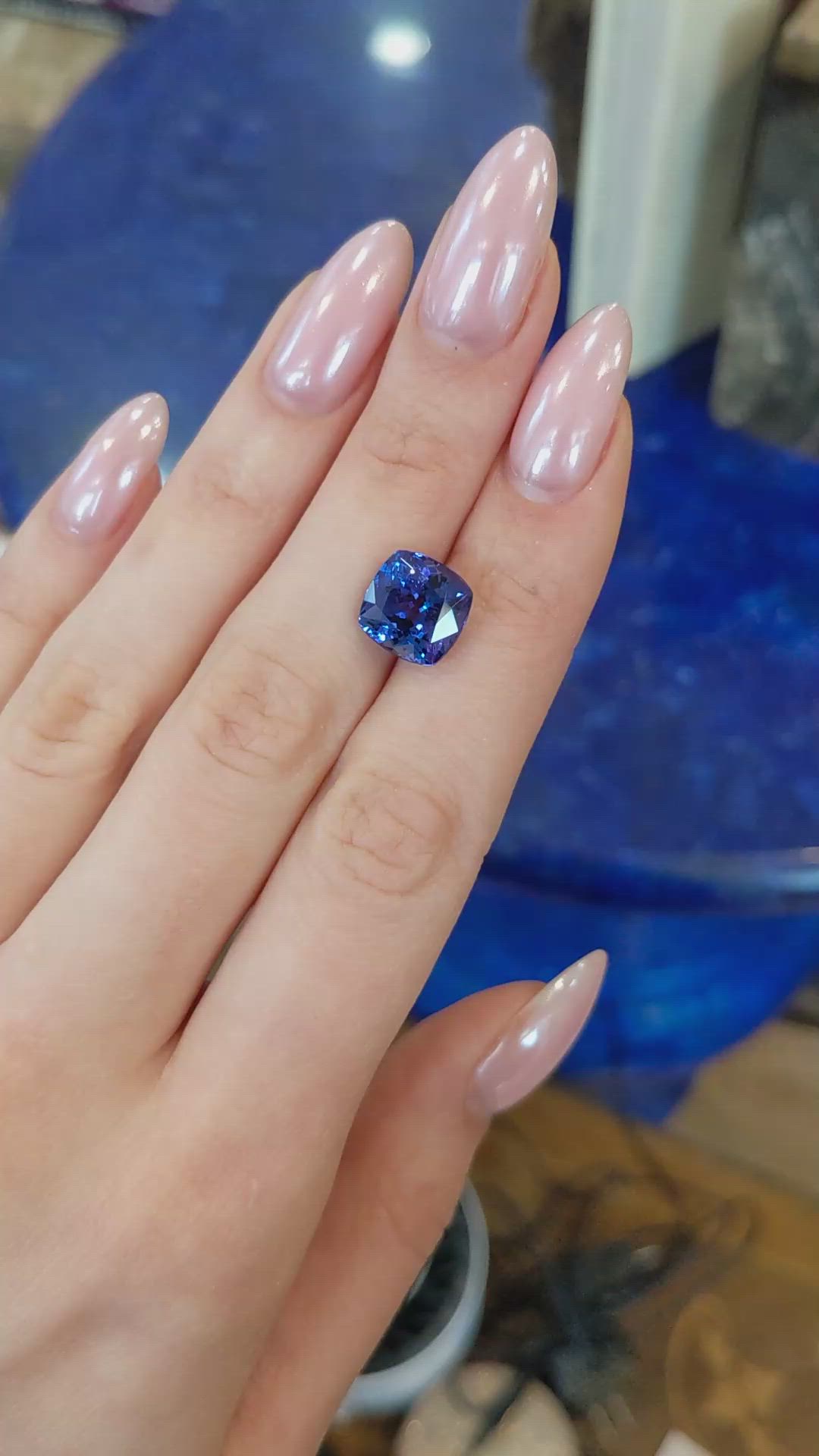




6.39 Ct. Blue Tanzanite from Tanzania
This loose stone is available to ship now
Item ID: | K23909 |
|---|---|
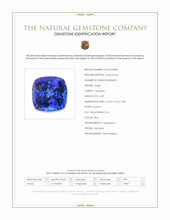
Dimensions (MM): help | Length: 10.43 Width: 10.43 Height: 7.83 |
Weight: | 6.39 Ct. |
Color: help | Blue |
Color intensity: help | Vivid |
Clarity: help | Very Very Slightly Included |
Shape: help | Cushion |
Cut: | Mixed Brilliant Cut |
Cutting style: | Faceted |
Enhancements: help | Heat Treated |
Origin: help | Tanzania |
Per carat price: help | $540 |
This 6.39 carat blue tanzanite from Tanzania in inventory at The Natural Gemstone Company is a superb example of material that combines vivid color intensity with precision cutting and exceptional polish. The stone is fashioned in a cushion shape, measuring 10.43 by 10.43 by 7.83 millimeters, with a mixed brilliant cut that harmonizes a brilliant facet arrangement on the crown and a modified pavilion to concentrate color. The clarity grade is very very slightly included, evaluated at eye level, which for this piece translates to exceptional apparent clarity and only minute internal features visible with magnification. The polish is graded excellent across all facets, the girdle is well proportioned and faceting junctions are tight, yielding strong return of light and crisp facet reflections. This tanzanite has undergone professional heat treatment to stabilize and enhance the blue hue, a standard and controlled enhancement for material from this region, and the result is a vivid saturation that reads as a deep royal blue with subtle violet overtones when viewed face up.
The narrative of how this specimen was created begins deep within the crust of what is now northeast Tanzania, where prolonged regional metamorphism and localized hydrothermal activity reworked preexisting rocks millions of years ago. Under elevated temperatures and pressures, aluminum silicate host minerals recrystallized, and trace vanadium became incorporated into the zoisite crystal structure, imparting the distinctive blue to violet hues that define tanzanite. Convection of silica rich fluids and slow crystallization produced well formed prismatic crystals with fine atomic ordering, and subsequent tectonic uplift and erosion exposed pockets of zoisite along shear zones in the Merelani Hills. The original crystal habit and internal lattice orientation are responsible for the pronounced trichroism of tanzanite, a property that presents distinct blue, violet and occasionally brownish pleochroic colors along different crystallographic axes. Precise heat treatment converts the brownish and purple components to the desirable blue and violet tones by altering the valence states of trace elements, and this stone displays the optimized balance of hue, tone and saturation that results from careful, controlled heating.
The cutter of this cushion mixed brilliant made deliberate technical choices to maximize both color and light performance. The crown employs a brilliant style facet scheme to produce scintillation and lively dispersion, while the pavilion uses a modified arrangement that deepens color and reduces windowing, a common issue in strongly pleochroic material. The finished table is dimensioned to deliver favorable face up color without sacrificing brilliance, and the pavilion depth of approximately seventy five percent provides the color concentration collectors seek, at the cost of slightly less table brightness under some lighting conditions. Facet alignment and symmetry were executed to gemological tolerance, enhancing internal light return and ensuring the vivid color reads evenly across the table and crown. For mounting, an open back or a low profile gallery is recommended when the goal is to transmit maximum light through the stone, while closed back settings will increase perceived depth of color, a useful design choice for solitaire pendants and rings intended to emphasize saturation. As presented by The Natural Gemstone Company, this 6.39 carat cushion tanzanite represents a synthesis of geological rarity, gemological integrity, and masterful lapidary technique, and it will respond well to certification and custom setting by experienced jewelers who understand how to showcase the stone geometry and pleochroic behavior.


