
- Stone13
- Reports2




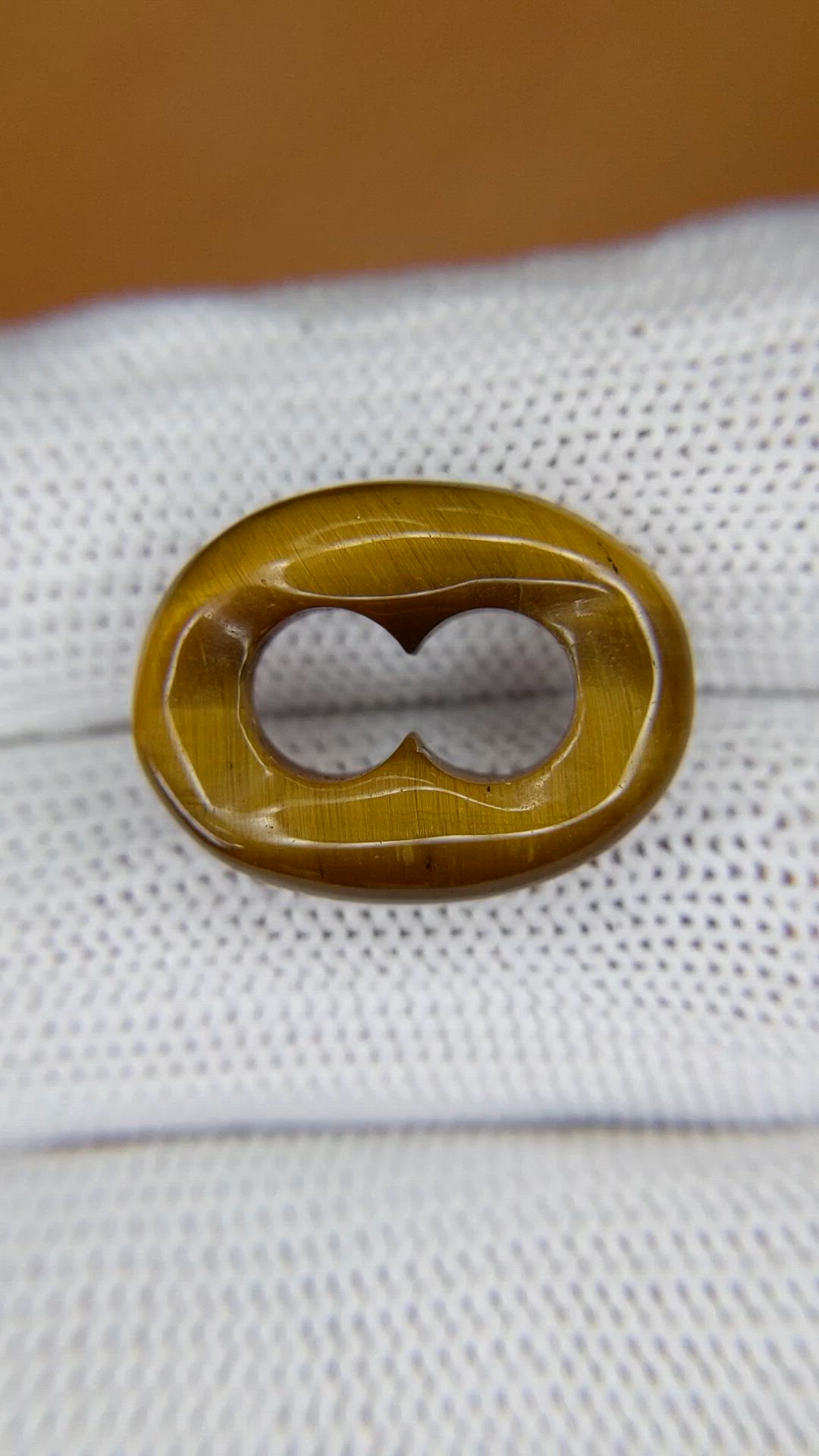
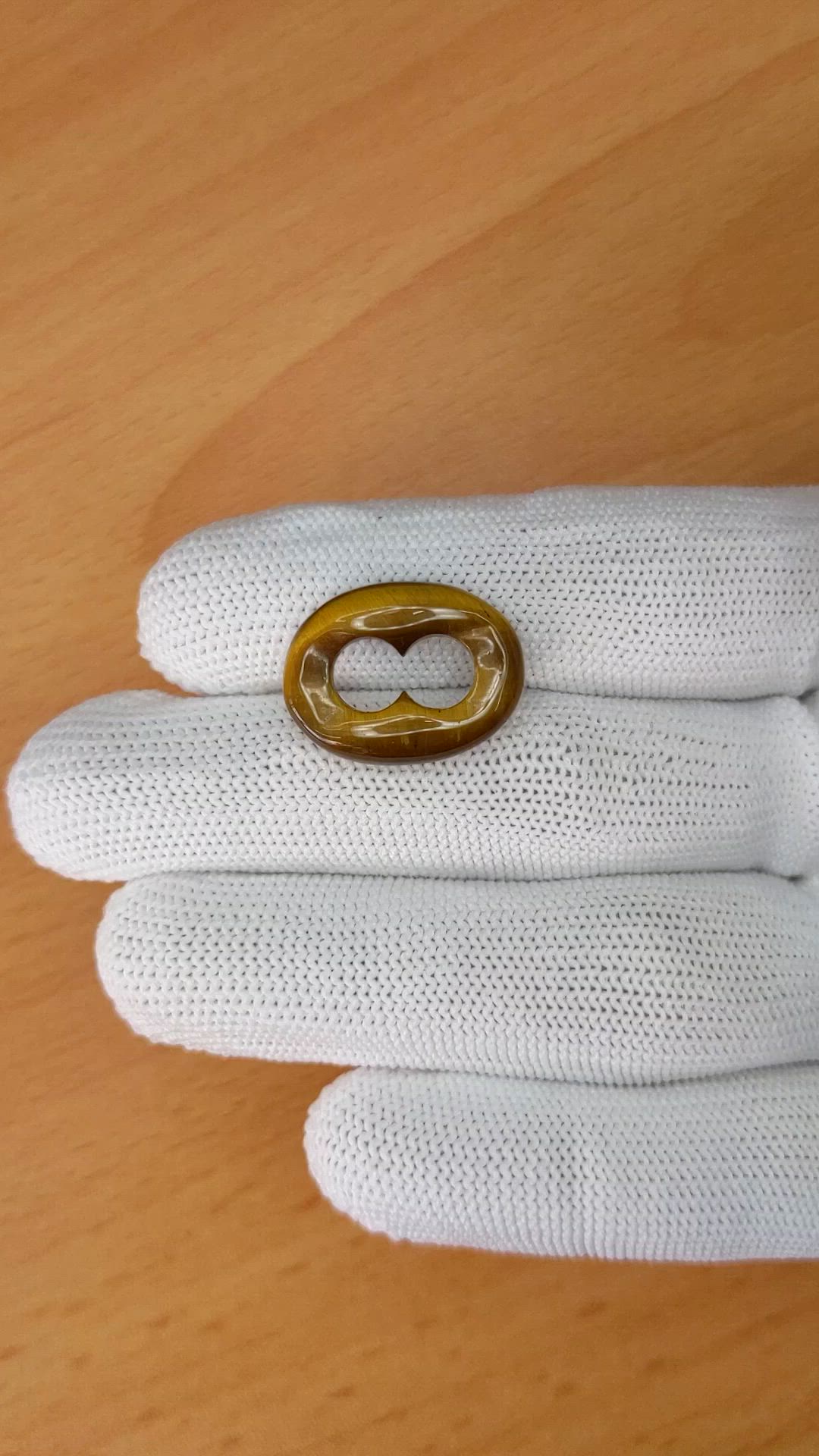

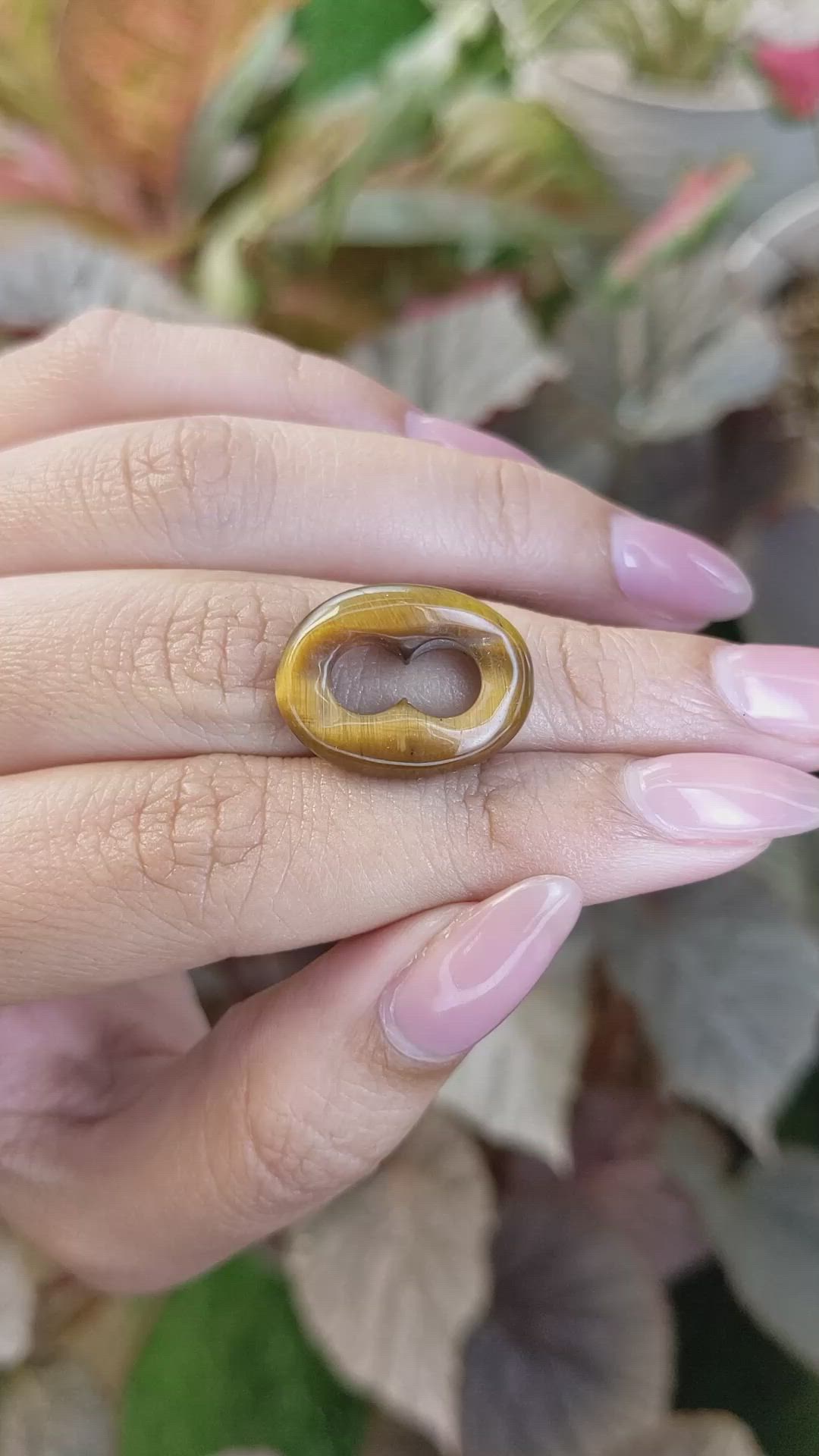
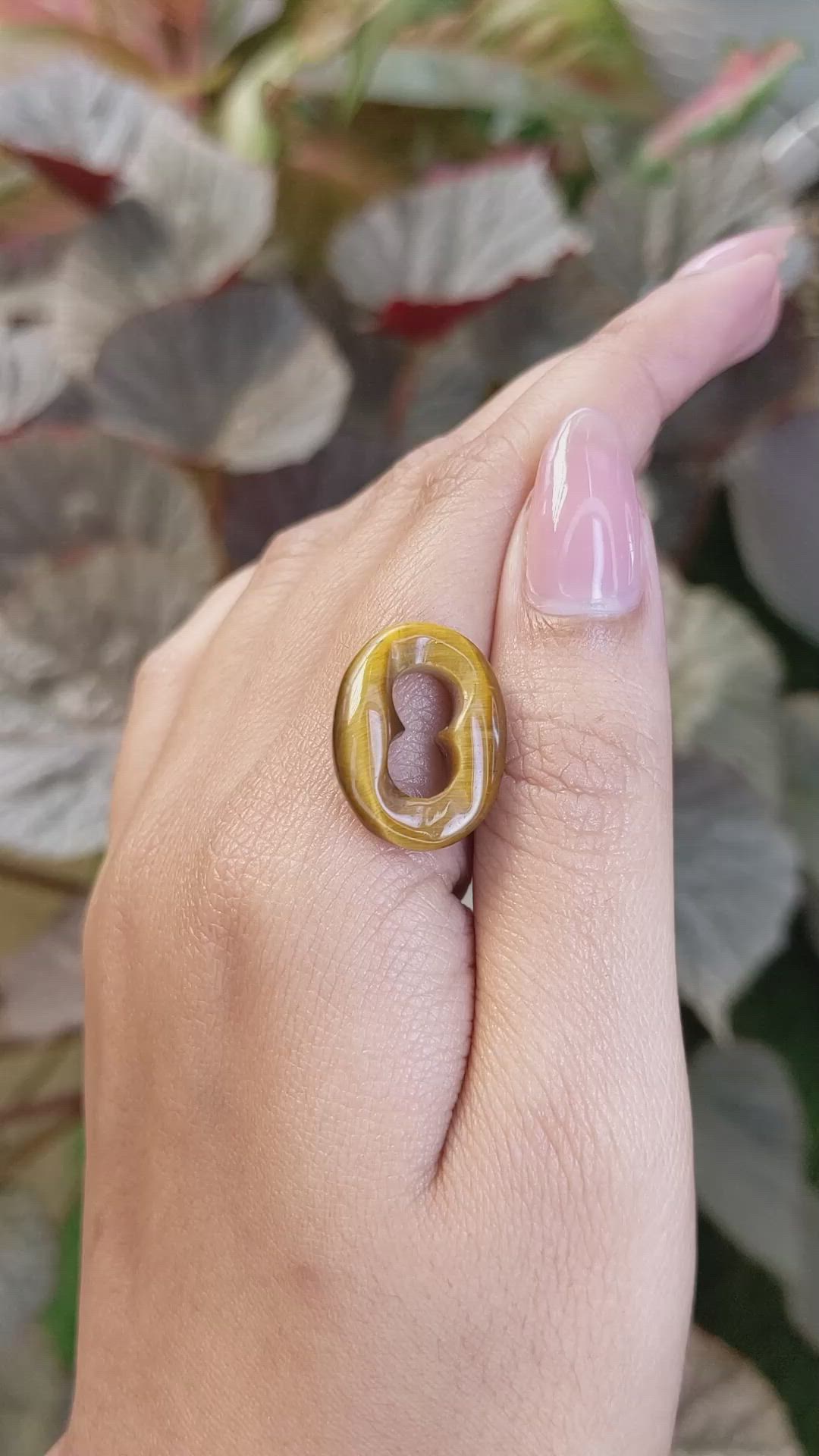
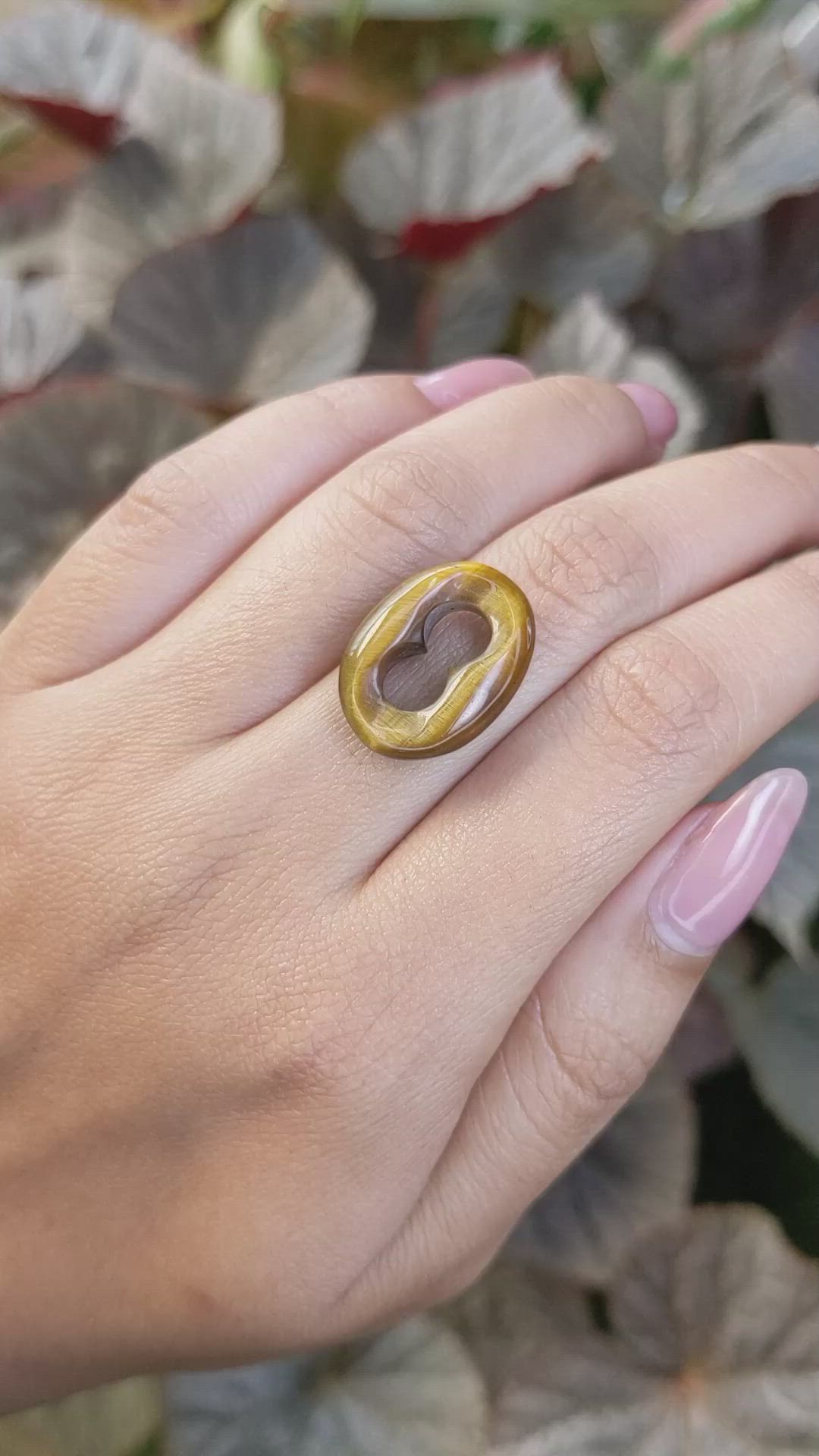


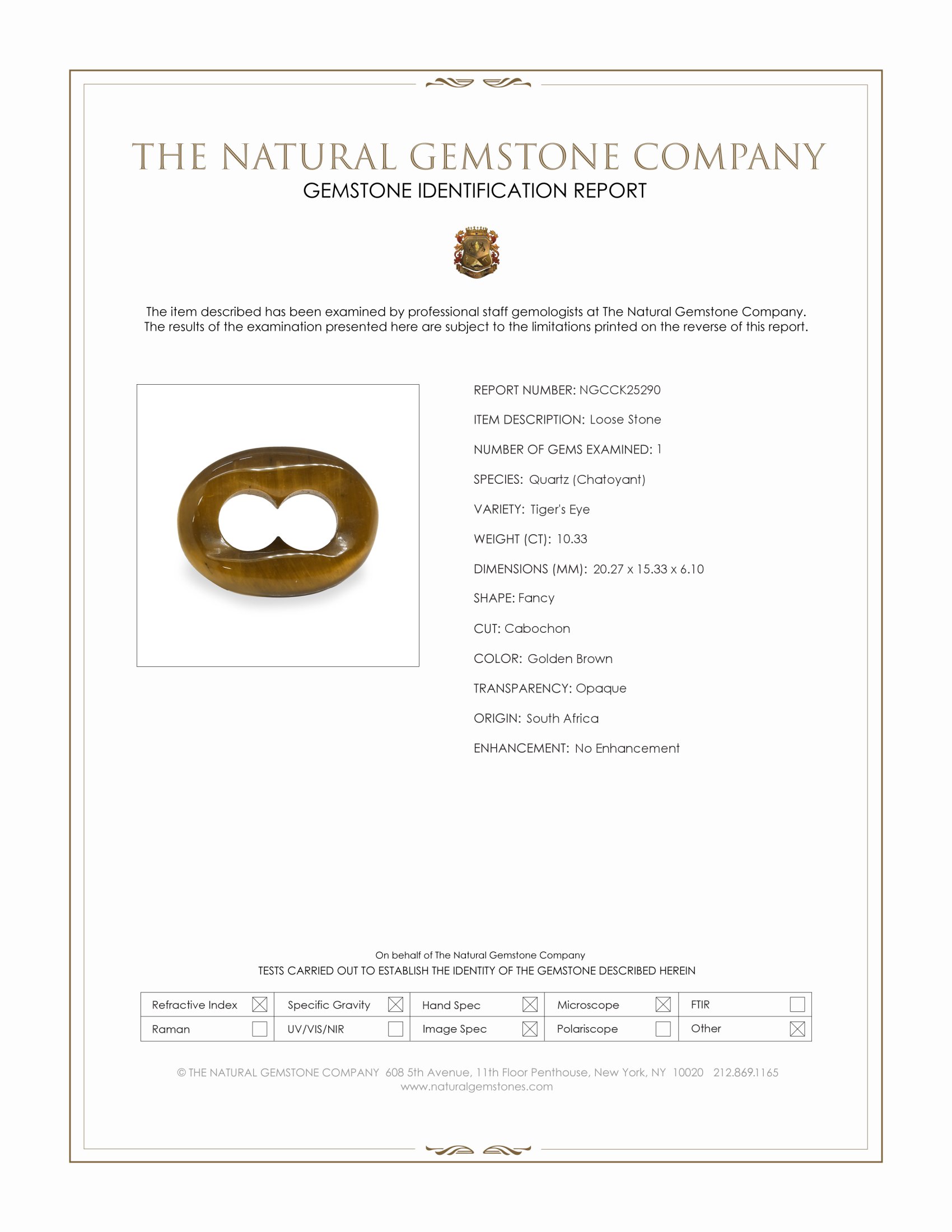

10.33 Ct. Cabochon Tiger's Eye from South Africa
This loose stone is available to ship now
Item ID: | K25290 |
|---|---|
Dimensions (MM): help | Length: 20.27 Width: 15.33 Height: 6.1 |
Weight: | 10.33 Ct. |
Color: help | Golden Brown |
Color intensity: help | N/A |
Clarity: help | Opaque |
Shape: help | Fancy |
Cut: | Cabochon |
Cutting style: | Cabochon |
Enhancements: help | No Enhancement |
Origin: help | South Africa |
Per carat price: help | $10 |
This specimen is a single, opaque, golden brown tiger eye, weighing 10.33 carats, presented in a thoughtful cabochon cut and fashioned into a refined fancy shape. The polished surface displays a continuous band of chatoyant light that moves across the dome when the stone is tilted, reflecting the oriented fibrous structure that defines tiger eye. The finished dimensions are 20.27 x 15.33 x 6.10 mm, the clarity grade is recorded as opaque evaluated at eye level, the color intensity is not applicable, and the surface finish is an excellent polish. There has been no enhancement or treatment to alter color or structure, and the material is sourced from South Africa. The Natural Gemstone Company documents these attributes to support accurate selection and to provide straightforward information for gemstone cutters and jewelry designers.
The formation of this tiger eye began millions of years ago within silica rich, iron bearing sedimentary layers where metamorphic influence and slow chemical processes converged to produce a unique pseudomorph. Original fibrous crocidolite, a blue asbestos variety, lay embedded within chert bearing host rocks. Over prolonged geological time, silica bearing fluids percolated through fractures and pore spaces, gradually replacing the crocidolite fibers molecule by molecule while preserving their parallel, fibrous orientation. Simultaneously, iron components associated with the original fibers oxidized and diffused into the adjacent silica matrix, imparting the warm golden brown color that is visible today. The retained parallel microstructure is responsible for the chatoyancy. Light reflecting from the aligned, needle like silica structures produces the narrow band of shimmering light that appears to glide across the surface, a phenomenon that becomes most apparent when the stone is shaped as a cabochon. Regional metamorphism and low grade thermal events in the South African deposits provided sufficient heat and pressure to facilitate silica replacement and subtle recrystallization, while avoiding complete breakdown of the fibrous template. The net result, after millions of years of fluid flow, mineral exchange, and diagenetic stabilization, is a dense, stable, and visually compelling tiger eye nodular or vein material suitable for lapidary work.
The present cabochon exemplifies how careful cutting and polishing bring geological history into an object suitable for practical use. The cabochon profile preserves the directional chatoyancy and emphasizes the golden to brown tonal range resulting from iron staining, while the excellent polish minimizes surface scattering and enhances the banded reflection. The weight and dimensions make this piece appropriate as a focal element for a ring or a bespoke pendant, with internal proportions that allow secure bezel or prong mounting without compromising the chatoyant effect. Because there are no enhancements, the material will respond predictably to standard jewelry care, and its hardness and density are consistent with stable daily wear when set appropriately. The Natural Gemstone Company includes documented origin and treatment status to assist in appraisal and setting decisions, and to provide provenance for collectors who value natural formation processes. This tiger eye represents a direct link to the deep time geological processes of South Africa, a preserved record of mineral replacement and oxidation that has been shaped by human craft into a polished gem with consistent optical character.


