
- Pair13
- Reports4


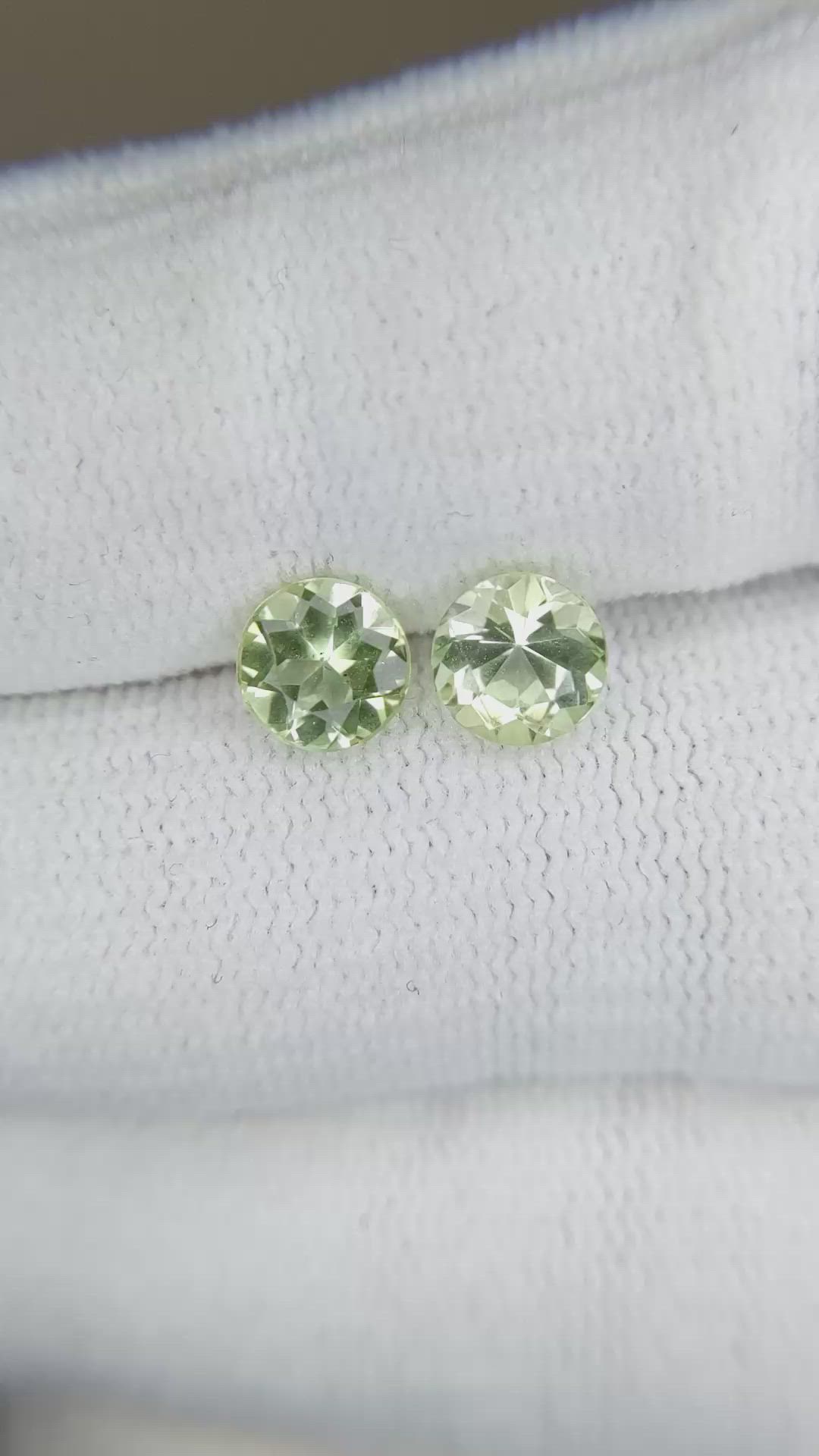
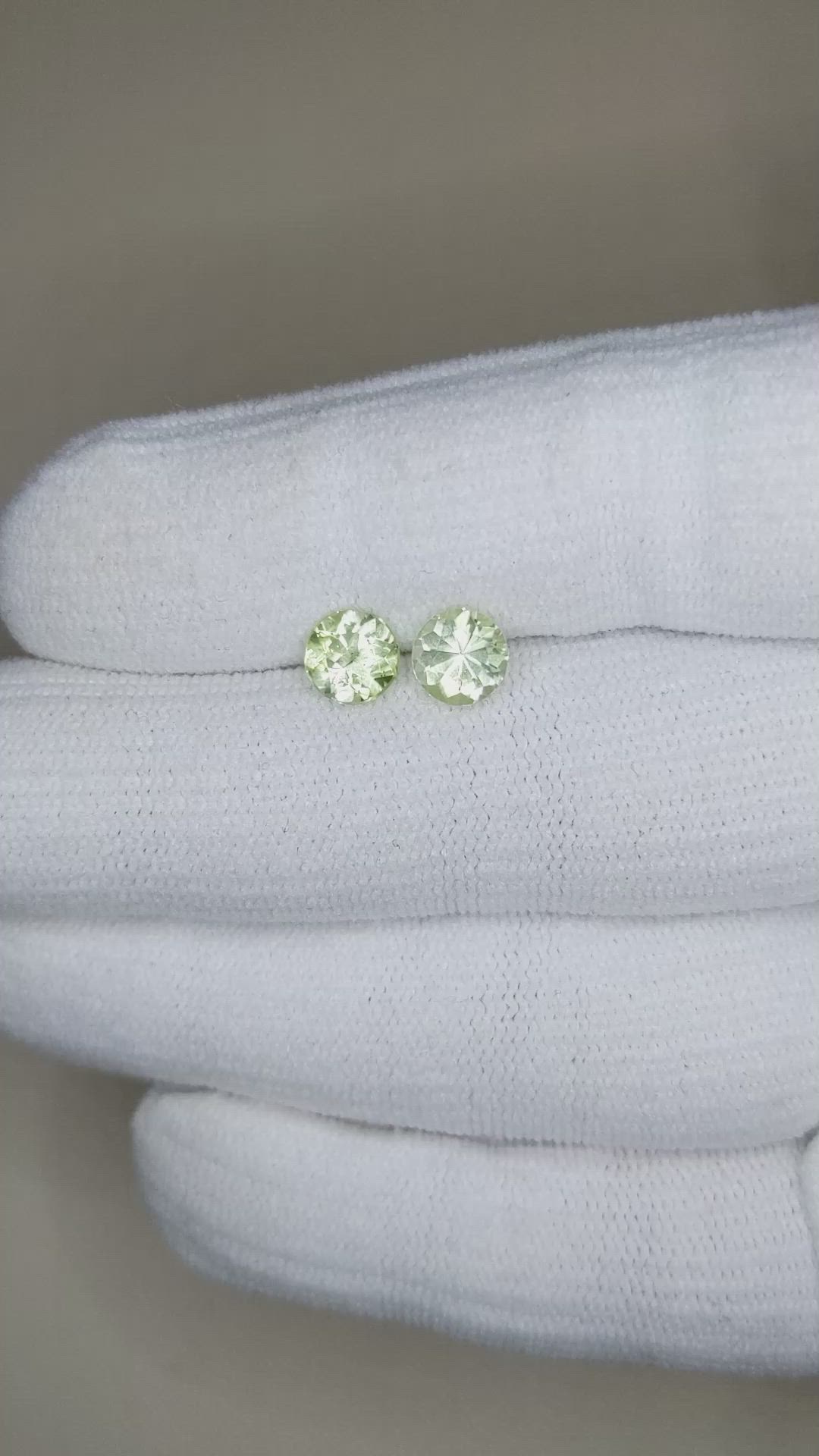
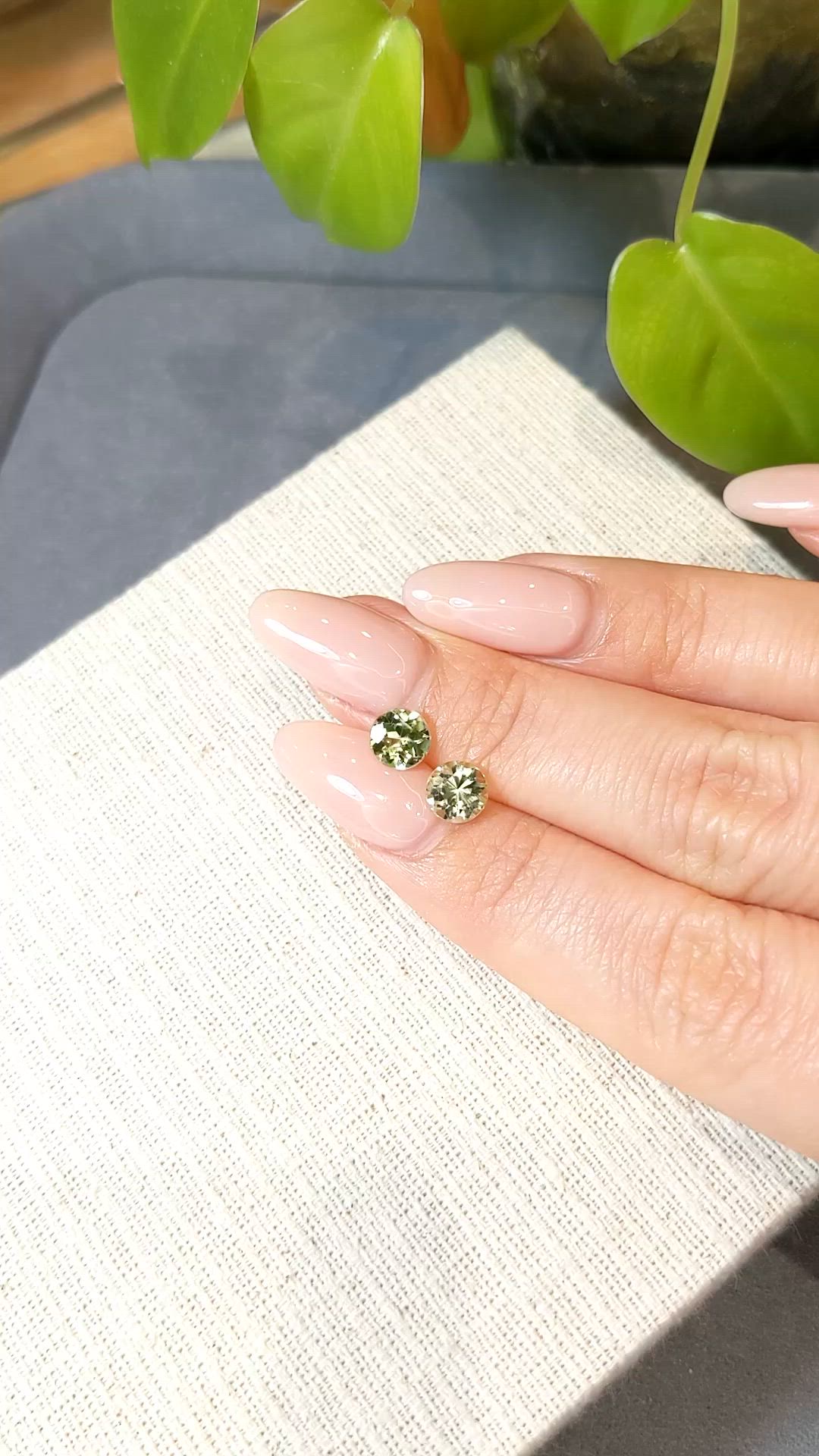
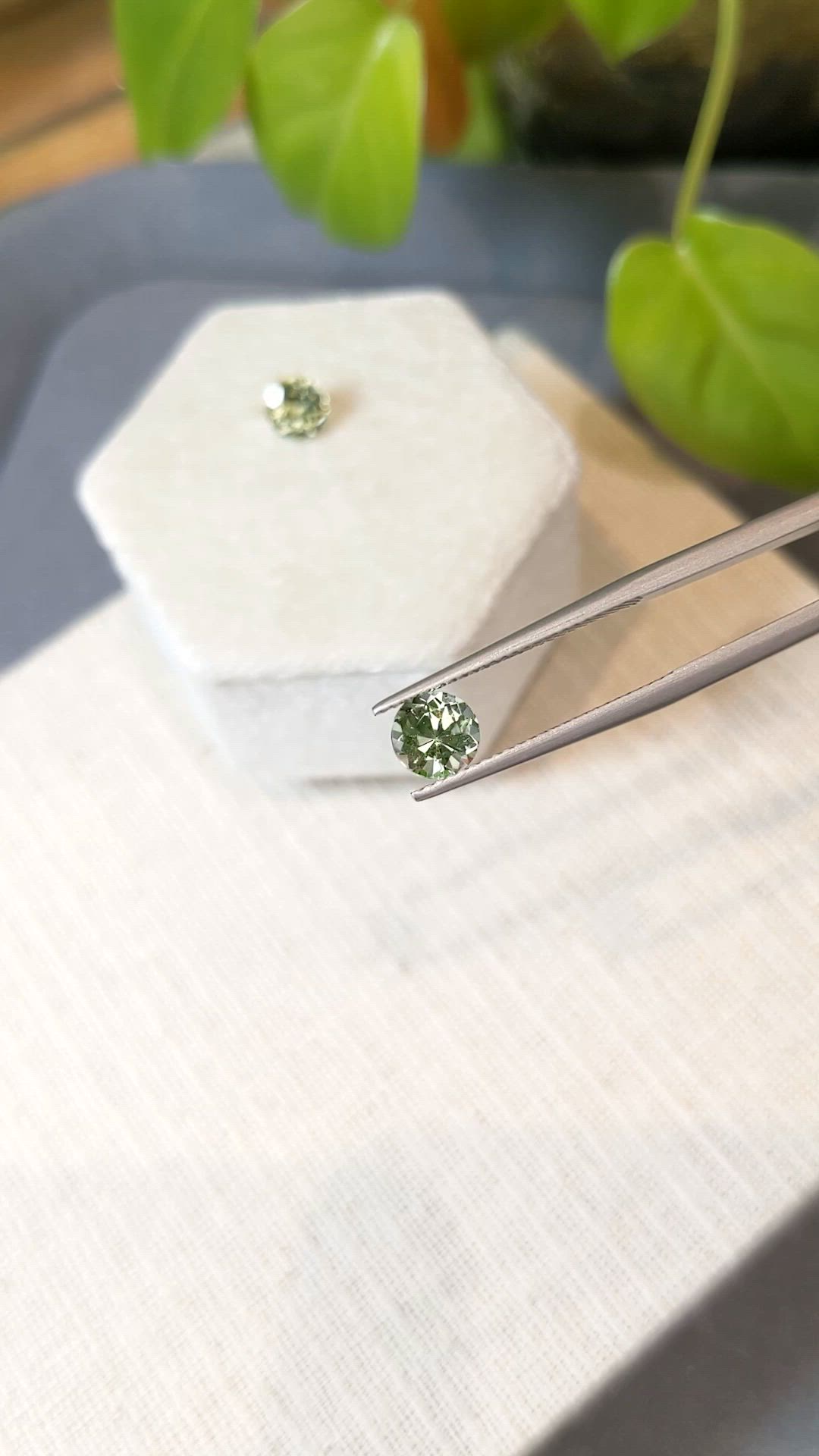




1.81 Ct.Tw.Total Carat Weight Yellowish Green Tourmaline Pair from Brazil
This pair of stones is available to ship now
Stone type: | Tourmaline | Tourmaline |
|---|---|---|
Item ID: | PR13970 | PR13970 |
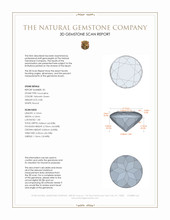
Dimensions (MM): help | Length: 6.12 Width: 6.13 Height: 3.83 | Length: 6.14 Width: 6.11 Height: 4.35 |
Weight: | 0.85 Ct. | 0.96 Ct. |
Color: help | Yellowish Green | Yellowish Green |
Color intensity: help | Intense | Intense |
Clarity: help | Very Very Slightly Included | Very Very Slightly Included |
Shape: help | Round | Round |
Cut: | Mixed Brilliant Cut | Mixed Brilliant Cut |
Cutting style: | Faceted | Faceted |
Enhancements: help | Heat Treated | Heat Treated |
Origin: help | Brazil | Brazil |
Per carat price: help | $100 | $100 |
This matched pair consists of two round yellowish green tourmalines weighing 0.85 carat and 0.96 carat, with measured dimensions of 6.12 by 6.13 by 3.83 millimeters and 6.14 by 6.11 by 4.35 millimeters respectively. Both stones are cut in a mixed brilliant style which combines a faceted brilliant crown with a modified pavilion geometry to optimize scintillation and light return. The depth proportions measure approximately 62.6 percent for the smaller stone and 70.8 percent for the larger stone, values that influence face up appearance and light performance in distinct ways. Clarity is graded as very very slightly included evaluated at eye level, indicating only minor internal features that do not interfere with brilliance or structural integrity when set. Color intensity is described as intense, and the polish is excellent, delivering sharp facet junctions and crisp reflections across the table and crown facets. These tourmalines originate from Brazil and have been heat treated, a stable and routine enhancement used to refine tone and saturation without surface coatings or dyes.
Optical behavior of these tourmalines benefits from the mixed brilliant faceting which accentuates contrast and scintillation while preserving a pleasing table window. The yellowish green hue is concentrated and evenly distributed, creating a lively face up presence under natural and artificial lighting. Tourmaline pleochroism can be present in some examples, and here the stones display a subtle shift between a warmer yellow green and a slightly greener axis when rotated through light, a characteristic that adds visual complexity for wearer and maker to exploit in design. The deeper pavilion of the larger stone yields a more saturated face up color and slightly smaller apparent spread relative to its weight, while the shallower pavilion of the smaller stone produces a brighter, more open face up appearance. Because internal inclusions are minimal and placed in less optically active zones, the material reads clean at typical viewing distances and responds very well to controlled directional lighting in finished jewelry.
When considering settings and design applications the matched pair is highly versatile. As primary stones for stud earrings the color match and near equal diameters make them ideal for simple four prong or three prong settings where crown angles are left exposed to maximize scintillation. For ring applications the difference in pavilion depth can be compensated by selecting setting styles that standardize face up appearance, for example matching custom bezels with equivalent wall thicknesses or adding tapered halos of accent diamonds that equalize perceived size and brightness. For daily wear rings a bezel or partial bezel provides protective metal at the girdle and reduces the risk of edge chipping given tourmaline hardness on the Mohs scale of seven to seven point five. For pendant use a low profile prong or open cup setting will allow light to pass through the table and develop lively return, while suspending the stones in a halo of melee diamonds or colored sapphires will enhance contrast and perceived richness. Channel and pavé applications for matched pairs work well in symmetrical ear climbers or matched cluster designs where the slight weight variation can be masked by identical mounting proportions or by introducing small accent stones of graded sizes to harmonize the visual rhythm.
Practical considerations for lapidary compatibility and finishing techniques are important to discuss with your jeweler. The excellent polish and precise facet arrangement mean that tight prong seats and minimal bezel relief are required to avoid disturbing the light return. Because one stone carries a deeper pavilion profile the girdle height and pavilion angle should be measured and matched to the intended setting depth, or a custom mounting with a stepped seat should be fabricated to ensure both stones sit at identical heights. Heat treatment applied to these Brazilian tourmalines is stable under normal use, but both stones should be treated with the usual gemstone care recommendations. Avoid abrupt thermal shock and prolonged exposure to harsh chemicals. Routine cleaning by warm soapy water and a soft brush is preferred, and ultrasonic cleaning should be evaluated by your jeweler based on overall mounting and presence of micro fractures. The Natural Gemstone Company stands behind the provenance and description of this pair and can provide measured reports and follow up guidance for custom mounting and matching accents. These tourmalines lend themselves to a range of jewelry expressions from minimalist modern to vintage inspired settings and are particularly successful when paired with white diamonds for contrast, warm yellow gold to emphasize the yellowish tones, or subtle green colored accent stones to create tonal harmony.


