
- Stone15
- Reports2


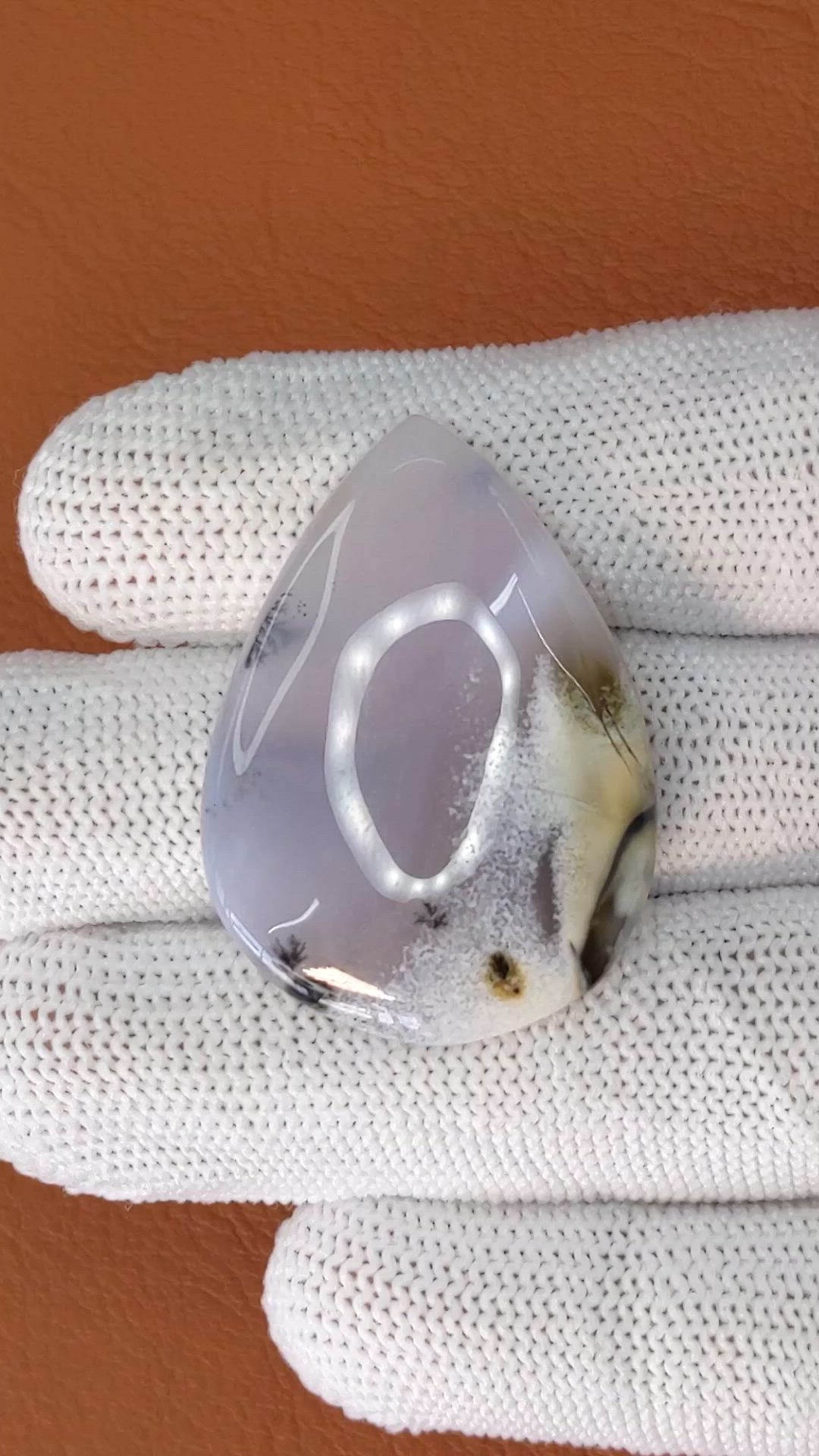
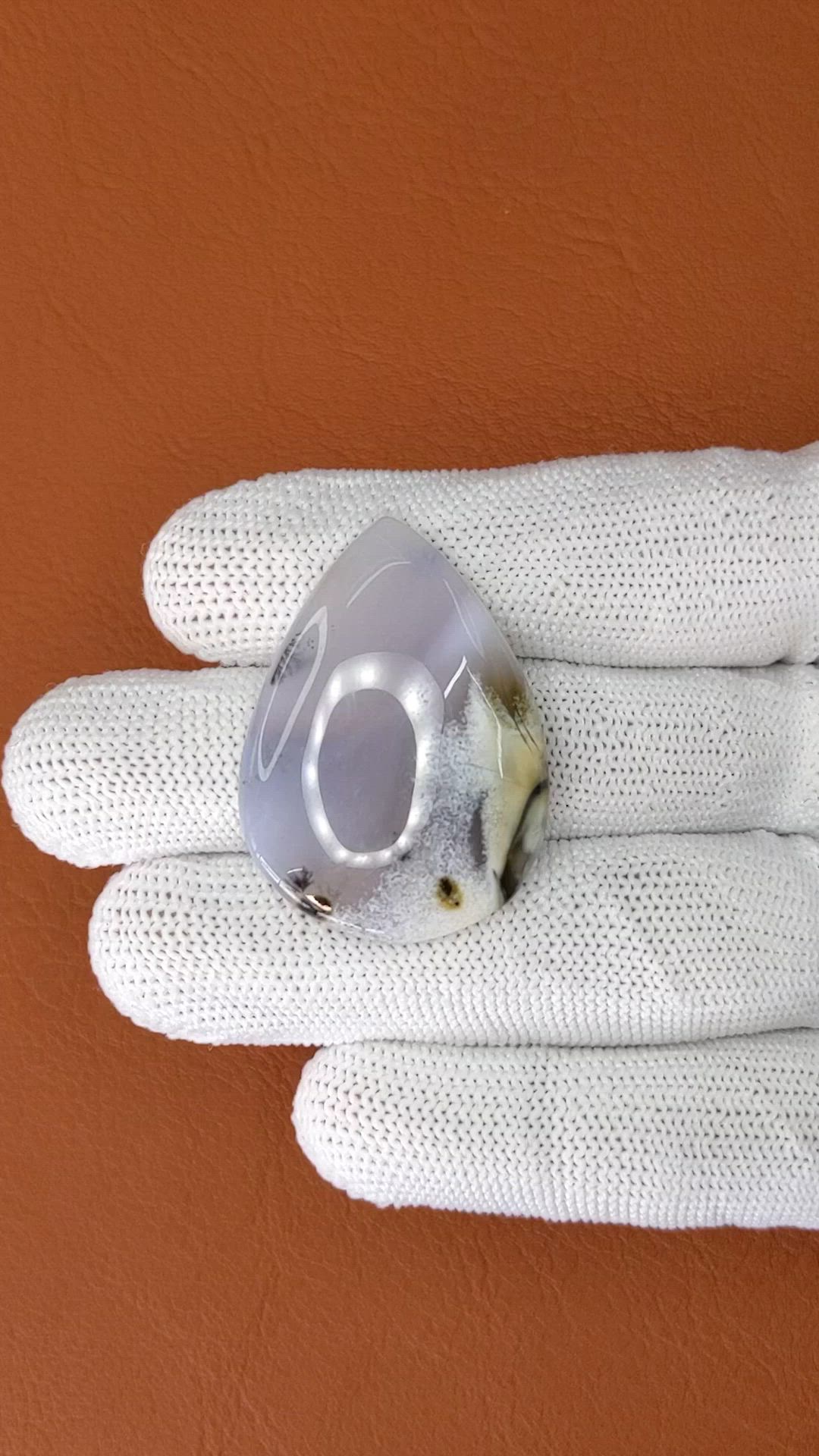
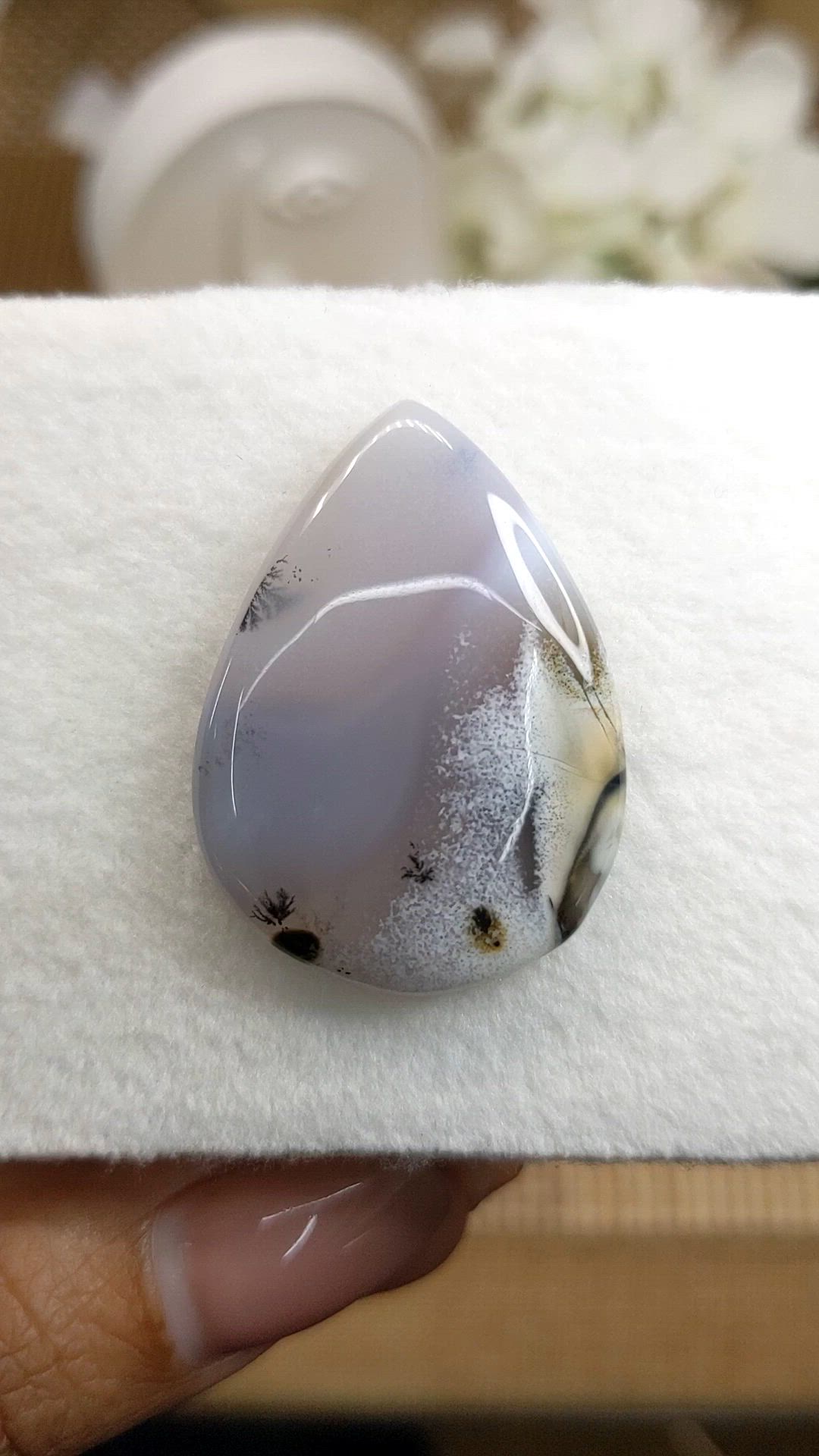
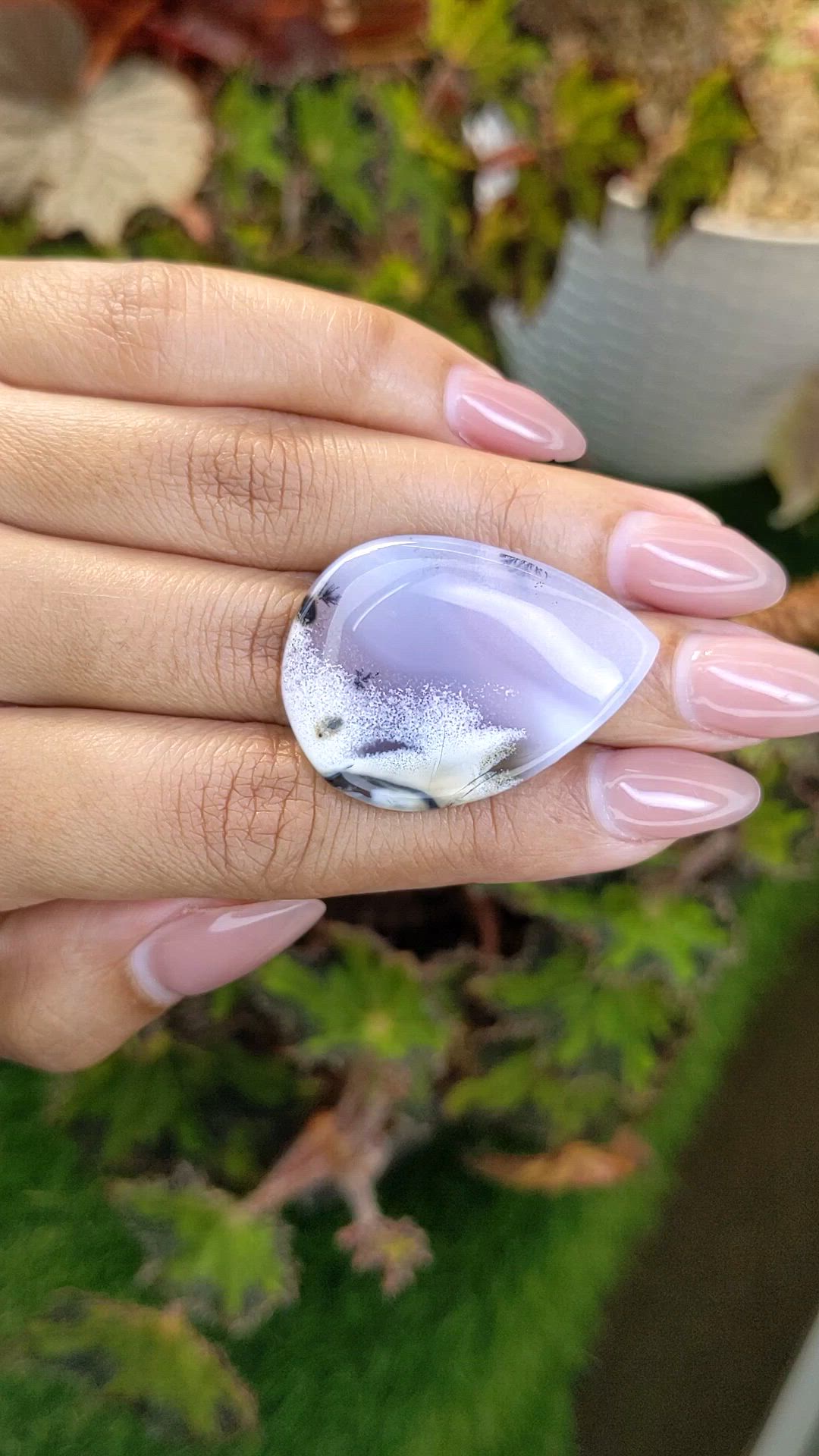
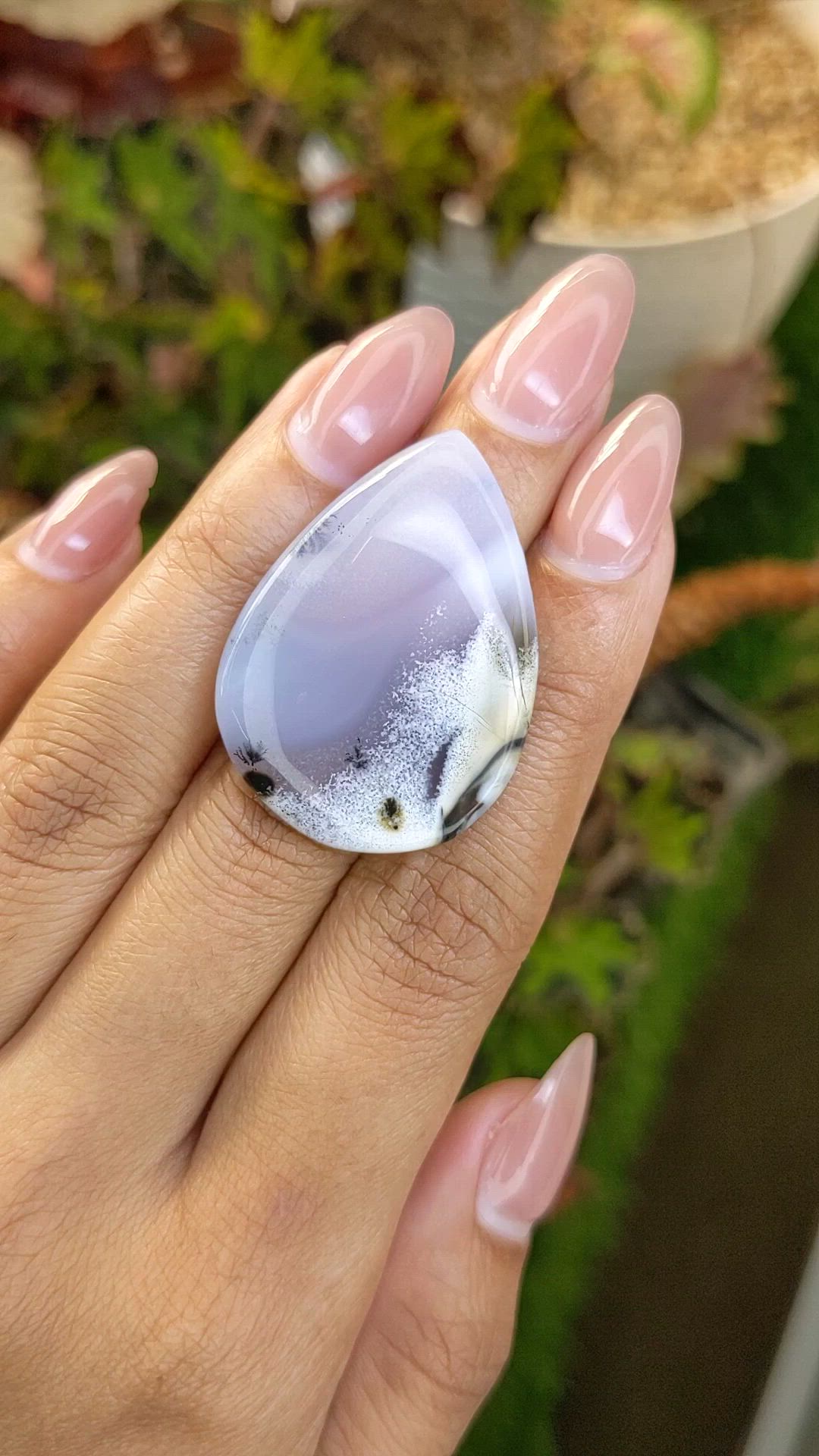
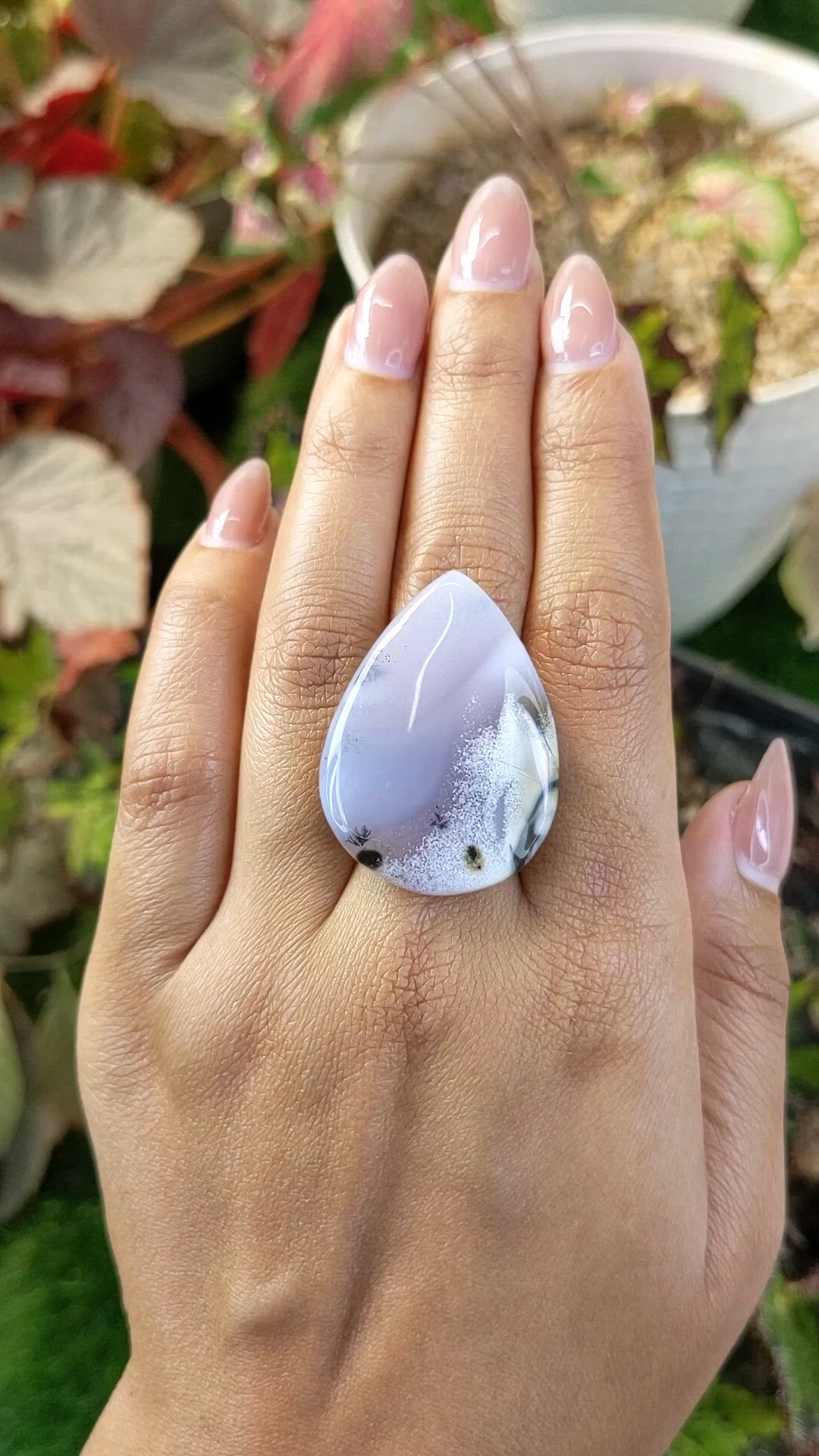
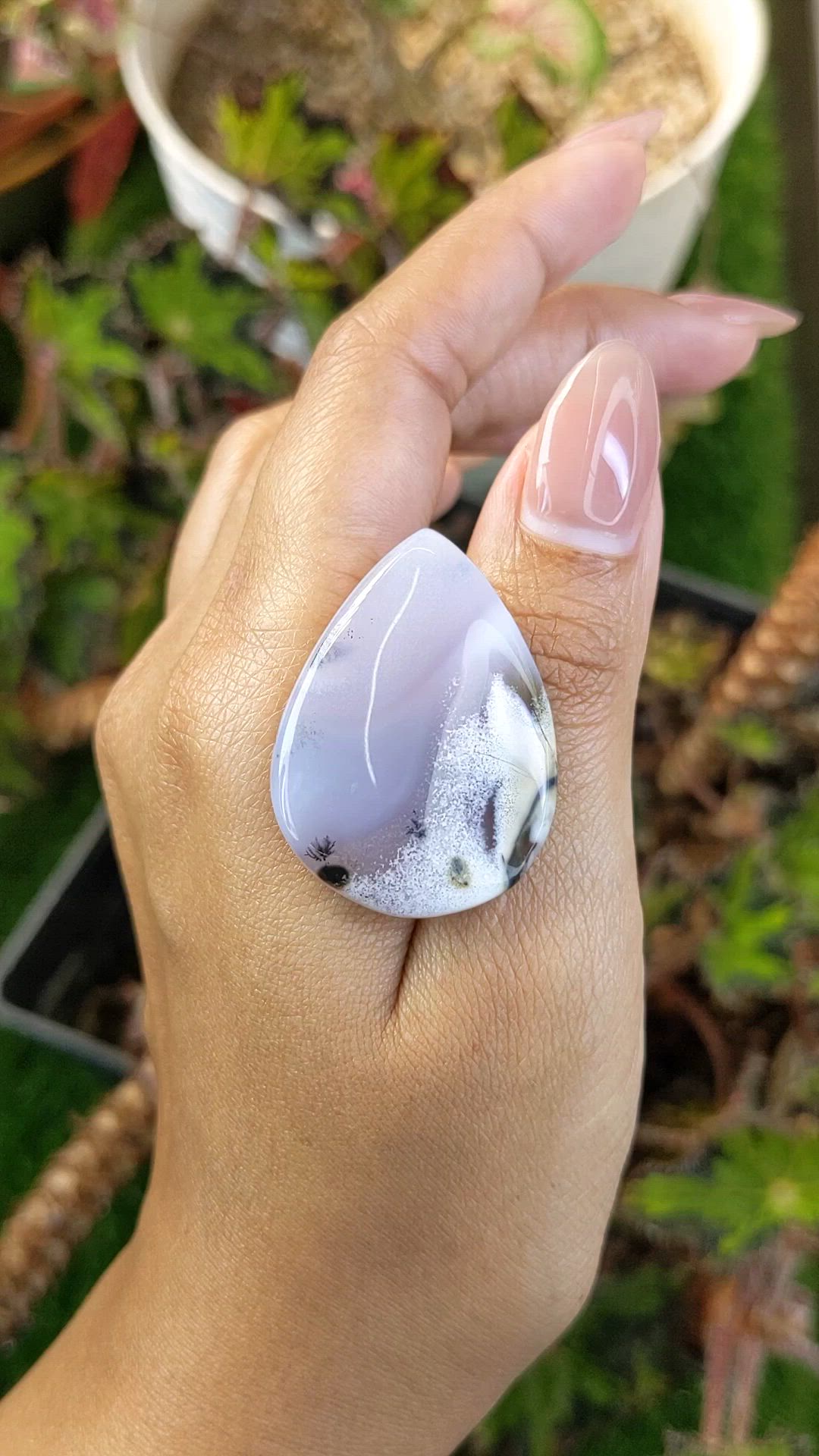


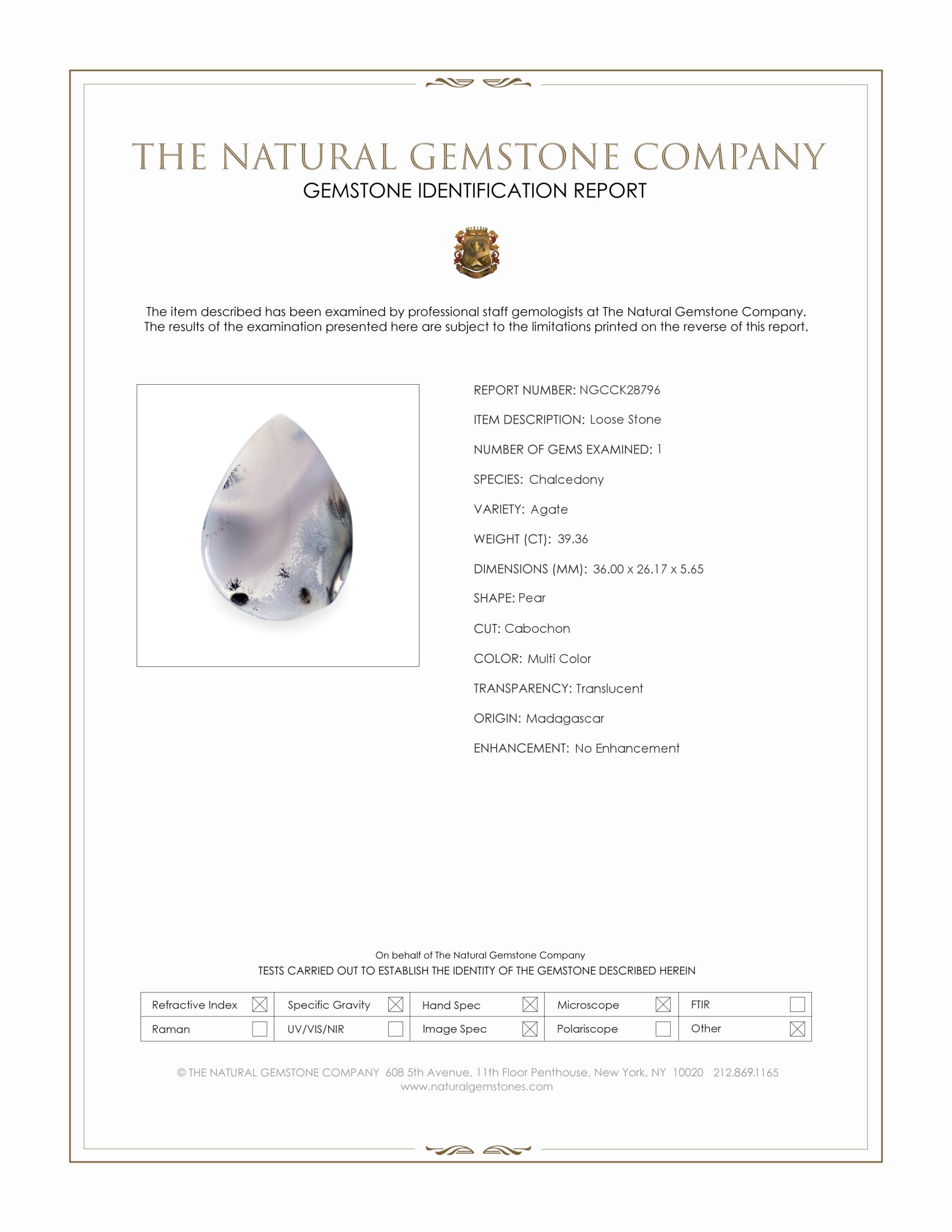
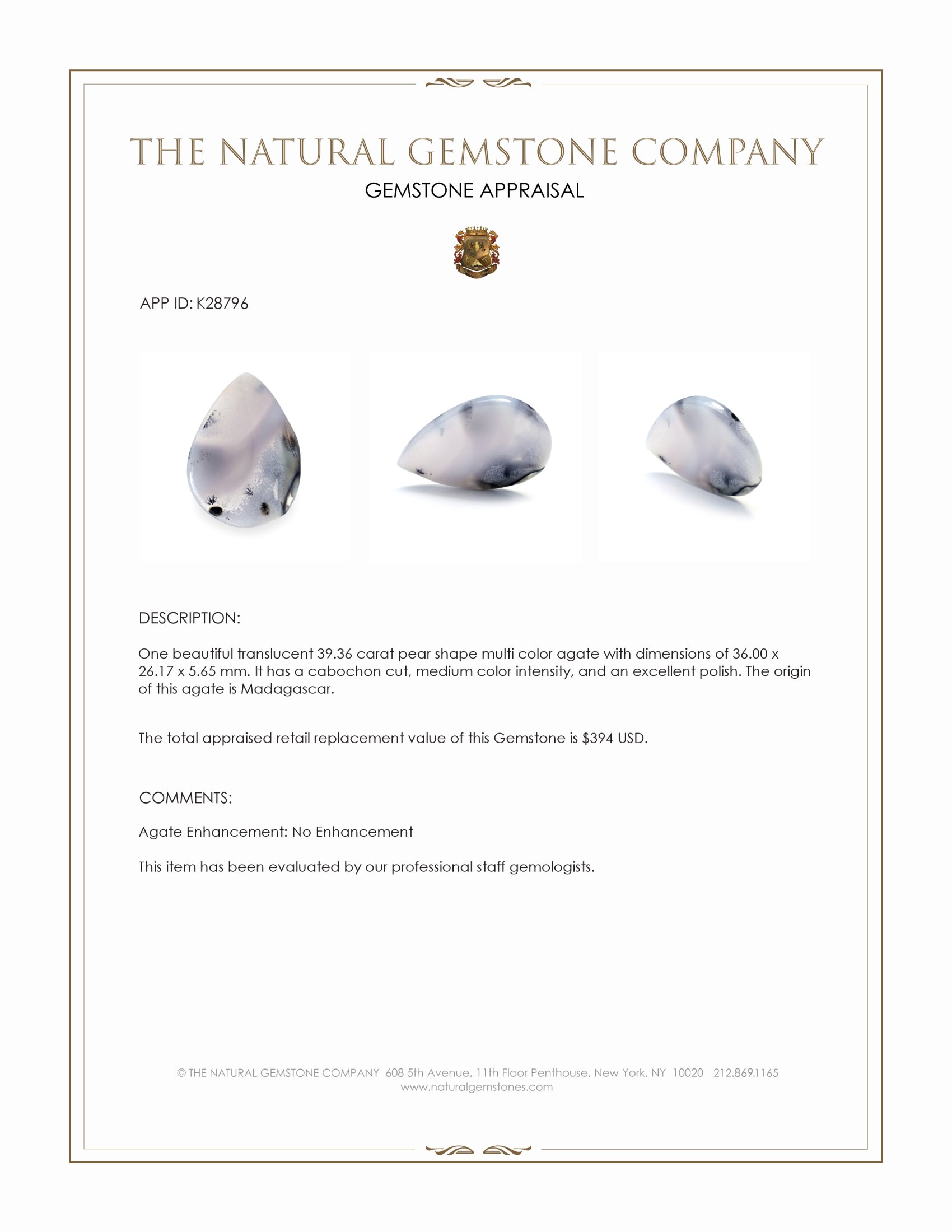
39.36 Ct. Multi Color Cabochon Agate from Madagascar
This loose stone is available to ship now
Item ID: | K28796 |
|---|---|
Dimensions (MM): help | Length: 36 Width: 26.17 Height: 5.65 |
Weight: | 39.36 Ct. |
Color: help | Multi Color |
Color intensity: help | Medium |
Clarity: help | Not Applicable |
Shape: help | Pear |
Cut: | Cabochon |
Cutting style: | Cabochon |
Enhancements: help | No Enhancement |
Origin: help | Madagascar |
Per carat price: help | $10 |
This pear shaped translucent multi color agate presents as a purposefully restrained cabochon, a 39.36 carat specimen measuring 36.00 by 26.17 by 5.65 millimeters, sourced from Madagascar and offered by The Natural Gemstone Company. The material exhibits medium color intensity across a subtle range of grays, soft whites, and muted near black dendritic accents, with translucency sufficient to permit deep subsurface light penetration without overwhelming the scenic inclusions. The cabochon cutting style was selected to emphasize the stone s internal topology rather than to maximize facet generated brilliance. The dome profile and finished surface translate the stone s internal patterning into a readable, three dimensional field, while the excellent polish minimizes surface scattering and produces clean specular highlights along the crest of the dome. No enhancement has been applied to the rough or finished stone, preserving the original chalcedony structure and natural contrast of the dendritic features.
From a technical optics perspective the cabochon cut in this piece is engineered to balance transmission, internal scattering, and surface reflection for optimum visual effect. Quartz family chalcedony typically displays a refractive index near 1.54, which combined with the microcrystalline fibrous structure yields significant subsurface scattering when viewed through a curved surface. The chosen dome geometry, with a dome height to length ratio of approximately one to six, moderates the angle of incidence for ambient light so that a substantial portion of incoming photons refract into the body rather than immediately reflecting away. That controlled refraction produces a soft internal glow that amplifies the perceived depth of the dendritic inclusions, while the excellent surface polish produces crisp specular highlights at grazing angles that serve as visual anchors for the eye. The result is a duality of diffuse luminosity and localized surface sheen, a characteristic that cabochon cuts can deliver more predictably than faceted cuts on similarly translucent material. The medium color intensity further supports this effect, allowing sufficient light transmission to reveal internal patterning, while providing enough chromatic density to outline the dendritic contrasts against the lighter chalcedony field.
Craftsmanship details are central to how this cabochon performs in actual wear and in setting. The lapidary sequence began with orientation of the preform to maximize the scenic inclusions placement beneath the dome, a decision that determines the gem s face up character. Initial saw cutting and preforming established the pear outline and approximate dome height, followed by staged grinding on progressively finer diamond wheels to refine curvature and meet the dimensional tolerances of 36.00 by 26.17 by 5.65 millimeters. A graduated sanding regime removed micro abrasions, using abrasives matched to the chalcedony hardness, and the pre polish employed a fine aluminum oxide or diamond lap to collapse subsurface scratches while retaining a consistent curvature. Final polishing was performed with a cerium oxide or fine diamond slurry to produce the excellent polish noted in the description, ensuring minimal surface diffusion and high gloss. The pavilion was finished to a slightly flattened plane beneath the dome to facilitate secure bezel seating, a setting recommendation for a cabochon of this scale and shape to preserve edge integrity and to present the scenic face cleanly to the viewer. The stone s untreated status, the controlled dome geometry, and the meticulous polish together create a durable, wearable gem that reads as both technically calibrated material and as an artistic landscape, and The Natural Gemstone Company stands behind the provenance and the lapidary standards applied to this Madagascar agate.


