
- Stone15
- Reports3

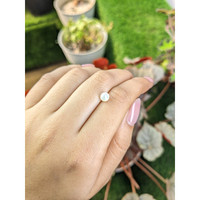

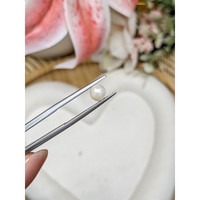
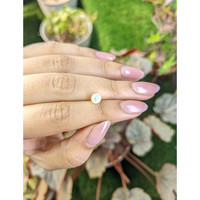
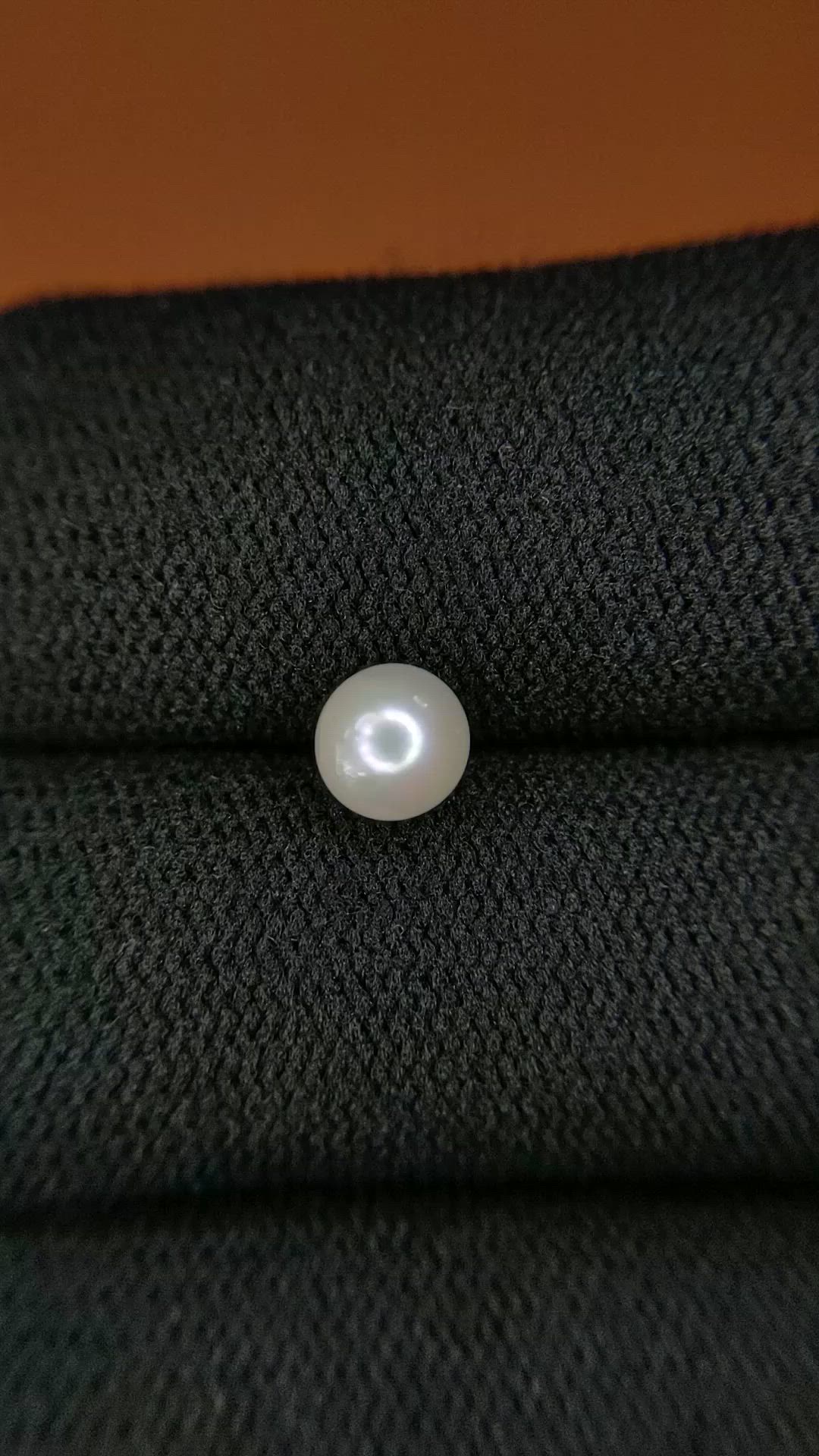
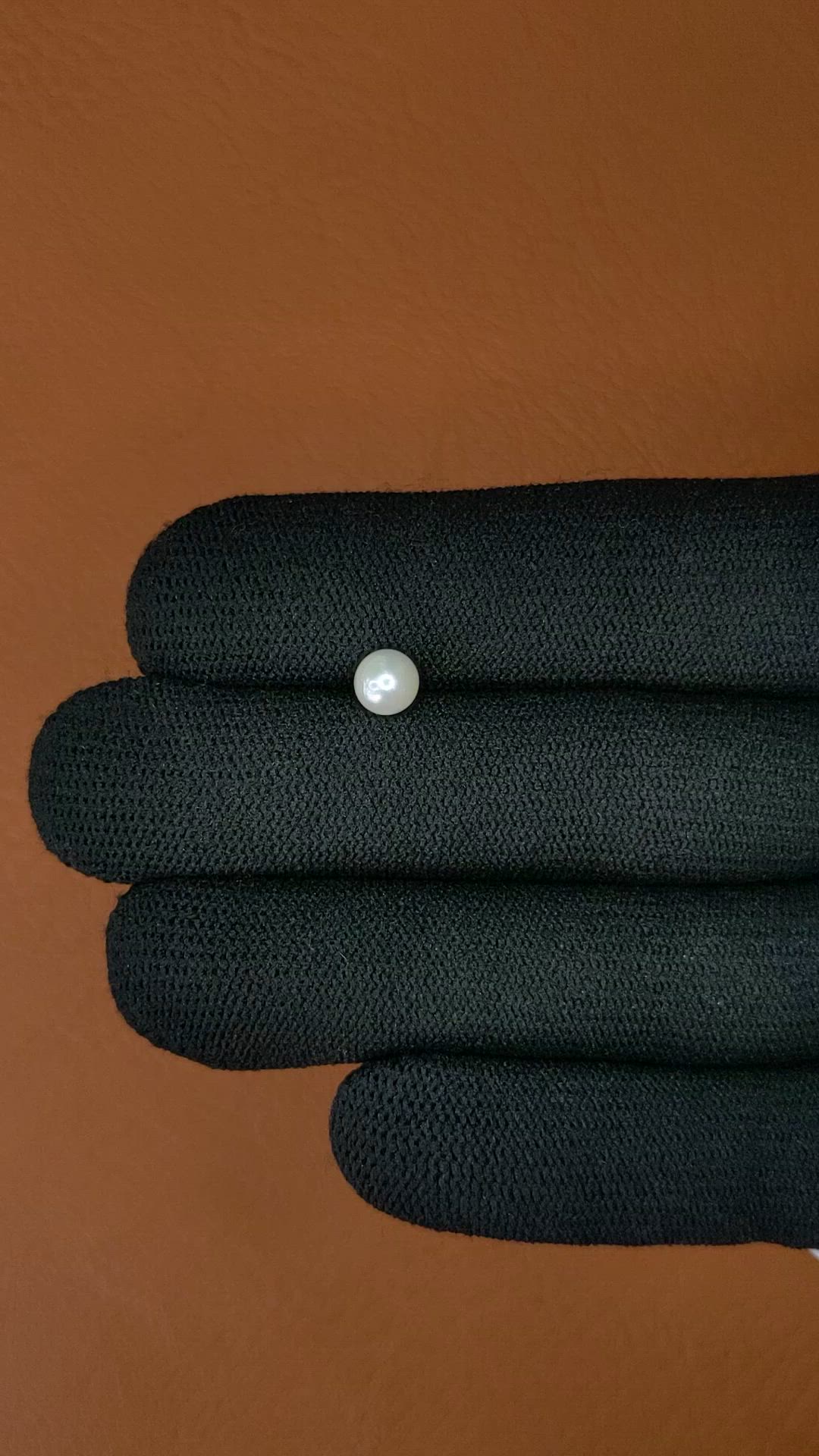
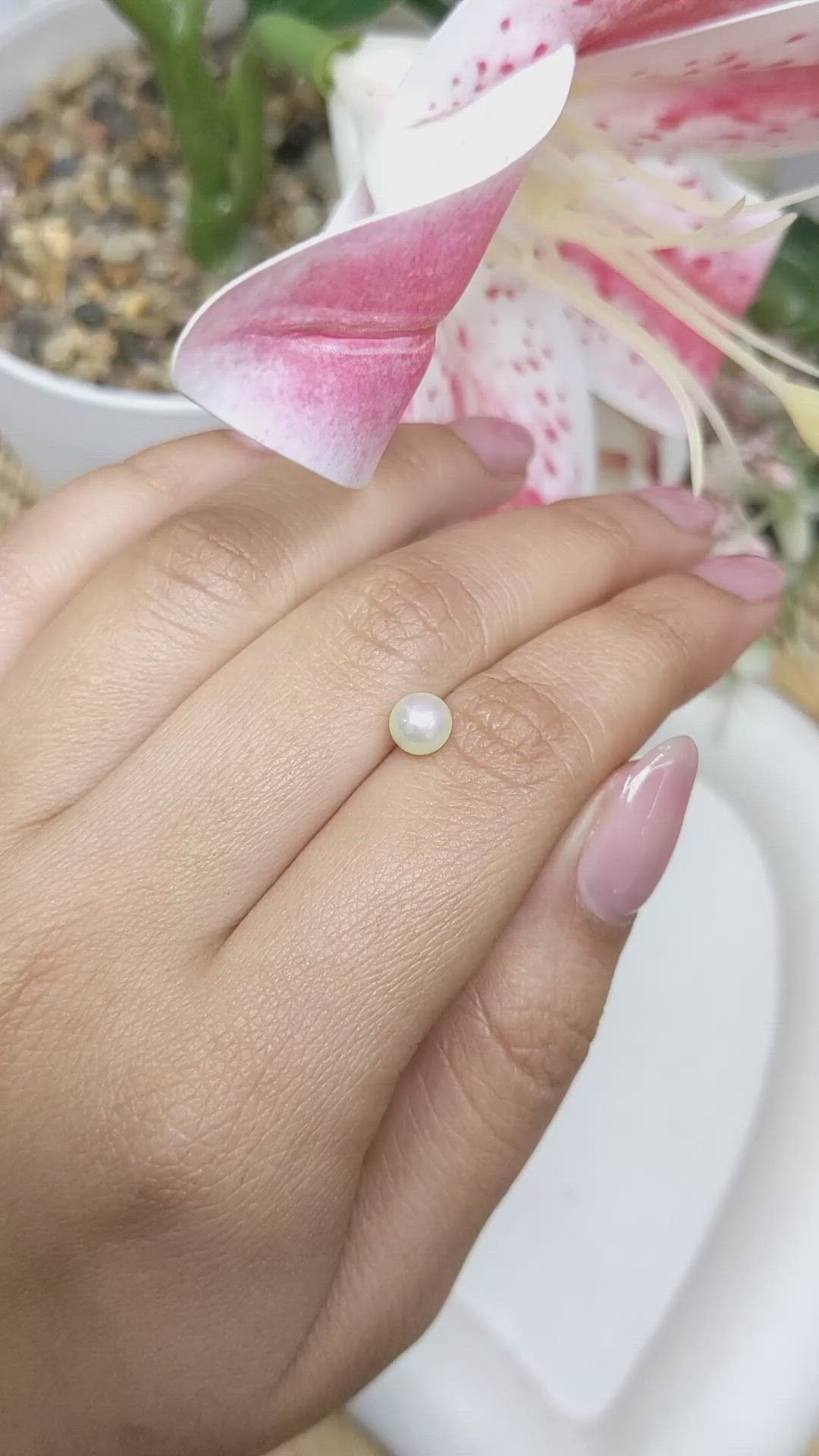
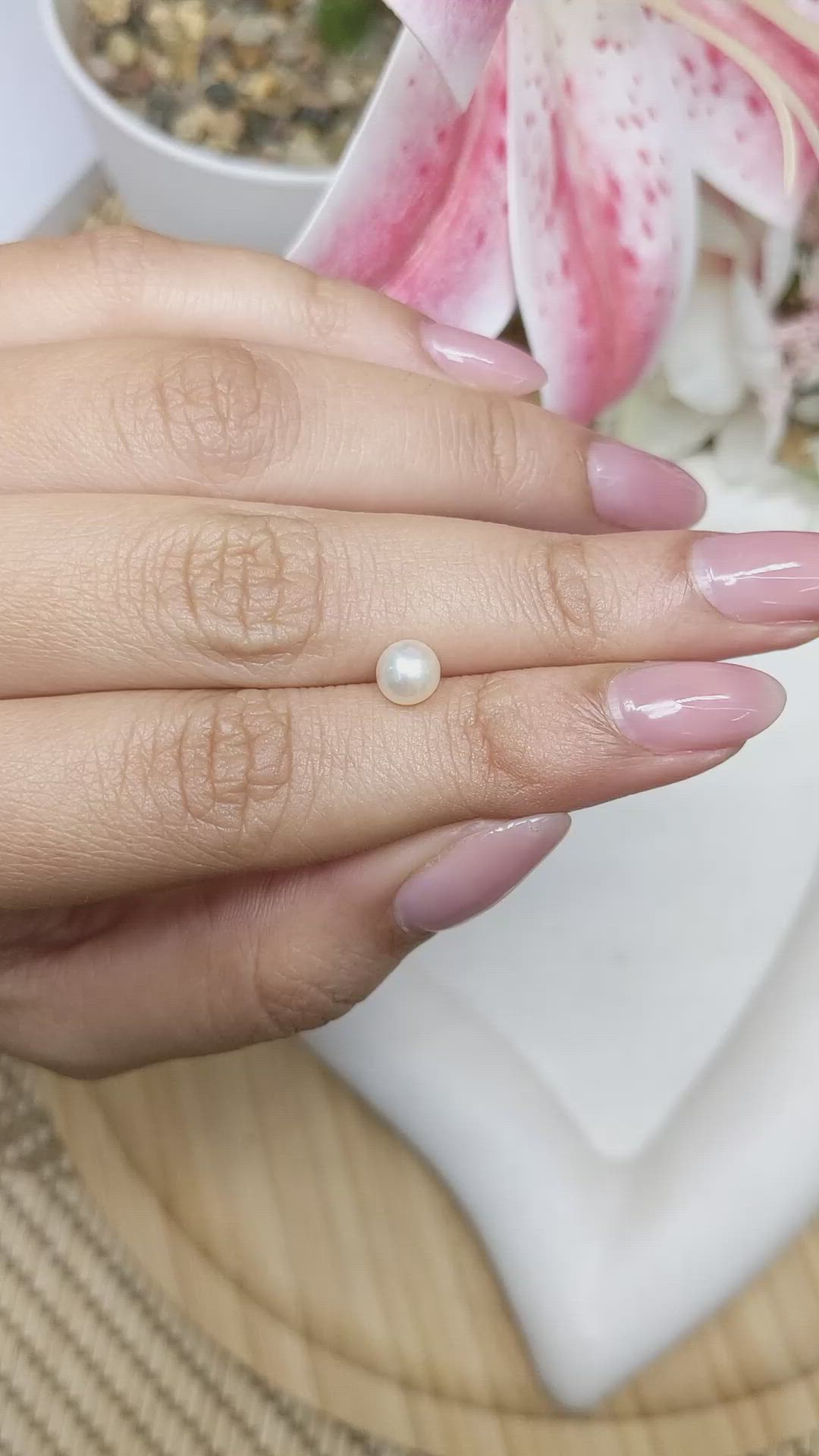
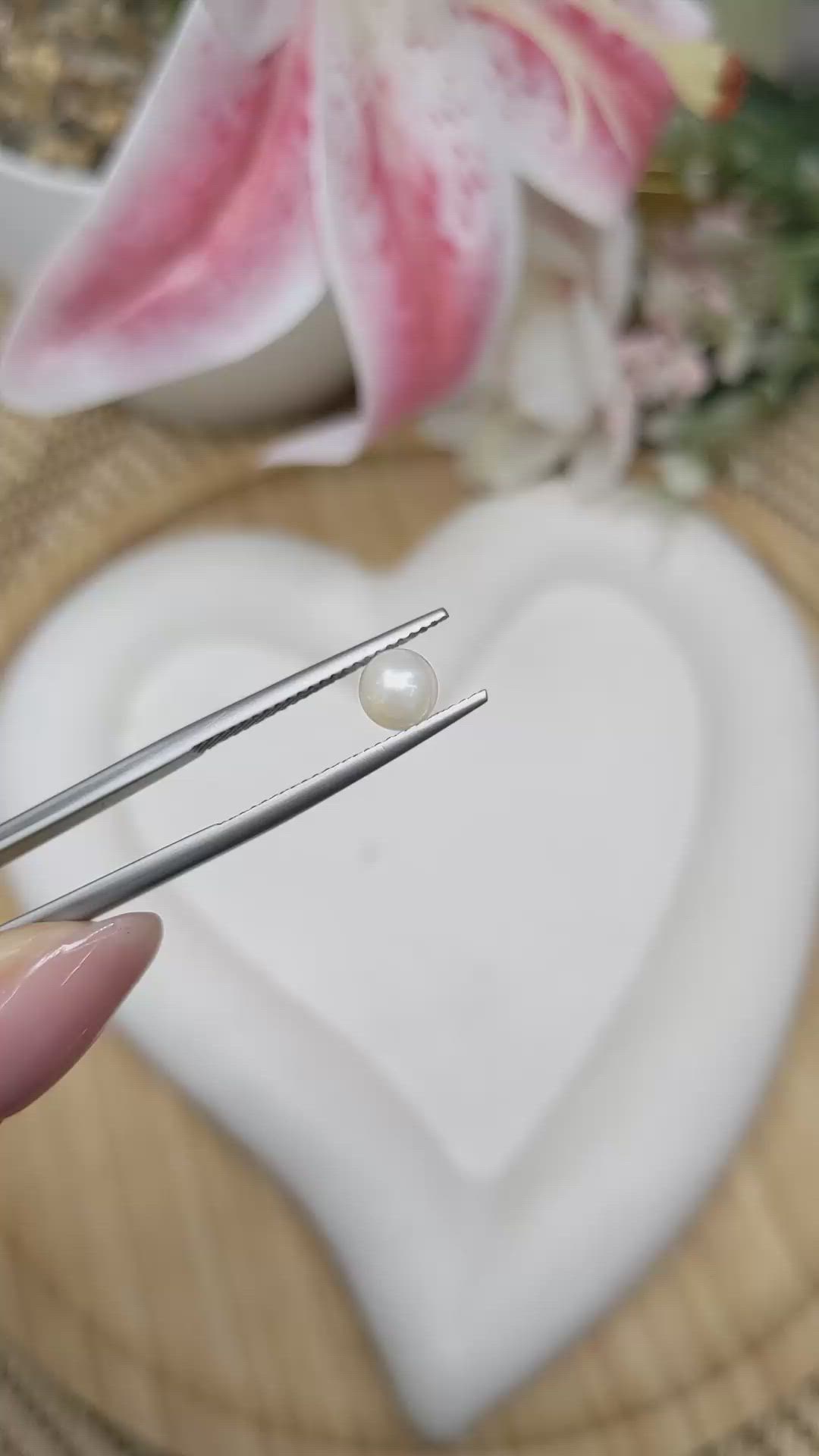
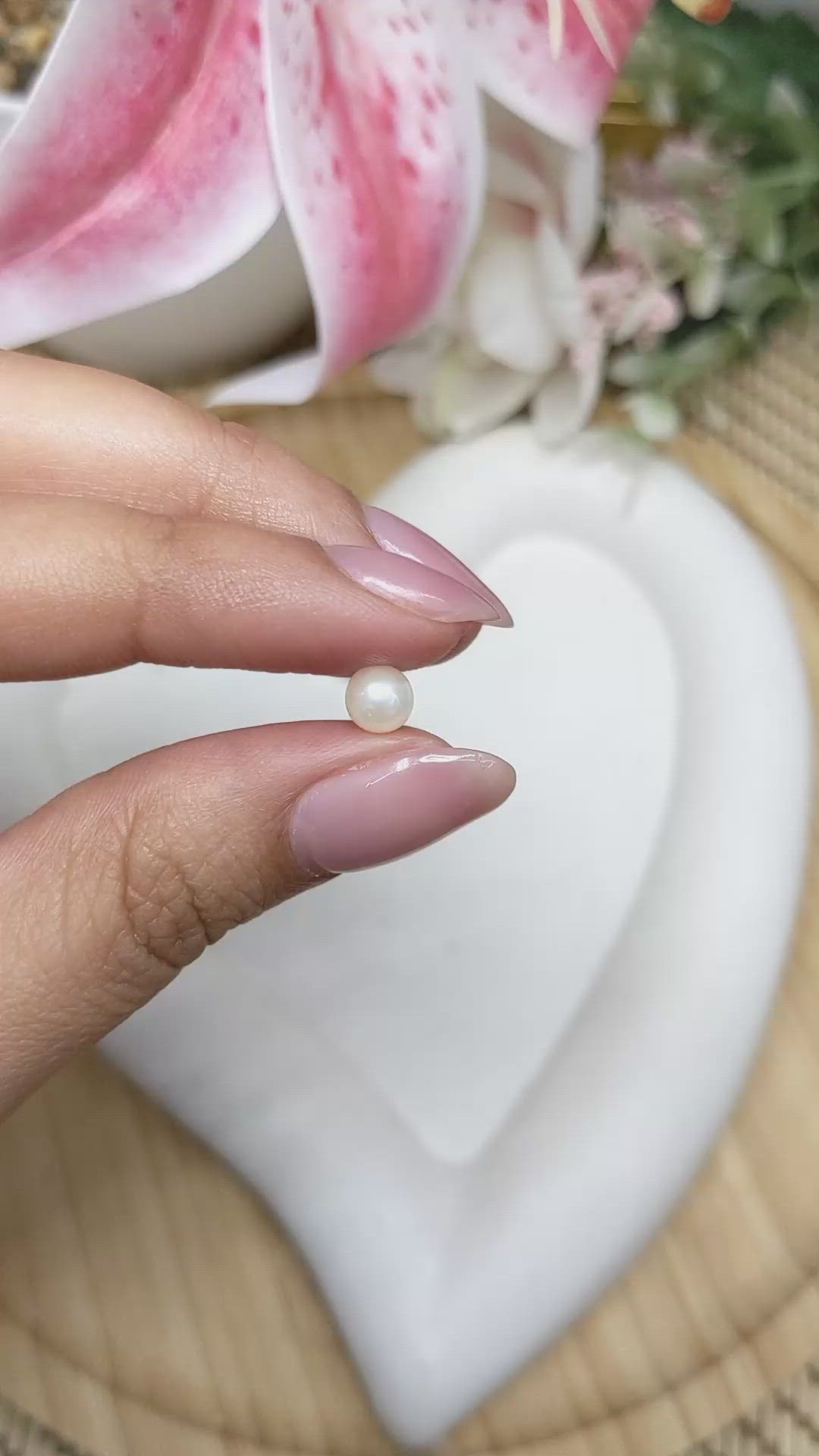


1.24 Ct. Cream with Silver Overtone Akoya Pearl from China
This loose stone is available to ship now
Item ID: | K32502 |
|---|---|
Dimensions (MM): help | Length: 5.48 Width: 5.64 Height: 5.43 |
Weight: | 1.24 Ct. |
Color: help | Cream with Silver Overtone |
Color intensity: help | N/A |
Clarity: help | N/A |
Shape: help | Round |
Cut: | Mixed Brilliant Cut |
Cutting style: | N/A |
Enhancements: help | Luster Enhancement |
Origin: help | China |
Per carat price: help | $40 |
This piece offered by The Natural Gemstone Company is a technically refined Akoya pearl, presented as a one point two four carat round. The physical dimensions measure approximately five point four eight by five point six four by five point four three millimeters, indicating a near spherical profile with minimal deviation. The body color is a warm cream, overlaid by a distinct silver overtone that modulates across viewing angles. The surface has been finished with a mixed brilliant polish technique, an approach atypical for bead cultured pearls but effective in this specimen for maximizing specular highlights and controlled light scattering. The polish grade is excellent, and the documented enhancement is for luster, a customary treatment applied to even high quality Akoya material to standardize surface sheen and reduce visual texture. Origin is China, reflecting the mature aquaculture and post harvest processing standards established in that region.
On a microscopic and optical level this pearl demonstrates the layered nacre structure responsible for what gemologists term orient, a layered interference phenomenon. Rather than the prismatic refraction and facet dependent light return of crystalline gemstones, this Akoya exhibits constructive and destructive interference from successive aragonite platelets, producing soft iridescent zones that shift between silver and faint pastel hues as the angle of observation changes. The mixed brilliant polishing strategy enhances the contrast between diffuse radiance and small areas of concentrated specular reflection, creating points of bright sparkle that sit within a larger glow. Because color intensity is recorded as not applicable, the evaluative emphasis moves to the balance of overtone, body color, and luster, with this specimen showing a harmonious relationship that reads as luminous and cool against the cream ground tone.
When comparing brilliance and visual dynamics to more commonly encountered gemstones such as diamond, sapphire, and topaz, the distinction is primarily one of mechanism. Diamonds and other transparent faceted gems deliver brilliance through high refractive index and faceting geometry, producing intense white flashes and scintillation as facets exchange light with the viewer. Sapphires produce strong color saturation and selective absorption, while topaz can exhibit bright internal reflections when faceted in brilliant or step cuts. This Akoya pearl does not rely on internal refraction or facet junctions for its appeal, instead leveraging orientation and surface polish to generate a luminous, skin reflective sheen. In practice the pearl will read as more organic and subtler in motion, producing a continuous soft radiance rather than discrete flashes. For connoisseurs who appreciate nuance, the interplay of silver overtone and excellent surface polish yields a type of brilliance that complements rather than competes with faceted stones when set together, offering a textural contrast and a warm reflective quality that faceted brilliance cannot mimic.
From a setting and craftsmanship perspective the dimensions and finish of this round Akoya allow for versatile mounting choices while preserving optical performance. A flush or bezel setting will protect the enhanced surface and preserve the luster enhancement applied post harvest, while a low profile prong set with discreet cups can expose more of the pearl to ambient light and emphasize its orient and overtone. The near spherical symmetry and consistent diameter across three axes minimize the need for corrective mounting work, reducing the risk of stress points during setting. For designers aiming to juxtapose materials, pairing this pearl with high polish metal that provides reflective backing will intensify perceived luster, while satin finished metal will soft focus the reflection and accentuate the cream bodycolor. At The Natural Gemstone Company we recommend considering the pearl as a focal point or pendant where its layered optical characteristics can be appreciated at close range, or as an accent paired with fine faceted stones where its soft brilliance provides a balancing counterpoint.


