
- Stone15
- Reports3


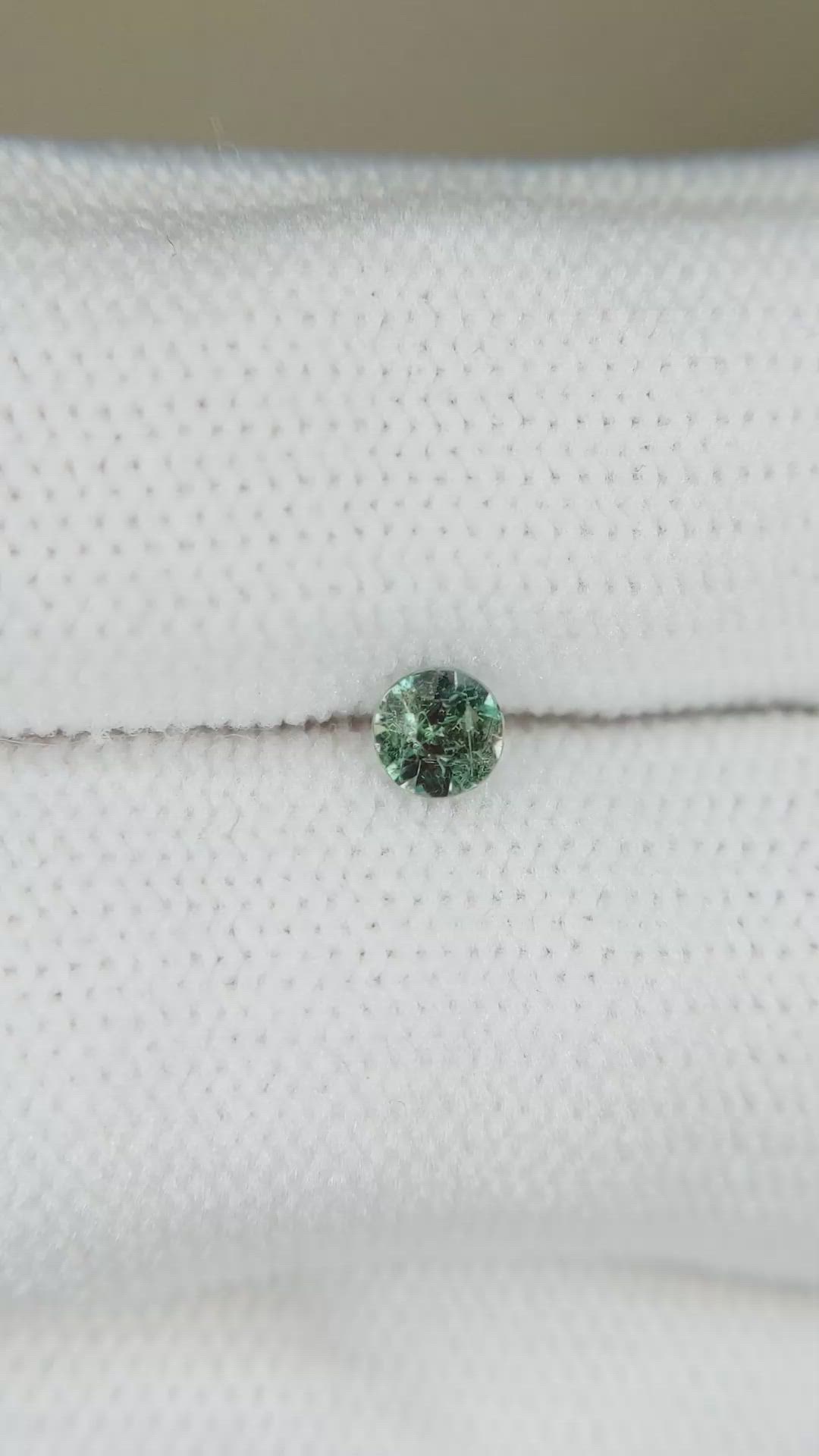
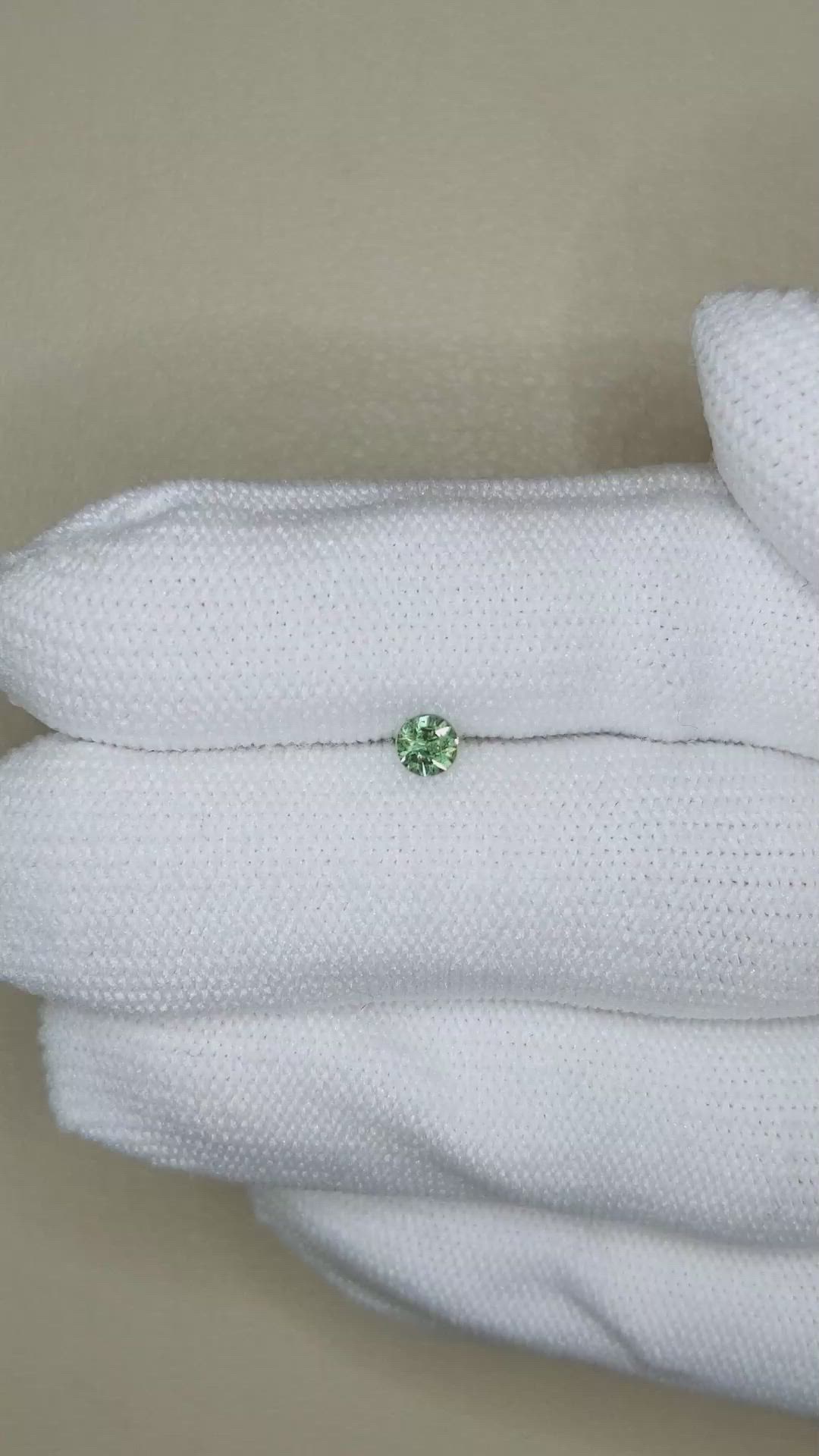
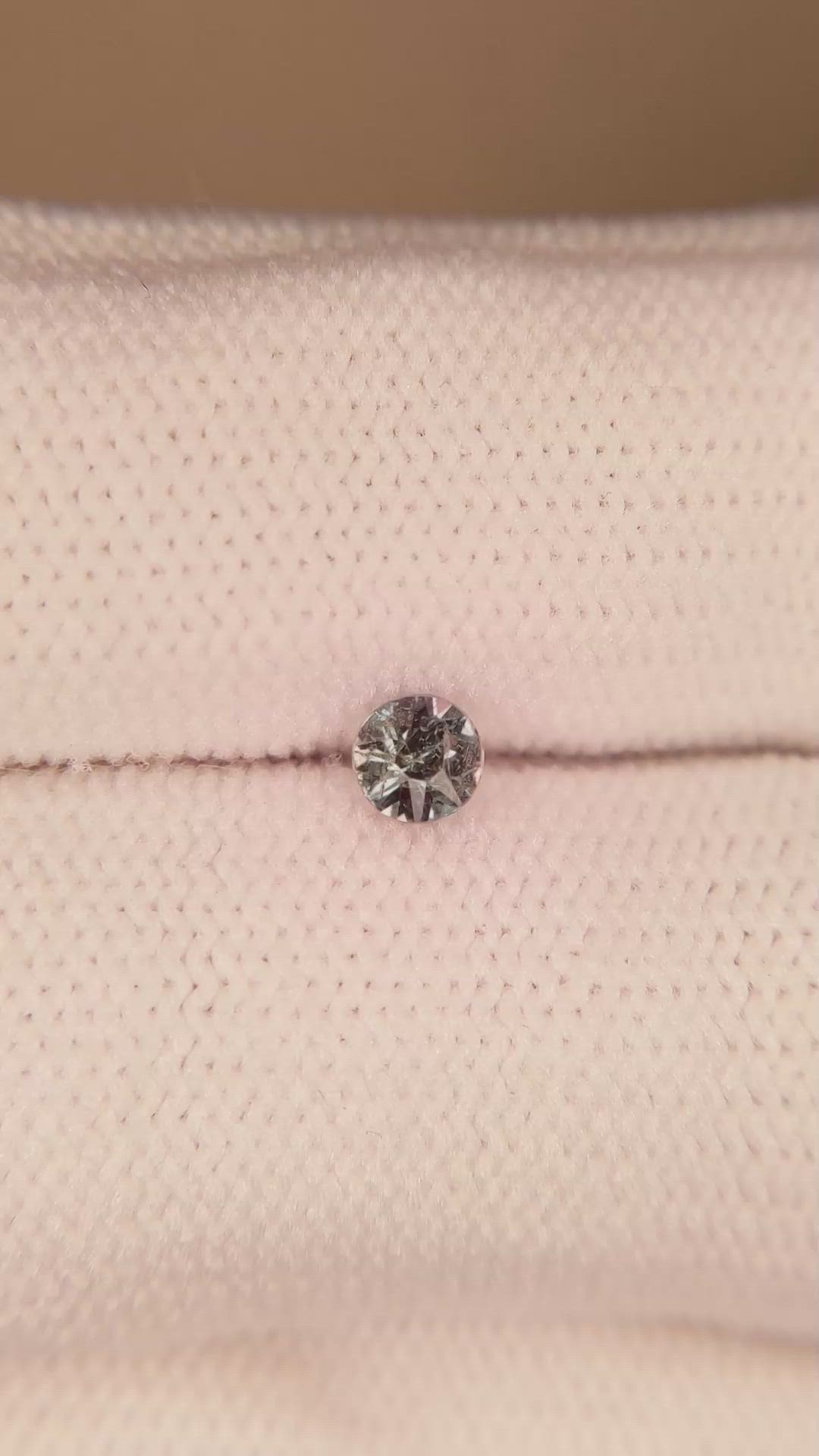

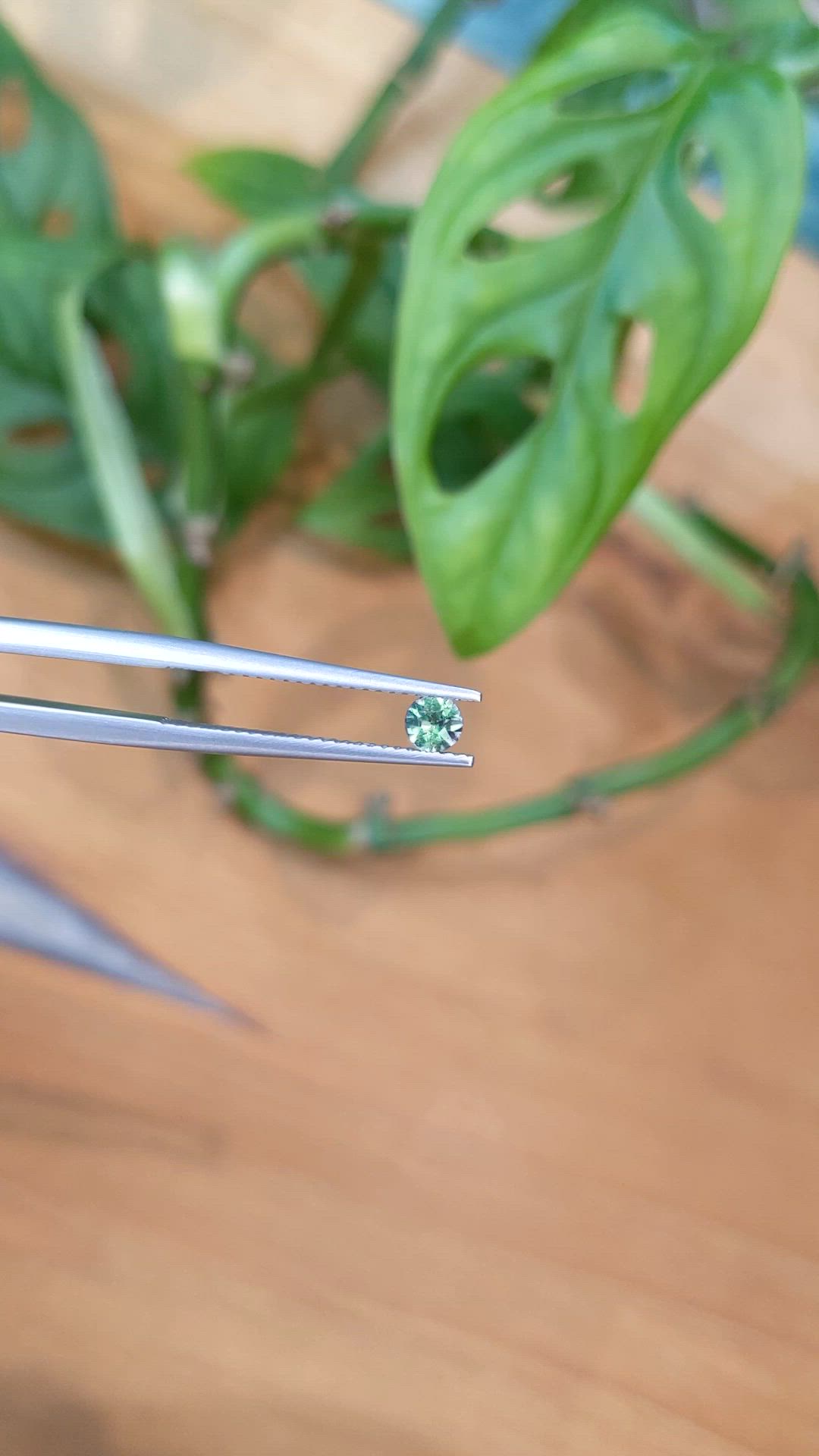
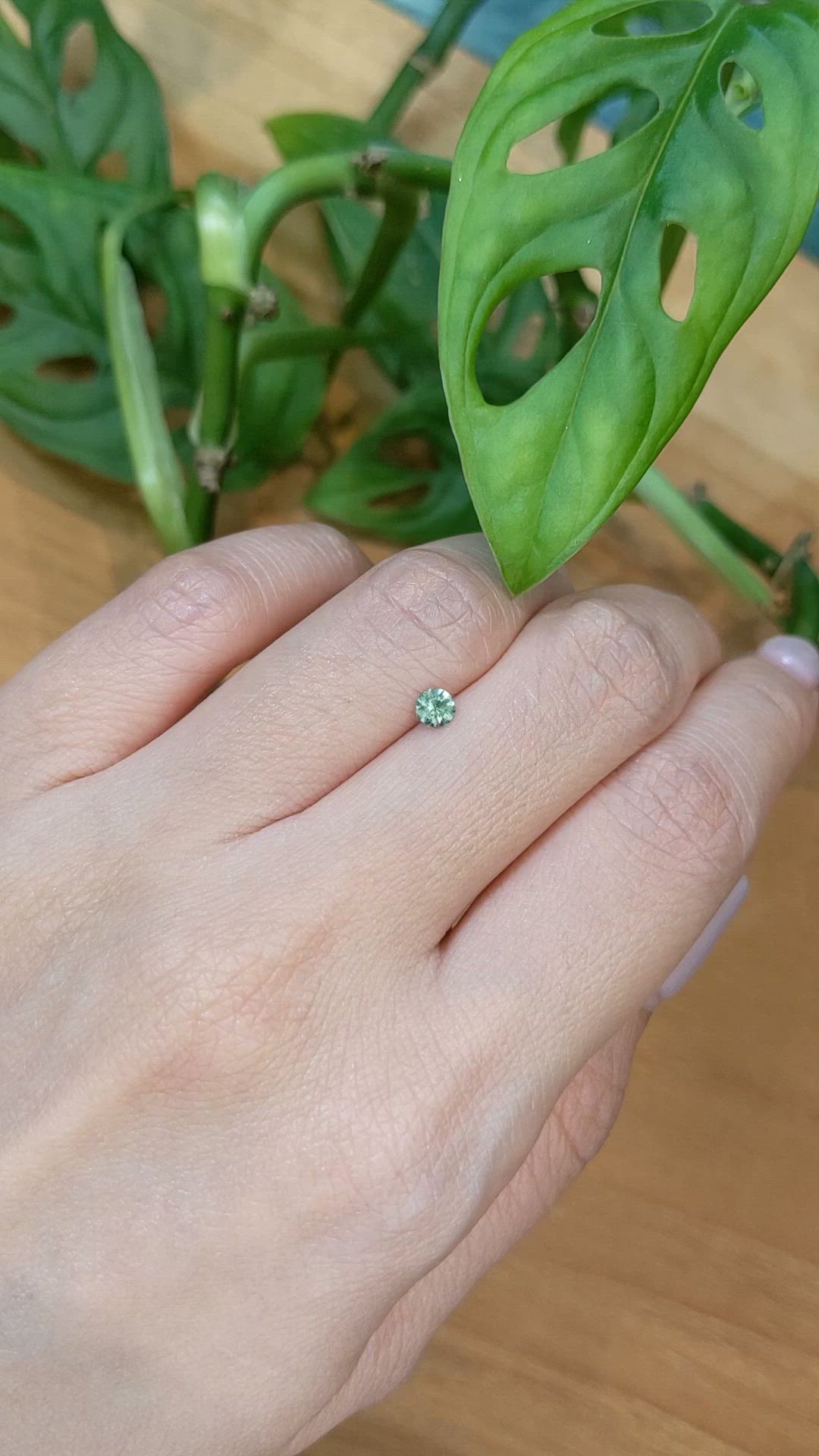
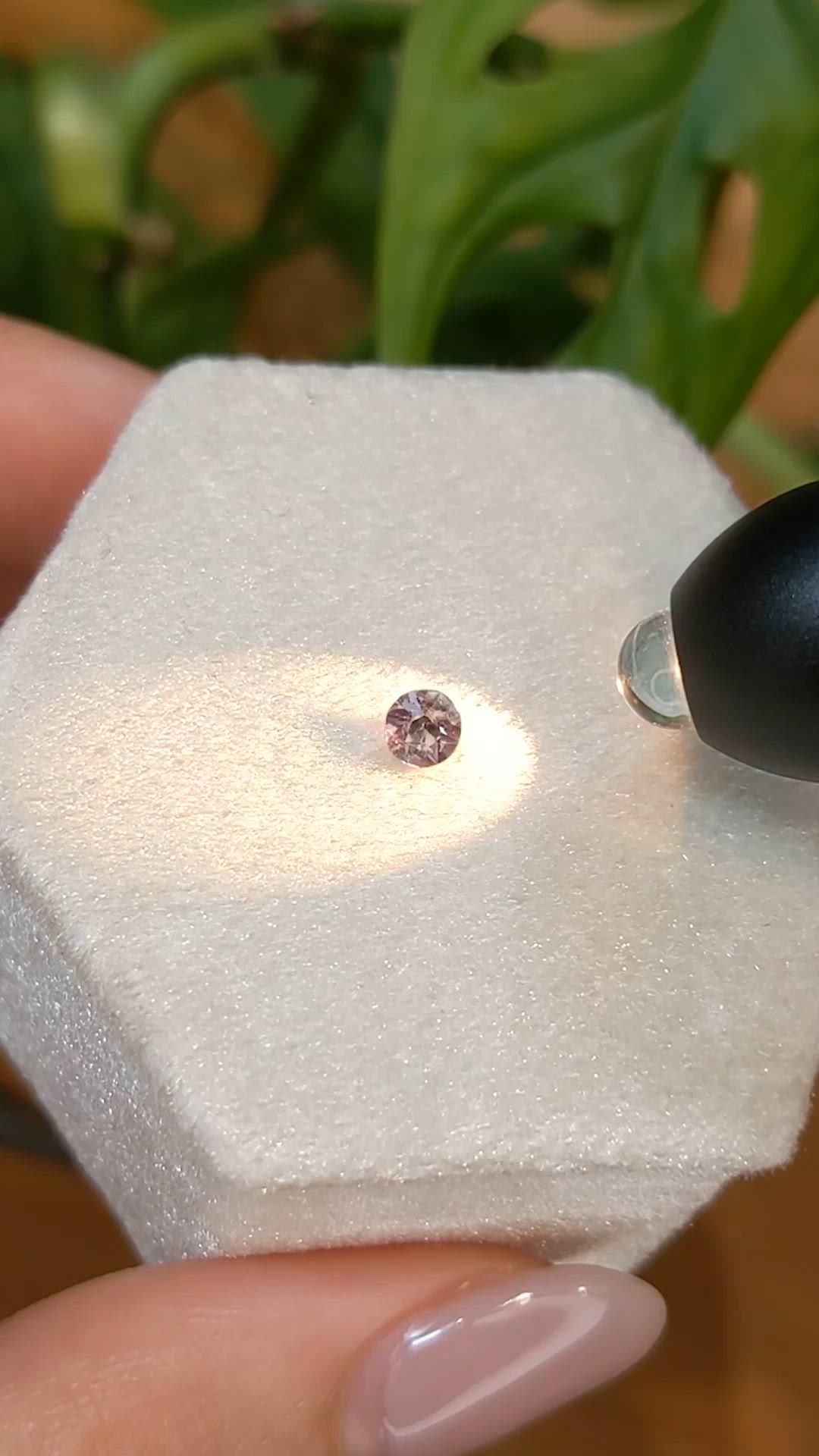



0.22 Ct. Alexandrite from Tanzania
This loose stone ships by Aug 29
Item ID: | K23549 |
|---|---|
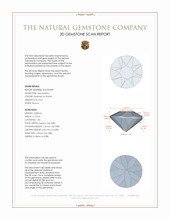
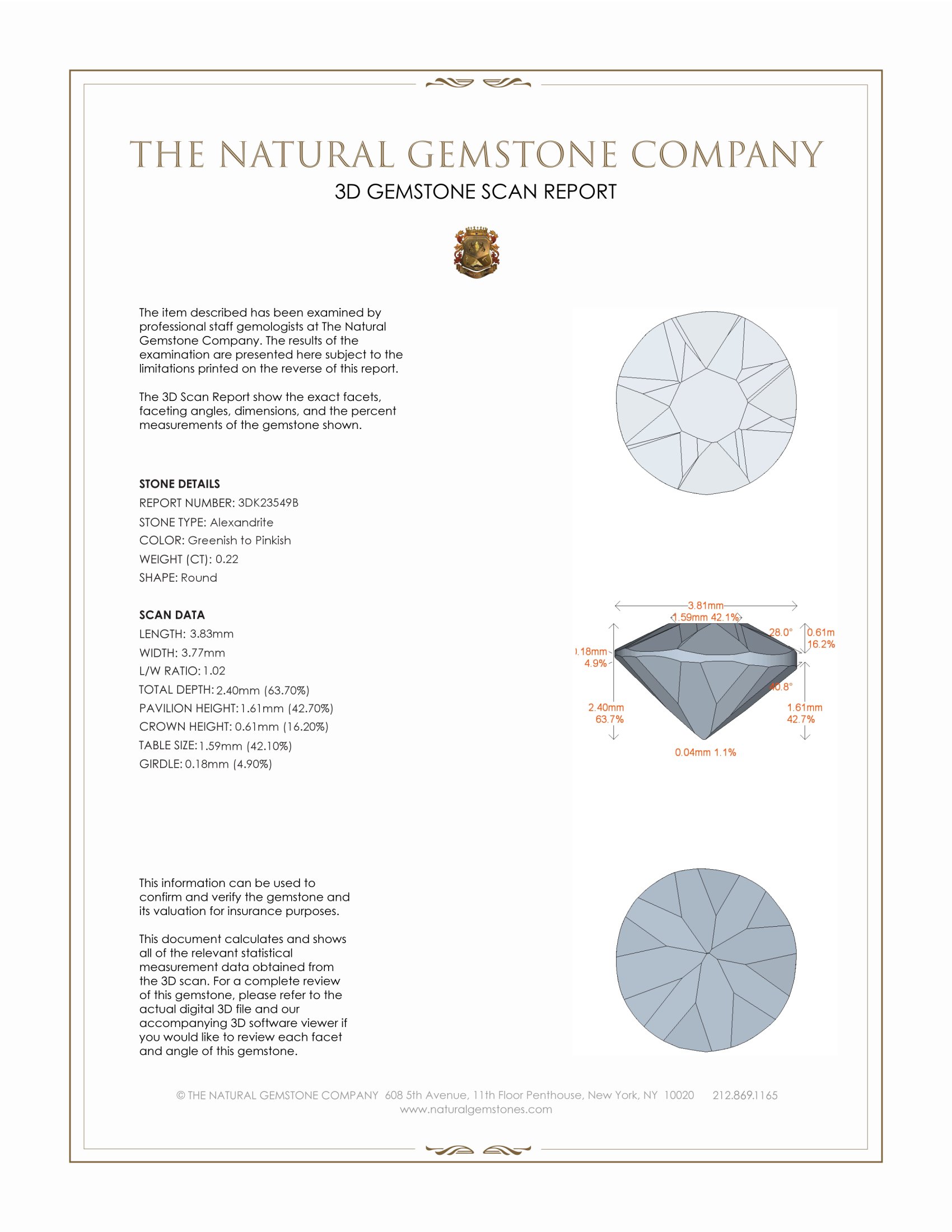
Dimensions (MM): help | Length: 3.83 Width: 3.77 Height: 2.4 |
Weight: | 0.22 Ct. |
Color: help | Greenish to Pinkish |
Color intensity: help | Intense |
Clarity: help | Slightly Included |
Shape: help | Round |
Cut: | Mixed Brilliant Cut |
Cutting style: | Faceted |
Enhancements: help | No Enhancement |
Origin: help | Tanzania |
Per carat price: help | $4,536 |
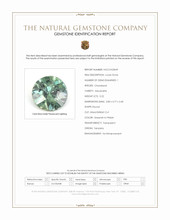
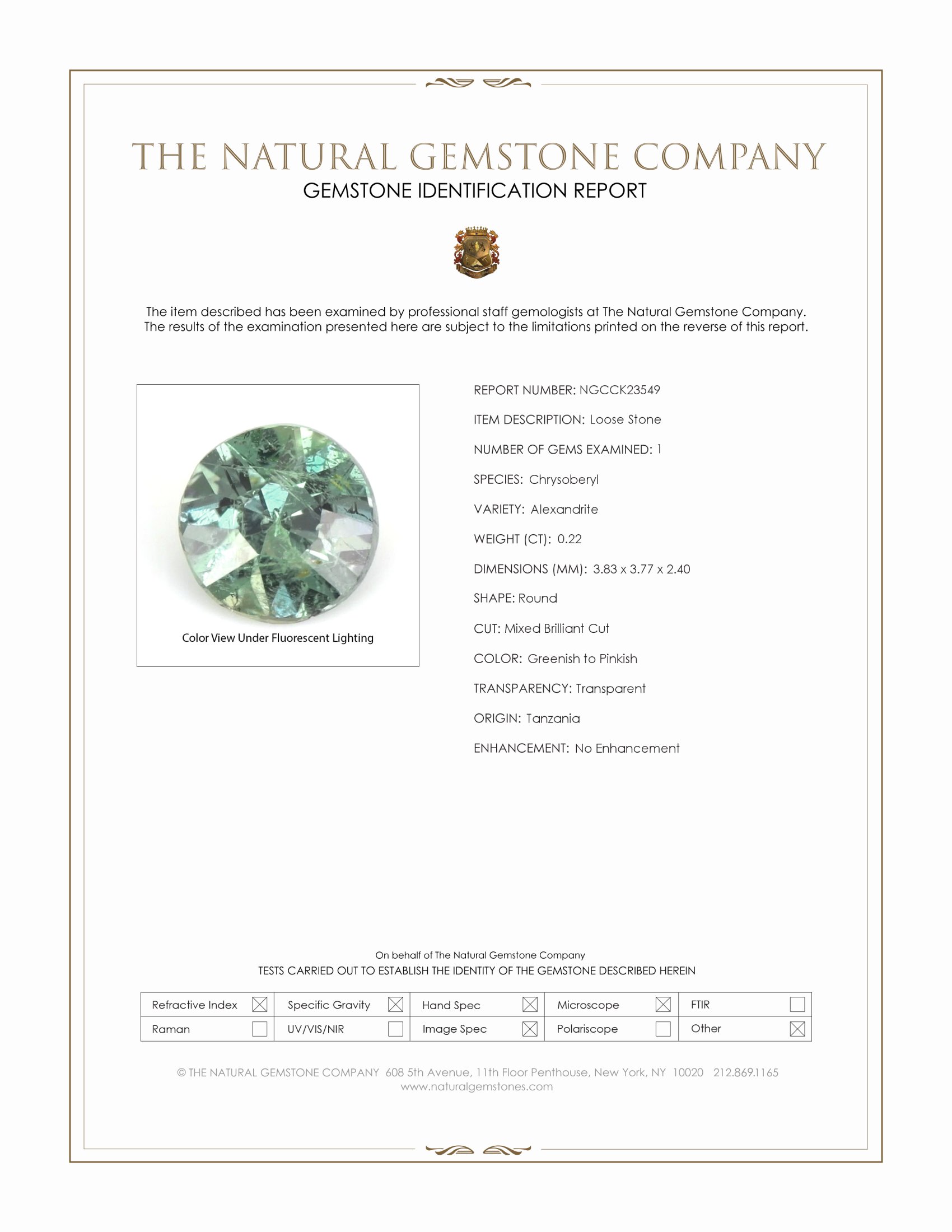
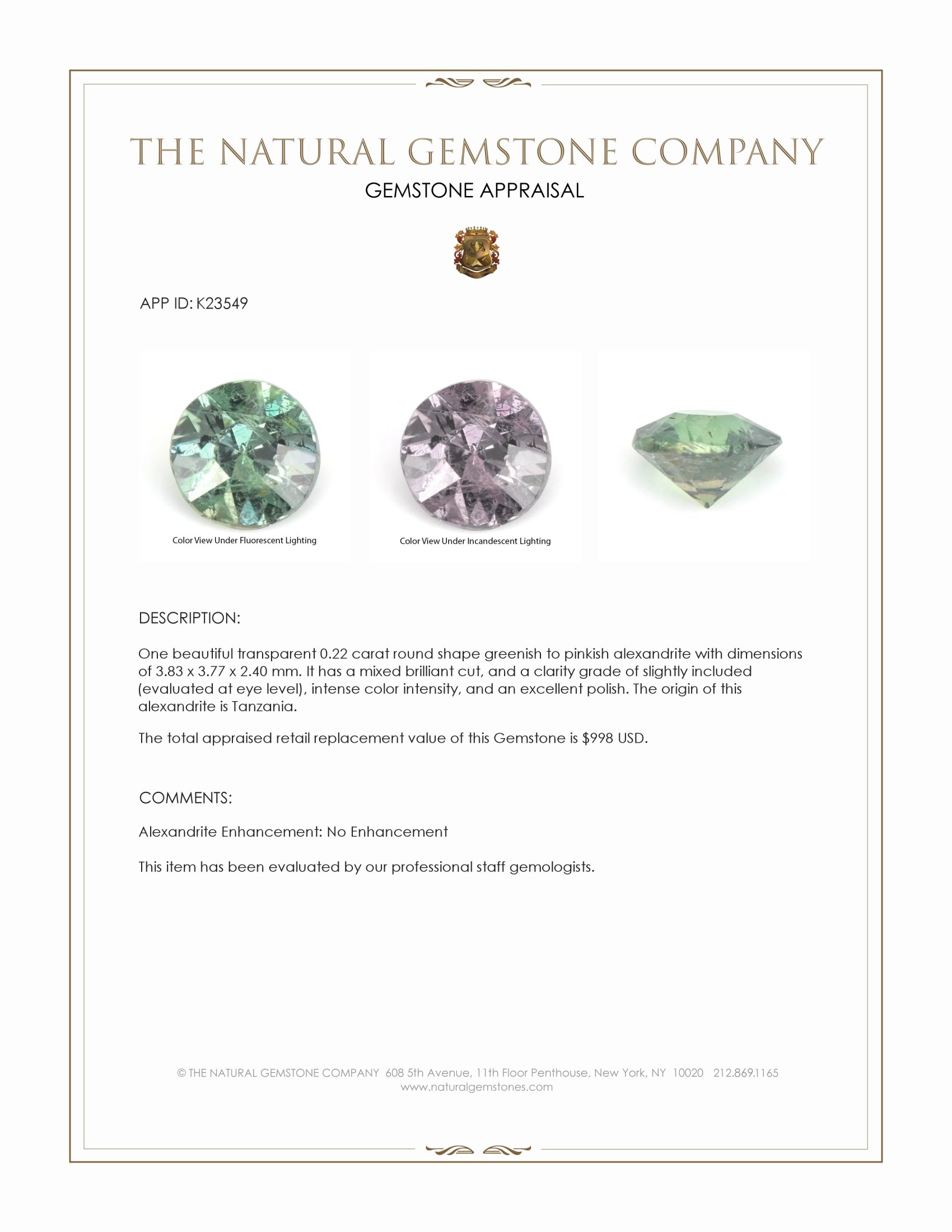
This listing describes a transparent alexandrite, 0.22 carat, round shape, with dimensions 3.83 by 3.77 by 2.40 mm. The stone is fashioned in a mixed brilliant cut, offering both table and pavilion facet arrangements that are designed to optimize brilliance and color presentation. Clarity is graded as slightly included when evaluated at eye level, and the polish is excellent, producing clean facet junctions and a smooth finish. Color intensity is reported as intense, and the piece has not undergone any enhancement. The origin is Tanzania, and this specimen is offered with provenance details available from The Natural Gemstone Company, providing clear information about source and treatment status for collectors and connoisseurs.
In neutral to daylight conditions the gem presents a greenish hue, shifting toward a pinkish tone under warmer illumination, a classic alexandrite color change. The green phase leans toward a fresh, slightly bluish green rather than a heavily yellowish green, while the pinkish phase is more towards a medium rose rather than a deep purplish red. Compared to historical Ural Mountains alexandrite from Russia, which often displays a very strong and dramatic green to red change with a typically darker tone in both modes, this Tanzanian stone offers a lighter, more vibrant green and a brighter pink, giving it a lively appearance in both lighting environments. Against Brazilian alexandrite examples, which can favor a cooler, bluer green and a more mauve red, the Tanzanian piece reads warmer in its pink phase and more vivid in its green phase, with a clarity profile that is generally comparable to fine Brazilian material.
When set beside Sri Lankan and Madagascan alexandrite specimens, the differences in hue and tone become more nuanced. Sri Lankan stones frequently present more subtle color change, with a tendency toward bluish green and a softer purplish red, often with lighter tone and higher transparency. This Tanzanian alexandrite is more intense than many Sri Lankan examples, retaining stronger saturation in both green and pink conditions. Madagascan stones can vary widely, some showing a strong teal green to reddish purple shift, occasionally with higher body tone and deeper saturation. The Tanzanian specimen falls between those extremes, offering a clear and intense color presence without the heavier body tone that can mute brilliance. In relation to other gemstone types from famous localities, the green stage is distinct from Colombian emeralds, which display a deeper bluish green with a different refractive character and typical inclusion patterns, and the pink stage is different from Ceylon or Padparadscha sapphires, which present different pink to orange tones and higher refractive dispersion characteristics.
Assessment of physical and gemological attributes supports the gem as suitable for fine jewelry and for collectors seeking a naturally color changing chrysoberyl with reliable provenance. The mixed brilliant cut enhances perceived color change by concentrating light return through the table and crown facets, while the excellent polish aids in minimizing light leakage and maximizing sparkle. Slight inclusions are characteristic for natural alexandrite and contribute to identification and individuality, they do not materially detract from the overall visual performance given the small carat weight and the intense color. The absence of enhancement is significant in valuation and long term stability, and the Tanzanian origin should be noted for its emerging reputation for producing alexandrite with lively color change and attractive clarity.
The Natural Gemstone Company provides this alexandrite with full disclosure of origin and treatment, and with photographic and descriptive documentation suited for appraisal and insurance purposes. For gemologists and experienced collectors who compare material by hue and tone across geographic sources, this stone offers a clear example of East African alexandrite character, with a vivid green under cooler light and a bright pink in warmer light, combined with the clean presenting surface details afforded by an excellent polish. The balance of intense color, natural clarity, and precise cutting creates a specimen that will perform well in both study and wear, and that represents a transparent, unenhanced example of Tanzanian alexandrite provenance.


