
- Stone12
- Reports3
-round-greentobrown-alexandrite-1.0000-cts-k17093-1.jpg?d=200x200&v=20250902161250)
-round-greentobrown-alexandrite-1.0000-cts-k17093-lifestyleimage-1.jpg?d=200x200&v=20250904051041)
-round-greentobrown-alexandrite-1.0000-cts-k17093-lifestyleimage-2.jpg?d=200x200&v=20250904051042)
-round-greentobrown-alexandrite-1.0000-cts-k17093-lifestyleimage-3.jpg?d=200x200&v=20250904051042)


-round-greentobrown-alexandrite-1.0000-cts-k17093-1.jpg?d=750x750&s=ngc&v=20250902161250)
-round-greentobrown-alexandrite-1.0000-cts-k17093-lifestyleimage-1.jpg?d=750x750&s=ngc&v=20250904051041)
-round-greentobrown-alexandrite-1.0000-cts-k17093-lifestyleimage-2.jpg?d=750x750&s=ngc&v=20250904051042)
-round-greentobrown-alexandrite-1.0000-cts-k17093-lifestyleimage-3.jpg?d=750x750&s=ngc&v=20250904051042)



1.00 Ct. Alexandrite from Ceylon (Sri Lanka)
This loose stone is available to ship now
Item ID: | K17093 |
|---|---|
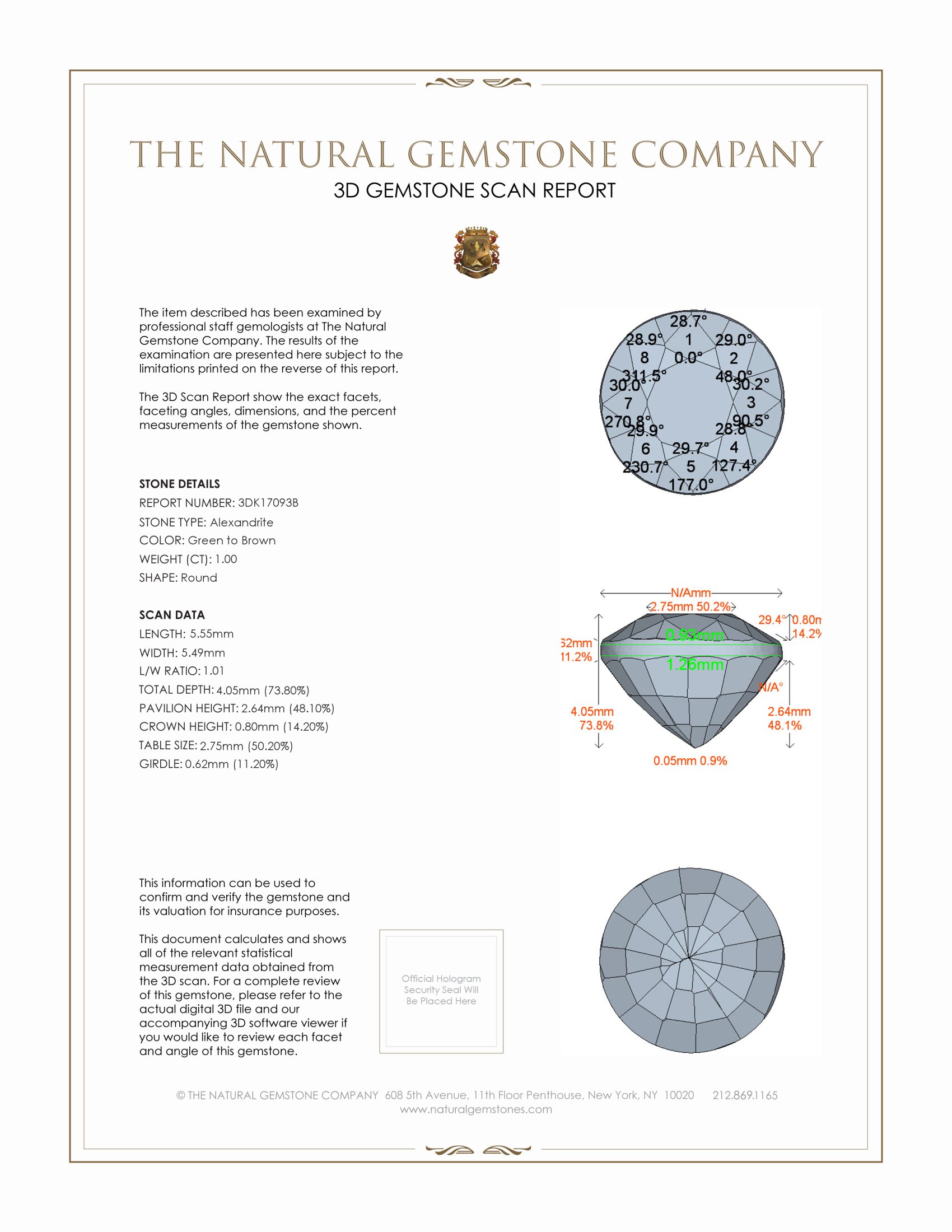
Dimensions (MM): help | Length: 5.55 Width: 5.49 Height: 4.05 |
Weight: | 1.00 Ct. |
Color: help | Green to Brown |
Color intensity: help | Intense |
Clarity: help | Included |
Shape: help | Round |
Cut: | Mixed Brilliant Cut |
Cutting style: | Faceted |
Enhancements: help | No Enhancement |
Origin: help | Ceylon (Sri Lanka) |
Per carat price: help | $7,400 |
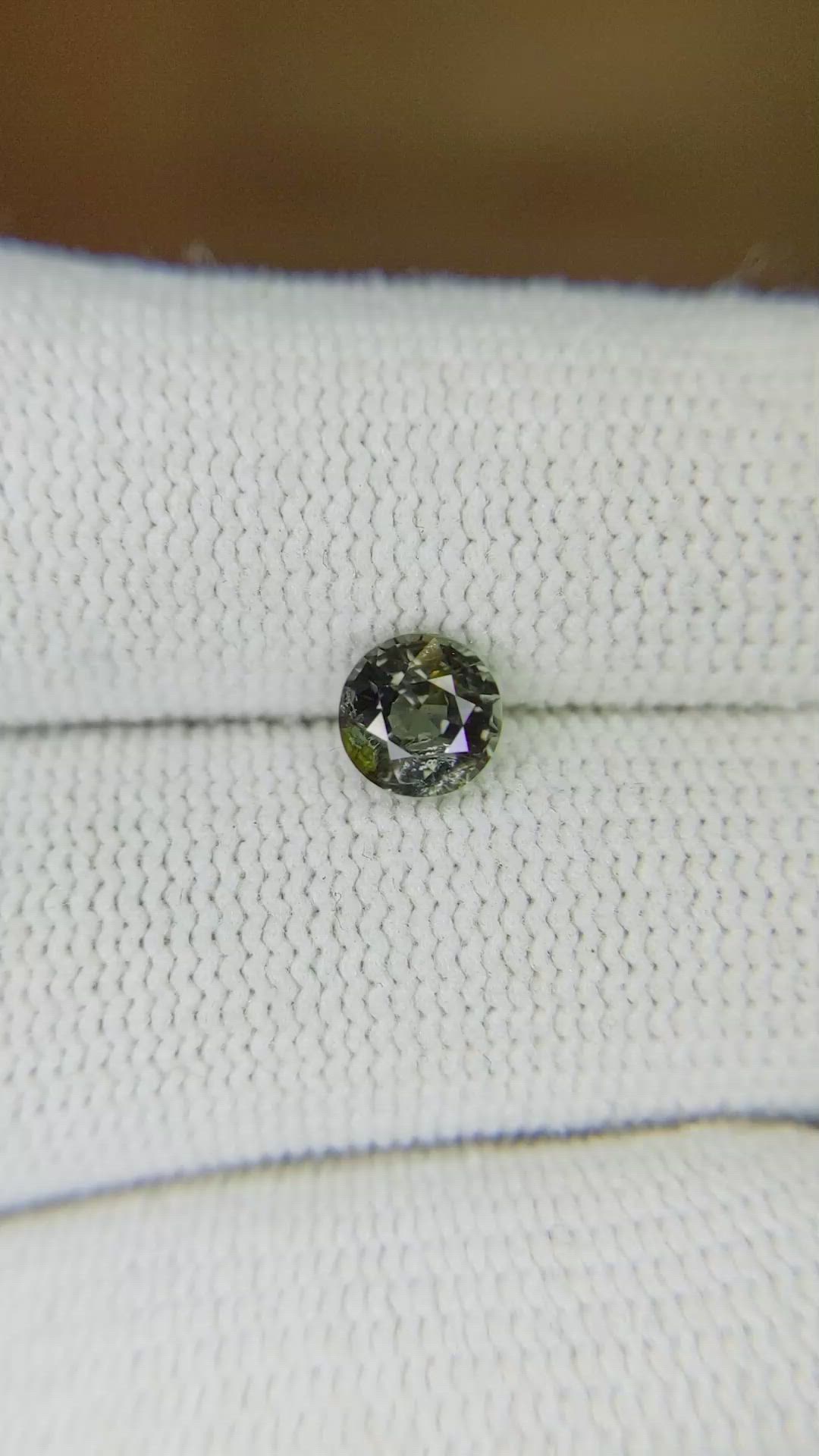
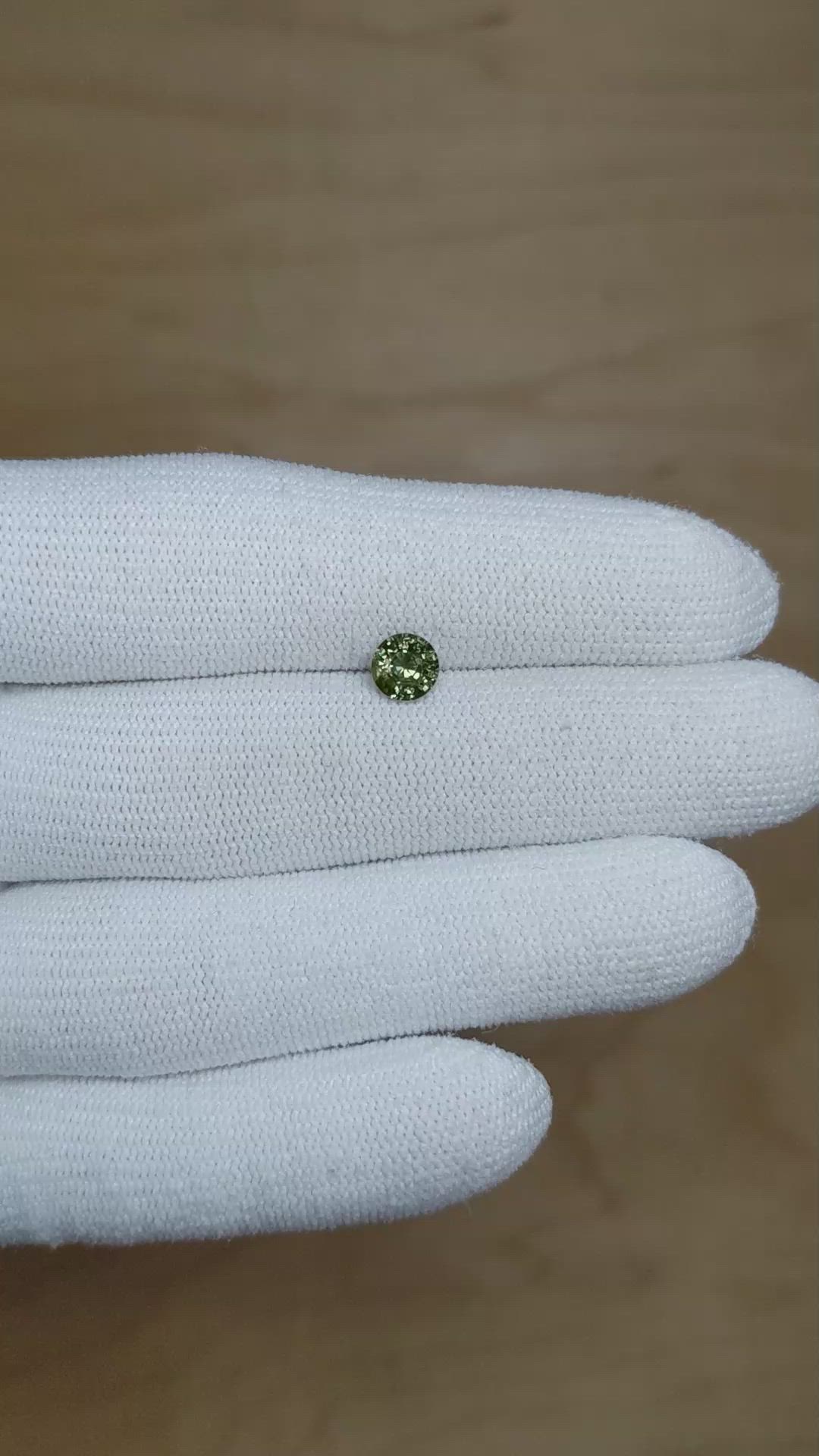
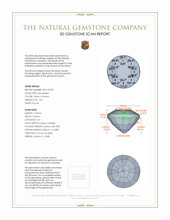
This 1.00 carat round alexandrite from Ceylon is presented with precise dimensions of 5.55 by 5.49 by 4.05 millimeters, a mixed brilliant cut, and an intense color intensity. The measured depth is approximately seventy three point four percent, a proportion that reflects a deliberate cutting decision to maximize saturation and the alexandrite color change rather than to emphasize table size. Clarity is graded as included at eye level, indicating the presence of internal features that are visible without magnification, and polish is excellent, delivering clean facet junctions and a mirror finish on crown and pavilion surfaces. There has been no enhancement, and the stone is offered in natural, untreated condition, making it a responsible choice for collectors and discerning clients who value provenance and original material. Origin is Sri Lanka, which contributes character through the typical Ceylon color spectrum that here reads as green in daylight tones shifting toward warm brown tones in incandescent light.
The mixed brilliant faceting in this piece is engineered to balance light return and color saturation. The crown employs a brilliant style to break incident light into small, lively flashes, while the pavilion uses modified step and broad pavilion mains to produce deeper color return and to enhance viewing contrast. This hybrid approach leverages the high refractive index of chrysoberyl family material, approximately one point seven four seven to one point seven five five, by creating multiple internal reflection pathways so that selective absorption tied to chromium and trace elements is emphasized. The deeper overall pavilion depth concentrates optical path length, intensifying hue and strengthening the alexandrite effect, that is the distinct change from green to brown across lighting environments. The included clarity grade does introduce internal structures that can scatter light, however the cutter has oriented inclusions parallel to pavilion mains where possible, reducing disruptive light leakage and permitting strong contrast between reflected flashes and dark facet windows. Excellent polish ensures that surface scattering is minimal, so the stone presents maximum visual contrast and crisp facet break under close inspection.
When compared to more common gemstones the brilliance behavior of this alexandrite is distinctive rather than directly analogous. Diamond, with its much higher refractive index around two point four one seven and greater dispersion, produces more scintillation and spectral fire than chrysoberyl, and that remains a benchmark for brilliance in the jewelry market. Corundum species such as sapphire and ruby have refractive indices slightly higher than chrysoberyl and marginally greater dispersion, resulting in perceptible fire and lively scintillation in well cut stones. Beryl family stones such as emerald have lower refractive indices near one point five eight and tend to exhibit a softer, more glassy light return. Alexandrite, by contrast, pairs a relatively high refractive index with low dispersion, producing strong, crisp luster and high contrast flashes without the pronounced rainbow fire of diamond. What sets alexandrite apart is not simply the intensity of white light return, but the dynamic modulation of color under varying spectral conditions. The chromophore absorption bands that create the alexandrite effect selectively attenuate portions of the spectrum, so facets that return light at different angles will display different hues, producing a moving interplay of green, deep olive, and warm brown that is not found in single hue gemstones.
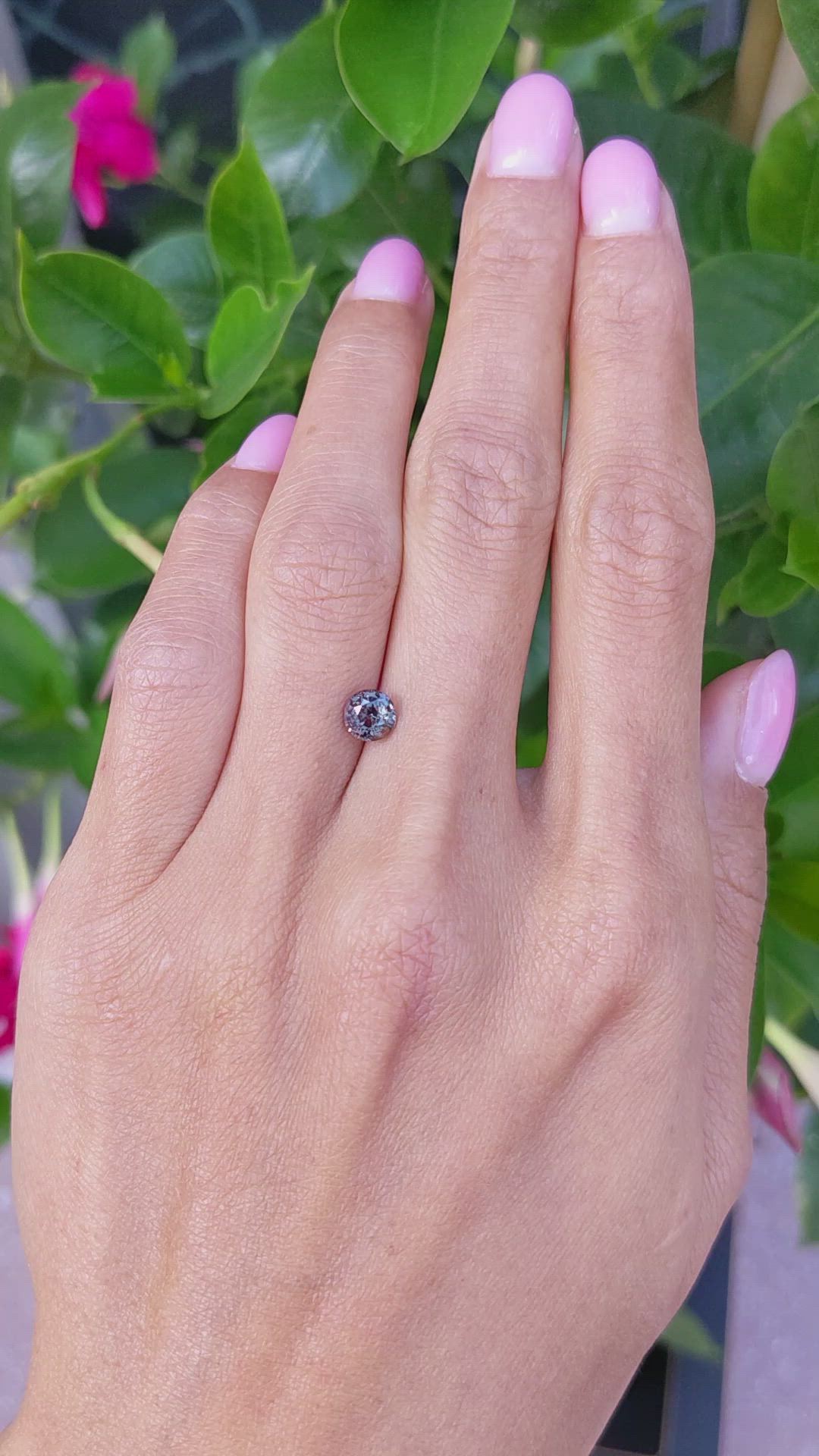
For the practical buyer this stone offers a compelling combination of technical attributes. The one carat mass and five point five millimeter diameter make it suitable for rings and pendants where the color change can be appreciated in daily wear, and the mineral hardness of chrysoberyl around eight point five affords strong resistance to abrasion. The cutter has prioritized color saturation and optical performance over table size, a choice that benefits the alexandrite effect by increasing internal path length and maximizing hue shift. The Natural Gemstone Company warrants that this piece is unheated and natural, and we can provide further gemological documentation on request. For clients who appreciate facet geometry, refractive behavior, and the science behind pleochroic color change, this Ceylon alexandrite is a technically refined example that stands apart from more common stones by virtue of its dynamic color response and the precision of its mixed brilliant execution.


