
- Stone10
- Reports3
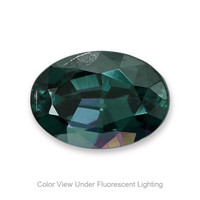
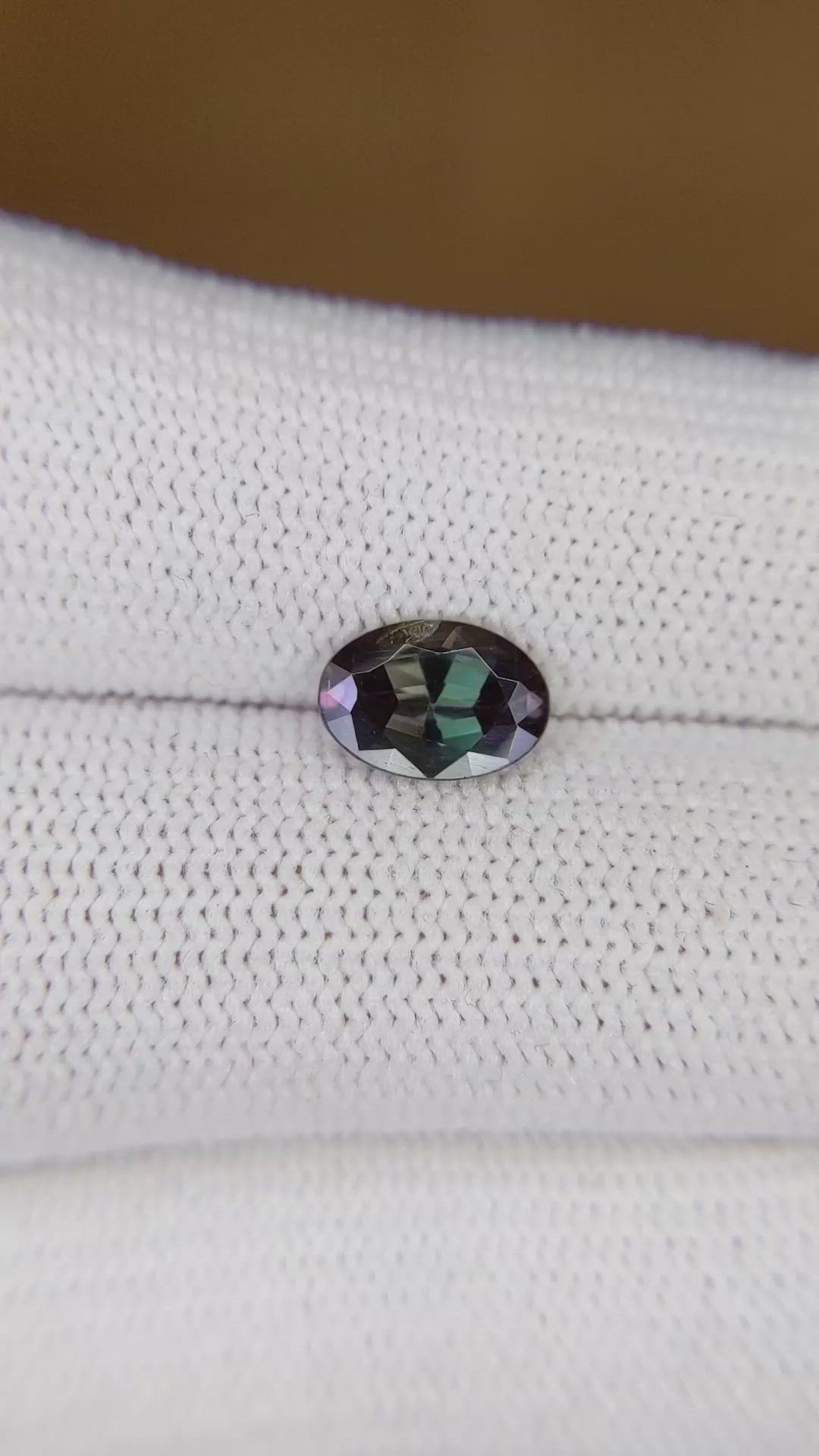
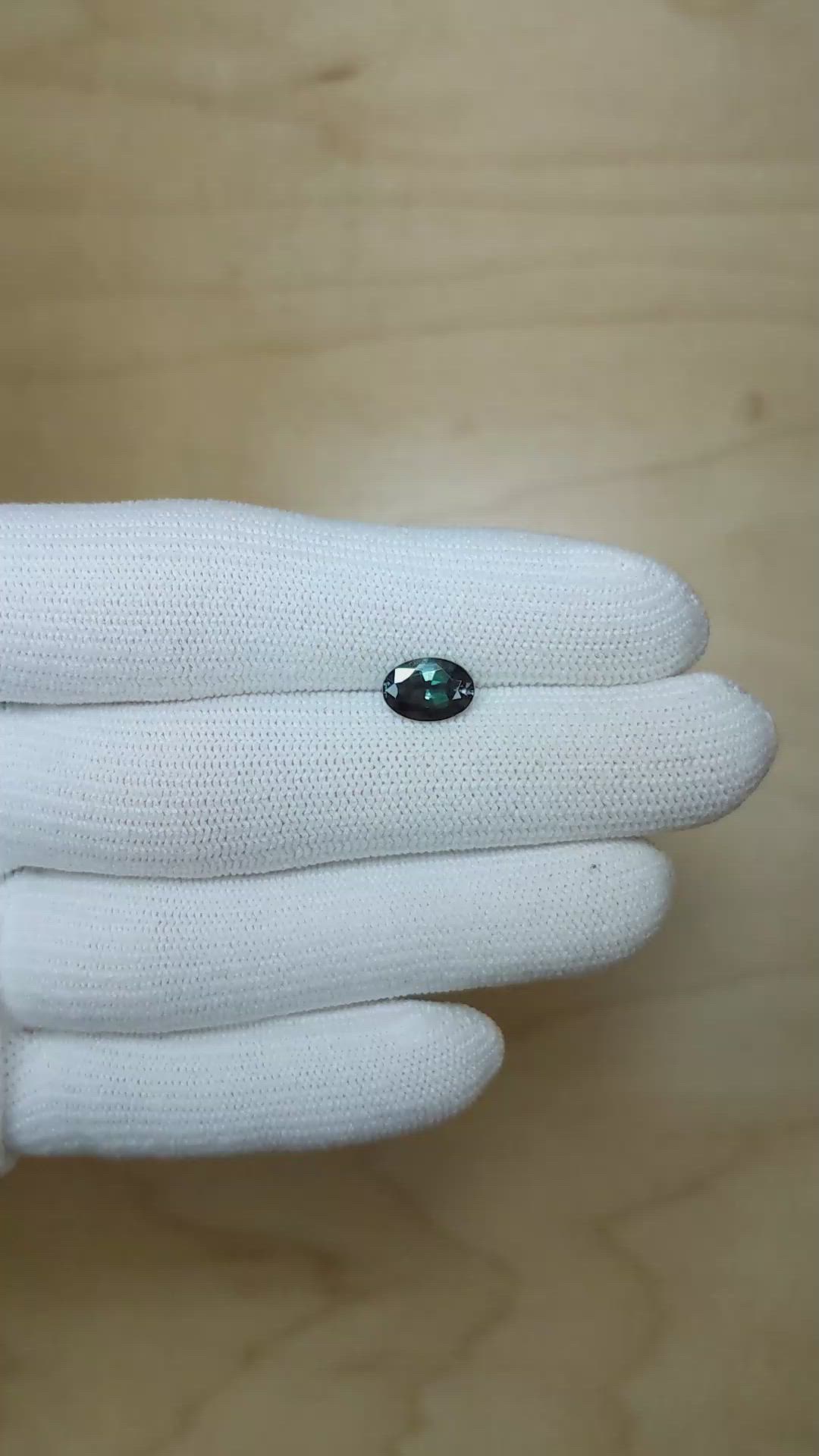
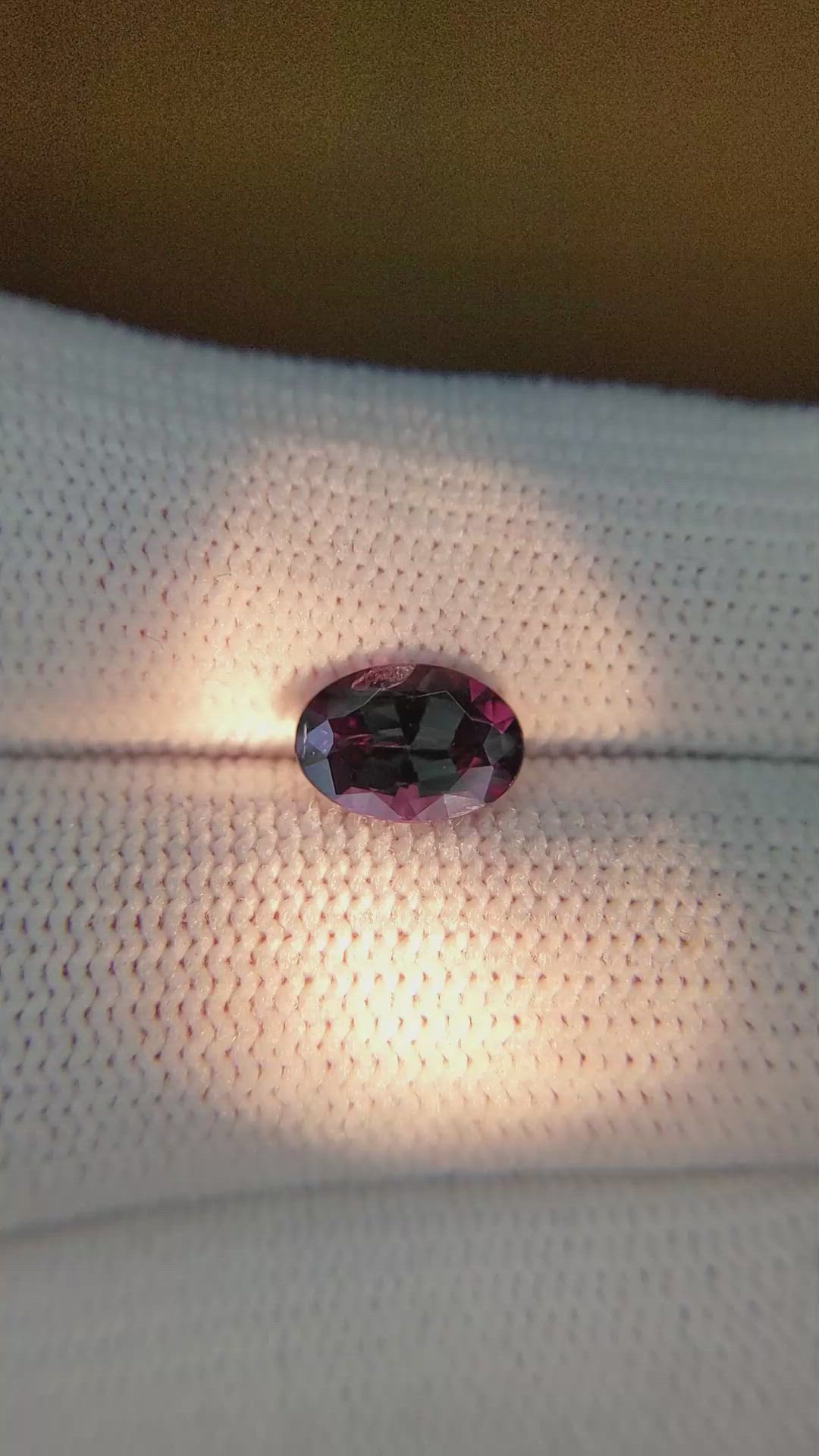
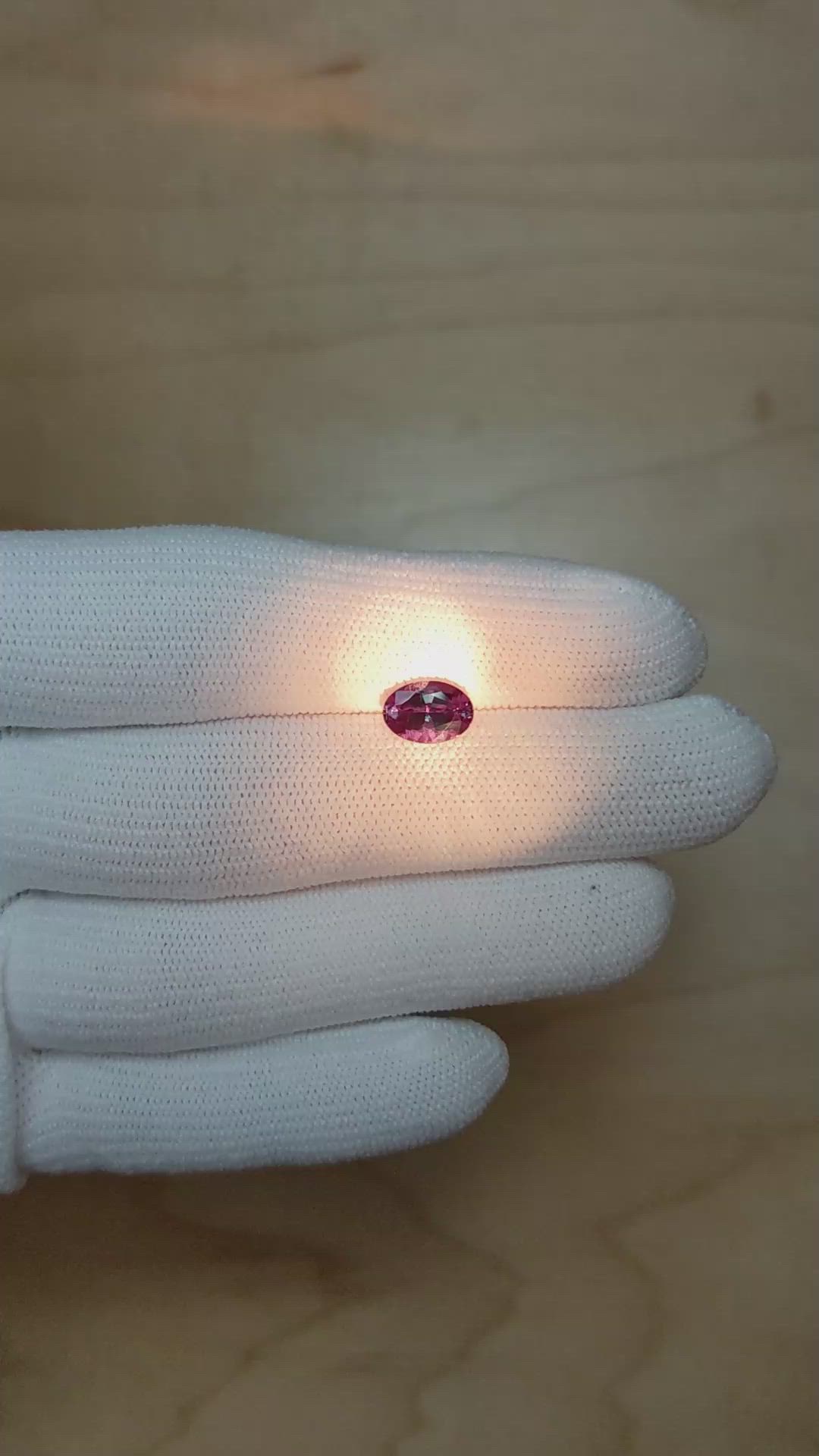

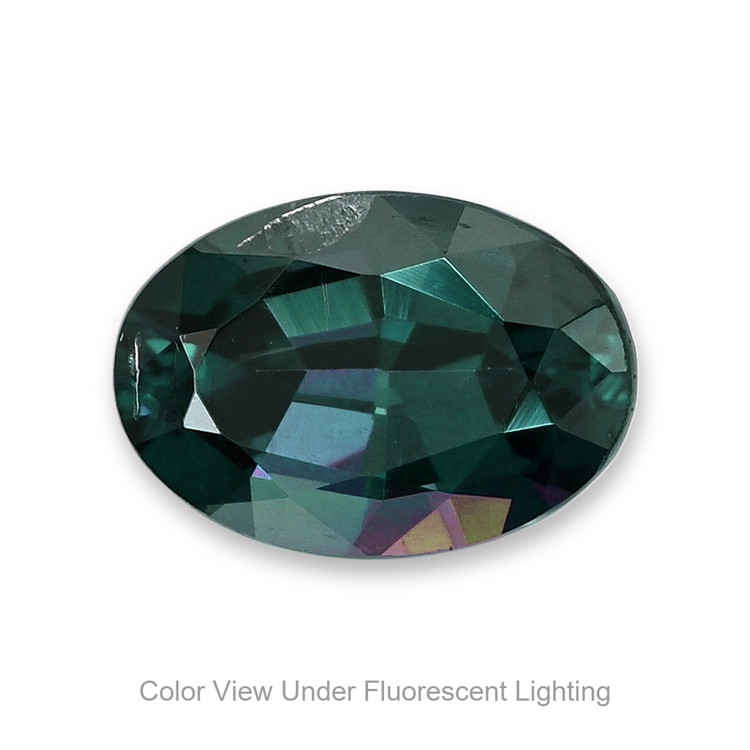

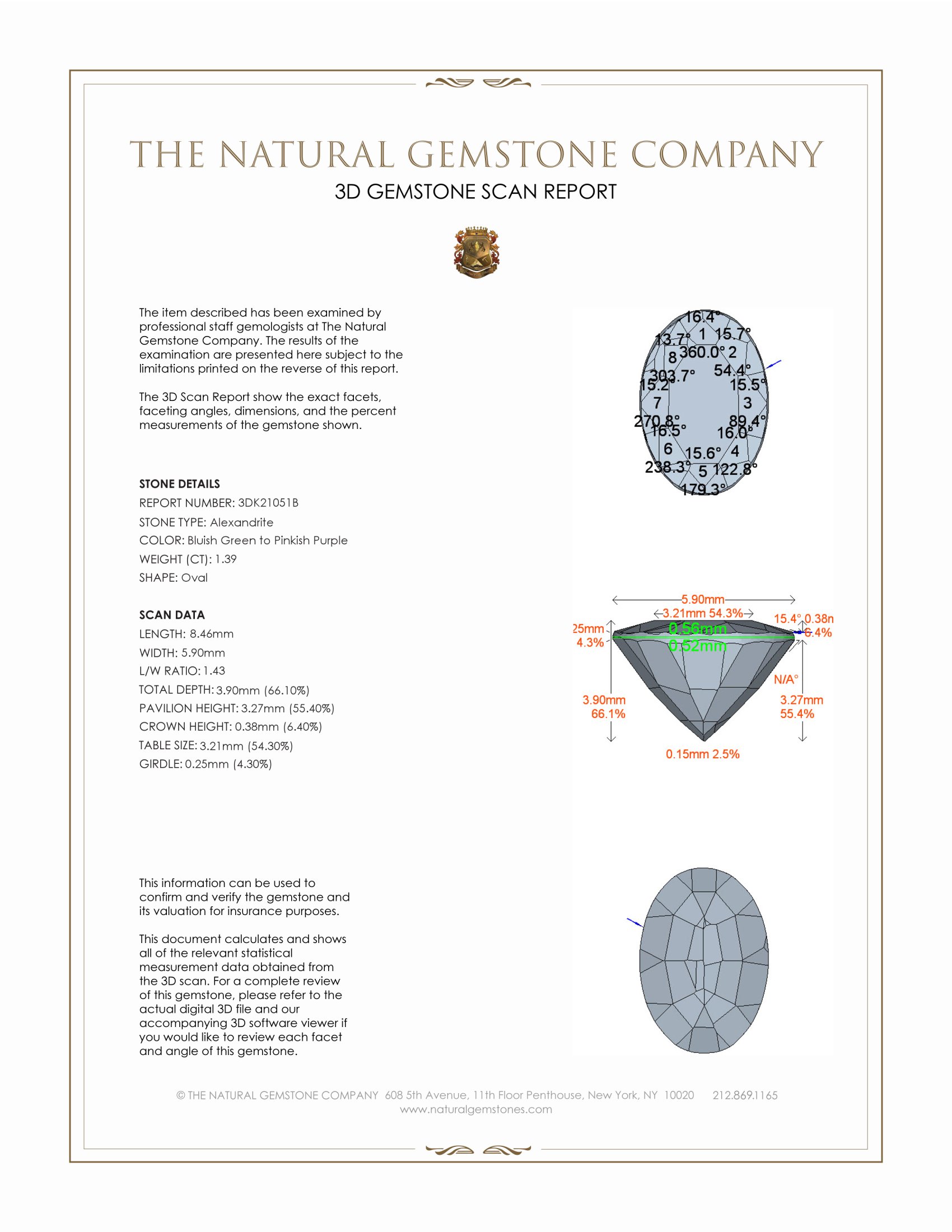

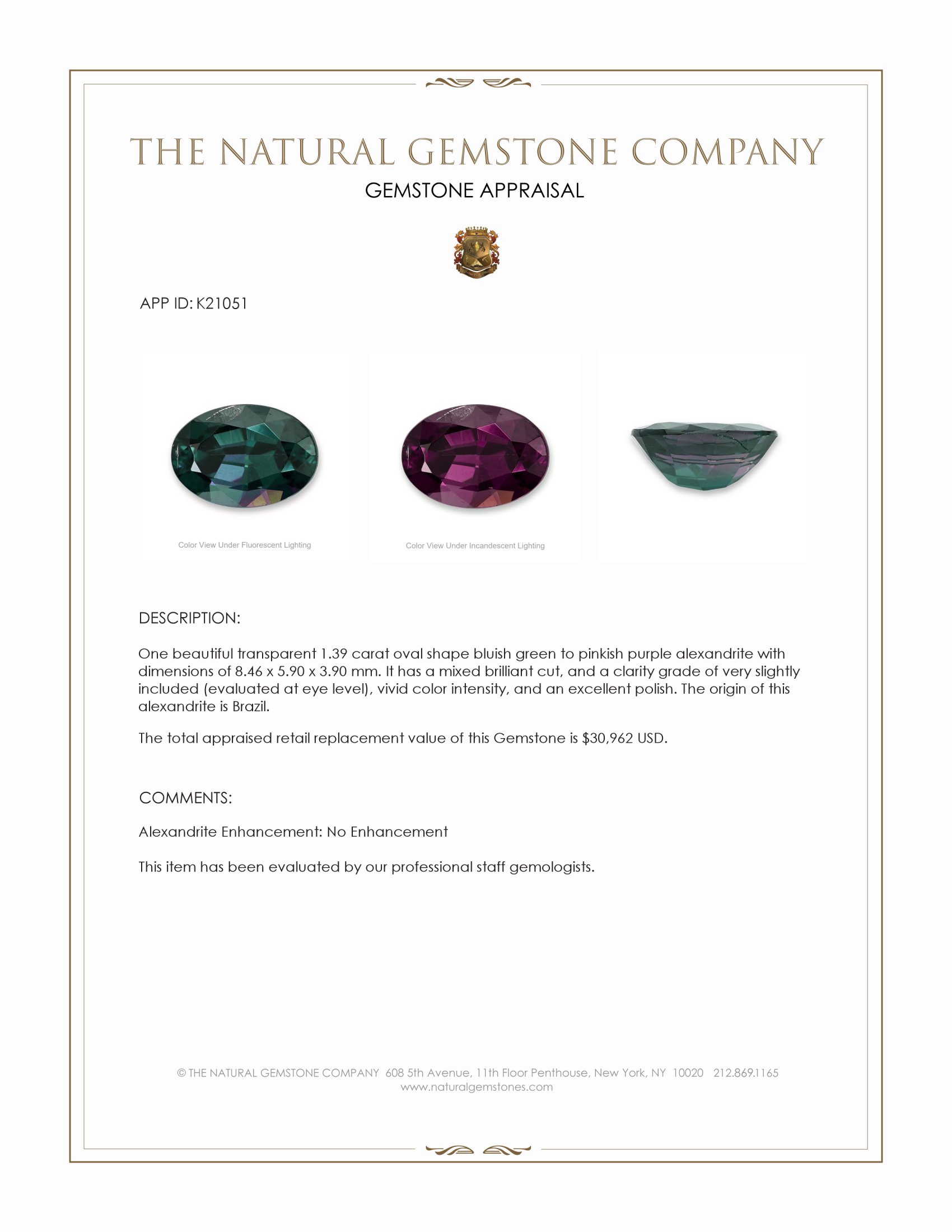
1.39 Ct. Alexandrite from Brazil
This loose stone is available to ship now
Item ID: | K21051 |
|---|---|
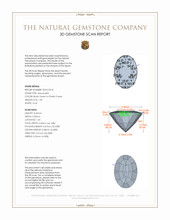
Dimensions (MM): help | Length: 8.46 Width: 5.9 Height: 3.9 |
Weight: | 1.39 Ct. |
Color: help | Green to Purple |
Color intensity: help | Vivid |
Clarity: help | Very Slightly Included |
Shape: help | Oval |
Cut: | Mixed Brilliant |
Cutting style: | Faceted |
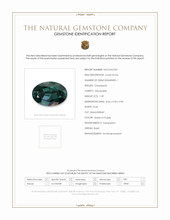
Enhancements: help | No Enhancement |
Origin: help | Brazil |
Per carat price: help | $22,275 |
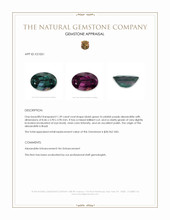
This transparent 1.39 carat oval shape green to purple alexandrite measures 8.46 x 5.90 x 3.90 mm, and presents a mixed brilliant cut executed to exacting proportions. The mixed brilliant faceting combines a finely faceted crown with a precision pavilion facet layout to balance color saturation and light return in a compact oval outline. Face up the stone shows vivid color intensity, shifting from saturated green under daylight balanced illumination to a strong purple under incandescent light, consistent with a classic alexandrite effect. Clarity is graded as very slightly included, evaluated at eye level, which indicates only minor natural inclusions that do not impede transparency or scintillation. The polish on all facet planes is excellent, yielding crisp facet junctions and lively facet contrast, and no enhancements have been applied to alter the stone, preserving its natural state and optical character. The material is from Brazil, a source noted for producing alexandrites with clean bodytone and a pleasing balance between green and purple hues, and the specimen is offered by The Natural Gemstone Company.
From a lapidary and gemological perspective, the mixed brilliant cut on this oval alexandrite is chosen deliberately to optimize the chromatic shift and overall performance. The crown facet array is designed with carefully controlled crown height and table proportions to modulate the interaction of incident light with the chromium induced absorption bands that produce the color change. The pavilion facet angles and depth have been calibrated to maximize internal reflection and scintillation without sacrificing face up color saturation, a crucial balance for stones under one and a half carats. Oval geometry introduces specific optical considerations, including directionally dependent pleochroism and potential lengthwise color zoning, and the cutter has oriented the pavilion and crown to minimize uneven color distribution and to leverage the pleochroic axes for a consistent face up tone. The minor inclusions noted in the very slightly included grade are natural growth features, and their limited presence enhances the gemological fingerprint without compromising durability or brilliance. Excellent symmetry and polish contribute to predictable light return and crisp color boundaries between green and purple, important qualities for buyers who assess alexandrite on the basis of both color change intensity and cut quality.
Technically, the alexandrite phenomenon arises from chromium impurities in the chrysoberyl lattice, which create selective light absorption that shifts perceived hue as the spectral balance of illumination changes. Natural growth conditions produce subtle variations in trace element concentrations, lattice strain, and internal morphology, yielding complex spectral responses and nuanced color shifts that are difficult to replicate synthetically. Lab grown alexandrites, often produced by flux or hydrothermal methods, can exhibit strong and attractive color change, and they offer advantages in uniformity and cost efficiency. However, laboratory synthesis tends to produce more homogeneous inclusion patterns and more predictable optical responses, which while visually appealing, lack the stochastic complexity of natural material. Collectors and connoisseurs often value the microstructural irregularities, zoning patterns, and inclusion suites of natural alexandrite as indicators of provenance and as contributors to the stone specific personality that develops under different lighting conditions.
Compared to lab grown alternatives, this natural Brazilian alexandrite offers several distinct advantages relevant to discerning buyers and investors. First, provenance and traceability are intrinsic to natural stones, and documented origin from Brazil adds market context and collector interest. Second, the absence of enhancements preserves the stone in its original geological state, which is a decisive factor for purists and for long term value stability. Third, the complex interplay of natural inclusions, trace elements, and growth zoning in this gem produces a layered optical performance that can reveal different nuances of green and purple across real world lighting environments, a quality that synthetic stones may mimic but seldom duplicate with the same spectral complexity. Finally, rarity and market perception confer greater potential for appreciation and resale, particularly for well cut, vividly colored specimens with excellent polish and clarity grades that are established in reputable channels. The Natural Gemstone Company stands behind the technical description and provenance of this alexandrite, and our presentation emphasizes accurate gemological detail for buyers who demand a precise understanding of cut, color, clarity, and treatment status when comparing natural examples to lab created counterparts.


