
- Stone15
- Reports4
-oval-greentobrown-alexandrite-2.1000-cts-k17449-1.jpg?d=200x200&v=20250930091737)
-oval-greentobrown-alexandrite-2.1000-cts-k17449-lifestyleimage-1.jpg?d=200x200&v=20250915050043)
-oval-greentobrown-alexandrite-2.1000-cts-k17449-lifestyleimage-2.jpg?d=200x200&v=20250915050043)
-oval-greentobrown-alexandrite-2.1000-cts-k17449-lifestyleimage-3.jpg?d=200x200&v=20250915050043)

-oval-greentobrown-alexandrite-2.1000-cts-k17449-1.jpg?d=750x750&s=ngc&v=20250930091737)
-oval-greentobrown-alexandrite-2.1000-cts-k17449-lifestyleimage-1.jpg?d=750x750&s=ngc&v=20250915050043)
-oval-greentobrown-alexandrite-2.1000-cts-k17449-lifestyleimage-2.jpg?d=750x750&s=ngc&v=20250915050043)
-oval-greentobrown-alexandrite-2.1000-cts-k17449-lifestyleimage-3.jpg?d=750x750&s=ngc&v=20250915050043)


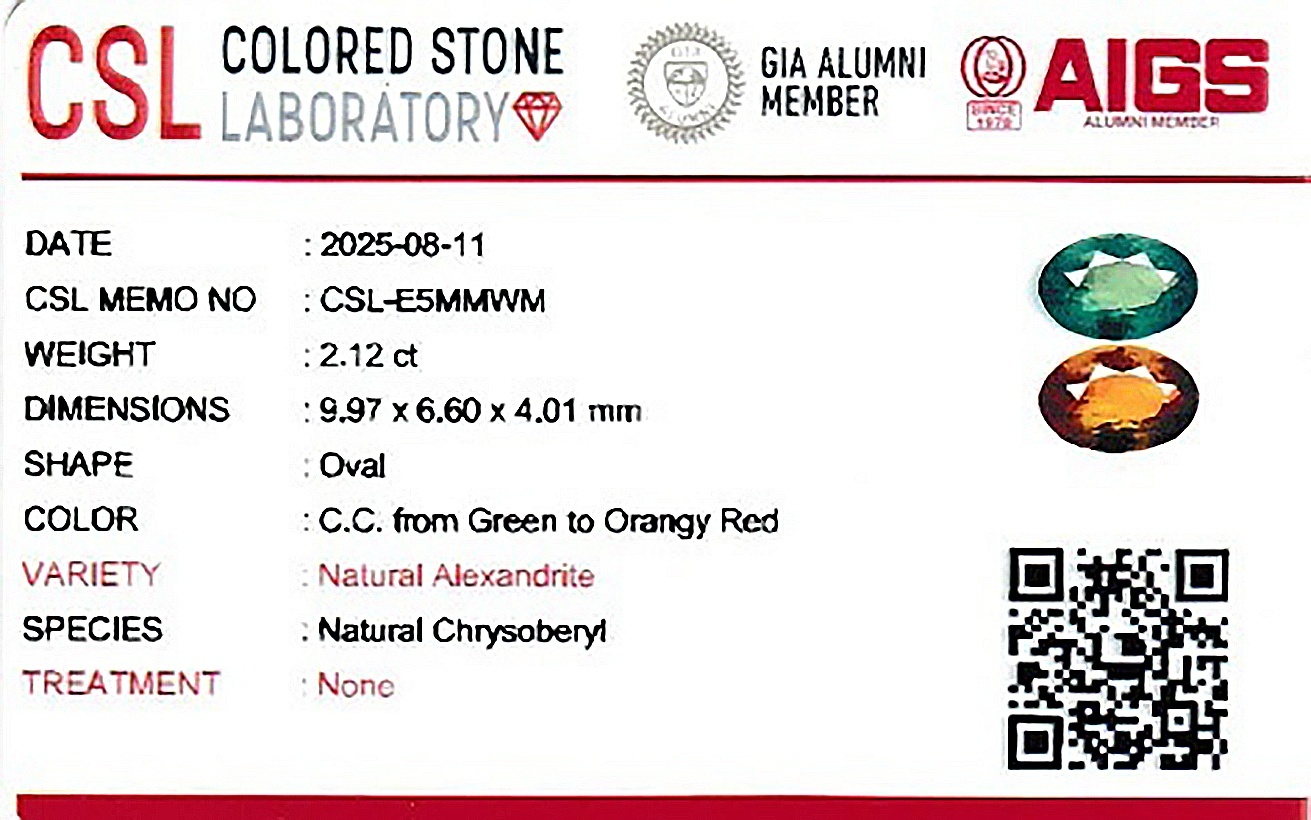

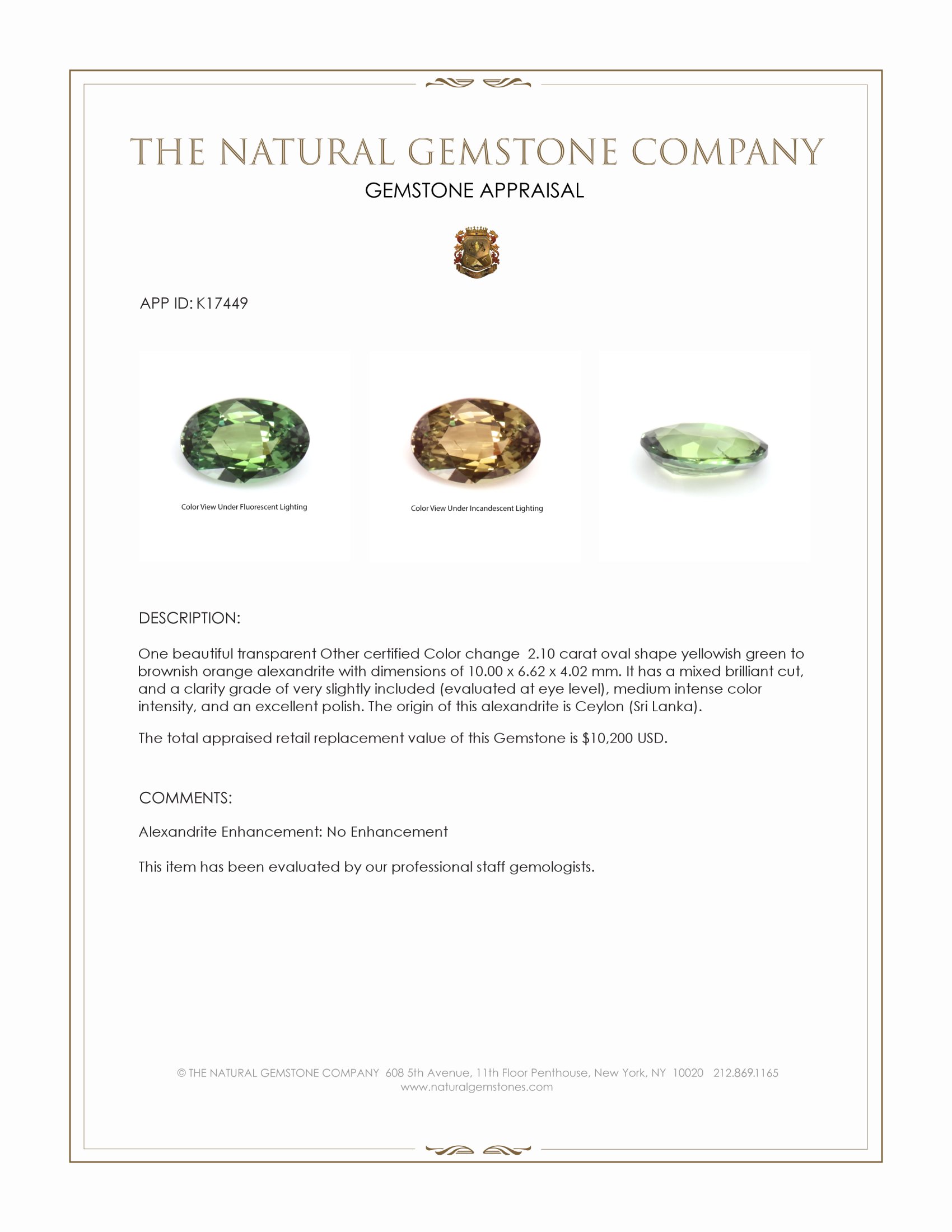
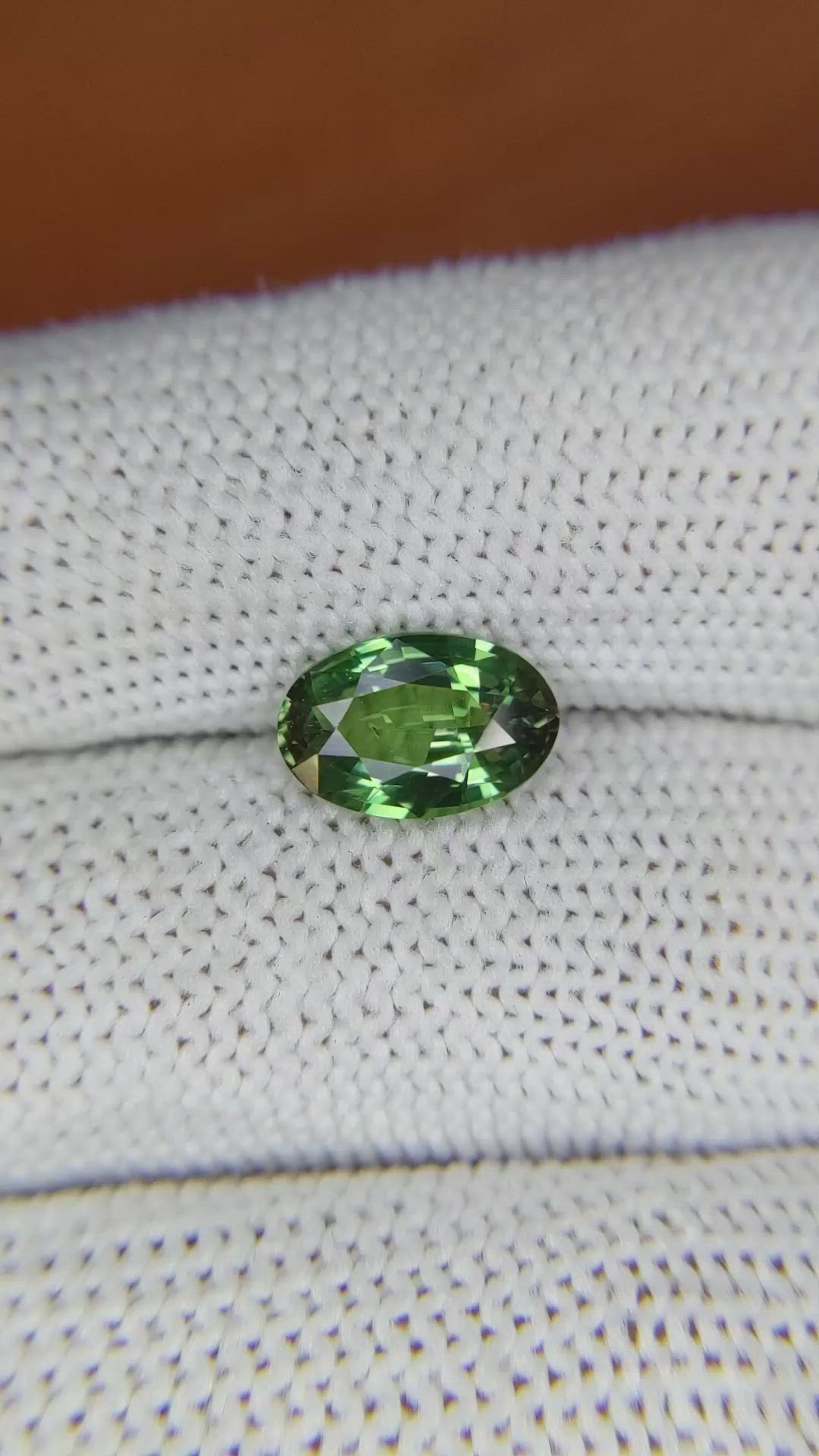
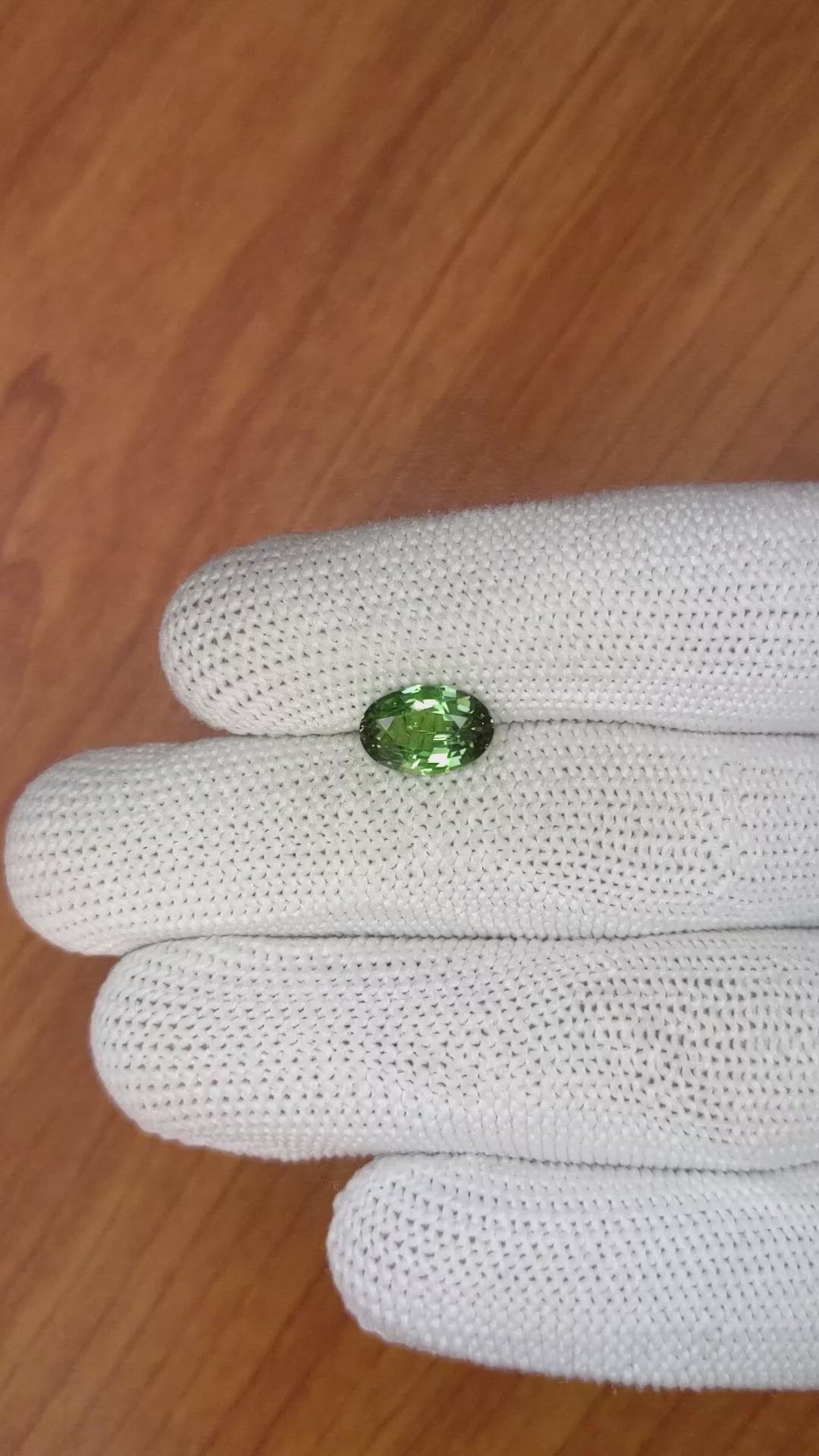
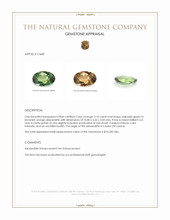
2.10 Ct. Alexandrite from Ceylon (Sri Lanka)
This loose stone ships by Jan 4
Item ID: | K17449 |
|---|---|
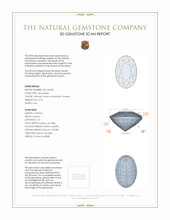
Dimensions (MM): help | Length: 10 Width: 6.62 Height: 4.02 |
Weight: | 2.10 Ct. |
Color: help | Yellowish Green to Brownish Orange |
Color intensity: help | Medium Intense |
Clarity: help | Very Slightly Included |
Shape: help | Oval |
Cut: | Mixed Brilliant |
Cutting style: | Faceted |
Enhancements: help | No Enhancement |
Origin: help | Ceylon (Sri Lanka) |
Per carat price: help | $4,857 |
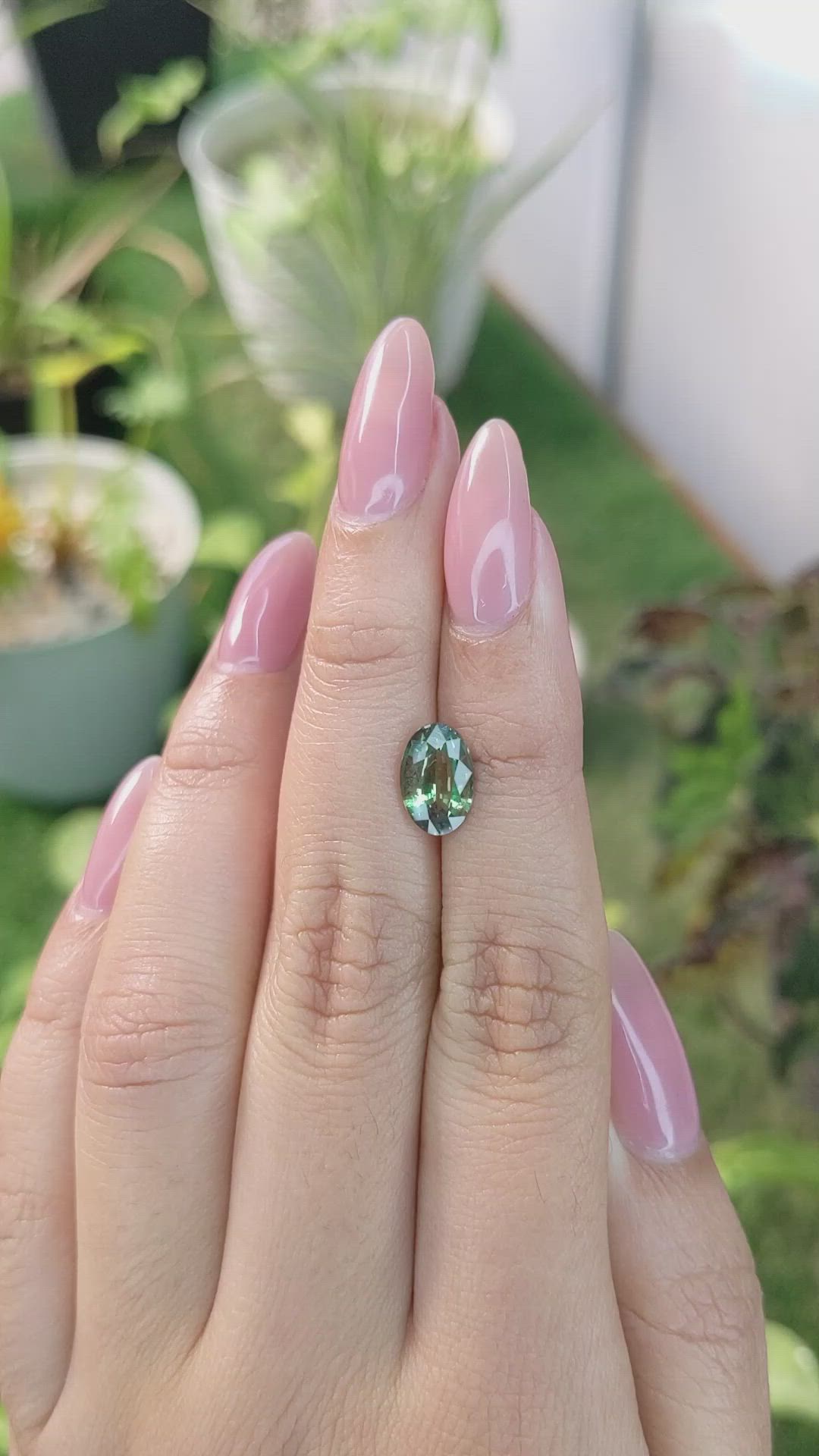
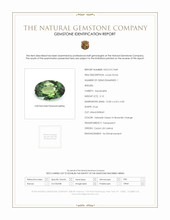
This listing presents one certified color change alexandrite from Ceylon Sri Lanka offered by The Natural Gemstone Company, weighing 2.10 carats, in an elongated oval shape with precise dimensions of 10.00 by 6.62 by 4.02 millimeters. The cutter employed a mixed brilliant faceting scheme, combining a brilliant style crown with a modified pavilion facet arrangement to balance scintillation with color retention. Clarity has been assessed as very slightly included when evaluated at eye level, indicating small internal features that do not materially interrupt light transmission or overall optical performance. Color intensity is described as medium intense, yielding a lively appearance under appropriate lighting, and the polish has been executed to an excellent standard, providing clean facet junctions and high surface luster. There has been no enhancement to this natural stone, and the documented origin of Ceylon Sri Lanka contributes to the gemological profile and desirability.
From a cutting and optical design perspective, the mixed brilliant execution in this oval alexandrite is engineered to optimize the gem for color change behavior while maintaining desirable brilliance. The crown displays a classic brilliant facet layout that concentrates return through the table and star facets, while the pavilion is modified to an array of elongated facets that preserve weight and control windowing. The proportion geometry yields a depth relative to the average of length and width that is suitable for this size, supporting a balanced face up appearance and effective light performance. Facet symmetry and polish are both at a level that minimizes light leakage and maximizes contrast at facet edges, which enhances perceived color saturation in both daylight and incandescent viewing conditions. The cut also maintains a well centered table and a consistent girdle profile, factors that support secure setting and reduce the need for heavy bezel metal removal during mounting.
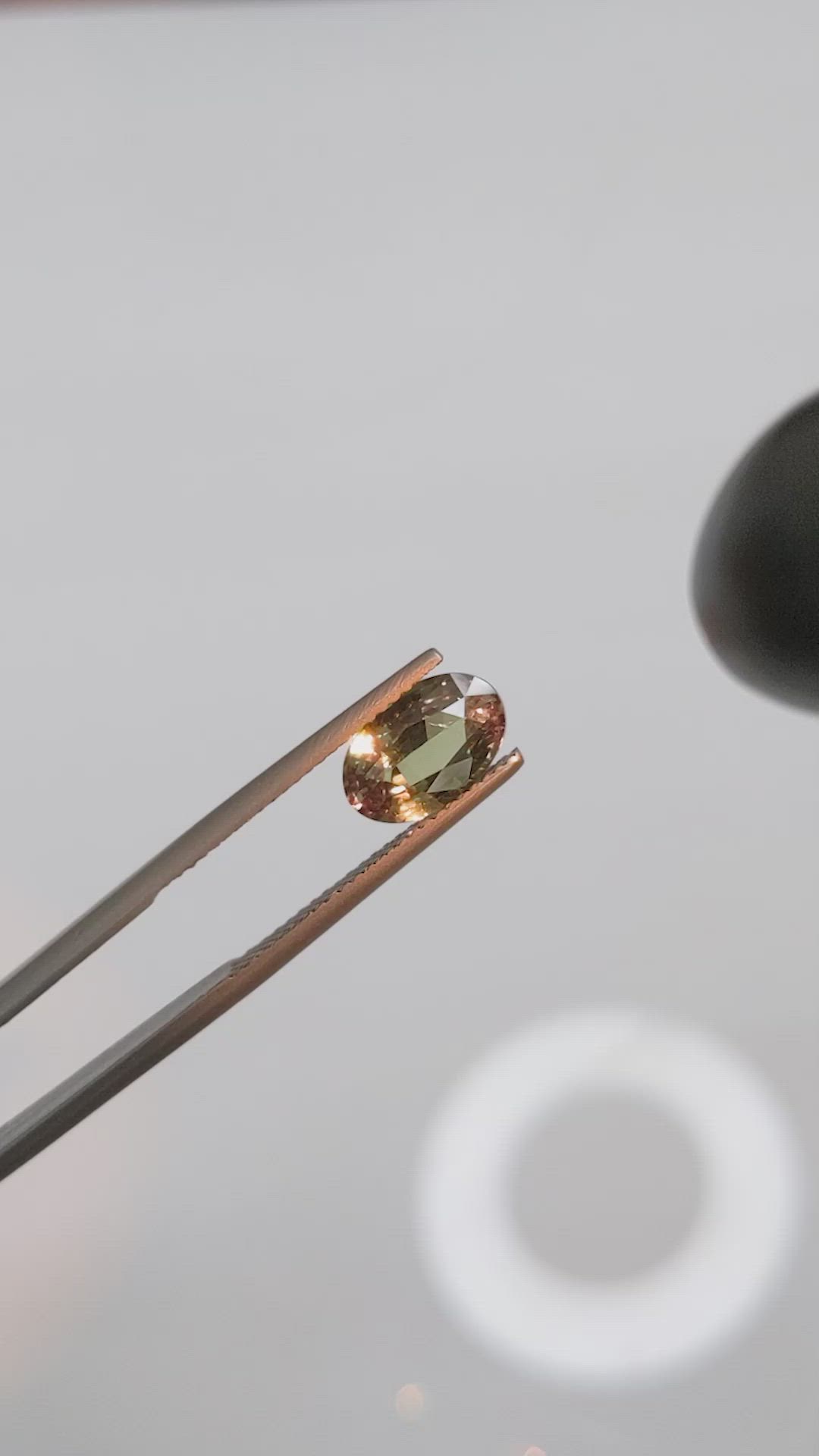
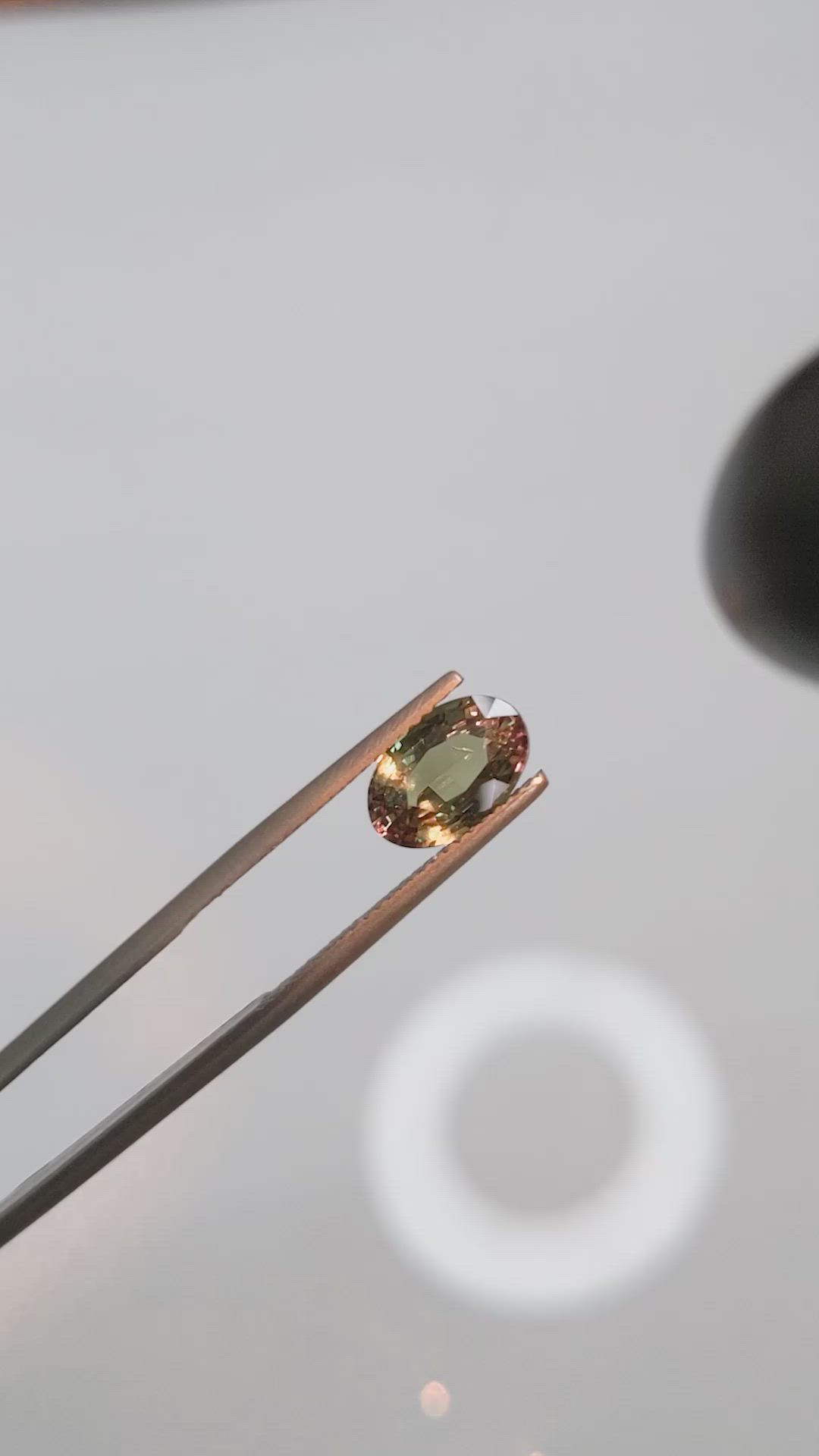
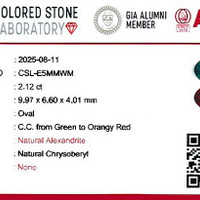
The color change phenomenon in this alexandrite is the defining characteristic for advanced buyers, and it is expressed here as a transition from a yellowish green in higher correlated color temperature lighting environments to a warm brownish orange in lower correlated color temperature incandescent illumination. This reversible optical shift results from strong selective absorption arising from chromium substitution in the chrysoberyl crystal lattice, combined with pleochroic behavior that redistributes hue depending on viewing angle and polarization. The medium intense saturation means the daylight green is fresh and vibrant without appearing overly dark, while the incandescent brownish orange is warm and distinct, creating a pronounced and commercially attractive contrast between the two states. Color zoning is minimal, which indicates even distribution of the color causing elements and allows the color change to be uniform across the table and through the crown facets. For collectors who prioritize color change strength, this specimen offers a reliable and repeatable response in standard domestic and natural lighting scenarios.
Durability considerations are central to practical enjoyment and long term retention of value, and chrysoberyl alexandrite sits near the top of the classical gemstone hardness scale. On the Mohs hardness scale this alexandrite is at approximately eight and a half, making it significantly harder than common gem materials such as quartz which ranks at seven, and moderately less hard than corundum species such as sapphire and ruby which rank at nine, with diamond at the extreme top at ten. In practical terms this hardness provides robust resistance to abrasion, making the stone well suited for daily wear applications including rings, when set with appropriate care. Impact resistance is influenced by internal features and facet geometry, so the very slightly included clarity grade is favorable. For mounting recommendations the cutter and gemologist team at The Natural Gemstone Company advise secure prong work or a partial bezel that protects the girdle without overly concealing the pavilion facets, and they recommend routine care using warm water and a mild, non abrasive detergent with a soft brush. Do not use harsh chemicals or abrasive cleaners, and consider professional ultrasonic or steam cleaning only after consultation when inclusions are present. This alexandrite is supplied with certification of its color change character and origin documentation upon request, and further technical data including high resolution imaging and spectral analysis can be provided to interested buyers who require full gemological substantiation.


