
- Stone12
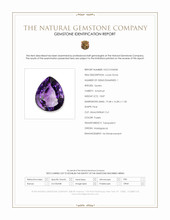
- Reports2
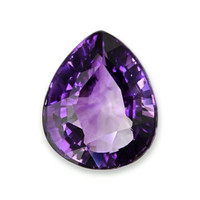
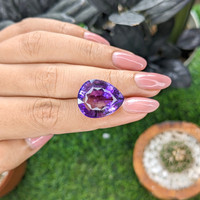
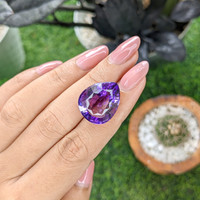
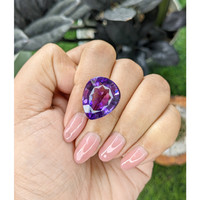
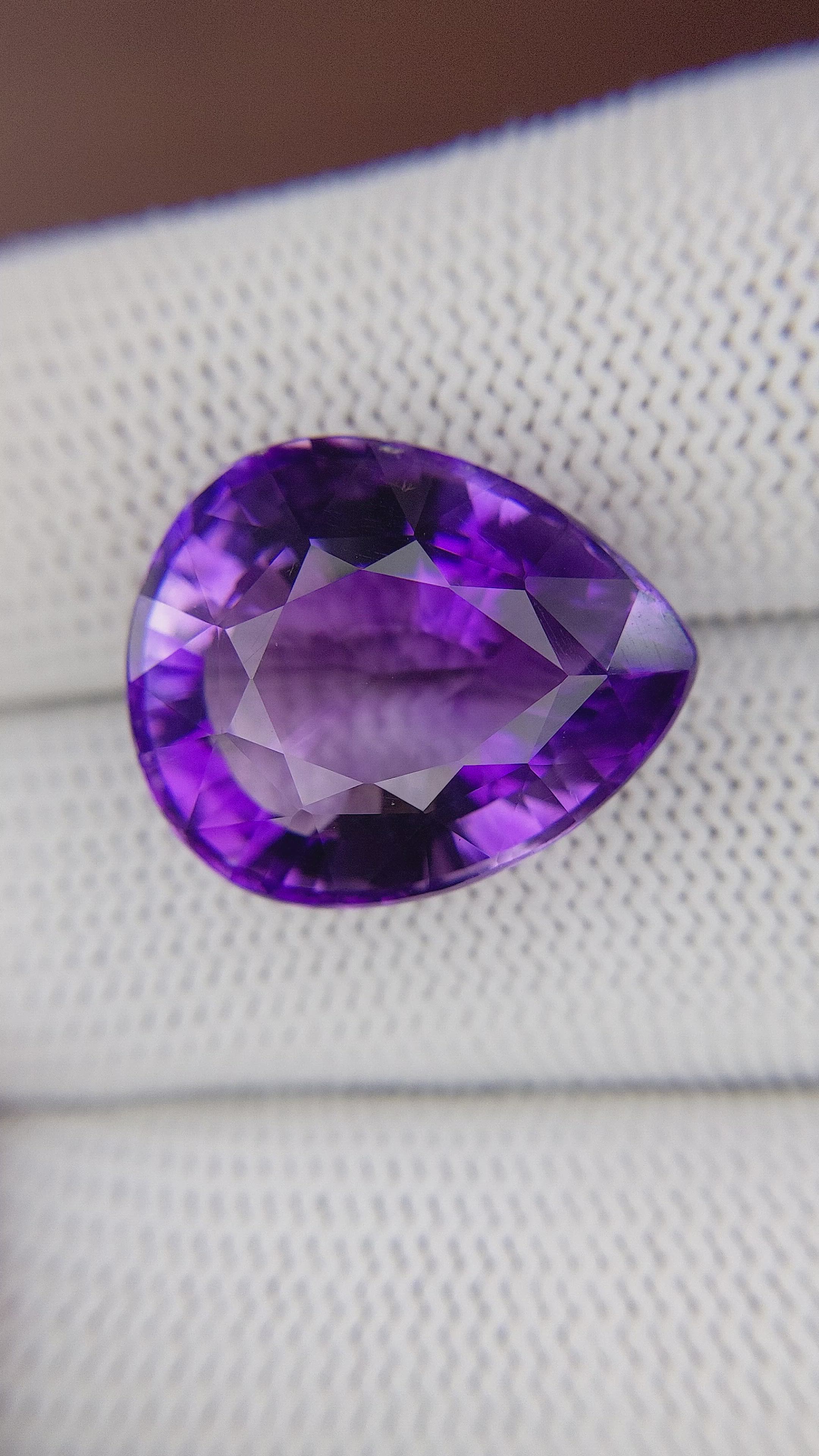
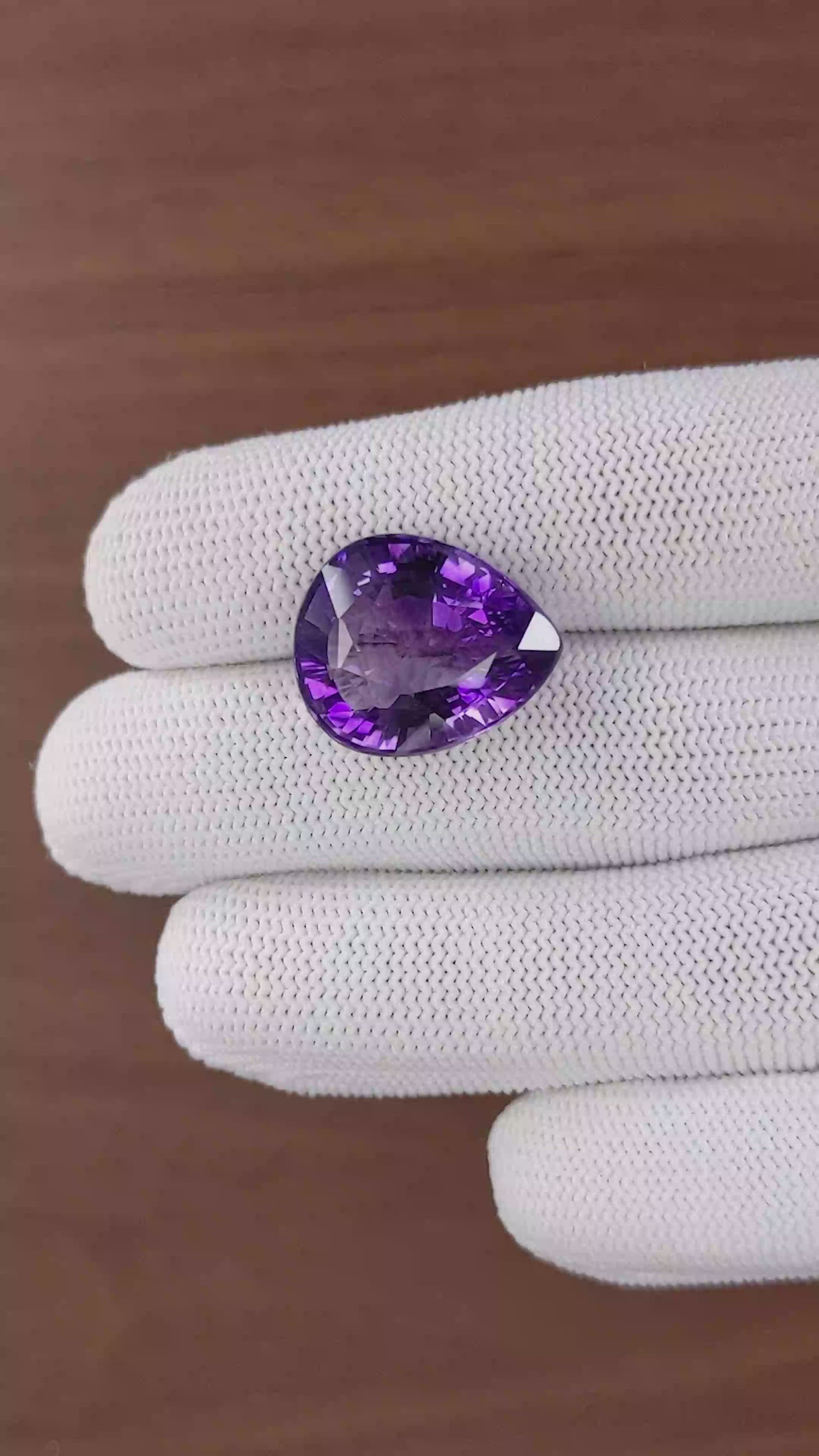
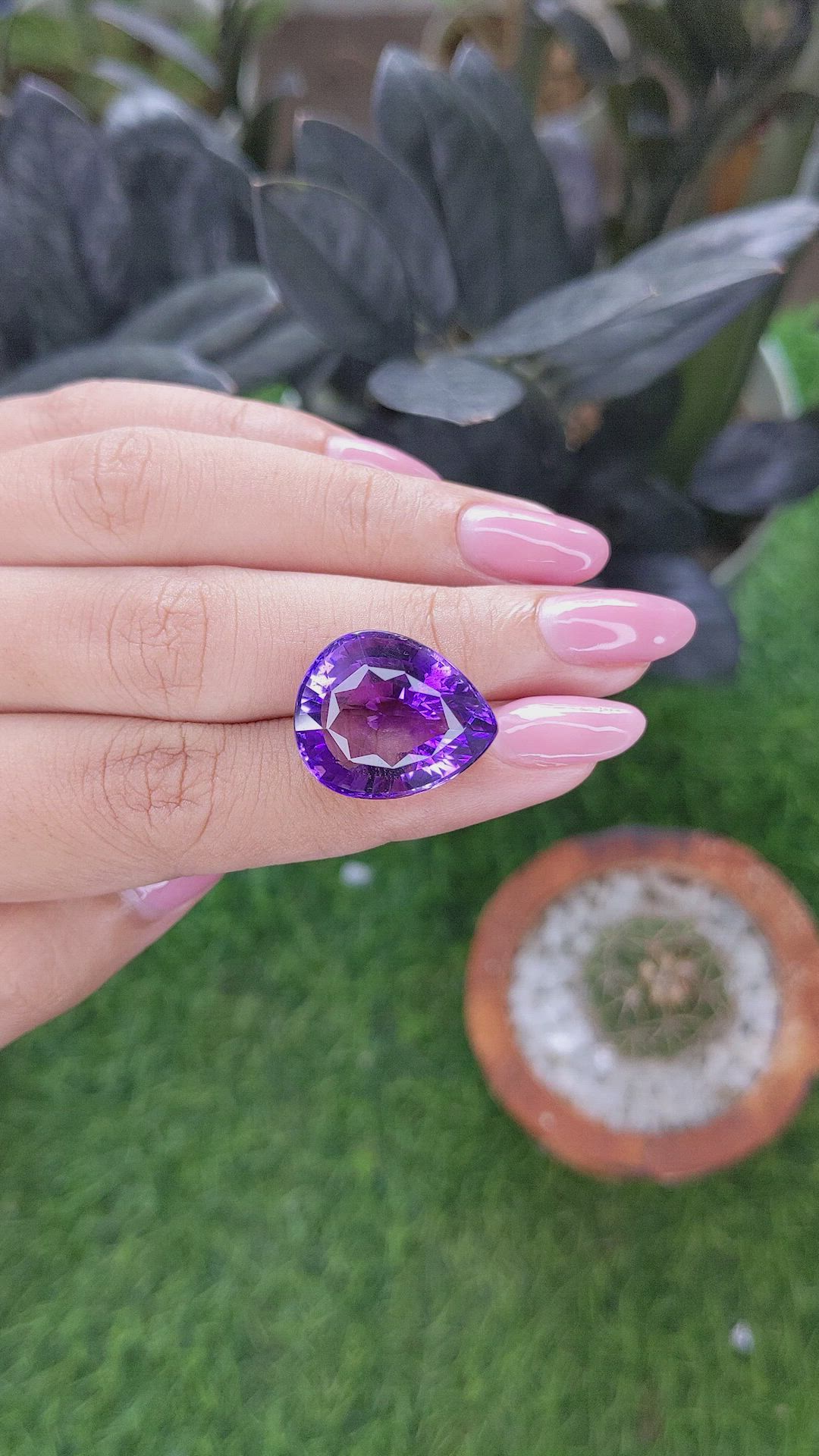
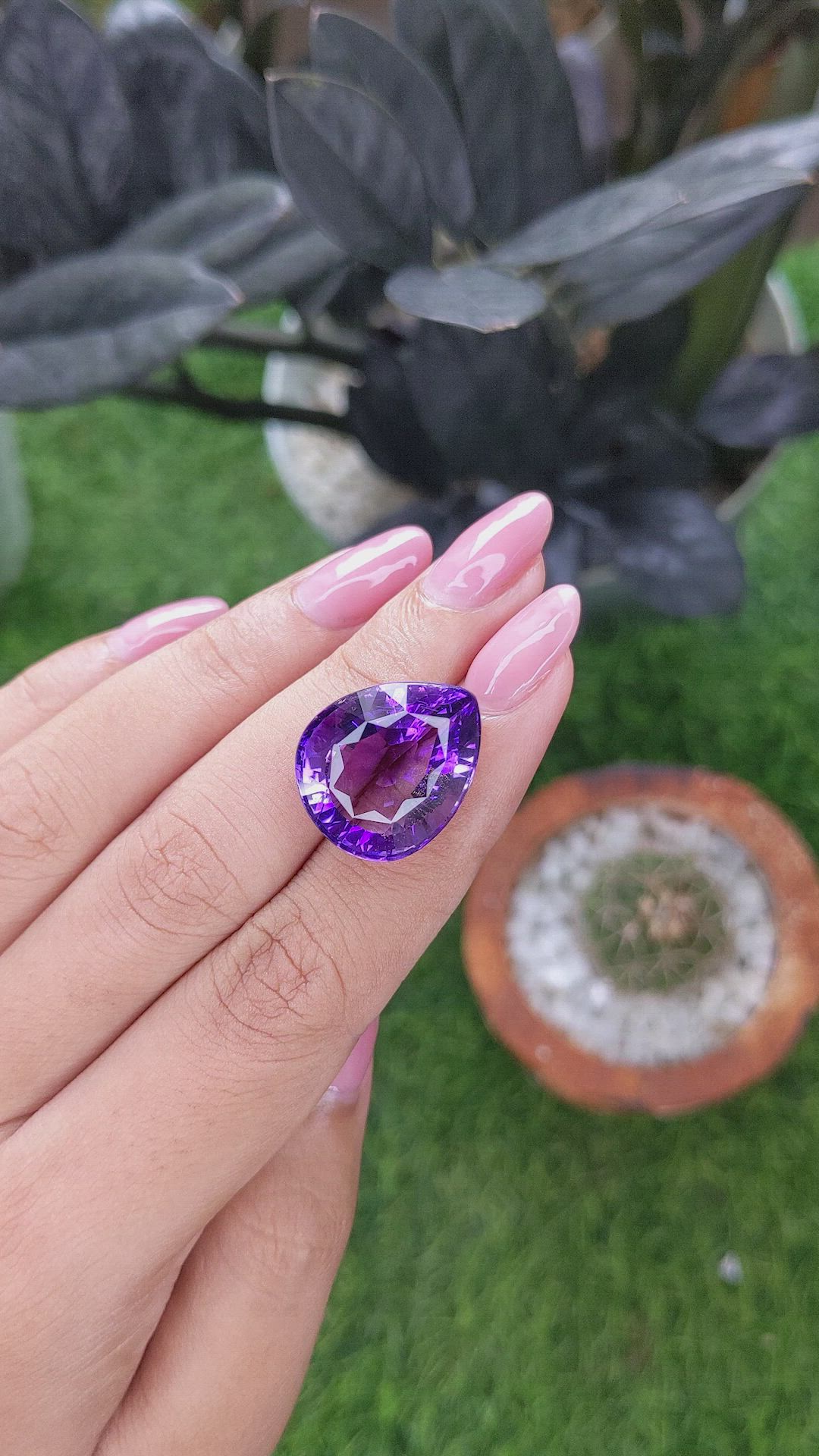
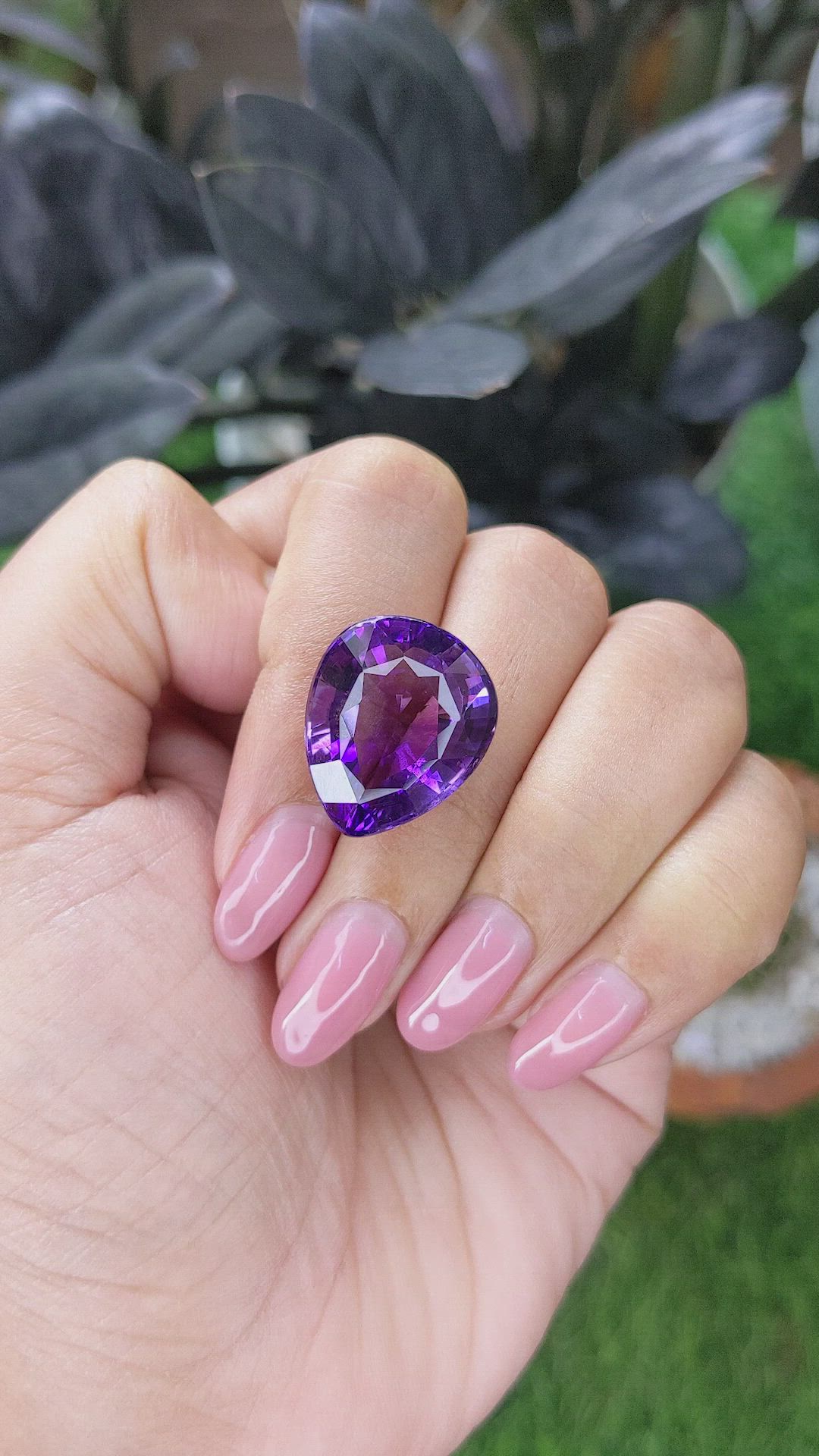
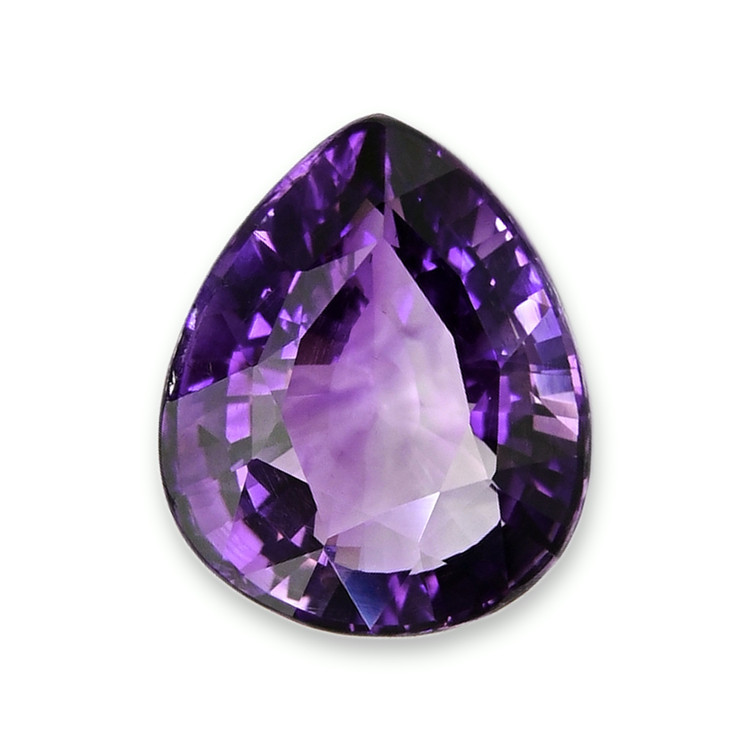
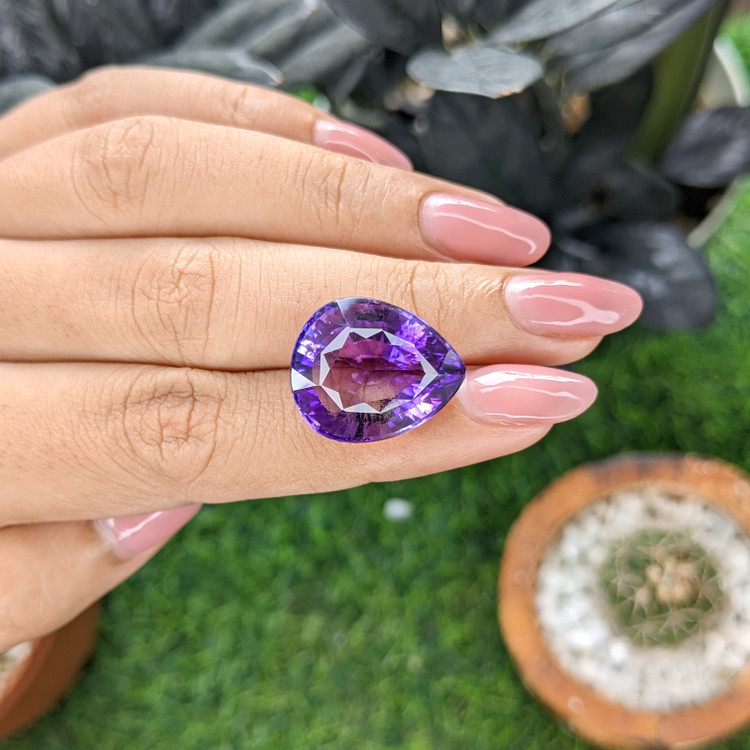
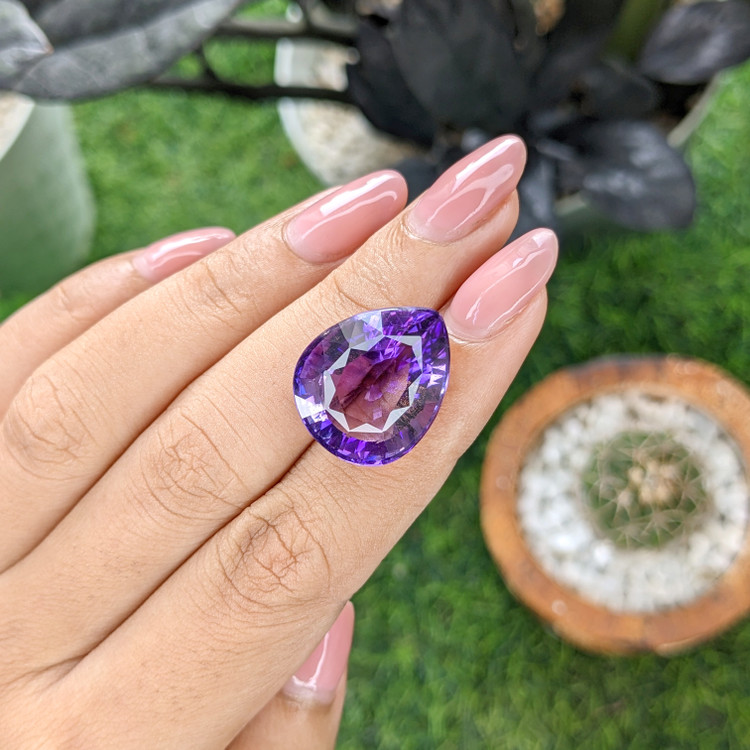
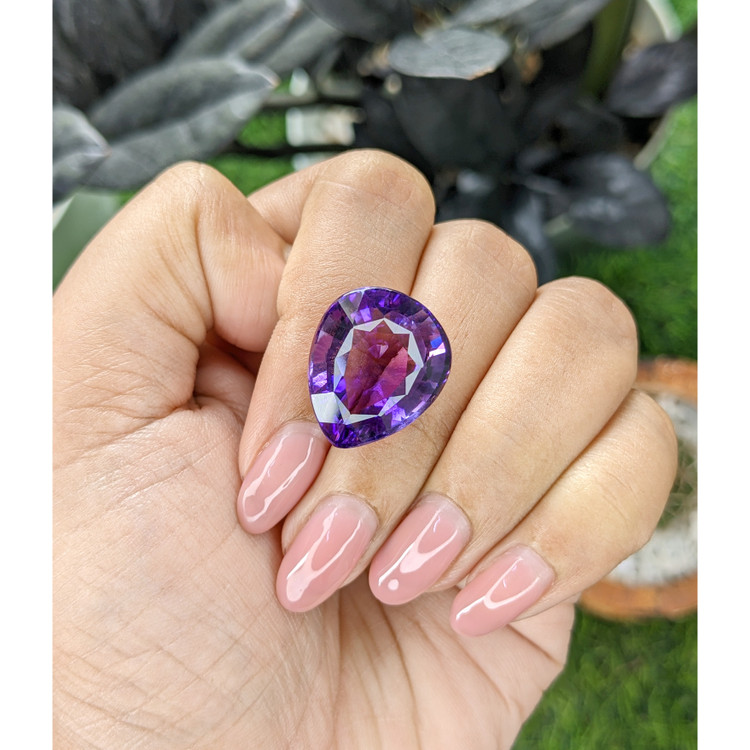
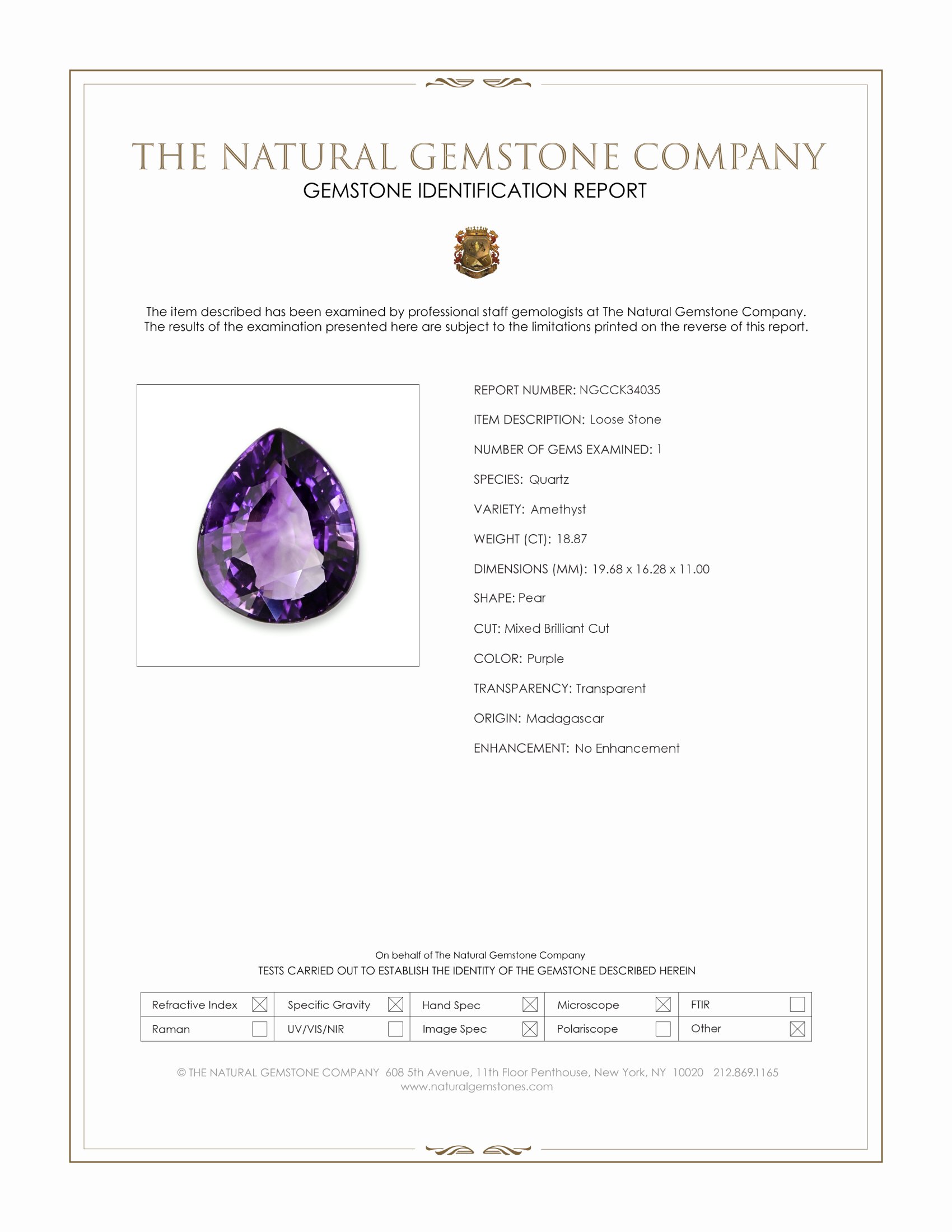
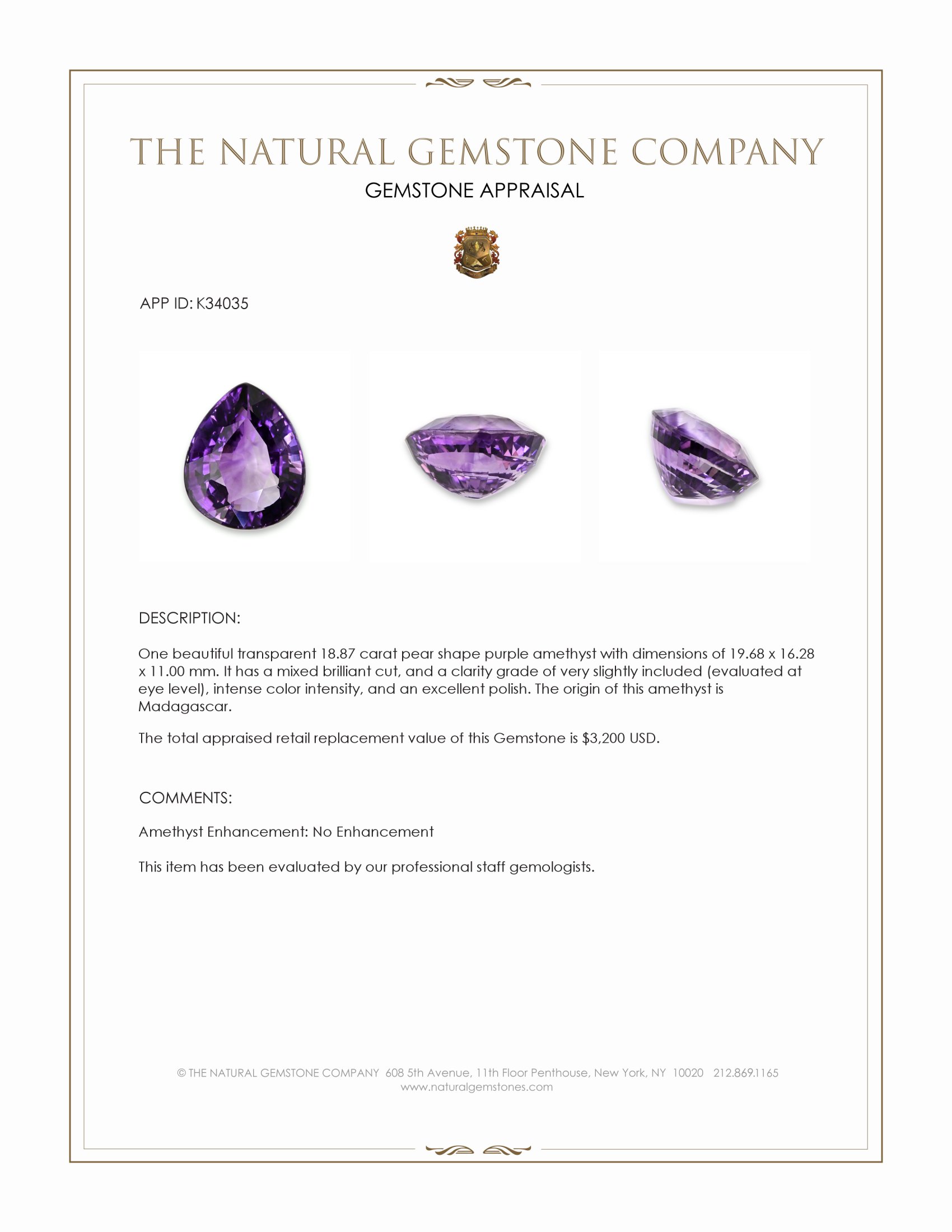
18.87 Ct. Purple Amethyst from Madagascar
This loose stone ships by Dec 6
Item ID: | K34035 |
|---|---|
Dimensions (MM): help | Length: 19.68 Width: 16.28 Height: 11 |
Weight: | 18.87 Ct. |
Color: help | Purple |
Color intensity: help | Intense |
Clarity: help | Very Slightly Included |
Shape: help | Pear |
Cut: | Mixed Brilliant Cut |
Cutting style: | Faceted |
Enhancements: help | No Enhancement |
Origin: help | Madagascar |
Per carat price: help | $170 |
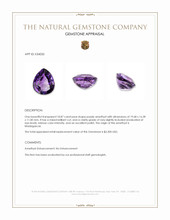
One transparent purple amethyst weighing 18.87 carats and cut to a classic pear shape measures 19.68 x 16.28 x 11.00 mm. The cutting style is faceted, with a mixed brilliant cut that combines a brilliant facet arrangement on the crown with a step influenced pavilion to optimize both brilliance and light return. Clarity is graded as very slightly included when evaluated at eye level, and the surface exhibits an excellent polish. The color displays intense purple saturation, and there has been no enhancement performed on this stone. This specimen originates from Madagascar and is presented by The Natural Gemstone Company.
The inherent sparkle of this amethyst is a product of both its internal crystal structure and the precision of its cutting. Amethyst is the violet variety of quartz, crystallizing in the trigonal system, and it has a refractive index that lies approximately between 1.544 and 1.553. That range of refractive index determines the critical angles for internal reflection, and when facets are cut to the correct geometry, light entering the gem is efficiently redirected back to the viewer as brightness and scintillation. The mixed brilliant cut used for this pear shaped gem produces multiple small facet intersections that create a sequence of controlled reflections. These reflections are reinforced by the stone s moderate birefringence, near 0.009, which in a well oriented cut can contribute subtle doubling effects without causing visible blur. Dispersion in quartz is low, near 0.013, so the sensation of sparkle in this amethyst derives predominantly from strong white light return and dynamic contrasts between bright and dark facet faces, rather than from pronounced spectral fire.
The size and shape of this 18.87 carat stone amplify the optical effects that produce its distinctive scintillation. Larger table and pavilion facets establish extended light paths within the crystal, allowing repeated internal reflections and a more pronounced play of light across the crown. The pear outline concentrates reflected light towards the narrow point while maintaining an open and dominant table, so the viewer perceives both concentrated flashes and broad surface brilliance as the gem is tilted. Intense purple coloration interacts with the facet architecture to define contrast patterns. Where color zoning or natural saturation variations occur, the mixed brilliant architecture translates those variations into deliberate light and dark contrasts, increasing perceived sparkle and depth. The excellent polish reduces micro roughness that would otherwise scatter light and dull facet edges, preserving crisp specular highlights and lively scintillation across the stone s surface. The clarity grade of very slightly included at eye level means that light passage is largely uninterrupted, while small internal features remain insignificant to visual performance, enabling a clean and energetic return of light.
Practical considerations emphasize how structural and material properties of this Madagascar amethyst inform mounting and care decisions to preserve its optical performance. The gem s specific gravity near 2.65, and a Mohs hardness around 7, indicate a stable stone suited to ring, pendant, or statement pieces provided appropriate protective settings are chosen. An open gallery or low bezel allows unimpeded light entry and exit, which sustains optimal brilliance. For a pear shape, a secure prong setting at the tip combined with a minimal bezel at the rounded end will protect the stone while permitting maximum light interaction. Routine cleaning with mild soap, warm water, and a soft brush removes surface oils that reduce luster, and ultrasonic cleaning is generally acceptable for well cut, untreated amethyst provided there are no significant fractures. The fact that this stone has undergone no enhancement reinforces its natural optical qualities and provenance from Madagascar adds geological context to its color and clarity profile. The Natural Gemstone Company offers this amethyst as an example of how intrinsic crystal structure, disciplined cutting, and careful finishing coalesce to deliver a level of sparkle and presence that is both technically quantifiable and visually compelling.


