
- Stone15
- Reports3


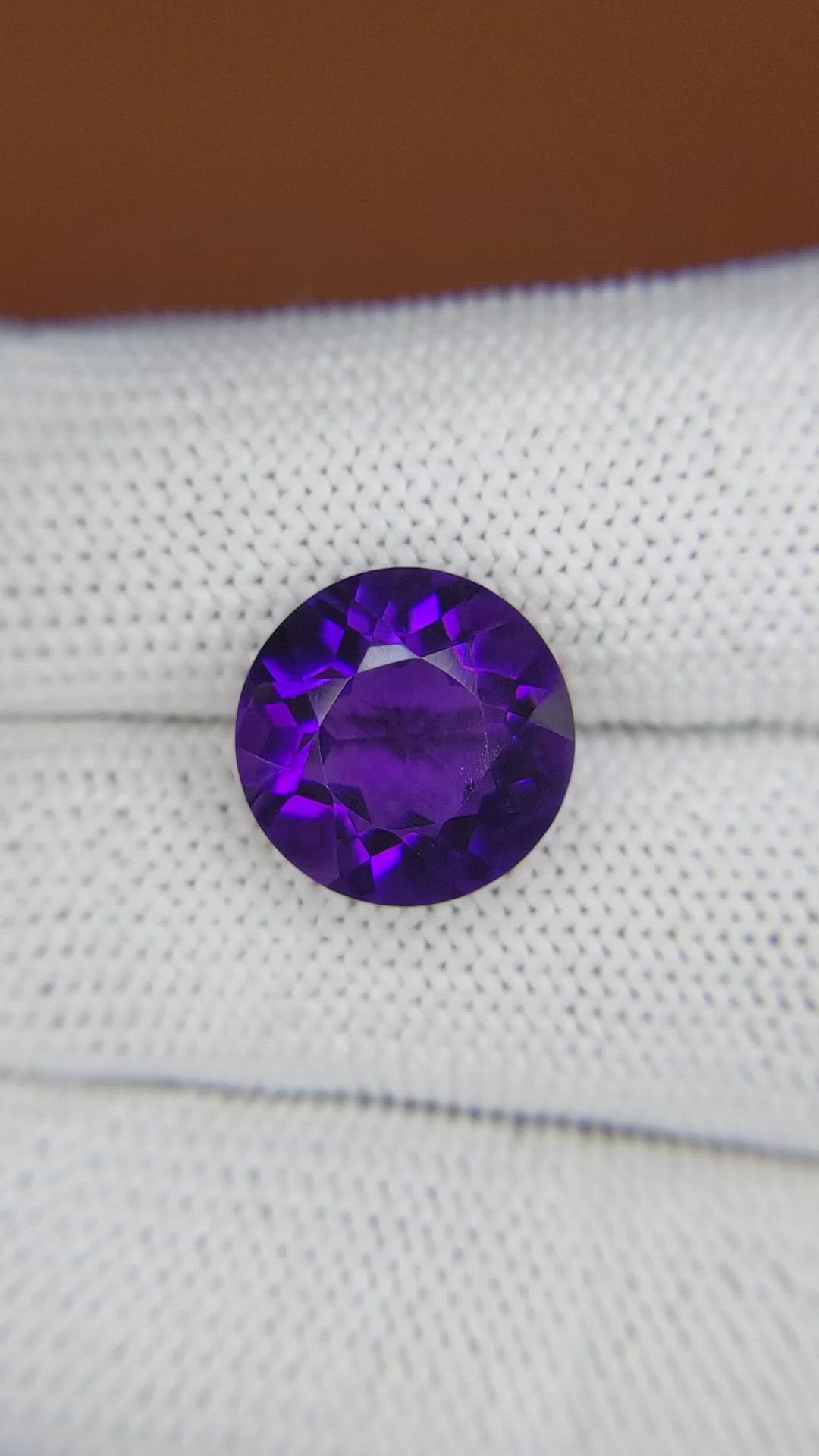
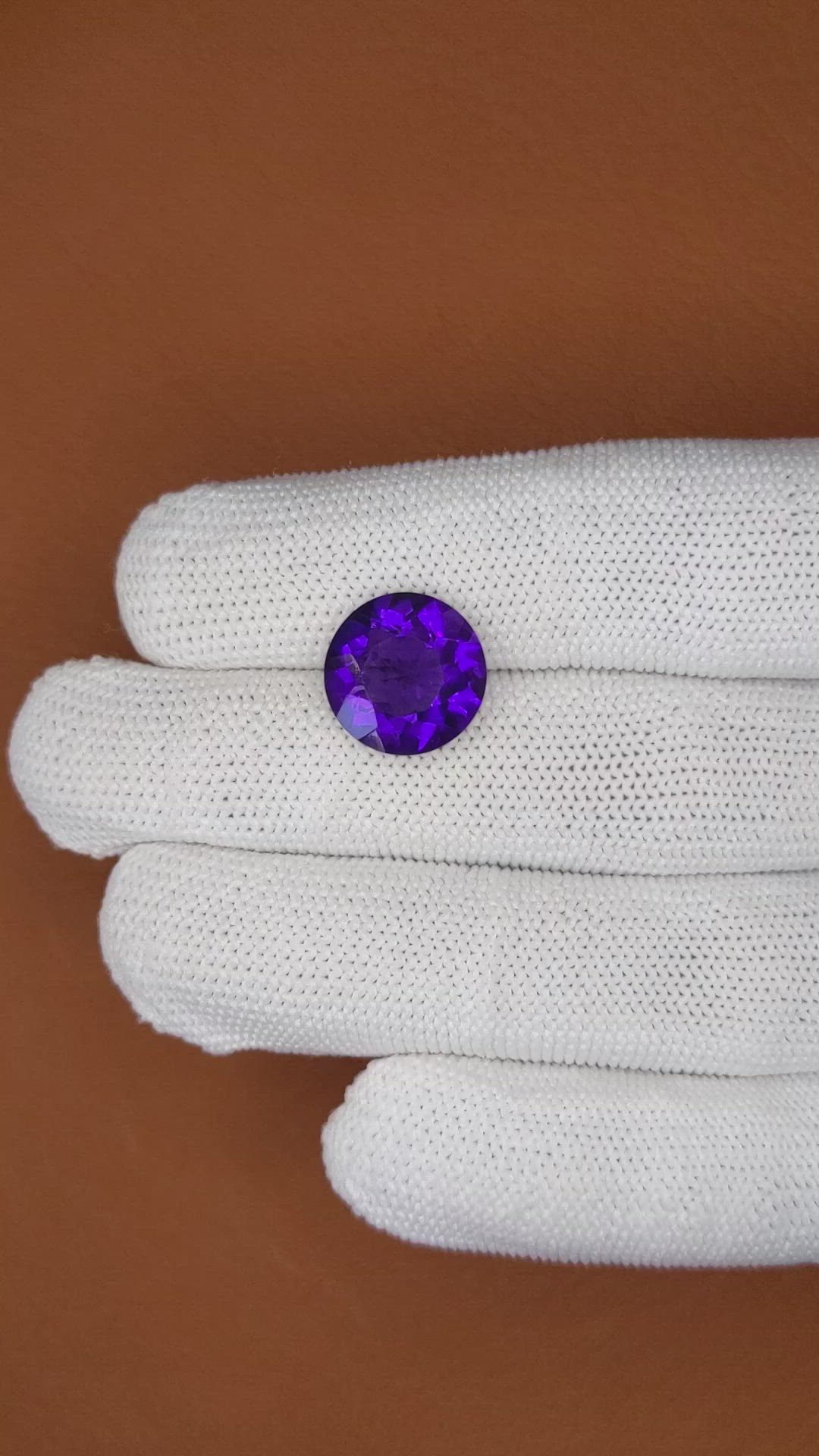
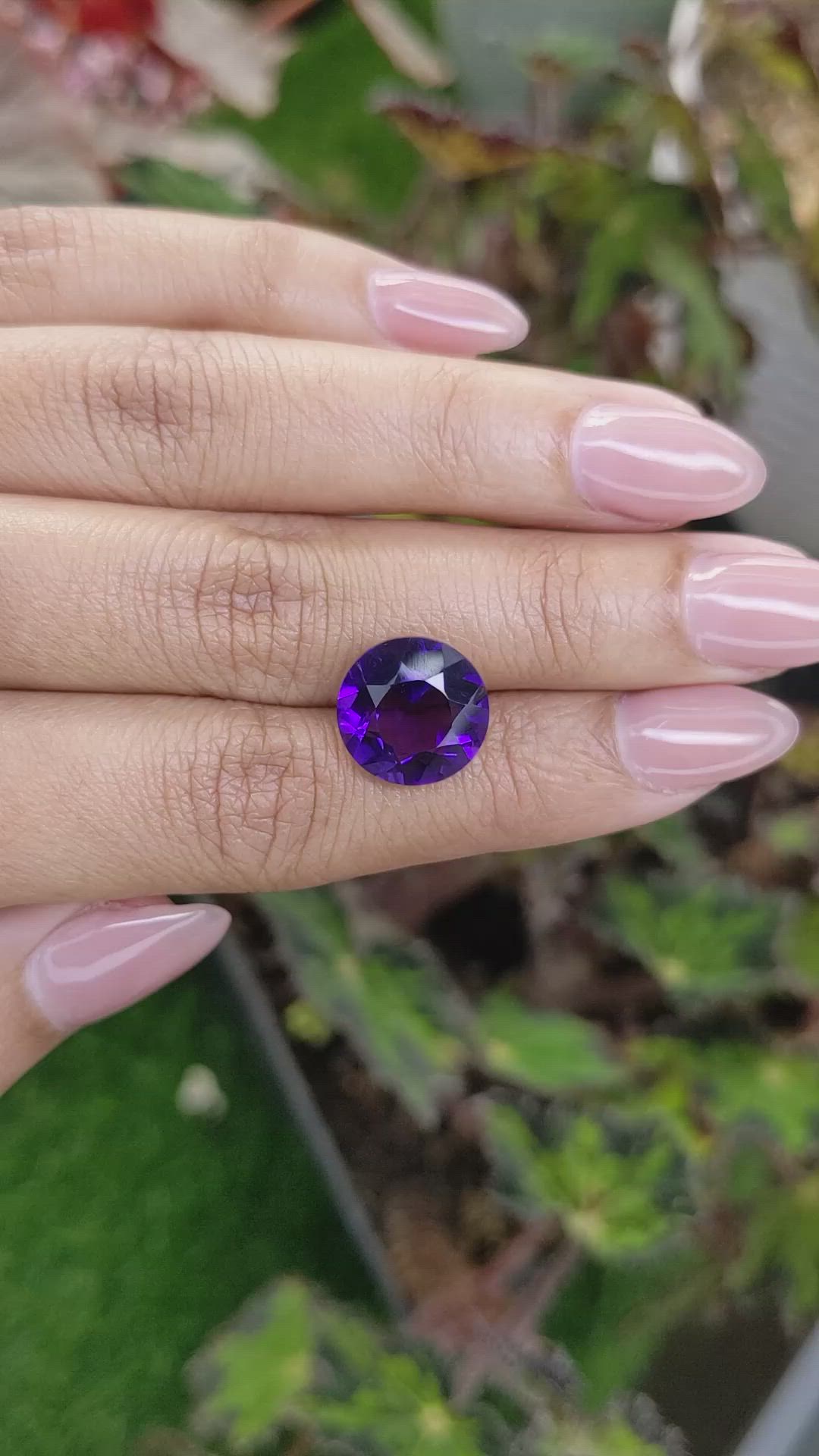
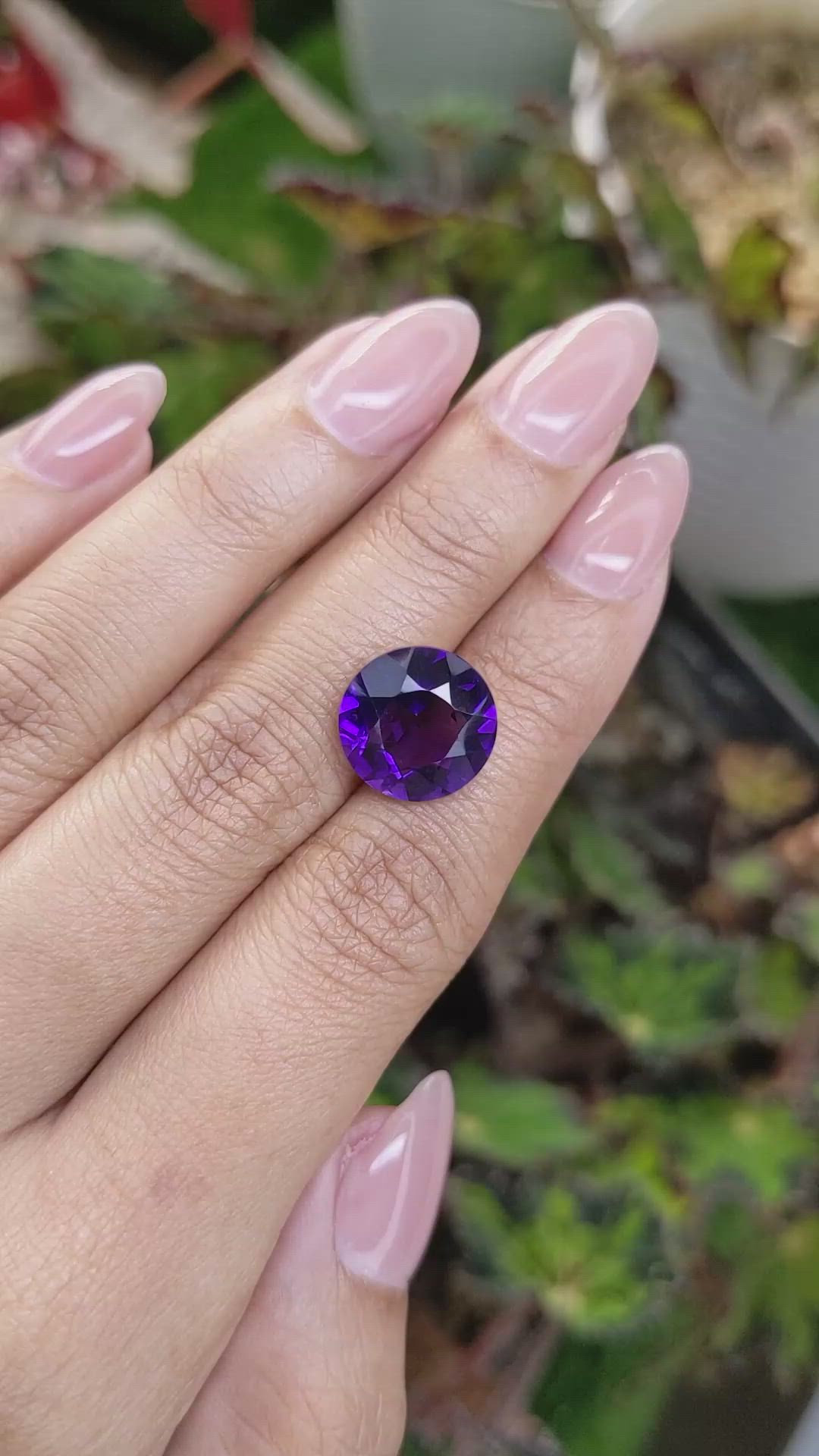
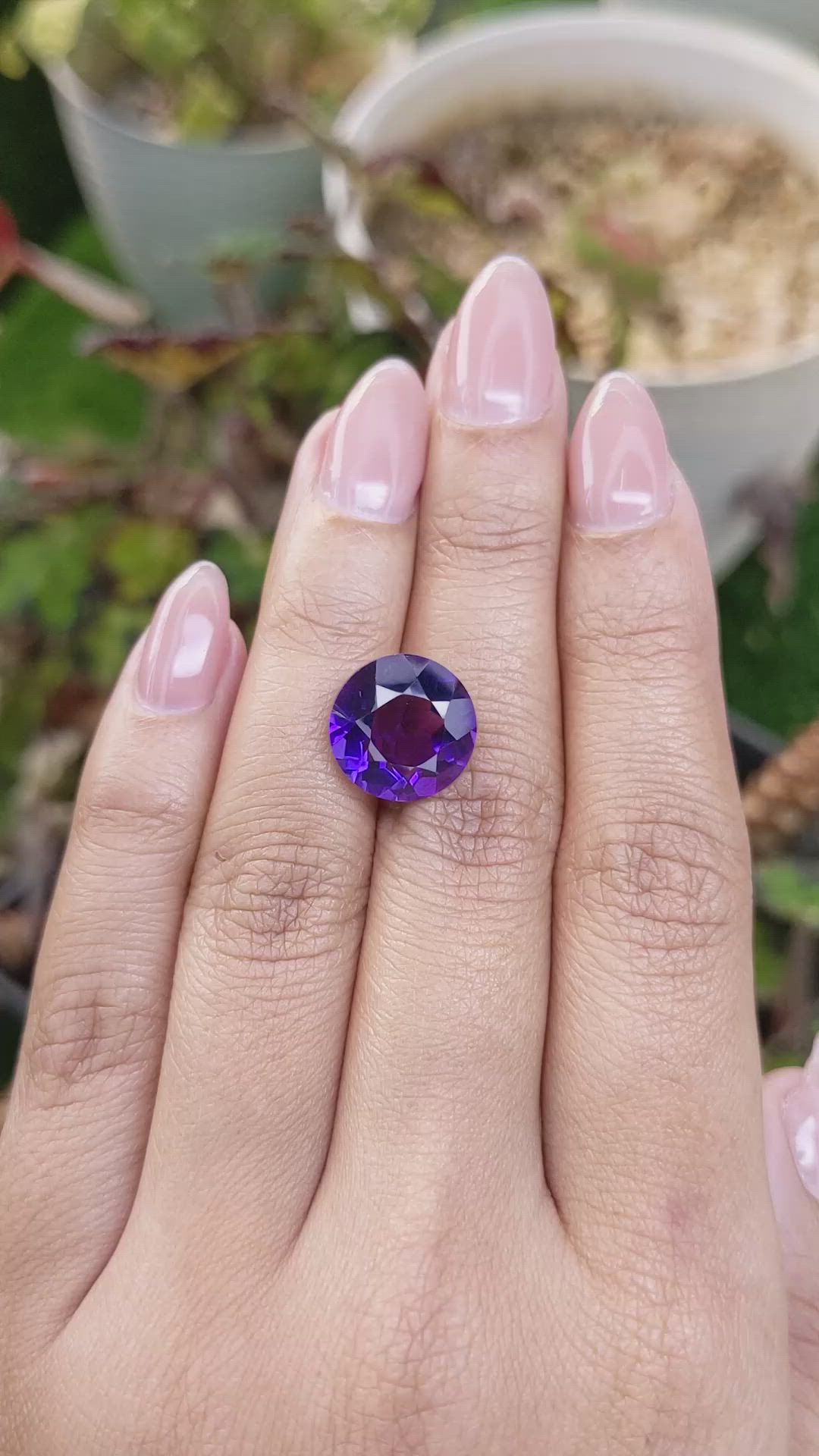
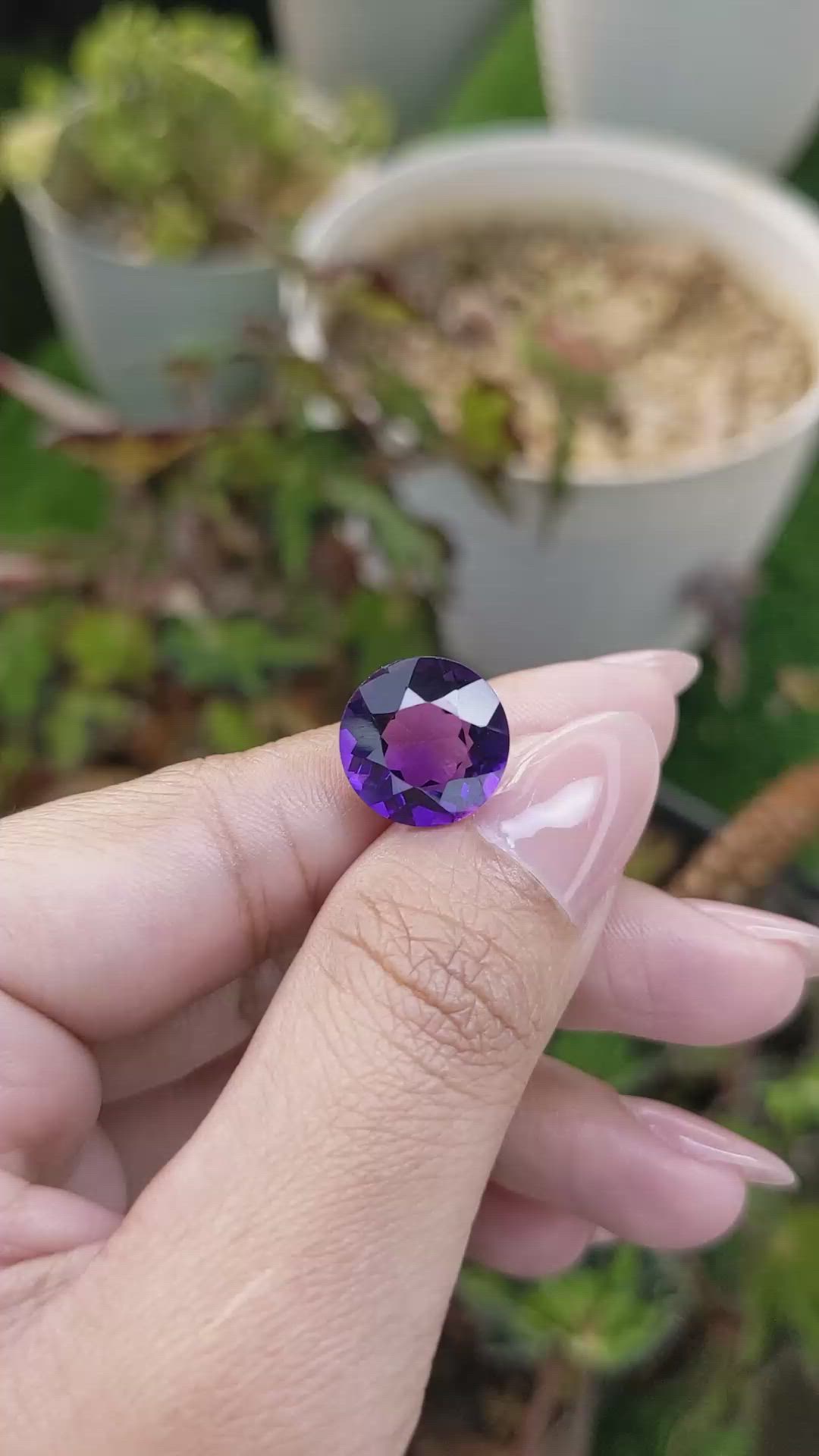



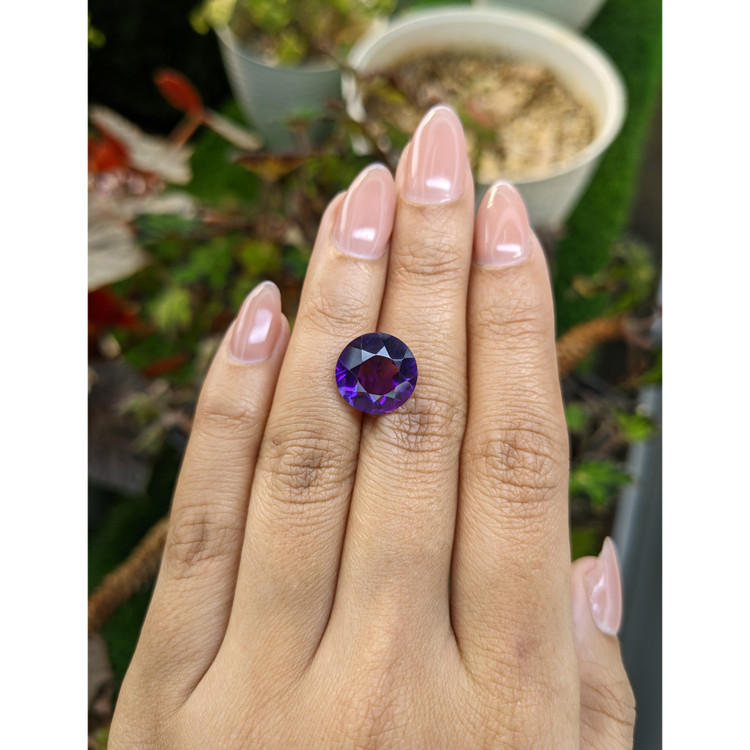
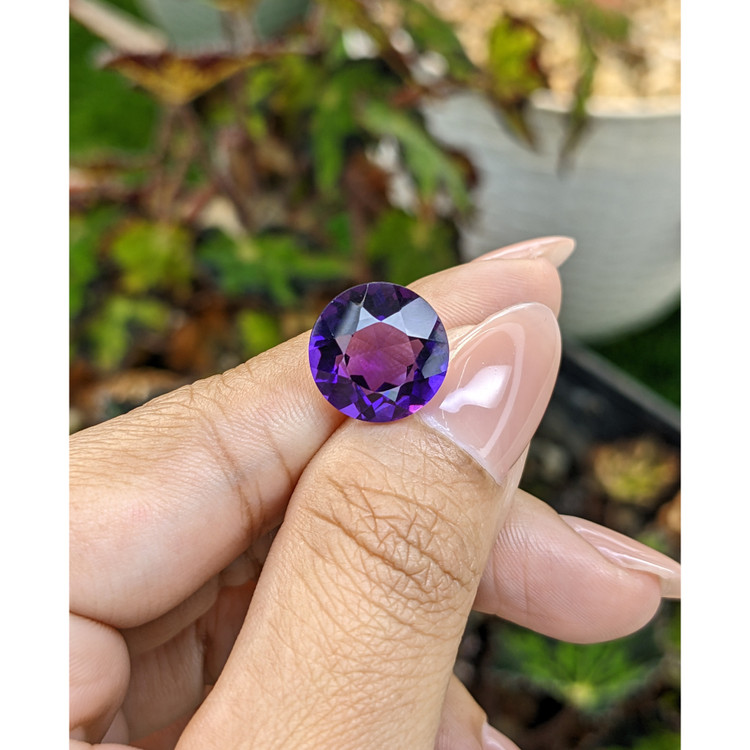
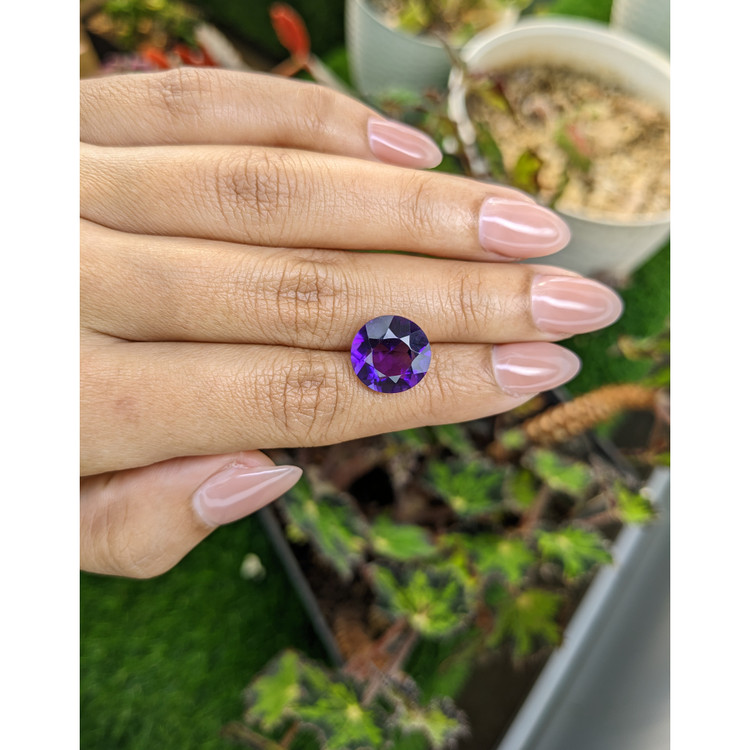
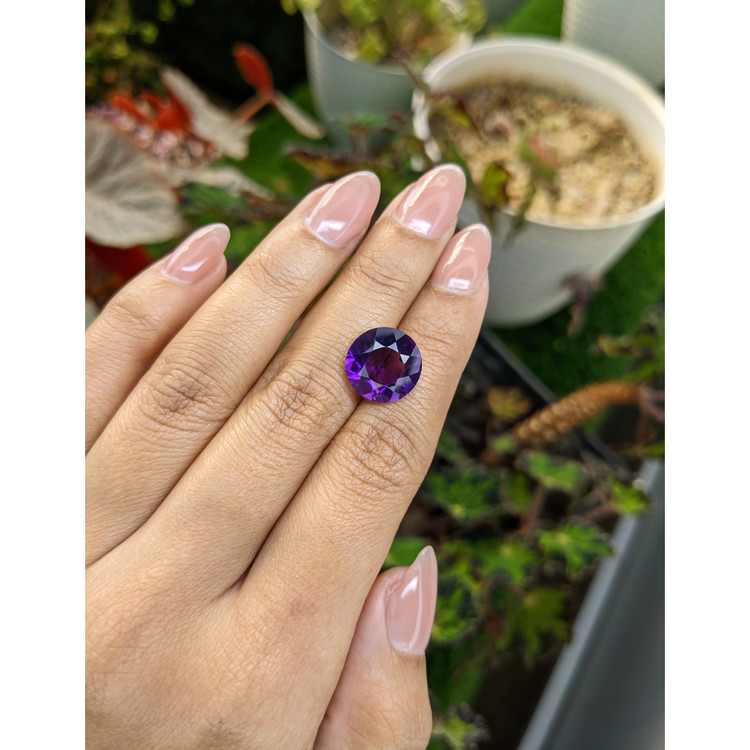


6.25 Ct. Purple Amethyst from Brazil
This loose stone is available to ship now
Item ID: | K30365 |
|---|---|
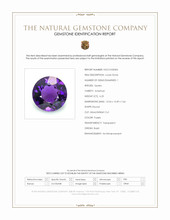
Dimensions (MM): help | Length: 12.54 Width: 12.49 Height: 7.66 |
Weight: | 6.25 Ct. |
Color: help | Purple |
Color intensity: help | Medium |
Clarity: help | Eye Clean |
Shape: help | Round |
Cut: | Mixed Brilliant Cut |
Cutting style: | Faceted |
Enhancements: help | No Enhancement |
Origin: help | Brazil |
Per carat price: help | $10 |
Presented by The Natural Gemstone Company, this transparent amethyst weighs 6.25 carats, and is fashioned in a classic round shape with precise dimensions of 12.54 by 12.49 by 7.66 millimeters. The cutting style is faceted, executed as a mixed brilliant cut that marries a brilliant crown to a modified pavilion, and the result is a balanced interplay of brightness and color. The stone has a clarity grade of eye clean when evaluated at normal viewing distance, and its medium color intensity reads as a saturated purple without appearing overly dark. The polish is excellent, preserving sharp facet junctions and smooth facet planes that contribute to polished surface luster. There has been no enhancement to this piece, it remains a natural, untreated amethyst sourced from Brazil, a well established locale for material with even tone and strong saturation. The combination of size, transparency, and symmetry delivers a presence on the finger that is proportionate to its 6.25 carat weight, and the optical performance is immediately apparent under both daylight and artificial lighting.
At the heart of this stone is the quartz crystal lattice, a trigonal network of silicon dioxide that establishes the fundamental optical behavior of amethyst. Trace concentrations of iron incorporated into that lattice, together with natural irradiation over geological time, produce the characteristic purple color that ranges from bluish violet to reddish violet. The crystal structure yields a refractive index in the range typical for quartz, which governs how light bends upon entry and exit, and this index supports internal reflections that manifest as brilliance. Amethyst exhibits modest pleochroism, so different facet orientations may reveal subtle shifts between deeper violet and slightly lighter bluish violet, and a well executed cut uses that characteristic to create lively color dynamics across the table and pavilion. Although quartz has relatively low dispersion compared to gems like diamond, the right combination of transparency, facet pattern, and polish allows strong contrast and scintillation, turning the stone into a lively visual engine that disperses light and color in a compelling way.
The mixed brilliant cut employed in this example directly leverages both the intrinsic optical properties of amethyst and the precise proportions of the rough. The crown facets are arranged to capture and refract incoming light while the pavilion facets are angled to encourage controlled internal reflection and return of light through the crown. With a diameter near 12.5 millimeters and a depth of 7.66 millimeters, the depth percentage is approximately 61 percent, a proportion that sits within the practical range for balanced light performance in mixed rounds, and it supports both well defined face up coverage and good light return. The medium color intensity benefits from moderate table size and carefully sized star and kite facets, which avoid concentrating color into a small area or washing it out, and the eye clean clarity ensures that light paths remain unobstructed, allowing internal reflections to form crisp, high contrast flashes. Excellent polish reduces scattering at facet surfaces, so reflections are mirror like and scintillation appears as defined flashes rather than muted glow. In combination, the refractive behavior of the quartz lattice, the evenly distributed iron derived color, the mixed brilliant facet scheme, and the precise polishing create a sparkle that is distinguished in both brightness and color play, an effect that is often described as unmatched among stones of similar type and size.
For practical placement, this amethyst is well suited to rings where the round outline and mixed brilliant faceting will read consistently from every angle, and it will also perform attractively in pendant and brooch settings that allow access to direct light. The absence of enhancement simplifies long term care, which consists of periodic cleaning with mild detergent and warm water, avoiding harsh chemicals and extreme thermal or mechanical shock. Origin from Brazil provides provenance that collectors and designers value, and the natural, untreated status is confirmed by The Natural Gemstone Company as part of our standard description practice. When selecting this stone for a bespoke piece, consider settings that allow the pavilion to breathe so the gem can interact with light, and choose metal tones that complement the medium purple, for example cool white metals to emphasize brightness, or warm yellow metals to deepen the saturated tone. This amethyst is offered as a straightforward, technically excellent specimen, and its optical characteristics illustrate how crystalline structure, impurity driven color, precise cutting proportions, and superior finishing come together to produce a gem with compelling, enduring sparkle.


