
- Stone14
- Reports3


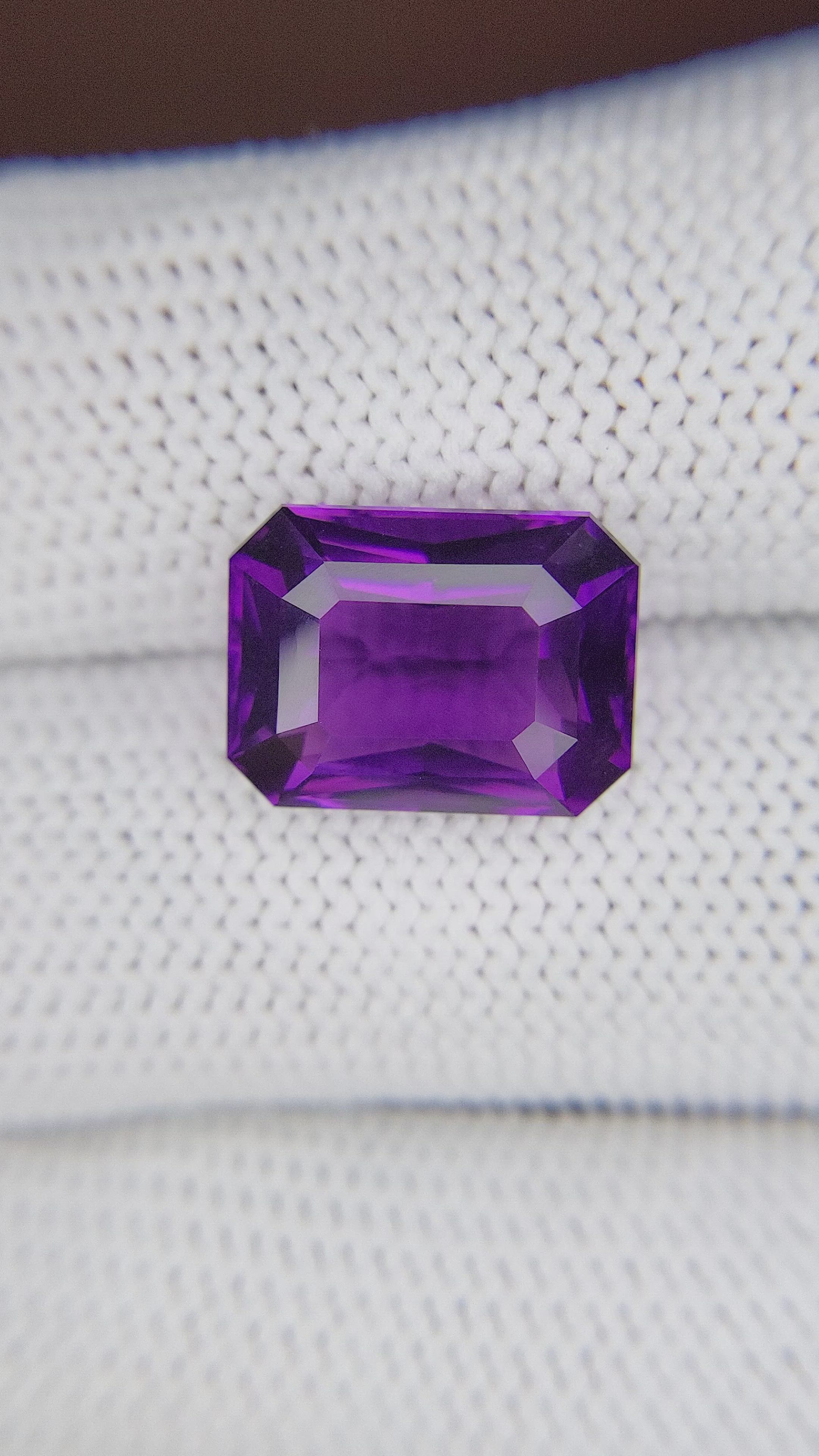
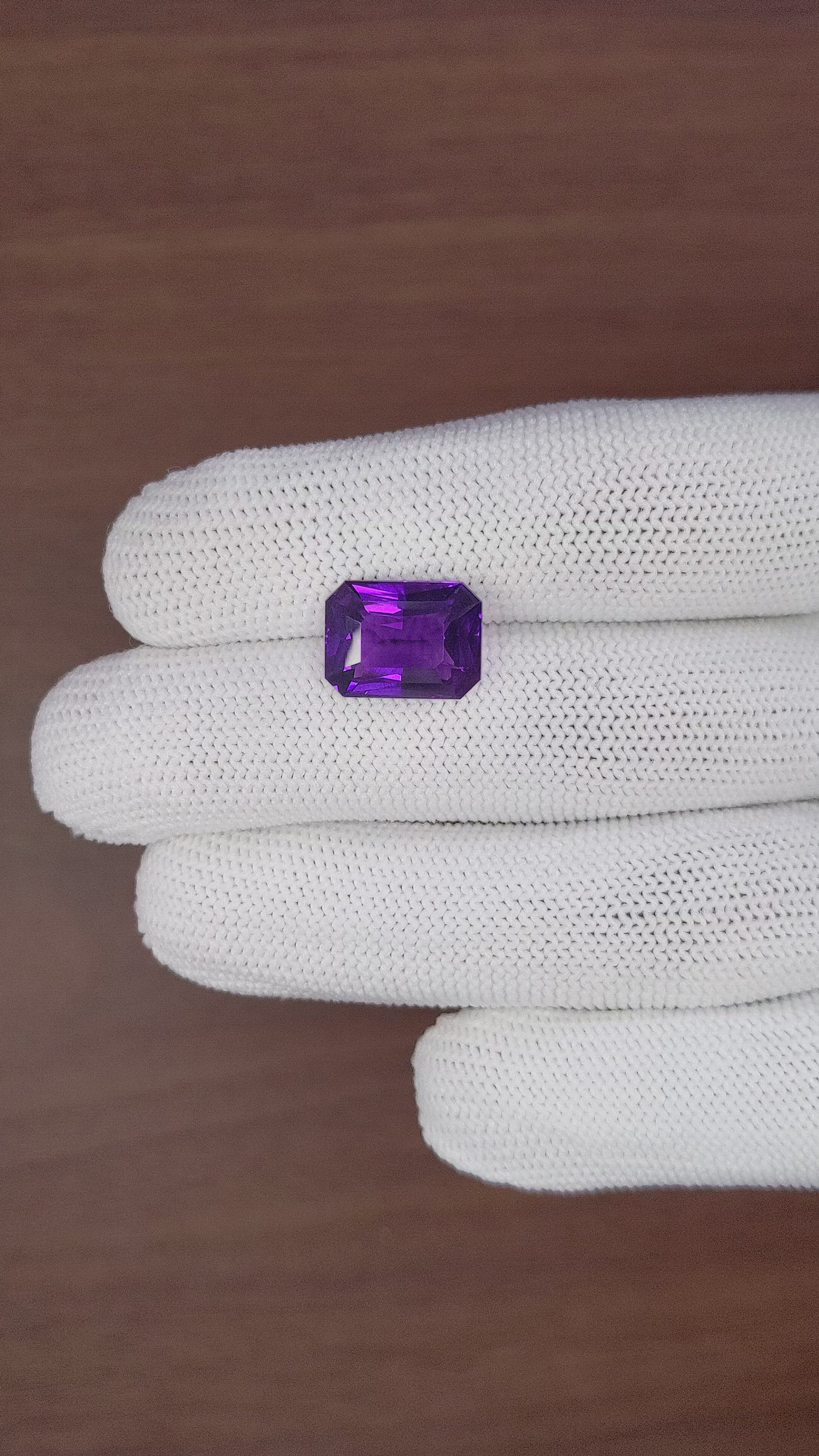
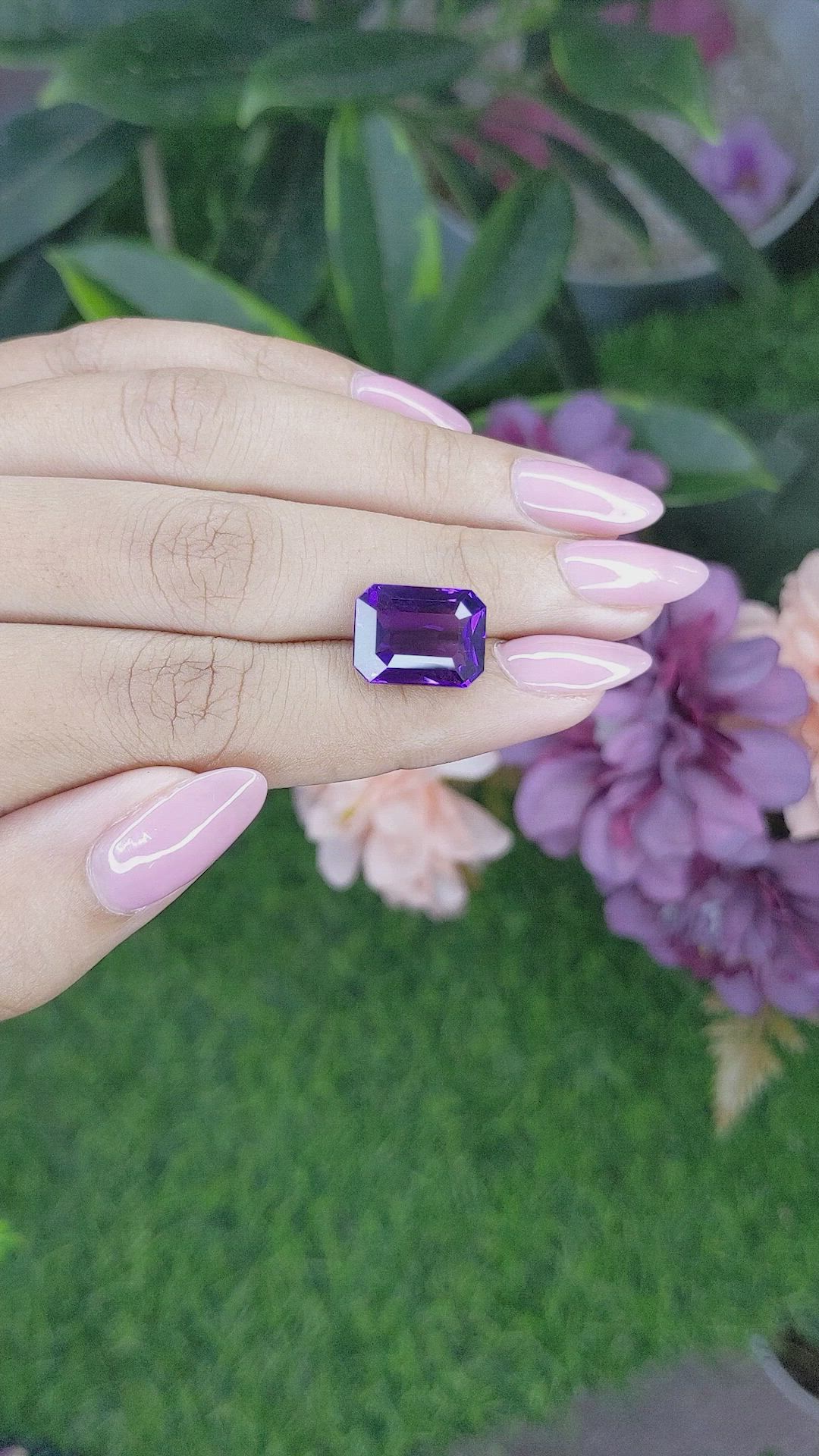
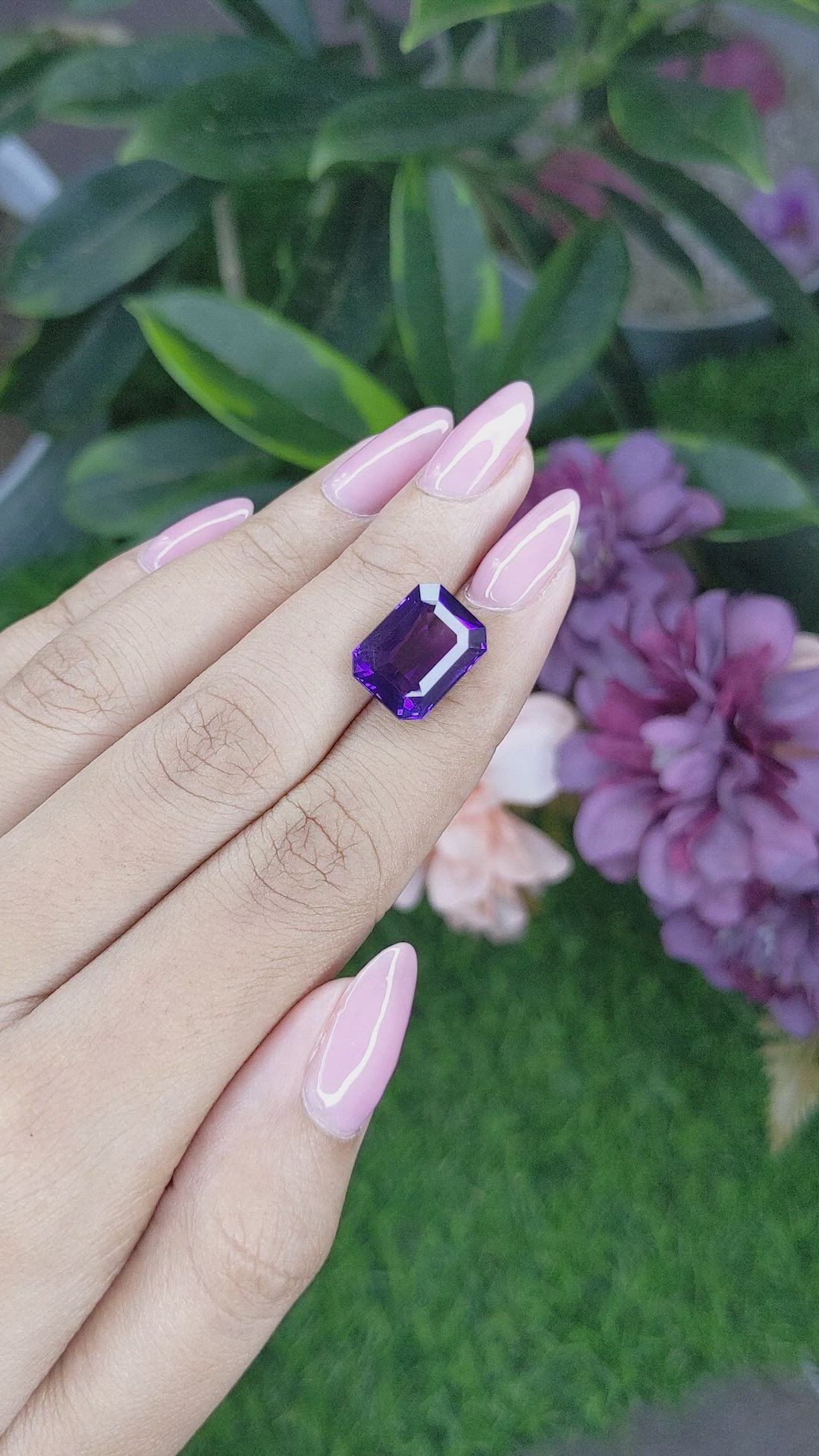
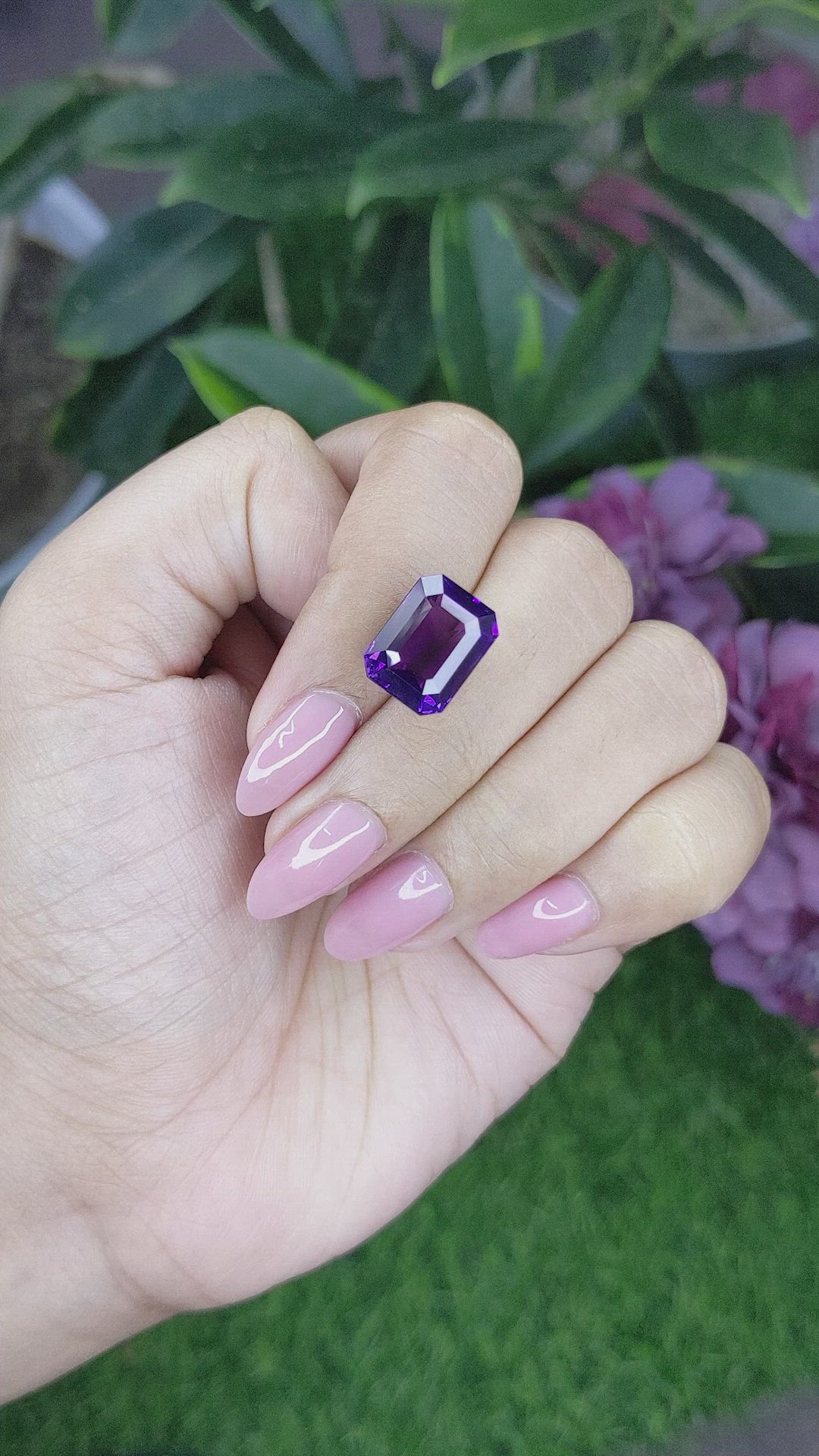


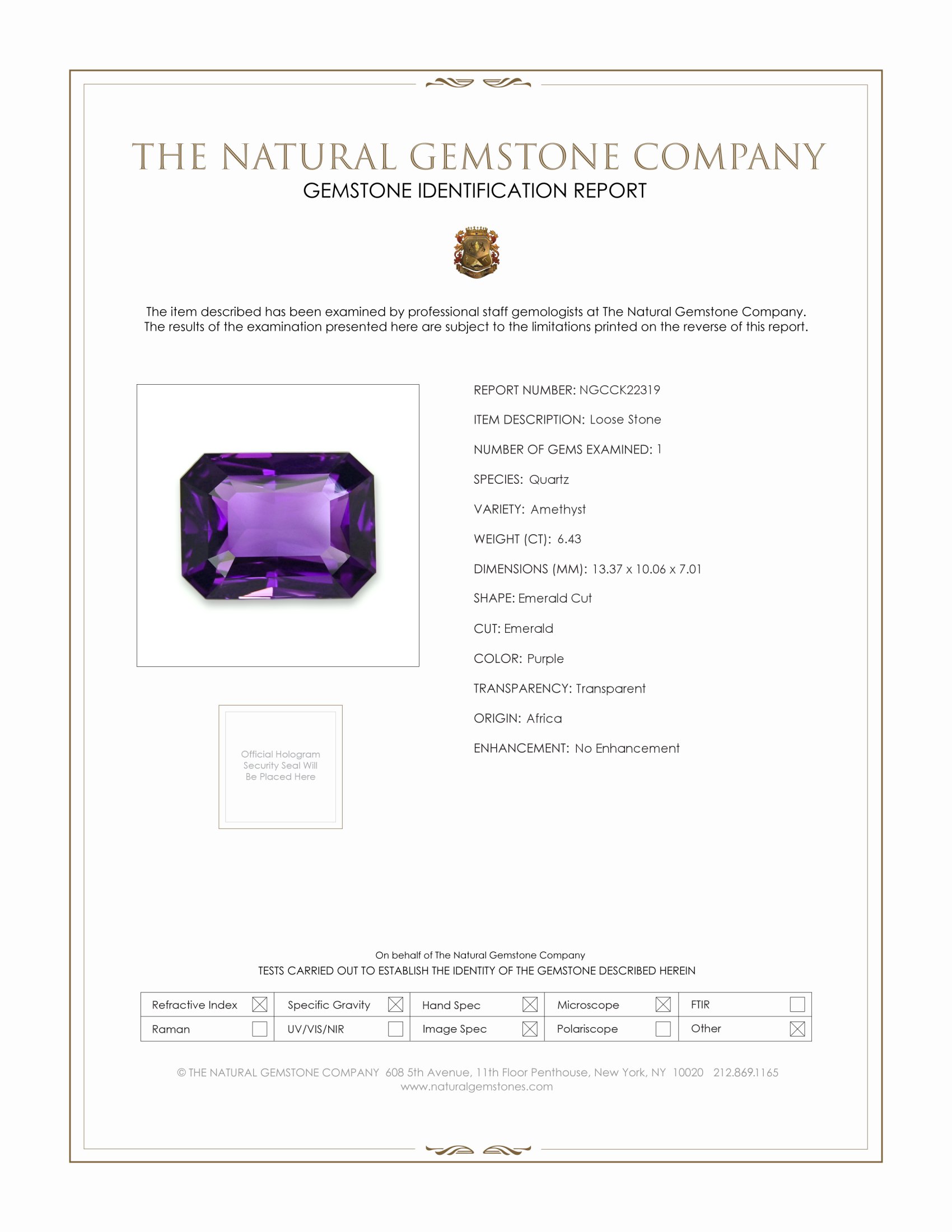

6.43 Ct. Amethyst from Africa
This loose stone ships by Apr 20
Item ID: | K22319 |
|---|---|
Dimensions (MM): help | Length: 13.37 Width: 10.06 Height: 7.01 |
Weight: | 6.43 Ct. |
Color: help | Purple |
Color intensity: help | Vivid |
Clarity: help | Eye Clean |
Shape: help | Emerald Cut |
Cut: | Emerald |
Cutting style: | Faceted |
Enhancements: help | No Enhancement |
Origin: help | Africa |
Per carat price: help | $86 |
This specimen is a transparent 6.43 carat emerald cut purple amethyst originating from Africa, with dimensions 13.37 by 10.06 by 7.01 mm. The stone is executed in a classical emerald cut, featuring broad step facets on both the crown and pavilion, truncated corners, and a large, well proportioned table. The cutting exhibits excellent symmetry, and the polish is graded excellent, producing crisp facet junctions and clean light return across the table and along the step facets. Measured depth relative to the face dimensions is approximately 60 percent, a proportion that preserves face up area while allowing sufficient pavilion depth to concentrate and saturate the purple hue without creating a windowed appearance. There has been no enhancement, the gem is natural and untreated, and clarity is graded eye clean when evaluated at normal viewing distances, ensuring a clean, gemaceous presentation suitable for fine jewelry.
Color is a vivid, well saturated purple, with even distribution across the table and minimal color zoning visible to the unaided eye. Technical observers will appreciate that the emerald cut accentuates chroma rather than sparkle, producing broad planes of color that present a rich, velvety appearance under diffused light, and clean, angular flashes when the stone is tilted. Amethyst often displays pleochroic tendencies, with subtle shifts between deeper violet and slightly redder violet tones when viewed from different crystallographic directions, and this example shows those natural color dynamics in a pronounced yet harmonious way. The combination of vivid color intensity and an eye clean clarity grade indicates that the natural trace element and growth environment produced strong, stable chromium free coloration, rather than color that is surface applied or induced by modern enhancement techniques.
When compared to lab grown amethyst, the distinctions are technical and material in origin, and they matter to collectors and connoisseurs. Lab grown quartz can reproduce the chemical composition of natural amethyst with high precision, often delivering highly uniform color and near flawless clarity at lower cost, but synthetic growth lacks the complex zoning, growth banding, and mineral inclusions that record the multistage geological history of a natural crystal. Natural amethyst, such as this African piece from The Natural Gemstone Company, contains subtle growth features that are inert markers of origin and formation conditions, features that permit advanced gemological analysis, provenance documentation, and long term collector interest. From a value perspective natural, untreated stones typically retain and appreciate in secondary markets more readily than mass produced laboratory equivalents, because rarity is a function of geological occurrence, not manufacturing capacity. Additionally, because this amethyst is not subjected to heat treatment or irradiation, its color stability is intrinsic to the crystal lattice, avoiding the potential for altered color responses that can occur in some treated materials over time or under high heat.
Selecting this amethyst for a bespoke piece offers both design and conservation advantages, and The Natural Gemstone Company provides supporting information for jewelry fabrication and care. The emerald cut geometry performs exceptionally in classic solitaire ring and pendant settings where the step facets and table can be presented face up, and the truncated corners reduce the risk of chipping at the girdle in daily wear. For long term preservation, routine cleaning with warm water, a mild detergent, and a soft brush is recommended, avoiding prolonged exposure to harsh chemicals, steam, or extreme temperature changes, and professional inspection of the setting periodically is advised. The Natural Gemstone Company stands behind the description and provenance of this stone, and can supply additional documentation and high resolution imagery on request, enabling precise matching to mounting plans and certification workflows for clients who require detailed gemological reporting. This amethyst represents a technically refined natural option for connoisseurs who prioritize documented origin, unenhanced color, and the unique internal signatures that only genuine geological formation can provide.


