
- Stone16
- Reports3
-emerald-bicolor-ametrine-10.2900-cts-k16183-1.jpg?d=200x200&v=20251111062324)
-emerald-bicolor-ametrine-10.2900-cts-k16183-lifestyleimage-1.jpg?d=200x200&v=20251112083907)
-emerald-bicolor-ametrine-10.2900-cts-k16183-lifestyleimage-2.jpg?d=200x200&v=20251112083908)
-emerald-bicolor-ametrine-10.2900-cts-k16183-lifestyleimage-3.jpg?d=200x200&v=20251112083908)
-emerald-bicolor-ametrine-10.2900-cts-k16183-lifestyleimage-4.jpg?d=200x200&v=20251112083908)


-emerald-bicolor-ametrine-10.2900-cts-k16183-1.jpg?d=750x750&s=ngc&v=20251111062324)
-emerald-bicolor-ametrine-10.2900-cts-k16183-lifestyleimage-1.jpg?d=750x750&s=ngc&v=20251112083907)
-emerald-bicolor-ametrine-10.2900-cts-k16183-lifestyleimage-2.jpg?d=750x750&s=ngc&v=20251112083908)
-emerald-bicolor-ametrine-10.2900-cts-k16183-lifestyleimage-3.jpg?d=750x750&s=ngc&v=20251112083908)
-emerald-bicolor-ametrine-10.2900-cts-k16183-lifestyleimage-4.jpg?d=750x750&s=ngc&v=20251112083908)


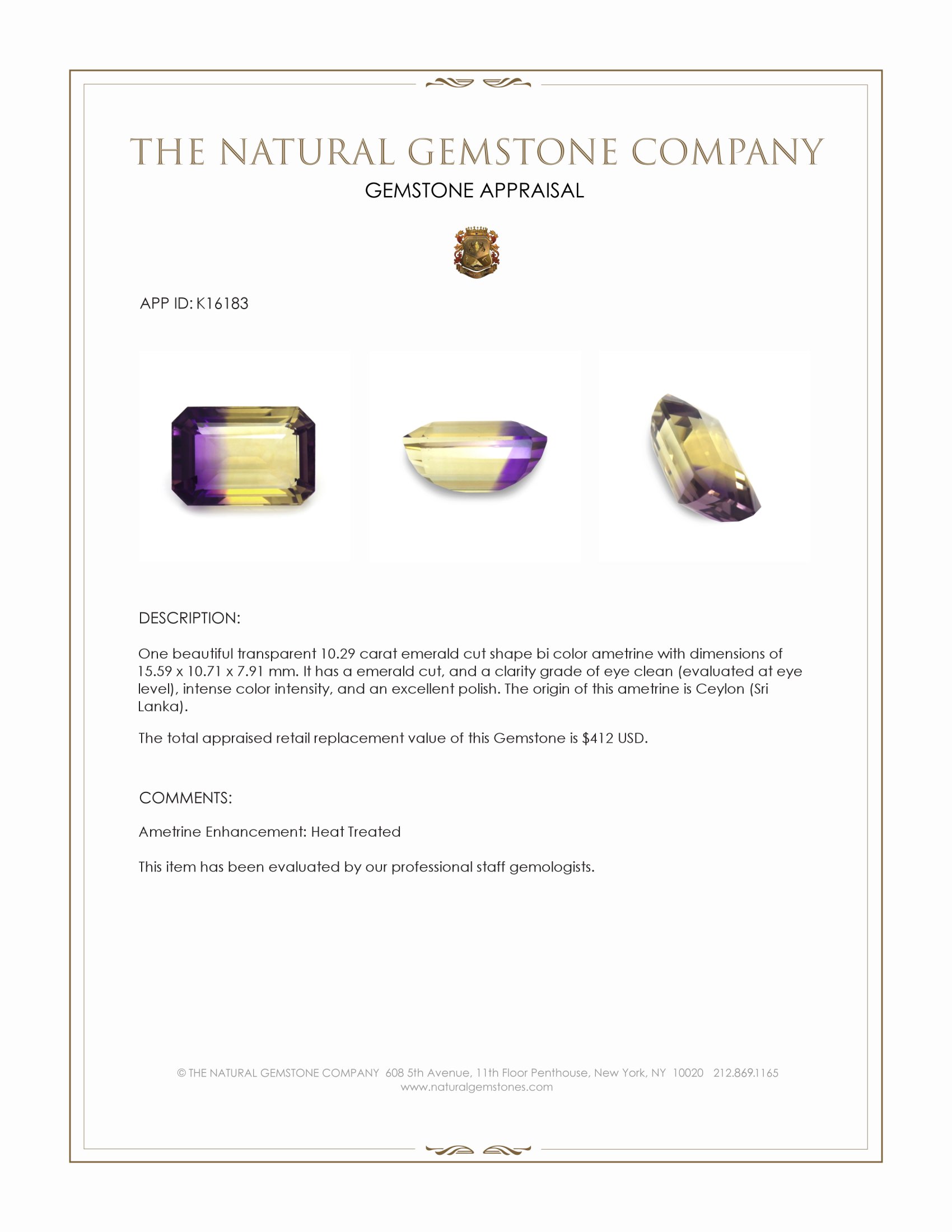
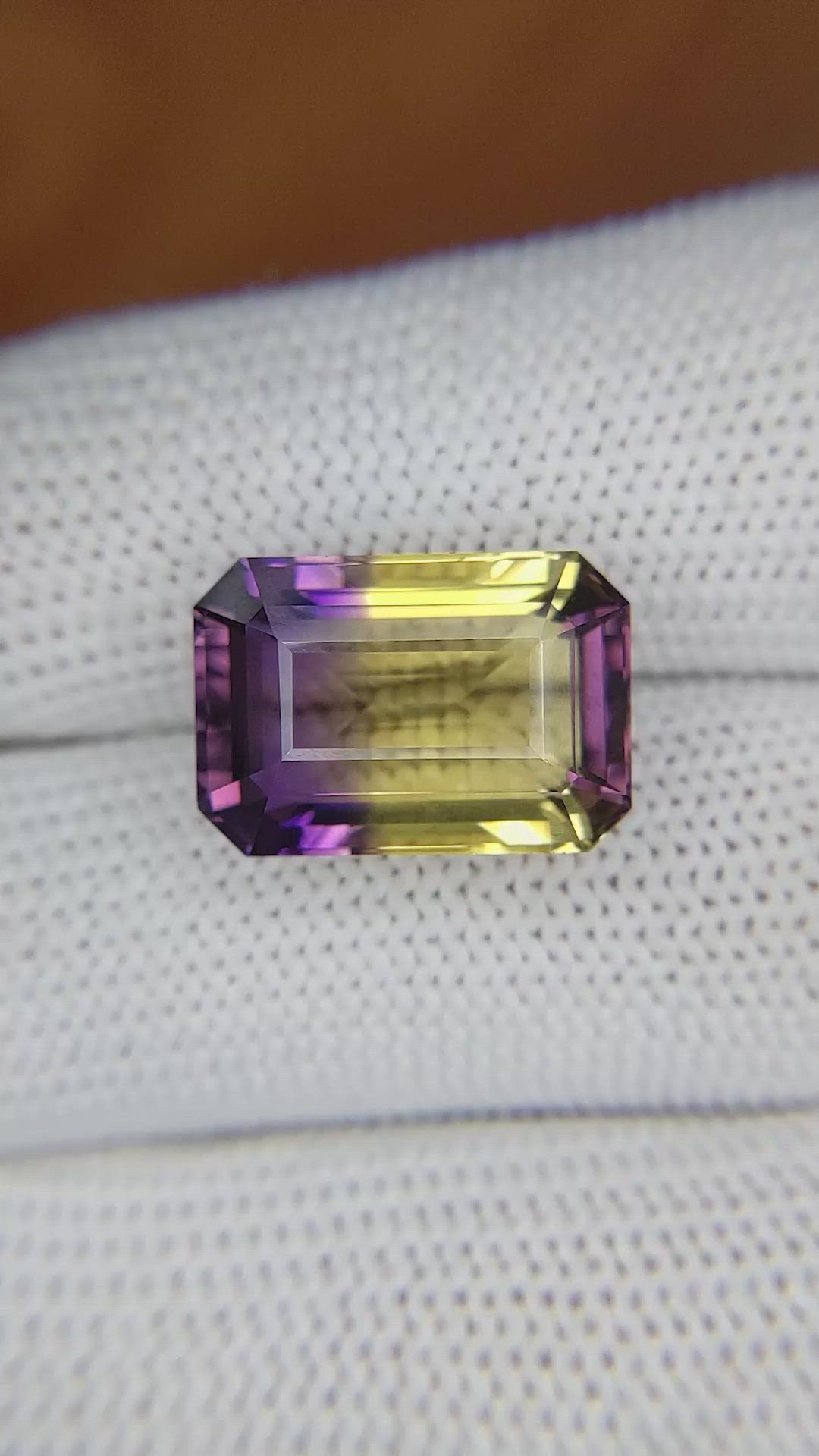
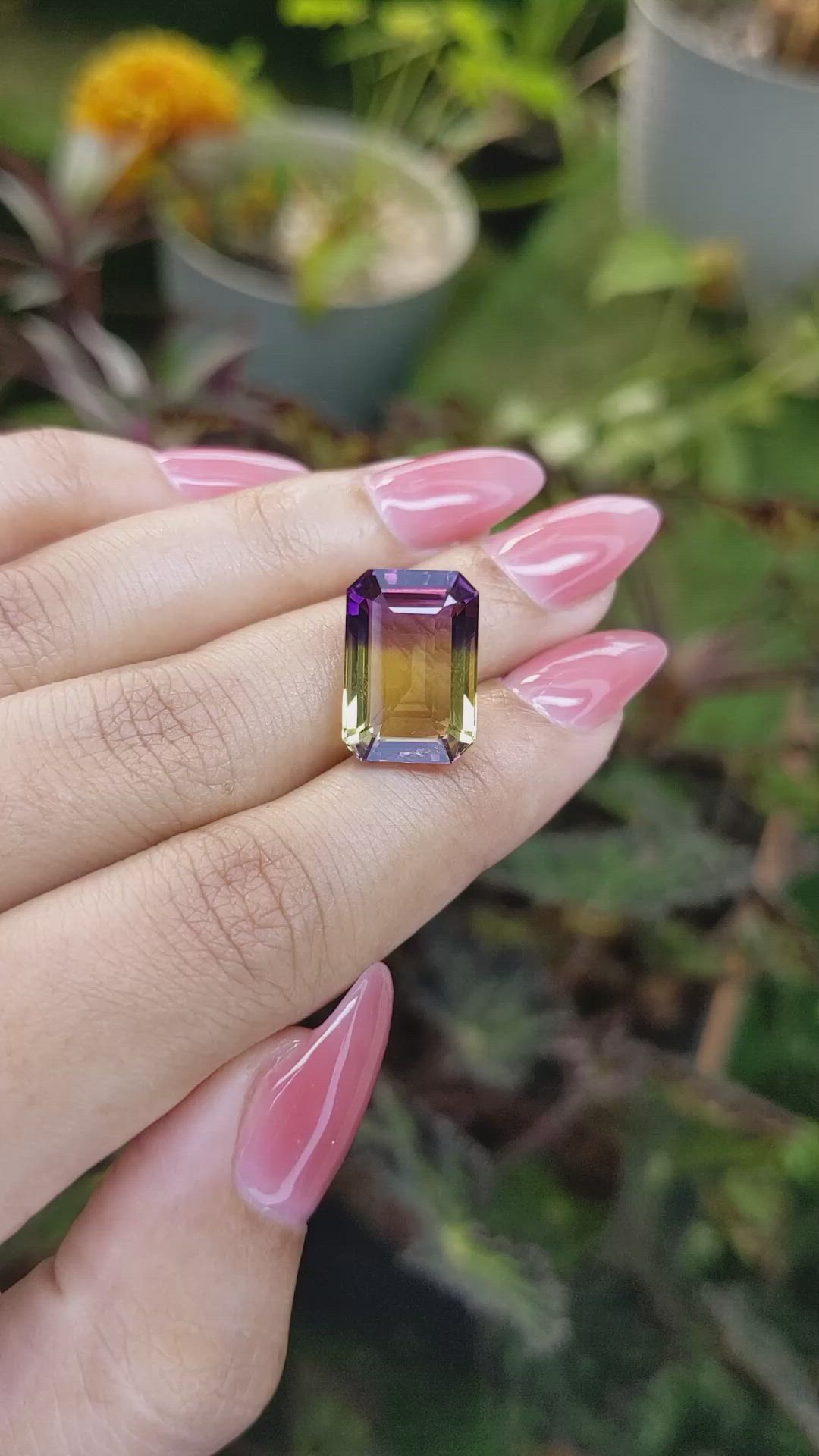
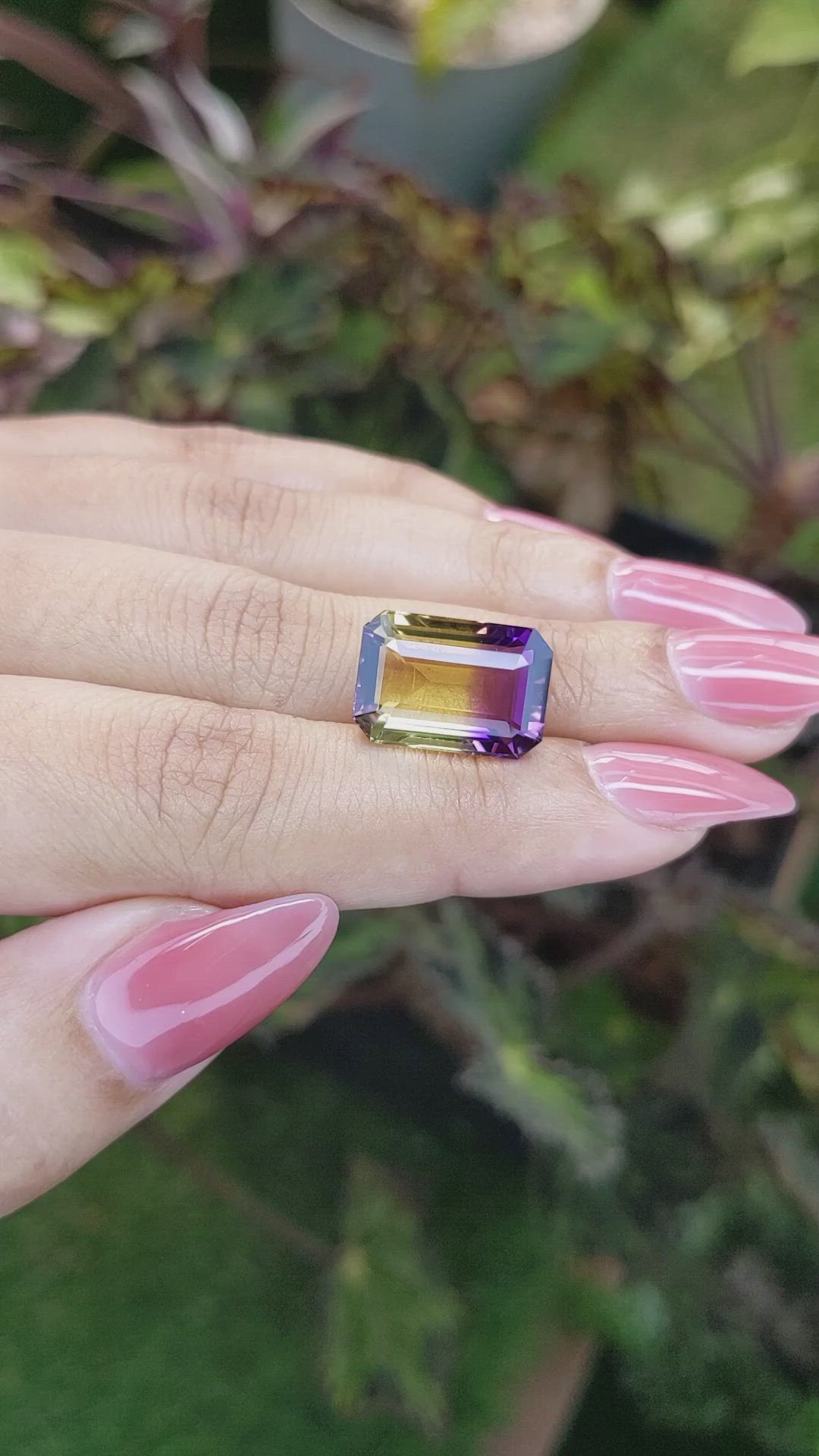
10.29 Ct. Ametrine from Ceylon (Sri Lanka)
This loose stone is available to ship now
Item ID: | K16183 |
|---|---|
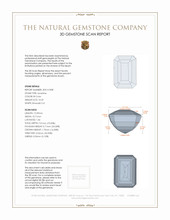
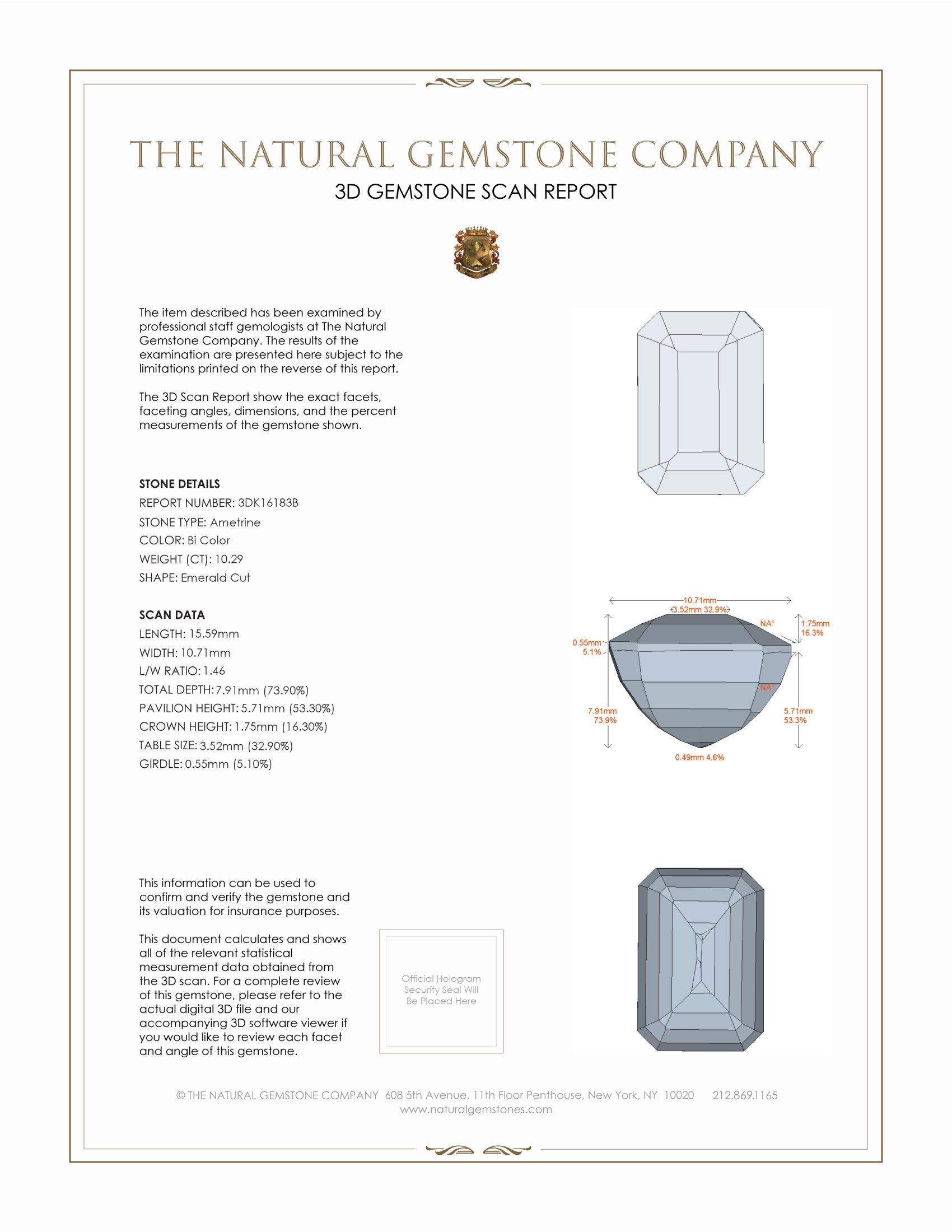
Dimensions (MM): help | Length: 15.59 Width: 10.71 Height: 7.91 |
Weight: | 10.29 Ct. |
Color: help | Bi Color |
Color intensity: help | Intense |
Clarity: help | Eye Clean |
Shape: help | Emerald Cut |
Cut: | Emerald |
Cutting style: | Faceted |
Enhancements: help | Heat Treated |
Origin: help | Ceylon (Sri Lanka) |
Per carat price: help | $40 |
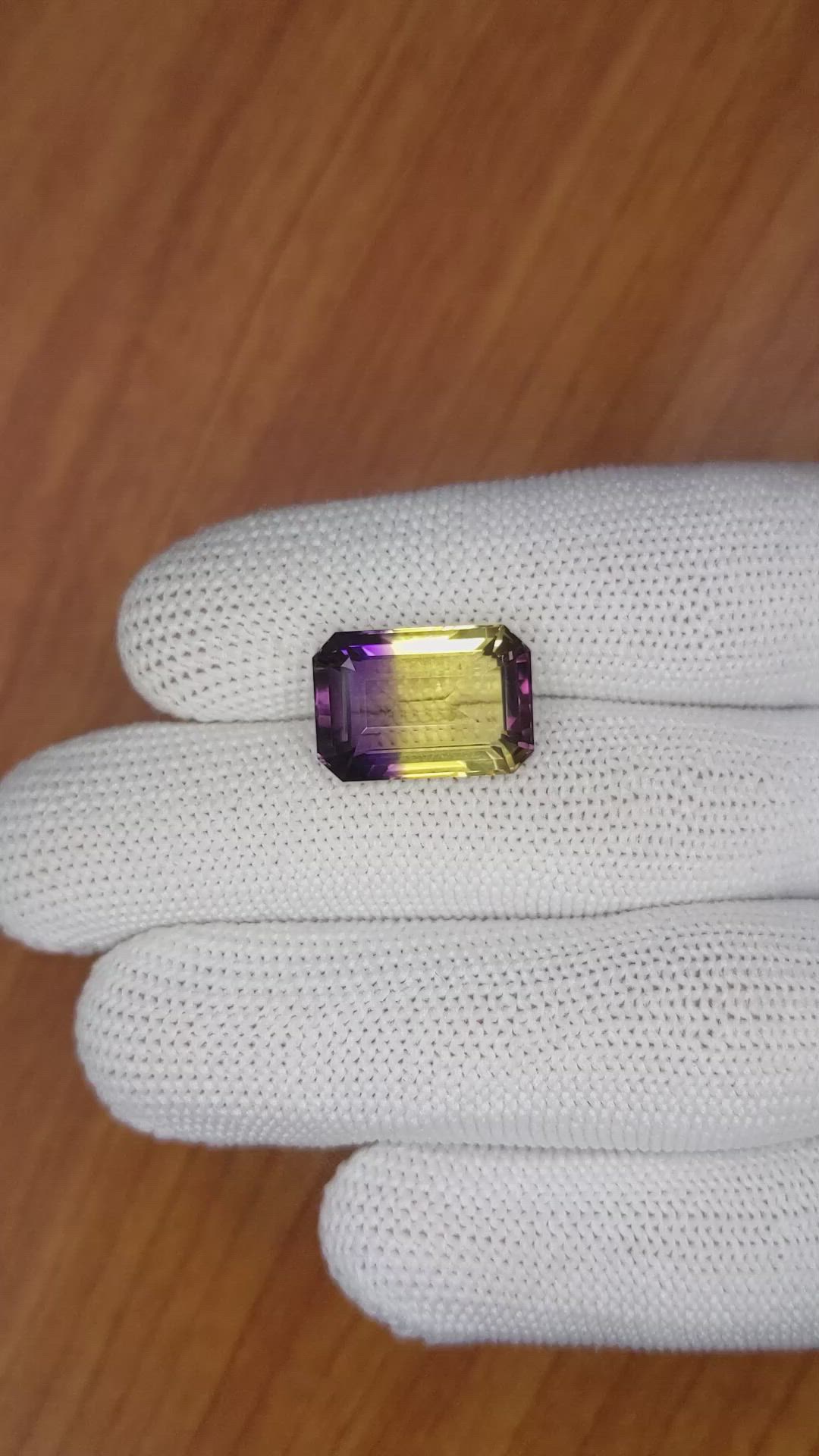
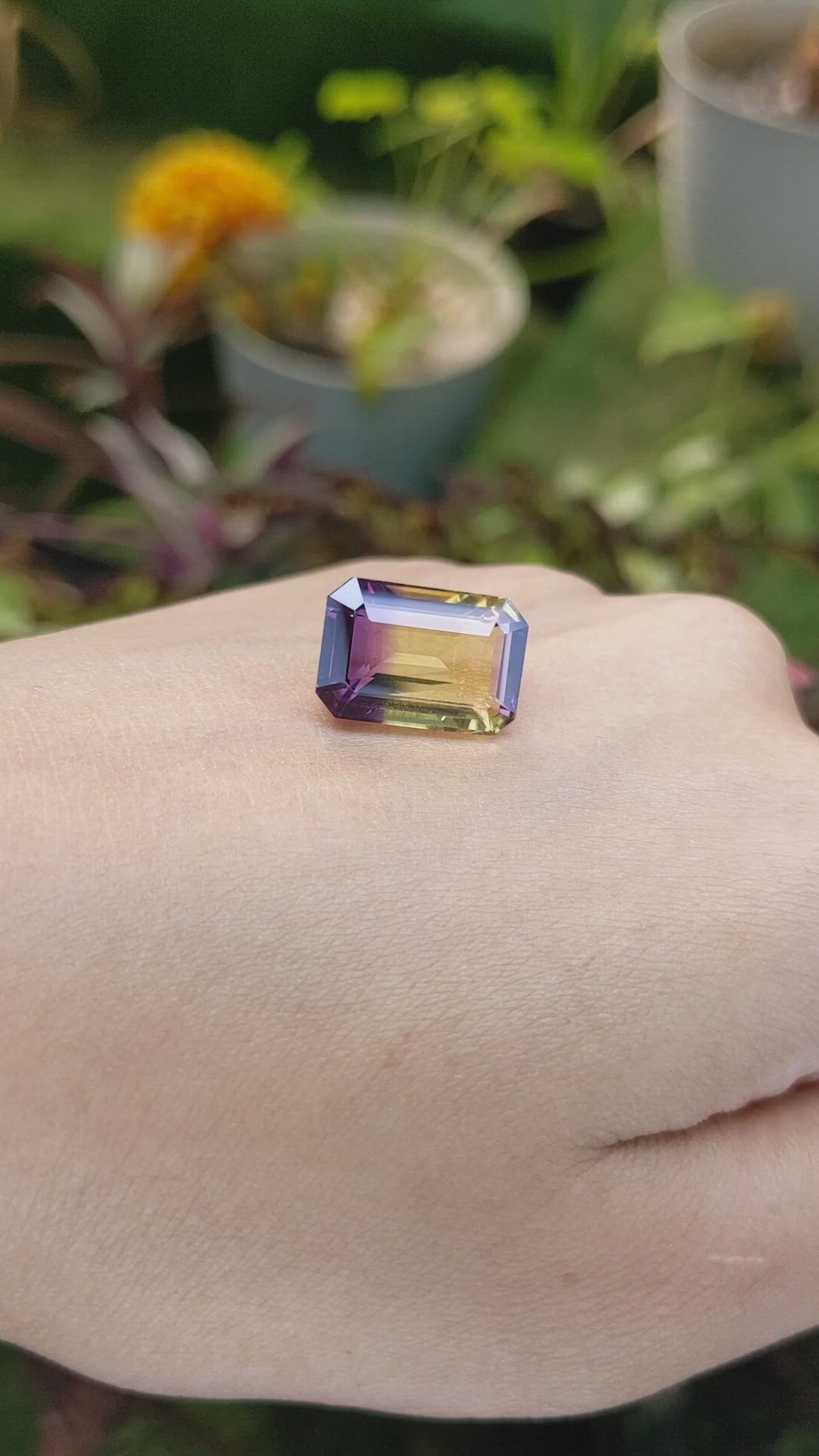
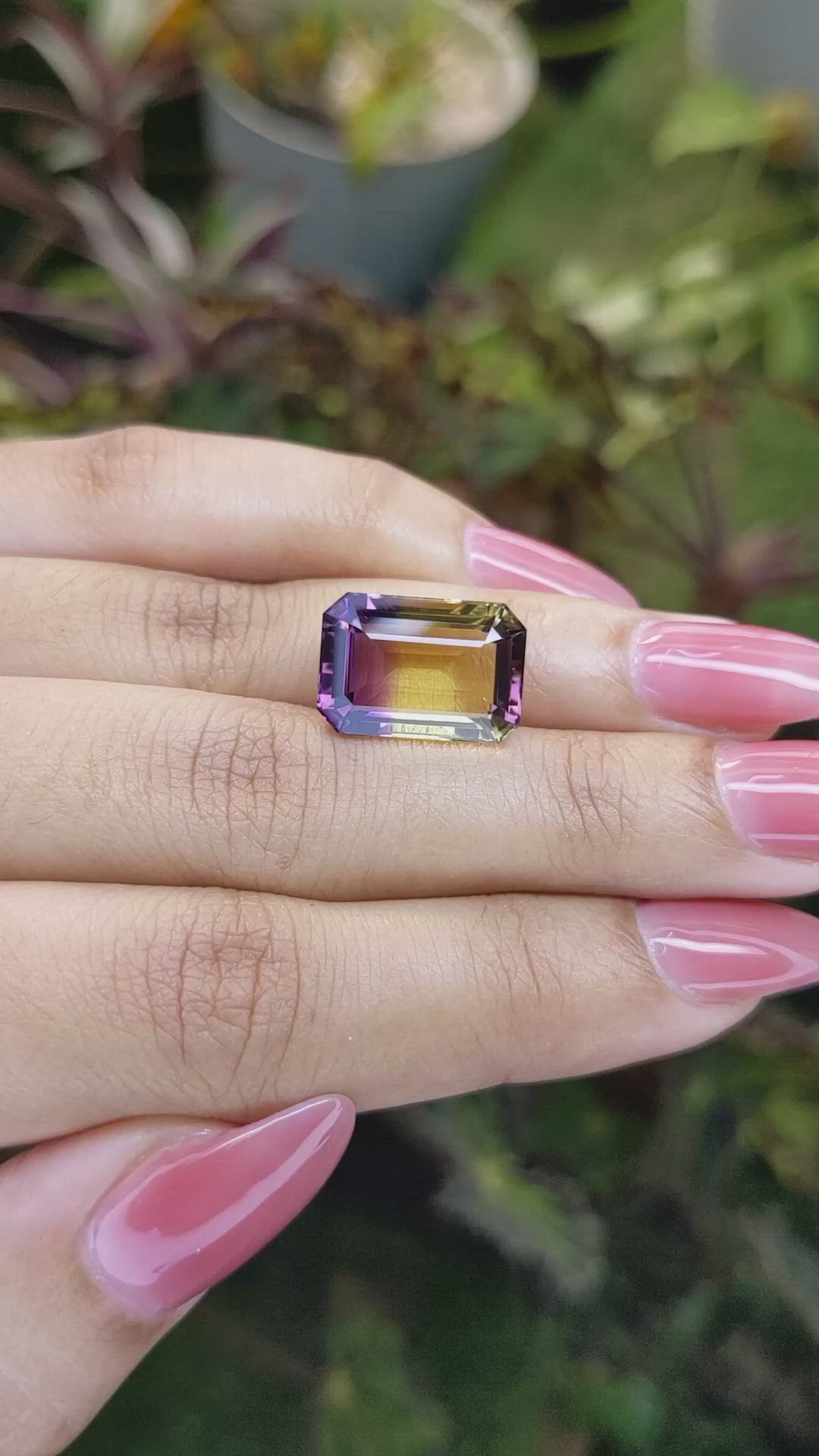
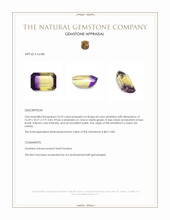
This listing describes a single transparent, bi color ametrine weighing 10.29 carats, presented in an emerald cut with dimensions 15.59 by 10.71 by 7.91 millimeters. The gem is notable for its clear division of color, combining the purple tones of amethyst with the golden hues of citrine, creating a visually striking bicolor effect within a single facet plane. Clarity is graded as eye clean when evaluated at eye level, and the stone displays an intense color intensity that remains vivid across the table and crown. The facet finish is described as excellent polish, and the specimen has undergone heat treatment as an enhancement. The reported place of origin is Ceylon, Sri Lanka, and the piece is offered by The Natural Gemstone Company.
Optically, ametrine is a variety of quartz and therefore exhibits the characteristic refractive and dispersion properties of quartz, with an approximate refractive index range near 1.544 to 1.553 and modest dispersion near 0.013. In direct comparison to more commonly encountered gemstones, the optical behavior differs in ways that influence perceived brilliance. Diamond, with a refractive index around 2.42 and dispersion of roughly 0.044, produces intense fire and scintillation that quartz cannot match. Corundum varieties such as sapphire and ruby, with refractive indices around 1.76 to 1.77 and dispersion near 0.018, also return stronger brilliance than quartz when faceted for maximum light return. Beryl varieties, including emerald, sit closer to quartz in refractive index but often display lower transparency due to inclusions. The ametrine’s brilliance should therefore not be equated with diamond style sparkle; rather, its visual impact arises from broad, luminous flashes and contrasting color zones that emphasize depth and saturation rather than high dispersion fire.
What sets this particular 10.29 carat emerald cut ametrine apart is the combination of size, cut, color intensity, and clarity. The emerald cut emphasizes broad, step-cut facets and a clear table, creating a hall-of-mirrors effect that favors large, clean flashes of color and light over the fine scintillation of brilliant cuts. For a bicolor stone, the emerald cut is particularly effective at presenting distinct color separation and directional color contrast, allowing the purple and golden bands to read clearly across the surface. The eye-clean clarity reported at eye level ensures minimal internal distraction, so the eye is drawn to the interplay of hues and the stone’s internal depth. Heat treatment, commonly applied to quartz to adjust and stabilize tone and saturation, has been used to enhance the intensity of the color in this piece, and the excellent polish maximizes surface luster and light return. The combination of a substantial carat weight, precise emerald cut geometry, intense color, and eye-clean clarity makes this ametrine a notable example among quartz gemstones.
From a practical standpoint, the gem’s material properties and origin inform both handling and setting decisions. Quartz has a Mohs hardness near 7, which is durable for most jewelry applications but requires reasonable care to avoid abrasion and heavy impact that could cause chipping in a step-cut girdle or corners. The emerald cut’s long, faceted planes lend themselves to protective settings, such as bezel or partial bezel mounts, or designs that incorporate prong protection at the corners. The bicolor nature benefits from a setting that allows orientation control so the color division can be displayed intentionally, for example aligned along or across the finger in a ring design, or placed to catch light differentially in a pendant. Cleaning can be performed with warm, soapy water and a soft brush, and since the enhancement is heat treatment, the stone is stable under normal cleaning conditions; caution is advised with prolonged exposure to high temperatures or sudden thermal shock. The stated origin, Ceylon Sri Lanka, provides provenance context, and when combined with the gem’s documented attributes, supports assessment for bespoke settings or as a collector piece offered through The Natural Gemstone Company.


