
- Stone17
- Reports3
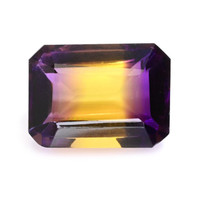
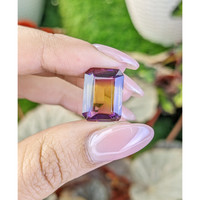
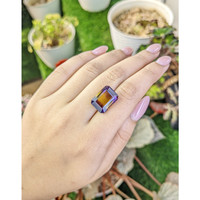
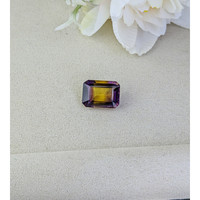
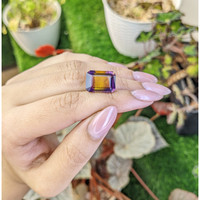
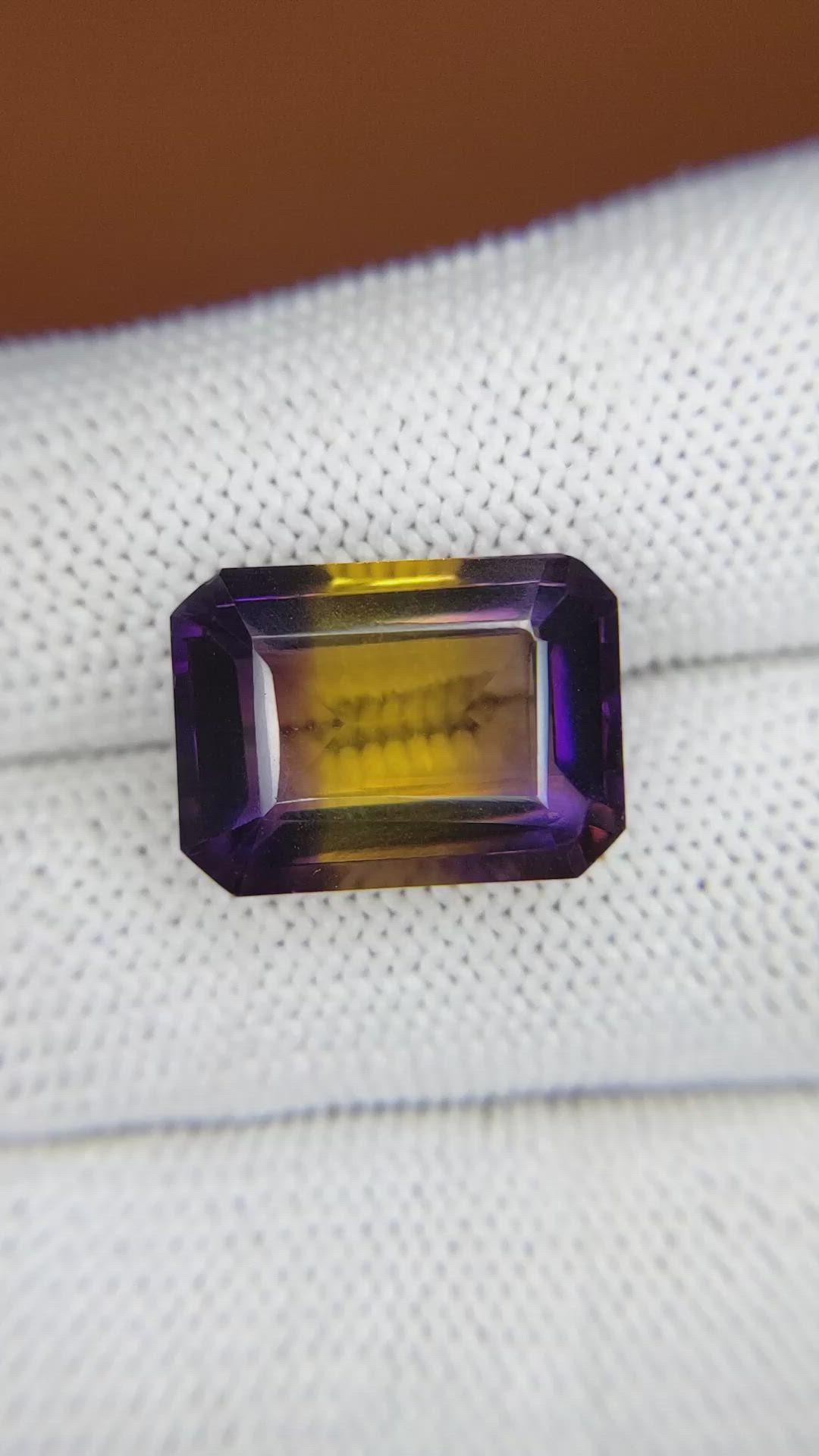
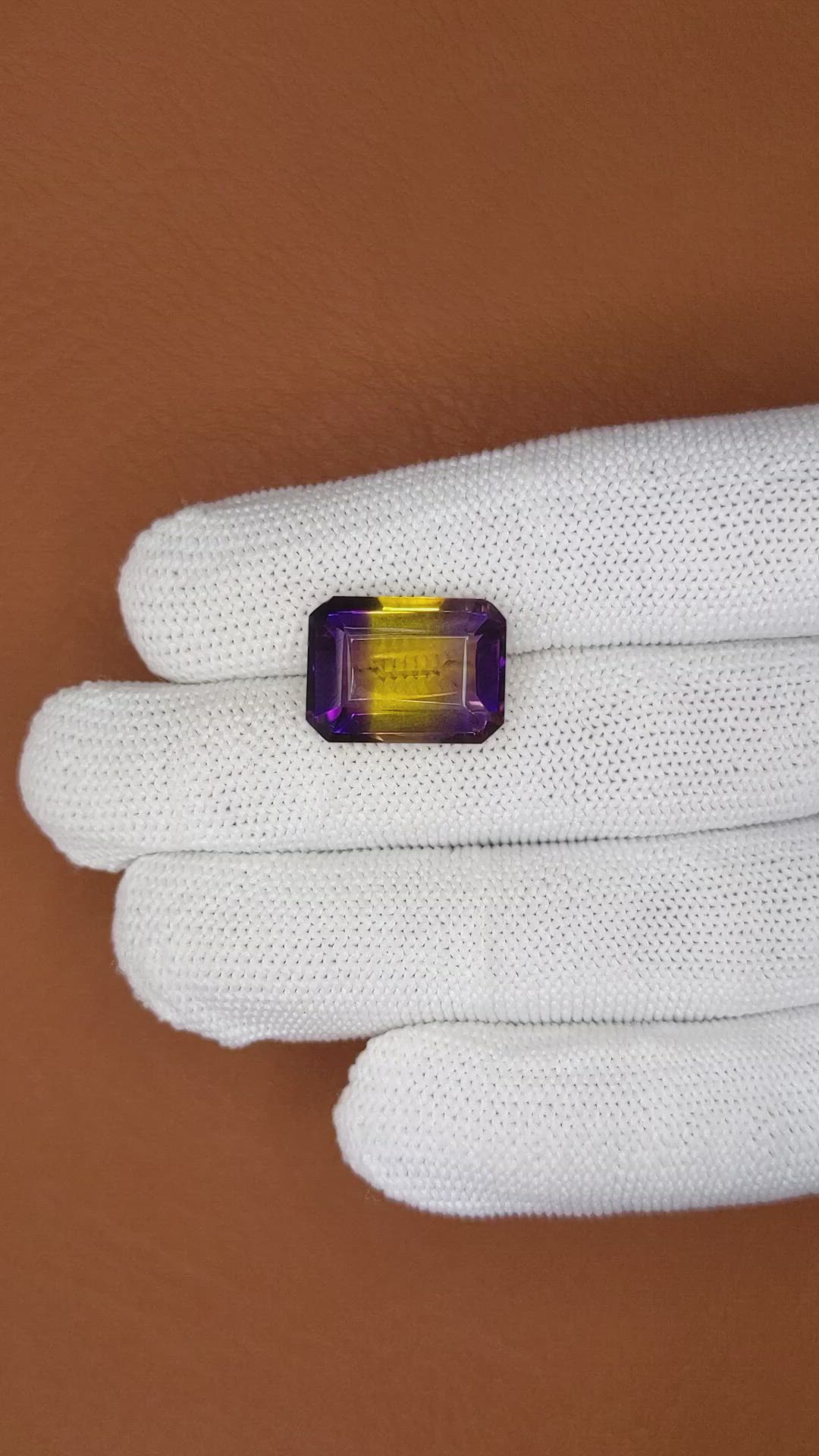
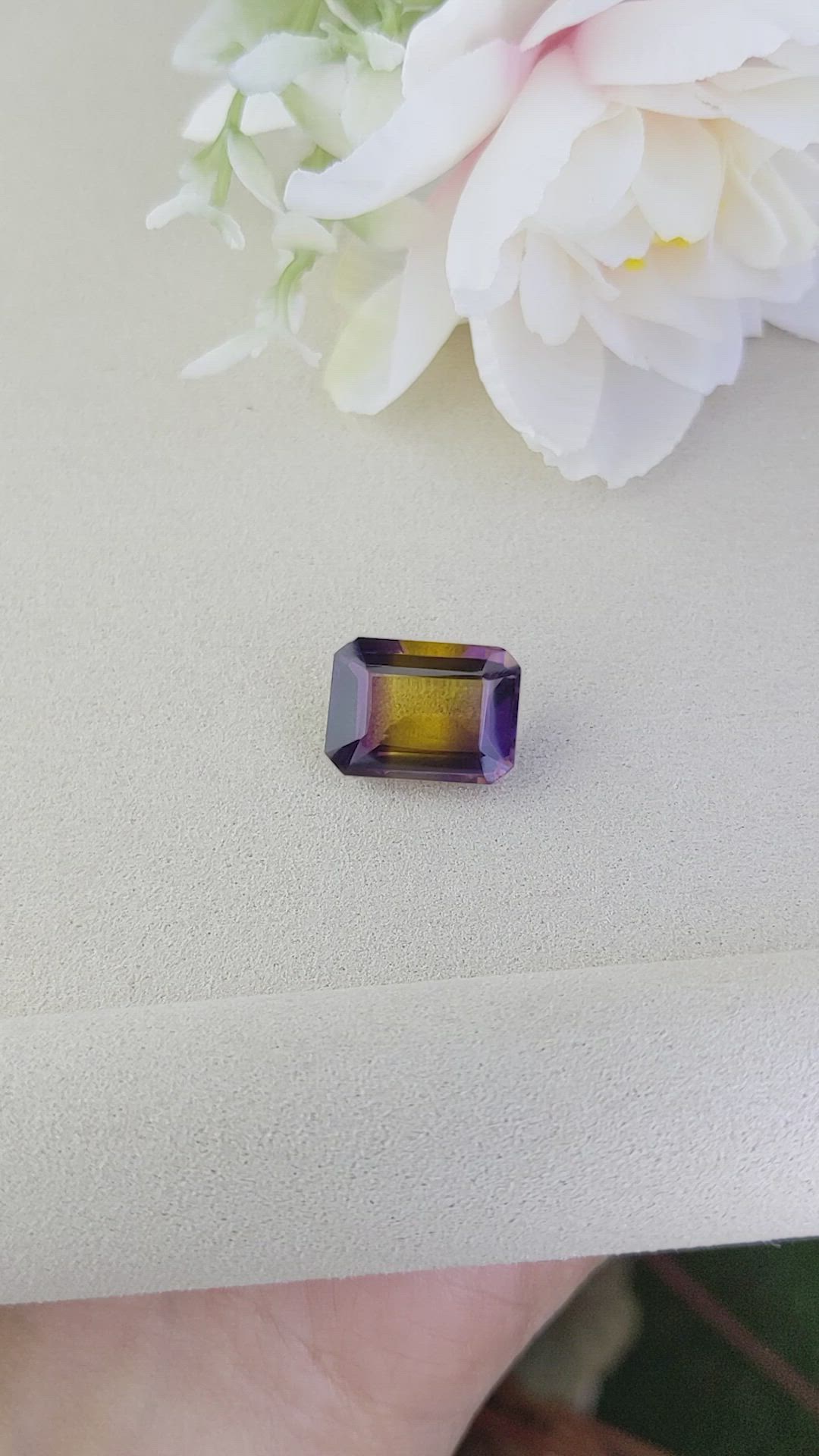
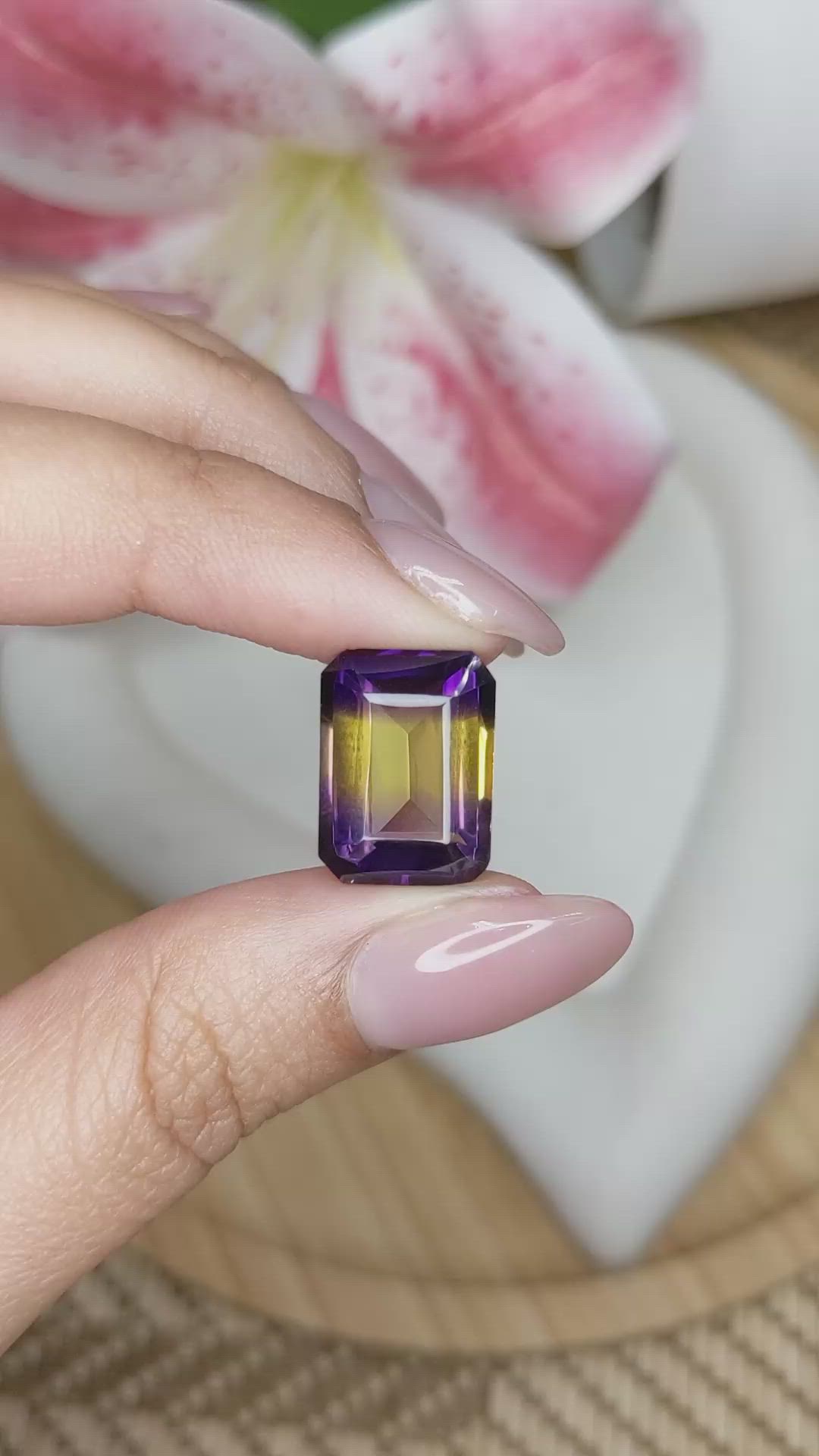
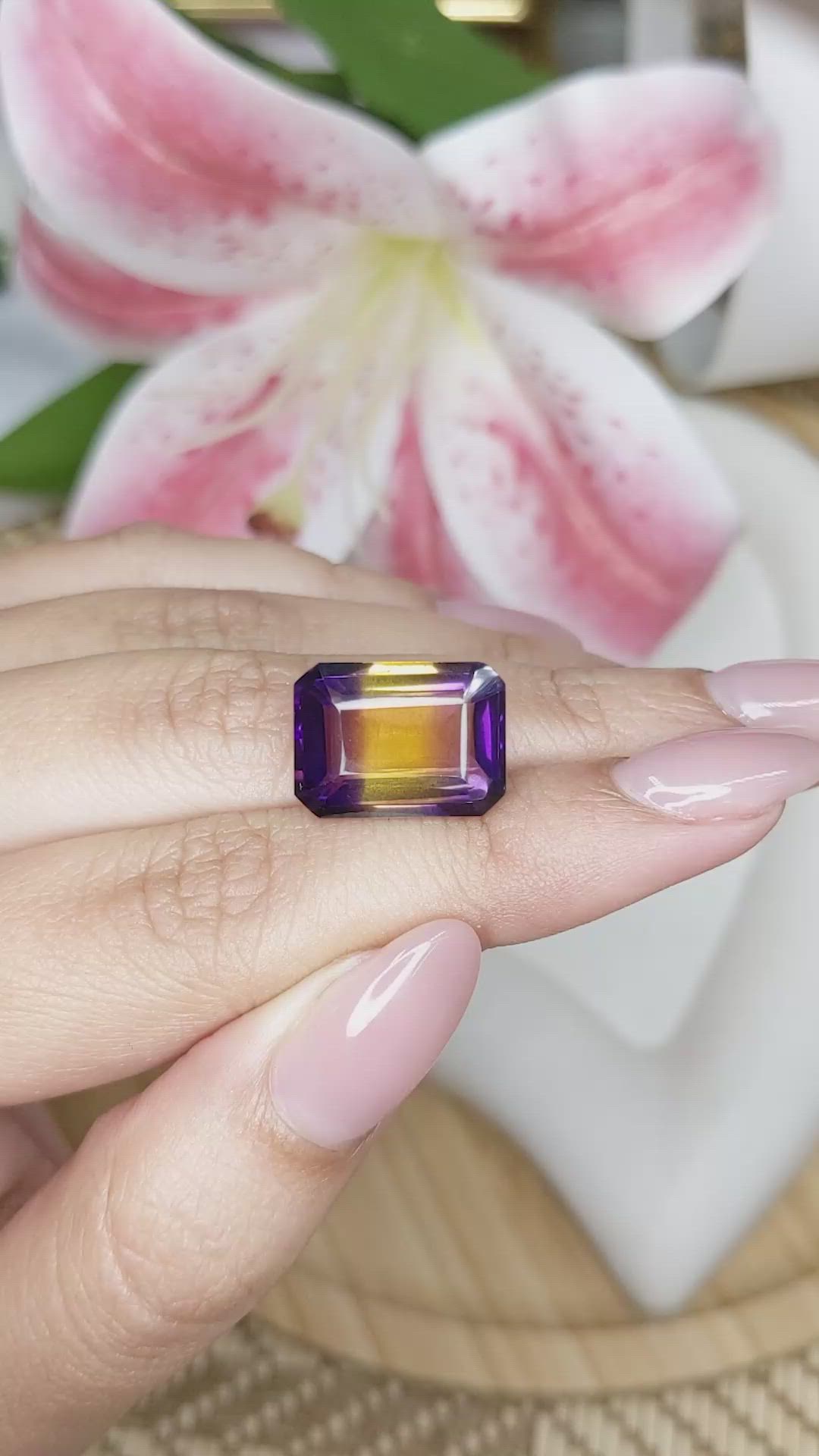
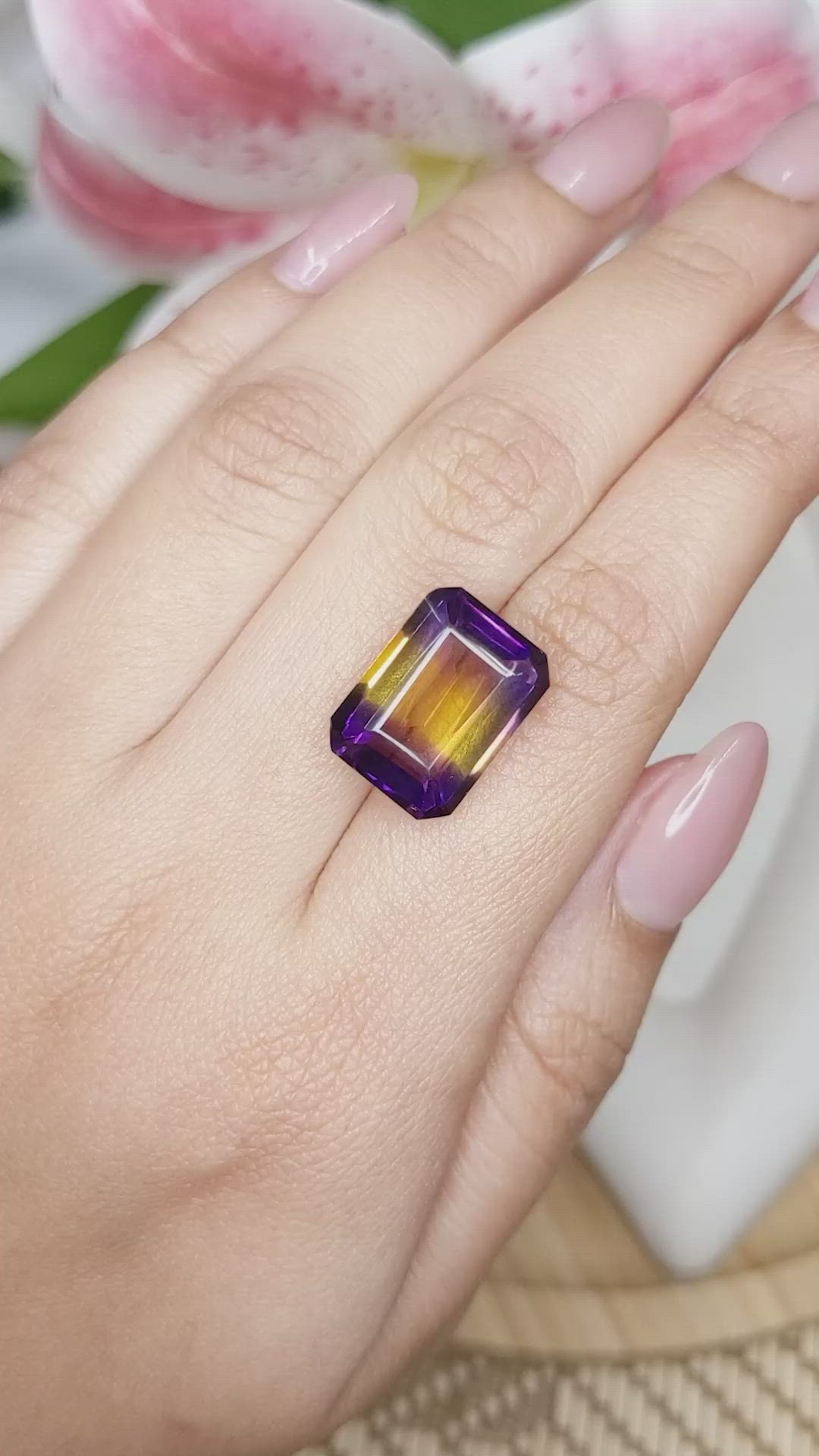
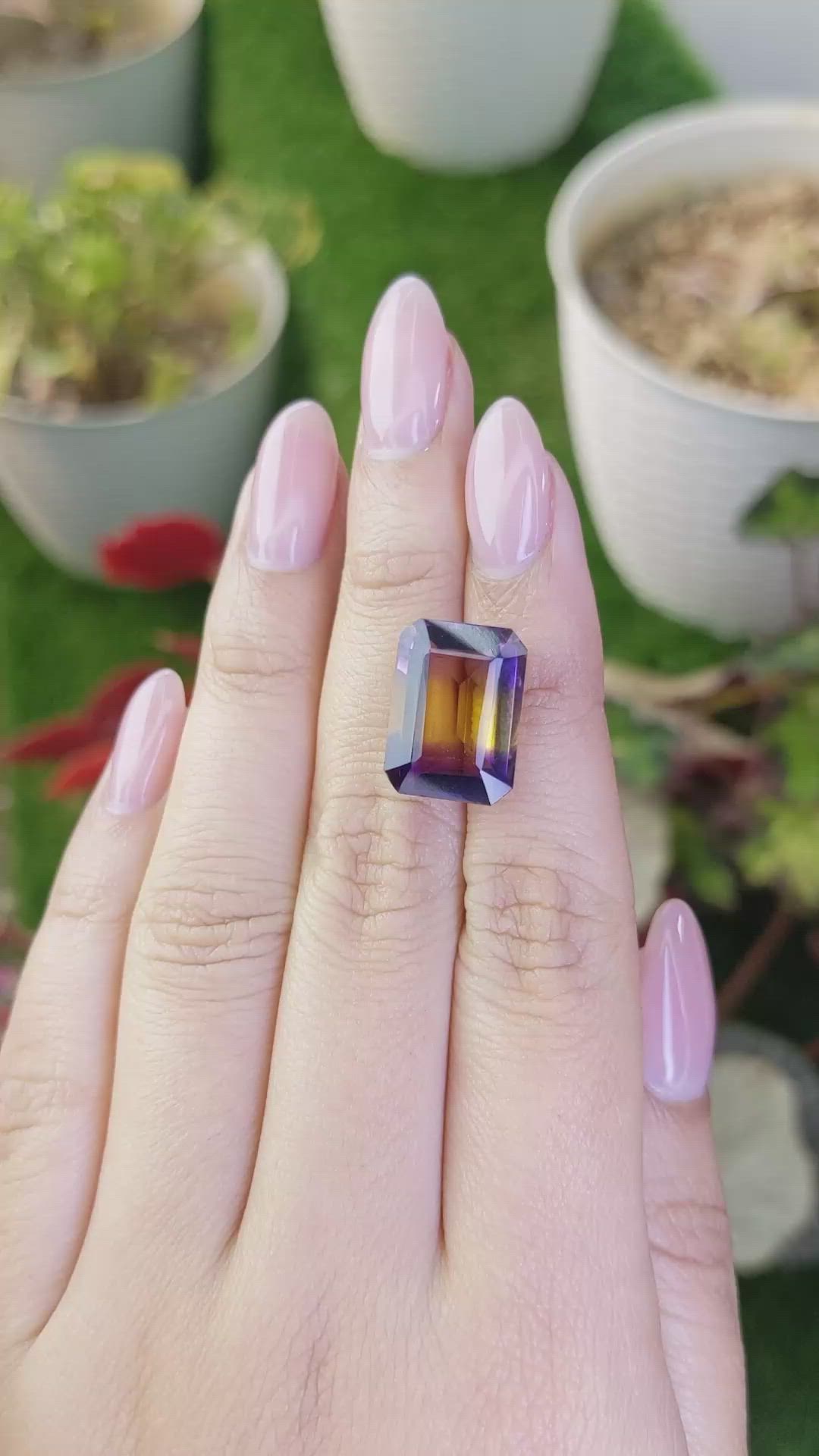

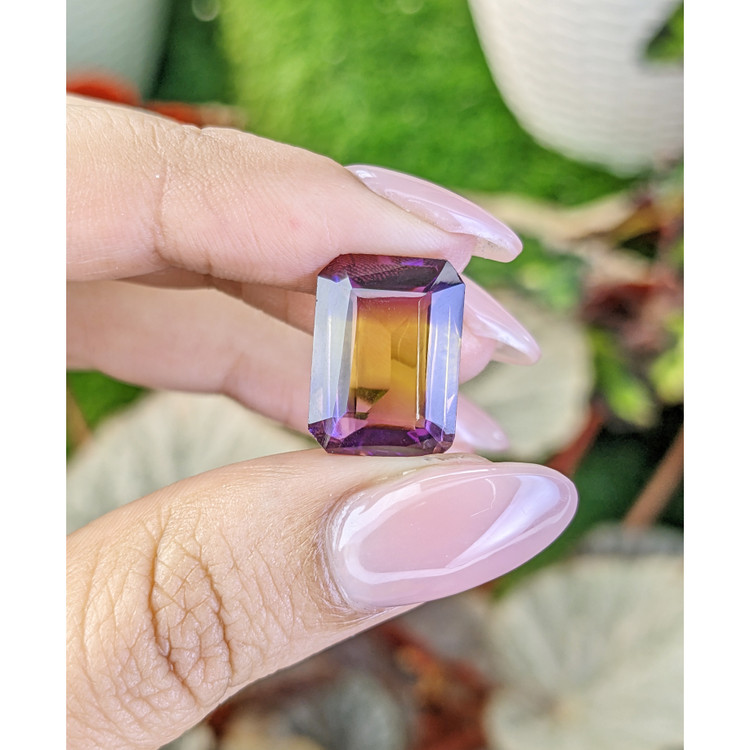
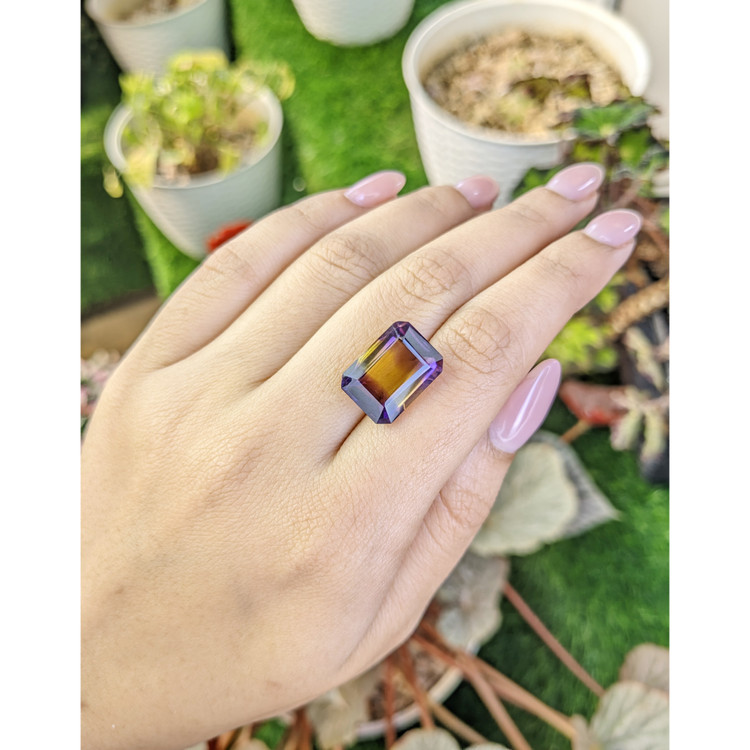
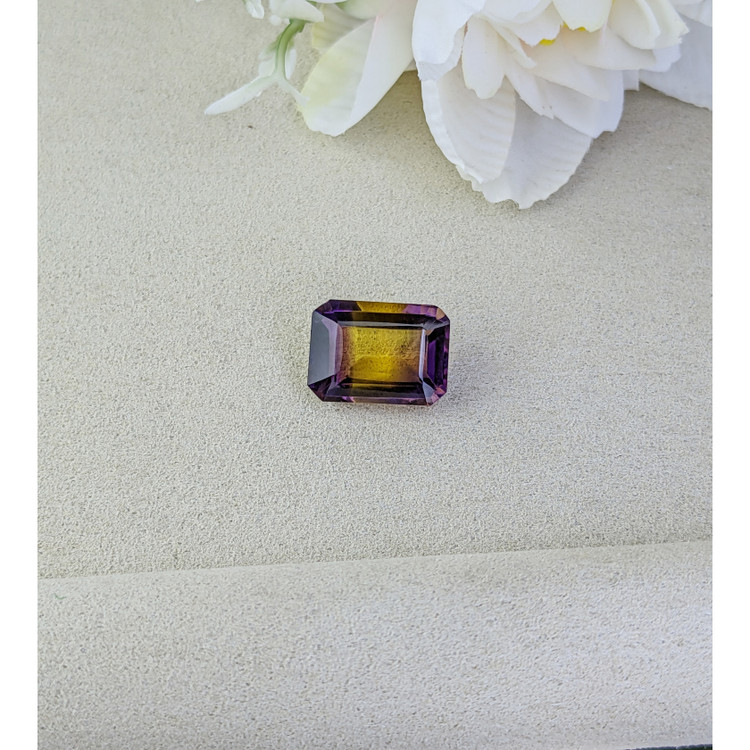
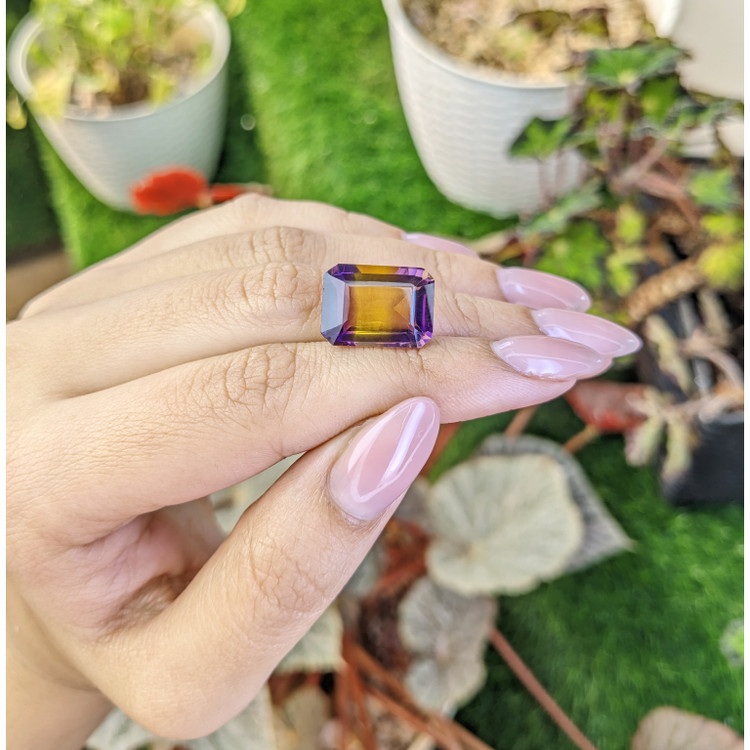

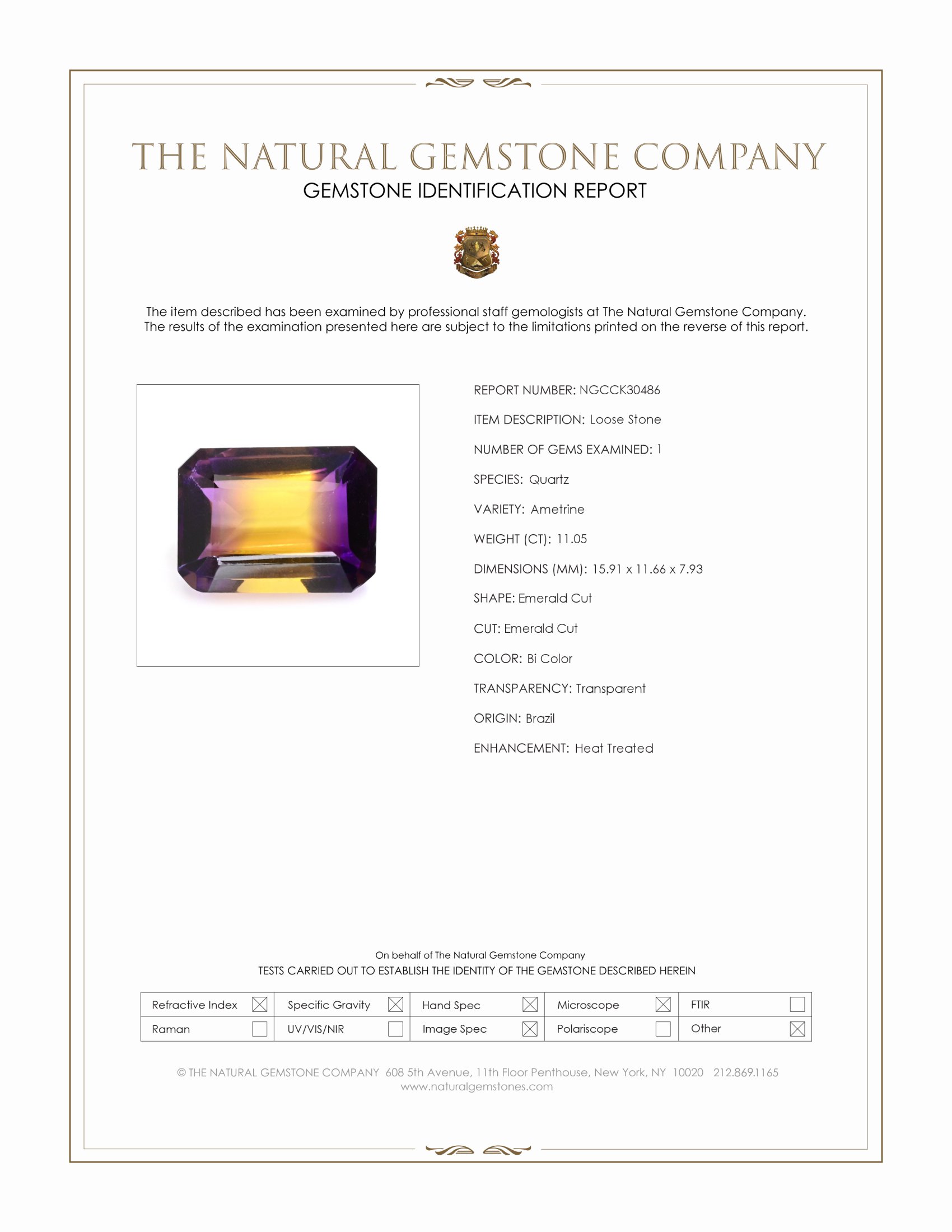
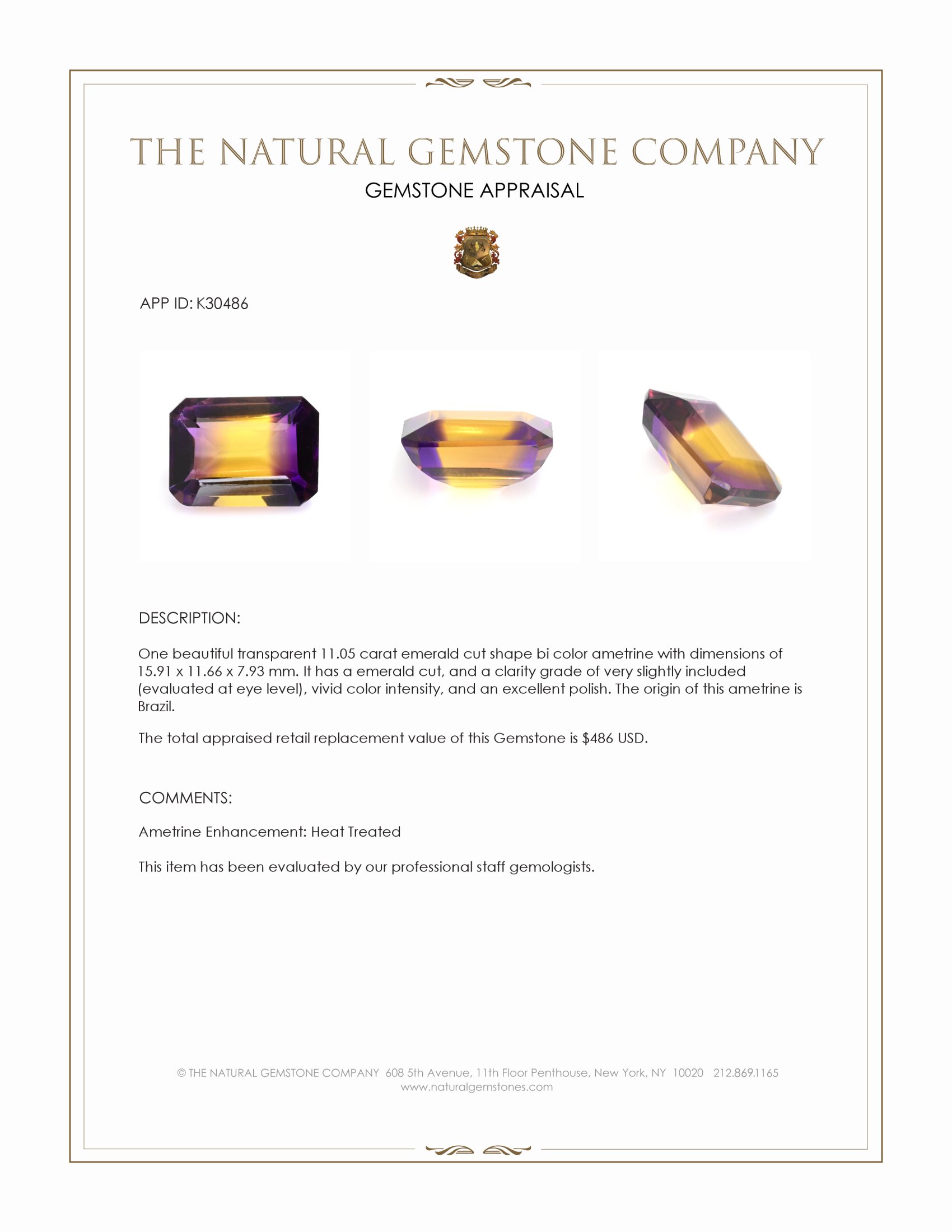
11.05 Ct. Bi Color Ametrine from Brazil
This loose stone is available to ship now
Item ID: | K30486 |
|---|---|
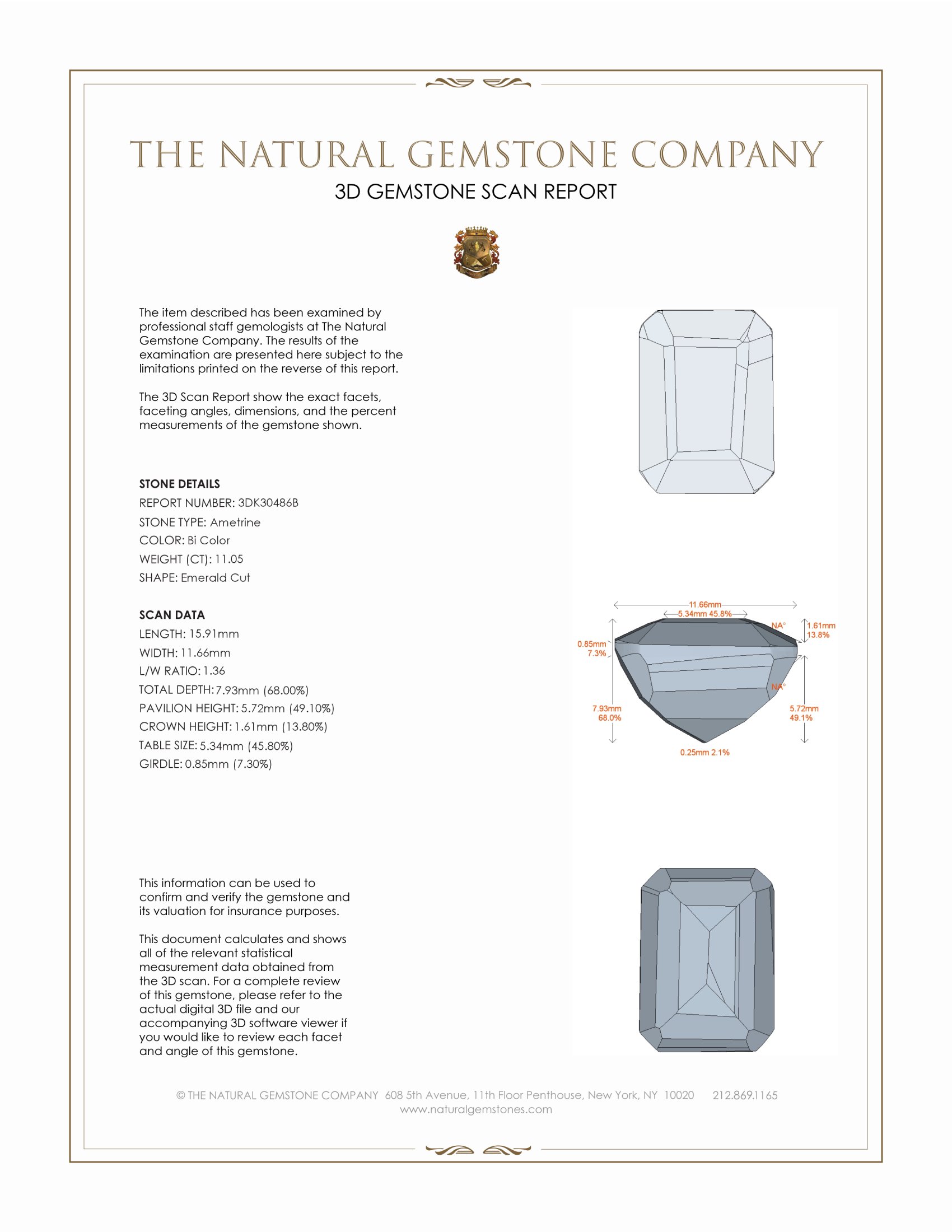
Dimensions (MM): help | Length: 15.91 Width: 11.66 Height: 7.93 |
Weight: | 11.05 Ct. |
Color: help | Bi Color |
Color intensity: help | Vivid |
Clarity: help | Very Slightly Included |
Shape: help | Emerald Cut |
Cut: | Emerald Cut |
Cutting style: | Faceted |
Enhancements: help | Heat Treated |
Origin: help | Brazil |
Per carat price: help | $44 |
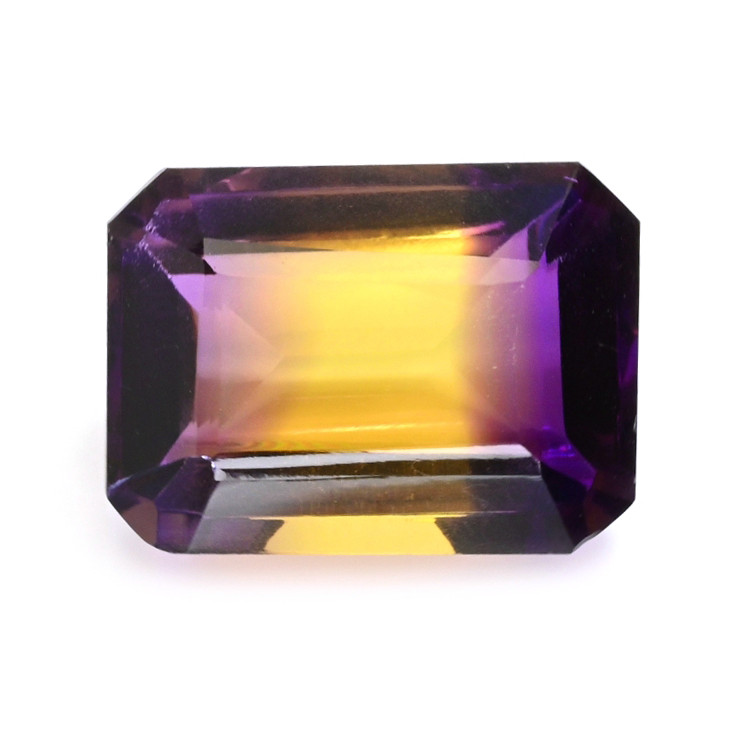
This 11.05 carat emerald cut bi color ametrine measures 15.91 x 11.66 x 7.93 mm, with a faceted cutting style executed to emphasize its strong two tone zoning. The stone is fashioned in a classical emerald cut, with broad step facets, a generous table, and carefully controlled pavilion depth to maximize face up color and directional light return. The clarity grade is very slightly included evaluated at eye level, and those internal characteristics are minimal and stable, contributing to the gem character without distracting from the vivid color intensity. The polish is excellent across all facets, giving crisp facet junctions and a smooth table that enhances both the golden citrine plane and the deep amethyst plane. This specimen has been heat treated to refine and stabilize its hues, and it originates from Brazil, a locality known for producing high quality quartz varieties. The Natural Gemstone Company presents this gem with detailed lapidary documentation on cut and finish for discerning buyers.
The origin story of this ametrine begins millions of years ago in a silica rich geologic setting where volatile laden hydrothermal fluids circulated through fractures and cavities in host igneous and metamorphic rocks. As the silica rich solution cooled slowly, quartz crystals began to nucleate and grow, incorporating trace iron into the crystal lattice. Slight variations in the oxidation state of that iron, driven by localized temperature gradients and subtle fluctuations in redox conditions during growth, produced juxtaposed zones of amethyst purple and citrine yellow within a single crystal. Over deep geologic time, episodic reheating and pressure changes imposed additional chemical gradients, sharpening the color boundaries and creating the striking bi color effect observed today. After tectonic uplift and erosion exposed the deposits, skilled lapidaries from The Natural Gemstone Company selected a clean, well zoned rough and oriented it to exploit the planar color separation. The emerald cut was chosen intentionally to present two broad color planes, to create a controlled dialogue between light and color, and to preserve the gem weight while achieving optical balance. The result is a transparent, technically precise ametrine that displays vivid saturation, excellent facet architecture, and a natural history that links its visual drama to processes operating over millions of years.


