
- Stone17
- Reports2


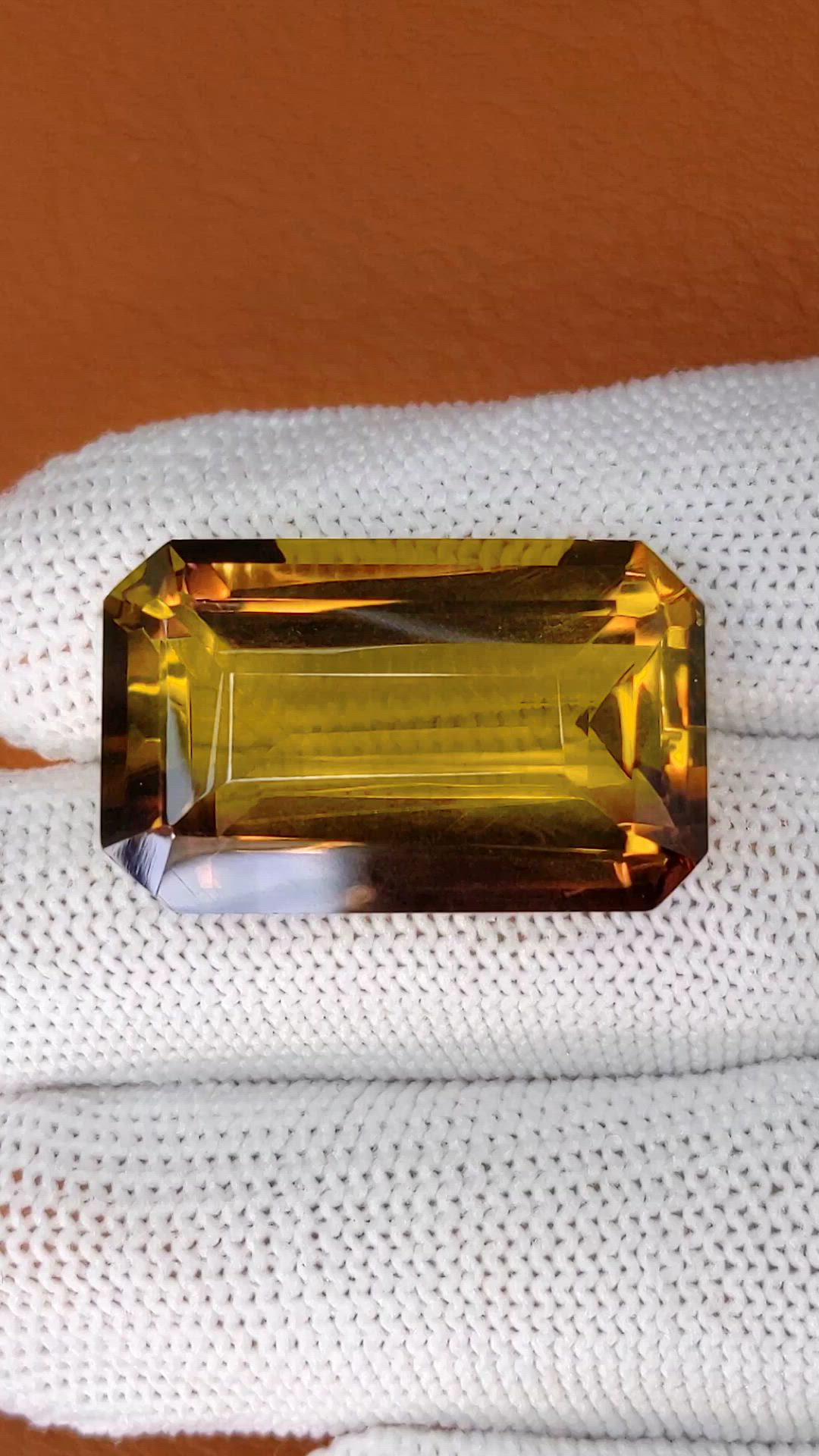
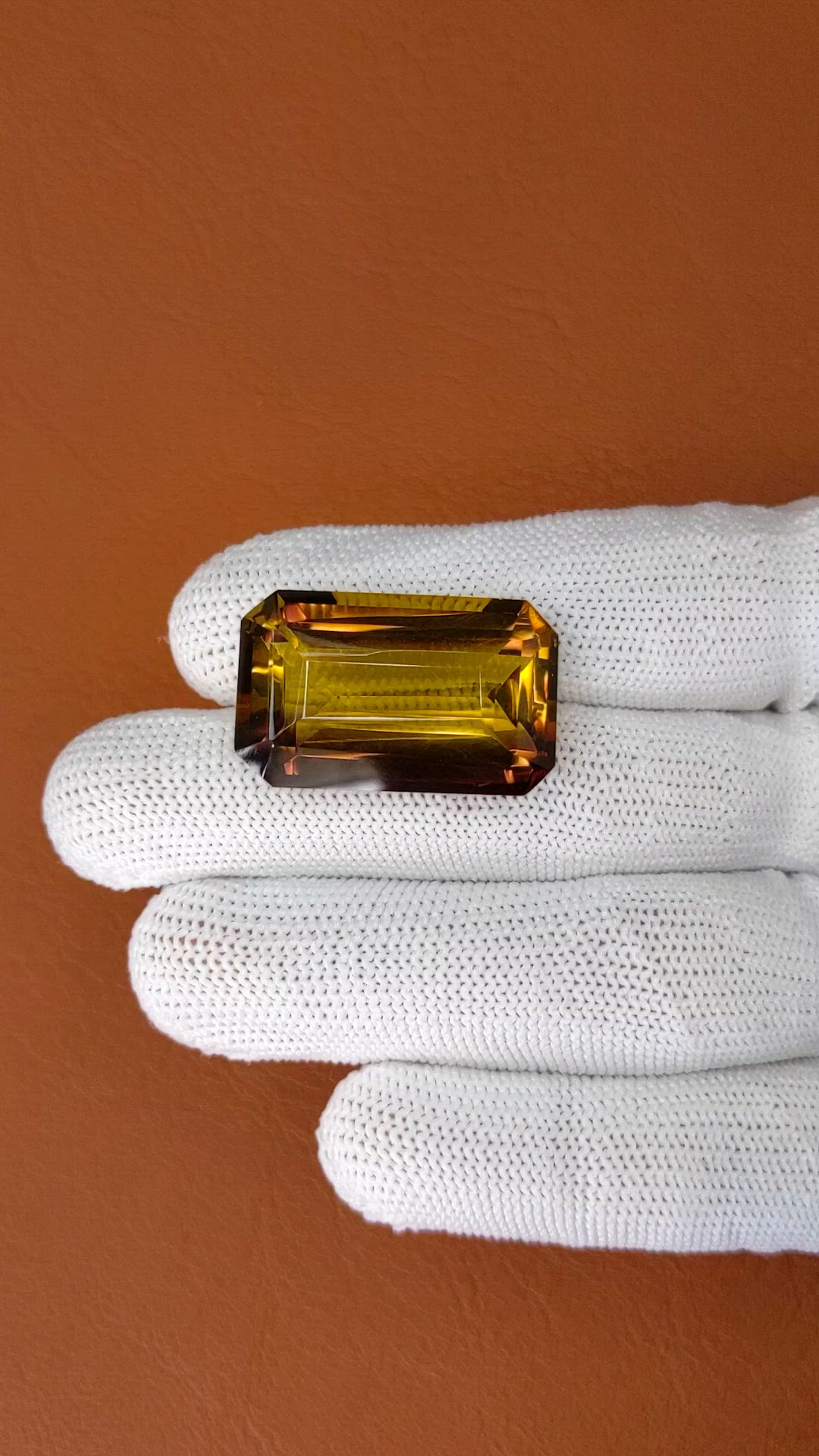
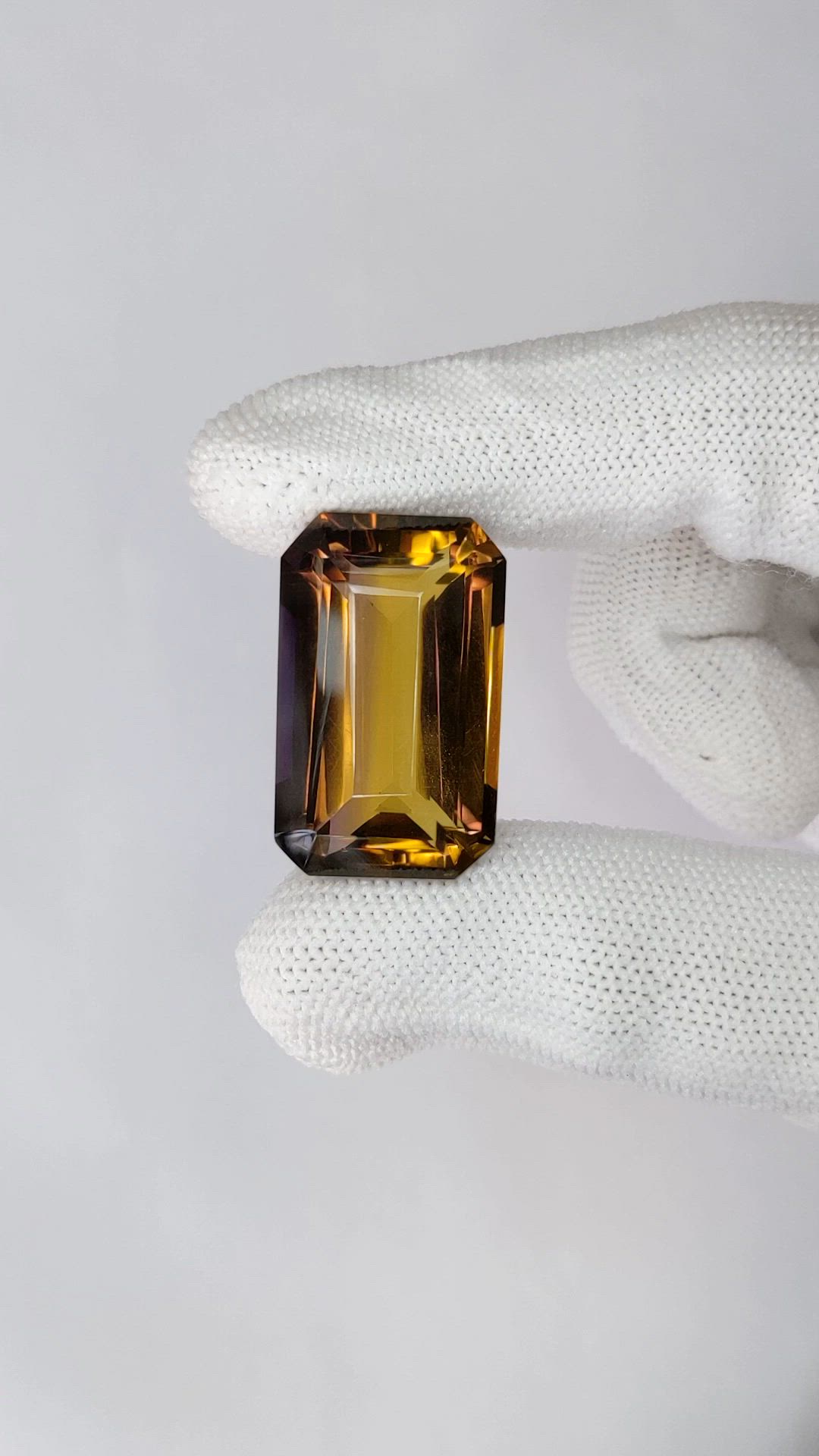
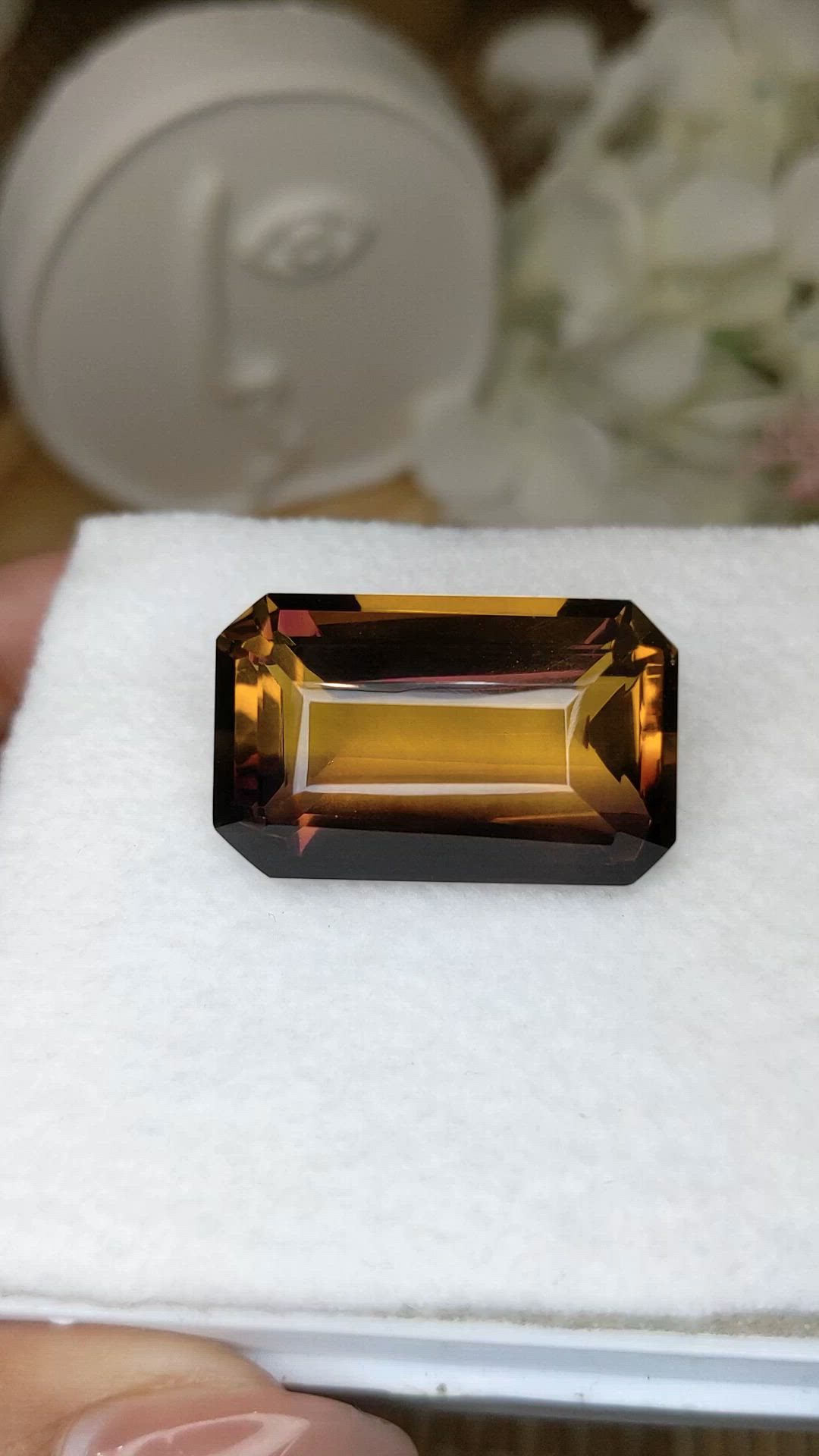
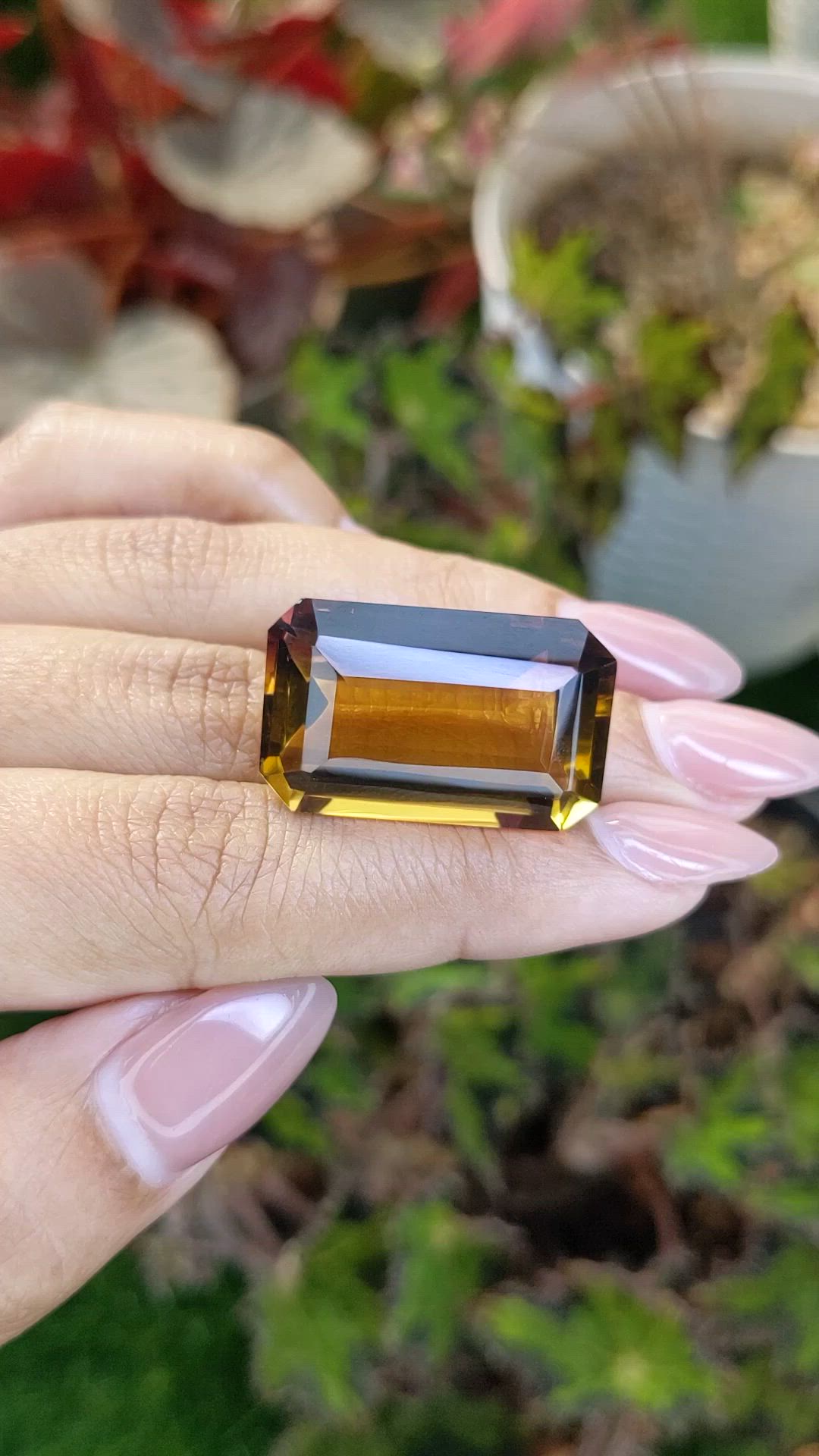
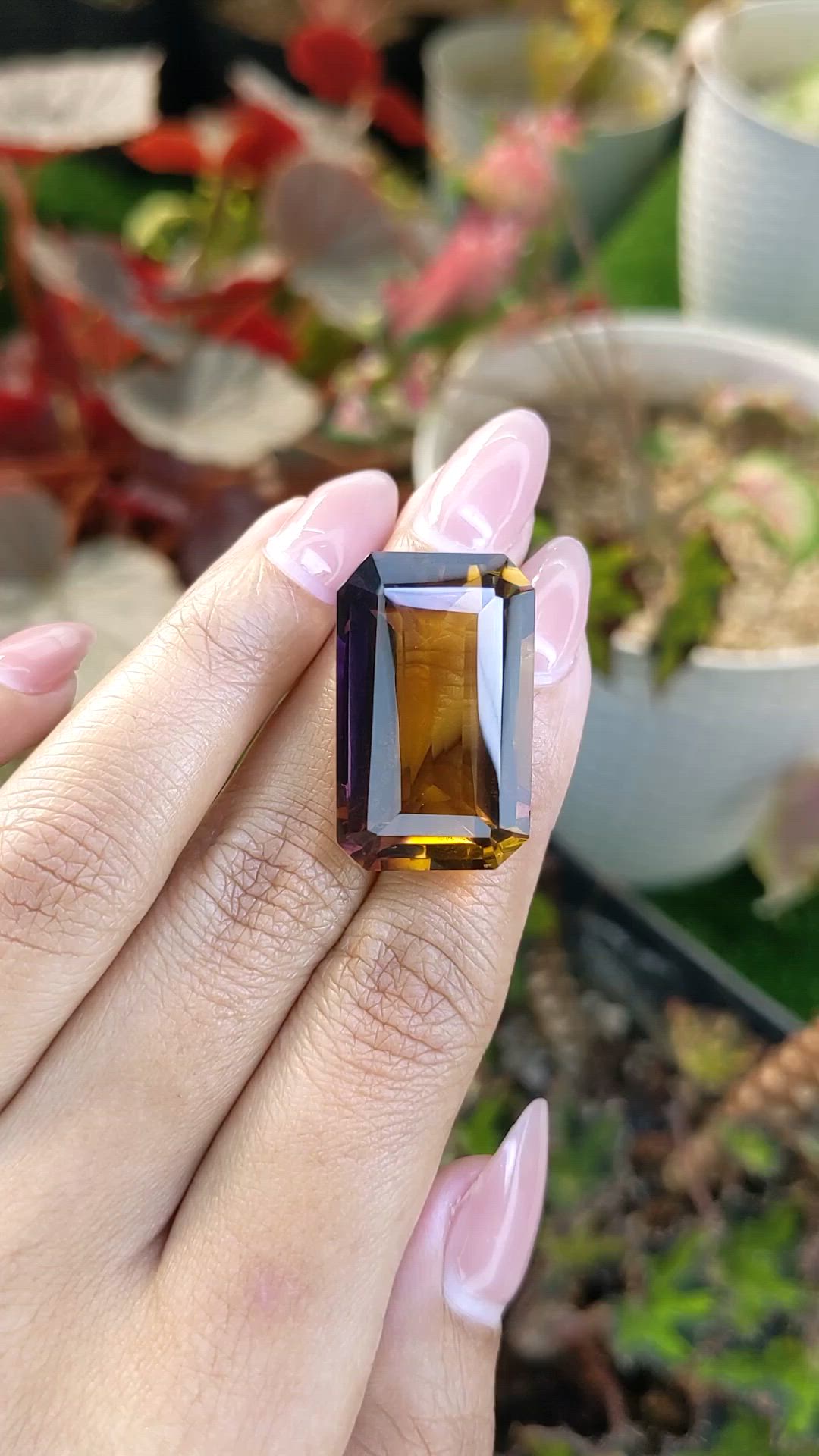
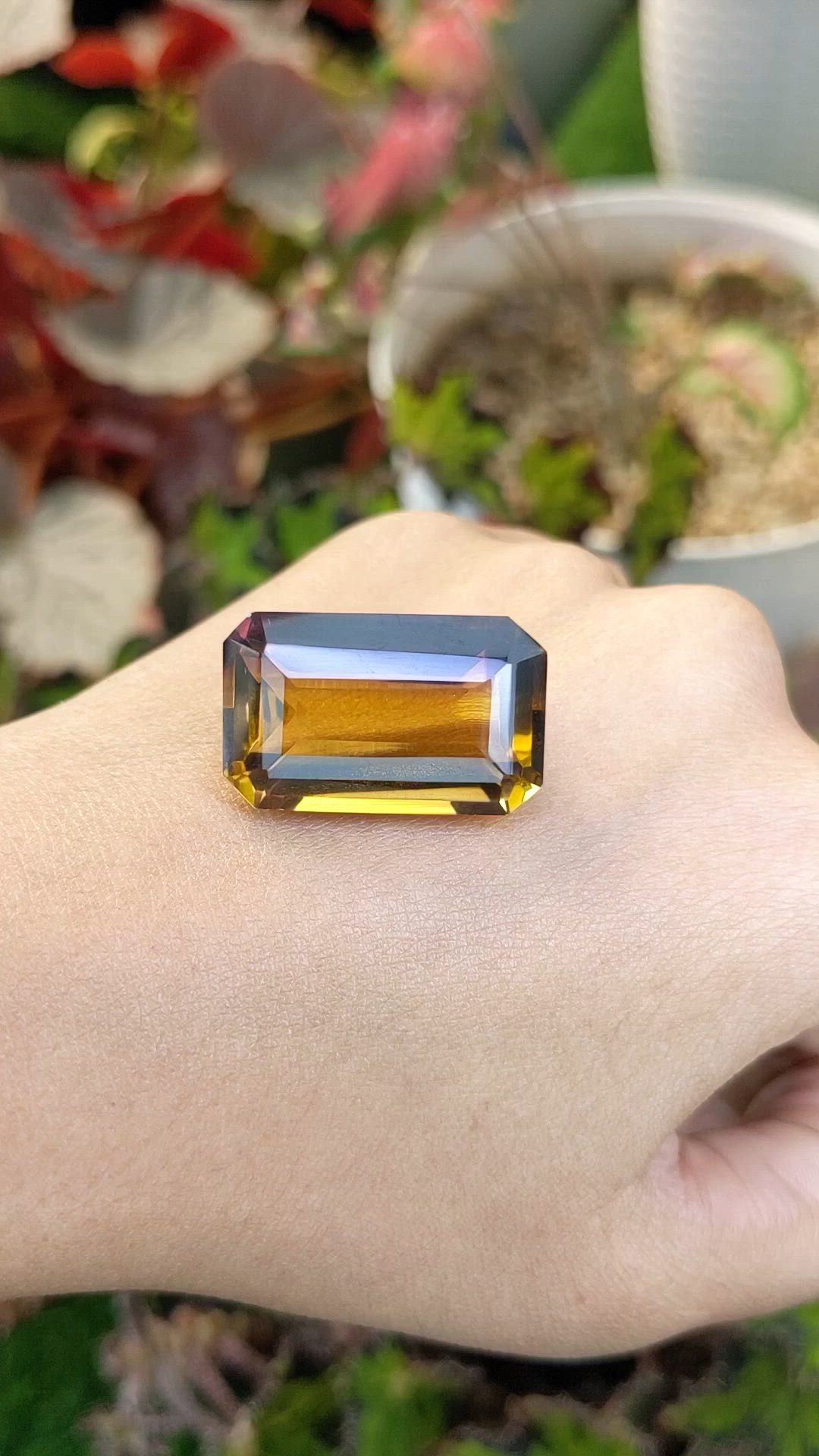
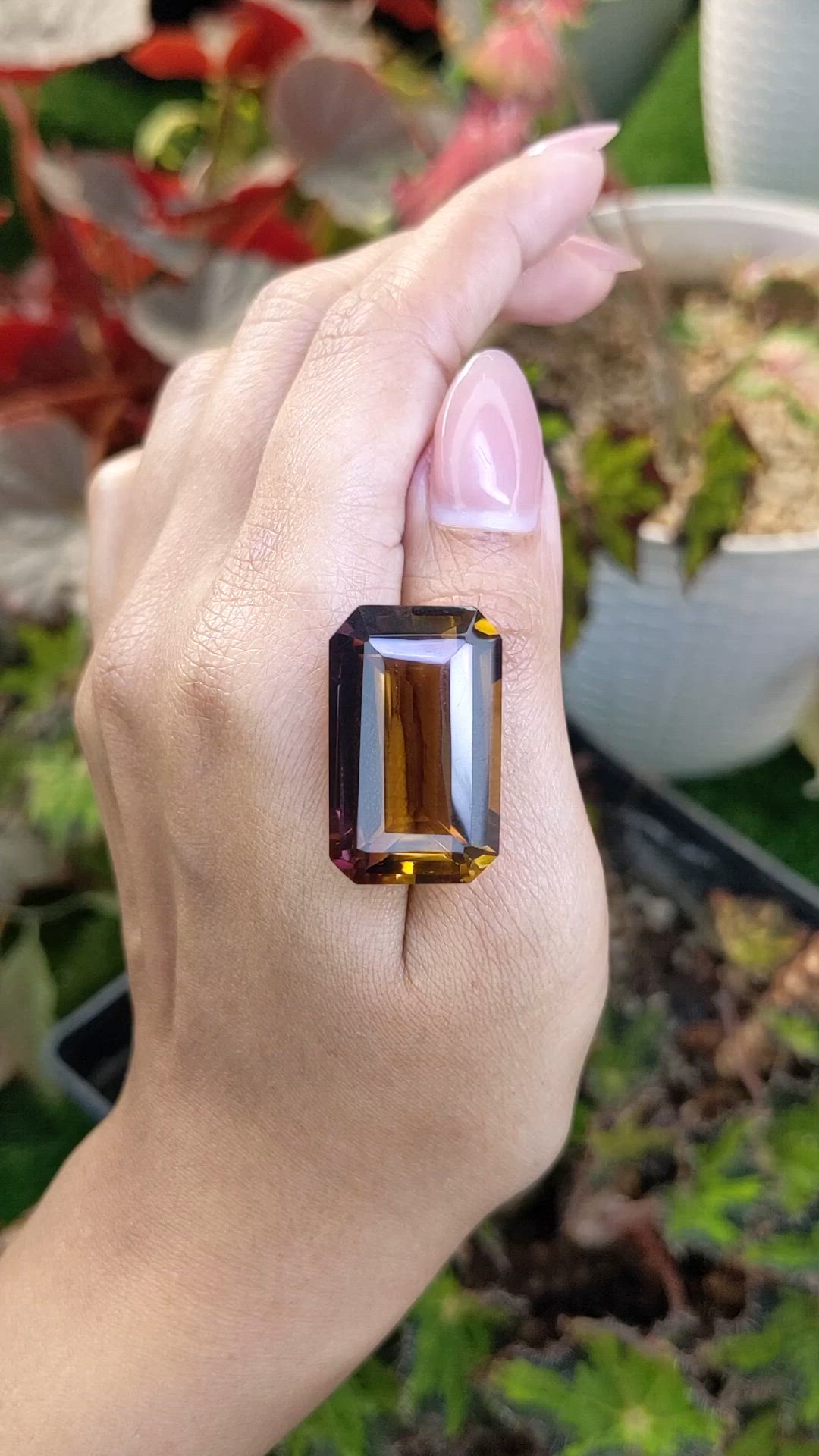
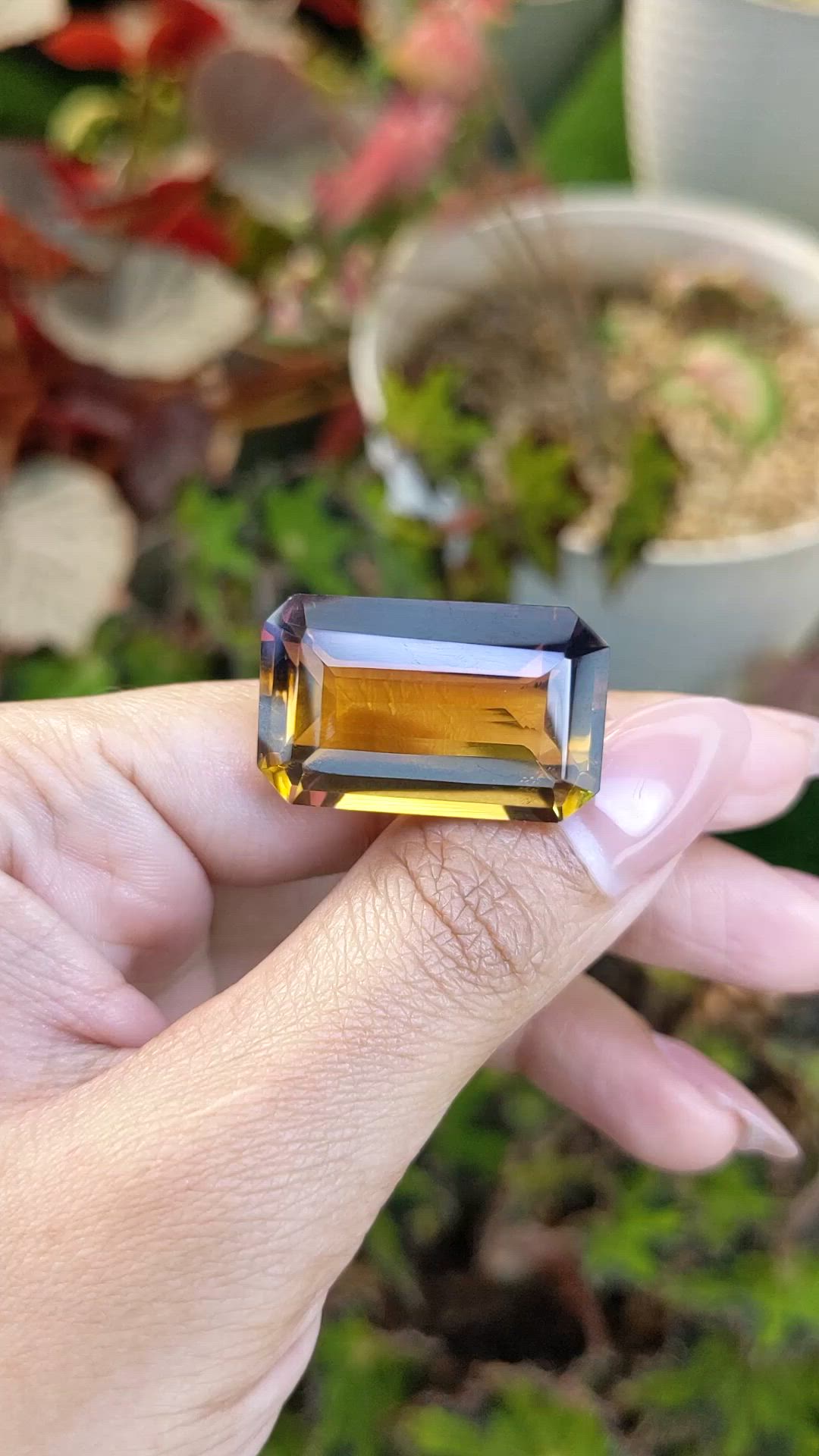


42.95 Ct. Bi Color Ametrine from Madagascar
This loose stone is available to ship now
Item ID: | K28813 |
|---|---|
Dimensions (MM): help | Length: 27.56 Width: 16.99 Height: 12.48 |
Weight: | 42.95 Ct. |
Color: help | Bi Color |
Color intensity: help | Intense |
Clarity: help | Eye Clean |
Shape: help | Emerald Cut |
Cut: | Emerald Cut |
Cutting style: | Faceted |
Enhancements: help | Heat Treated |
Origin: help | Madagascar |
Per carat price: help | $24 |
This specimen is a transparent bi color ametrine weighing 42.95 carats, cut in an emerald shaped outline and finished as a faceted gem, with precise dimensions of 27.56 x 16.99 x 12.48 millimeters. The cutting style is faceted with an emerald cut geometry, producing broad step facets and a generous table plane. Clarity is graded as eye clean at typical viewing distance, and color intensity is recorded as intense across both the amethyst and citrine zones. The polish is excellent, and the material has been heat treated as a stable enhancement to refine the saturation. The piece originates from Madagascar, and it is presented by The Natural Gemstone Company.
The intrinsic structure of quartz, the mineral family to which ametrine belongs, is the foundation of the gemstone s optical performance. Quartz crystallizes in the trigonal crystal system, yielding a uniaxial optic character and a modest birefringence, typically on the order of 0.009. The refractive indices fall near 1.544 to 1.553, values that permit clear light transmission with defined internal reflections. Ametrine s distinctive bicolor zoning arises from controlled chemical variation within the same quartz crystal. Iron substitution and localized differences in oxidation state during growth create contiguous zones of purple amethyst and golden citrine, separated by sharp or gradational boundaries. That juxtaposed color zoning alters the way light is absorbed and remitted across the stone, providing complex internal contrast while maintaining continuity of the crystal lattice, a combination that supports both color separation and coherent light return.
Cutting and facet architecture translate that internal potential into observed sparkle. An emerald cut employs parallel step facets arranged to emphasize depth and clarity rather than sheer scintillation, producing a hall of mirrors effect that accentuates contrasts between light and dark planes. On a large, 42.95 carat example with generous pavilion depth and a broad table, those elongated facets guide light in long, reflective paths, producing flashes that are measured and resonant rather than frenetic. The bi color zoning interacts with the step facet pattern to create alternating bands of warm and cool reflected light, so that as the stone is rotated the viewer perceives shifting ribbons of color and reflected highlights. Excellent polish is critical in this process, minimizing surface scattering and preserving the phase coherence of reflected rays, while an eye clean clarity grade ensures that inclusions do not interrupt the internal light pathways. Precise facet alignment with respect to the crystal s axial orientation reduces light leakage and optimizes total internal reflection, so that the gem s return of light is as efficient as the material s intrinsic refractive attributes allow.
The combined effect of crystal chemistry, color zoning, cut, clarity, and finish yields a type of sparkle and color interplay that distinguishes this ametrine from single color quartz varieties and from many other colored gemstones. Rather than relying on high dispersion to generate spectral fire, this gemstone produces refined brilliance through organized reflections and contrasting color planes, a quality that appears particularly striking in larger stones where facet geometry can be executed on a grander scale. Heat treatment in this instance has been employed to stabilize and intensify the citrine component without compromising the amethyst zone, delivering consistent color behavior under varied lighting conditions. Origin information from Madagascar provides a geological context for the specimen s growth environment and typical zoning patterns. Presented by The Natural Gemstone Company, this emerald cut bi color ametrine exemplifies the manner in which mineral structure and thoughtful lapidary work combine to produce a luminous, nuanced visual presence suitable for connoisseurs, designers, and collectors who value optical integrity and material provenance.


