
- Stone10
- Reports3
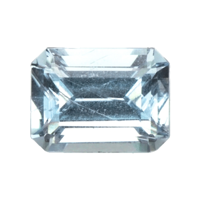
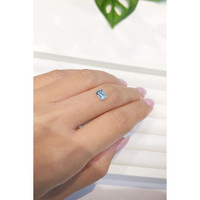
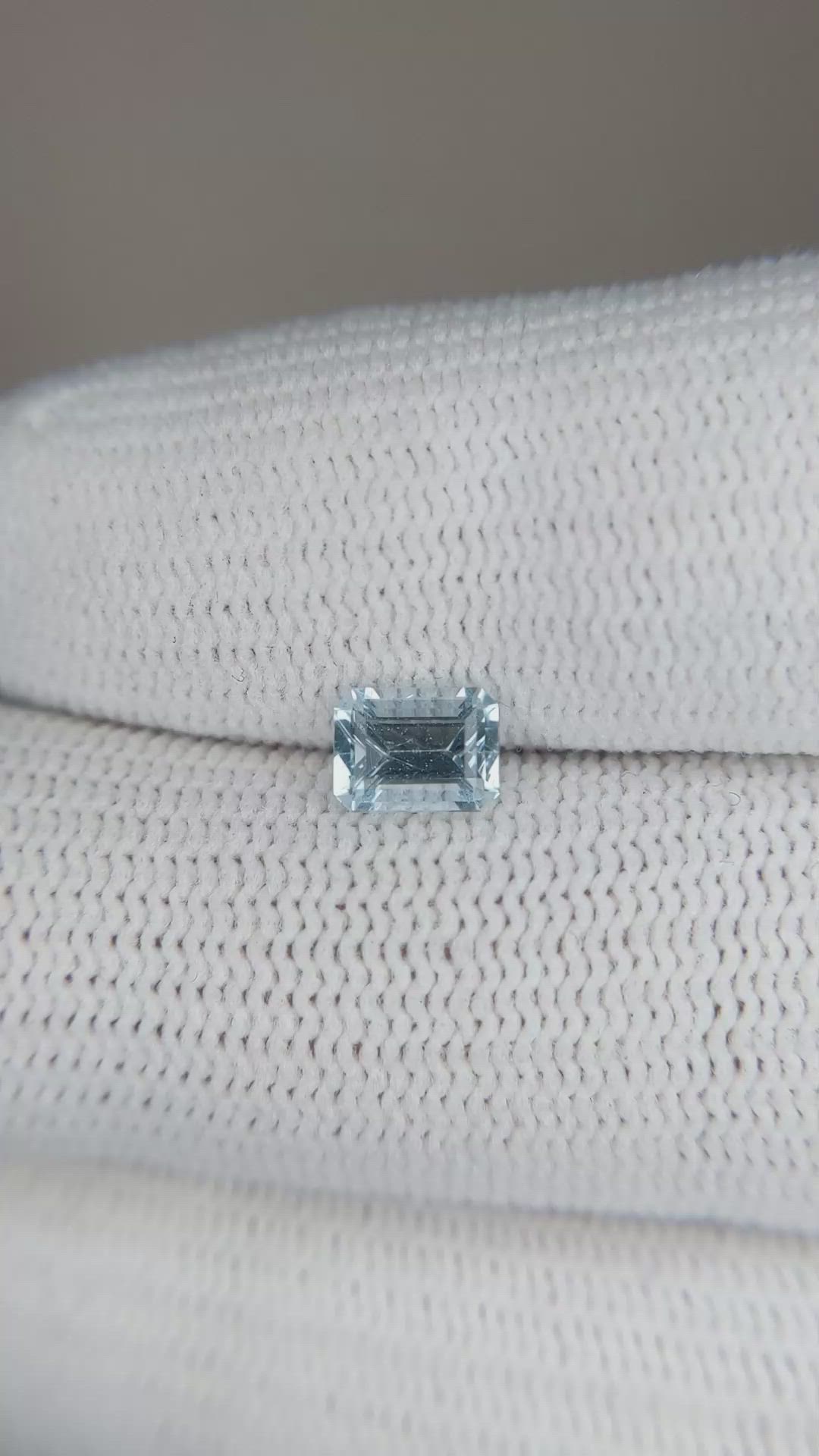
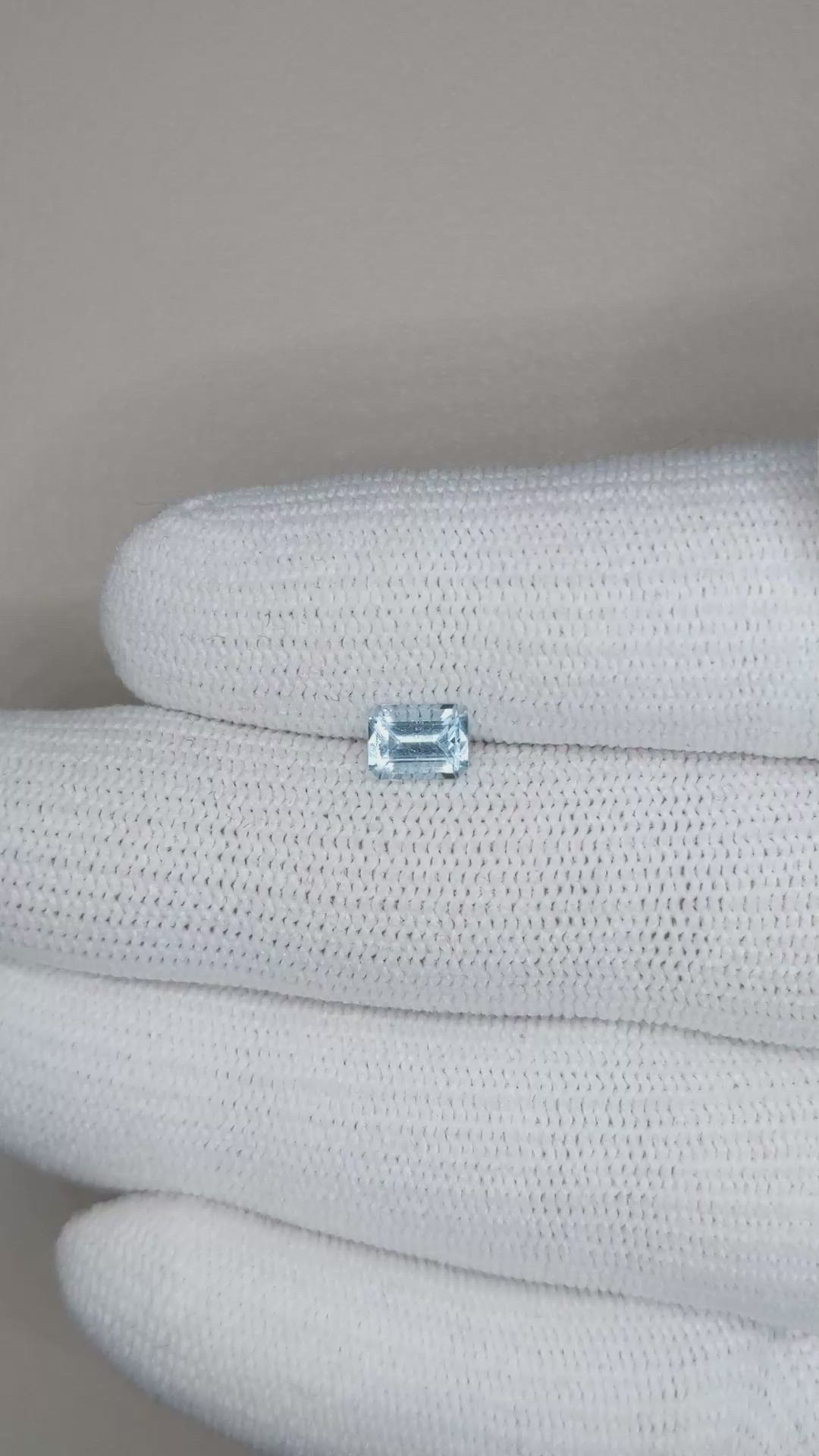




0.63 Ct. Blue Aquamarine from Mozambique
This loose stone is available to ship now
Item ID: | K4739 |
|---|---|
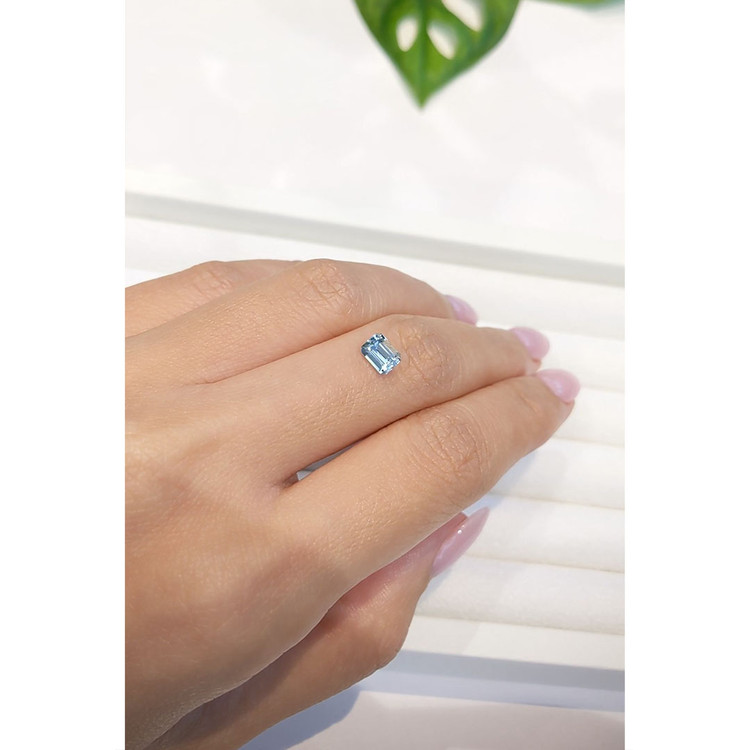
Dimensions (MM): help | Length: 5.88 Width: 4.42 Height: 3.5 |
Weight: | 0.63 Ct. |
Color: help | Blue |
Color intensity: help | Light |
Clarity: help | Slightly Included |
Shape: help | Emerald Cut |
Cut: | Emerald |
Cutting style: | Faceted |
Enhancements: help | Heat Treated |
Origin: help | Mozambique |
Per carat price: help | $440 |
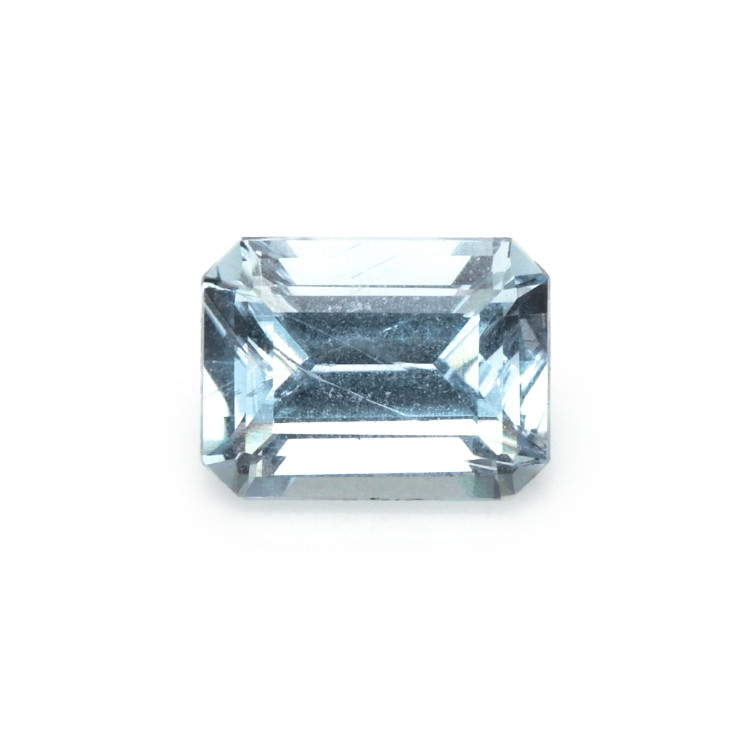
This aquamarine is a precision fashioned, emerald cut gem weighing 0.63 carat, with exact dimensions of 5.88 by 4.42 by 3.50 millimeters, exhibiting proportions that fall within classical standards for emerald cut stones. The length to width ratio is approximately one point three three, producing an elongation that reads elegant in a range of mounting styles, while the depth relative to the averaged table plane is approximately sixty eight percent, which situates this piece on the deeper side of typical step cut profiles. The emerald cut faceting schema used here employs broad, parallel step facets on both the crown and pavilion, a large, flat table plane, and truncated corners that both protect the girdle and visually soften the rectangular outline. These decisions in facet architecture prioritize clarity and the presentation of color over scintillation, generating the linear flash pattern and hall of mirrors effect that connoisseurs associate with finely executed step cuts. The finish quality is exemplary, with an excellent polish across facet planes, crisp facet junctions, and well controlled symmetry, attributes that maximize surface brightness, minimize external light scattering, and allow the internal character of the stone to be read with minimal interference.
Color and clarity are described with technical precision. The stone carries a light color intensity in the blue spectrum characteristic of aquamarine material, leaning toward the pure to slightly greenish blue hues commonly sourced from Mozambican pockets. The body color is evenly distributed across the table and step facets under standard daylight and standard incandescent viewing, with modest attenuation in the deeper pavilion areas consistent with the stone geometry and depth. The clarity grade is slightly included when evaluated at eye level, meaning that inclusions are detectable to the unaided eye but are neither dominant nor deleterious to the gem s overall aesthetic or structural soundness. Typical inclusion morphology observed in aquamarine of this origin includes narrow two phase tubes or healed fissures and occasional fine negative crystals, inclusions that respond well to careful cutting and polishing and that often serve as geographic fingerprints. The gem has been enhanced by controlled heat treatment, an industry standard for aquamarine, applied to reduce greenish or yellowish undertones and to stabilize a cleaner blue hue. This treatment is stable under normal wearing conditions, fully disclosed, and does not compromise the material s hardness or durability.
From a lapidary and technical performance standpoint, this aquamarine demonstrates considered craftsmanship. The step cut approach was selected to exploit the inherent transparency and low dispersion of beryl, favoring broad planar facets that yield clear linear reflections and a depth of color that changes smoothly with viewing angle. The large table offers a clear window into the gem s interior, allowing an evaluator to appreciate the slightly included clarity grade without the masking effects of brilliant style scintillation. Excellent facet polishing enhances the finish luster, producing sharp mirror like flashes at the facet junctions and a silky sheen on the crown. For mounting recommendations, prong settings that secure each corner will highlight the rectangular profile while protecting the truncated corners, and bezel settings will emphasize the soft geometry and protect the girdle from impact. When set in low profile styles the step cut will communicate elongation and sophistication, while when presented in solitaire or three stone configurations the gem will function as a calm, architectural counterpoint to more brilliant accent stones.
This gem carries a lineage that links modern lapidary practice with historical and cultural uses of aquamarine and step cut stones. Aquamarine has been prized since antiquity for its maritime associations, used by seafarers as talismans for calm travel and by coastal cultures as emblems of clarity and protection. The emerald cut and its step faceting heritage became a defining aesthetic in the Art Deco period, when designers favored geometric lines, plane surfaces, and an emphasis on clarity of form, making this combination of aquamarine and emerald cut particularly evocative of that era. Mozambique has emerged in recent decades as a valuable source of aquamarine, providing material that often balances pleasing blue tones with classic beryl toughness. The Natural Gemstone Company is proud to offer this specific example, with full disclosure of its heat treatment, measured dimensions, and clarity assessment, a documentable piece suitable for both collectors who value provenance and craftsmen who require predictable optical performance. For clients seeking a gem that combines classical cutting philosophy, transparent Mozambican origin, and a warm historical narrative, this aquamarine represents a technically sound and culturally resonant choice.


