
- Stone14
- Reports3


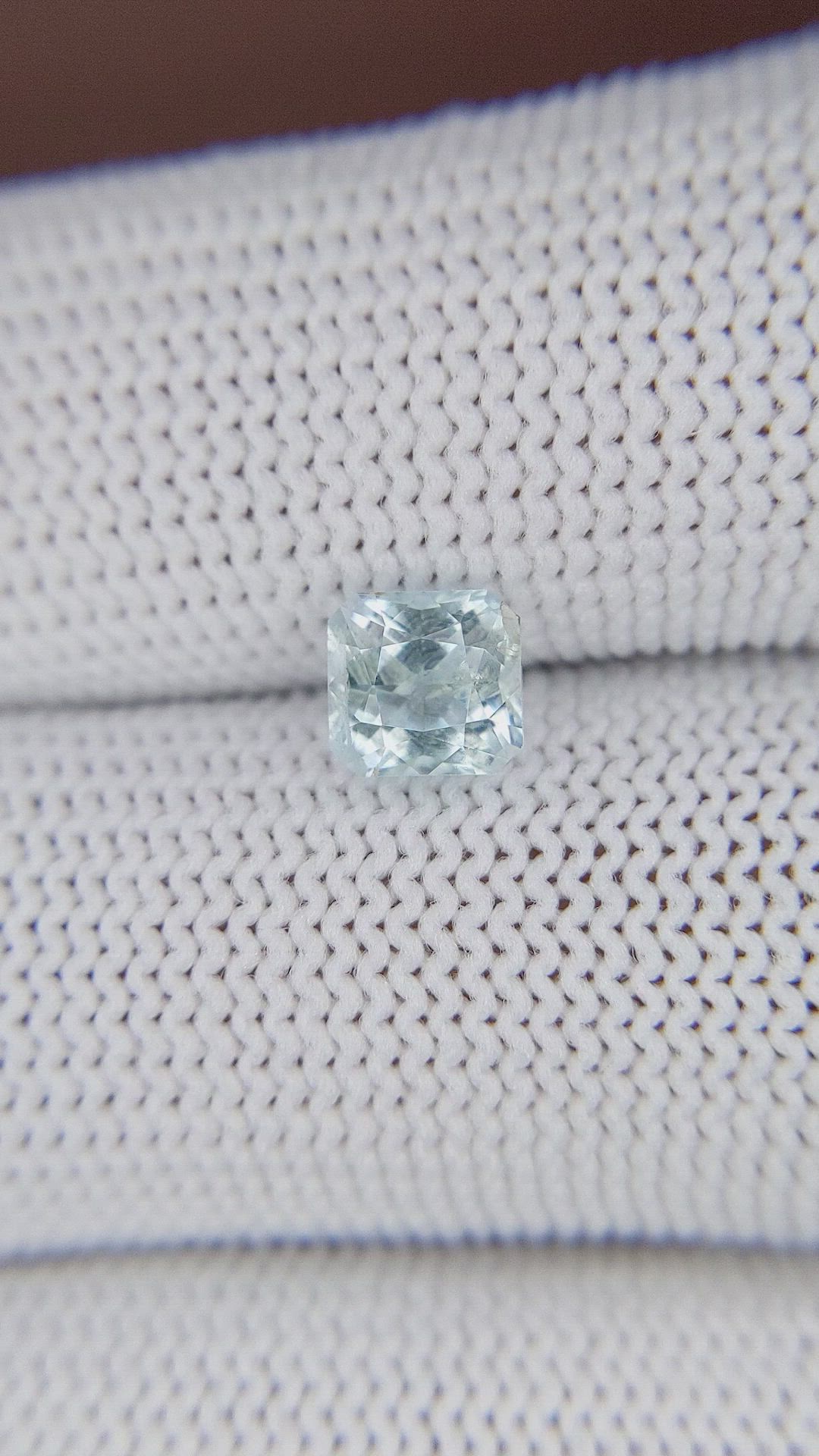
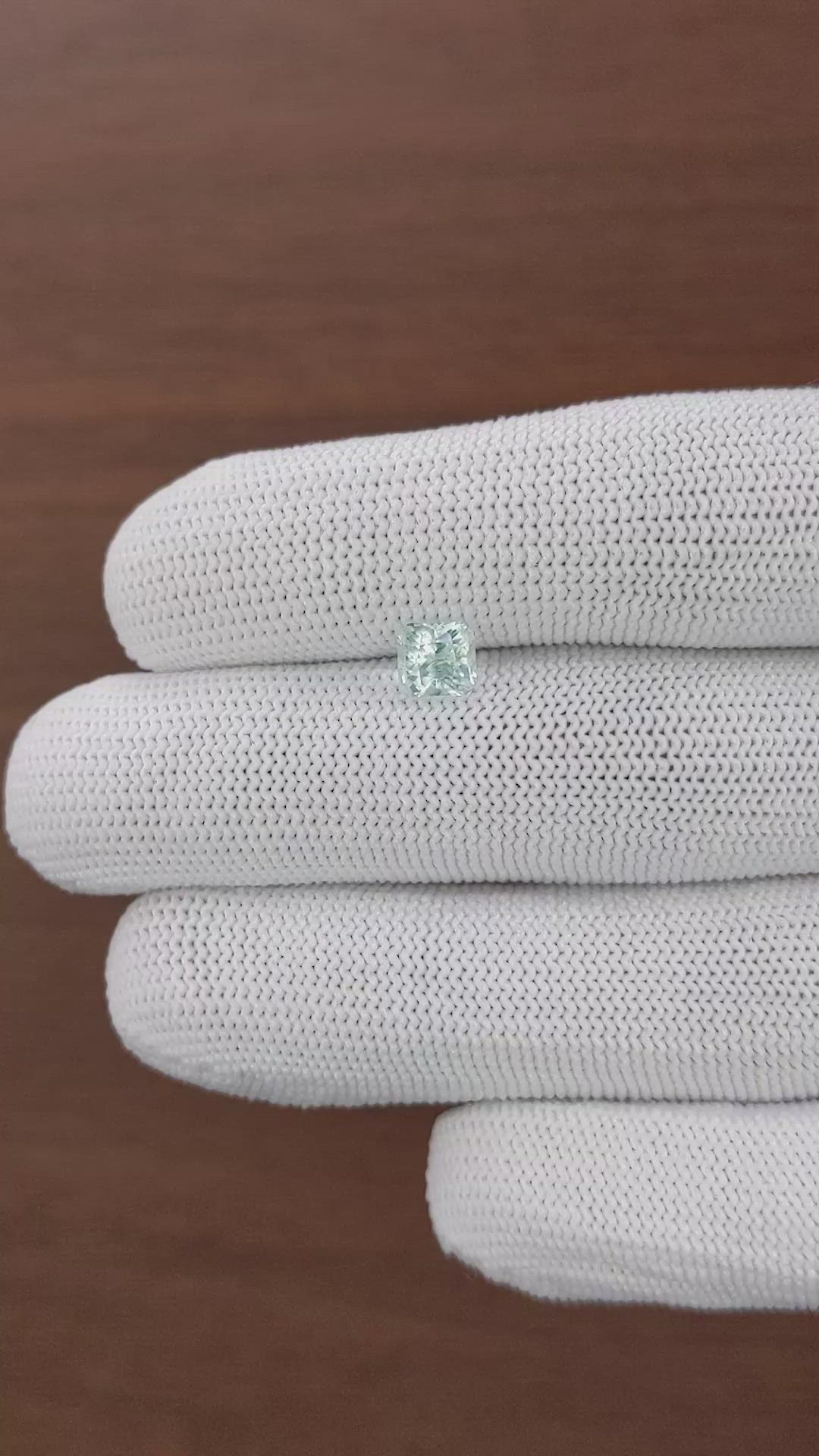
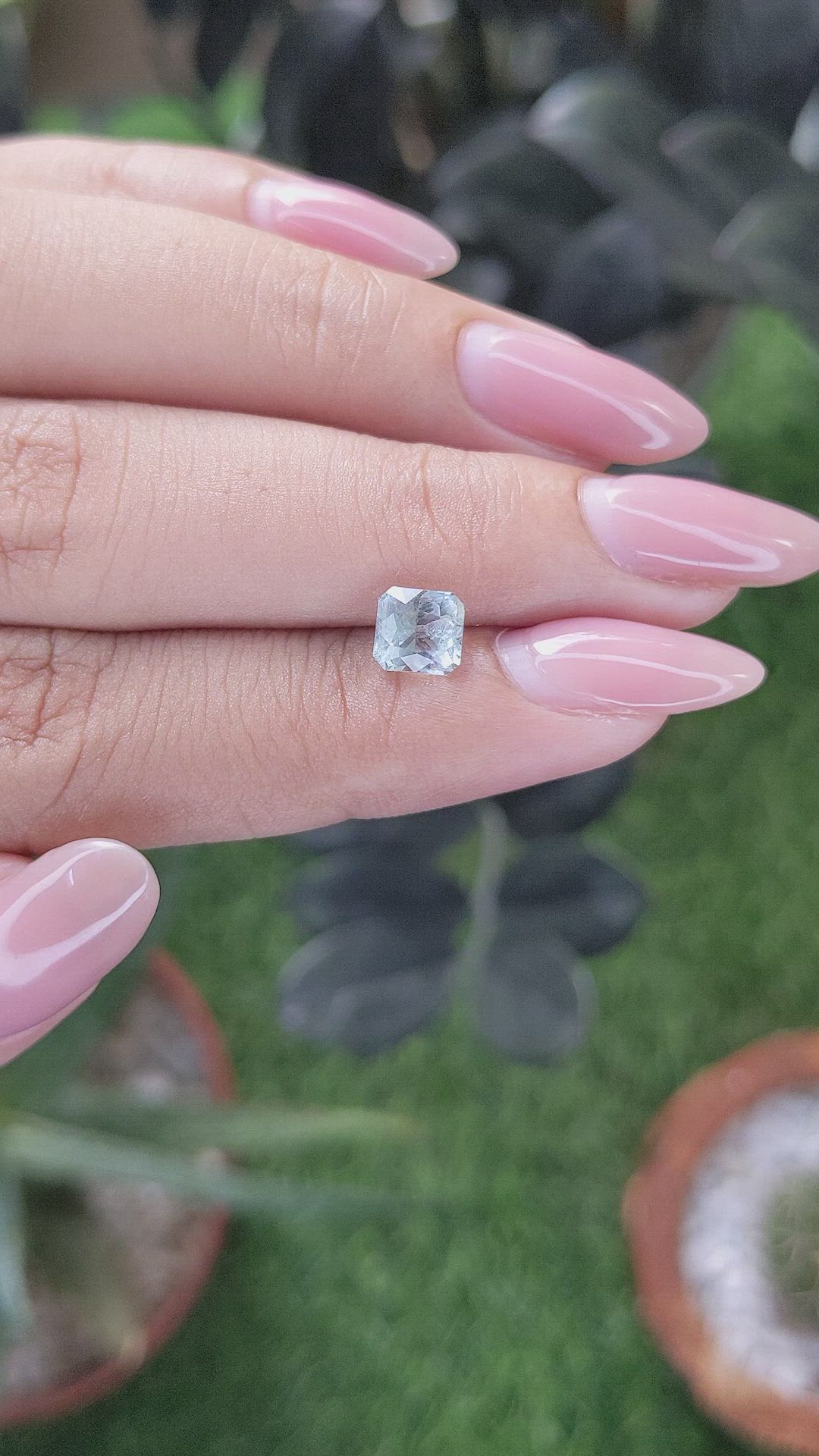
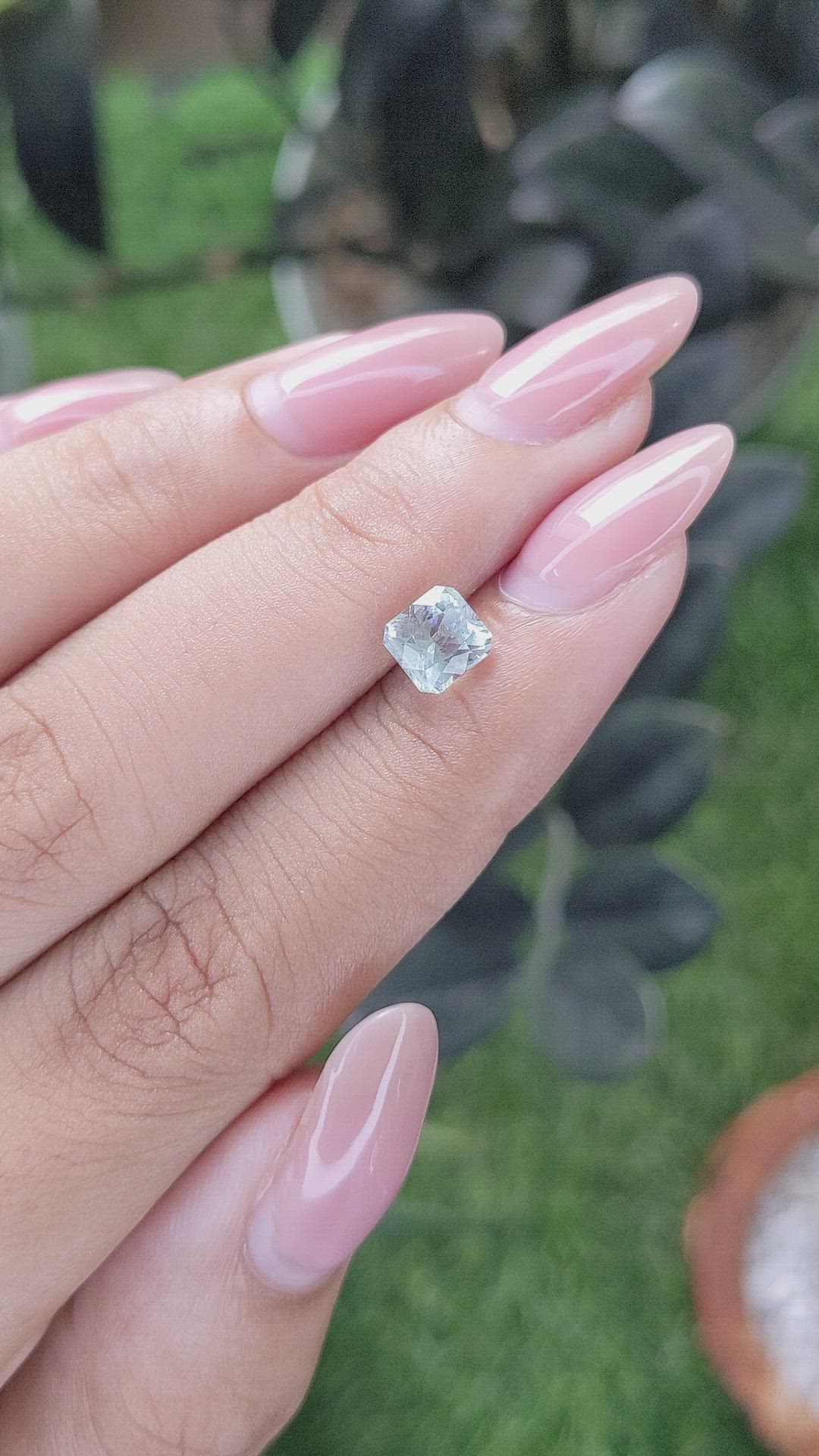
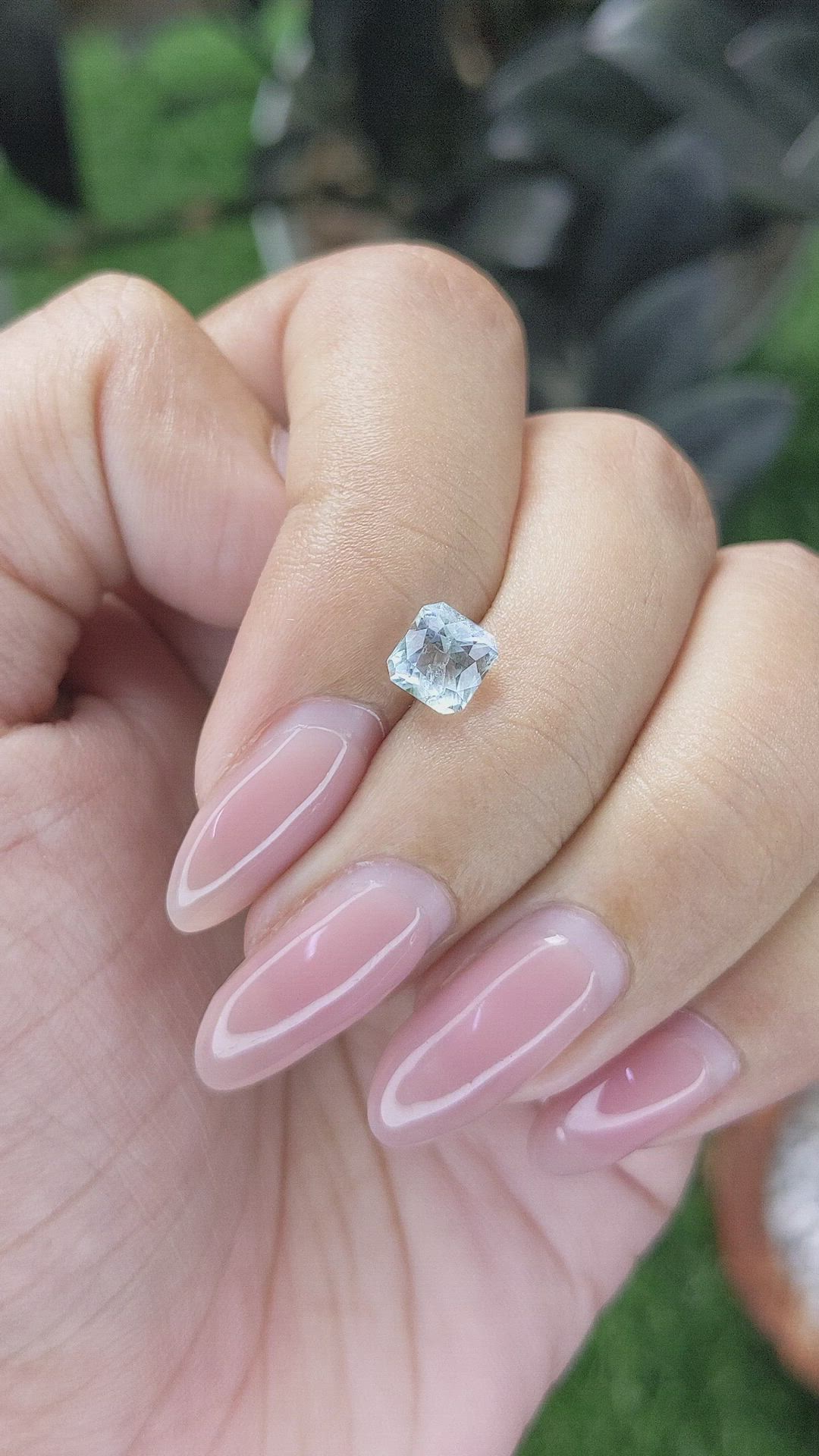


1.00 Ct. Blue Aquamarine from Tanzania
This loose stone ships by Nov 10
Item ID: | K28467 |
|---|---|
Dimensions (MM): help | Length: 5.8 Width: 5.54 Height: 4.66 |
Weight: | 1.00 Ct. |
Color: help | Blue |
Color intensity: help | Light |
Clarity: help | Included |
Shape: help | Radiant |
Cut: | Radiant Cut |
Cutting style: | Faceted |
Enhancements: help | No Enhancement |
Origin: help | Tanzania |
Per carat price: help | $1,212 |
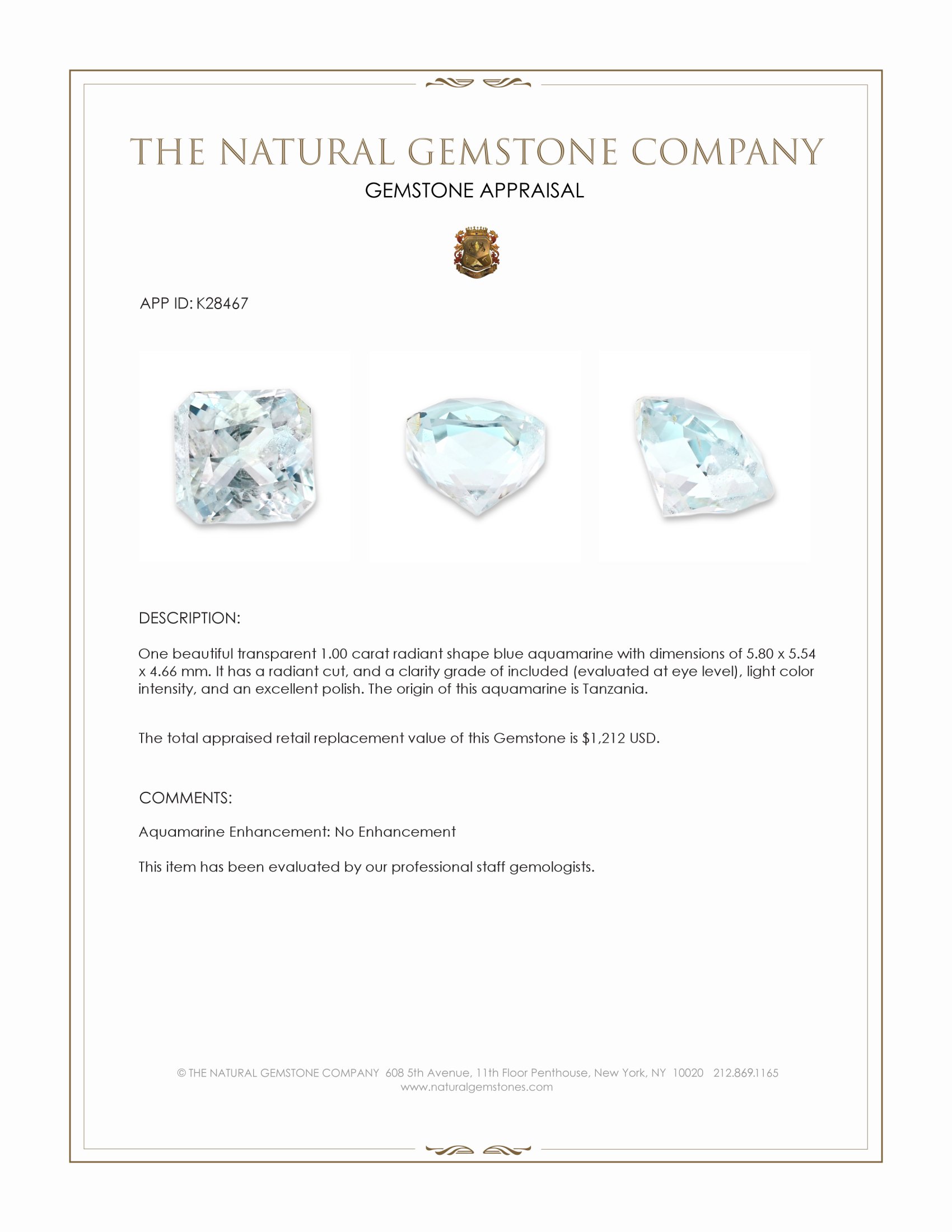
This listing describes a single, transparent 1.00 carat aquamarine, radiant shape, with dimensions 5.80 x 5.54 x 4.66 mm, clarity graded as included at eye level, light color intensity, and an excellent polish, origin Tanzania, no enhancement. The radiant cut chosen for this piece employs a hybrid facet schema combining trimmed corners with a dense arrangement of faceted planes across the crown and pavilion, producing a crisp, angular face up outline while maximizing apparent scintillation. Measured against the average girdle diameter of 5.67 mm the stone exhibits a depth percentage of approximately 82.2 percent, indicating a relatively deep pavilion profile that concentrates light return and preserves weight, at the trade off of a slightly smaller face up spread than a shallower cut of equal carat. The included clarity grade denotes visible internal features at a typical loupe or unaided eye inspection distance, however the material remains conventionally transparent and the excellent polish on every facet edge reduces surface diffusion, supporting lively windowed brilliance across the table facet.
From a faceting and optical engineering perspective, the radiant cut for this aquamarine emphasizes a tight network of crown facets that fragment incoming light into many small flashes rather than large broad reflections, a behavior that works well with the stone s light color intensity to yield a delicate, shimmering appearance. The table facet is proportioned to balance between retention of blue saturation and preservation of internal brightness, while the crown angle and pavilion facets are configured to limit light leakage given the deeper body depth. In practice this means the gem displays a cool, pastel blue face up, with internal flashes that alternate between icy blue and near colorless white, dependent on incident light angle. The included nature of the stone interacts with the facet junctions in predictable ways, with small feather or liquid signatures producing faint localized light scattering when viewed in profile, but these do not disrupt the overall transparency or the continuity of facet reflections under standard retail lighting.
Comparative evaluation versus aquamarines from prominent localities helps to clarify the hue and tone character of this Tanzanian specimen. Brazilian aquamarines, especially those from Minas Gerais, often show stronger, medium to deep sea blue tones with higher color saturation than the present stone, and they are frequently heat treated to achieve or deepen that blue, a practice absent in this no enhancement piece. Sri Lankan or Ceylon aquamarines typically exhibit a very light, watery blue that can appear similar in hue to this stone but often with a softer, more silvery tone rather than the slightly crisper cyan that this Tanzanian gem displays. Madagascar sourced aquamarines can show a more pronounced greenish tinge at equivalent color intensity, which contrasts with the cleaner blue axis of this example. Pakistani and Afghan aquamarines from high altitude pegmatites sometimes demonstrate richer, colder blue tones, often with greater saturation than this light intensity example. Against other blue gemstones, such as Swiss blue topaz or London blue topaz from treated sources, this aquamarine presents a more delicate, natural blue with less intense tone and a higher degree of transparency when viewed face up, reinforcing its appeal to buyers seeking an untreated, aquarium blue aesthetic.
For practical application and setting, The Natural Gemstone Company recommends consideration of the stone s deep pavilion when planning a mounting. The current depth makes this piece excellent for settings that accept deeper girdles, such as low bezel seats with secure collet engagement, or three or four prong solitaire mounts that allow the pavilion room and position the crown for face up brilliance. Buyers seeking increased face up spread could opt for a recut to shallower proportions, a process that would increase apparent diameter but reduce weight, and that should be undertaken only by experienced cutters familiar with beryl cleavage and strain behavior. The included clarity should be communicated to the end client as visually apparent under close inspection, and it is advisable to place the stone in a protective setting for daily wear scenarios due to the potential of surface reaching inclusions. The combination of no enhancement, excellent polish, and Tanzanian origin makes this aquamarine a desirable option for collectors and connoisseurs who prefer natural color, and the radiant cut s mixed facet architecture is ideal for showcasing the gem s lively internal reflections while preserving carat weight. For precise matching to adjacent gems, or for bespoke mounting advice, The Natural Gemstone Company is available to provide additional imagery, lighting condition notes, and cutting trade recommendations.


