
- Stone8
- Reports3

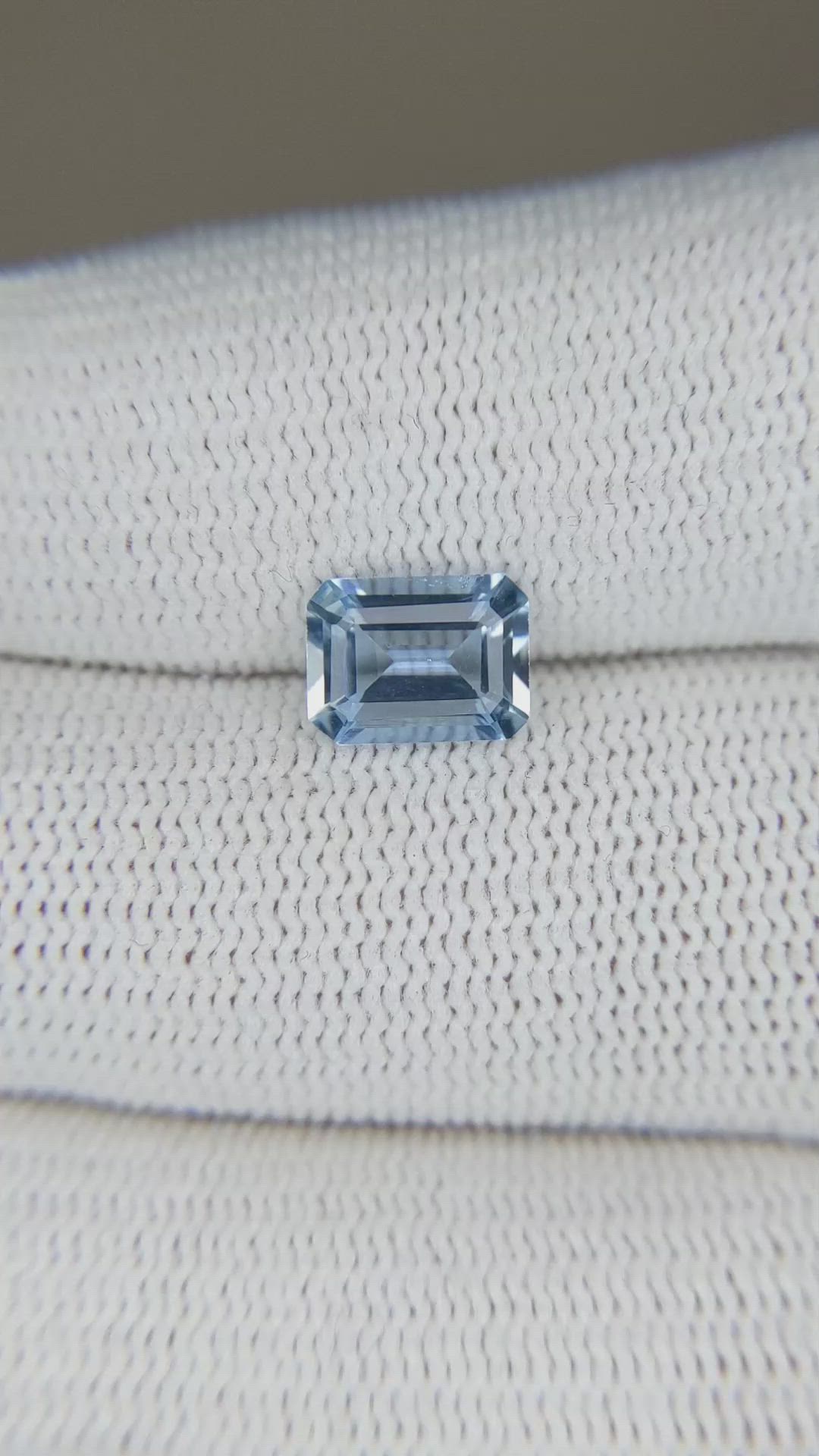
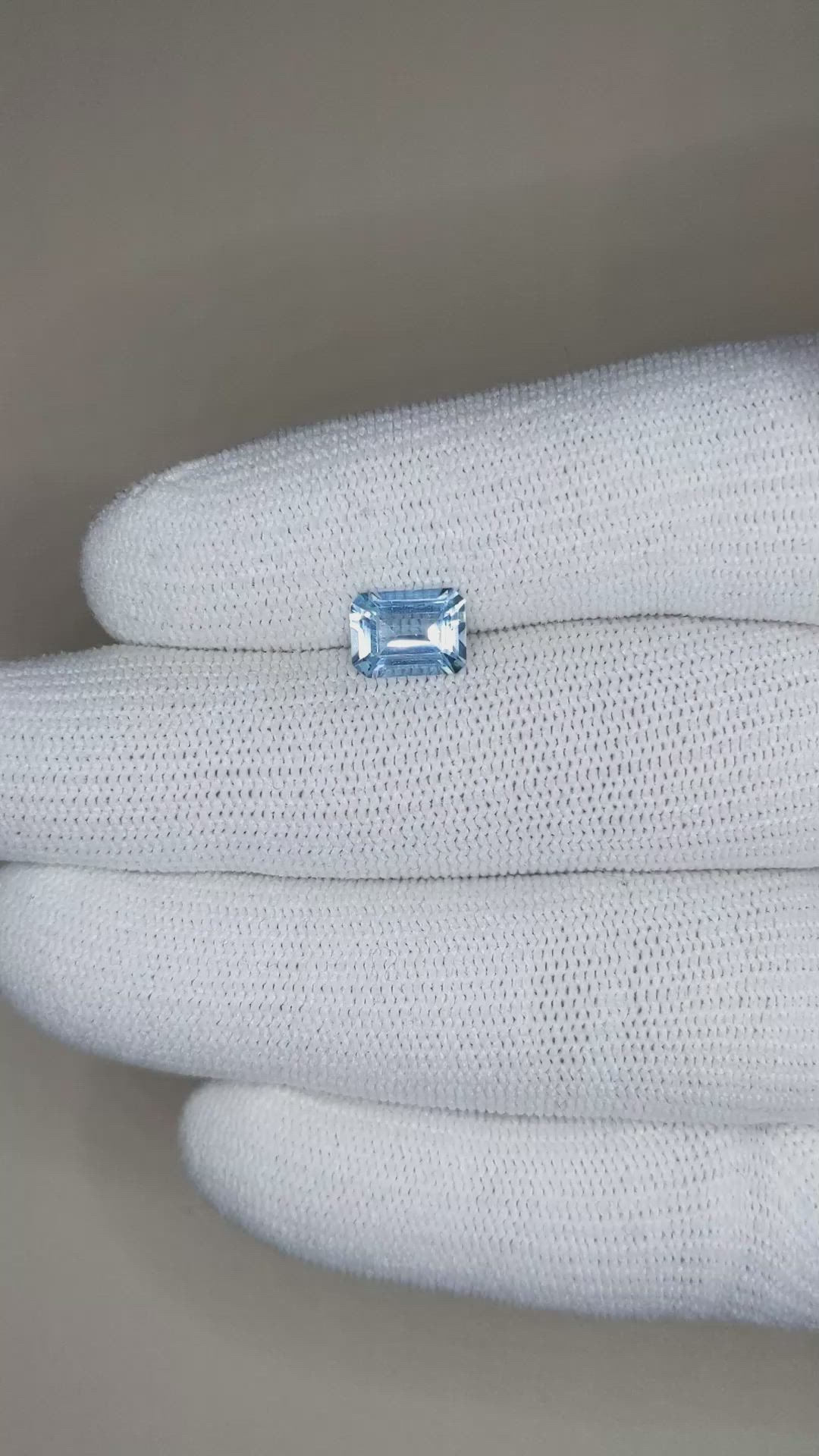




1.28 Ct. Aquamarine from Brazil
This loose stone is available to ship now
Item ID: | K20679 |
|---|---|
Dimensions (MM): help | Length: 7.96 Width: 5.93 Height: 3.93 |
Weight: | 1.28 Ct. |
Color: help | Blue |
Color intensity: help | Medium |
Clarity: help | Very Slightly Included |
Shape: help | Emerald Cut |
Cut: | Emerald |
Cutting style: | Faceted |
Enhancements: help | Heat Treated |
Origin: help | Brazil |
Per carat price: help | $300 |
One transparent 1.28 carat aquamarine, emerald cut, presents with dimensions of 7.96 x 5.93 x 3.93 mm, a very slightly included clarity grade when evaluated at eye level, medium color intensity, and an excellent polish. The stone originates from Brazil, and has been heat treated to enhance its blue tone. The emerald cut maximizes the gem body color while producing broad, clean facets that emphasize clarity and a steady, controlled light return. Under consistent lighting this specimen displays a cool, sea blue tone distributed evenly across the table and pavilion, with minimal obstruction from inclusions due to its high transparency. The Natural Gemstone Company offers this gem as a representative example of a well cut Brazilian aquamarine that balances gemological soundness and aesthetic restraint.
In terms of reflective qualities this aquamarine exhibits the characteristic vitreous luster and moderate brilliance typical of beryl family stones. Compared to emeralds, which often show significant internal features that interrupt light transmission, this aquamarine delivers a clearer, more uniform light return, producing broad flashes rather than scattered scintillation. Against morganite and heliodor, which share a similar refractive behavior as beryl species, the aquamarine tends to read as crisper due to its color contrast against neutral lighting, though overall sparkle is comparable. When measured visually against other commonly encountered blue gems such as blue topaz or sapphire, the aquamarine shows softer brilliance and markedly less fire, owing to a lower dispersion. Blue topaz may appear brighter under some lights because of higher refractive tendencies, while corundum varieties such as sapphire will show stronger, more concentrated brilliance and deeper tone saturation. The emerald cut of this stone moderates outgoing flashes, favoring linear hallows of light that emphasize clarity and color over intense scintillation. For settings that prioritize an elegant, understated sheen and a cool, clean blue presence, this aquamarine is well suited, offering stable reflective behavior and consistent visual appeal.


