
- Stone6
- Reports3


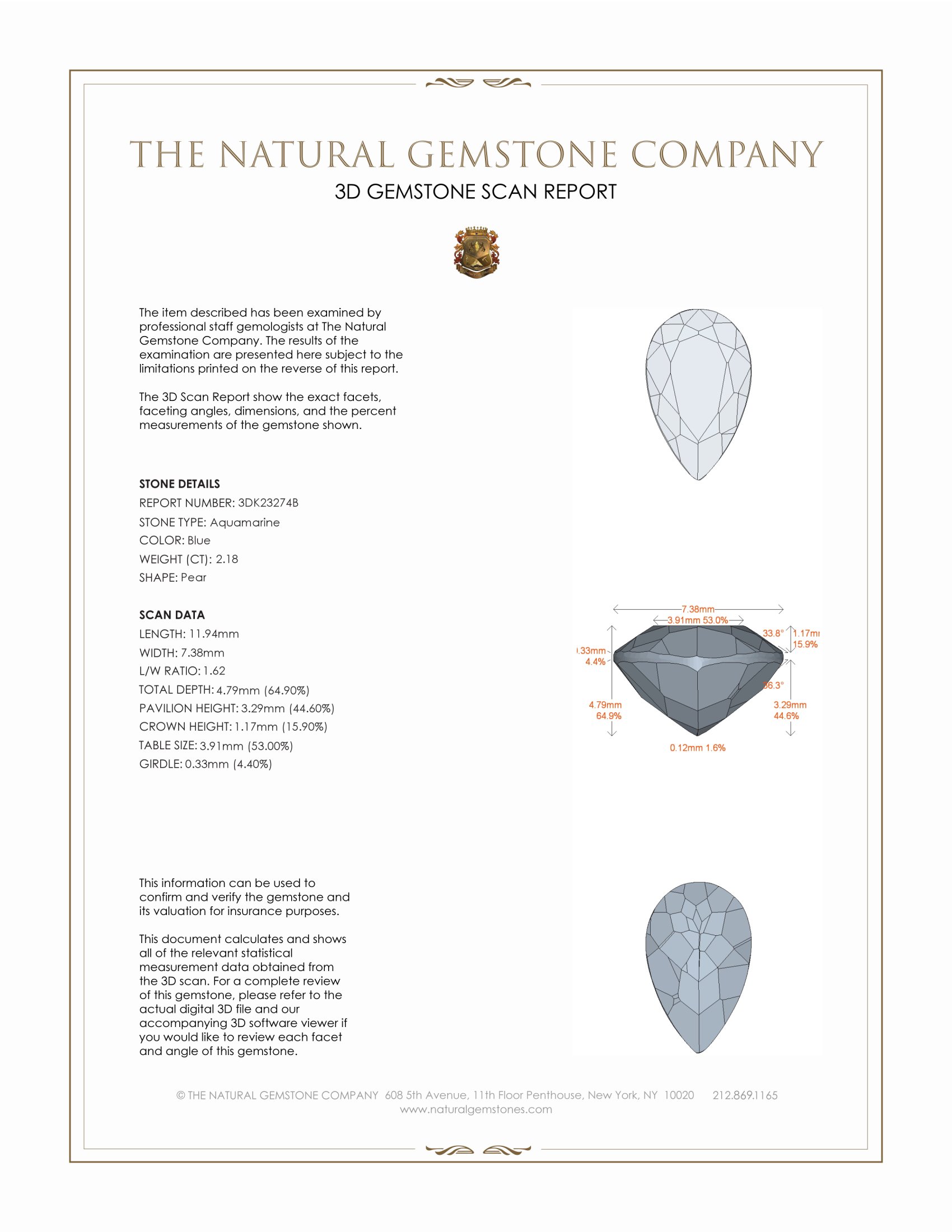
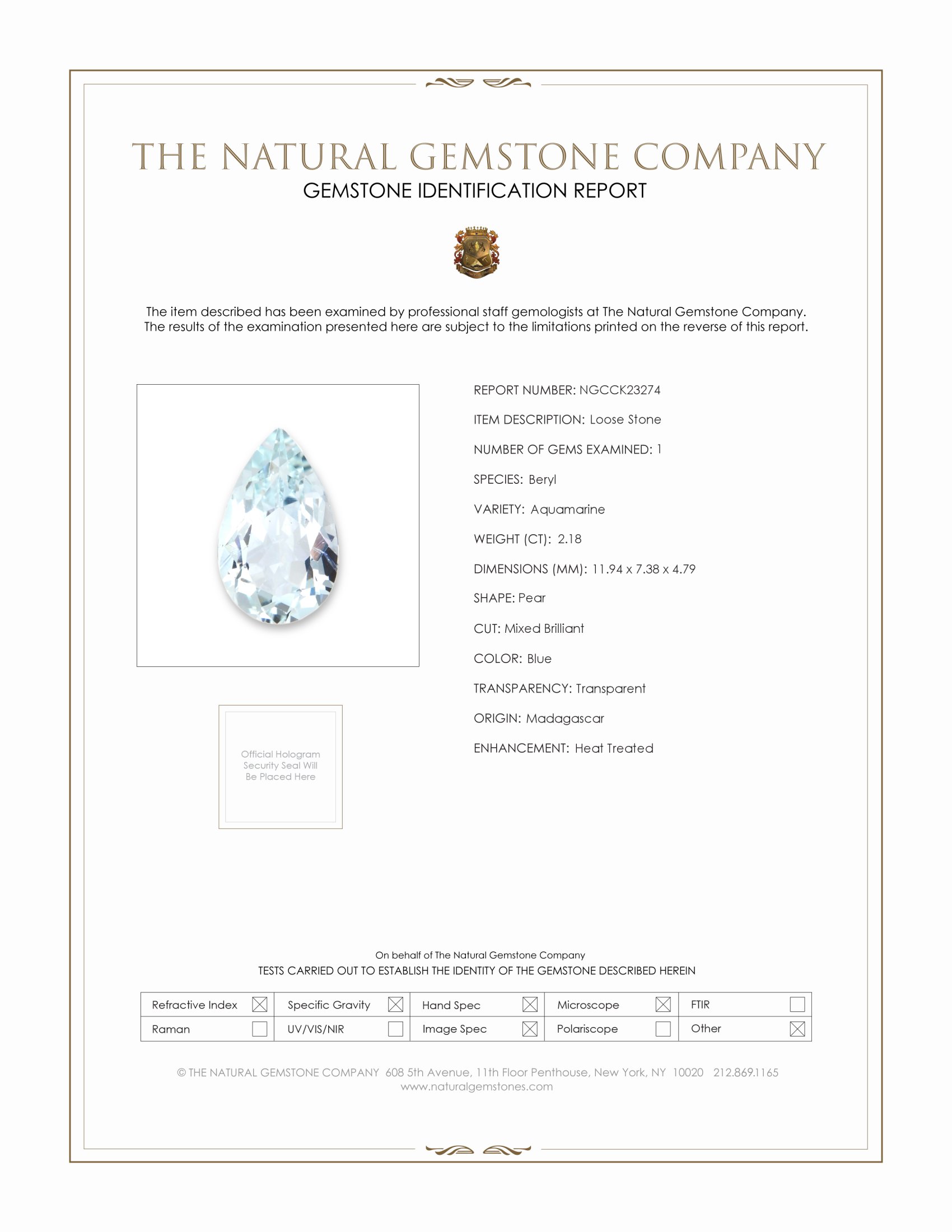
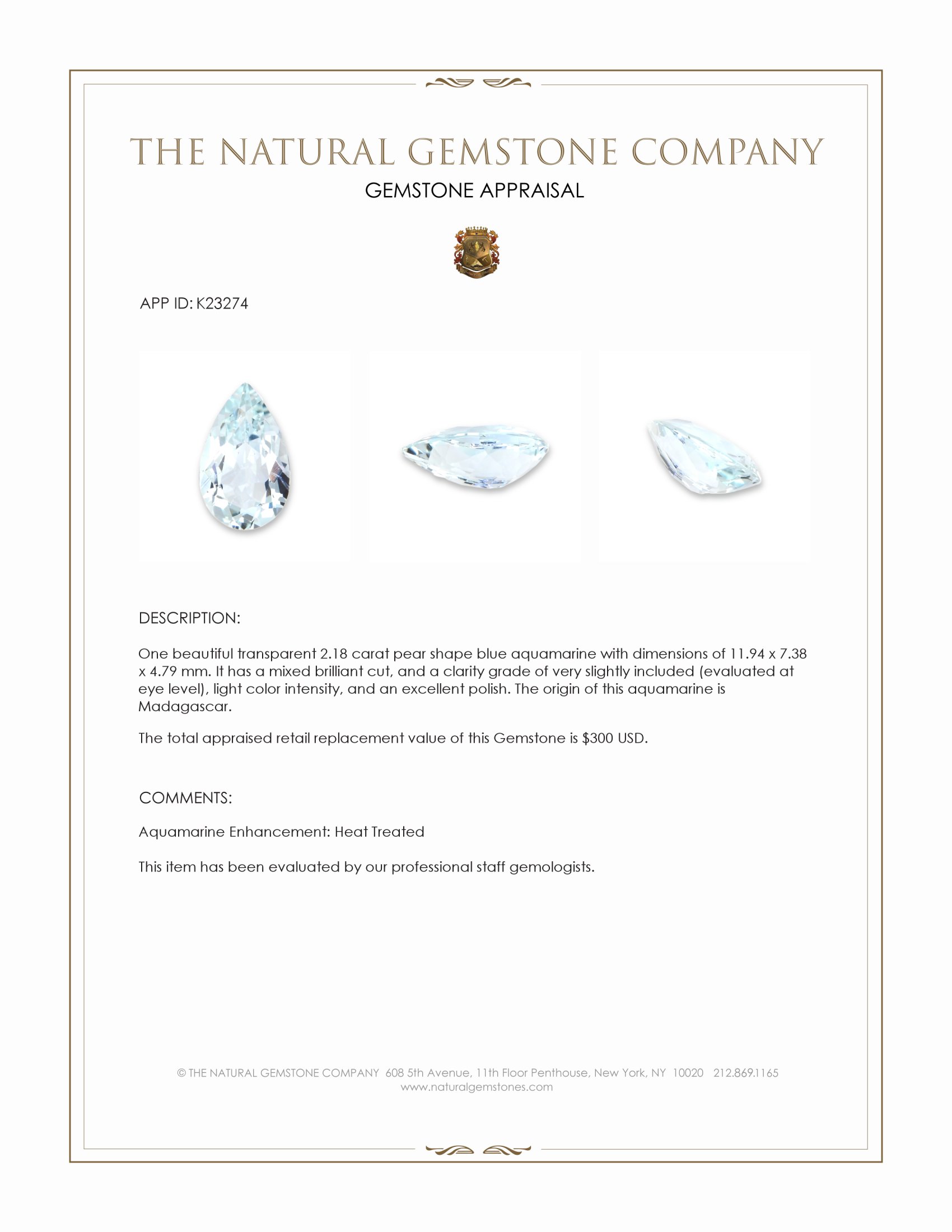
2.18 Ct. Aquamarine from Madagascar
This loose stone ships by Apr 19
Item ID: | K23274 |
|---|---|
Dimensions (MM): help | Length: 11.94 Width: 7.38 Height: 4.79 |
Weight: | 2.18 Ct. |
Color: help | Blue |
Color intensity: help | Light |
Clarity: help | Very Slightly Included |
Shape: help | Pear |
Cut: | Mixed Brilliant |
Cutting style: | Faceted |
Enhancements: help | Heat Treated |
Origin: help | Madagascar |
Per carat price: help | $138 |
This pear shape blue aquamarine from Madagascar, weighing 2.18 carats and measuring 11.94 x 7.38 x 4.79 millimeters, offers a rare combination of size and eye cleanliness that is immediately noticeable once set into jewelry. Cut in a mixed brilliant style, this stone balances table facet brilliance with deep pavilion reflection, capturing light in a way that fresher cuts and older heavy step cuts cannot. The clarity grade is very slightly included evaluated at eye level, which means that the small natural characteristics do not interrupt the gem s overall transparency, they instead affirm its natural origin and lend subtle life to the stone under different lighting conditions. The color intensity is light, delivering the classic aquamarine icy blue that reads crisp and freshwater like, and the excellent polish produces sharp facet junctions and mirror like surfaces that maximize light return. This gem has been heat treated to enhance its blue hue, a widely accepted practice that improves color stability without diminishing the stone s integrity, and when you buy from The Natural Gemstone Company you are getting transparent provenance and hands on quality control.
When comparing reflective qualities to other aquamarines and similar blue gemstones, the mixed brilliant cut of this pear shape aquamarine becomes a clear advantage. Many aquamarines on the market are presented in emerald cuts or other step cuts, which emphasize color and clarity but often sacrifice scintillation and contrast. In contrast this mixed brilliant cut introduces multiple crown and pavilion facets that create lively scintillation and crisp flashes of white light when the gem moves, producing a lively presence in rings and pendants. Aquamarine s refractive index from 1.577 to 1.583 is lower than that of sapphire, but when paired with an optimized cut and an excellent polish it yields a glassy, pure brilliance that appeals to buyers who prefer a clean, icy sparkle over intense fire. Because aquamarine has low dispersion around 0.014, it will not display the colorful fire you see in higher dispersion gemstones, but what it does deliver is a cool, sophisticated brightness and even light performance that looks elegant under day light and artificial light alike.
Against other blue stones like blue topaz, blue sapphire, and synthetic alternatives, this aquamarine holds distinct advantages in aesthetic and value. Blue topaz often has slightly higher refractive index and can appear brilliant, but many blue topaz gems are heavily treated by irradiation and heat to achieve their deep blues, resulting in colors that can look artificial or overly saturated. This Madagascar aquamarine offers a natural looking light blue that reads refined and premium even when compared to topaz at similar price points. Compared to blue sapphires, which display stronger luster because of higher refractive index and more intense color saturation, aquamarine provides a softer, less busy visual effect, which many buyers prefer for daily wear and for designs where subtlety and lightness are desired. Sapphires can command much higher prices per carat, making this aquamarine a superior value for customers seeking a sizable, eye clean blue gemstone. Against synthetic options like cubic zirconia or moissanite, this natural aquamarine offers authenticity, geological story, and a unique crystalline structure. Cubic zirconia and moissanite exhibit exaggerated fire and brightness that can read artificial next to precious metals, while this aquamarine reads as genuine and tasteful, offering a calm, watery shimmer rather than a glittery spectacle.
Practical performance and design recommendations further highlight why this stone stands out as a choice of superior value. The 2.18 carat weight and pear shape proportions of 11.94 by 7.38 millimeters make it ideal for a solitaire ring with a halo of small diamonds to accentuate its light return, or a delicate pendant where the mixed brilliant facets can catch and scatter light with every movement. The excellent polish ensures clean reflections against metal settings, and the very slightly included clarity means the stone will be perceived as nearly eye clean, a rare trait for stones of this size sourced from Madagascar. Aquamarine s hardness around 7.5 to 8 on the Mohs scale offers good durability for everyday wear, better suited for users who want a beautiful stone they can reach for daily without excessive concern for abrasion. At The Natural Gemstone Company we recommend selecting protective settings for active wearers, and pairing this pale blue aquamarine with white metals to emphasize its icy tone, or with warm yellow gold to create a modern contrast that highlights the gem s clarity and brilliance.
In summary this Madagascar origin pear shape aquamarine from The Natural Gemstone Company combines natural provenance, refined cutting, and excellent polish to produce a light blue gem that is both eye clean and lively in reflection. The mixed brilliant cut offers more scintillation than typical step cut aquamarines, while the light yet pure color provides an elegant alternative to deeper blue topaz or costly sapphires. Heat treatment is applied to stabilize and enhance the desirable blue, a standard and accepted enhancement that increases the gem s visual appeal without compromising structural integrity. For buyers seeking a balanced combination of brightness, subtle sparkle, and accessible luxury in a 2.18 carat package, this aquamarine represents a compelling choice and a smart investment in natural beauty. Contact us at The Natural Gemstone Company to discuss setting options and to see additional images and lighting views that showcase this stone s reflective advantages.


