
- Stone12
- Reports3


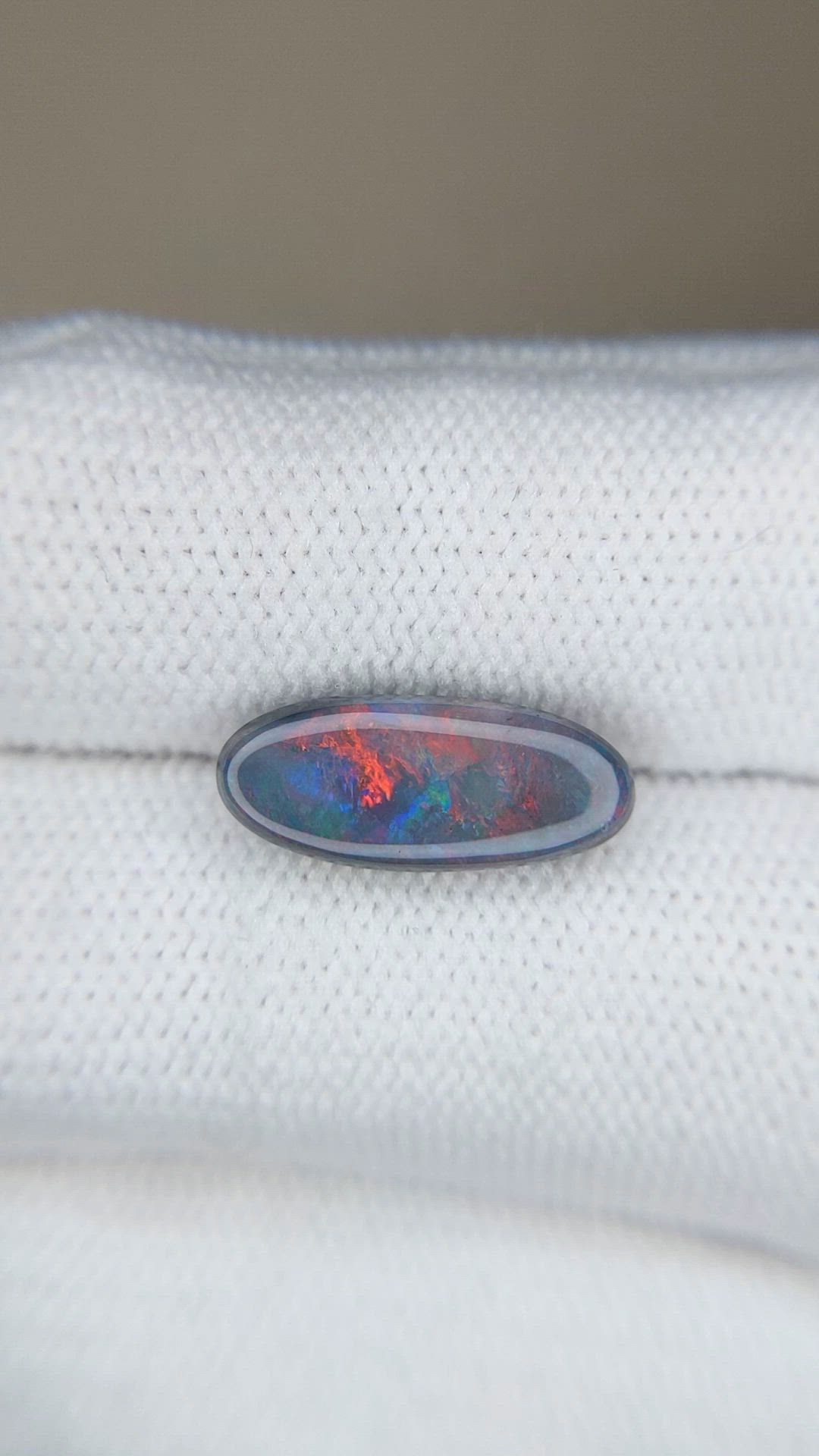
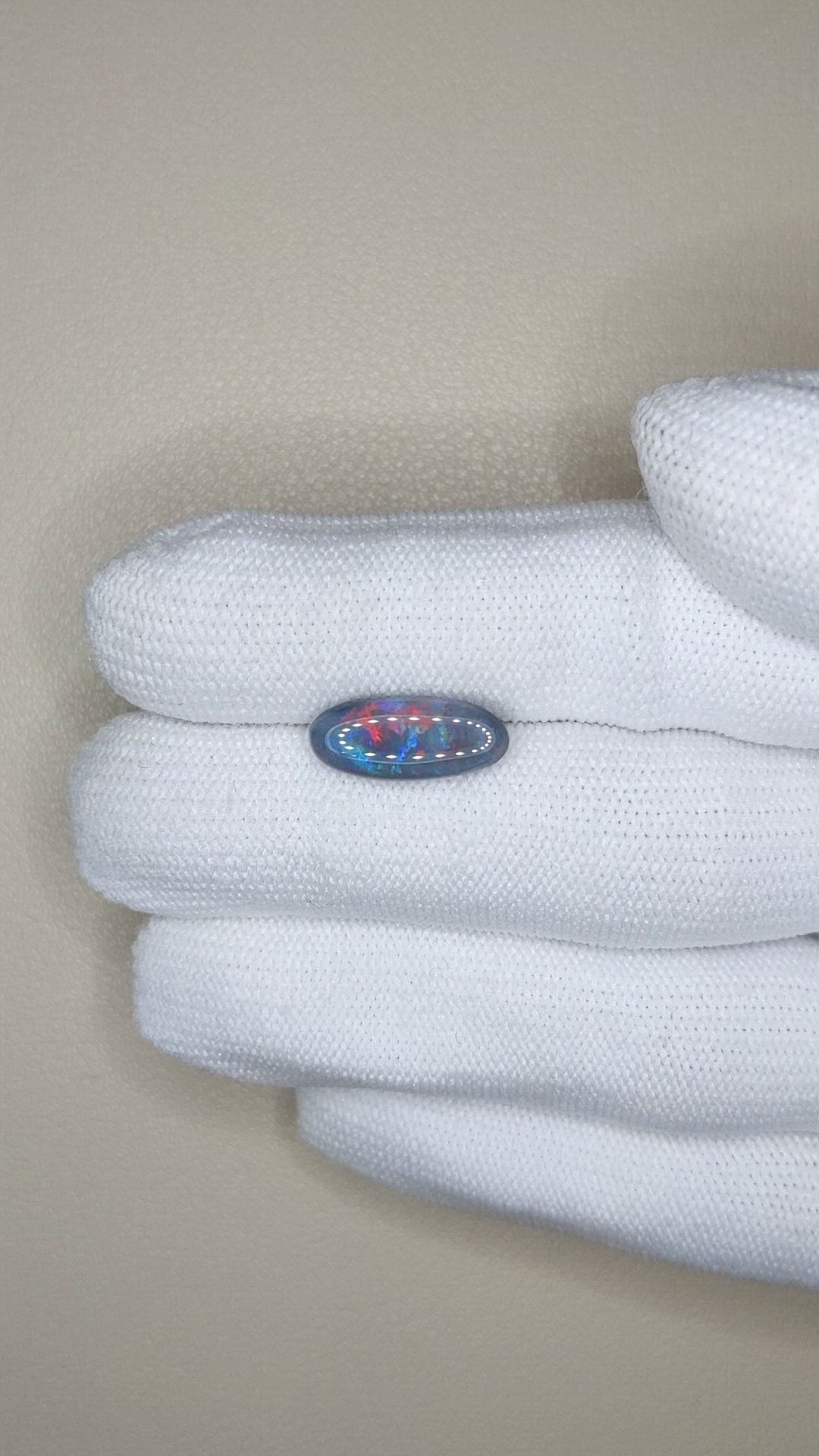
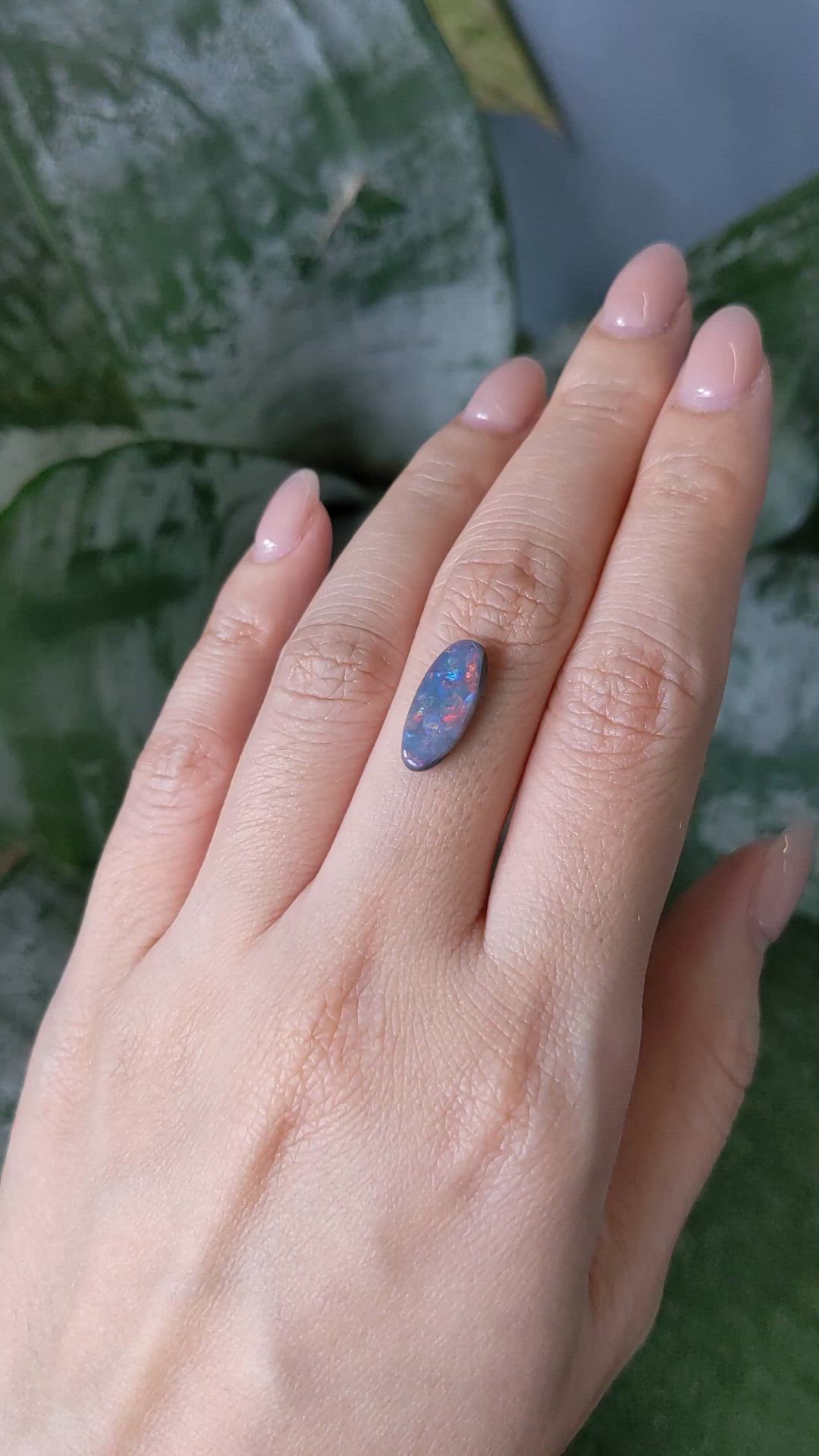
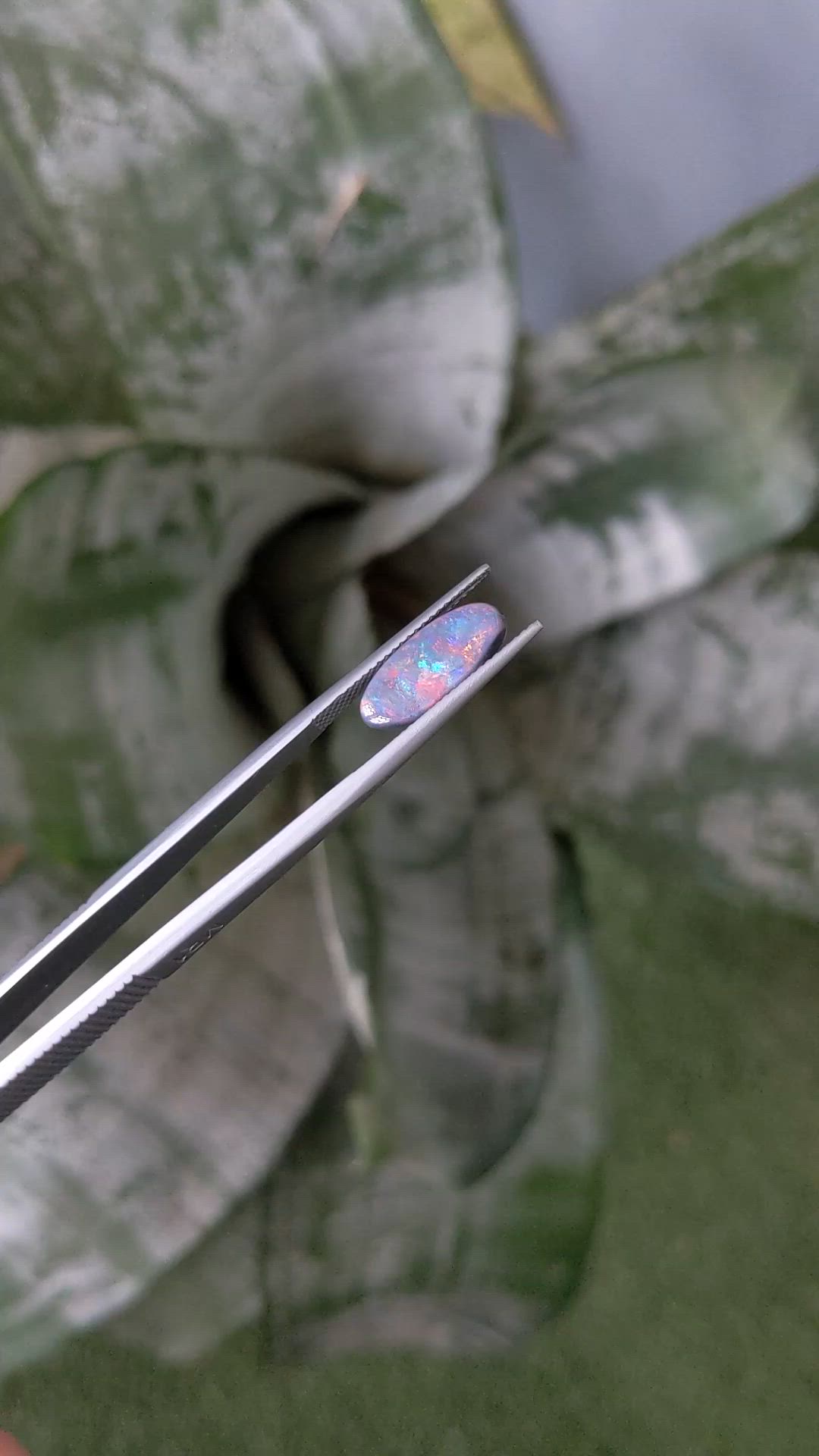

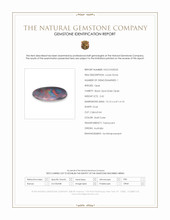


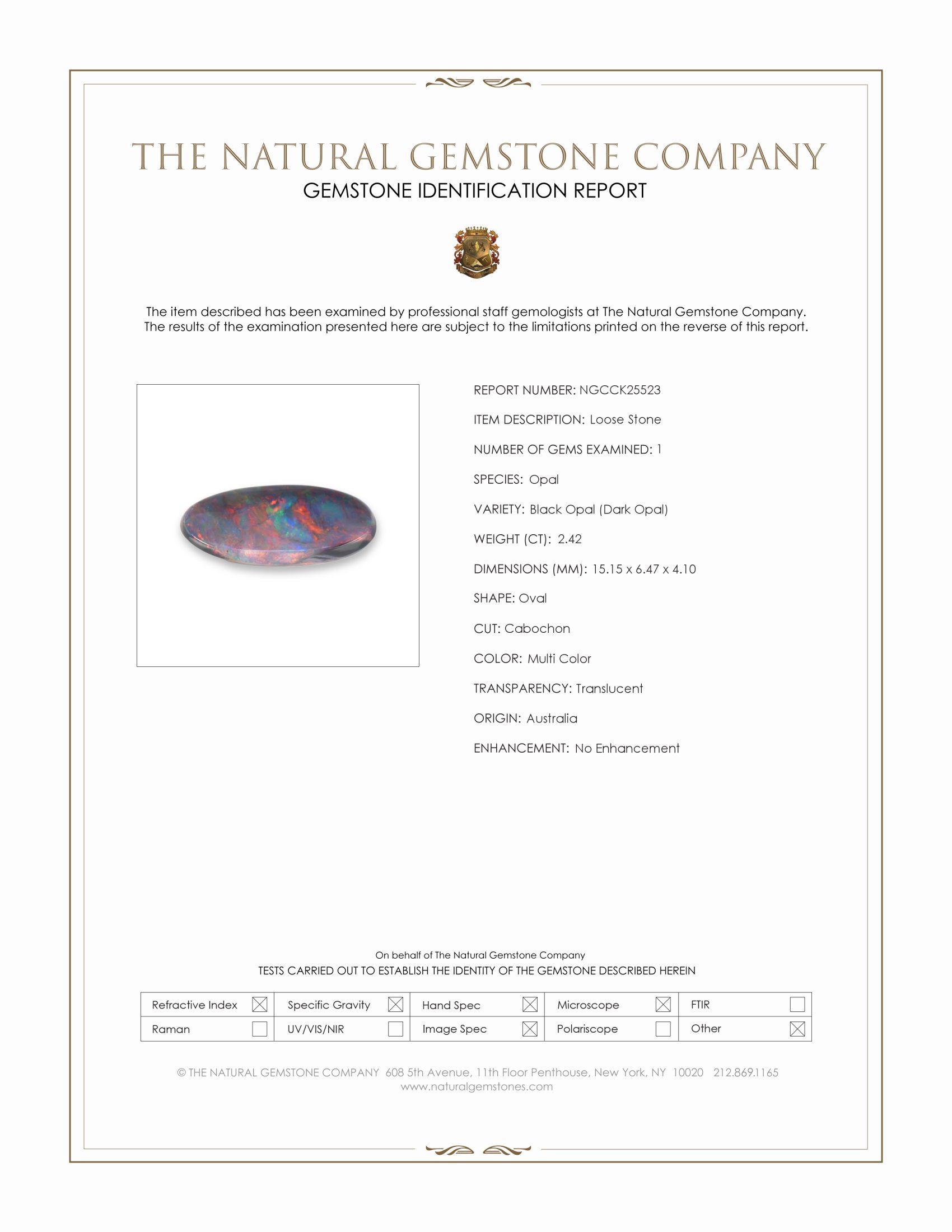
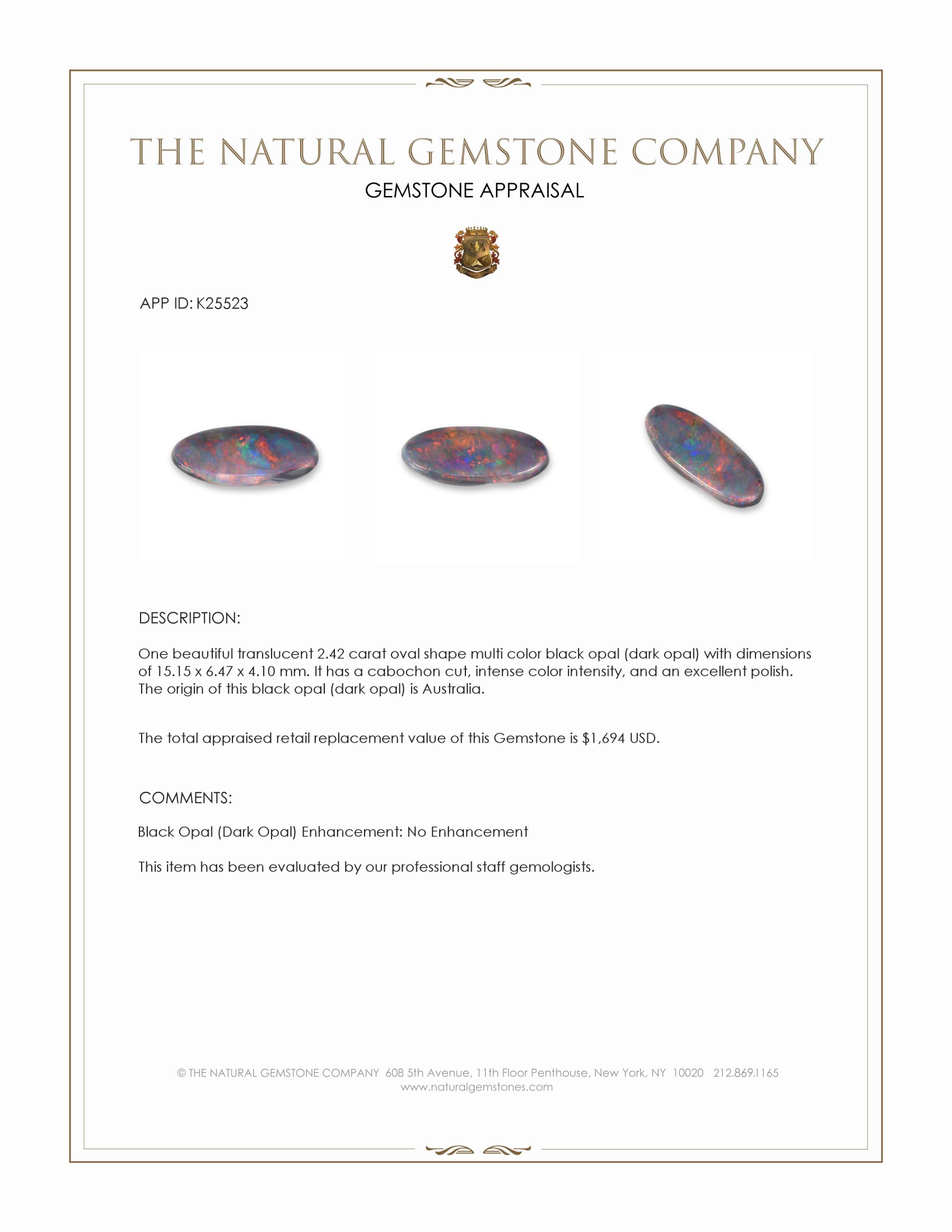
2.42 Ct. Multi Color Cabochon Black Opal (Dark Opal) from Australia
This loose stone is available to ship now
Item ID: | K25523 |
|---|---|
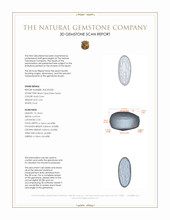
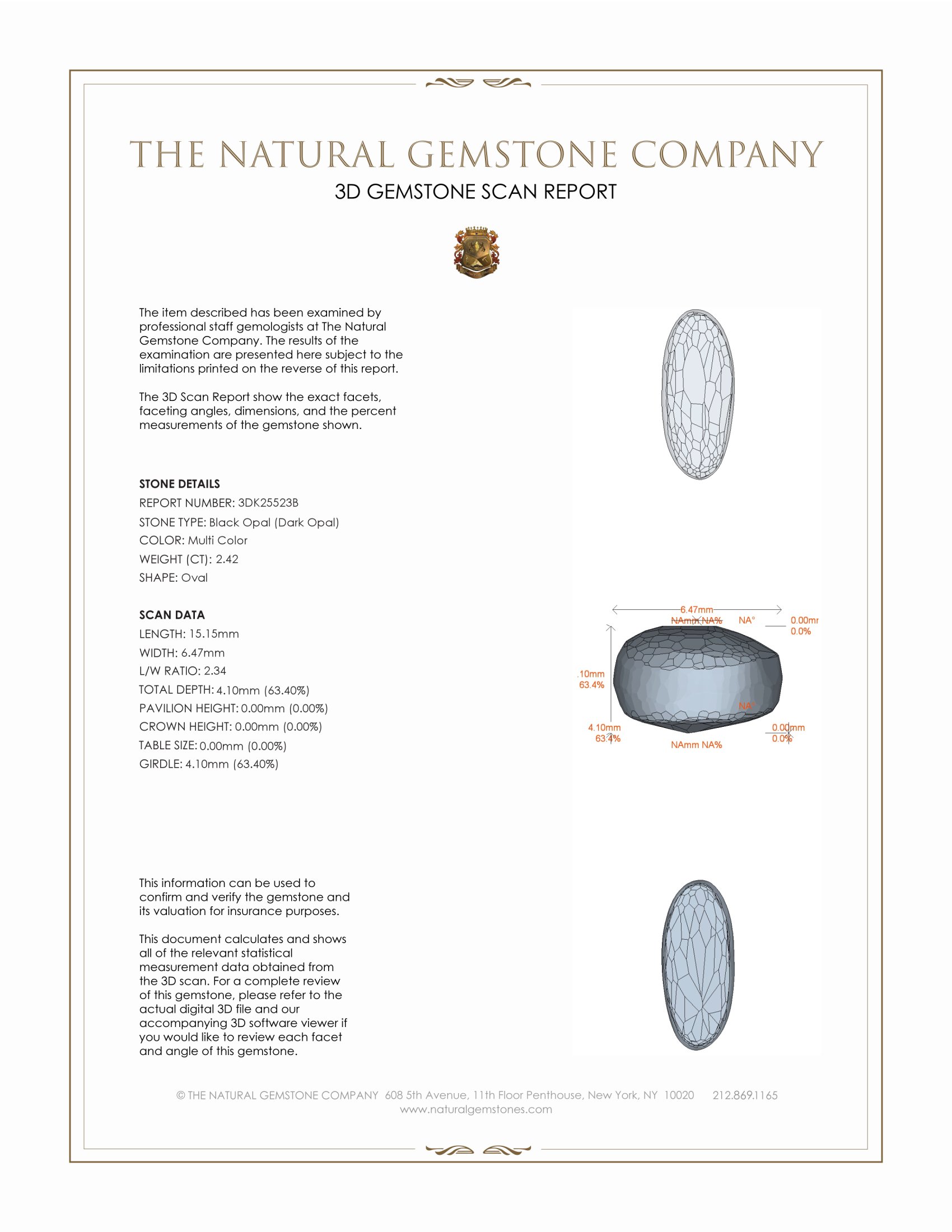
Dimensions (MM): help | Length: 15.15 Width: 6.47 Height: 4.1 |
Weight: | 2.42 Ct. |
Color: help | Multi Color |
Color intensity: help | Intense |
Clarity: help | Not Applicable |
Shape: help | Oval |
Cut: | Cabochon |
Cutting style: | Cabochon |
Enhancements: help | No Enhancement |
Origin: help | Australia |
Per carat price: help | $700 |
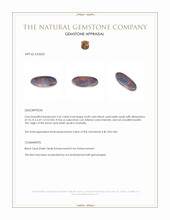
This listing describes one translucent Black Opal, Dark Opal, weighing 2.42 carats, presented in an oval cabochon form with dimensions of 15.15 x 6.47 x 4.10 mm. The stone has been shaped as a smooth cabochon to optimize the presentation of internal color, and it displays intense color intensity and an excellent polish. There are no enhancements, and the origin is Australia. The Natural Gemstone Company provides this item with full specification of weight, dimensions, cut style, enhancement status, and country of origin to support objective assessment and appropriate selection for collectors and designers.
Optically this opal exhibits broad, vivid play of color that spans red, orange, green, and blue tones across a semi translucent body. The dark base tone typical of Black Opal increases contrast between the color flashes and the ground, resulting in a perception of greater brightness and saturation than comparable opals with lighter body tones. The cabochon dome concentrates the viewing angles so that color appears to shift and reorganize as the stone is rotated, and the excellent polish maximizes light transmission into the silica structure and efficient diffraction back to the eye. Translucency in this specimen allows internal color to appear to float within the stone rather than being confined to a surface layer, while the evenness of the cut and polish minimizes dead spots and preserves a continuous color experience across the oval face.
When compared to other opal types this Black Opal differs in measurable ways. Versus white opal the darker body tone provides stronger contrast and a more dramatic presentation of red and orange flashes, where white opal tends toward a softer, more diffuse play of color on a pale background. Versus crystal opal which can offer high transparency and a floating or three dimensional color effect, this Black Opal trades some absolute transparency for greater chromatic intensity and contrast due to its darker ground. Versus boulder opal the present stone lacks an ironstone backing but gains uniformity of color across the bed rather than the often interrupted patterning over matrix that characterizes many boulder pieces. Compared with other iridescent gems such as labradorite and moonstone the mechanism producing color in opal is distinct, opal color arises from diffraction by closely packed silica spheres and therefore presents as pure spectral flashes, whereas labradorite and moonstone produce lamellar interference effects that yield broad sheens and limited spectral dispersion, typically favoring blue and green rather than the fuller spectrum including deep red that is possible in high quality Black Opal.
From a practical standpoint the cabochon cut and the dimensions make this piece well suited to settings that protect the sides and pavilion, such as bezel or partial bezel mounts, while exposing the face to best display the play of color. The absence of enhancements confirms that observed optical qualities are inherent to the material rather than the result of composite construction such as doublets or triplets, and therefore the stone responds to light and orientation as a single natural opal. Standard care practices for opal should be observed, avoiding prolonged exposure to high heat, strong solvents, and ultrasonic cleaning, and considering a protective setting for daily wear to reduce risk of abrasion or impact. The Natural Gemstone Company documents the gemology, dimensions, and treatment status to facilitate accurate comparison with other opal offerings and to inform mounting and care decisions, providing objective specification for lapidaries, jewelers, and collectors who prioritize intrinsic optical performance and natural provenance.


