
Famous Pearls: The World’s Most Famous Pearls and Their Incredible Stories
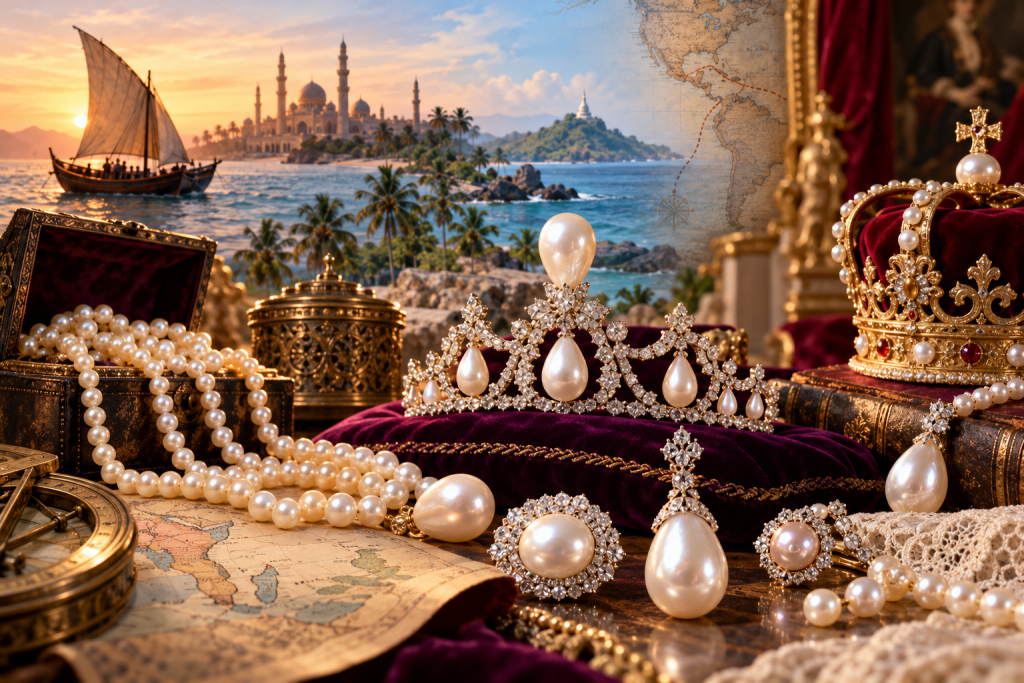
Famous pearls are natural pearls, and occasionally entire necklaces, whose beauty and history have made them legends. For thousands of years they came from natural pearl beds in the Persian Gulf, the waters of Sri Lanka, Chinese rivers and, after 1492, the coasts of present-day Venezuela and Panama. Royal families and wealthy collectors treasured them and passed them down through the generations. Today the most famous pearls are valued for three rare qualities together: natural origin, exceptional size or beauty, and a documented story that connects them to queens, empires and Hollywood icons.
Pearls have always been the gem of kings and queens. Long before cultured pearls existed, a fine round natural pearl was one of the most precious objects a person could own. Here are some of the pearls and pearl jewels whose stories still captivate collectors today.
The Oldest Pearl Stories
According to GIA, a Chinese historian recorded the oldest written mention of natural pearls in 2206 BC. In ancient China, pearls were believed to protect against fire and fire-breathing dragons, while in Europe they came to symbolize modesty, chastity and purity.

One of the most famous pearl tales comes from ancient Rome. The Roman writer Pliny the Elder told how Cleopatra wagered that she could host the most expensive banquet in history, then dissolved a priceless pearl earring in vinegar and drank it. Historians and scientists doubt the story could have happened as described, but it shows how highly pearls were valued in the ancient world.
La Peregrina: The Wandering Pearl
La Peregrina, meaning “the pilgrim” or “the wanderer” in Spanish, is perhaps the most celebrated pearl in history. This large, pear-shaped natural pearl came from the waters of the Americas in the sixteenth century and entered the Spanish royal collection. It was given to Mary I of England on her marriage to Philip II of Spain, and later appeared in portraits of Spanish queens.

Centuries later, after passing through the hands of the Bonaparte family and a British aristocratic family, La Peregrina was bought at auction in 1969 by Richard Burton as a gift for Elizabeth Taylor. Taylor worked with Cartier to create a spectacular necklace of natural pearls, diamonds and rubies to frame it. When her collection was sold at Christie’s New York in 2011, La Peregrina, weighing approximately 50.56 carats, achieved 11,842,500 US dollars, against an estimate of 2 to 3 million dollars.
Marie Antoinette’s Pearl
Before she was taken into captivity during the French Revolution, Queen Marie Antoinette reportedly wrapped her pearls, diamonds and rubies in cotton, placed them in a wooden chest and sent them out of France. They were later returned to her daughter and passed down through the Bourbon Parma family for some 200 years.
In 2018 the collection came to auction at Sotheby’s Geneva. The star was a slightly baroque, drop-shaped natural pearl suspended from a diamond bow. Estimated at CHF 1 to 2 million, it sold for CHF 36,427,000, which Sotheby’s described as a new auction record for a natural pearl. For more royal jewel stories, explore gemstones in royal collections.
The Baroda Pearls
The Maharajas of Baroda in India owned some of the most magnificent natural pearl jewels ever assembled. A multi-strand necklace known as the Baroda Pearls sold at Christie’s New York in 2007 for 7,096,000 US dollars, which at the time was a world auction record for a pearl jewel. That record was later surpassed by La Peregrina in 2011.
A Mansion Bought With Pearls
One of the most surprising pearl stories took place in New York. GIA reports that in 1917 Pierre Cartier traded a double strand of natural pearls for a mansion on Fifth Avenue. The building became Cartier’s New York flagship, and the story is still told as proof of just how valuable natural pearls were before cultured pearls arrived on the market.
The Hope Pearl
Many people know the Hope Diamond, but the same collector family also gave its name to the Hope Pearl, one of the largest natural saltwater pearls known. This large baroque pearl, crowned with a decorative mount, is today part of the collection of the Natural History Museum in London and is a reminder that pearls do not need to be round to be extraordinary. Its irregular shape is a perfect introduction to the world of baroque pearls.
Queen Elizabeth I and the Age of Pearls
During the Renaissance, pearls were a powerful symbol of royal wealth and purity. Queen Elizabeth I of England was painted again and again wearing ropes of pearls, pearl-studded gowns and pearl headdresses. Her portraits helped turn pearls into an image of power that still shapes royal style today. Read more about this era in our page on gemstone jewelry in the Renaissance.

Why These Famous Pearls Became Legends
What do all these famous pearls have in common? Most of them are natural pearls from a time when such gems were found only by chance. Many are unusually large or perfectly shaped, and nearly all have a documented history of royal or celebrity ownership. That combination is so rare that when these pearls appear at auction, they often sell for many times their estimates.
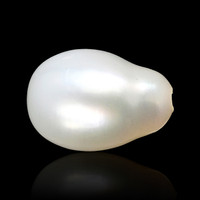
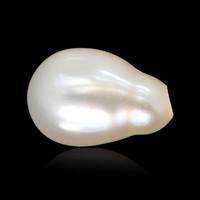
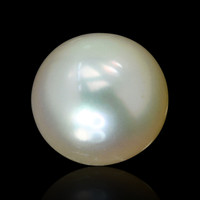
Pearls continue to carry those stories forward. Whether you are drawn to the romance of royal history or simply love the soft glow of a pearl, every strand connects you to a tradition that is thousands of years old. Discover how pearls have been used through the ages in our page on pearls and other famous gemstones by type.
Frequently Asked Questions
What is the most expensive pearl ever sold?
According to Sotheby’s, Marie Antoinette’s natural pearl and diamond pendant, which sold for CHF 36,427,000 in Geneva in 2018, set the auction record for a natural pearl.
Why are famous pearls usually natural pearls?
Before cultured pearls became commercially important in the 1920s, every pearl was natural. Large, fine natural pearls are extremely rare, so the historic pearls owned by royalty are almost always natural.