
The Duchess of Windsor’s Amethyst Necklace
Few royal jewelry collections have attracted as much fascination as that of Wallis Simpson, the Duchess of Windsor. Her jewels were bold, personal, and often closely connected to her relationship with Edward, Duke of Windsor. Among the most memorable was The Duchess of Windsor’s Amethyst Necklace, a spectacular Cartier amethyst, turquoise, and diamond bib necklace commissioned by the Duke in 1947.
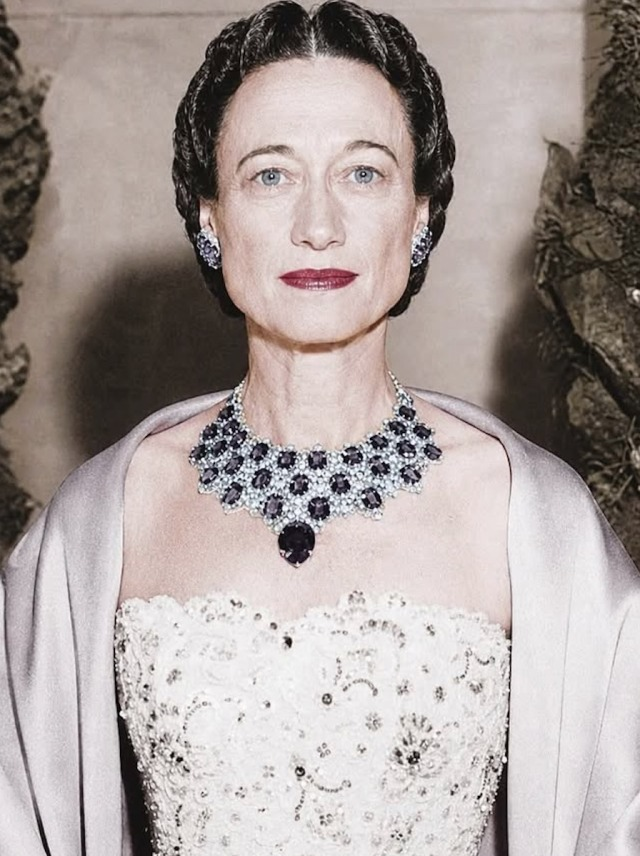
With its rich purple amethysts, contrasting turquoise, and sparkling diamonds, the necklace was far more than an impressive piece of fine jewelry. It reflected the Duchess’s adventurous approach to color, Cartier’s creativity, and a relationship in which jewelry often became a way of marking affection and important moments.
Wallis Simpson and the Duke of Windsor
The story behind the Duchess of Windsor’s amethyst necklace begins with one of the most famous royal relationships of the twentieth century.
Wallis Simpson was an American divorcée whose relationship with King Edward VIII contributed to the constitutional crisis that culminated in his abdication in December 1936. Edward subsequently became the Duke of Windsor, and the couple married in France on June 3, 1937.
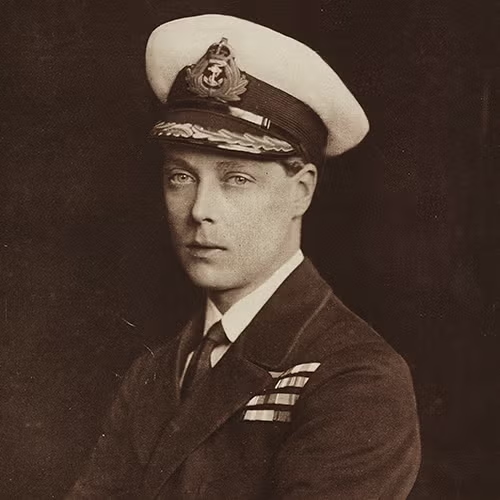
Whatever the controversies surrounding their lives, jewelry played a remarkable role in their relationship. The Duke and Duchess shared an appreciation for sophisticated design and exceptional gemstones, and many of their jewels commemorated private events and milestones.
Some pieces even carried dates, initials, and personal inscriptions. Their remarkable collection became almost a jeweled record of their life together.
The Creation of the Duchess of Windsor’s Amethyst Necklace
In 1947, the Duke of Windsor commissioned Cartier to create the extraordinary amethyst, turquoise, and diamond bib necklace for the Duchess.
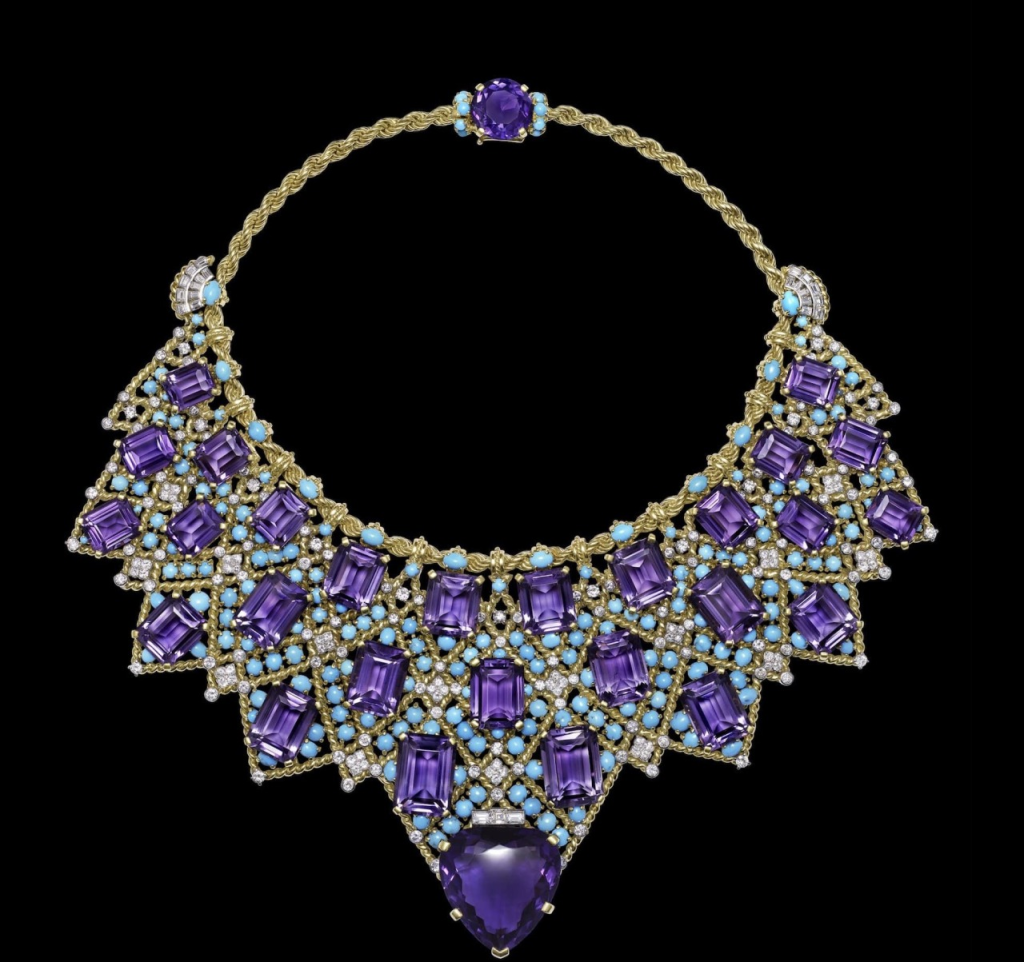
The necklace was an unusual and daring creation. Rather than relying entirely on diamonds and traditionally precious gemstones, the design celebrated a dramatic combination of purple amethyst and blue-green turquoise.
This combination reflected the creativity of post-war jewelry design, when leading jewelry houses increasingly experimented with strong colors, unusual gemstone combinations, and larger statement pieces.
For the Duchess of Windsor, whose personal style was already known for being distinctive and sophisticated, the necklace was a natural choice.
A Spectacular Combination of Amethyst and Turquoise
One of the most striking characteristics of the necklace is its use of contrasting colors.
The rich purple amethysts provide depth and drama, while the turquoise introduces a vibrant blue-green contrast. Diamonds add brilliance throughout the design, bringing light between the stronger areas of color.
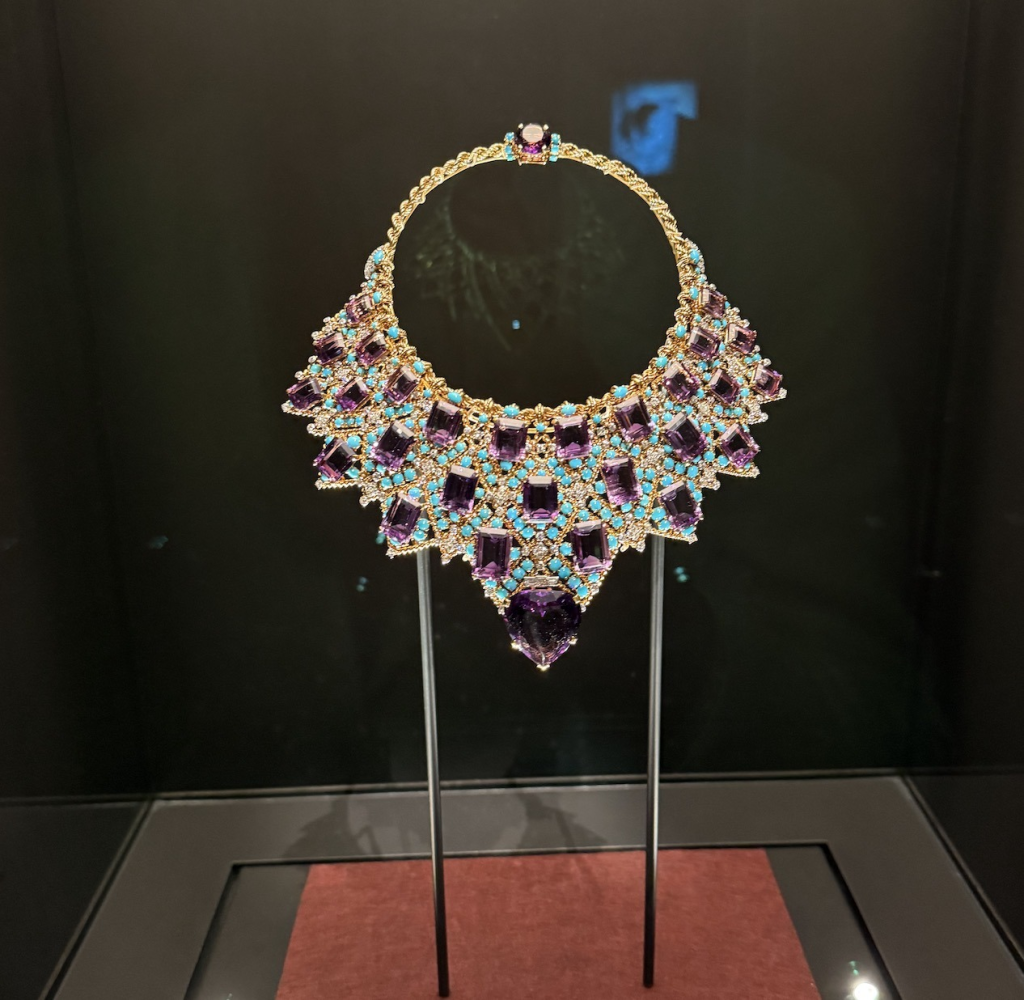
The necklace featured amethysts in different cuts, including an eye-catching heart-shaped amethyst, alongside turquoise cabochons and diamonds. Instead of following the structure of a traditional gemstone necklace, Cartier arranged the stones in an elaborate bib-style composition.
The result was glamorous, colorful, and remarkably modern for its time.
Why Amethyst Was Perfect for the Design
Amethyst is the purple variety of quartz and has been admired in jewelry for thousands of years. Its color can range from soft lilac and lavender to rich, saturated purple.
Historically, purple was closely associated with royalty, wealth, and power. Before purple dyes became widely available, producing rich purple colors was difficult and expensive, strengthening the color’s connection with elite society.
The Duchess of Windsor’s necklace demonstrated another side of amethyst. The gemstone did not need to compete with ruby, sapphire, or emerald. Instead, Cartier allowed its distinctive purple color to become one of the defining features of the entire jewel.
Against the vivid turquoise, the amethysts became even more noticeable.
A Necklace Made to Be Seen
The Duchess of Windsor was known for wearing important jewelry confidently rather than keeping exceptional pieces hidden away in a collection.
Her amethyst necklace was no exception.
One of its most famous appearances came in 1953, when the Duchess wore the Cartier amethyst and turquoise necklace to a gala at Versailles.
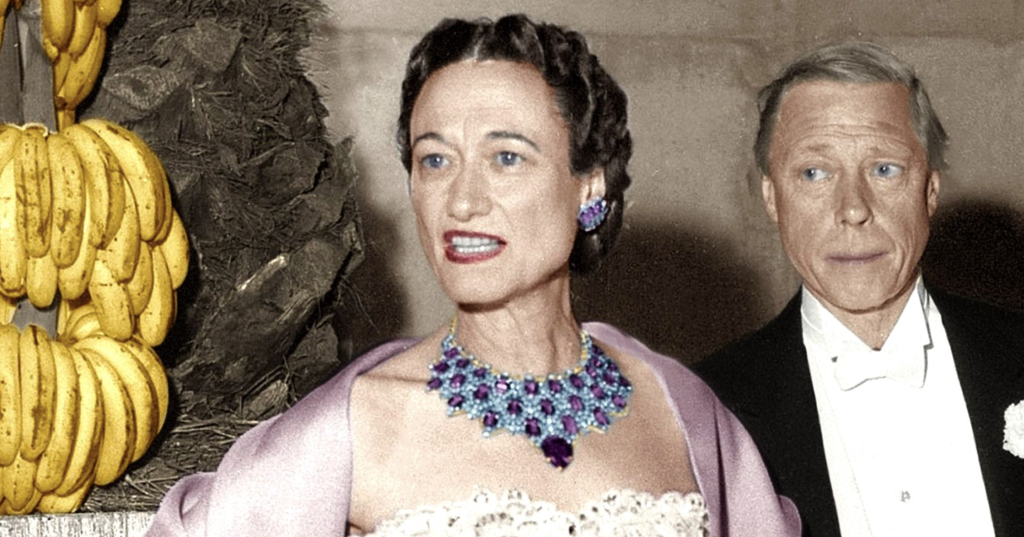
The impressive scale of the necklace complemented her distinctive fashion sense. Instead of simply accessorizing her outfit, the jewel became part of the overall fashion statement.
This approach contributed to the Duchess’s reputation as one of the twentieth century’s most memorable jewelry collectors. Her collection was not simply about possessing expensive gemstones. It was also about unusual designs, color combinations, craftsmanship, and personality.
Cartier and the Windsor Jewelry Collection
The amethyst necklace was only one part of the Windsors’ long relationship with Cartier.
The Duchess owned numerous Cartier creations, including highly innovative animal jewels, gemstone bracelets, and personalized pieces. Her willingness to experiment with jewelry gave Cartier opportunities to create designs that were unconventional and highly recognizable.
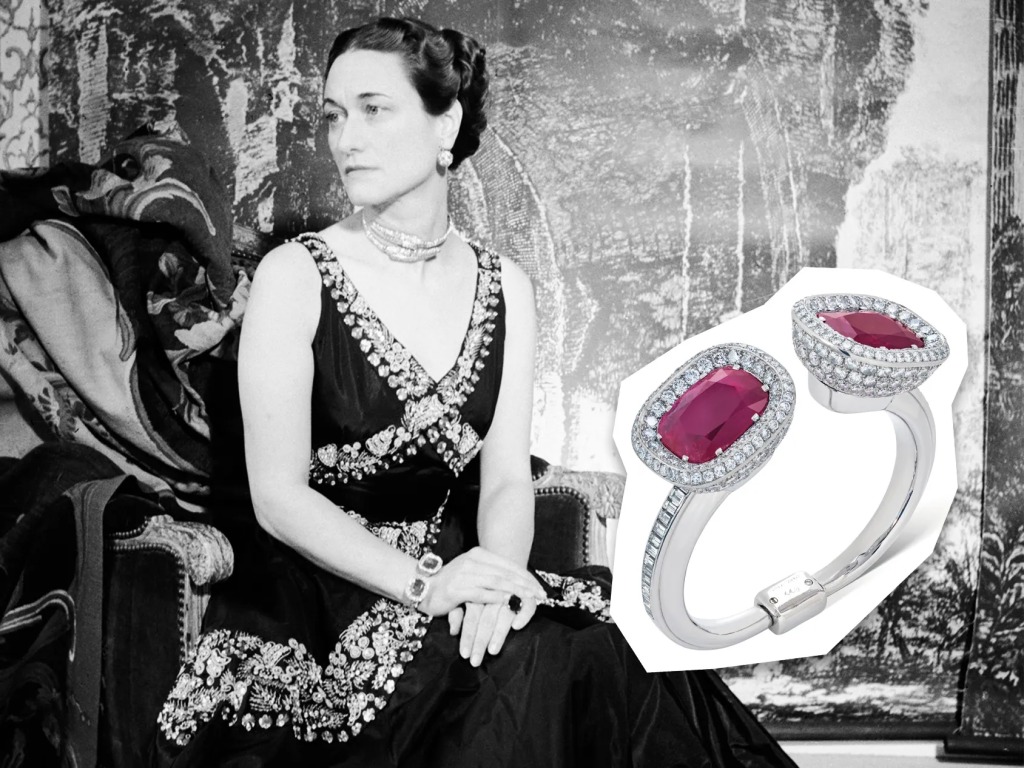
Jewelry also had a deeply personal role within the Windsor relationship. Several pieces were associated with particular dates, events, or memories.
Seen in this context, the 1947 amethyst necklace was more than another luxurious possession. It belonged to a collection in which gemstones frequently became symbols of personal experiences and affection.
The Legendary 1987 Auction
Following the Duchess of Windsor’s death in 1986, her extraordinary jewelry collection became the subject of one of the most famous jewelry auctions of the twentieth century.
The Jewels of the Duchess of Windsor were offered by Sotheby’s in Geneva in April 1987. The sale attracted enormous international attention and achieved approximately CHF 53.5 million, with proceeds benefiting the Pasteur Institute in Paris.
The amethyst, turquoise, and diamond necklace was among the celebrated Windsor jewels offered at the sale.
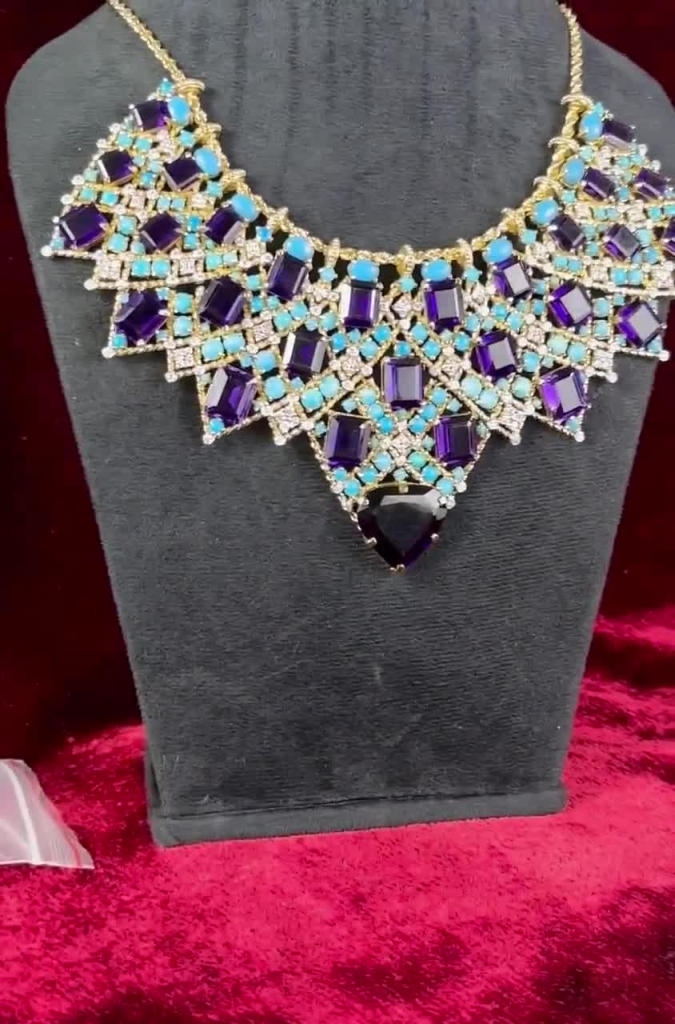
Its appearance at the auction demonstrated how dramatically provenance can influence the importance of jewelry. Collectors were not simply purchasing amethysts, turquoise, diamonds, and precious metal. They were acquiring pieces connected to a famous royal story and an important period in twentieth-century jewelry design.
A Different Kind of Royal Gemstone
The Duchess of Windsor’s necklace is especially interesting because amethyst is not traditionally classified alongside diamond, ruby, sapphire, and emerald as one of the four precious gemstones.
Yet Cartier transformed amethyst into a jewel worthy of one of the most famous jewelry collectors of the era.
The necklace demonstrates that an extraordinary jewel does not depend entirely on the monetary value or rarity of its gemstones. Color, craftsmanship, design, provenance, and creativity can be equally important.
A beautifully colored amethyst placed within an imaginative design can create an impressive piece of fine jewelry.
Why Amethyst Is Still Valuable and Popular Today
Amethyst continues to be one of the most recognizable colored gemstones in modern jewelry. Although fine amethyst is generally more accessible than ruby, sapphire, or emerald, high-quality stones with rich, evenly distributed purple color, good clarity, and an attractive cut can still be highly desirable.
Its popularity has also benefited from the growing interest in colored gemstones and individual jewelry designs. Modern buyers are increasingly exploring gemstones that offer distinctive colors and personality rather than limiting themselves to traditional choices.
Amethyst works particularly well with this trend. Its shades can range from delicate lavender to intense royal purple, allowing it to complement both modern and vintage-inspired jewelry. Larger amethysts can also create impressive statement rings, earrings, pendants, and necklaces without necessarily reaching the prices associated with similarly sized examples of rarer precious gemstones.
As the February birthstone, amethyst also carries personal meaning for many buyers. Combined with its long history, royal associations, distinctive purple color, and versatility, these qualities continue to make amethyst relevant in contemporary jewelry.
The Duchess of Windsor’s Lasting Influence on Jewelry
Wallis Simpson remains a complicated historical figure, but her influence on twentieth-century jewelry and fashion is difficult to overlook.
She was willing to experiment. Her collection combined important diamonds and precious gemstones with amethyst, turquoise, colorful combinations, sculptural forms, and playful designs.
Her amethyst necklace captures this approach particularly well.
Created by Cartier in 1947, worn at important social events, and eventually included in the historic 1987 auction, the necklace moved from a personal royal jewel to an internationally recognized piece of jewelry history.
A Royal Love Story Told in Purple
The Duchess of Windsor’s amethyst necklace remains memorable not because amethyst was the rarest gemstone in her collection, but because the jewel brought together so many elements of her story.
There was the Duke’s commission, Cartier’s craftsmanship, the unexpected combination of purple amethyst and turquoise, the Duchess’s distinctive personal style, and the remarkable provenance that followed the necklace throughout its history.
More than seventy years after its creation, the necklace remains an excellent example of how jewelry can become connected with identity, relationships, fashion, and memory.
For gemstone enthusiasts, it also offers a lasting lesson. Remarkable jewelry does not always depend on the rarest traditional precious stones. Sometimes beautiful color, exceptional craftsmanship, creative design, and a fascinating story are enough to turn a gemstone jewel into an icon.
Discover the captivating beauty of this timeless purple gemstone by exploring our finest Amethyst collection HERE, carefully selected for its exceptional color, brilliance, and natural charm.