
- Pair14
- Reports4
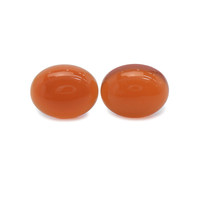
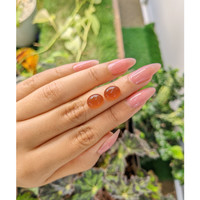
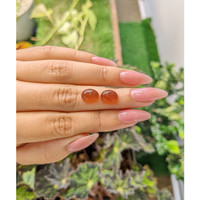
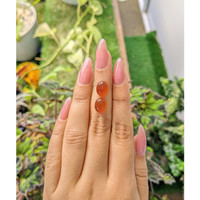
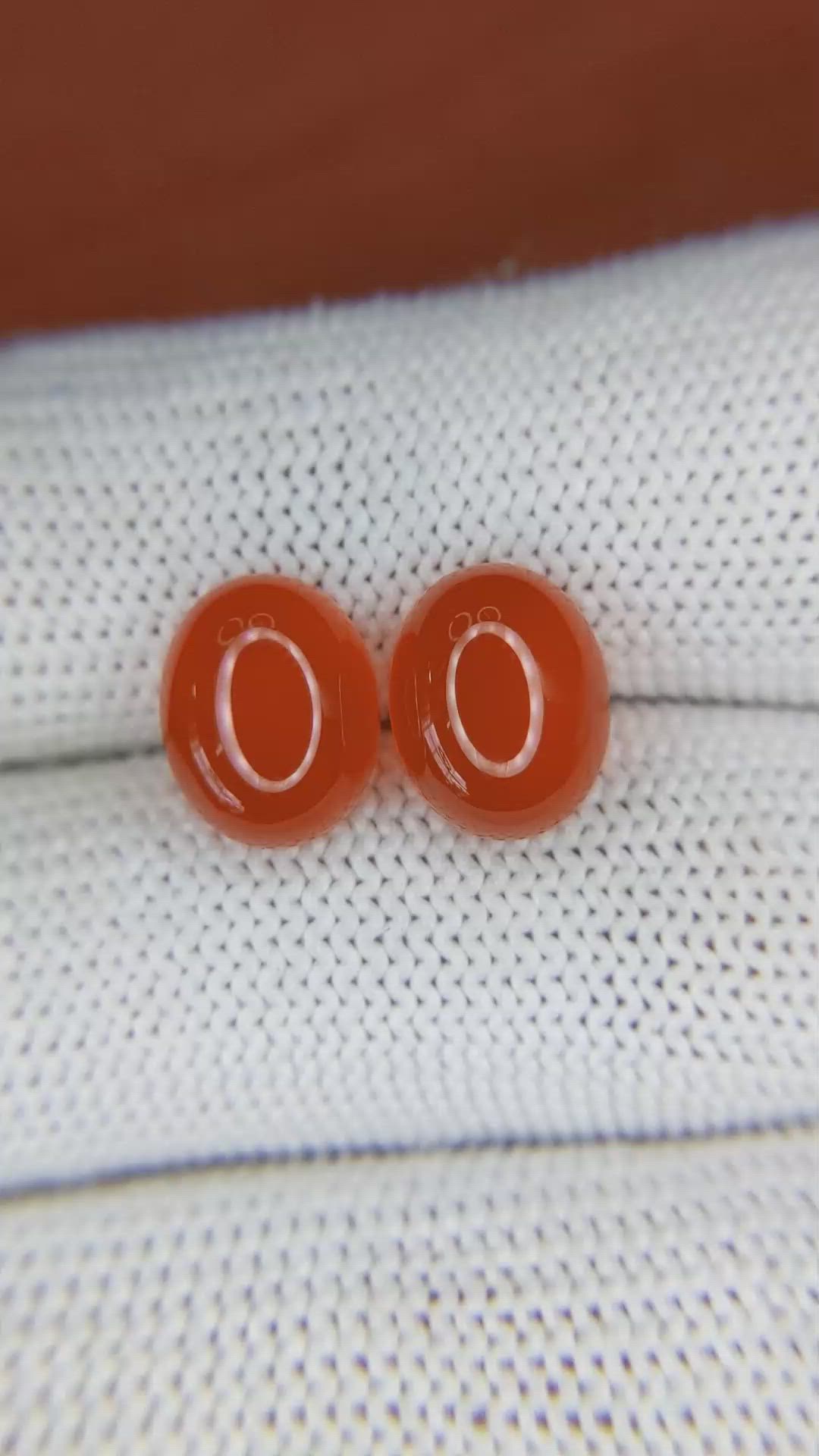
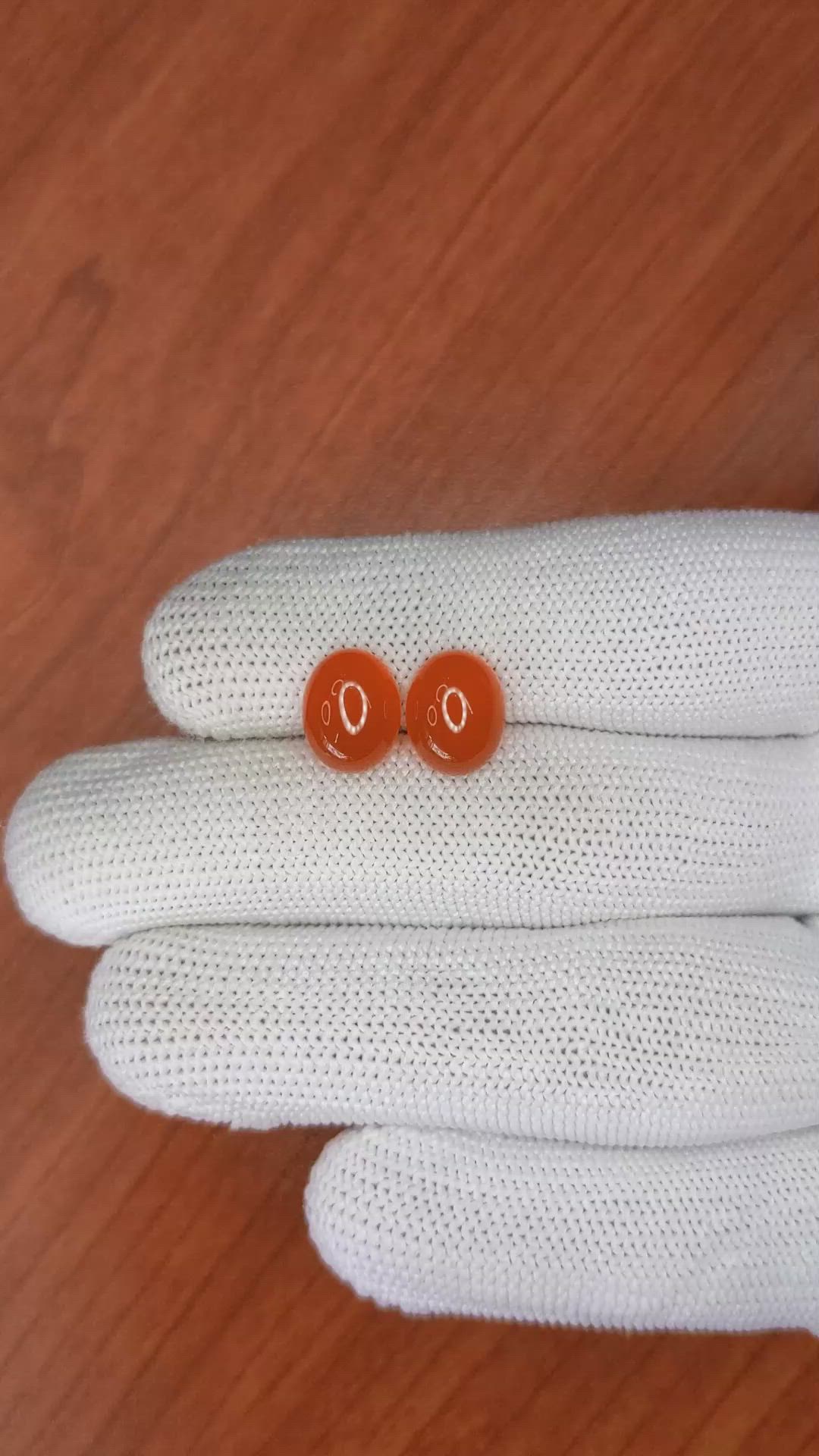

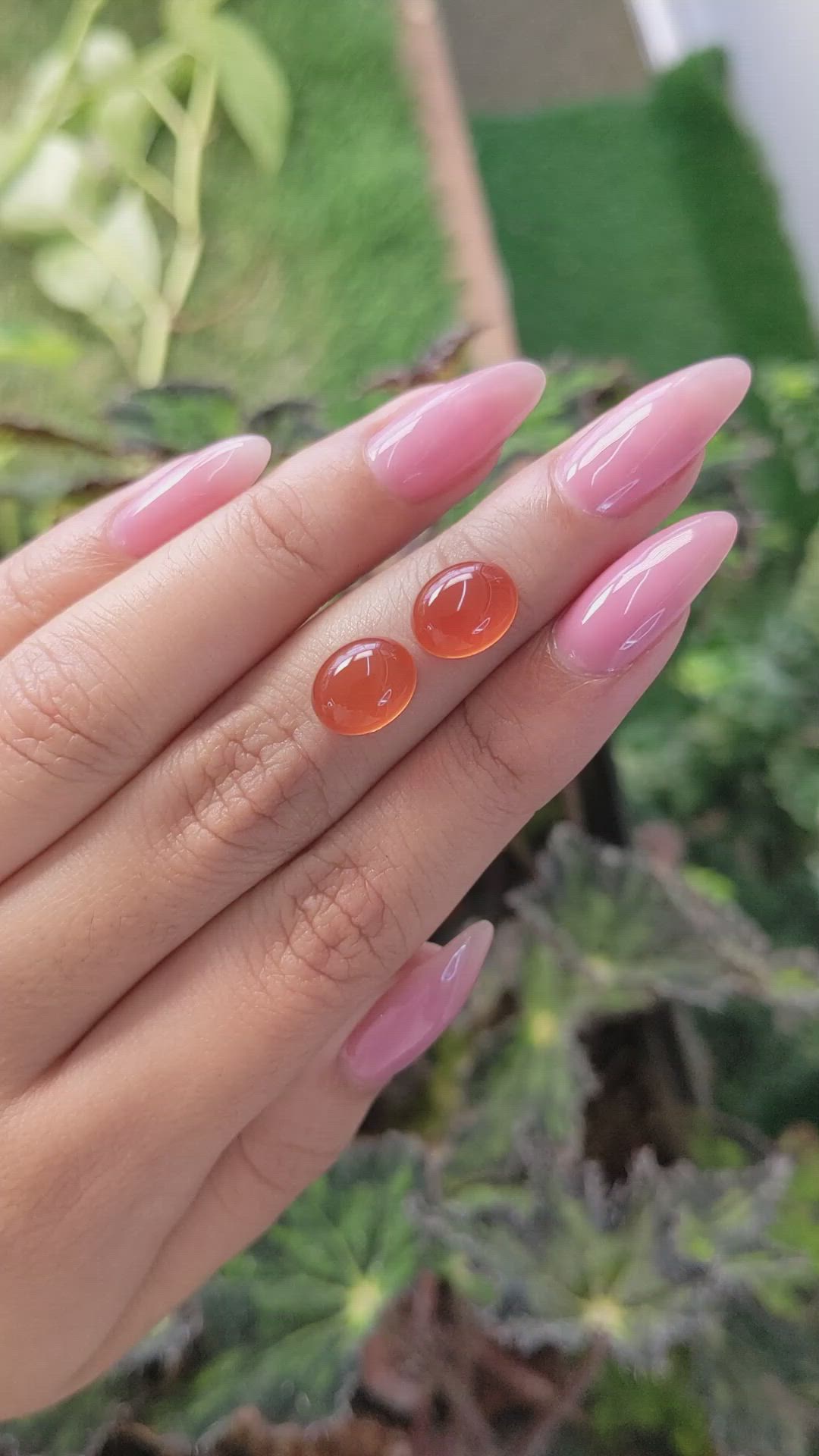
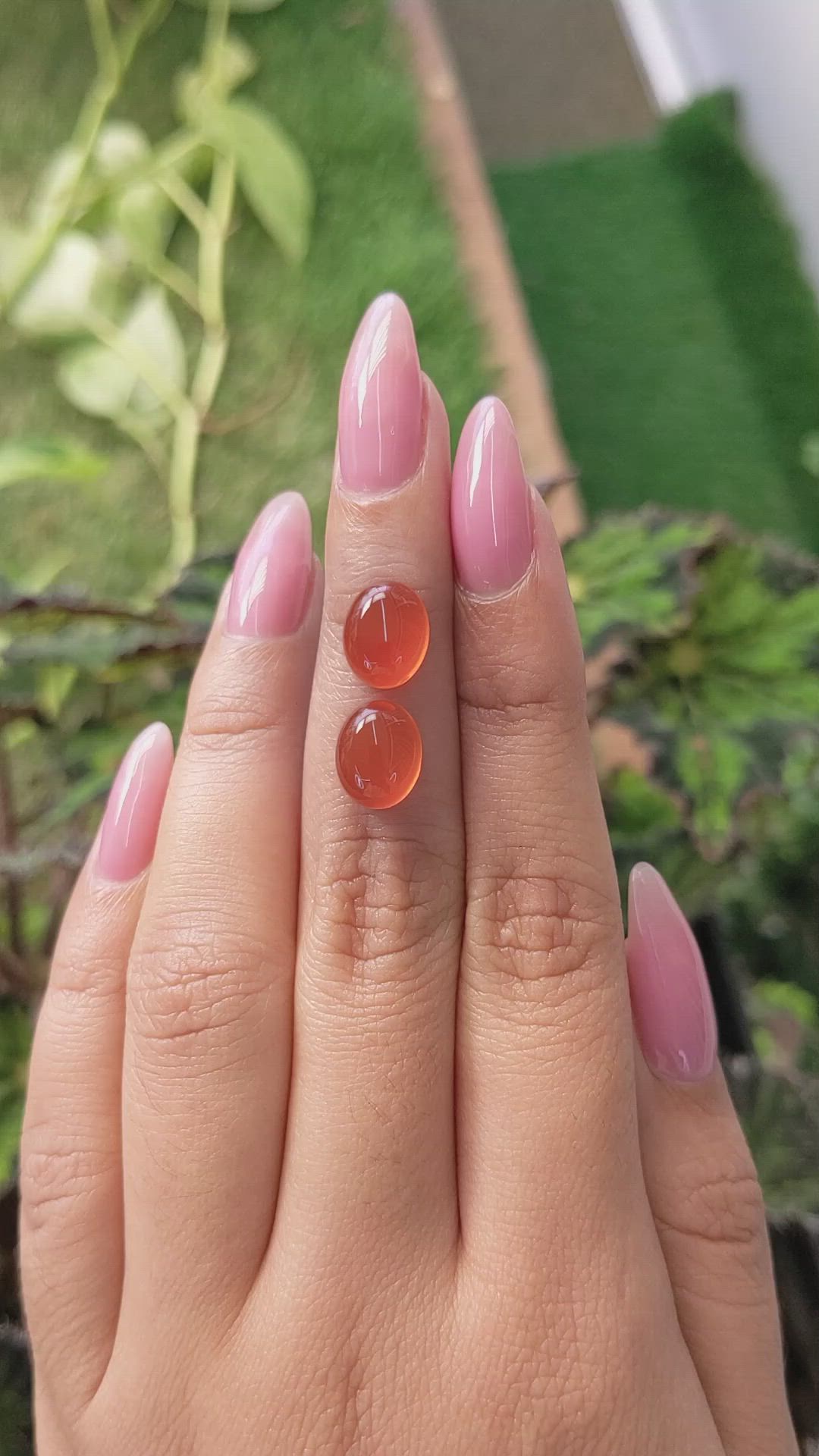



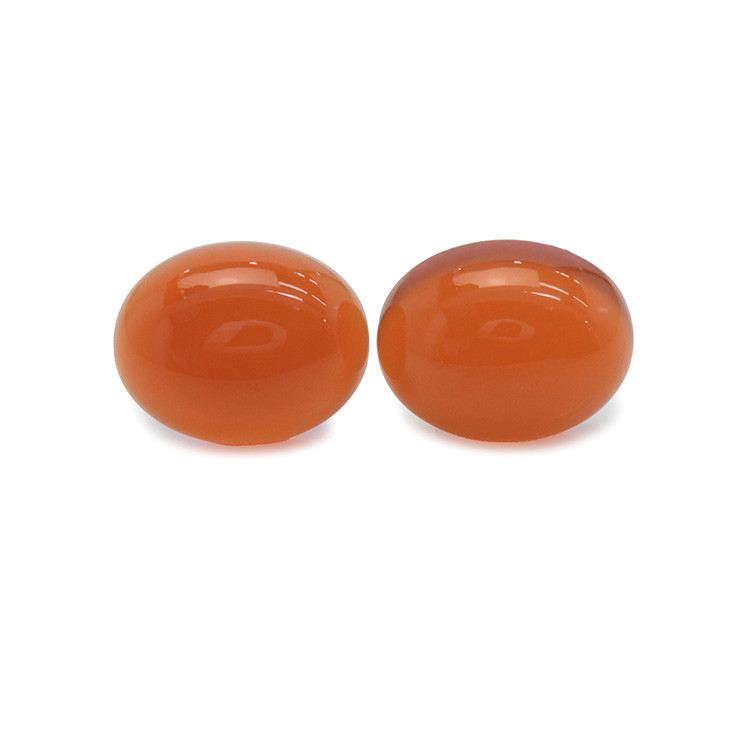
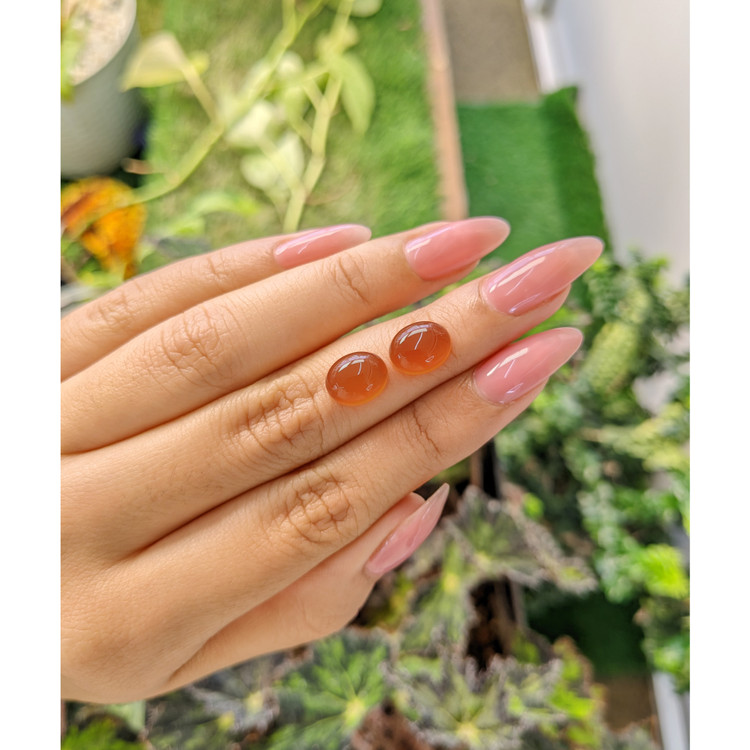
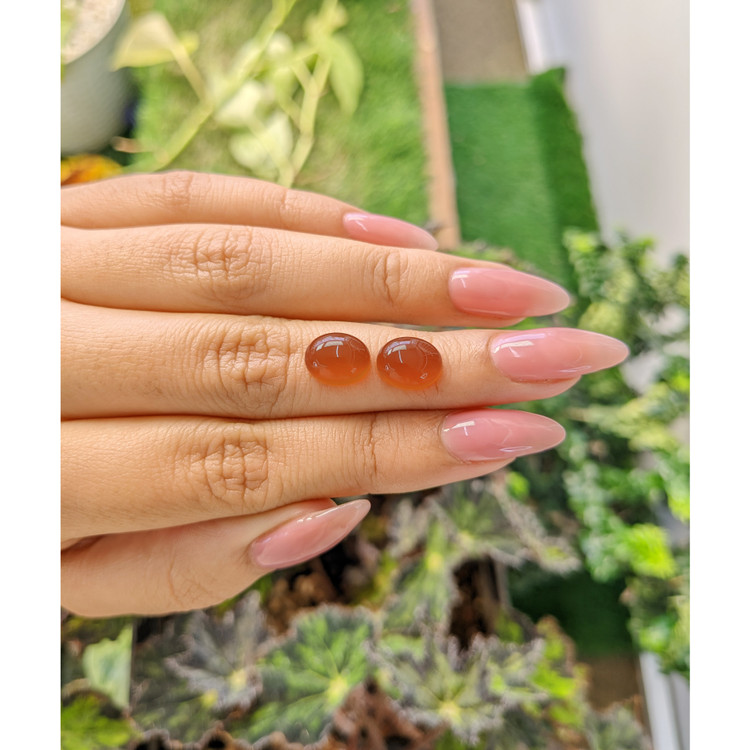
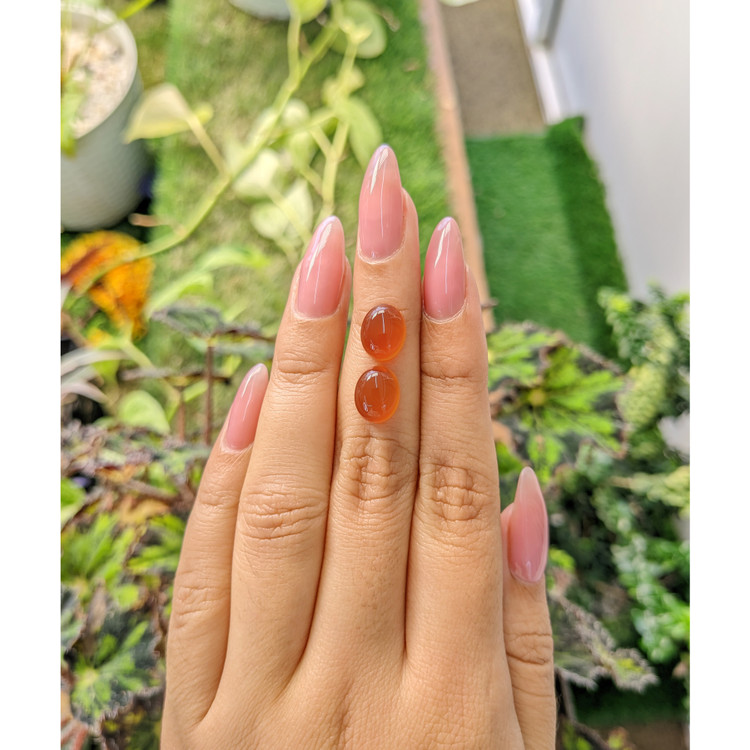


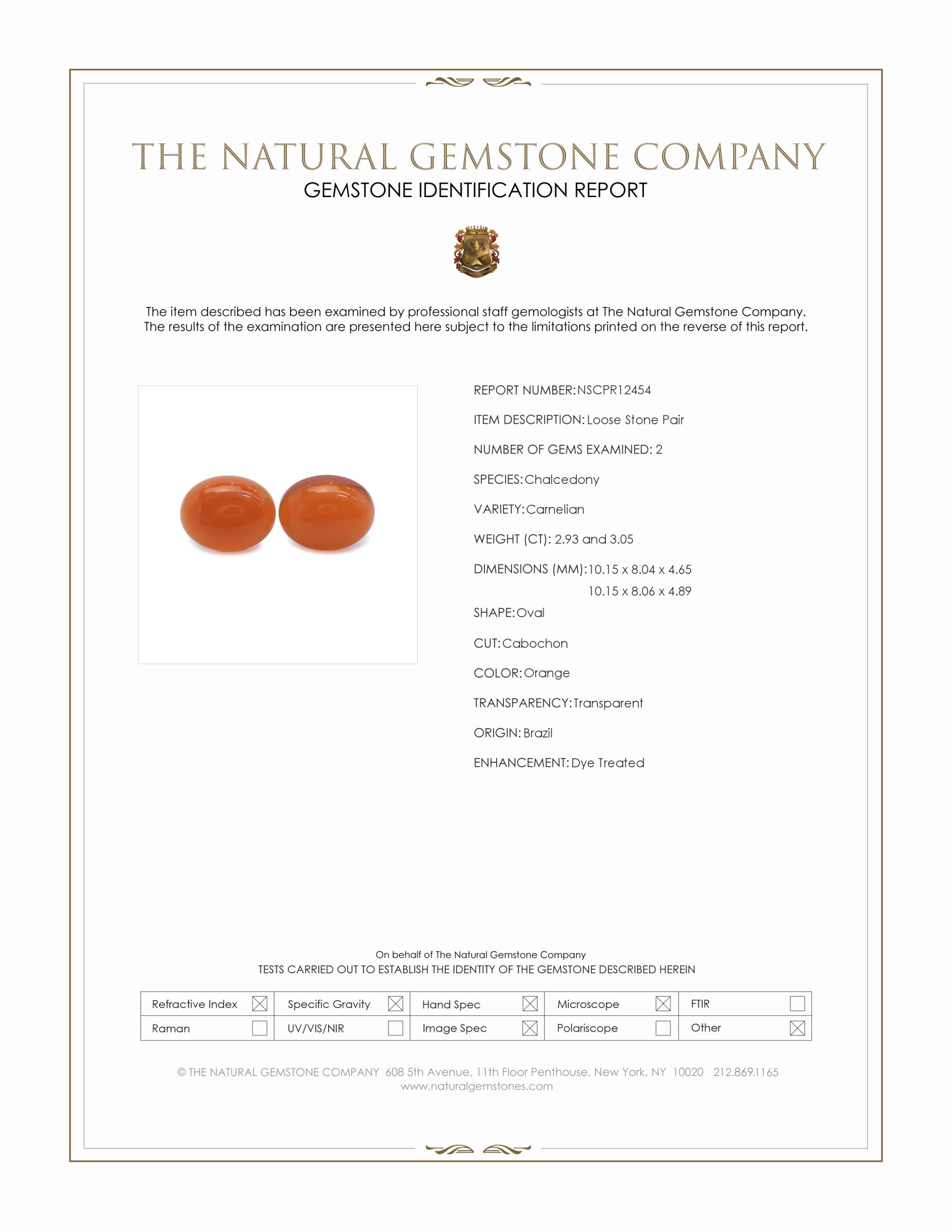

5.98 Ct.Tw.Total Carat Weight Orange Cabochon Carnelian Pair from Brazil
This pair of stones is available to ship now
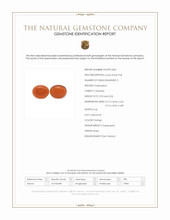
Stone type: | Carnelian | Carnelian |
|---|---|---|
Item ID: | PR12454 | PR12454 |
Dimensions (MM): help | Length: 10.15 Width: 8.04 Height: 4.65 | Length: 10.15 Width: 8.06 Height: 4.89 |
Weight: | 2.93 Ct. | 3.05 Ct. |
Color: help | Orange | Orange |
Color intensity: help | Vivid | Vivid |
Clarity: help | Not Applicable | Not Applicable |
Shape: help | Oval | Oval |
Cut: | Cabochon | Cabochon |
Cutting style: | Cabochon | Cabochon |
Enhancements: help | Dye Treated | Dye Treated |
Origin: help | Brazil | Brazil |
Per carat price: help | $16 | $16 |
This matched pair of carnelians from The Natural Gemstone Company presents precise proportions and consistent material quality, suitable for clients who prioritize technical accuracy and reproducible results. The weights measure 2.93 carats and 3.05 carats respectively, providing a nearly identical mass balance that is important for matched jewelry such as earrings or cufflinks. The shapes are classic ovals with dimensions of 10.15 by 8.04 by 4.65 millimeters and 10.15 by 8.06 by 4.89 millimeters, reflecting excellent symmetry in length and width, and a modest variation in dome height that remains well within acceptable tolerances for paired stones. These carnelians are fashioned as cabochons, with a smoothly domed profile that optimizes internal light diffusion and color saturation, and an overall form that is well centered and free from asymmetrical lobing or off axis cutting that would complicate matched settings.
Materially the specimens are transparent to high transmittance for carnelian grade chalcedony, exhibiting vivid orange color intensity that is evenly distributed across each stone. The visual presentation is characterized by homogeneous body color with minimal zoning, and clarity that is effectively eye clean, allowing for a warm internal glow when viewed against transmitted light. From a gemological standpoint these stones align with the expected parameters for Brazilian carnelian, including a refractive index in the chalcedony range, and a specific gravity consistent with cryptocrystalline quartz matrices. The cabochon cut employed emphasizes polish and surface finish rather than facet geometry, and in these pieces the polish is excellent, yielding a high luster mirror surface without visible lapping lines, tool marks, or surface pitting that would scatter light and reduce apparent color saturation.
Enhancement disclosure is explicit, these carnelians have been dye treated to achieve the vivid orange tone, a common and stable enhancement for this material when performed correctly. The dyeing process in reputable practice involves impregnation of the porous chalcedony surface with stable organic or inorganic colorants followed by thermal treatment to promote fixation, and in many cases a mild post process rinse and stabilization step is applied. Buyers should be advised that dyed chalcedony responds differently to prolonged exposure to strong chemicals, prolonged ultraviolet exposure, and high heat, therefore recommended care includes avoiding ultrasonic and steam cleaners, limiting contact with household solvents and chlorine, and storing the stones out of continuous direct sunlight to maximize color stability. Disclosure of dye treatment is provided for accurate valuation and for compliance with trade best practices, and The Natural Gemstone Company supports independent testing or certification on request for provenance and treatment verification.
From a setting and craftsmanship perspective these cabochons are versatile and user friendly, the dome heights represented by the thickness measurements support secure bezel settings that will protect the girdle and perimeter from impact while maintaining comfortable wearability. The near identical lengths and widths facilitate straightforward matched mounting, and the small variance in dome height can be accommodated by bedding adjustments in the seat of the setting or by using slightly deeper bezels on the slightly taller stone to ensure optical alignment when worn. For designers seeking to highlight the translucency and internal color glow, consider open back settings with complementary metal colors to warm the orange tone, or use closed back settings with reflective foil inserts where a more opaque, solid color appearance is desired. If you require additional technical data such as refractive index readings, specific gravity measurements, or high resolution photographs under controlled lighting, The Natural Gemstone Company can provide those resources to assist in quality control, certification, and bespoke design planning.


