
- Pair14
- Reports4
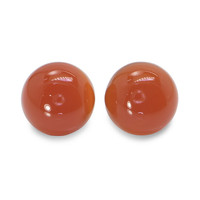
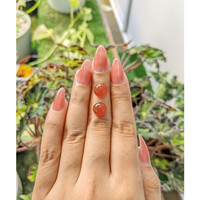
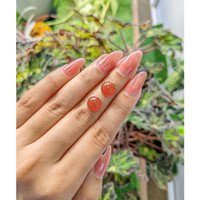
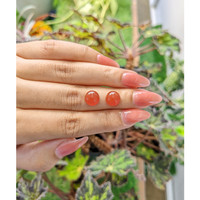


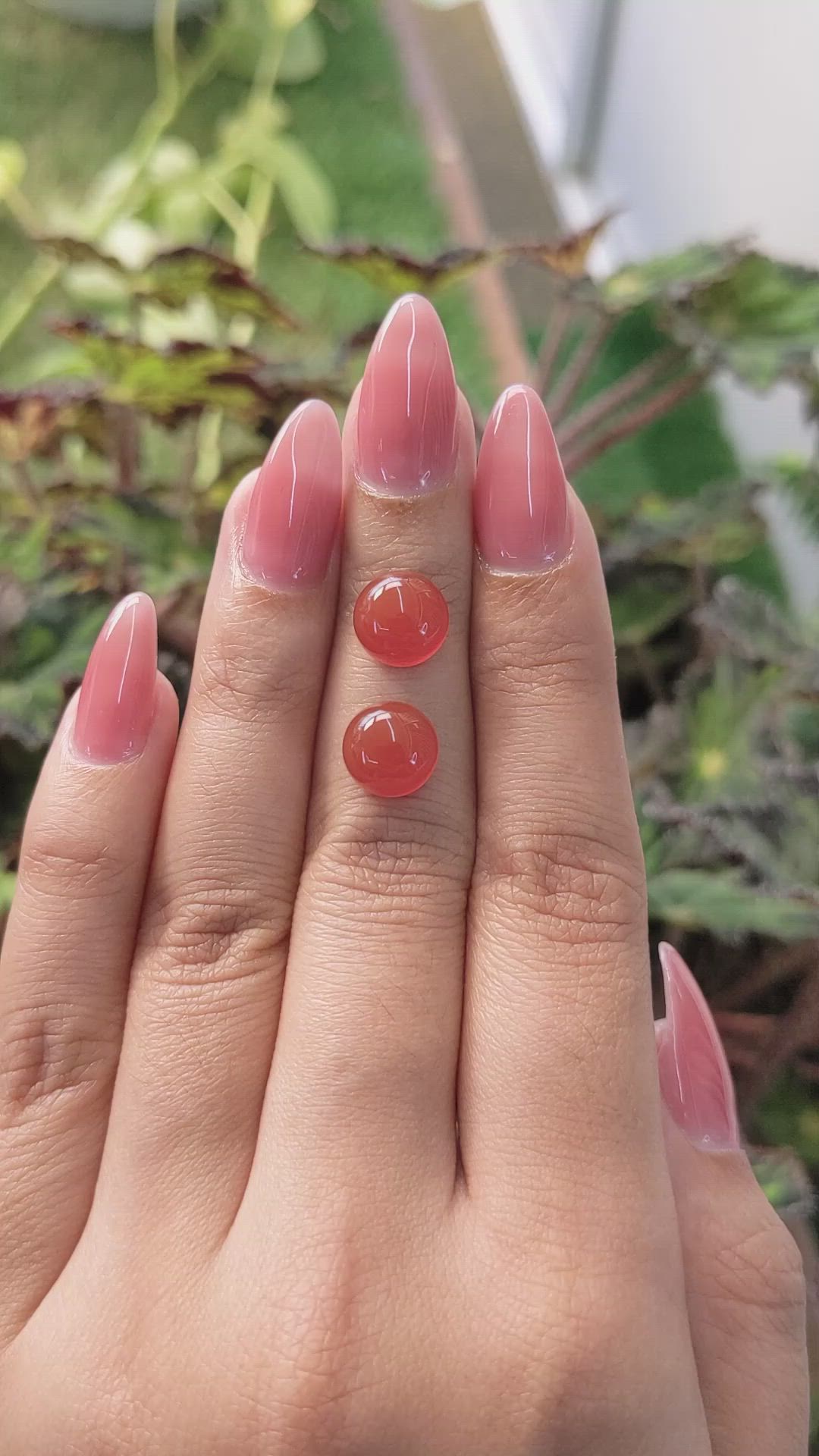


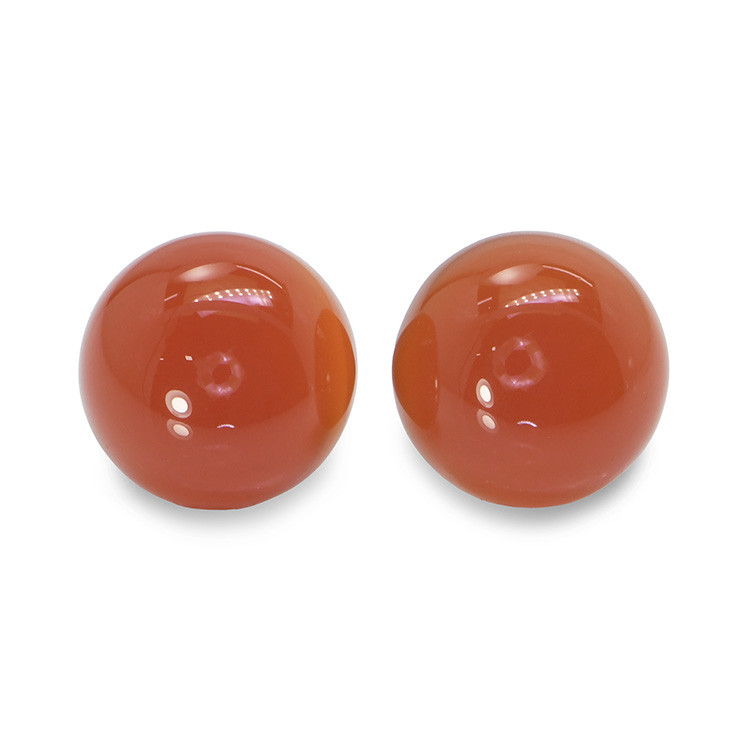
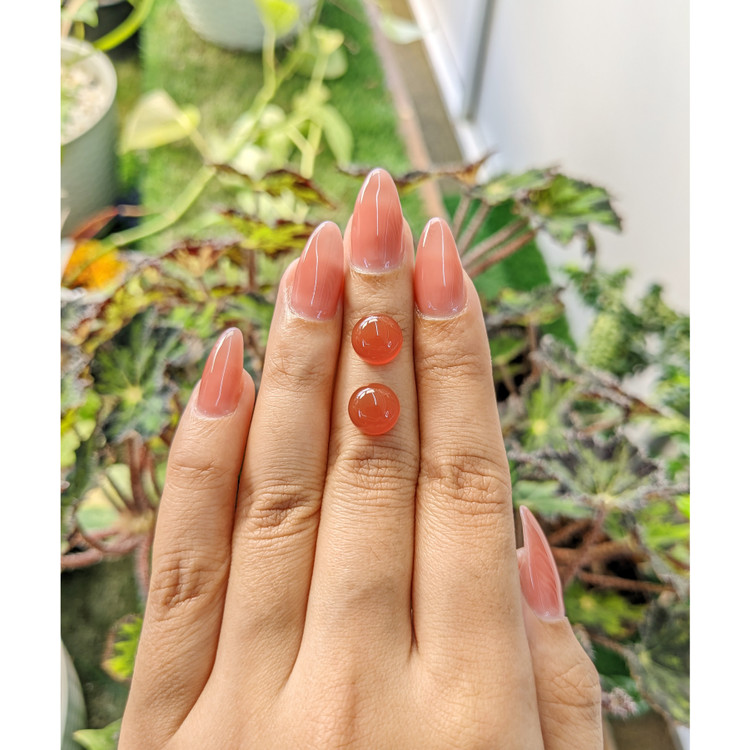
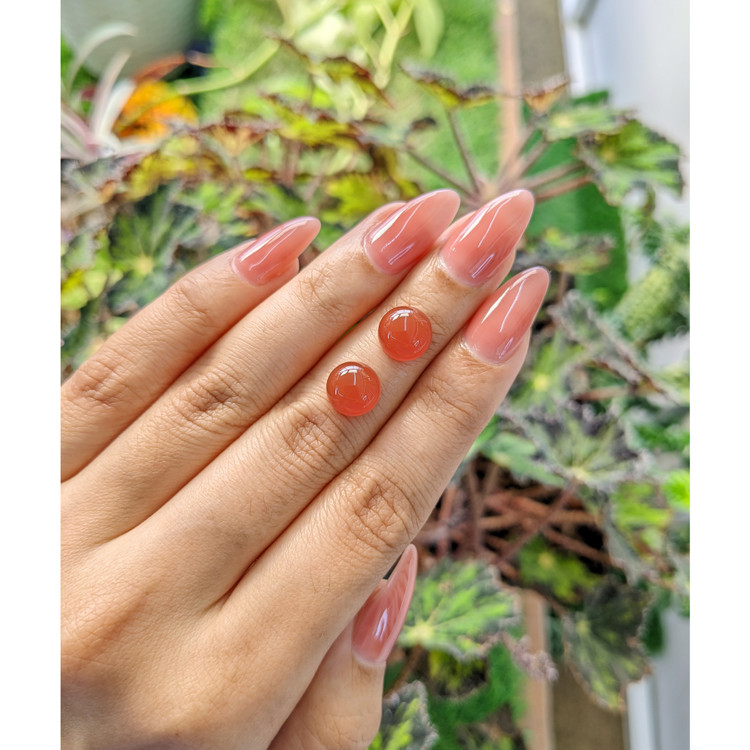
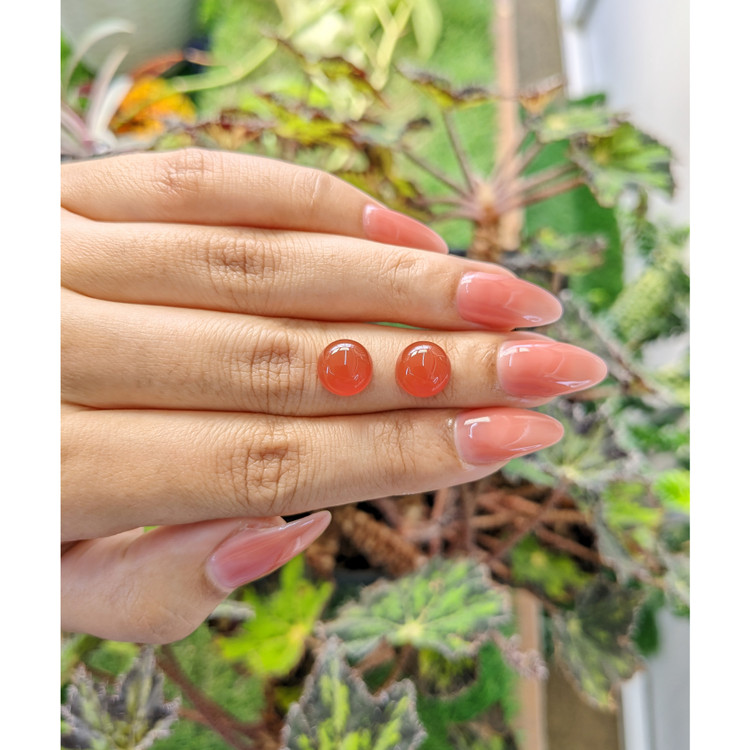



6.29 Ct.Tw.Total Carat Weight Orangey Red Cabochon Carnelian Pair from Brazil
This pair of stones is available to ship now
Stone type: | Carnelian | Carnelian |
|---|---|---|
Item ID: | PR12448 | PR12448 |
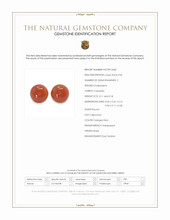
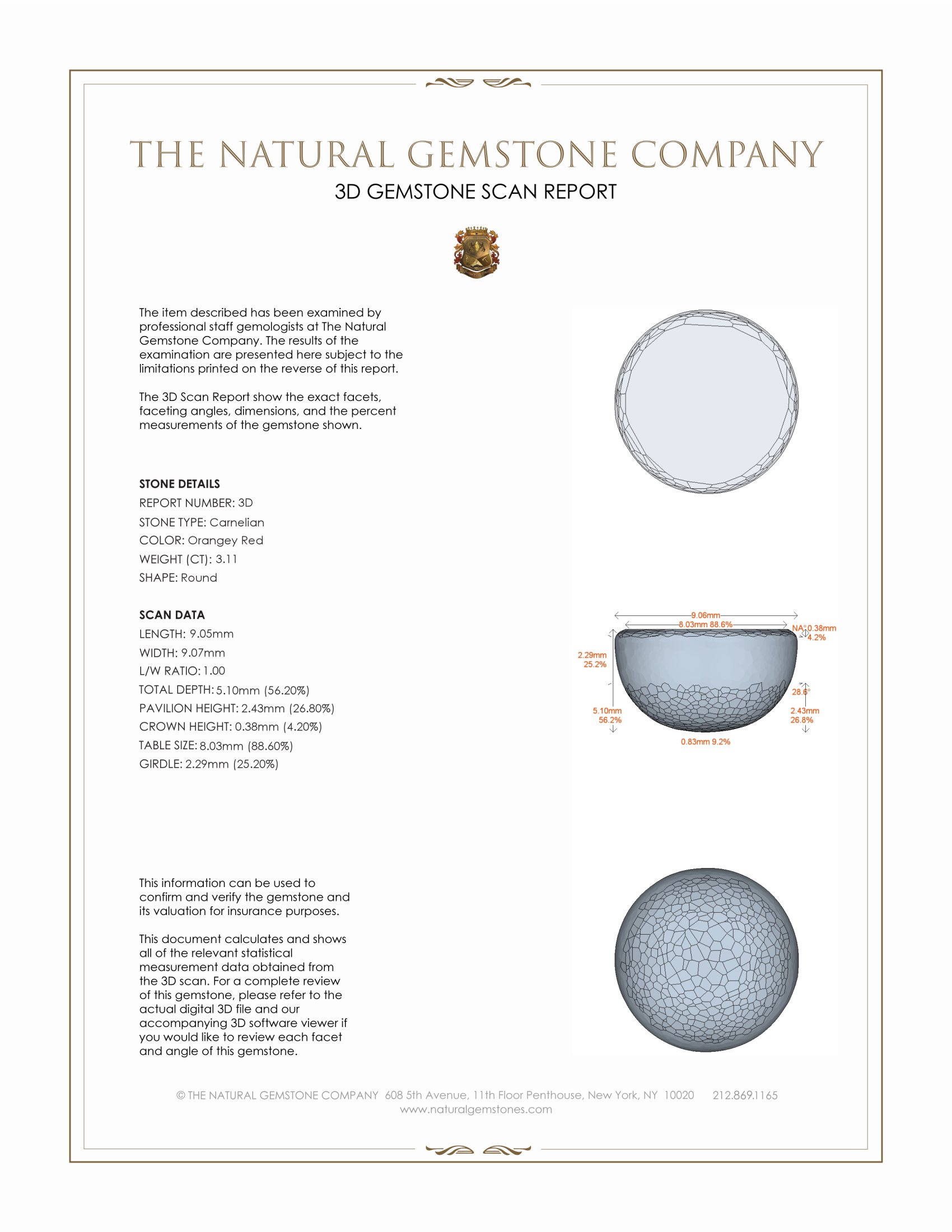
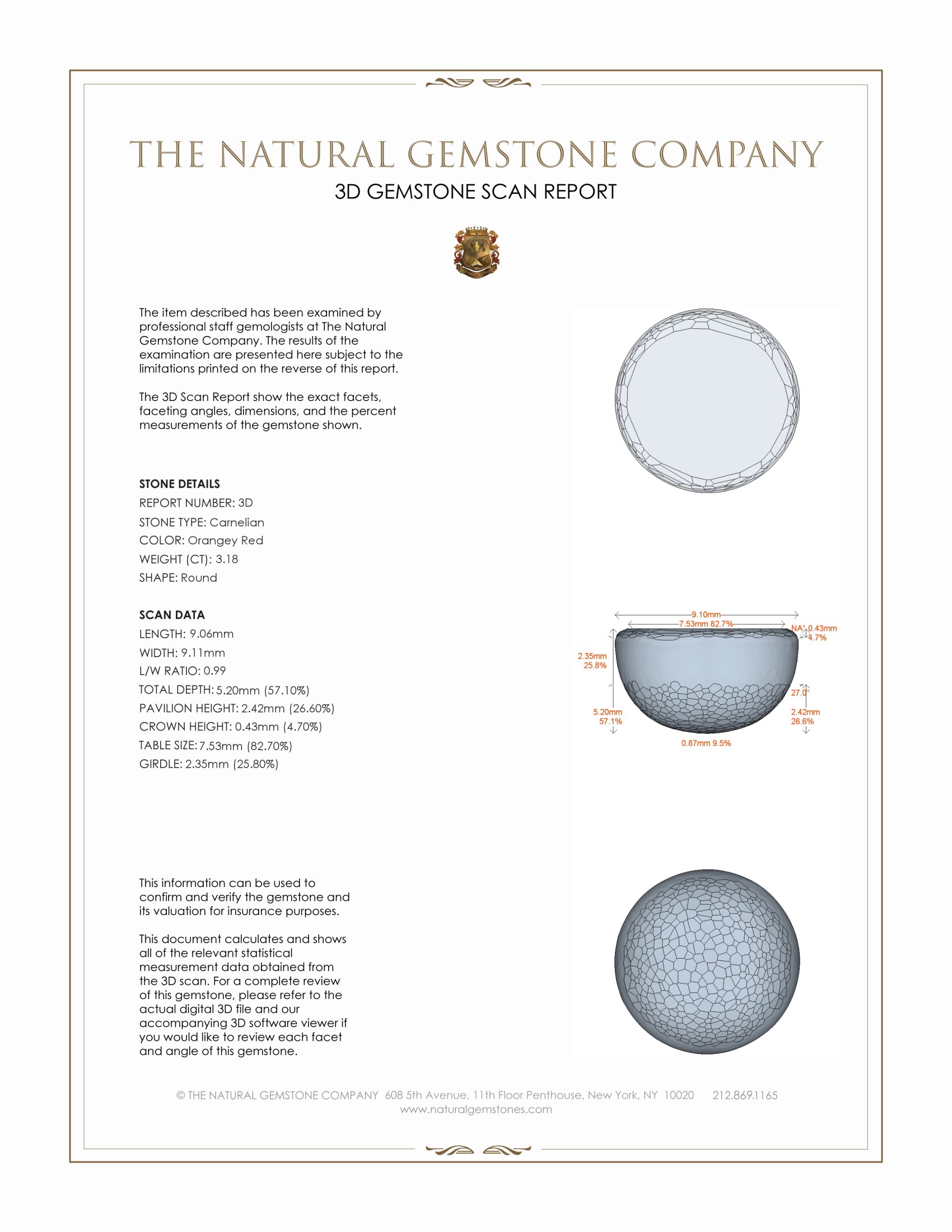
Dimensions (MM): help | Length: 9.05 Width: 9.07 Height: 5.1 | Length: 9.06 Width: 9.11 Height: 5.2 |
Weight: | 3.11 Ct. | 3.18 Ct. |
Color: help | Orangey Red | Orangey Red |
Color intensity: help | Vivid | Vivid |
Clarity: help | Not Applicable | Not Applicable |
Shape: help | Round | Round |
Cut: | Cabochon | Cabochon |
Cutting style: | Cabochon | Cabochon |
Enhancements: help | Dye Treated | Dye Treated |
Origin: help | Brazil | Brazil |
Per carat price: help | $16 | $16 |
This pair of carnelians from The Natural Gemstone Company presents a carefully matched set, weighing 3.11 carats and 3.18 carats respectively, each fashioned into a round cabochon shape with exceptional surface finish. The stones measure 9.05 by 9.07 by 5.10 millimeters and 9.06 by 9.11 by 5.20 millimeters, dimensions that reflect tight cutting tolerances and a near identical footprint for paired mounting. Color is described as orangey red with vivid color intensity, and the material is noted as transparent, which is atypical for many carnelians that often trend translucent to opaque. Enhancement is disclosed as dye treated, and provenance is Brazil, a locale known for producing carnelian material with strong orange to red saturation. The excellent polish and even doming indicate attention to final finishing, producing a high gloss that emphasizes the saturated color and clarity of each cabochon.
From a gemological perspective these pieces are chalcedony variants within the microcrystalline quartz group, and their optical and physical properties align with that species. Typical refractive index values for carnelian are approximately 1.53 to 1.54, and specific gravity commonly falls in the 2.58 to 2.64 range, providing predictable heft and response to standard jewelry mounting. Hardness on the Mohs scale is in the 6 to 7 range, delivering good durability for everyday wear when set with conventional protective settings. The transparent character of these particular stones improves light transmission through the dome, producing a uniform glow rather than the soft diffuse appearance seen in more opaque specimens. The orangey red hue is caused by iron oxide inclusions and charge transfer related coloration within the silica matrix, and the dye treatment has been applied to intensify and homogenize saturation, producing the vivid and marketable red tone evident in both cabochons.
Craftsmanship details emphasize the cabochon cutting workflow and the technical decisions that yield the current appearance. The cutters have selected a round outline and a medium to high dome profile, measured by the 5.10 millimeter and 5.20 millimeter heights, which optimizes the balance between surface reflection and internal glow. A higher dome increases reflected highlights and magnifies the uniformity of color, whereas a lower profile offers a more restrained silhouette. Preforming was executed to preserve transparency, followed by sequential grinding with progressively finer laps, and final polishing likely utilizing cerium oxide or tin oxide to achieve the noted excellent polish. Matching criteria for paired stones included not only weight and diameter but also dome curvature, color hue and saturation, and surface luster, all of which are within narrow tolerances for high quality matched pairs. The disclosure of dye treatment is consistent with industry practice, and the dyeing process used in carnelians typically penetrates microfractures and pore spaces to enhance perceived color, so disclosure and appropriate care are essential for long term stability.
Practical considerations for jewelers and end users include recommended settings, care, and use cases. The robust round cabochon geometry and the precise matching make this pair ideal for fine earrings, cufflinks, or a symmetrical pendant pair, with bezel settings offering maximum protection and accentuating the continuous silhouette, while secure prong settings can be used for more open mounting styles if the prongs engage the girdle sufficiently. Cleaning should be conservative, using warm water, mild detergent, and a soft cloth, avoiding prolonged exposure to strong solvents, concentrated acids, household bleaches, and high heat steam, as these conditions can compromise dyed material. Ultrasonic cleaners are not recommended for dyed chalcedony unless tested, because mechanical agitation and cavitation may affect dye stability in some treated specimens. The Natural Gemstone Company provides full disclosure of treatments and origin, and these two carnelians exemplify a balance of natural material and expert lapidary work, offering collectors and designers a vivid, well matched pair with reliable physical properties and presentation ready for precision mounting.


