
- Stone18
- Reports3


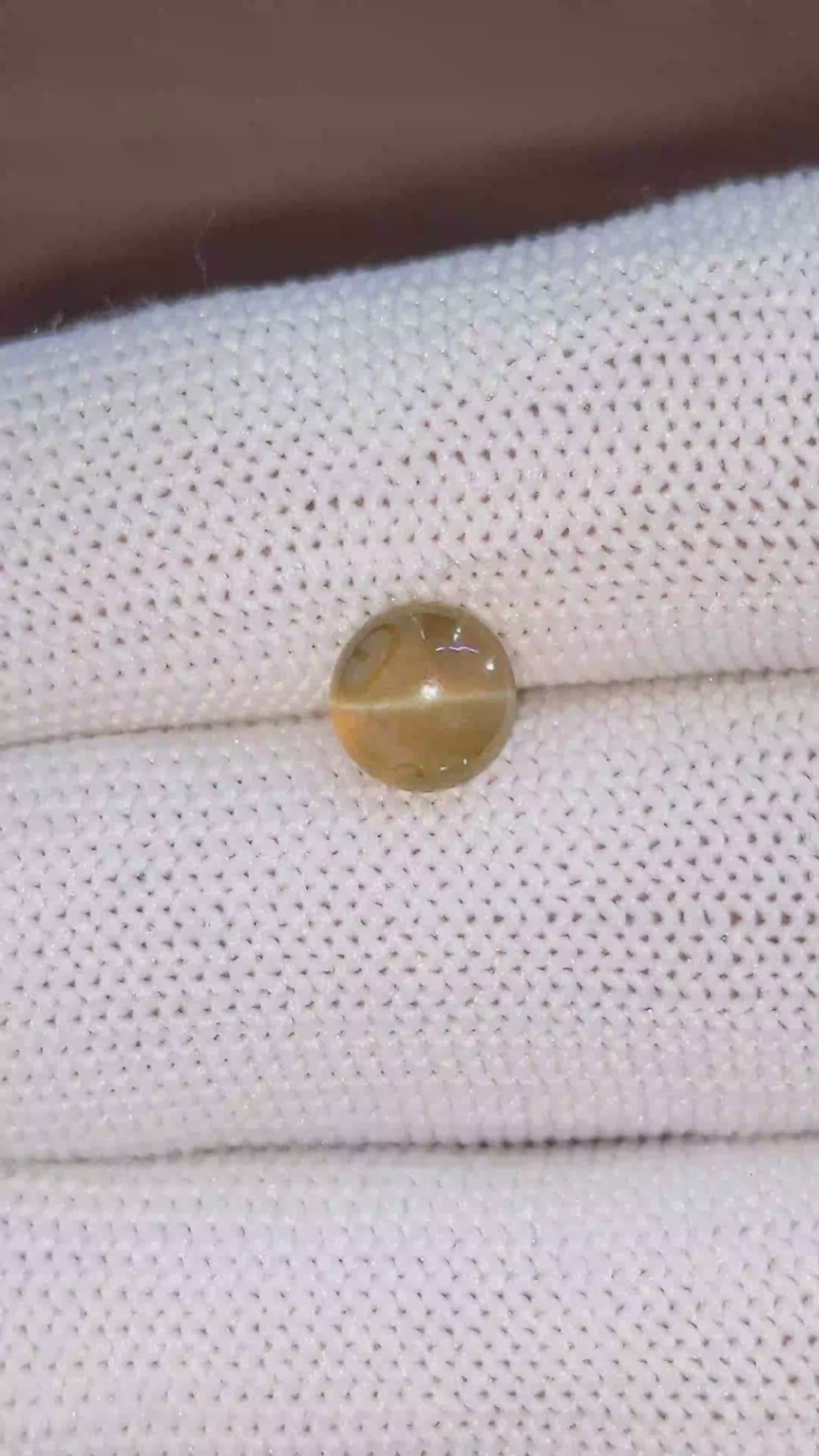
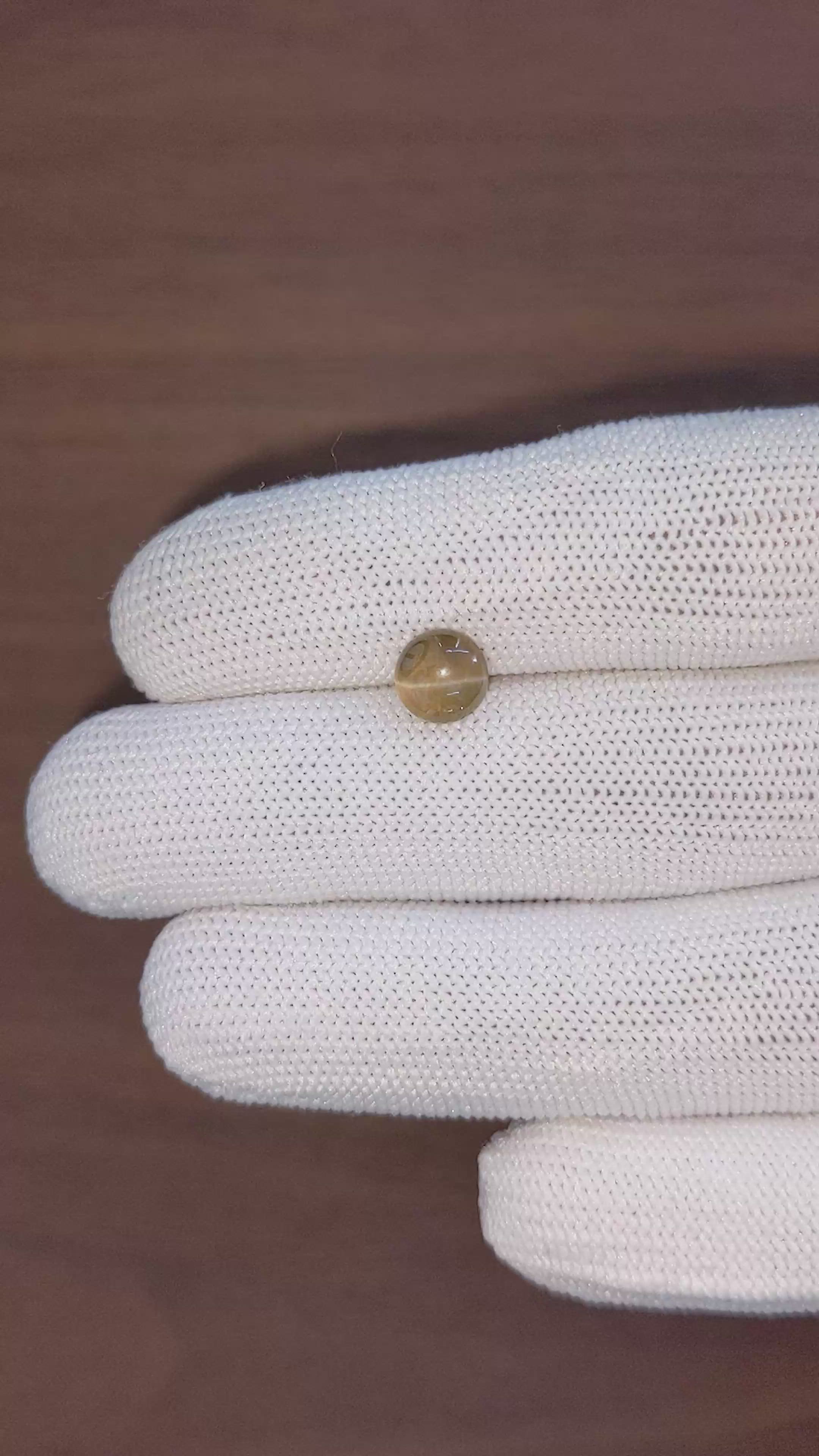
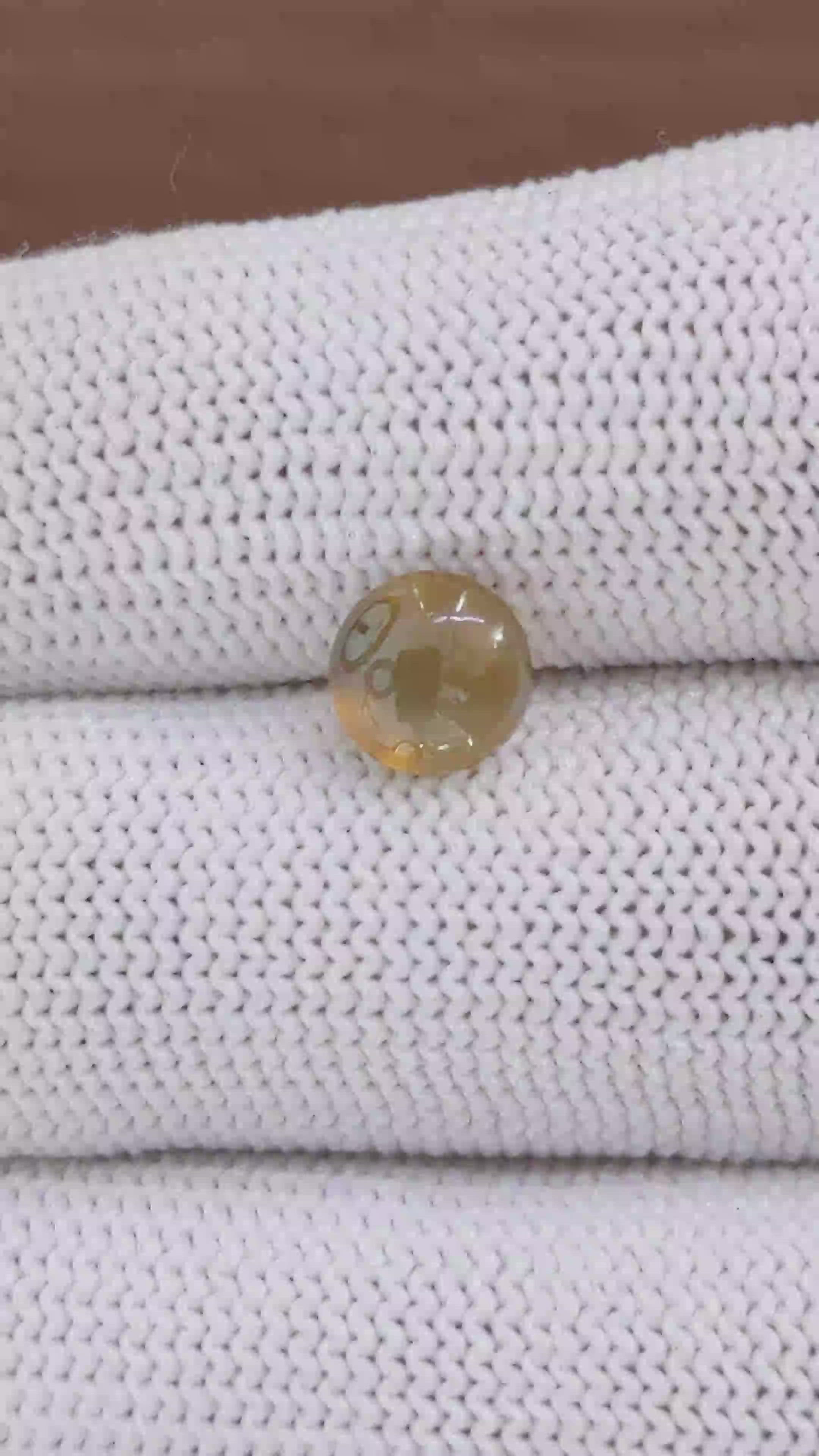
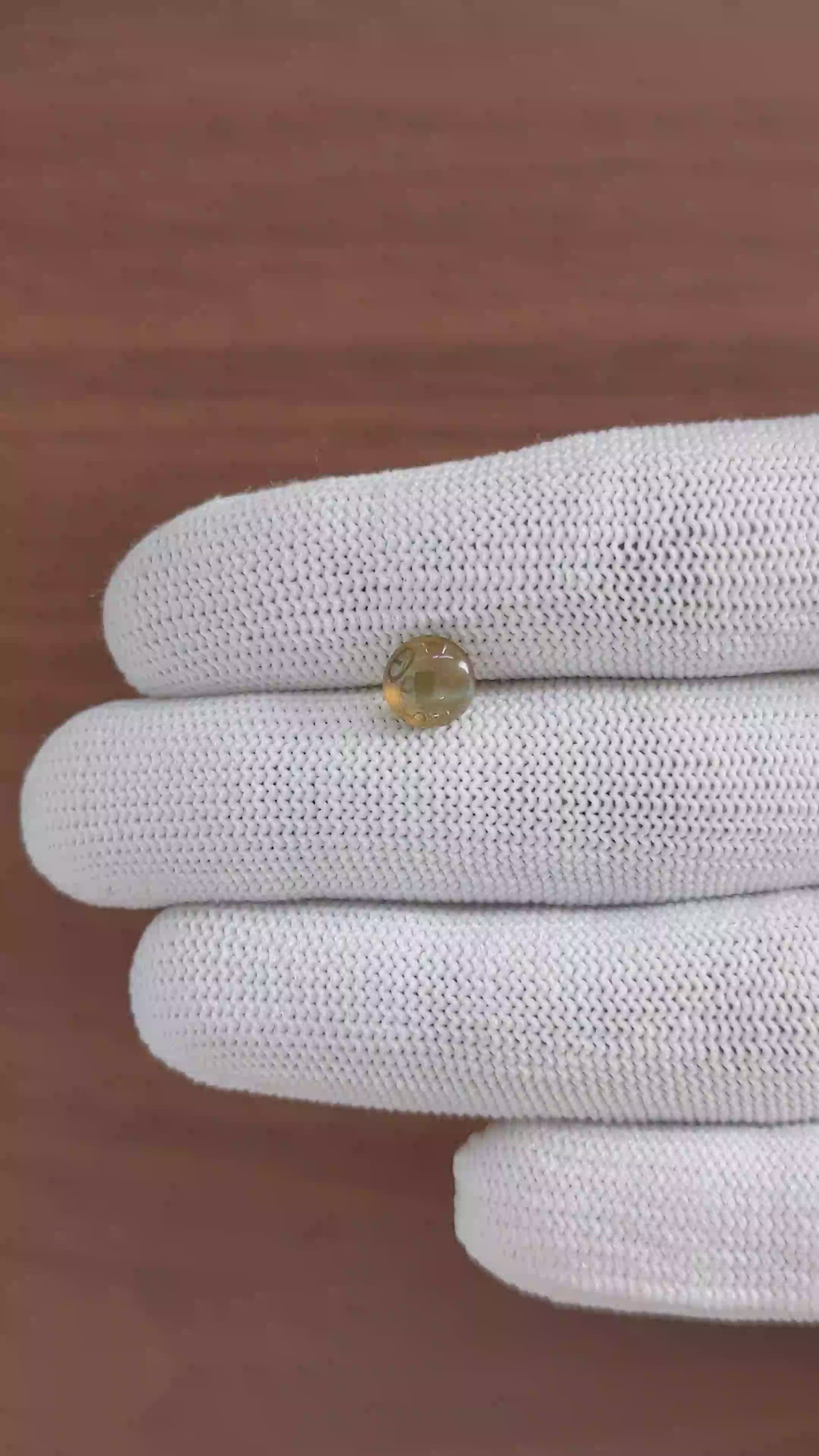
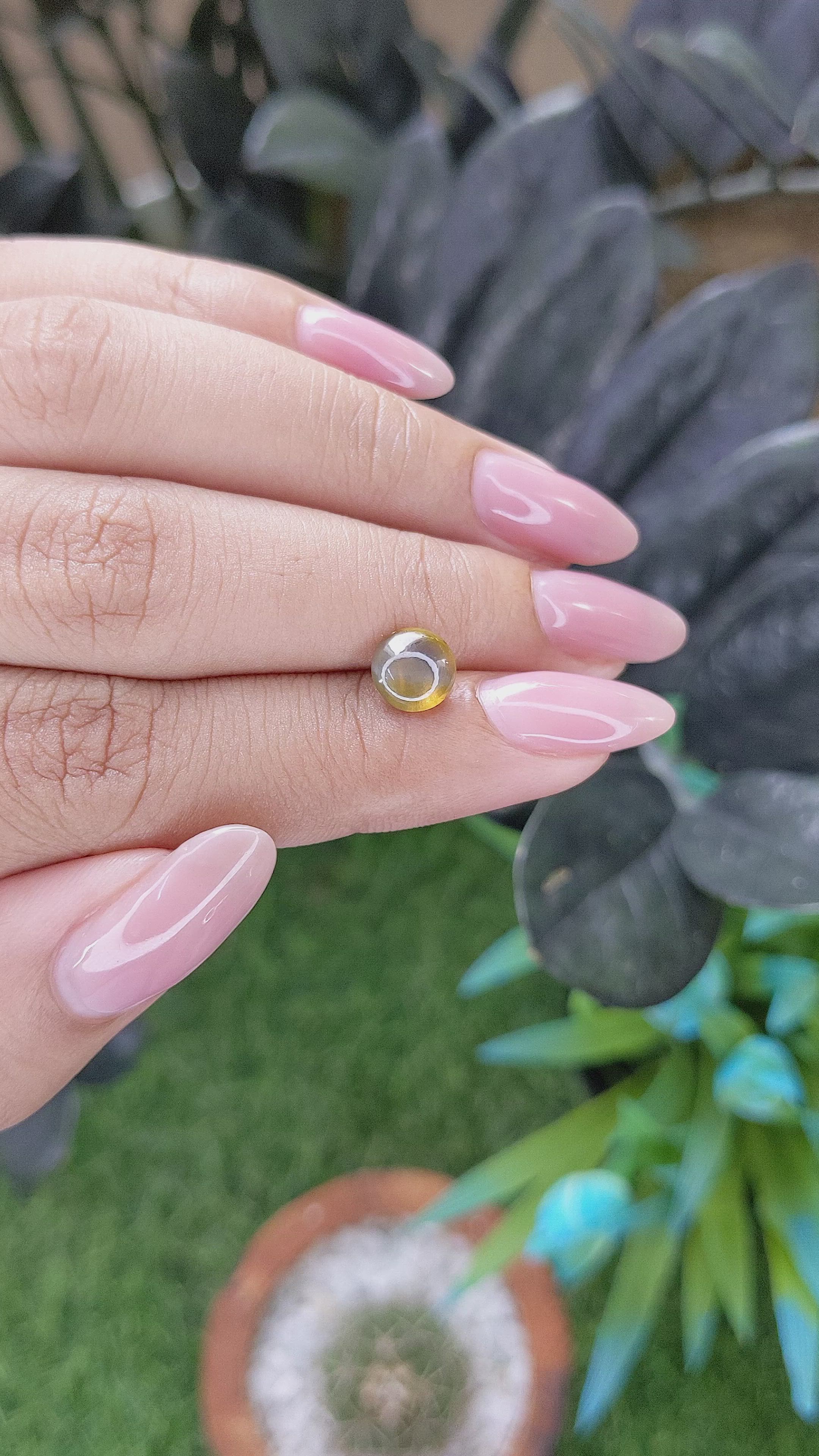
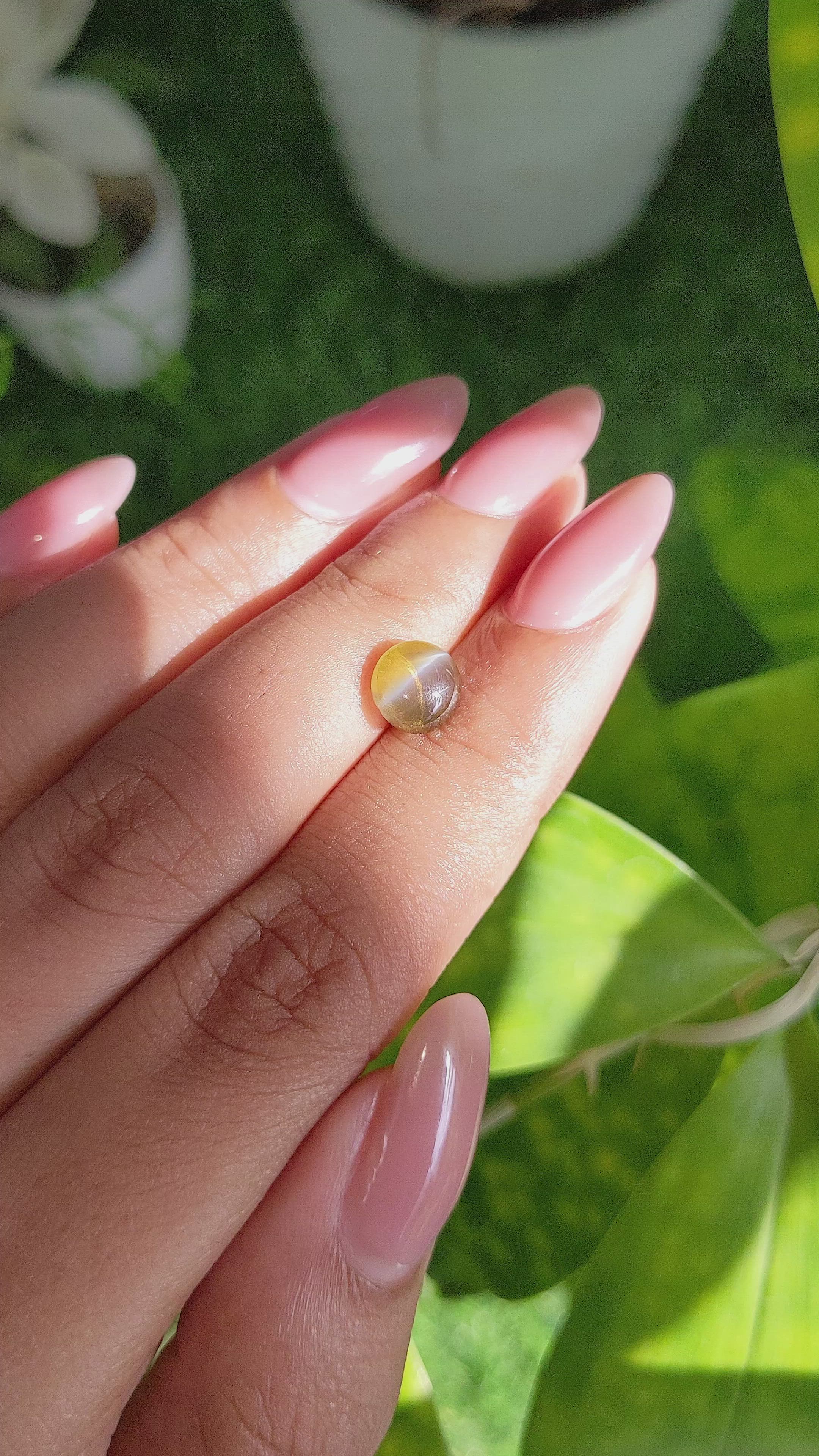
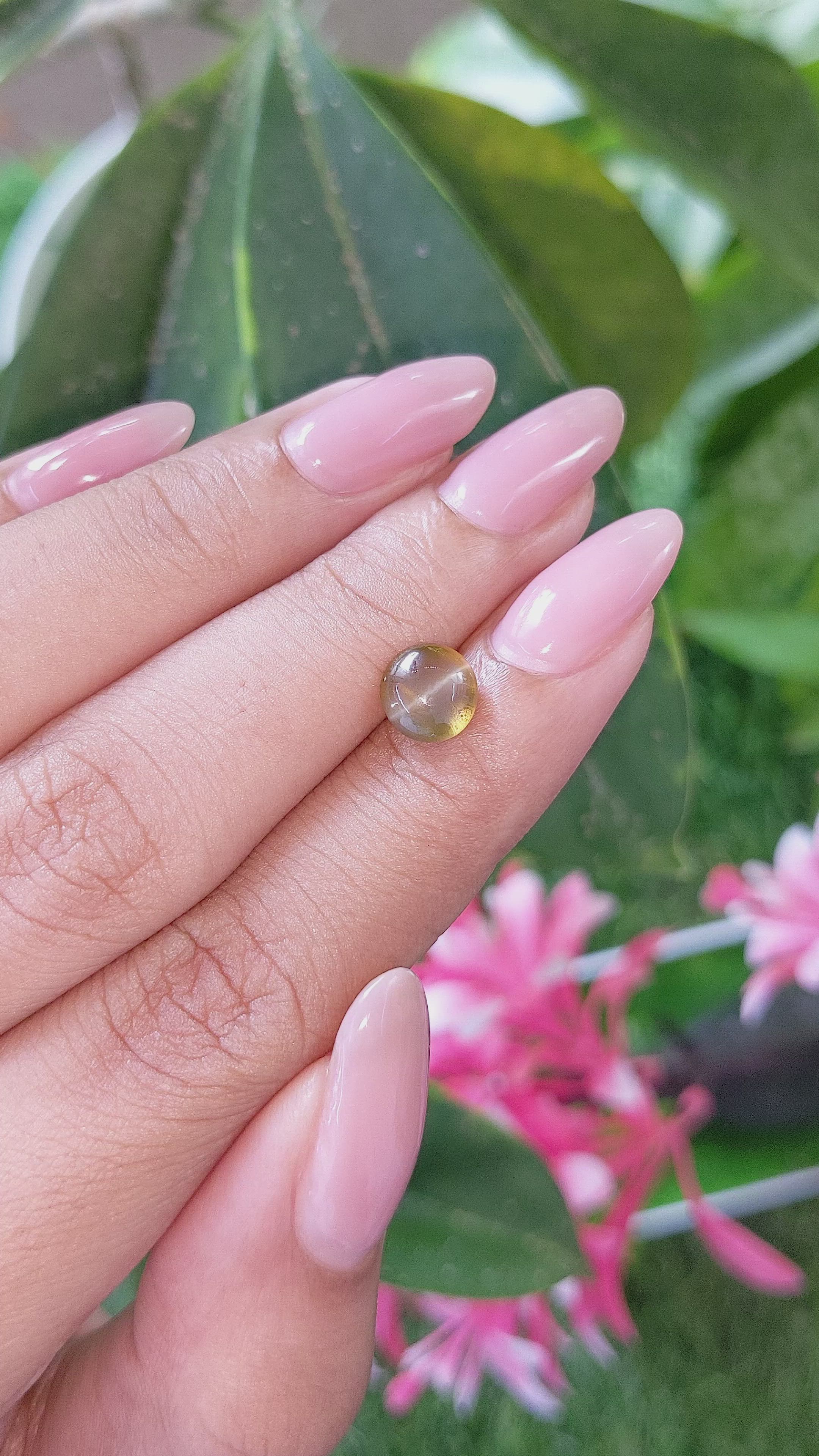
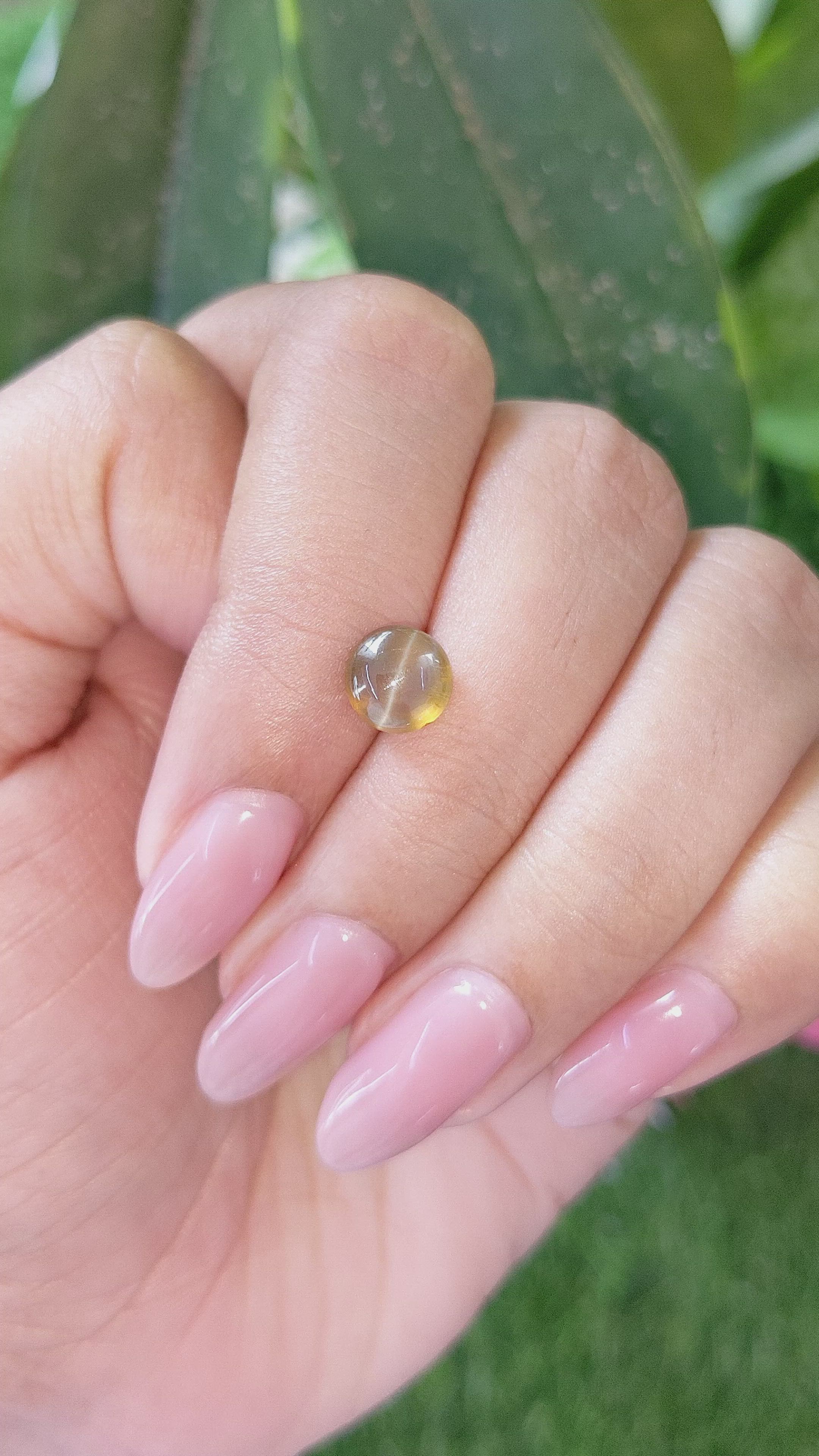


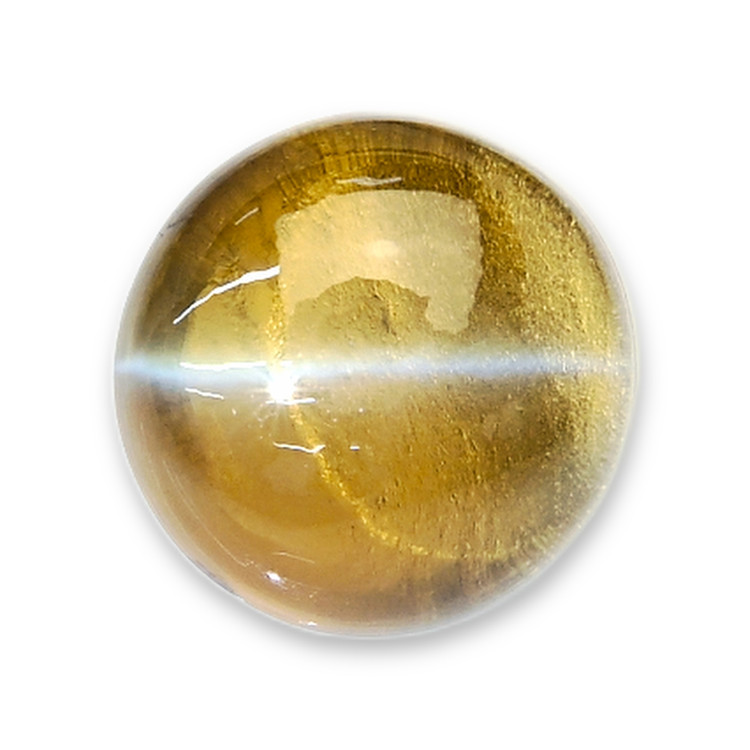



1.85 Ct. Yellowish Brown Cabochon Chrysoberyl from Madagascar
This loose stone ships by Sep 18
Item ID: | K27242 |
|---|---|
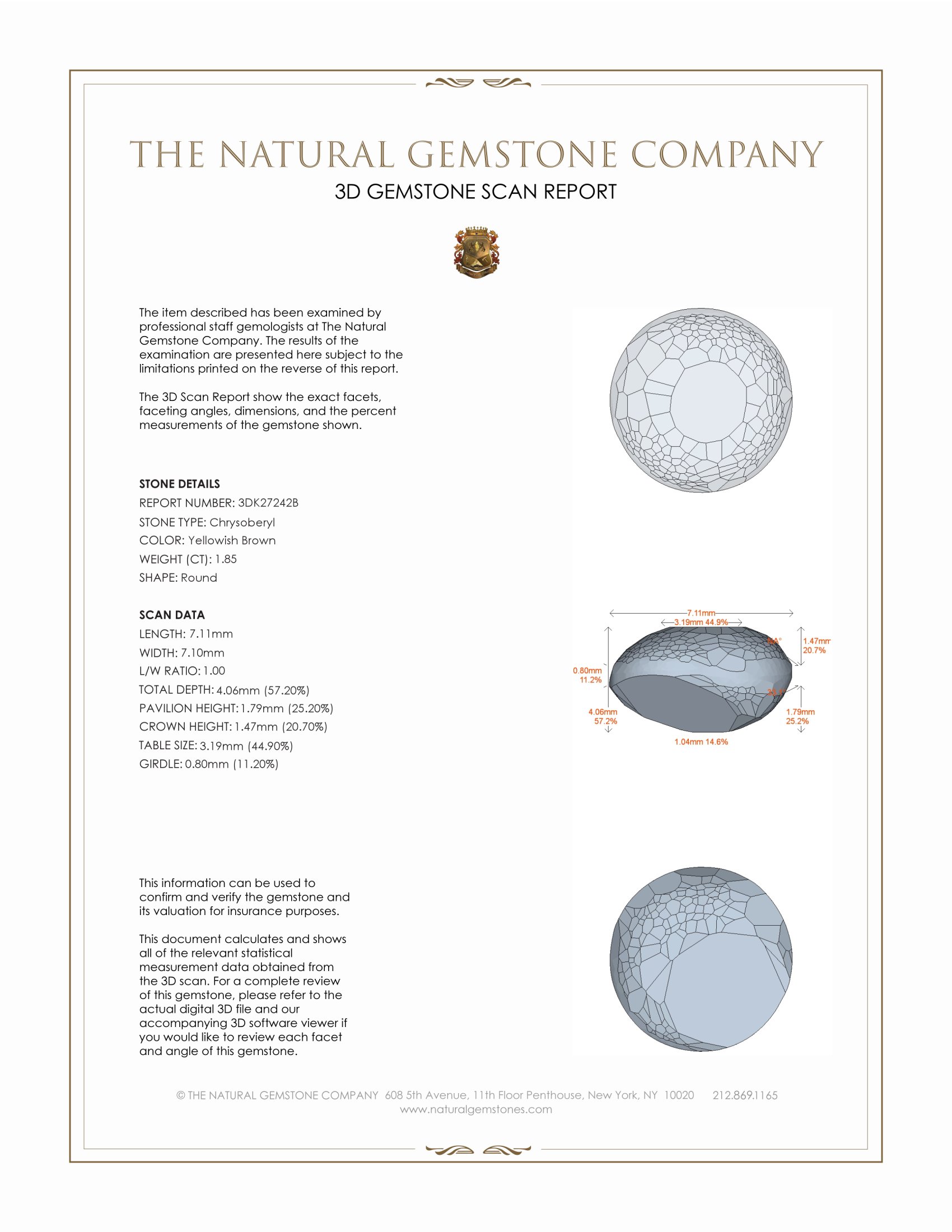
Dimensions (MM): help | Length: 7.11 Width: 7.1 Height: 4.06 |
Weight: | 1.85 Ct. |
Color: help | Yellowish Brown |
Color intensity: help | Intense |
Clarity: help | Included |
Shape: help | Round |
Cut: | Cabochon |
Cutting style: | Cabochon |
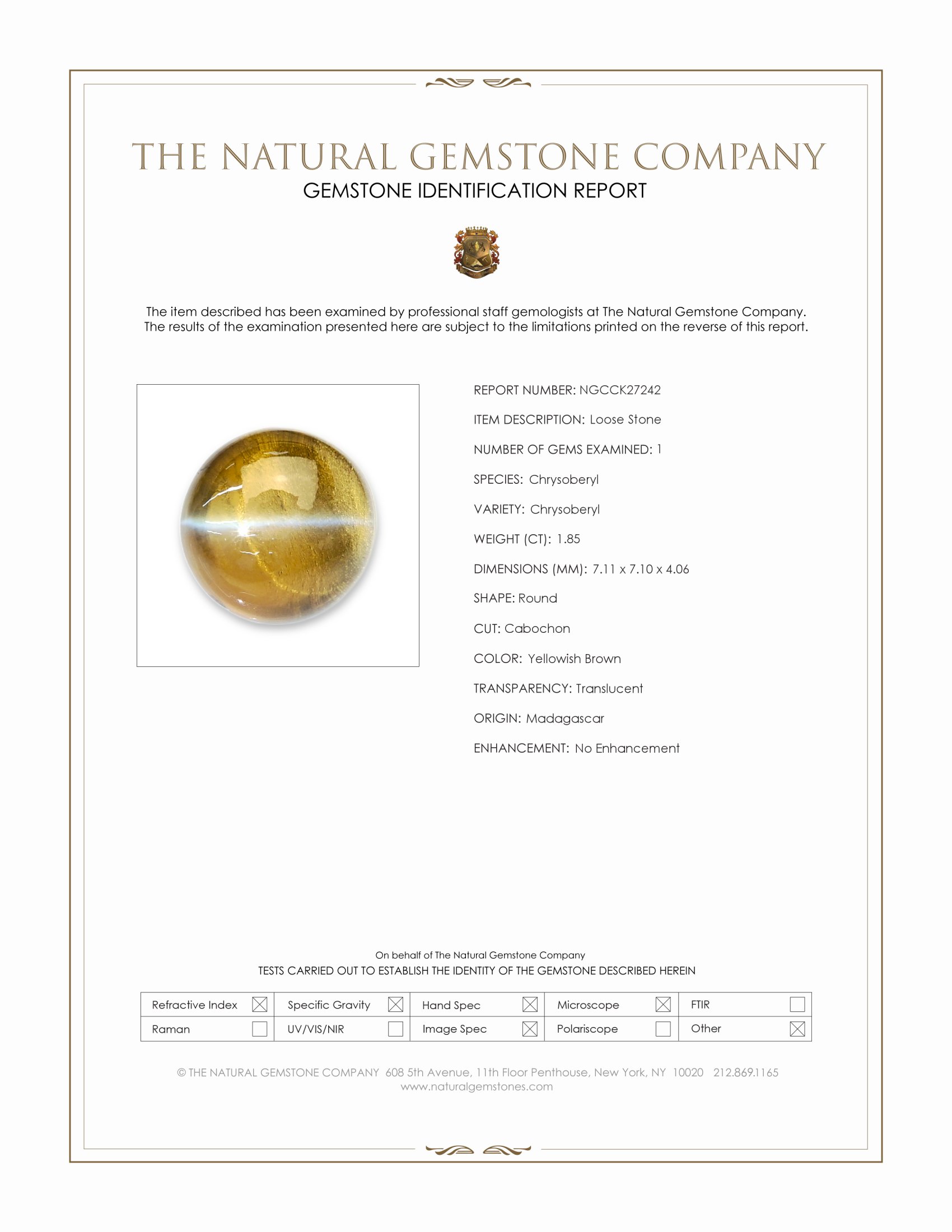
Enhancements: help | No Enhancement |
Origin: help | Madagascar |
Per carat price: help | $757 |
This translucent 1.85 carat round yellowish brown chrysoberyl measures 7.11 by 7.10 by 4.06 millimeters and is fashioned as a cabochon to display its optical character to best advantage. The warm amber to cognac hue is intense and evenly distributed across the dome, providing a rich backdrop for the internal features that make this specimen exceptional. The cut is carefully proportioned, with a moderate dome height that allows light to travel through the material and accentuate internal reflectivity. An excellent polish enhances surface luster and provides clean, bright reflections that contrast with the internal textures. No enhancement has been applied, and the natural translucency combined with the cabochon geometry creates a jewel that reads as both classic and distinctly natural in appearance.
What gives this stone its unmistakable signature is the pattern and fabric of its inclusions, which in chrysoberyl most commonly take the form of a silk of fine acicular needles and aligned growth tube structures. In this gem those aligned inclusions form a concentrated, bright chatoyant band that crosses the dome in a single, well defined eye when light strikes it. The band itself is produced by tightly parallel, fibrous inclusions that act like miniature mirrors, reflecting and focusing light into a linear highlight. Secondary features are visible as subtle feather like veils and planar platelets that catch light at oblique angles, producing faint flashes and a layered look beneath the surface. These internal characteristics are not random blemishes, they are structural records of the crystal growth environment in Madagascar, where rapid changes in temperature and fluid composition produce oriented needle and tube features. The result is a gemstone that is visually dynamic, with motion in the eye and depth in the body color as the stone is turned under light.
From a gemological perspective the stone has a clarity grade of included as evaluated at eye level, which means the internal features are visible without magnification, and they are significant contributors to the gem s personality rather than detractors from its value. For collectors and connoisseurs this grade communicates authenticity and narrative, since the inclusions are the natural fingerprint that ties the gem to its formation and provenance. The Madagascar origin is important, because this region is known for producing chrysoberyl with distinctive acicular fabrics and strong optical effects. The combination of an intense color, centered chatoyancy, and an undisturbed, unenhanced state elevates the piece in the market for natural gem material. The excellent polish further ensures that settings will present a crisp, clean surface and that the chatoyant band will remain clearly legible, a factor that is especially valued when the stone is set into rings or pendants where light interaction is central to appeal.
For the educated buyer this chrysoberyl represents a rare meeting of natural phenomenon, gemological integrity, and wearability. Chrysoberyl is a hard and durable species, ranking high enough on the Mohs scale to be suited for everyday jewelry, and this 1.85 carat, well proportioned round cabochon is an ideal size for a signature ring or a focal pendant. The Natural Gemstone Company stands behind the stone s origin and description, offering full disclosure that the gem is natural, unenhanced, and sourced from Madagascar. Care is straightforward, with gentle cleaning in warm soapy water and avoidance of harsh chemicals or ultrasonic baths if the setting contains adhesives. For collectors who value optical phenomena, and for designers seeking a natural element with a clear provenance and an unmistakable internal signature, this yellowish brown chrysoberyl is an engaging example of how inclusions can be the defining feature that converts a mineral specimen into a one of a kind gemstone.


