
- Pair16
- Reports4


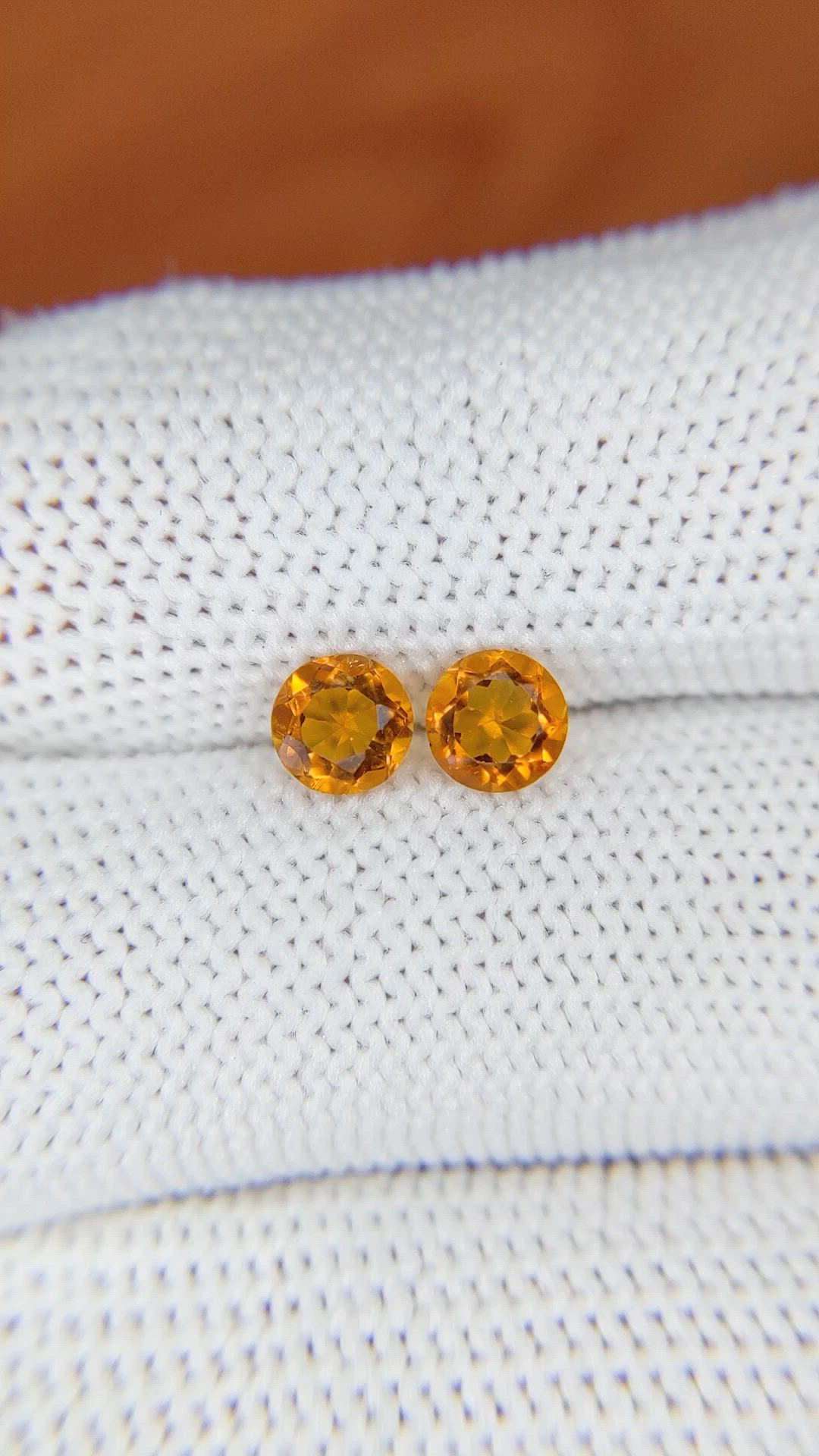
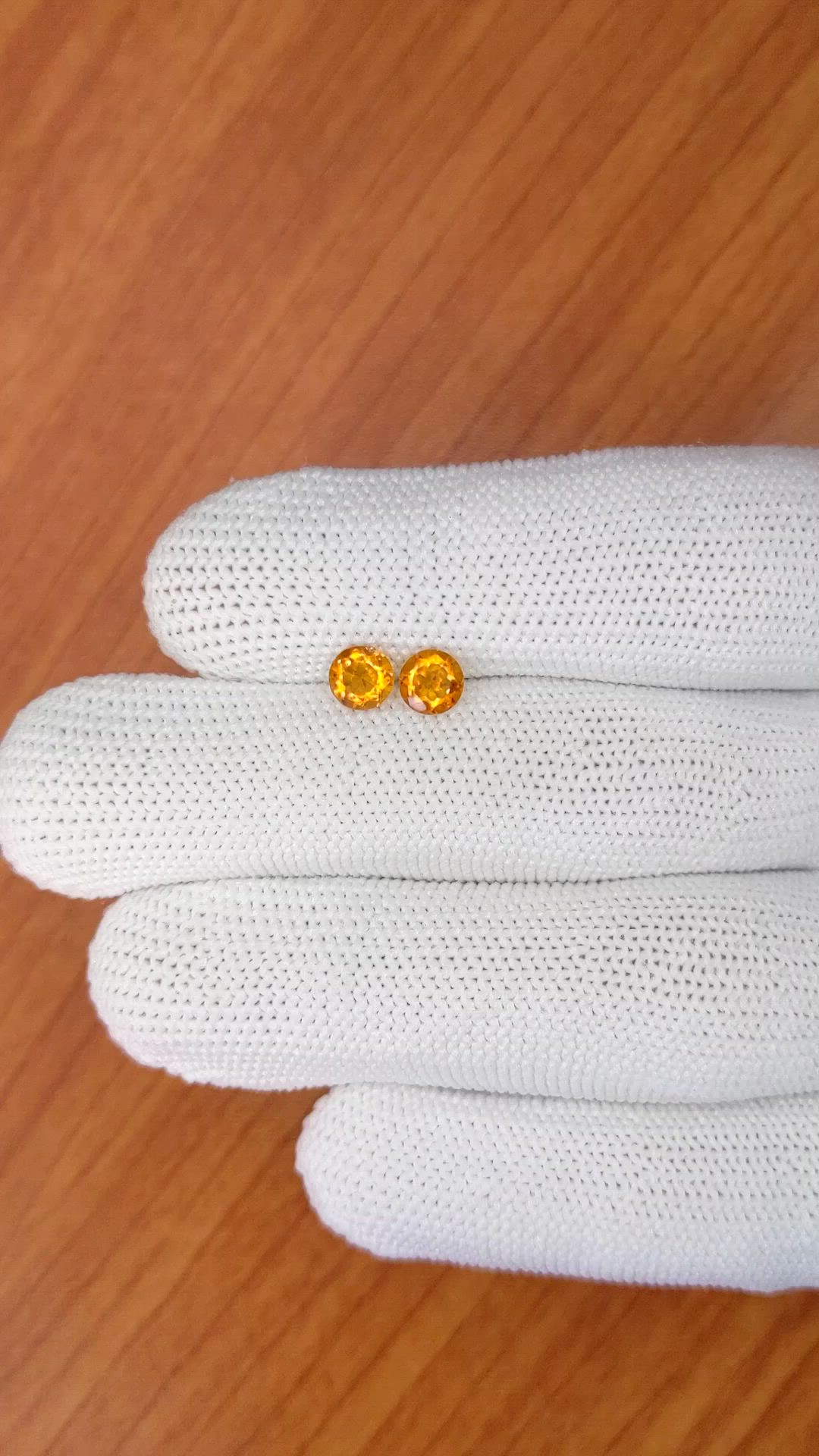
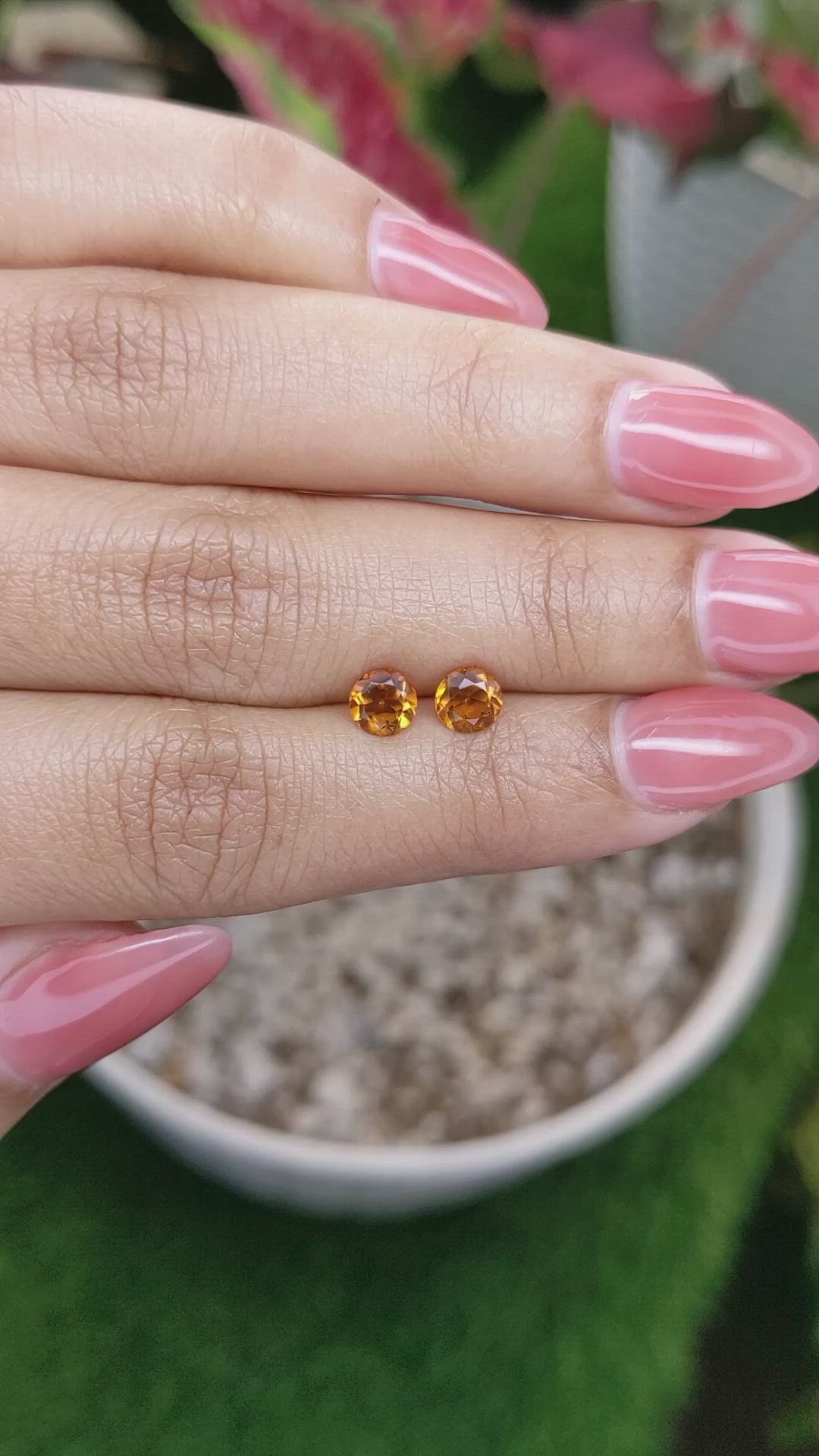
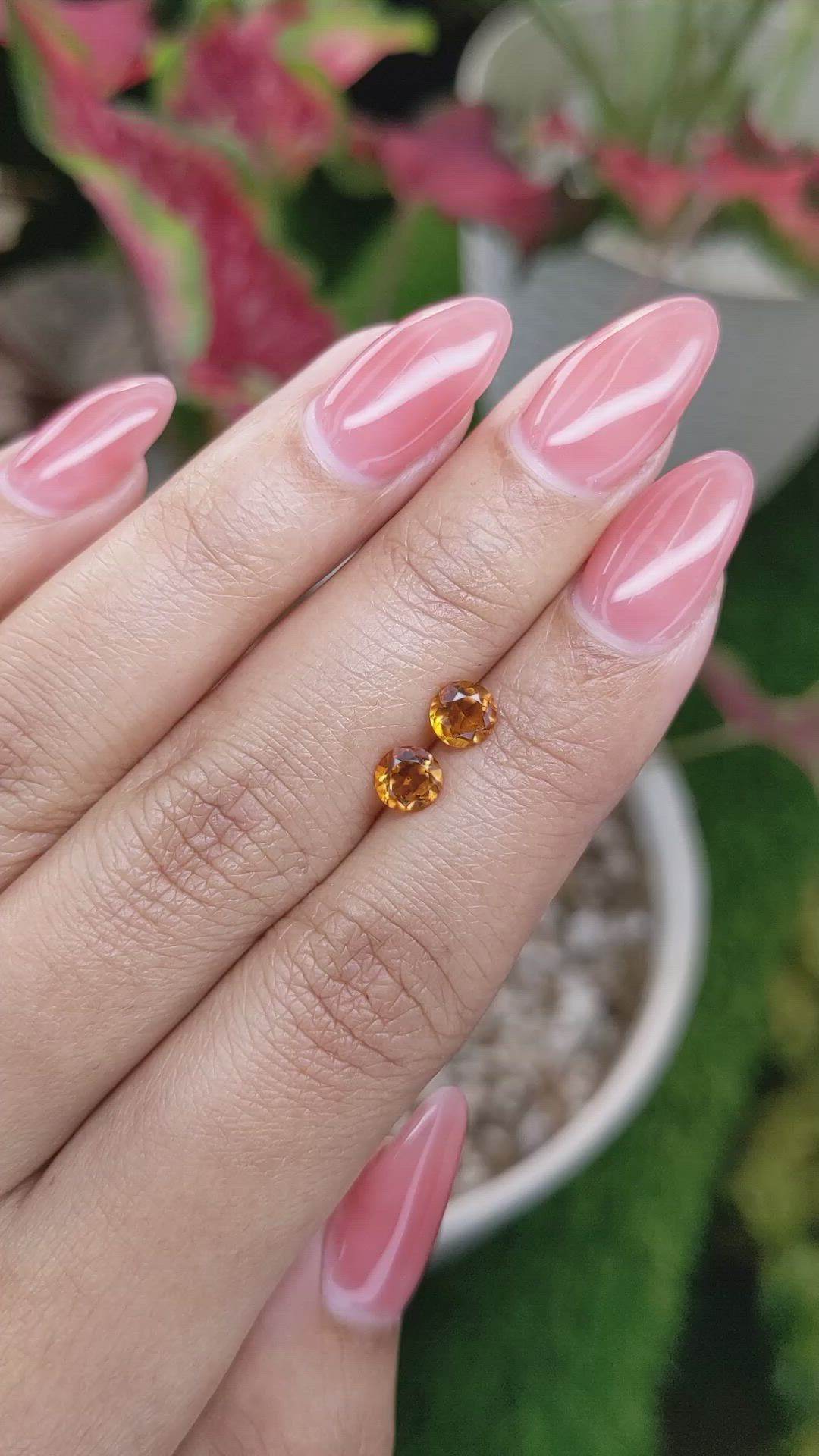
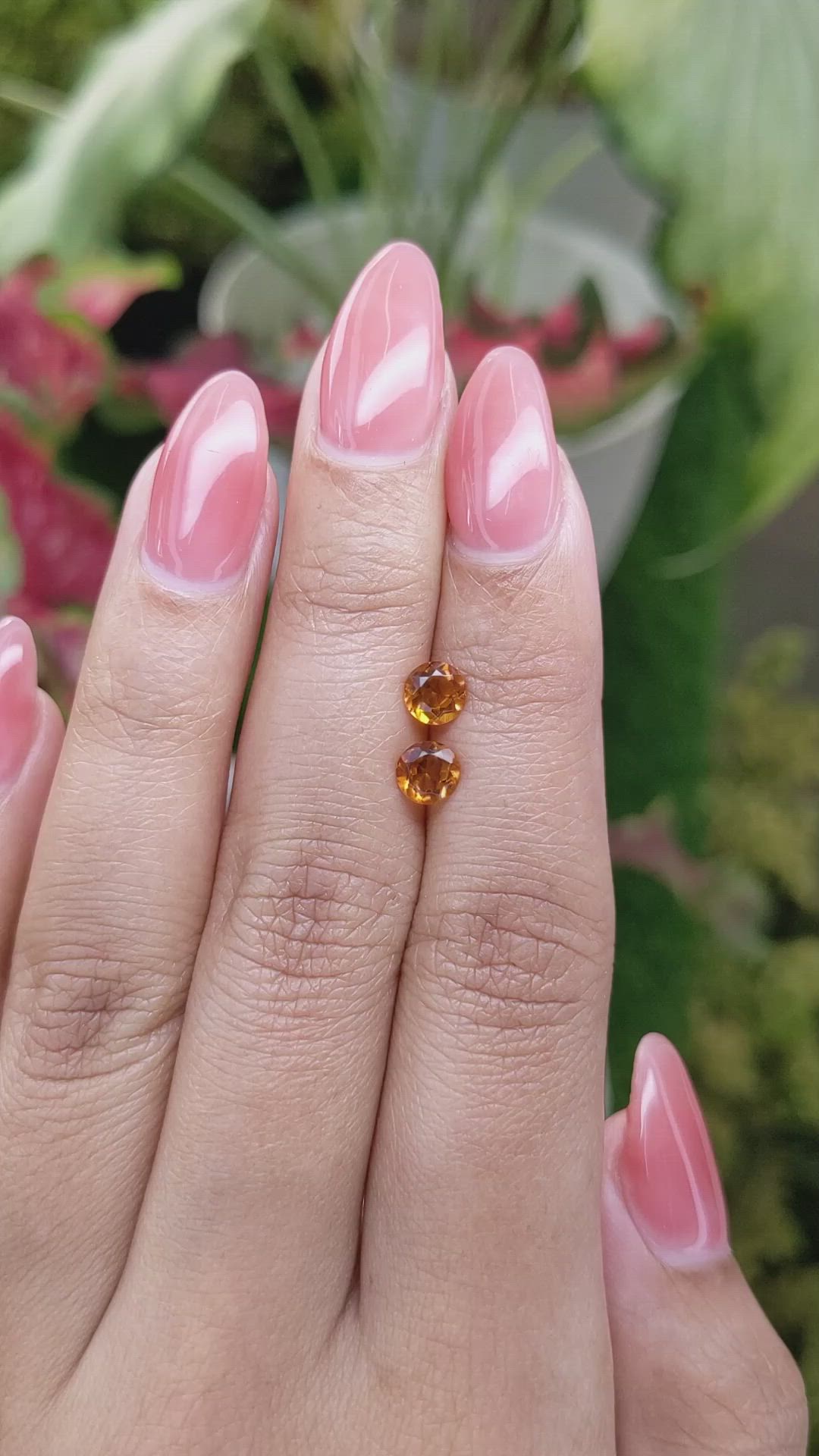


0.83 Ct.Tw.Total Carat Weight Yellowish Orange Citrine Pair from Brazil
This pair of stones is available to ship now
Stone type: | Citrine | Citrine |
|---|---|---|
Item ID: | PR13933 | PR13933 |
Dimensions (MM): help | Length: 5.03 Width: 5.03 Height: 3.22 | Length: 5.03 Width: 5.06 Height: 3.22 |
Weight: | 0.42 Ct. | 0.41 Ct. |
Color: help | Yellowish Orange | Yellowish Orange |
Color intensity: help | Vivid | Vivid |
Clarity: help | Very Very Slightly Included | Very Very Slightly Included |
Shape: help | Round | Round |
Cut: | Mixed Brilliant Cut | Mixed Brilliant Cut |
Cutting style: | Faceted | Faceted |
Enhancements: help | Heat Treated | Heat Treated |
Origin: help | Brazil | Brazil |
Per carat price: help | $40 | $40 |
This matched pair of transparent Brazilian citrines presents a precise example of small scale gem cutting tailored to maximize optical performance. The two stones weigh 0.42 carat and 0.41 carat respectively, and measure 5.03 by 5.03 by 3.22 mm and 5.03 by 5.06 by 3.22 mm, reflecting exceptional consistency in diameter and depth for a matched set. Both are round in outline and exhibit a yellowish orange hue with vivid color intensity, their color saturation enhanced through controlled heat treatment, a standard and stable enhancement for quartz gemstones. The cut style is mixed brilliant, combining a brilliant facet geometry on the crown with a modified pavilion geometry, and the overall finish is noted as excellent polish, with a clarity grade of very very slightly included evaluated at eye level, indicating inclusions are minute and do not materially interrupt light transmission or visual appeal. These attributes are the result of deliberate lapidary decisions intended to balance face up color, light return, and matched optical character for paired jewellery applications.
The mixed brilliant cut employed in these citrines is engineered to reconcile the competing demands of brilliance and color saturation inherent to quartz species. On the crown, a brilliant facet arrangement with a well proportioned table and tapered star and bezel facets captures incident light and refracts it into the pavilion. The pavilion in a mixed cut is often adapted with longer, slightly angled pavilion mains or modified facets that increase internal path length without inducing windowing, and in these stones the pavilion geometry has been calibrated to the material properties of citrine to increase internal reflection and scintillation. Facet junctions are crisp, facet symmetry is tight, and girdle thickness is controlled to support consistent light behavior at the critical girdle plane. The result is a face up presentation that maintains strong return of white light for brilliance, while permitting selective retention of longer wavelength yellow to orange photons, delivering the vivid coloration these citrines show.
From an optical physics perspective the mixed brilliant architecture in quartz maximizes total internal reflection and contrast in a way that emphasizes both brilliance and chroma. Citrine, as a variety of quartz, has a refractive index slightly above one point five four, and the cutter must set crown and pavilion angles to work with that refractive index so that light entering the crown is retained through successive internal reflections in the pavilion and redirected back through the crown facets rather than leaking out through the pavilion. A well proportioned table moderates the amount of direct windowing which would wash out color, and smaller star and upper girdle facets create the scintillation pattern that gives perceived liveliness. The modified pavilion facets in a mixed brilliant design lengthen optical paths for colored wavelengths, increasing selective absorption and scattering that deepen perceived color without sacrificing brilliance. Polishing quality is critical for this mechanism, because any micro abrasion or facet roughness disperses light unpredictably, diminishing contrast and reducing the crispness of facet reflections. These specimens exhibit excellent polish, so facet planes act as efficient mirrors and contribute to a high degree of contrast and sharp, lively flashes of light.
Craftsmanship considerations extend beyond optical geometry to include clarity management and pair matching. The clarity grade of very very slightly included evaluated at eye level indicates that inclusions are extremely small and well positioned, typically peripheral and not intersecting major facet junctions, allowing light to traverse the pavilion with minimal scattering. The matched weights and near identical dimensions demonstrate careful preform planning and synchronized cutting so that both stones present similar crown angle relationships and pavilion proportions, which is essential for matched settings such as earrings where symmetric light performance is required. Heat treatment has been applied to enhance the yellowish orange tone, a routine, stable process for quartz that yields consistent saturation and reduces zoning. Origin from Brazil is notable for yielding clean rough material with predictable color response to heat, facilitating the precise cutting strategy adopted here. For clients seeking technical excellence in small, matched colored stones, this pair from The Natural Gemstone Company offers a finely executed balance of facet architecture, polish quality, color intensity, and matched symmetry that will perform exceptionally in refined jewellery settings.


