
- Pair14
- Reports4
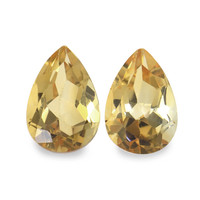
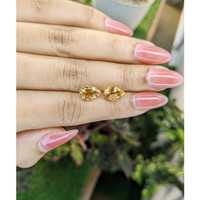
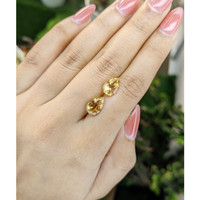
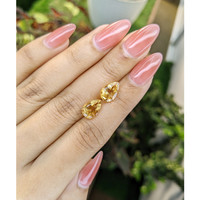
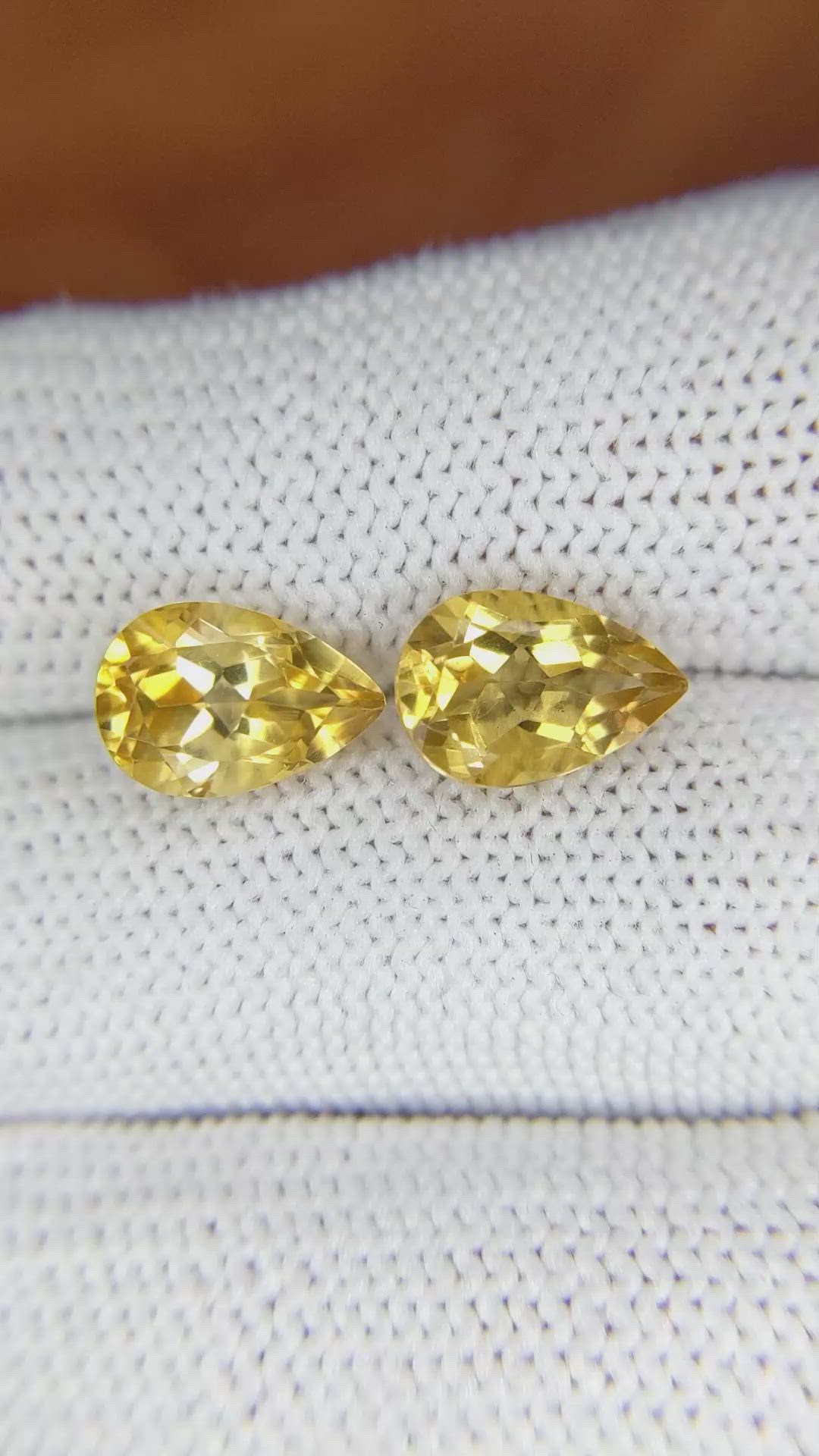
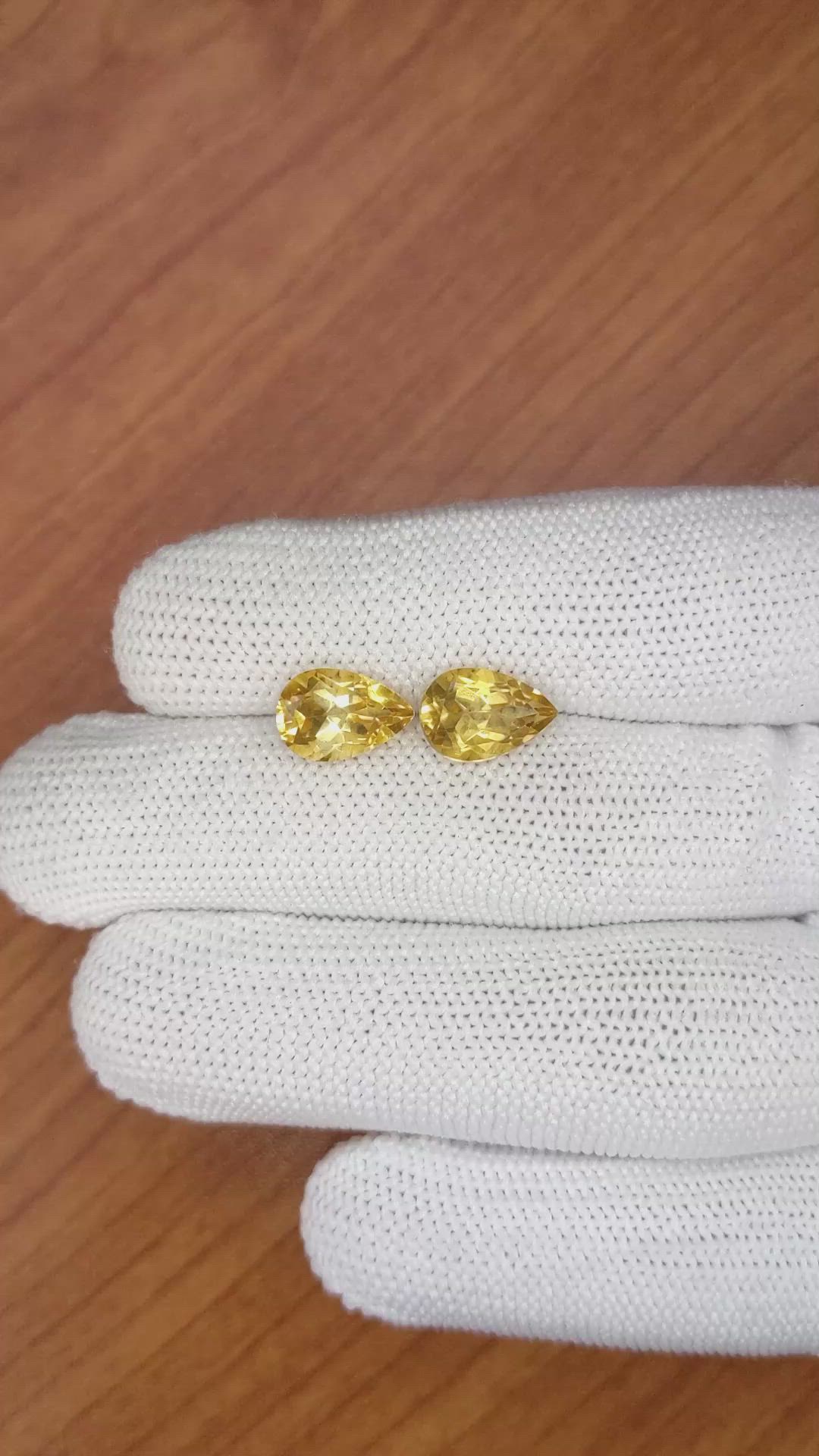
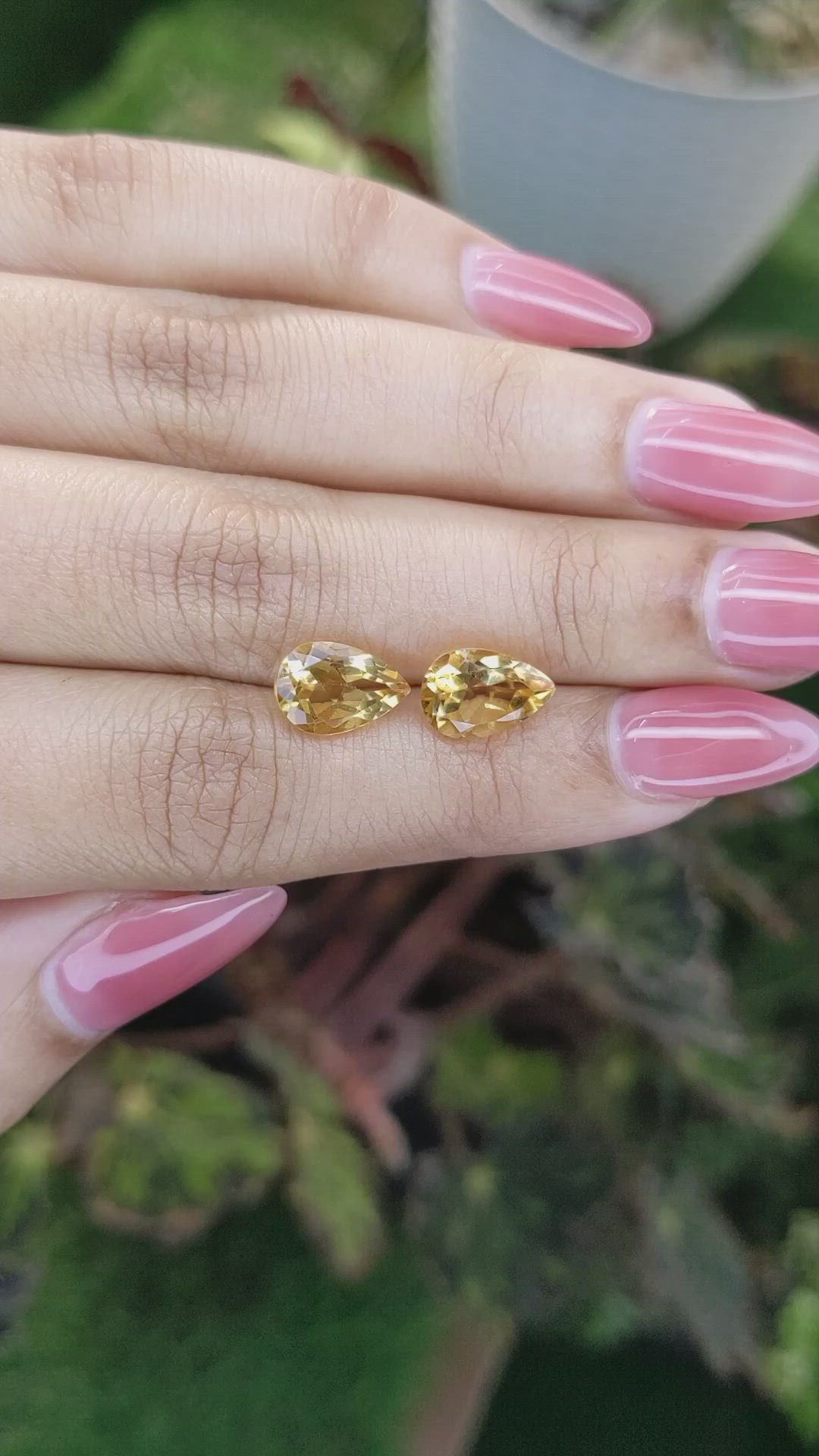
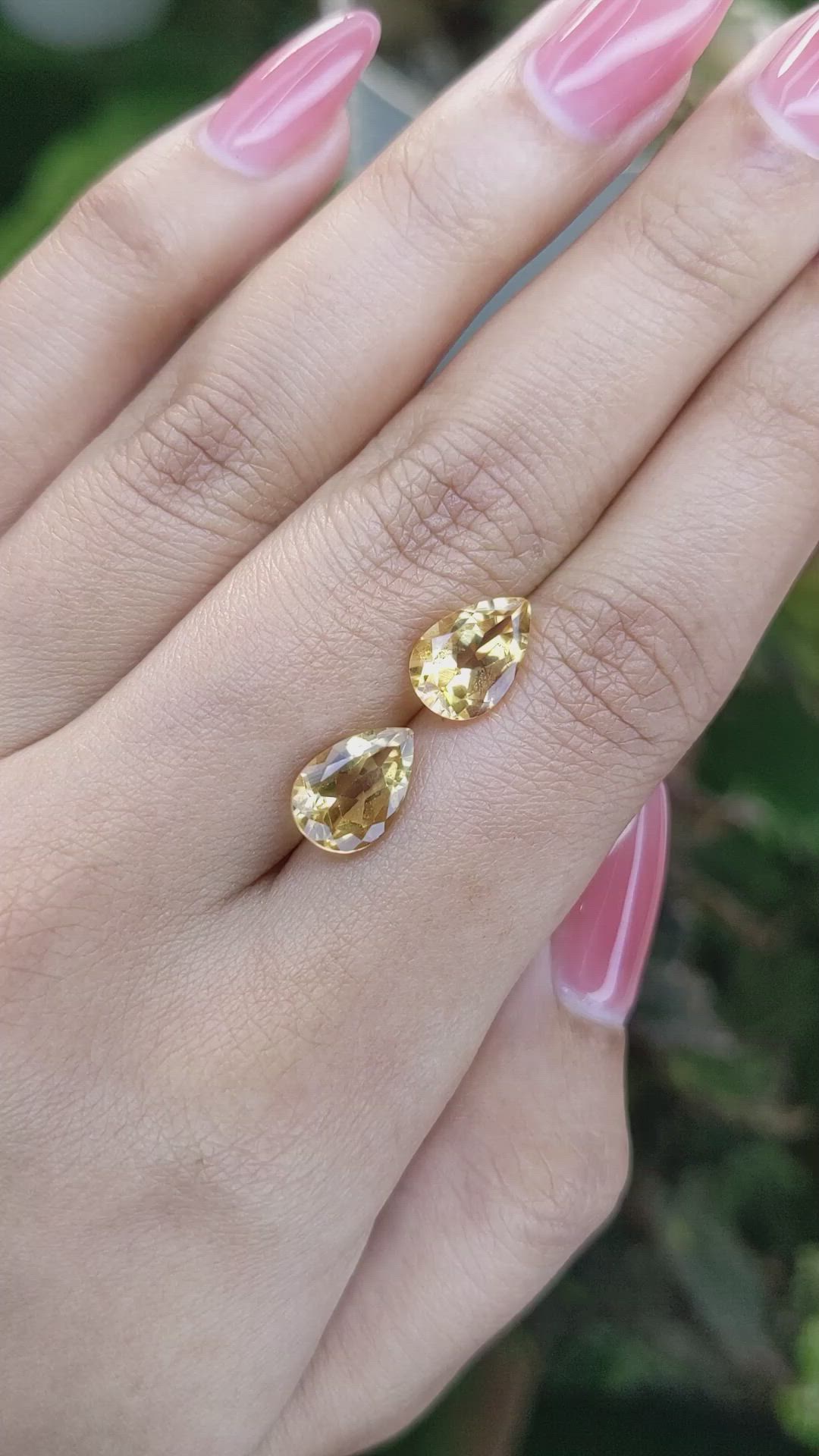
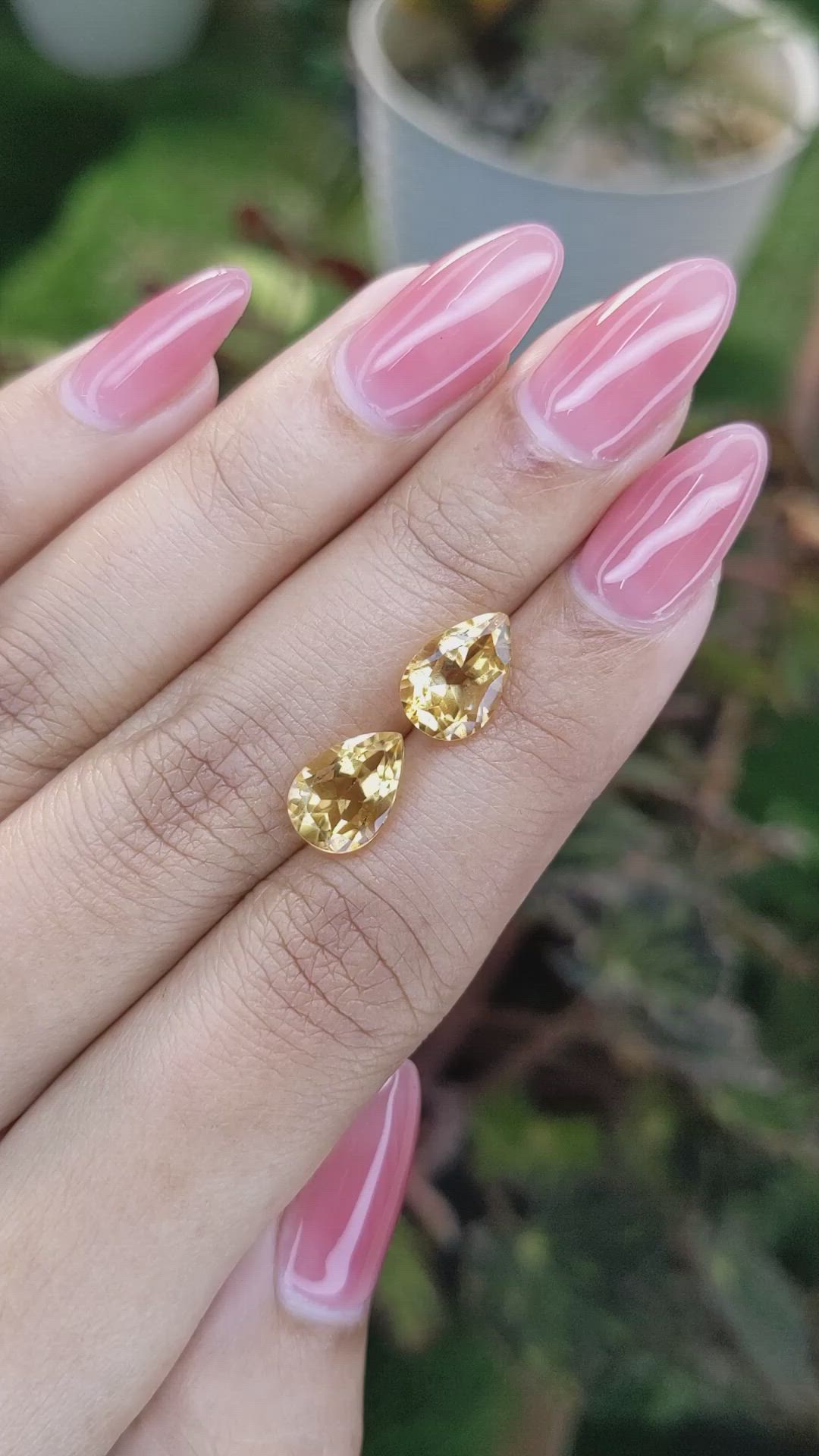


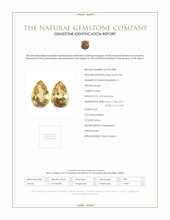

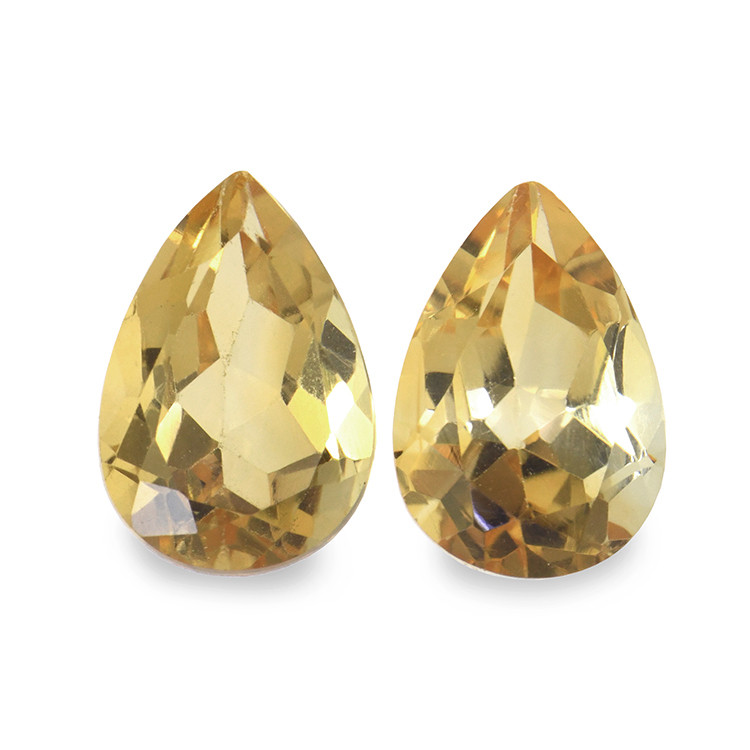
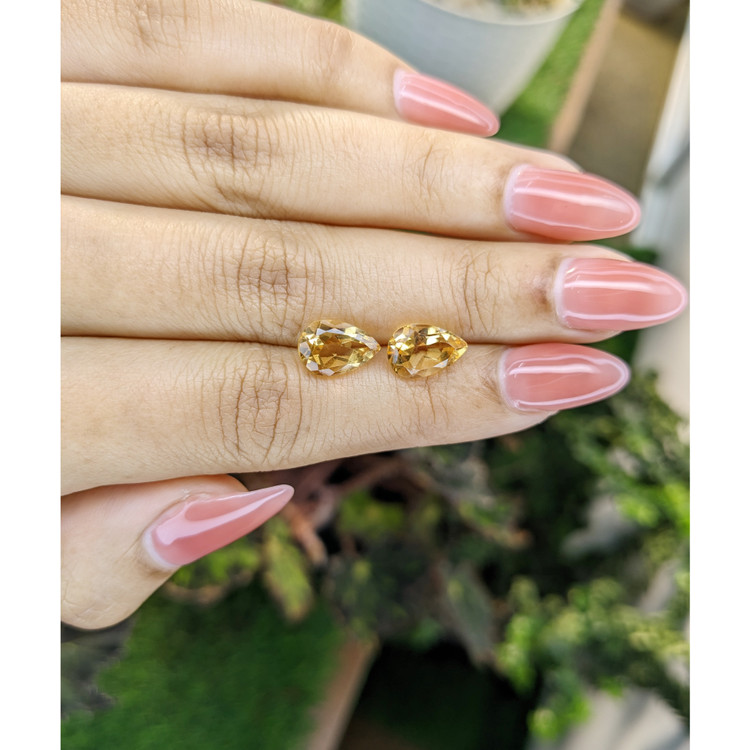
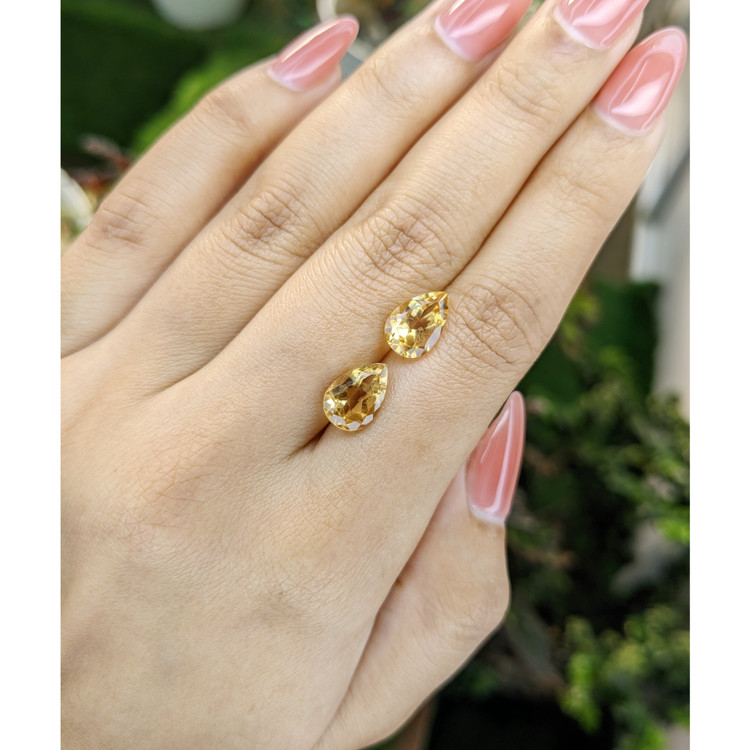
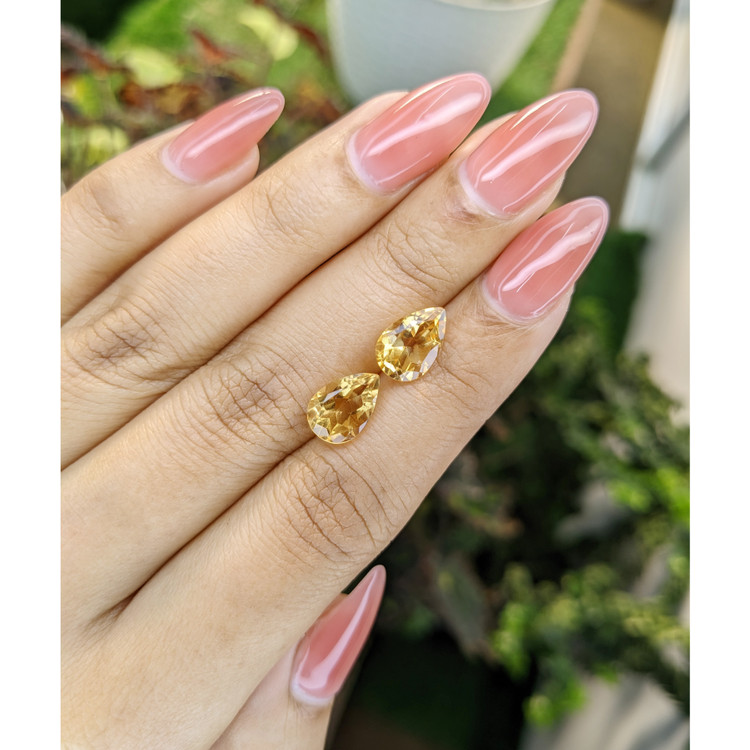

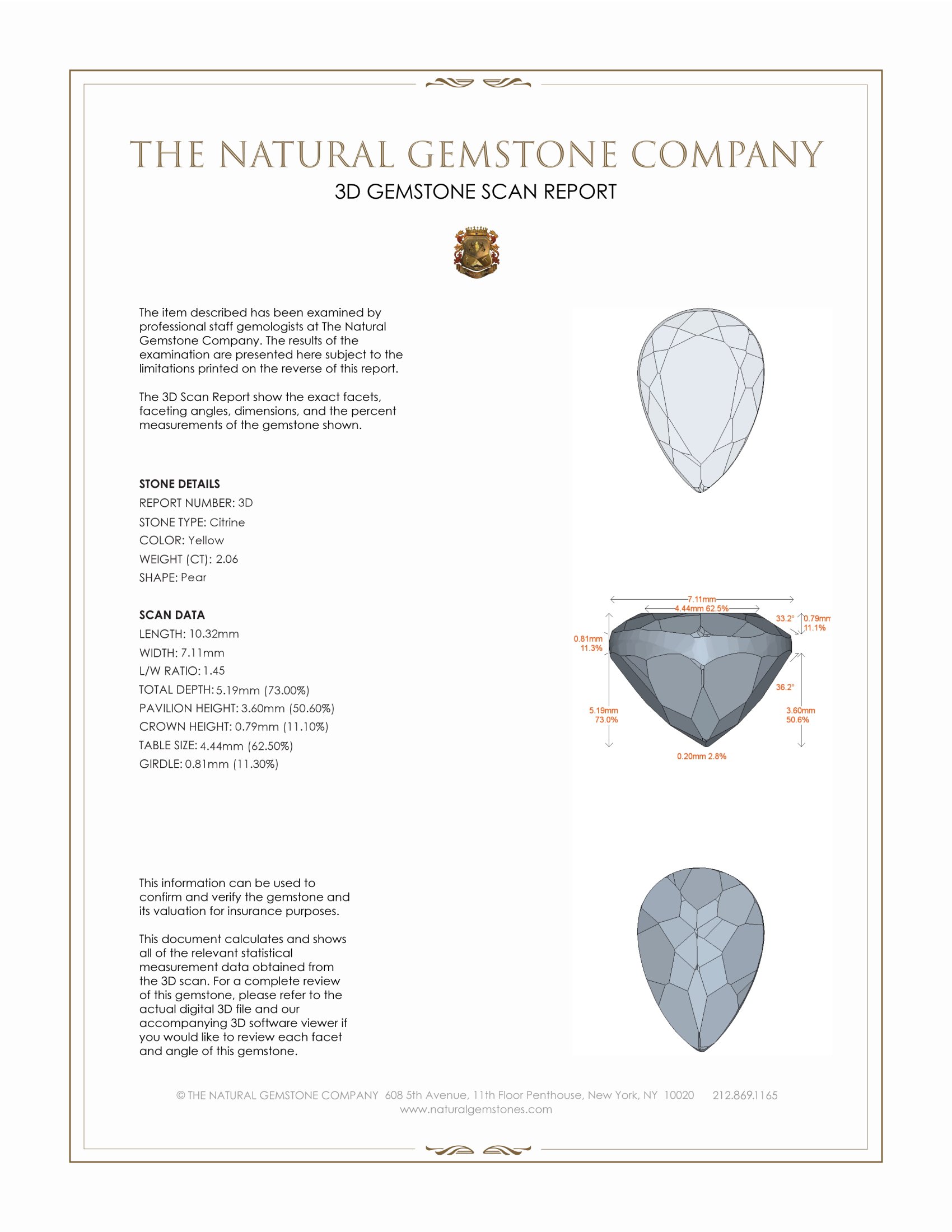
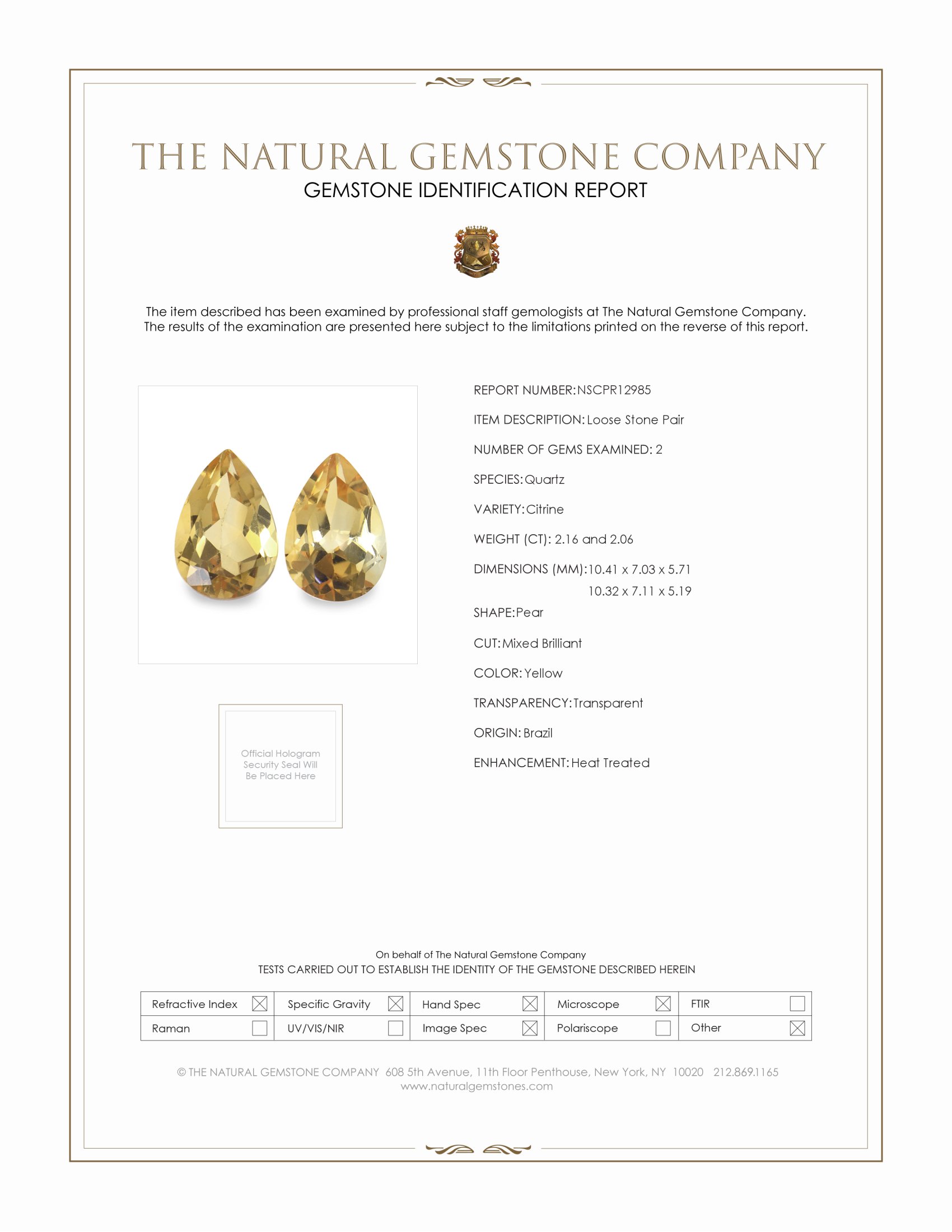
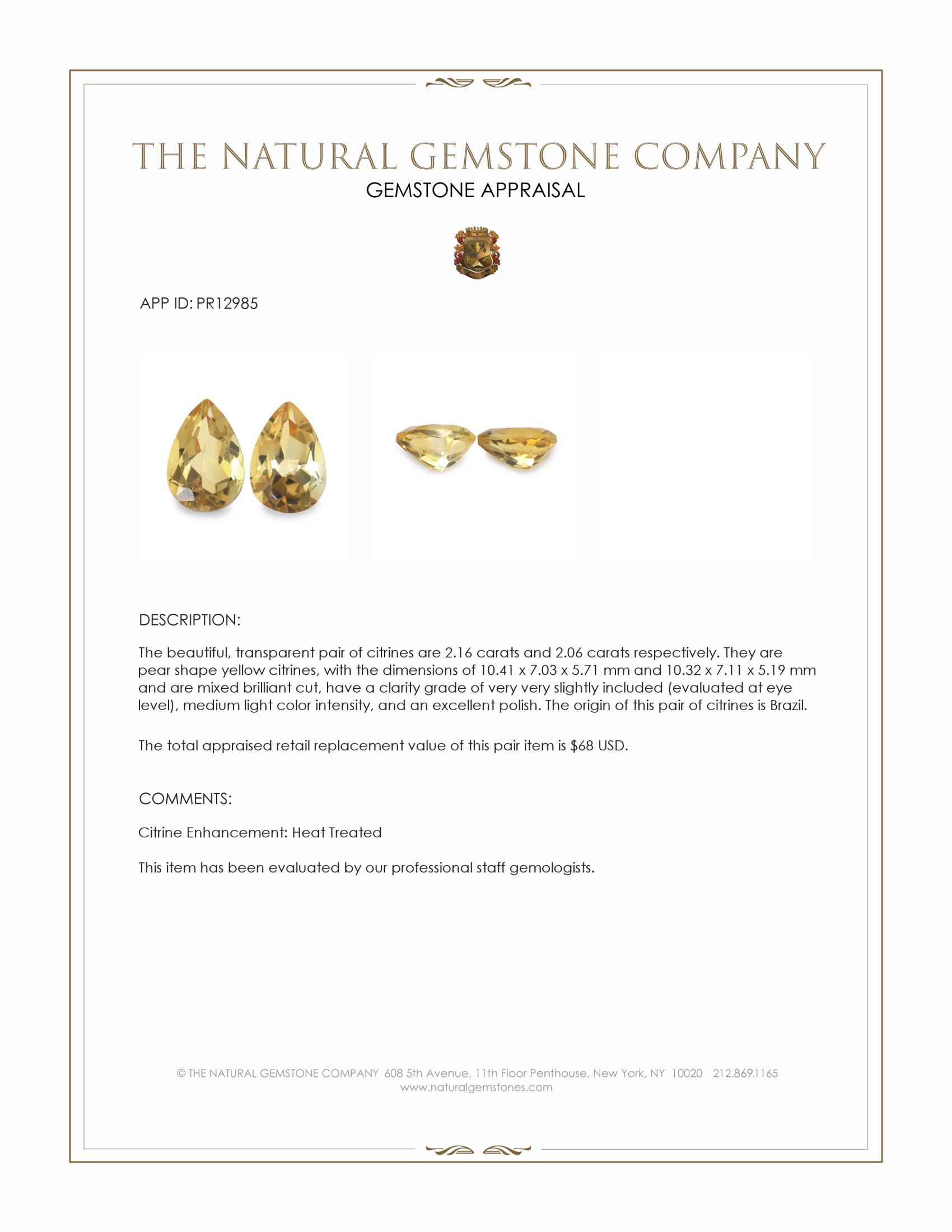
4.22 Ct.Tw.Total Carat Weight Citrine Pair from Brazil
This pair of stones is available to ship now
Stone type: | Citrine | Citrine |
|---|---|---|
Item ID: | PR12985 | PR12985 |
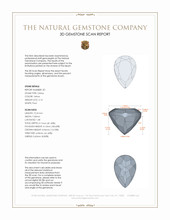
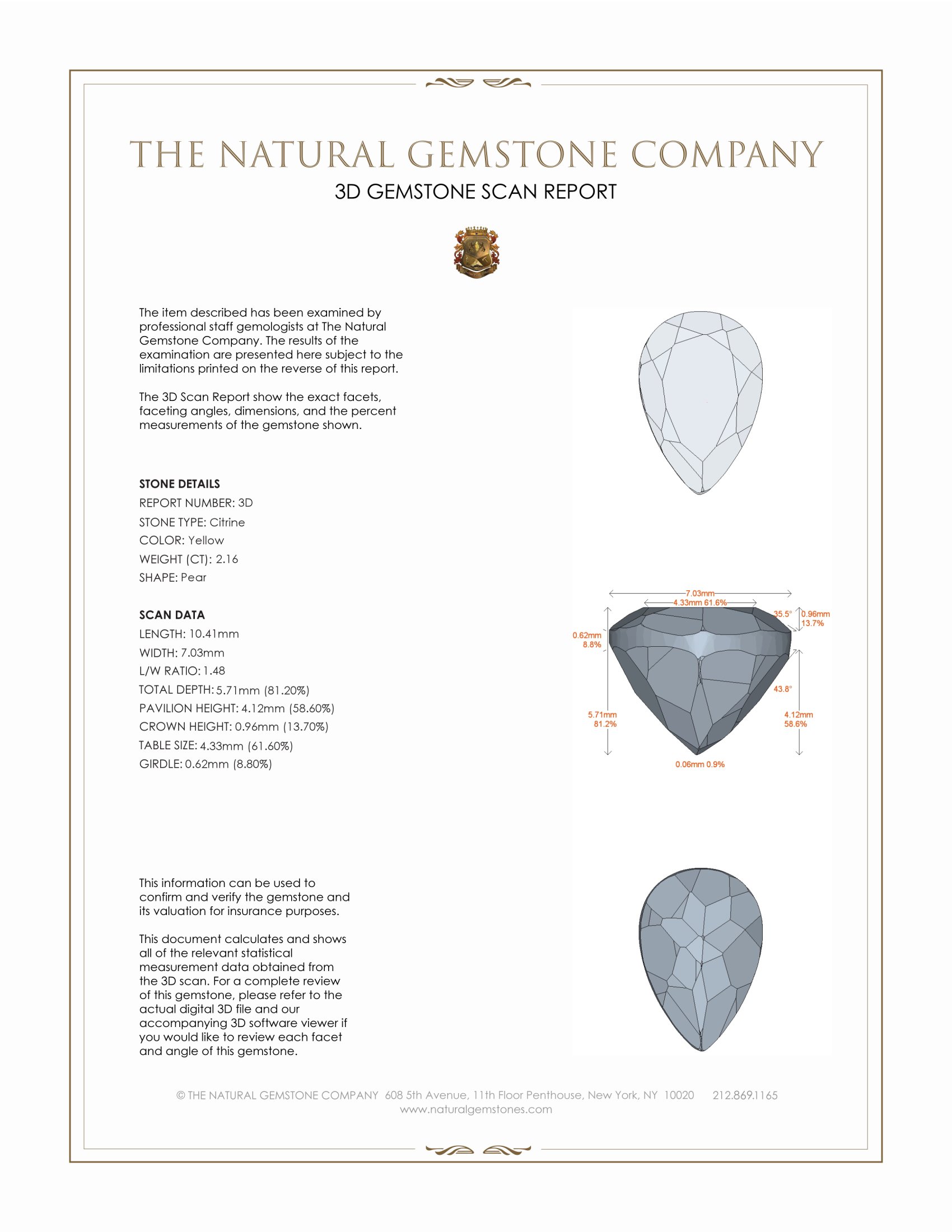
Dimensions (MM): help | Length: 10.41 Width: 7.03 Height: 5.71 | Length: 10.32 Width: 7.11 Height: 5.19 |
Weight: | 2.16 Ct. | 2.06 Ct. |
Color: help | Yellow | Yellow |
Color intensity: help | Medium Light | Medium Light |
Clarity: help | Very Very Slightly Included | Very Very Slightly Included |
Shape: help | Pear | Pear |
Cut: | Mixed Brilliant | Mixed Brilliant |
Cutting style: | Faceted | Faceted |
Enhancements: help | Heat Treated | Heat Treated |
Origin: help | Brazil | Brazil |
Per carat price: help | $16 | $16 |
If you are searching for a matched pair that closes the gap between classic elegance and modern design, these pear shape yellow citrines from The Natural Gemstone Company answer that need with confidence and clarity. The two transparent stones weigh 2.16 carats and 2.06 carats respectively, with dimensions of 10.41 x 7.03 x 5.71 mm and 10.32 x 7.11 x 5.19 mm, each cut in a mixed brilliant style that maximizes sparkle and light return. Evaluated at eye level, they carry a clarity grade of very very slightly included, and they show a pleasing medium light color intensity and an excellent polish. Sourced from Brazil and enhanced by heat treatment to refine color, this matched pair offers a reliable and attractive foundation for an engagement ring, a pair of statement earrings, a pendant set, or a collector grade addition to a curated gemstone wardrobe.
These citrines are particularly versatile, their pear silhouette lending itself to a wide range of design possibilities, from timeless halo rings that enhance fire, to drop earrings that emphasize movement, to tapered east west settings that deliver contemporary flair. The matched sizes and complementary cuts make them ideal for symmetrical applications, while their medium light yellow hue pairs beautifully with warm metals such as 14 carat or 18 carat yellow gold, and with rose gold for a vintage inspired warmth, as well as with white gold or platinum for a modern contrast. The mixed brilliant cut facets create lively scintillation without demanding very deep settings, and the dimensions offer enough depth for secure prongs or a bezel when extra protection is preferred. For makers and makers to be, these stones are easy to work with, and for clients seeking a bespoke piece the pair reads as a finished concept ready for immediate design. Trust The Natural Gemstone Company to guide you from selection to setting, we can advise on complementary center stones, mounting styles, and finishing touches that will showcase these citrines to their fullest potential, reach out for personalized design support and secure packaging, and let this matched pair conclude your search with a warm, sunny presence that will translate across every jewelry creation.


