
- Stone12
- Reports3


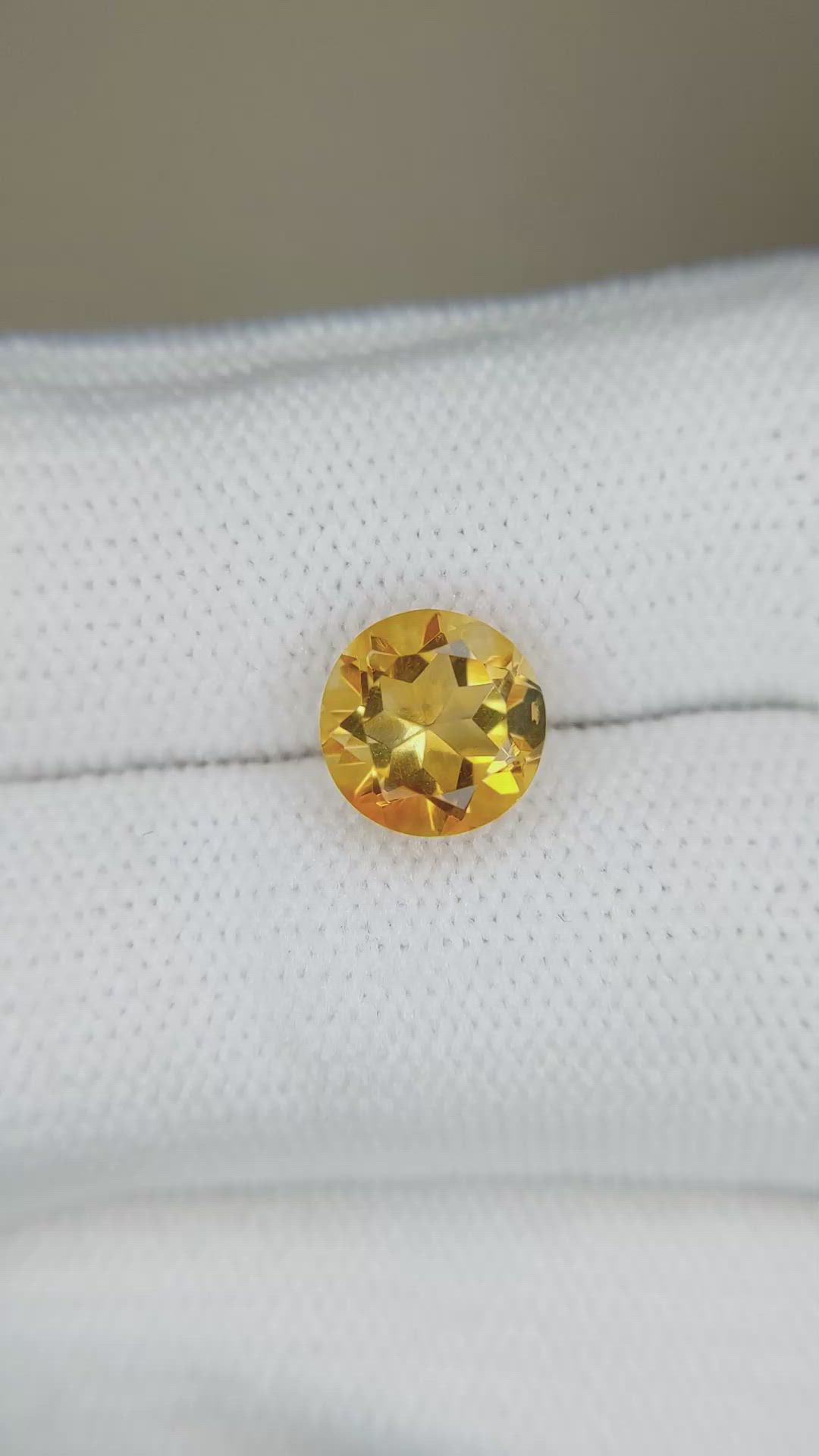
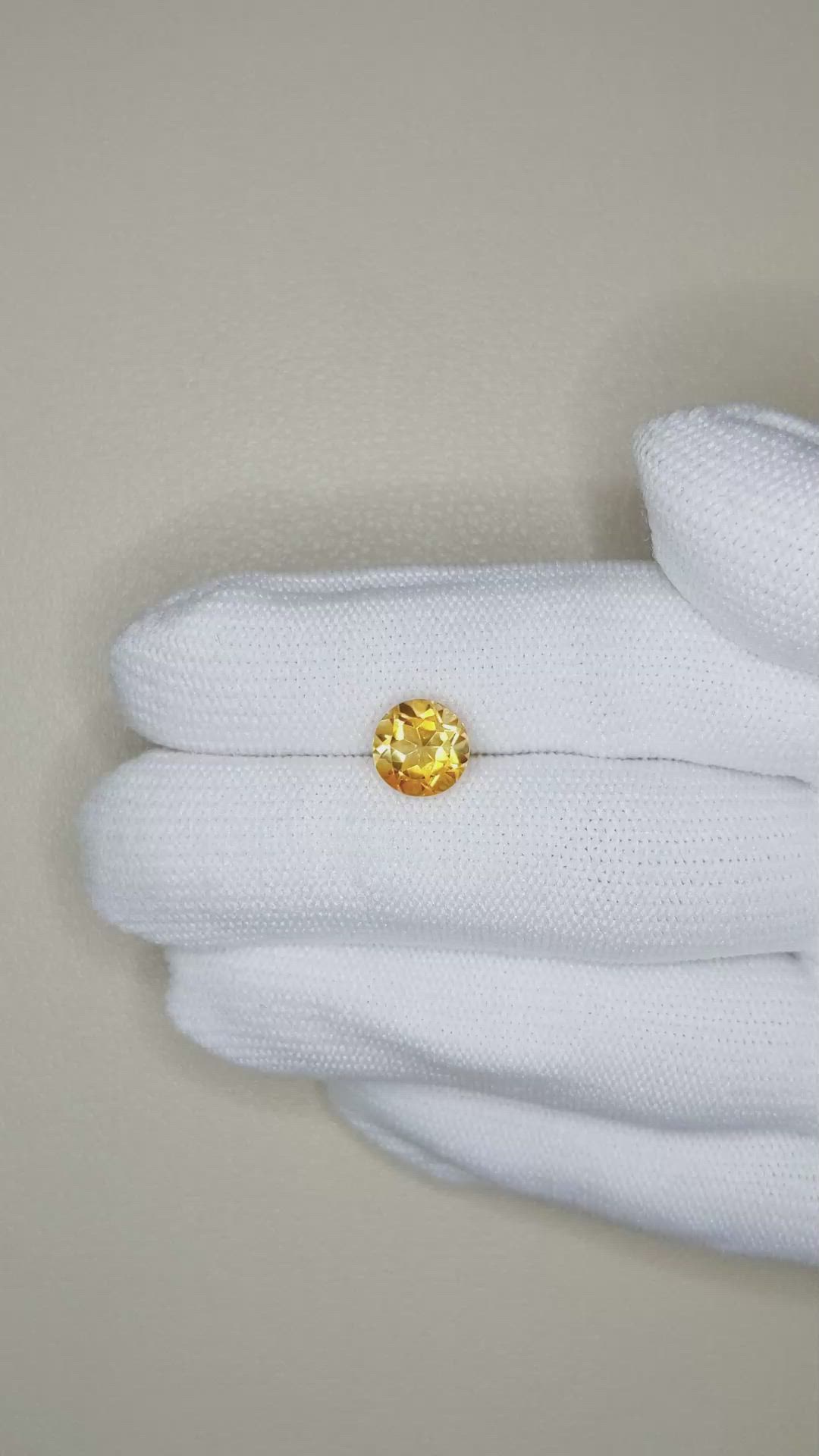
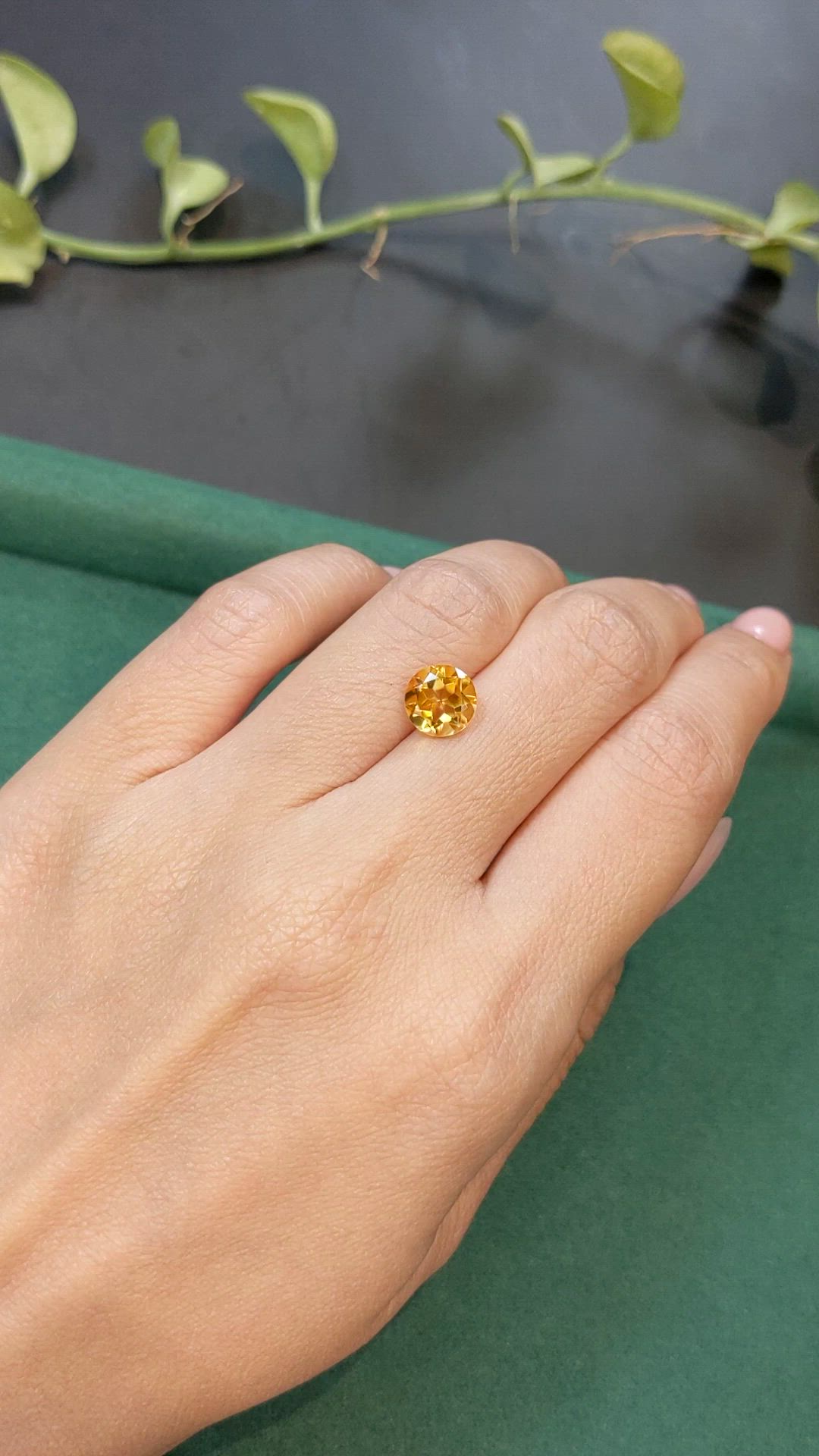
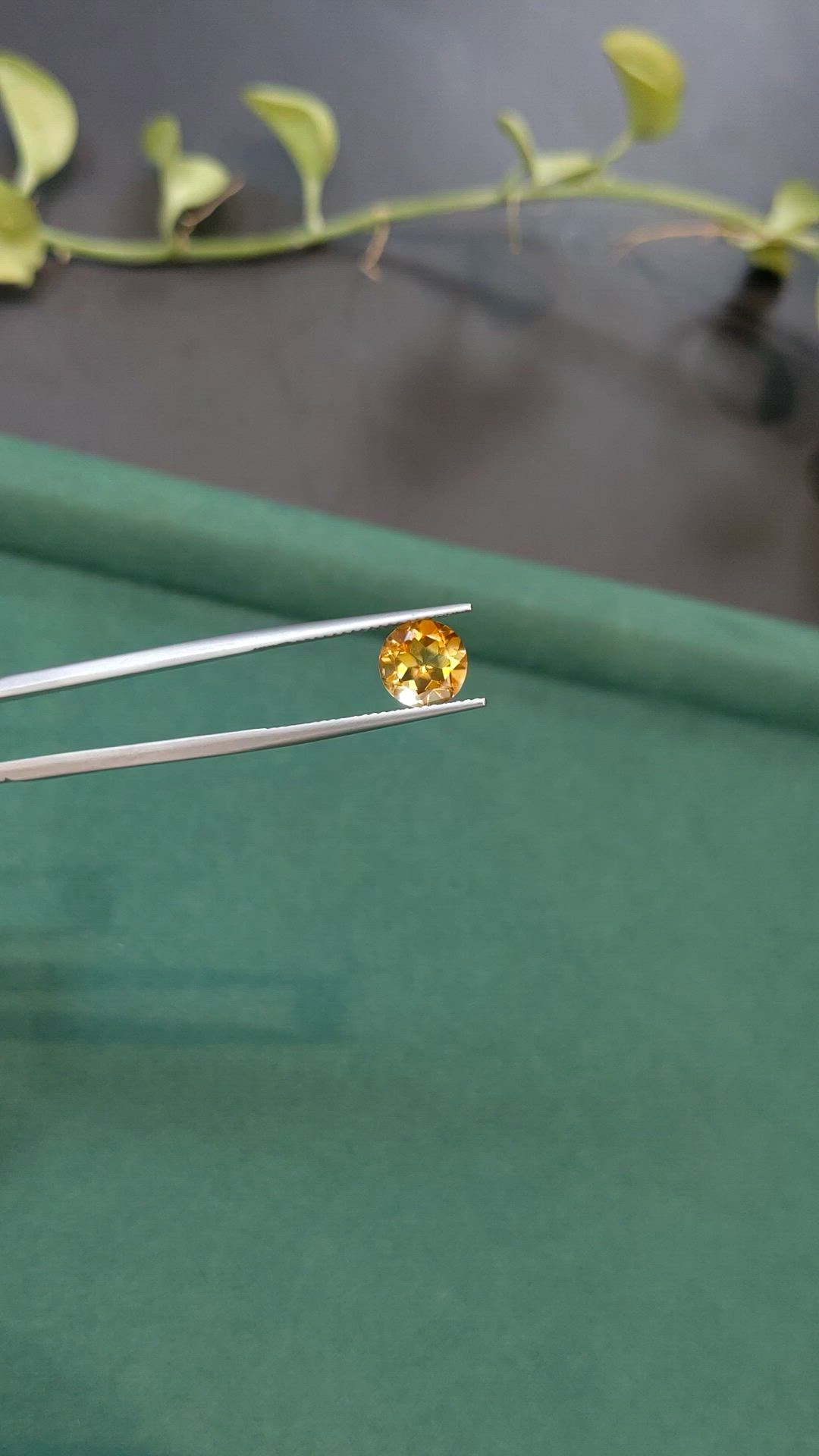




1.87 Ct. Yellowish Orange Citrine from Madagascar
This loose stone is available to ship now
Item ID: | K26144 |
|---|---|
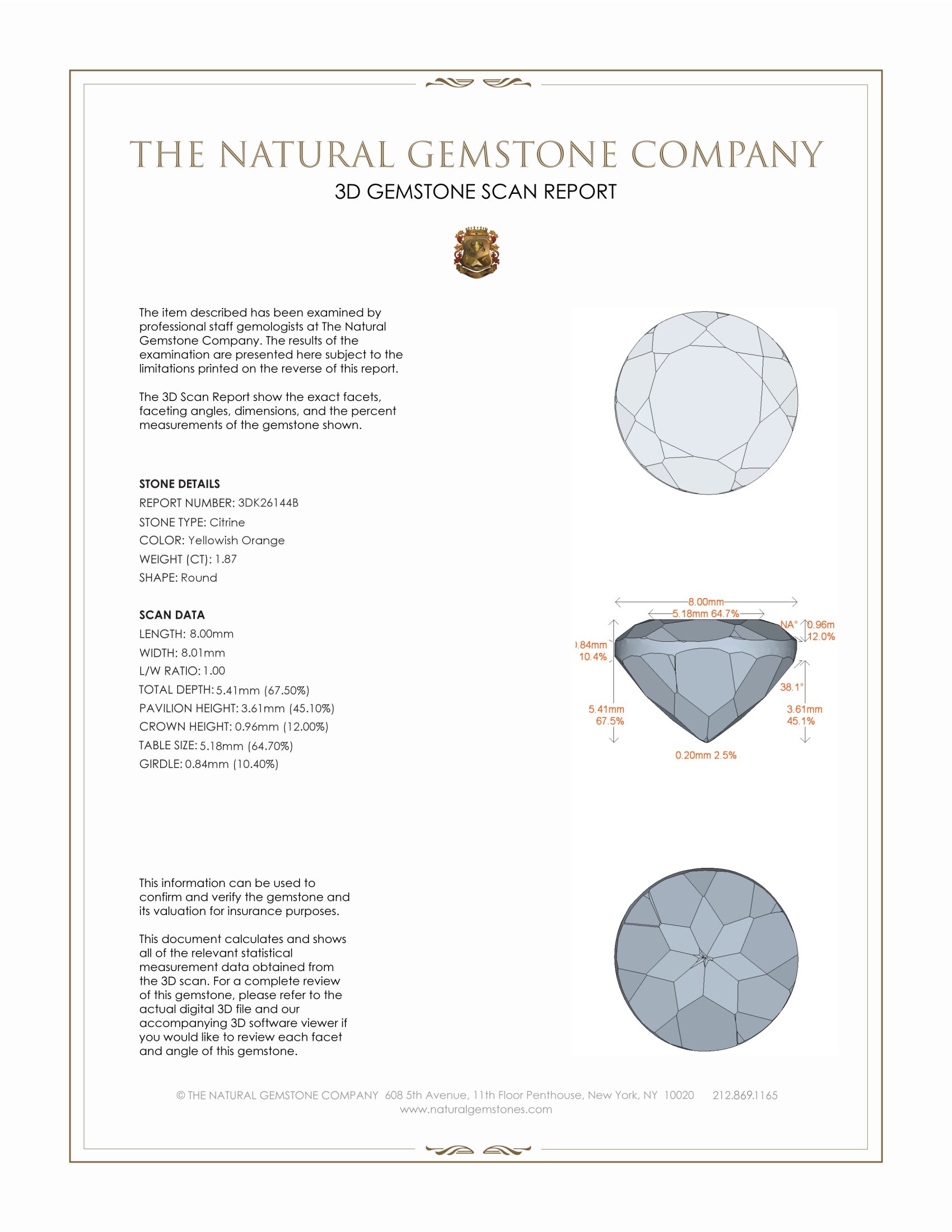
Dimensions (MM): help | Length: 8 Width: 8.01 Height: 5.41 |
Weight: | 1.87 Ct. |
Color: help | Yellowish Orange |
Color intensity: help | Intense |
Clarity: help | Very Slightly Included |
Shape: help | Round |
Cut: | Mixed Brilliant Cut |
Cutting style: | Faceted |
Enhancements: help | Heat Treated |
Origin: help | Madagascar |
Per carat price: help | $30 |
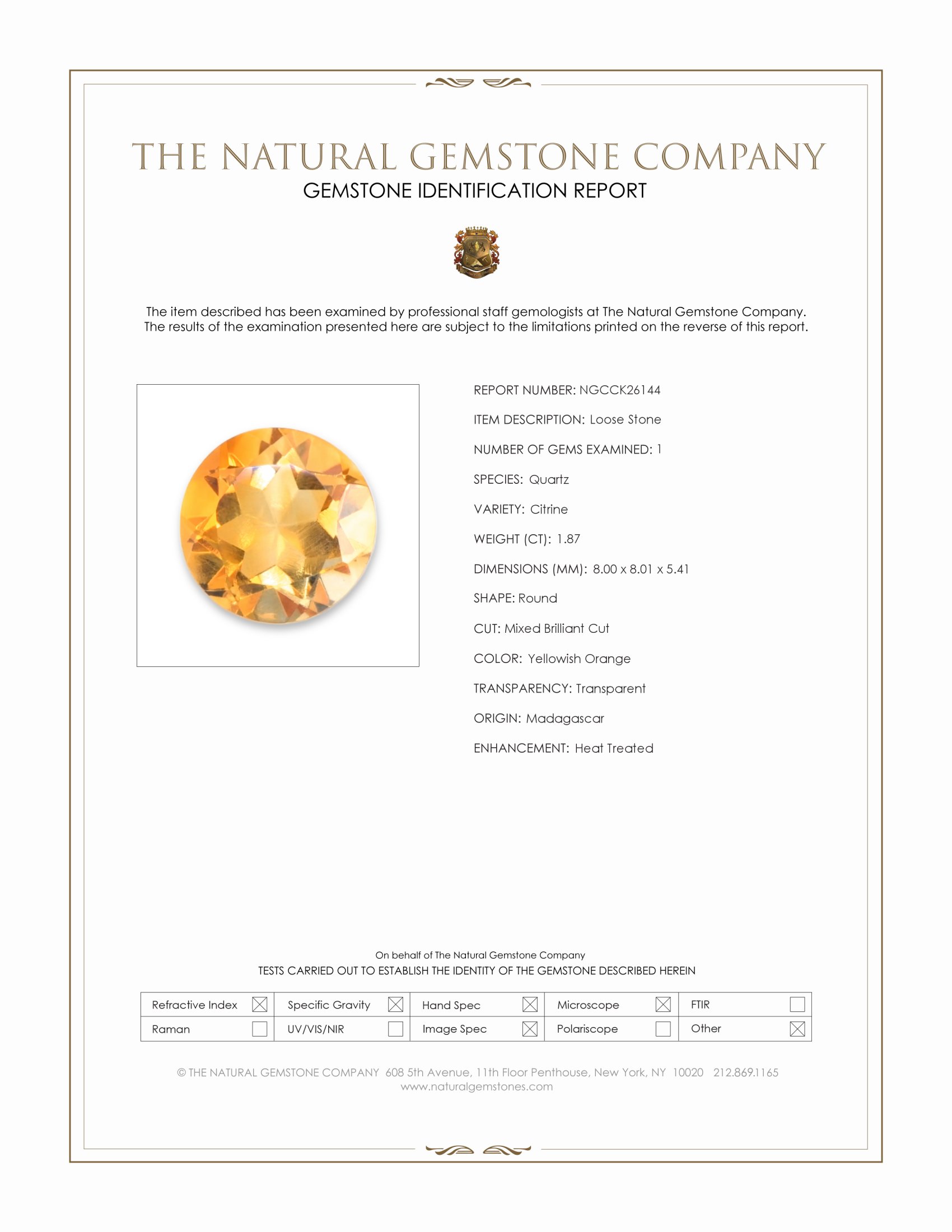
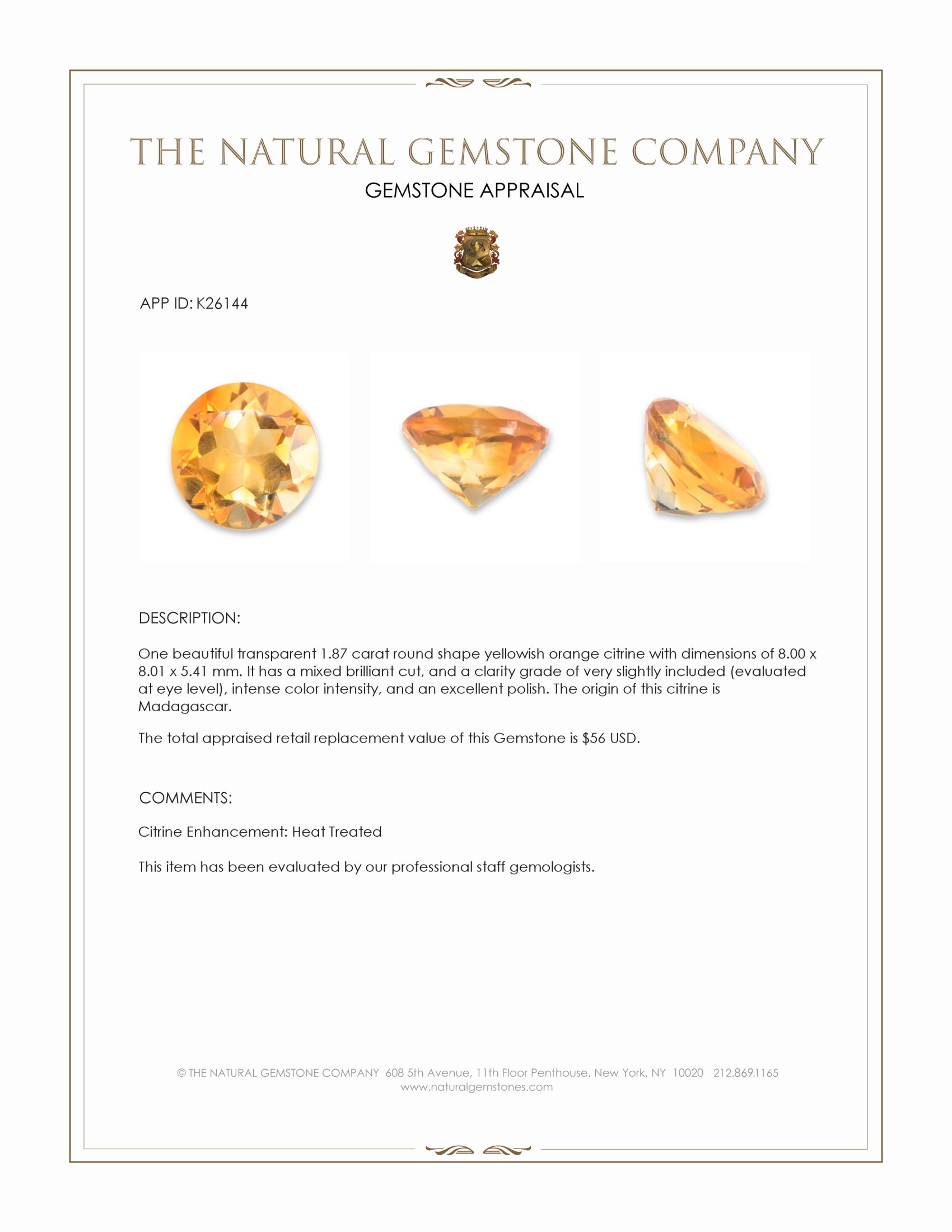
This item is a transparent round citrine, weighing 1.87 carats, with precise dimensions of 8.00 x 8.01 x 5.41 millimeters. The gem is fashioned in a mixed brilliant cut that blends pavilion and crown facet styles to optimize light return. Color is described as yellowish orange with intense saturation, and clarity is graded as very slightly included when evaluated at eye level. Surface condition is excellent, with a superior polish that promotes crisp facet outlines and consistent surface reflection. Enhancement is specified as heat treated, a common and stable treatment for citrine, and provenance is Madagascar, a locality known for producing warm, evenly colored quartz specimens. The Natural Gemstone Company presents this stone as an example of precise lapidary work combined with naturally attractive material qualities.
Optically the gem displays the characteristic vitreous luster of quartz, yielding broad, warm flashes of light rather than a high degree of spectral dispersion. The mixed brilliant cut in this instance is engineered to increase face up brightness and deliver lively scintillation across the crown facets, translating the intense yellowish orange tone into visible flashes when the stone is moved under light. Clarity at the level of very slightly included ensures that there are minimal internal interruptions to light transmission, so the stone exhibits clean, uninterrupted reflections in most viewing conditions. The excellent polish enhances surface reflection, which in citrine contributes strongly to perceived brightness, and the combination of cut and clarity makes the color appear more saturated and evenly distributed across the visible table.
When compared to other gemstones in the same category, primarily other quartz varieties, this citrine performs in a predictable and attractive way. Compared to amethyst, which shares quartz family optics but often presents with purple hues, citrine typically shows less contrast between flash and body color because its warmer tones absorb and reemit light differently. Compared to smoky quartz, which tends toward deeper, more muted tones, this yellowish orange citrine displays a higher degree of lively reflection and appears noticeably more luminous in white light. Relative to other gem species outside the quartz family, citrine has a lower refractive index and much lower dispersion. For example, gemstones such as topaz and garnet exhibit stronger refractive indices, producing crisper brilliance and potentially more intense sparkle. Stones like sapphire and spinel further increase contrast and brilliance due to higher refractive indices and stronger light bending. Diamond and certain high dispersion gems show pronounced spectral fire that citrine does not rival, however the advantage of citrine lies in its warm, broad flashes and consistent face up color which appeal to designs emphasizing color rather than scintillation.
Practical considerations for jewelry use and care follow from these optical characteristics. The 1.87 carat weight and near 8 millimeter diameter make this citrine well suited to solitaire rings, pendants, and center stones in multi stone settings where a stable, evenly colored focal point is desired. The mixed brilliant cut helps maintain visual interest by producing complementary flashes and a steady body color, especially under daylight and warm artificial light where the yellowish orange hue is most flattering. Heat treatment is a durable enhancement that stabilizes the intense color, and origin from Madagascar indicates a natural source with consistent crystal quality. Care should be standard for quartz group gems, avoiding prolonged exposure to strong acids, extreme heat, and abrasive chemicals, and cleaning with warm soapy water or an ultrasonic cleaner when mounted securely is acceptable. For professional buyers and custom jewelers seeking an accurate assessment of performance in a final setting, independent testing and a report can be arranged through recognized gemological laboratories, and The Natural Gemstone Company remains available to provide further measurements, photographs, and provenance documentation upon request.


