
- Stone15
- Reports3
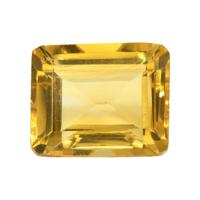
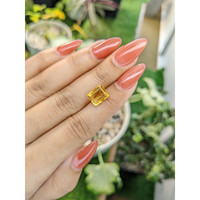
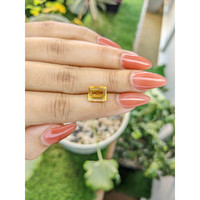
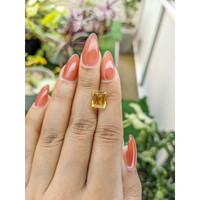
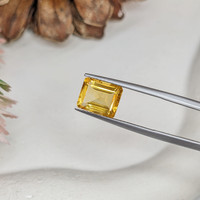


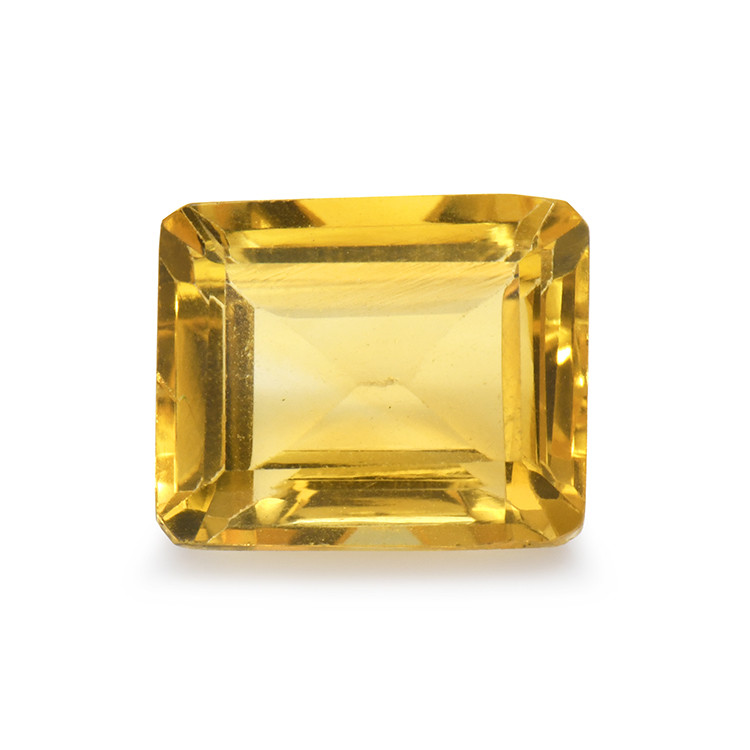
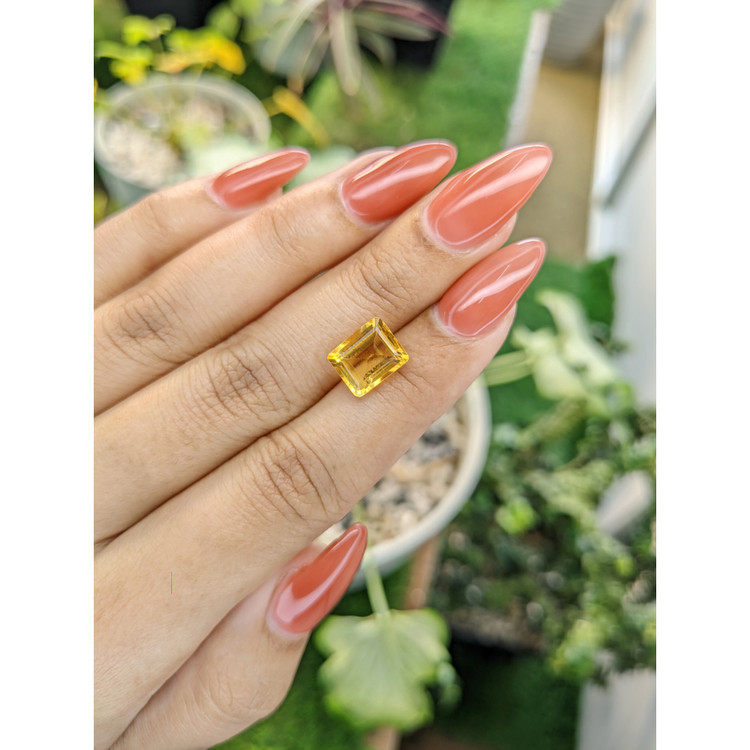
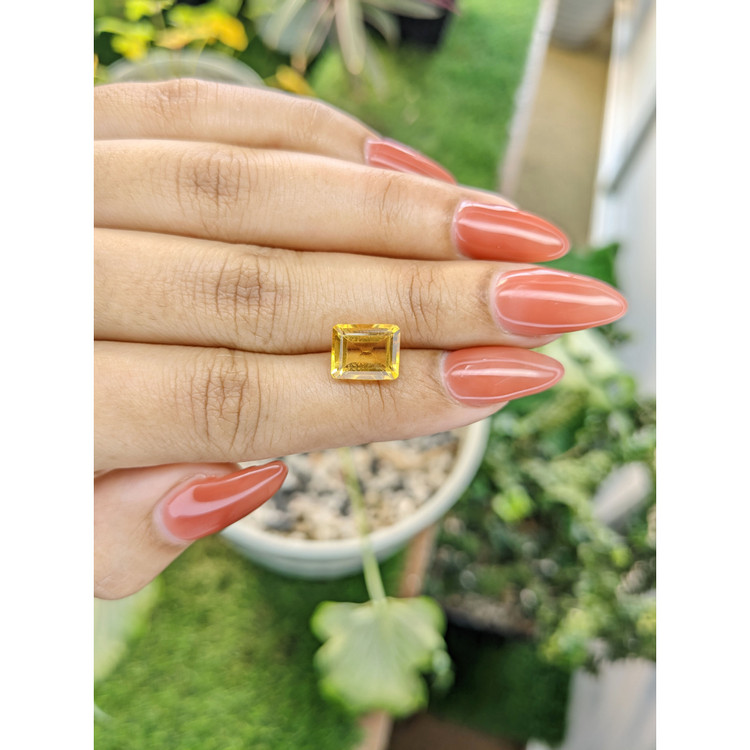
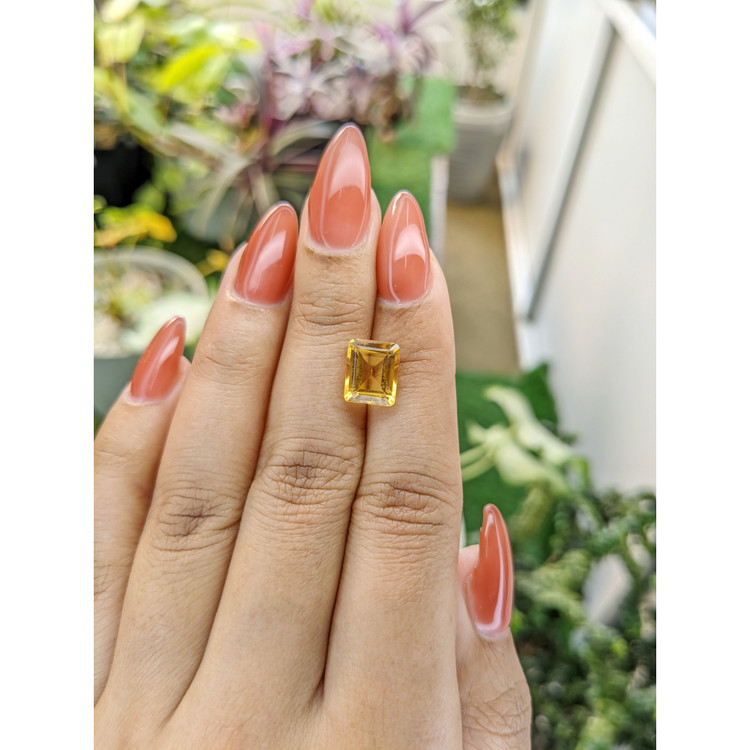
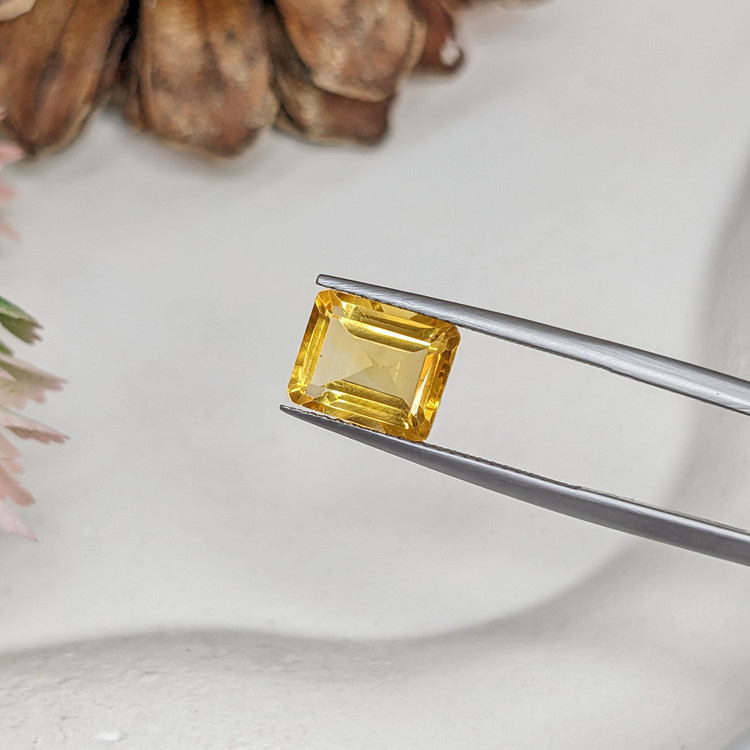


3.06 Ct. Citrine from Brazil
This loose stone is available to ship now
Item ID: | K13492 |
|---|---|
Dimensions (MM): help | Length: 9.7 Width: 7.98 Height: 5.37 |
Weight: | 3.06 Ct. |
Color: help | Orangish Yellow |
Color intensity: help | Intense |
Clarity: help | Very Very Slightly Included |
Shape: help | Emerald Cut |
Cut: | Emerald |
Cutting style: | Faceted |
Enhancements: help | Heat Treated |
Origin: help | Brazil |
Per carat price: help | $20 |
This 3.06 carat, emerald cut, orangish yellow citrine measures 9.70 x 7.98 x 5.37 millimeters, and delivers a precise balance of size, symmetry, and optical presence. The stone is fashioned as a classic rectangular step cut with long parallel facets on the crown and pavilion, a broad open table and slightly truncated corners, producing the restrained geometric optics that define the emerald cut. With a clarity grade described as very very slightly included when evaluated at eye level, the transparency is exceptional for quartz, allowing the intense color intensity to read cleanly through the facet architecture. The gem exhibits an excellent polish, with crisp facet junctions and a mirror smooth finish that maximizes surface luster and reveals the internal color saturation without distracting reflections. The measured depth of 5.37 millimeters over an average face dimension of 8.84 millimeters yields a practical depth ratio of approximately 60.7 percent, a proportion that preserves weight while enabling effective light flow in a step cut. This citrine is sourced from Brazil and has been enhanced by controlled heat treatment, a permanent and stable process applied to reach this intense orangish yellow hue, and it is offered with full provenance and disclosure by The Natural Gemstone Company.
The narrative of formation for this citrine spans geological time scales and chemical subtleties, beginning millions of years ago in silica rich environments deep within the Brazilian continental crust. Silica saturated hydrothermal fluids migrated through fractures and vugs in host rocks, often associated with granitic pegmatites or metamorphosed volcanic sequences, and deposited quartz in open cavities under slowly changing temperature and pressure conditions. Trace iron incorporated into the quartz lattice at the time of growth established the chromophore centers that under specific oxidation states produce yellow to orange tones. Over prolonged residence and gradual cooling, large, clear quartz crystals grew with well defined faces and internal continuity. Subsequent tectonic uplift and erosion exposed the pockets of quartz, allowing collectors and miners to recover crystal material that displayed favorable clarity and preliminary color. In the modern lapidary workflow the raw material for this gem was selected from Brazilian production for its internal clarity and potential color response to heat. The applied heat treatment converts or enhances existing iron related color centers to a stable intense orangish yellow, using calibrated temperatures to avoid undue strain or alteration to the crystal lattice. The result is a reproducible hue with long term stability, while retaining the inherent physical properties of citrine as a quartz species.
The cutting and finishing of this piece reflect a technical approach tailored to the step cut geometry and the color characteristics of citrine. The cutter oriented the rough so that the long axis of the stone follows the natural growth orientation of the crystal, a strategy that minimizes apparent inclusions and optimizes color distribution across the table. Facet planes were laid out to emphasize broad, uninterrupted color flashes rather than scintillation, consistent with the visual goals of the emerald cut. Attention to pavilion and crown angles preserves the balance between face up spread and depth, and the facet polish was executed to an excellent standard, producing sharp facet junctions and clean reflections that enhance perceived saturation. Given the very very slightly included clarity grade at eye level, the stone will appear eye clean in typical jewelry settings, with any minor internal features remaining discreet and stable. Practical considerations include the stone hardness typical of quartz, which supports everyday wear when set securely, and the permanence of the heat enhancement, which does not require special thermal handling beyond general gem care. As a representative piece from The Natural Gemstone Company this citrine is ideal for designs that showcase step cut geometry and rich color, such as classic solitaires and elegant three stone arrangements, where the geometry and intense orangish yellow tone can be displayed to best effect.


