
- Stone15
- Reports3
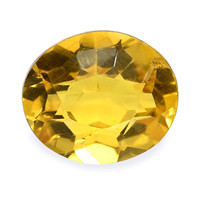
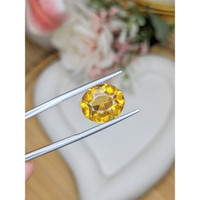
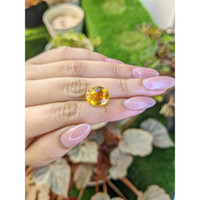
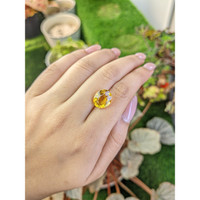
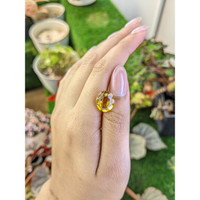
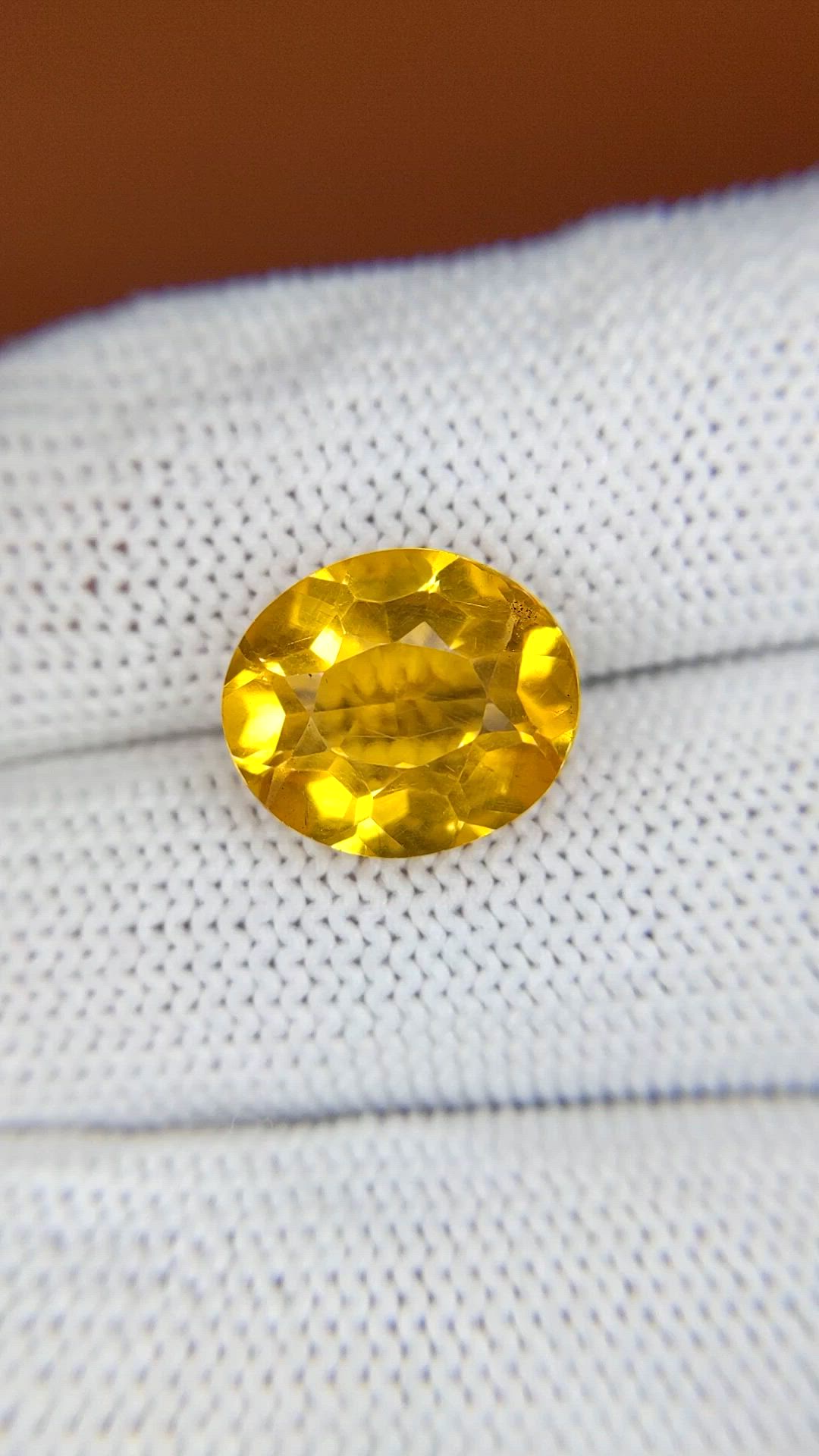
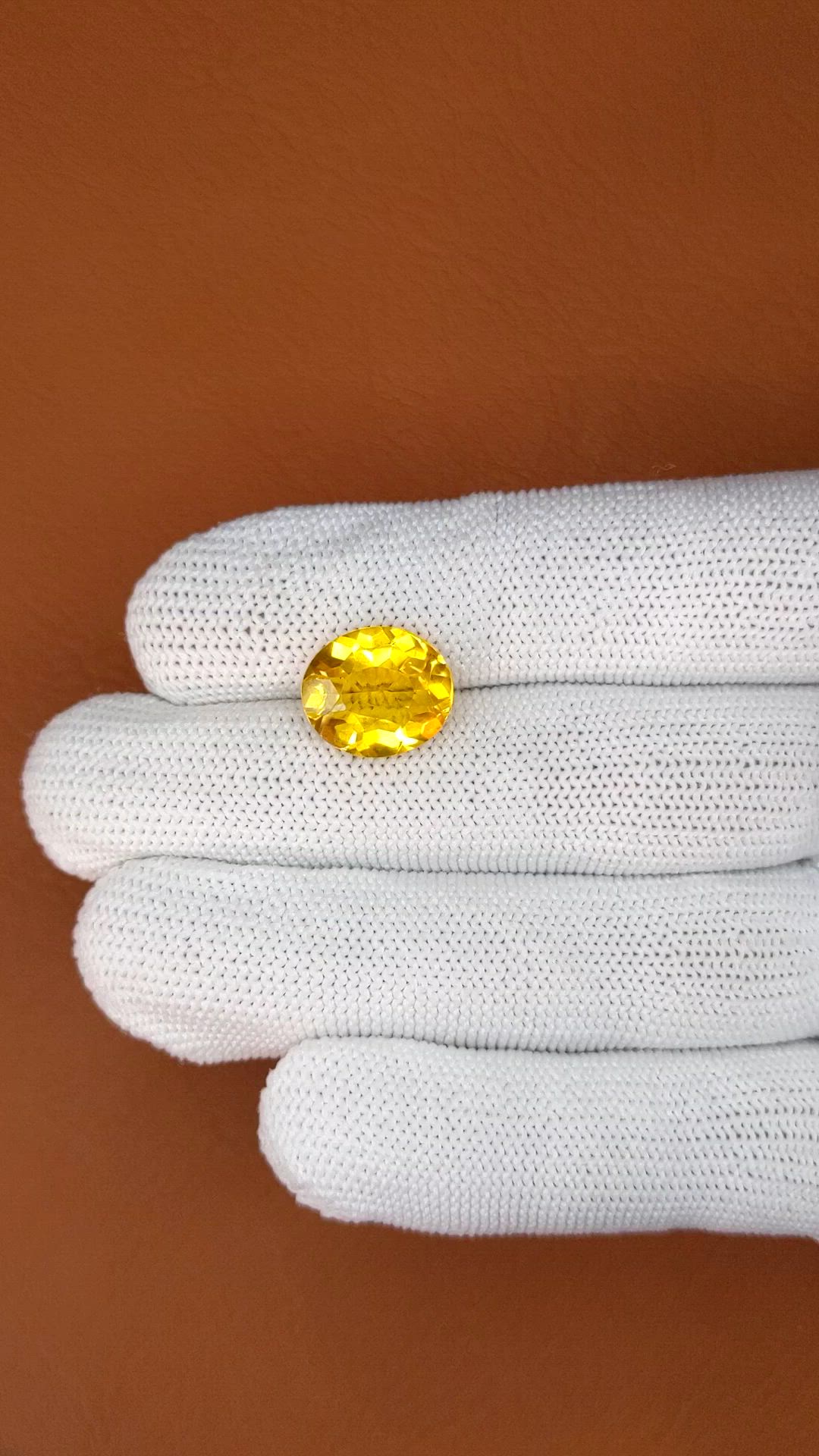
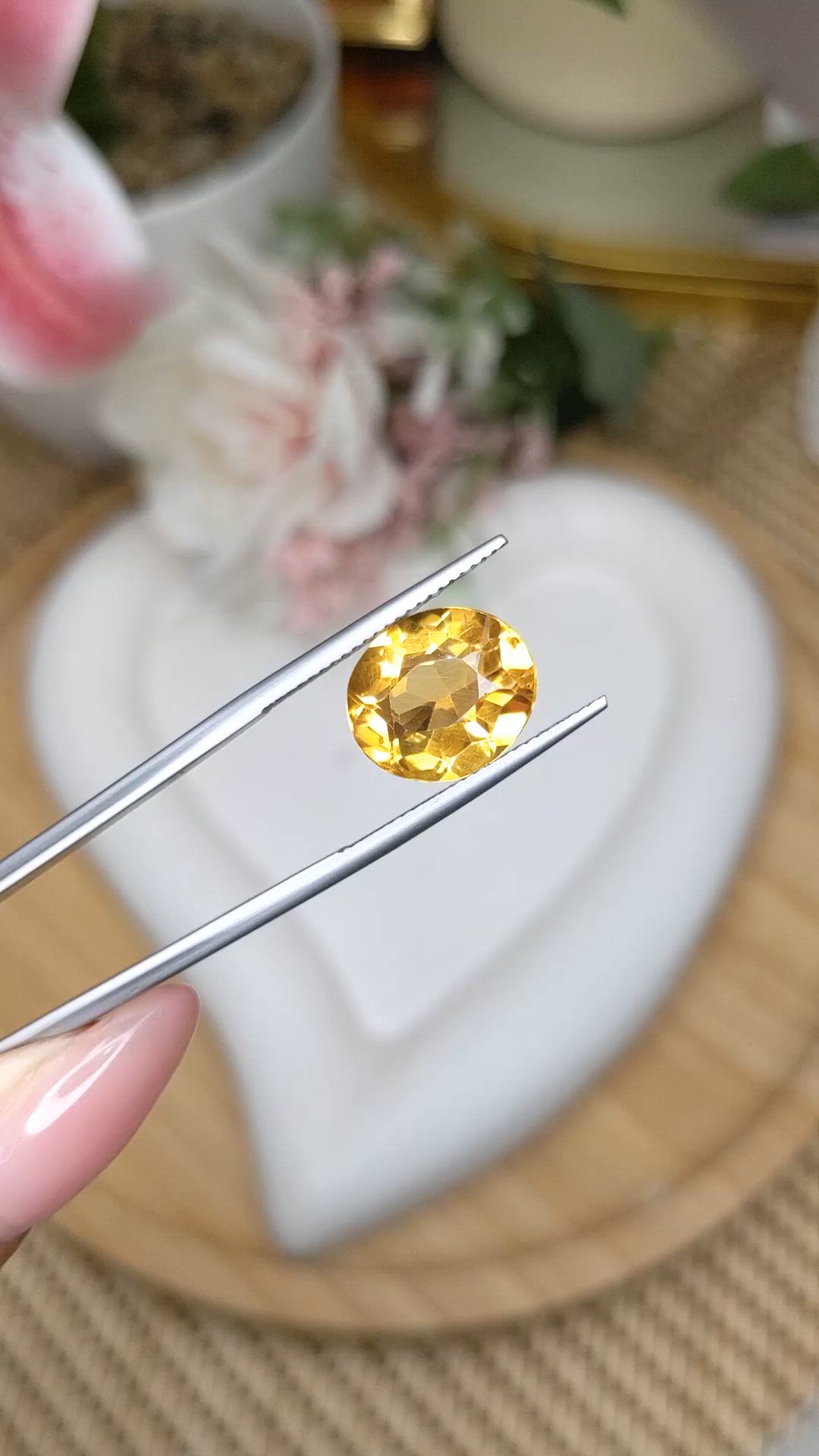
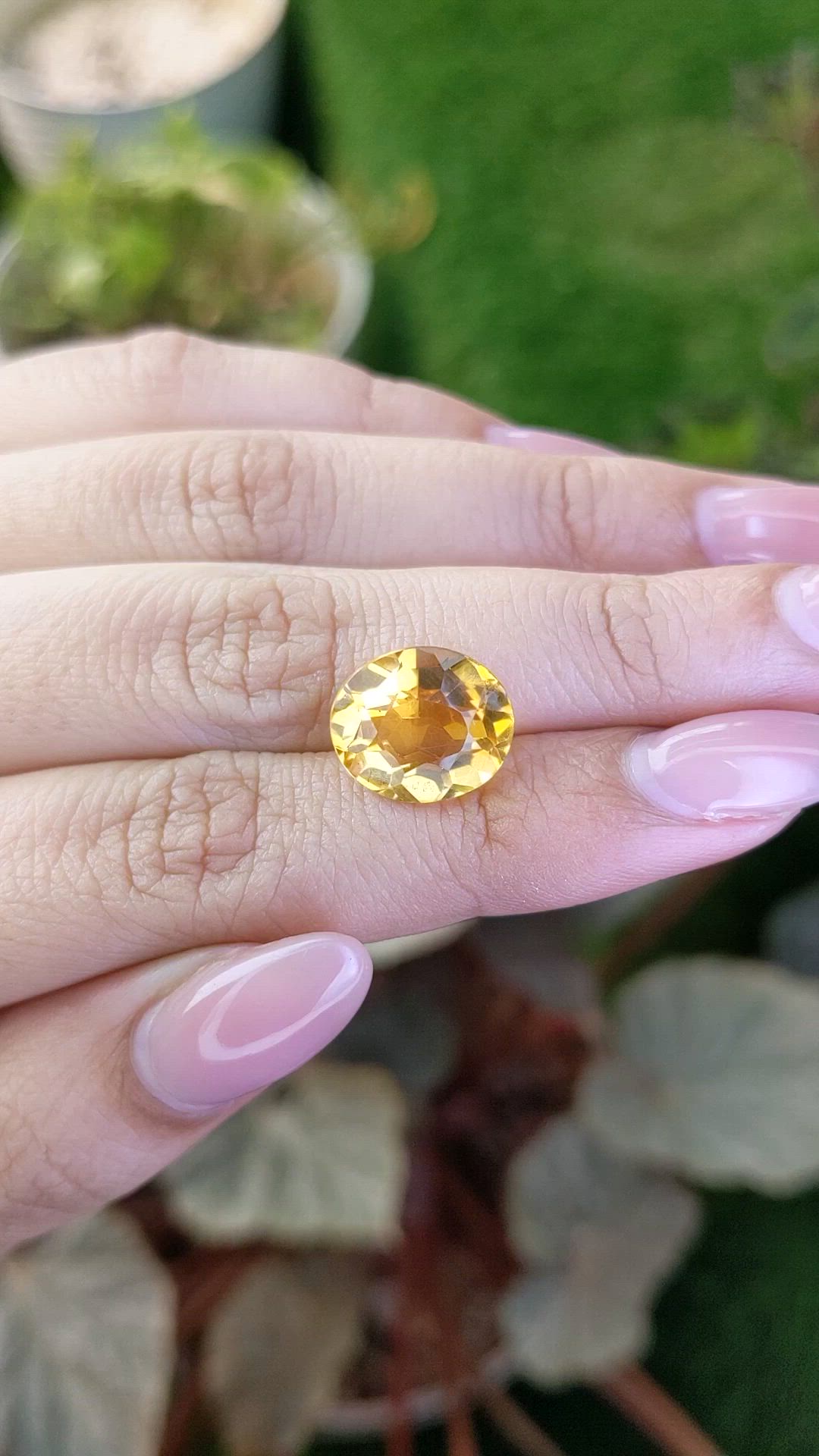
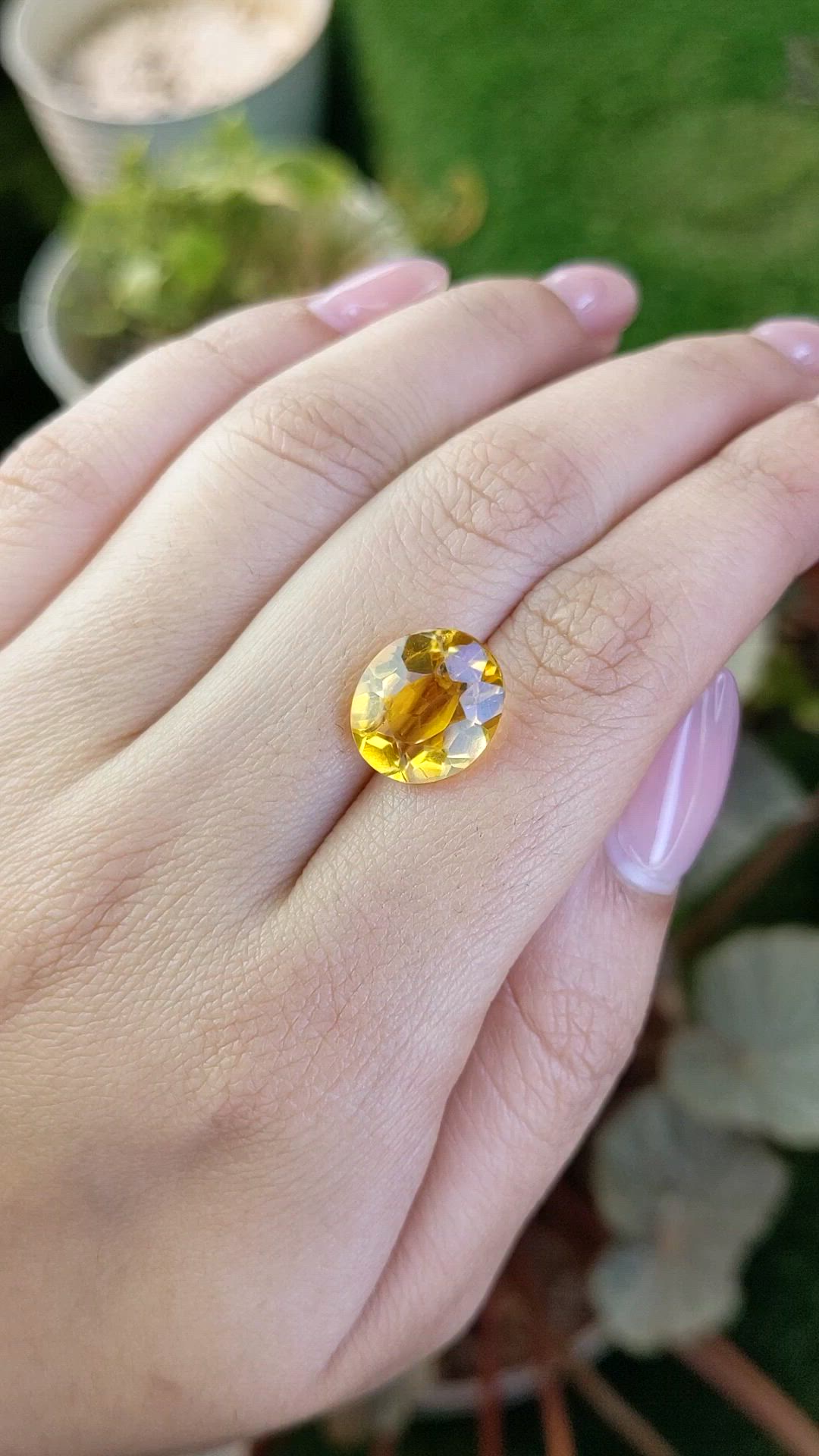
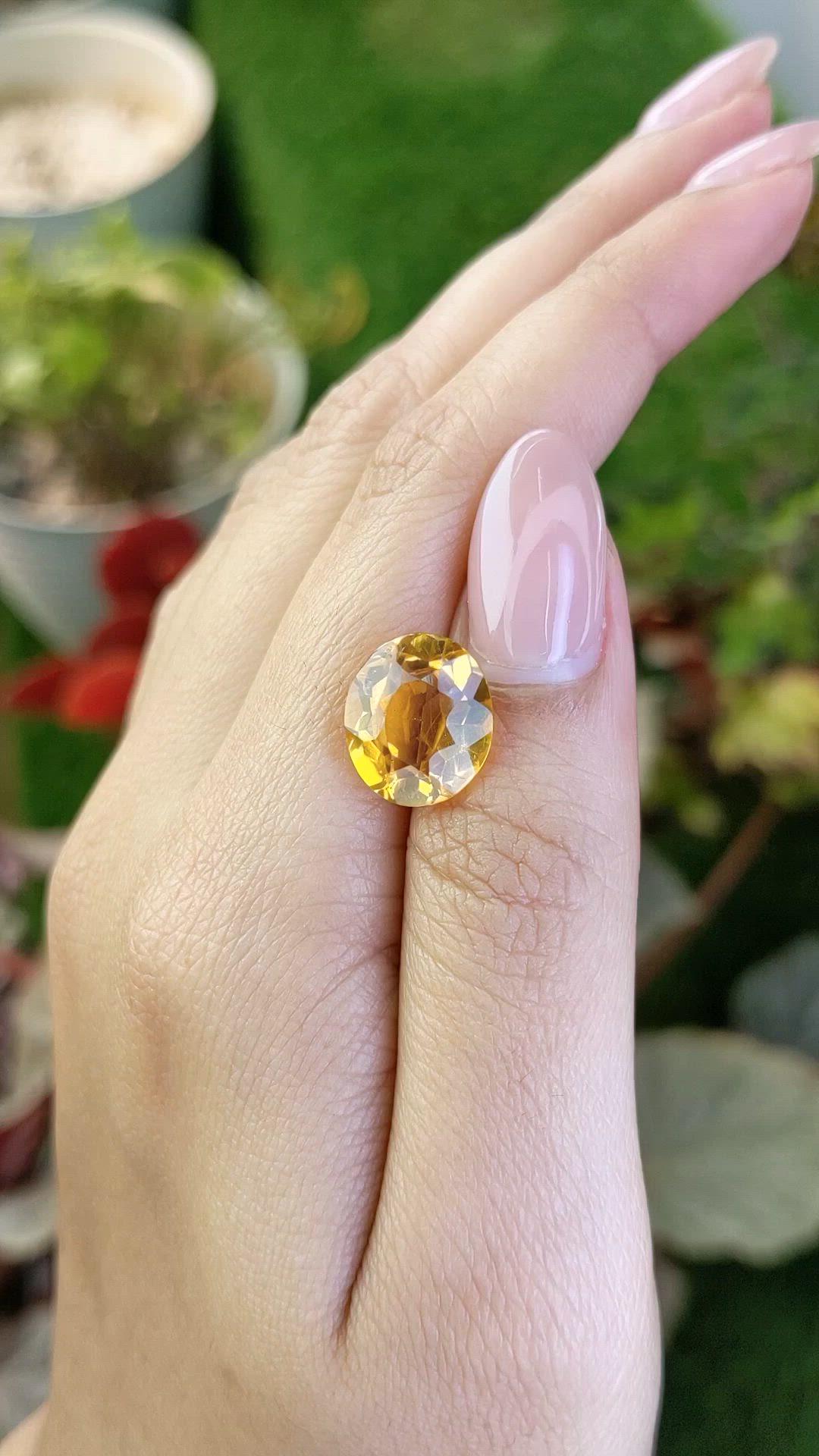

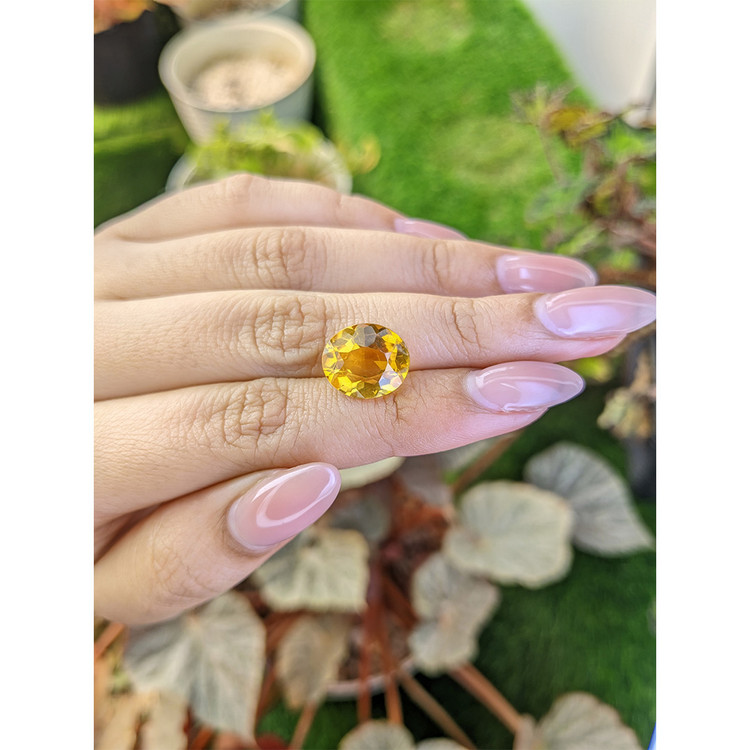
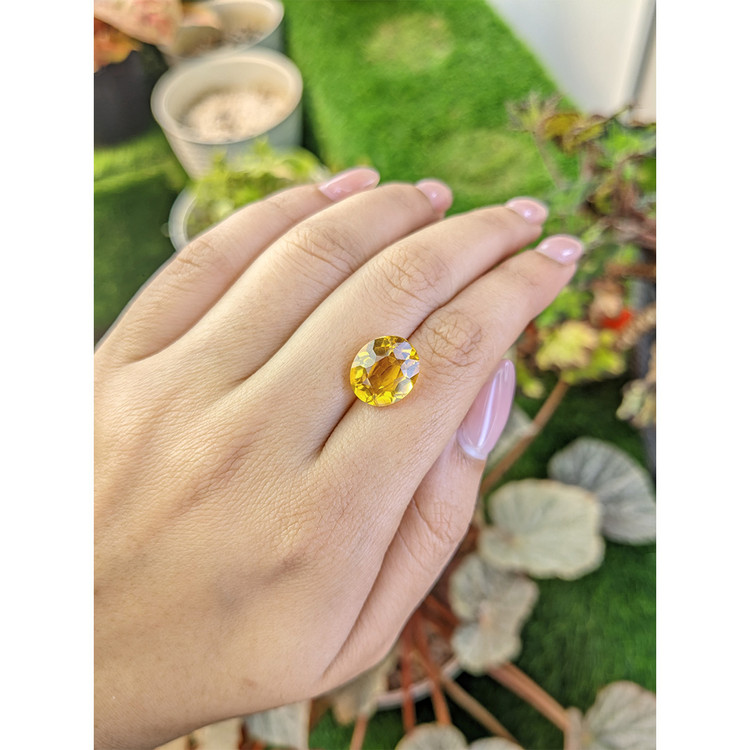
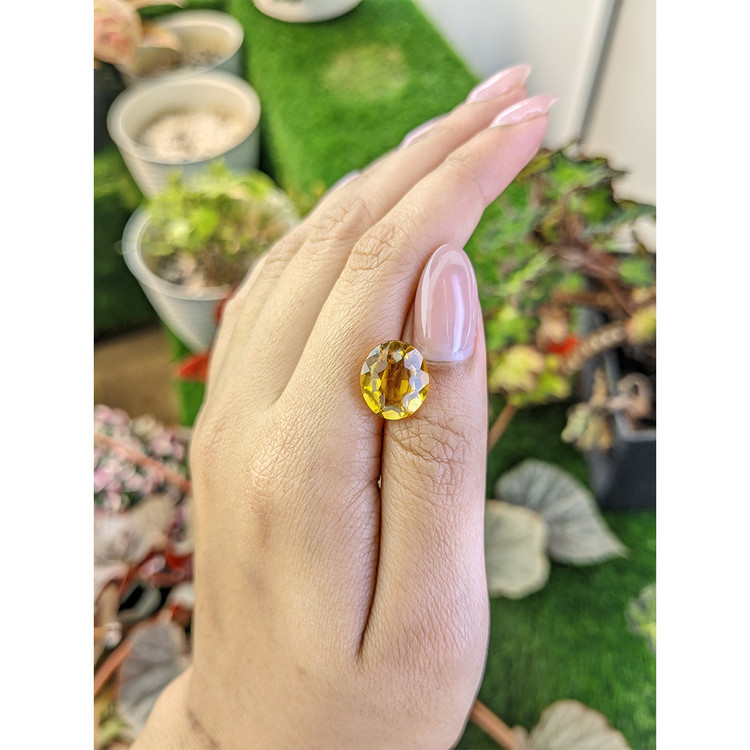

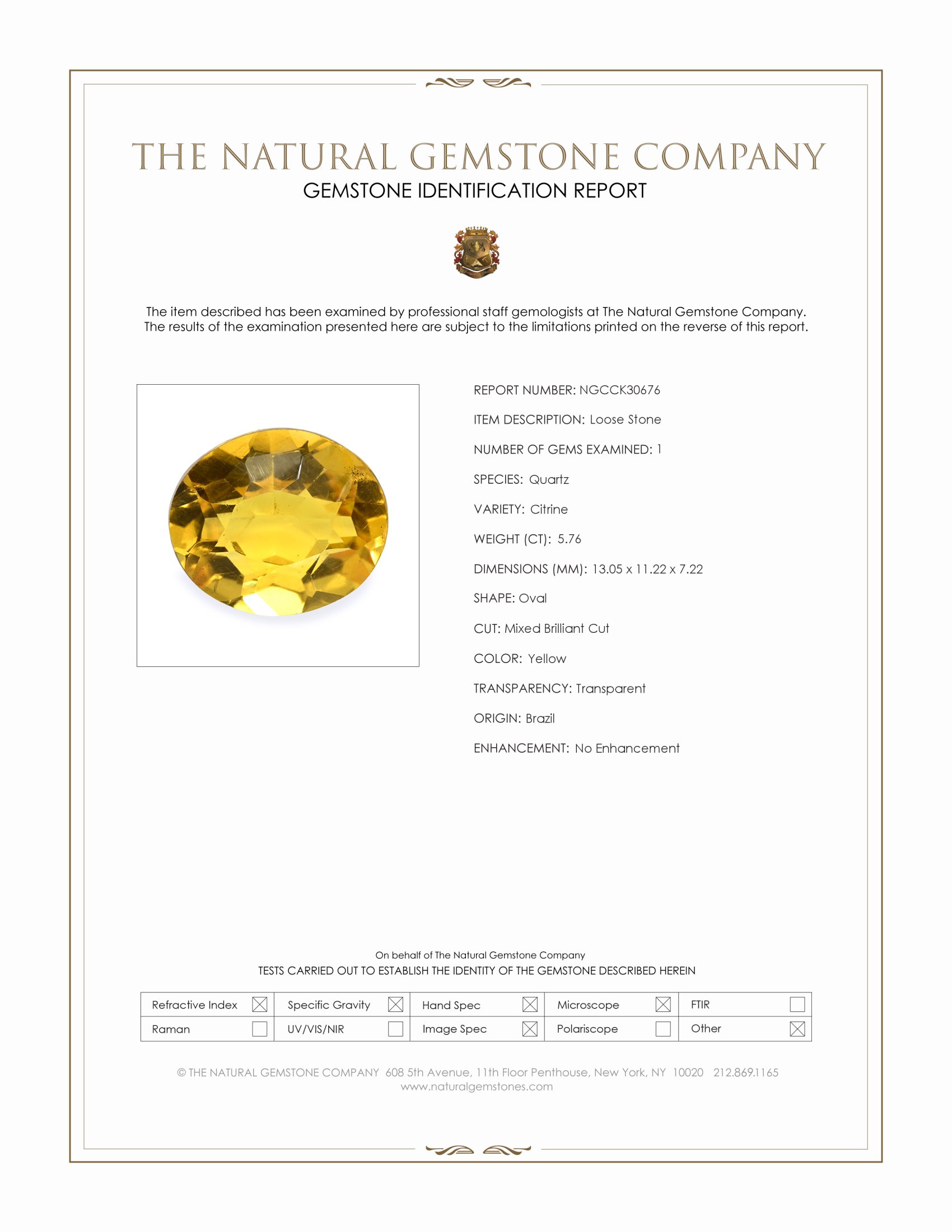
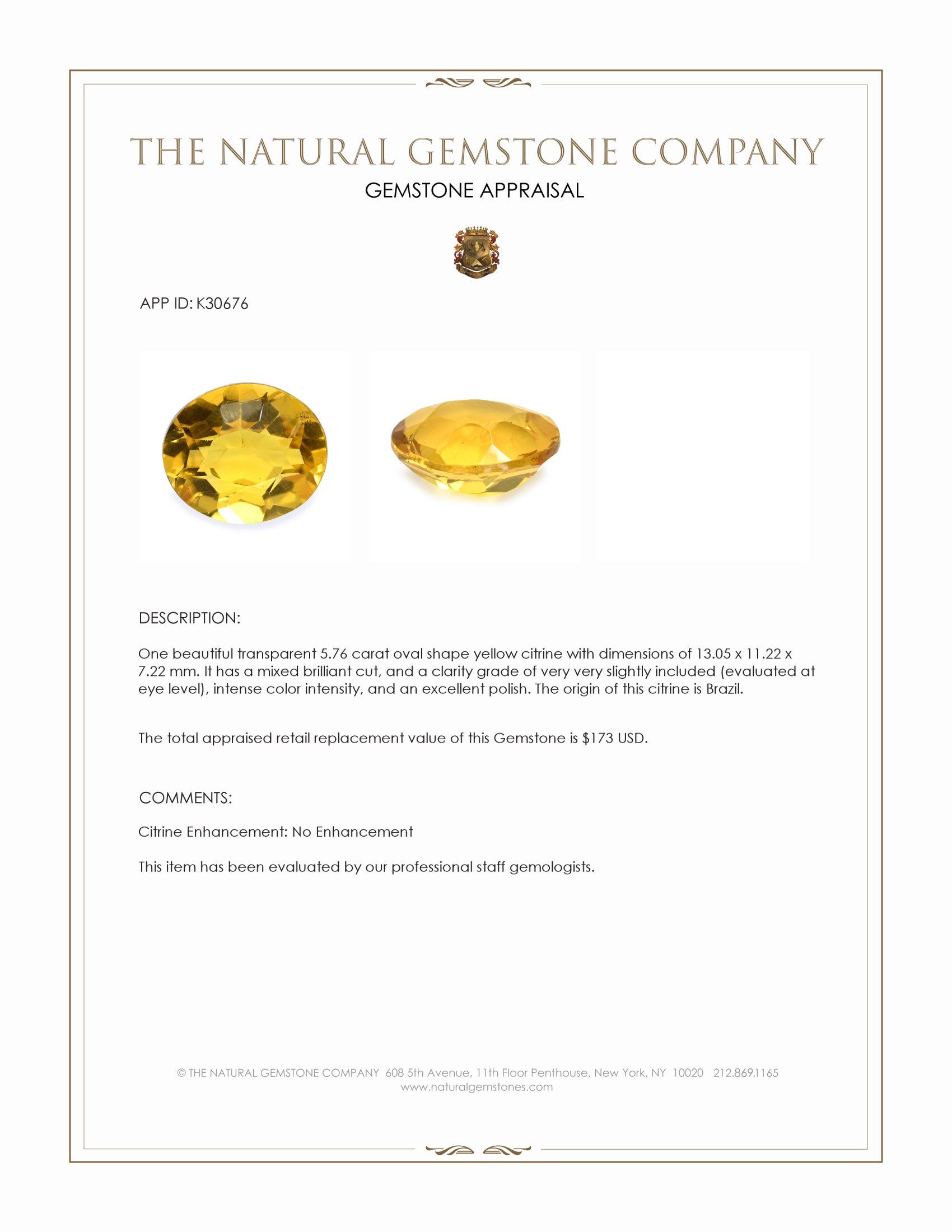
5.76 Ct. Yellow Citrine from Brazil
This loose stone is available to ship now
Item ID: | K30676 |
|---|---|
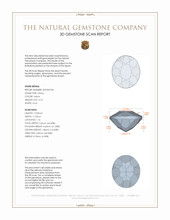
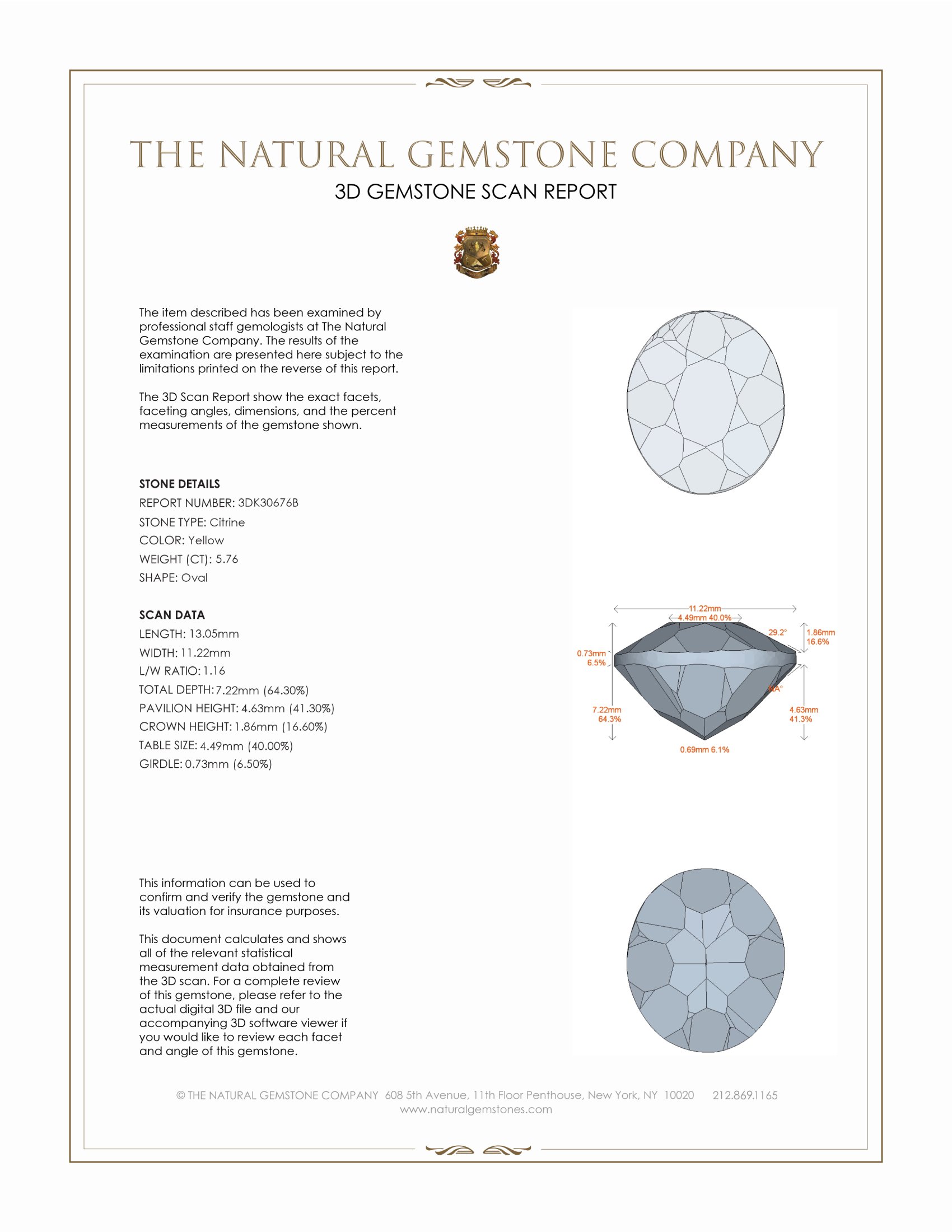
Dimensions (MM): help | Length: 13.05 Width: 11.22 Height: 7.22 |
Weight: | 5.76 Ct. |
Color: help | Yellow |
Color intensity: help | Intense |
Clarity: help | Very Very Slightly Included |
Shape: help | Oval |
Cut: | Mixed Brilliant Cut |
Cutting style: | Faceted |
Enhancements: help | No Enhancement |
Origin: help | Brazil |
Per carat price: help | $30 |
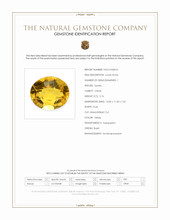
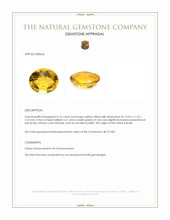
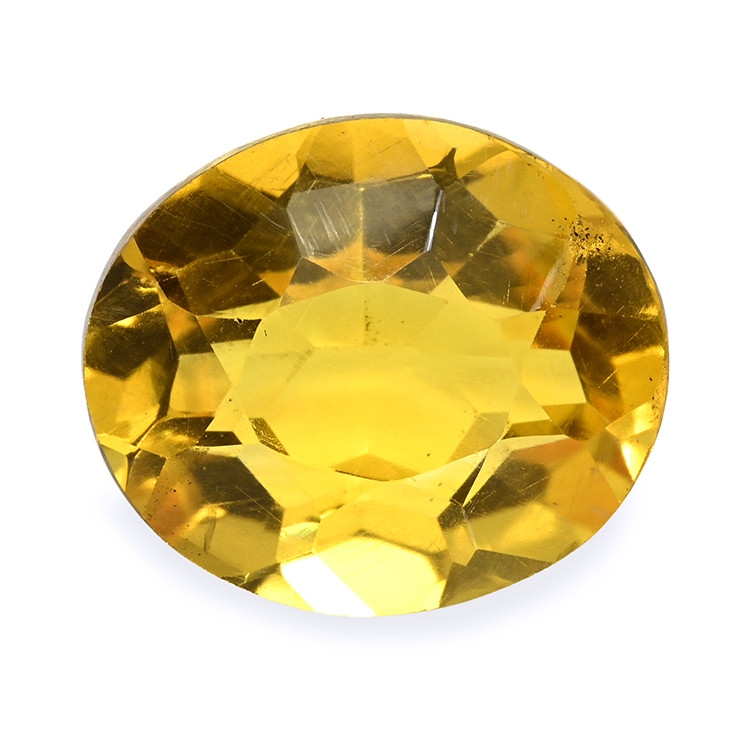
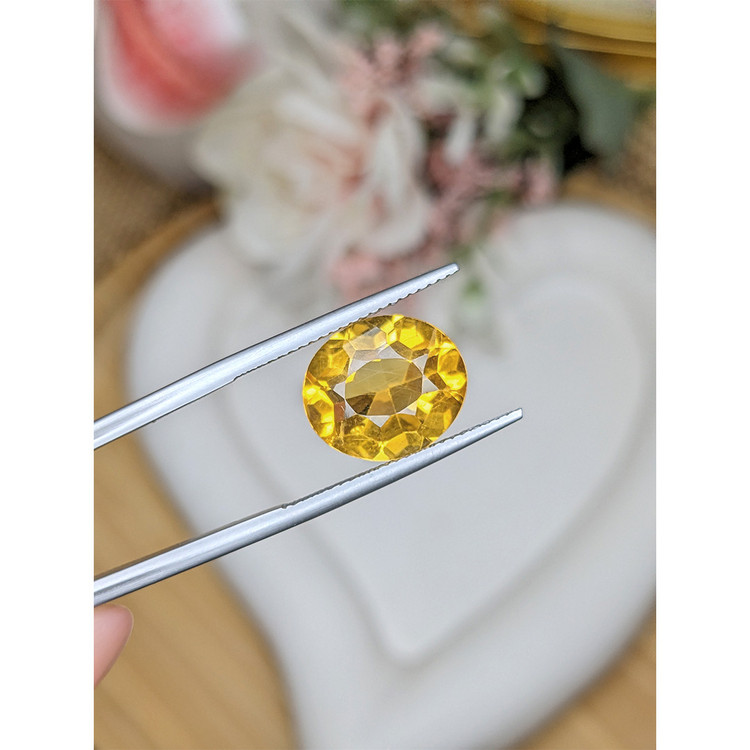
This 5.76 carat oval shaped yellow citrine from Brazil presents as a transparent, well proportioned collector grade specimen, measured at 13.05 by 11.22 by 7.22 millimeters, and cut in a faceted mixed brilliant style, exhibiting intense color intensity and a clarity grade assessed as very very slightly included at eye level, with no enhancement and an excellent polish, offered by The Natural Gemstone Company. The mixed brilliant approach in this piece combines a brilliant style crown with a modified pavilion geometry to balance scintillation with color saturation, and the cutter has optimized facet junctions and symmetry to produce uniform light return across the face of the stone. The oval outline is anatomically balanced for ring use, with an elongated table plane that preserves color saturation while avoiding windowing, and the excellent polish indicates meticulous lapidary finish work that minimizes surface diffusion and maximizes naked eye transparency. The absence of heat treatment or other enhancement materially increases collector desirability, because natural, untreated yellow citrine of this weight and color is significantly less common than treated material, and the Brazilian origin aligns with established provenance expectations for high quality quartz group gemstones.
From an optical and gemological perspective this citrine inherits the intrinsic properties of macrocrystalline quartz, with a refractive index in the expected range for quartz, a low dispersion value, and a relatively modest birefringence, and these physical constants inform cutting strategy and visual behavior. Because dispersion is low in quartz, brilliance and scintillation are primarily the result of facet architecture and polished facet clarity rather than fire, and the mixed brilliant cut here leverages numerous small crown facets to produce lively scintillation while the pavilion planes are tuned to reinforce color depth. The gem displays even color zoning that reads as a rich golden yellow under daylight and warm incandescent light, which indicates homogeneous chromophore distribution and effective orientation during cutting. Clarity is effectively eye clean, and microscopic inclusions that may be present do not interrupt light transmission or alter the stone color, which supports both aesthetic quality and valuation metrics. Hardness at Mohs seven, combined with a specific gravity around 2.65, makes this citrine suitable for everyday wear in most jewelry settings when properly secured, and the excellent polish further improves wear performance by reducing surface abrasion sites.
The physical proportions of this citrine reflect deliberate weight retention and optical optimization, because the measured depth of 7.22 millimeters yields a depth percent of approximately 59.5 percent when calculated against the average of length and width, which sits inside preferred ranges for oval mixed cuts and supports a balanced face up appearance, strong table brightness, and minimized windowing. The cutter achieved a refined girdle profile and consistent facet symmetry so that pavilion angles and crown relationships favor maximum light return without sacrificing carat weight, and this level of craftsmanship is evident in the uniform dispersion of brilliance across the stone face in the supplied images. The mixed brilliant facet schema is particularly effective for citrine because it enhances scintillation while preserving color saturation that can be diluted by overly shallow cutting, and the present stone demonstrates the trade off in favor of visual depth and color intensity. For design professionals this citrine’s dimensions and optical behavior make it immediately adaptable to bespoke ring or pendant settings, and the gem sits at a weight threshold where both wearable proportions and investment grade classification intersect.
From an investment standpoint this 5.76 carat, untreated Brazilian yellow citrine has several attributes that support future appreciation potential, and those attributes are technical in nature and verifiable with standard gemological reporting. First, the combination of substantial carat weight, intense natural color, and eye level clarity creates a scarcity profile that is quantifiable in the colored gemstone market, because most larger yellow citrines encountered at retail price points are the result of heat treated amethyst, whereas untreated material of this hue and size commands a premium. Second, provenance from Brazil contributes to market confidence, because Brazilian quartz deposits have historically produced transparent material with consistent color, and buyers place higher value on documented origin. Third, the absence of enhancement eliminates ambiguity in disclosure and adds liquidity in secondary markets, because untreated stones are preferred by collectors and certain institutional buyers. Market trends for natural colored gemstones have shown increasing collector interest in distinct, single origin, and untreated stones, and under those conditions a professionally documented piece with certified parameters such as this one typically exhibits moderate to strong appreciation over a multi year horizon, especially when held as part of a diversified gemstone portfolio. For maximum marketability and value preservation The Natural Gemstone Company recommends third party certification, insured storage, and documentation of provenance at the point of sale, because a formal report that states weight, dimensions, cut style, clarity assessment, color grade, absence of treatment, and origin materially enhances resale prospects and can reduce buyer due diligence friction in auction and private sale venues.


