
- Stone16
- Reports3


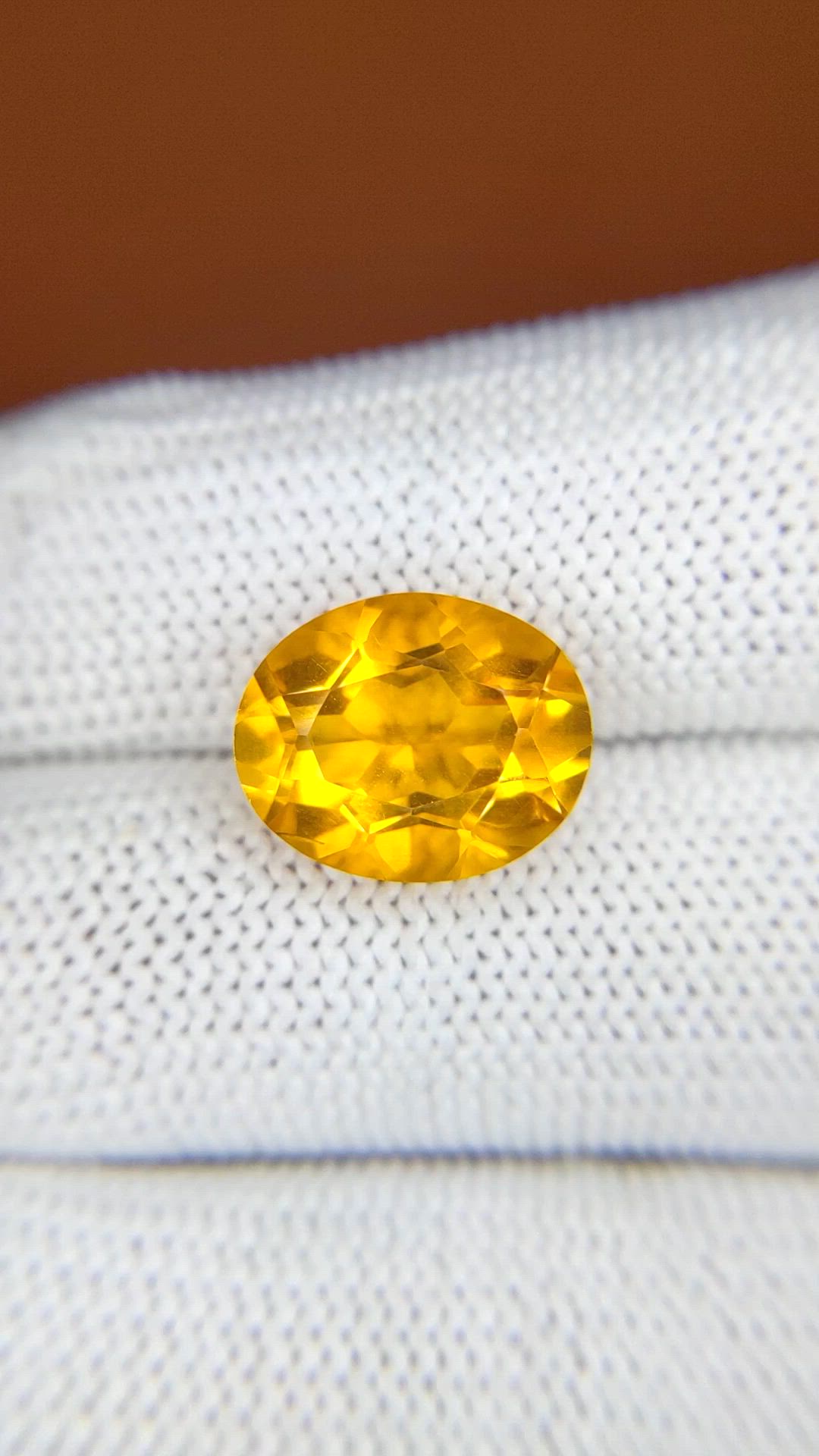
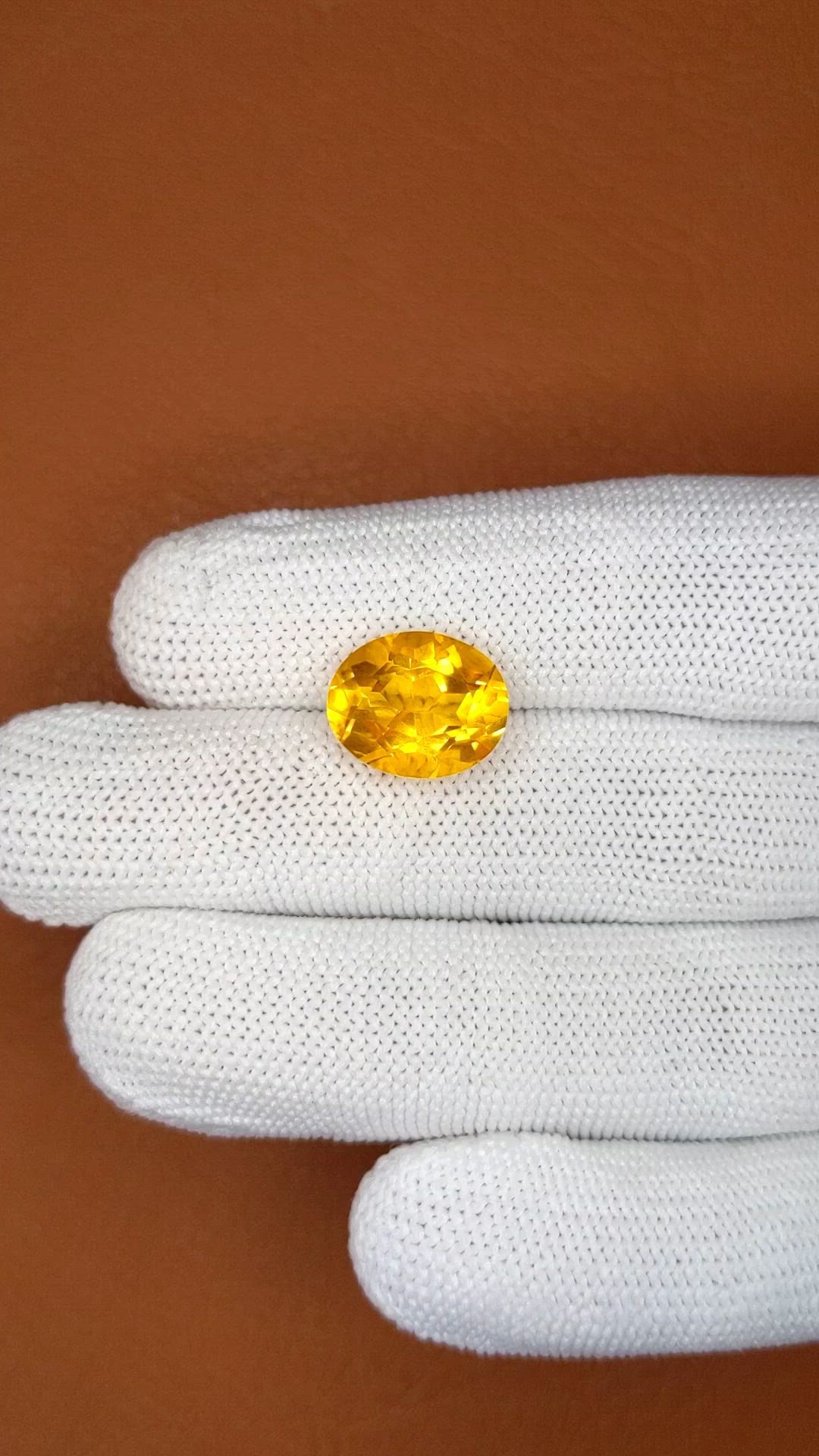
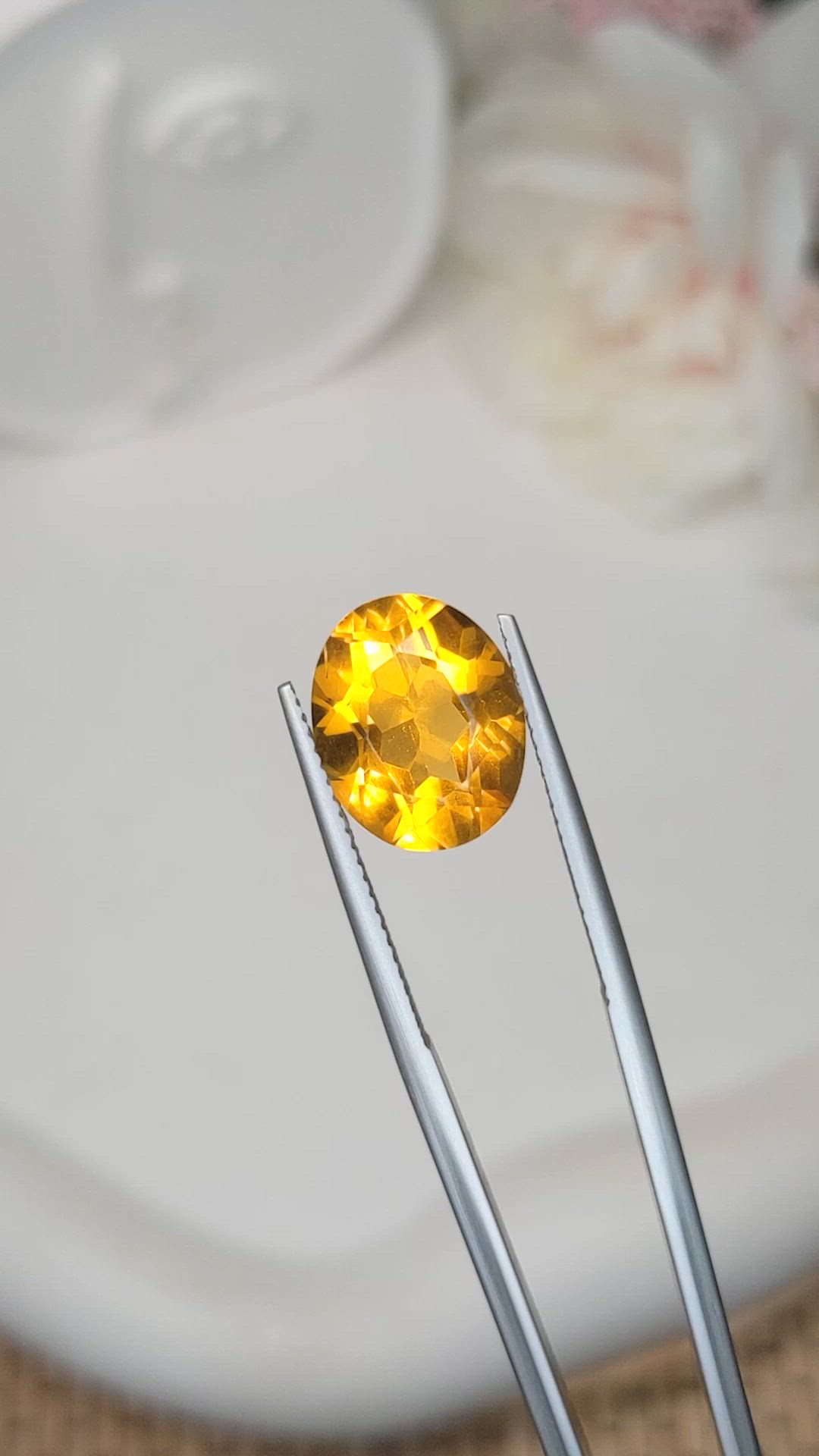
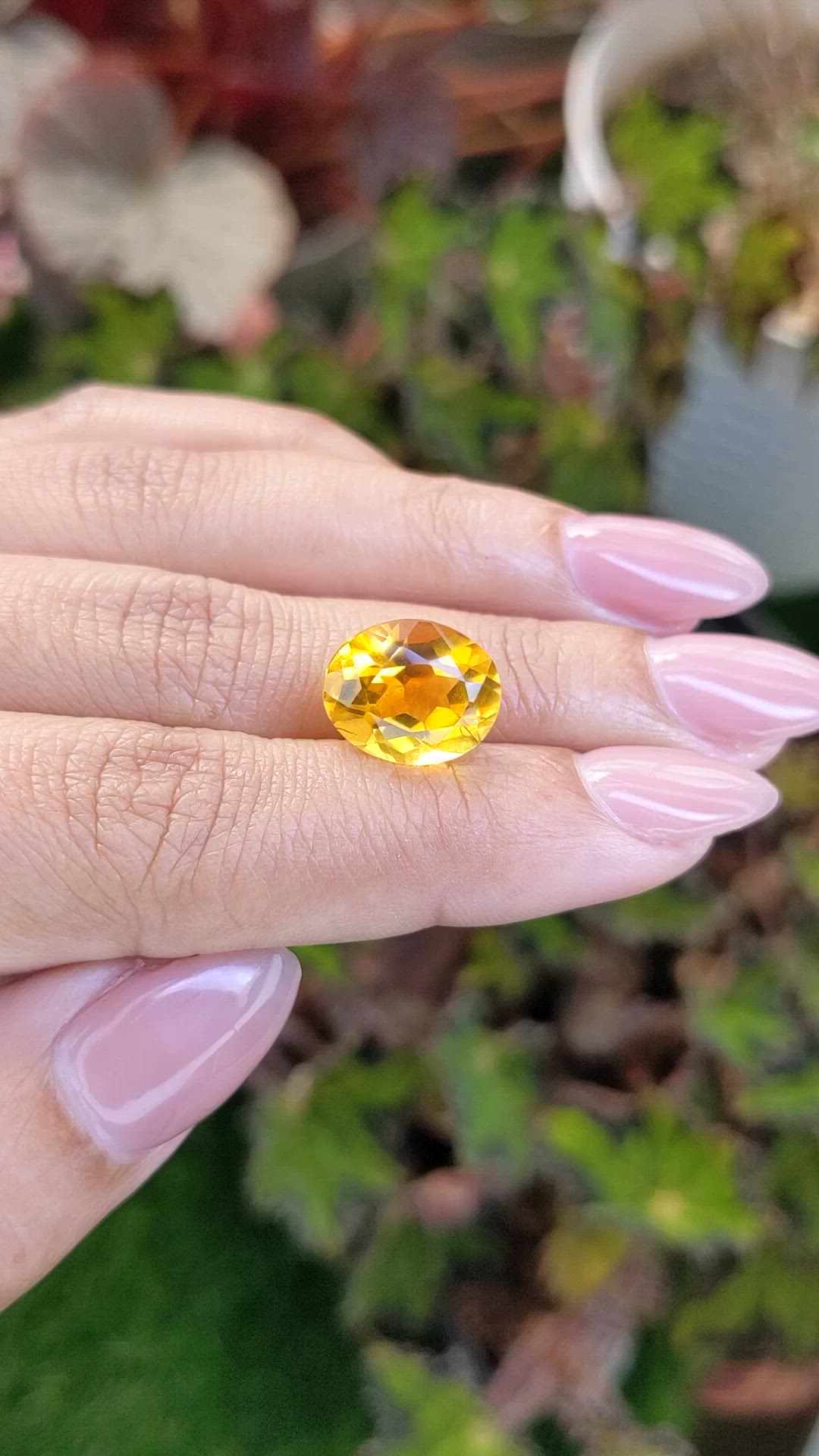
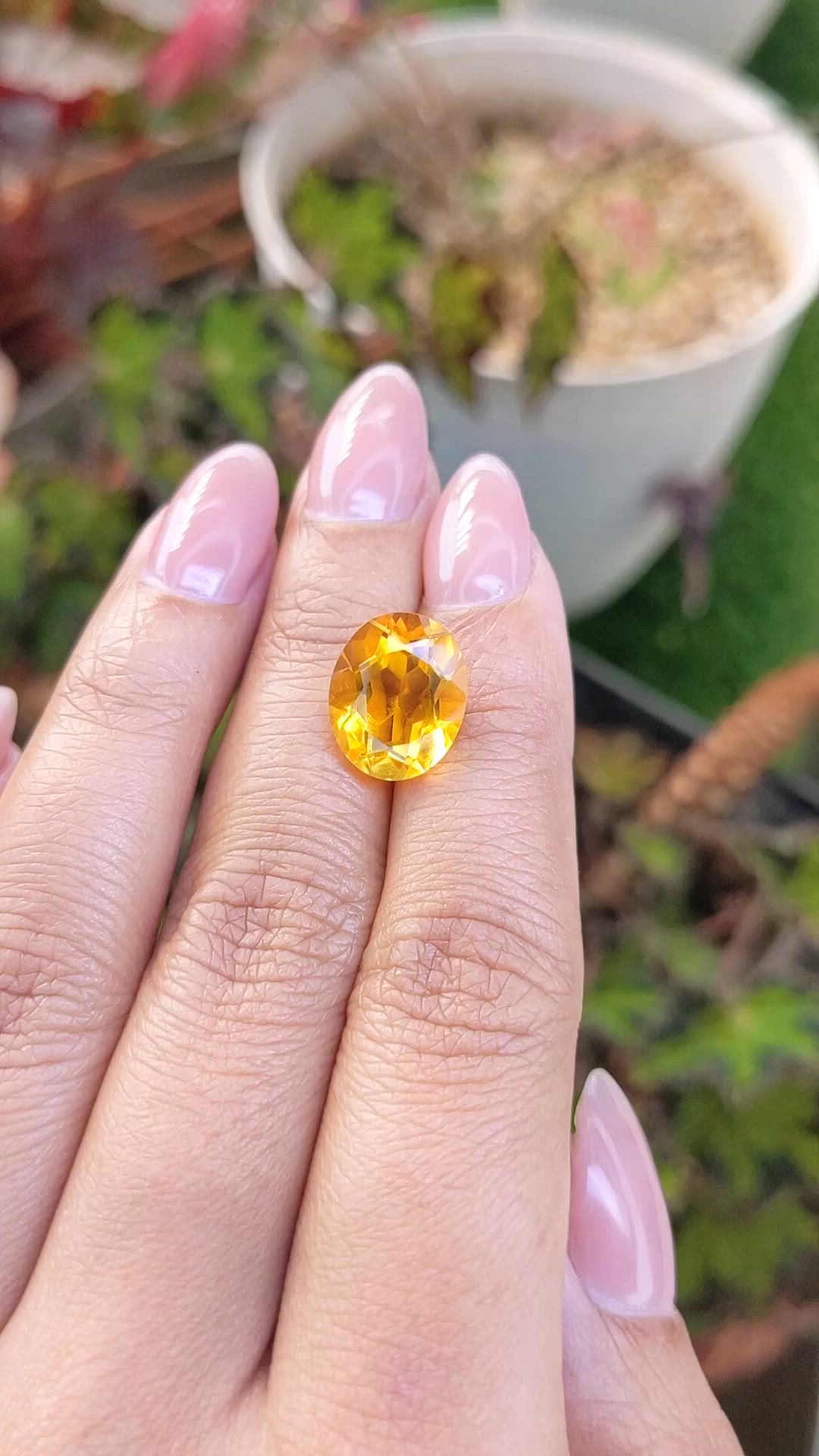
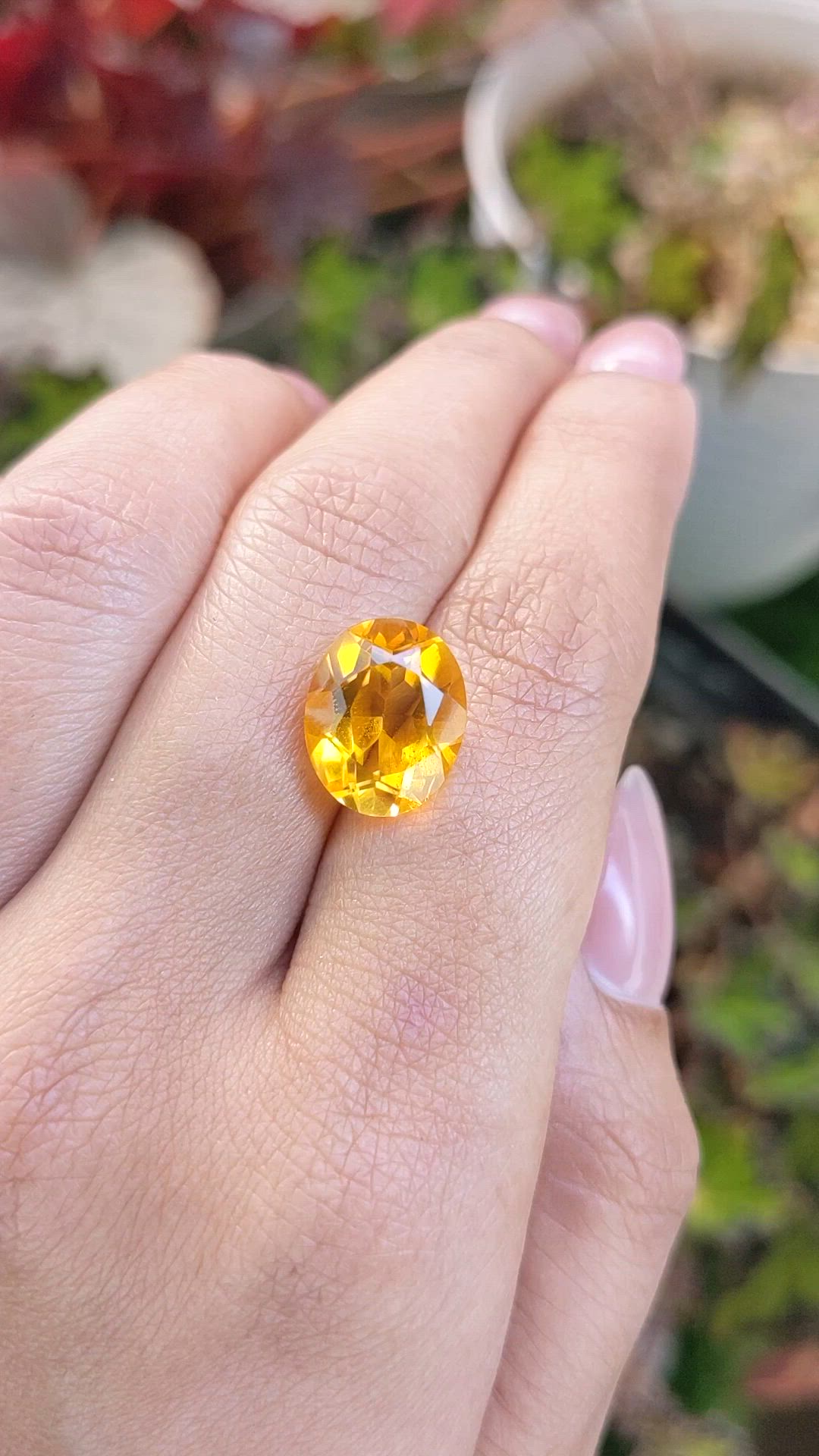



5.83 Ct. Orangish Yellow Citrine from Brazil
This loose stone is available to ship now
Item ID: | K29234 |
|---|---|
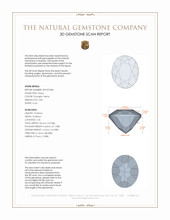
Dimensions (MM): help | Length: 13.04 Width: 10.6 Height: 7.81 |
Weight: | 5.83 Ct. |
Color: help | Orangish Yellow |
Color intensity: help | Intense |
Clarity: help | Very Very Slightly Included |
Shape: help | Oval |
Cut: | Mixed Brilliant Cut |
Cutting style: | Faceted |
Enhancements: help | No Enhancement |
Origin: help | Brazil |
Per carat price: help | $20 |
This 5.83 carat oval citrine presents a precise gemological specification that speaks to both its aesthetic presence and its technical merit. The stone is faceted in an oval outline, with finished dimensions measuring 13.04 by 10.60 by 7.81 millimeters, yielding a length to width ratio of 1.23 and a depth percentage of approximately 66.1 percent, proportions that balance face up spread with controlled pavilion volume. The cutter selected a mixed brilliant cut, an approach that integrates brilliant style facets to enhance scintillation, with carefully balanced pavilion facet geometry to direct light back through the crown. At face up inspection the polish is excellent, facet junctions are crisp, and symmetry is well maintained, which together contribute to uniform light return and minimal windowing across the table. Clarity has been graded as very very slightly included at eye level, meaning inclusions are negligible to the unaided observer and do not impede the gem s brilliance, this level of clarity is especially desirable in quartz material when paired with strong color. The gem is transparent, and all finishing was performed to maximize optical performance while preserving weight from the rough.
Color is a defining attribute of this oval, the hue reads as an orangish yellow with intense saturation, producing a warm, golden appearance that remains vivid in both direct and diffuse lighting. Color distribution is even across the table and through the pavilion, without localized zoning, which indicates skillful orientation of the rough during cutting and a high quality of the source material. This stone is reported as unenhanced, no treatment, a distinction that carries market significance, because many commercial citrines derive their tone from heat altered amethyst or smoky quartz. Origin is Brazil, a well established provenance known for producing clean, deeply colored citrine crystals, and provenance often influences collector confidence. From a gem physics perspective the material benefits from quartz s refractive index range of approximately 1.544 to 1.553, a modest dispersion near 0.013, and a Mohs hardness of 7, factors that combine to yield lively facet scintillation under good cutting, stable wearability for everyday jewelry, and restrained fire that emphasizes color rather than high dispersion flashes.
The 5.83 carat weight plays a central role in the stone s value profile and its relative rarity in an unenhanced state. In citrine the market shows a nonlinear price curve as weight increases, because larger, clean, vividly colored crystals suitable for precise faceting are less common, and the premium per carat typically rises for sizes above the mid single carat range. A near six carat gem with very very slight eye level inclusions, intense orangish yellow saturation, and no enhancement, represents a confluence of desirable attributes that appeals to both designers seeking a visually commanding center stone, and to collectors focused on natural provenance and craftsmanship. The mixed brilliant faceting further amplifies the perceived size by optimizing light return and contrast, thus enhancing face up presence for settings where the gem is viewed from above. For lapidaries and jewelers, the proportions present predictable mounting parameters, the slightly deep profile offers security for prong or bezel settings without excessive pavilion sacrifice, and the oval outline facilitates a broad range of design applications from solitaire rings to statement pendants. This specimen is offered by The Natural Gemstone Company, and it represents a calibrated combination of weight, color intensity, clarity, and cutting quality that commands attention in technical evaluations and in finished jewelry presentations.


