
- Stone13
- Reports3
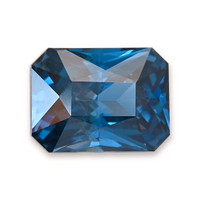
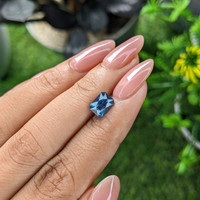
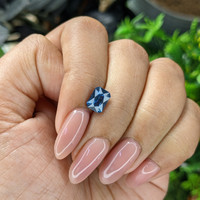
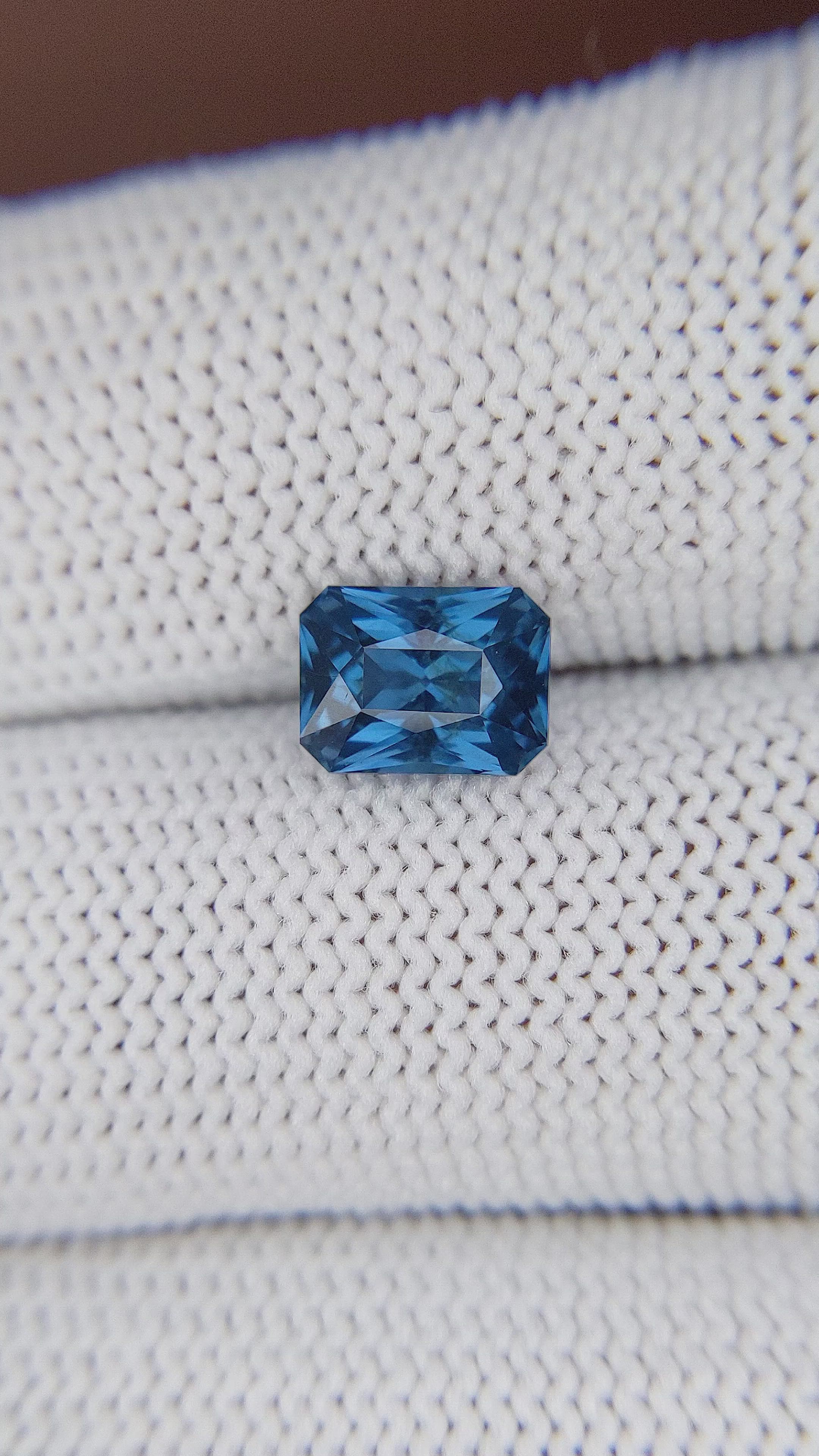
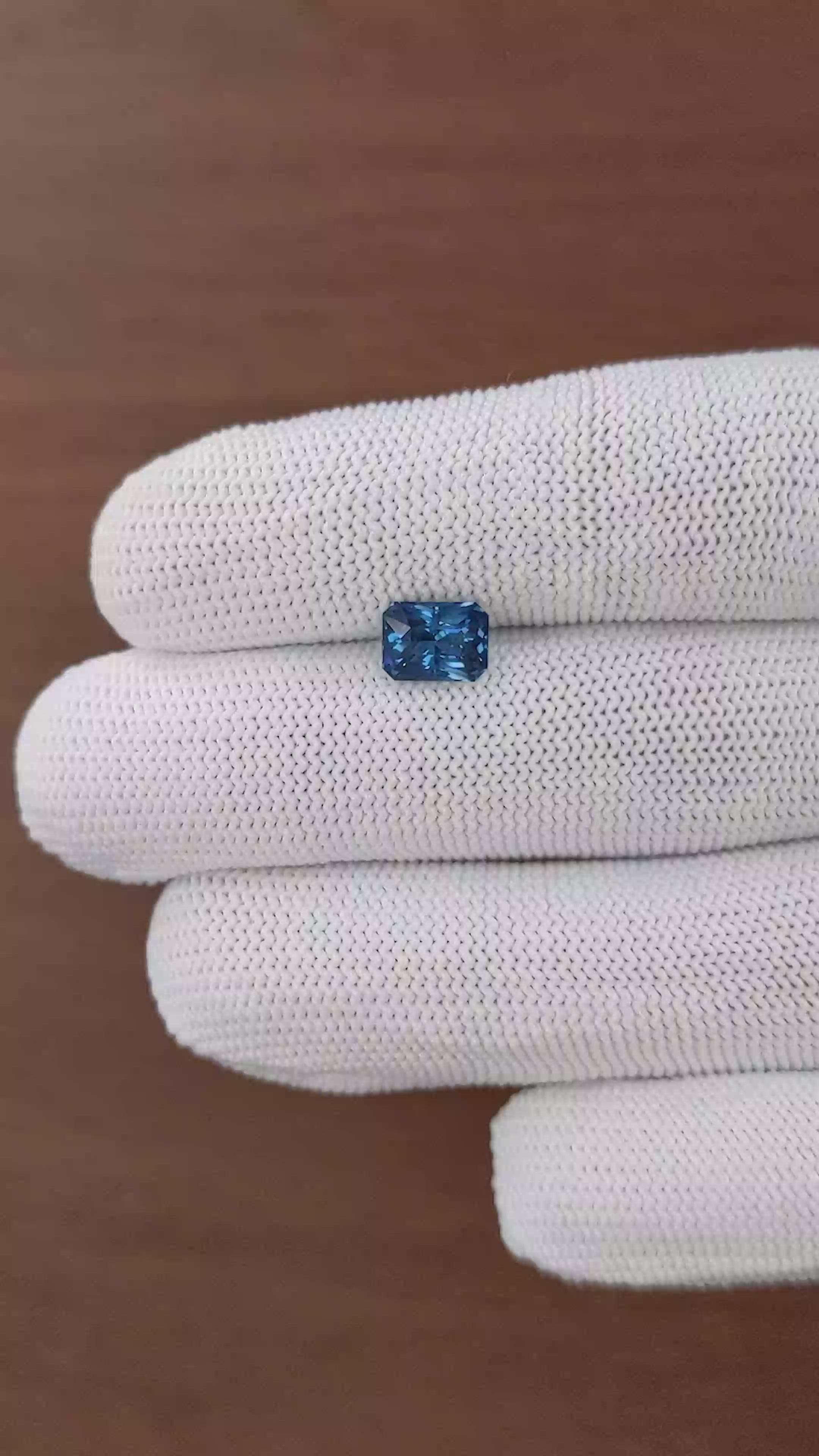
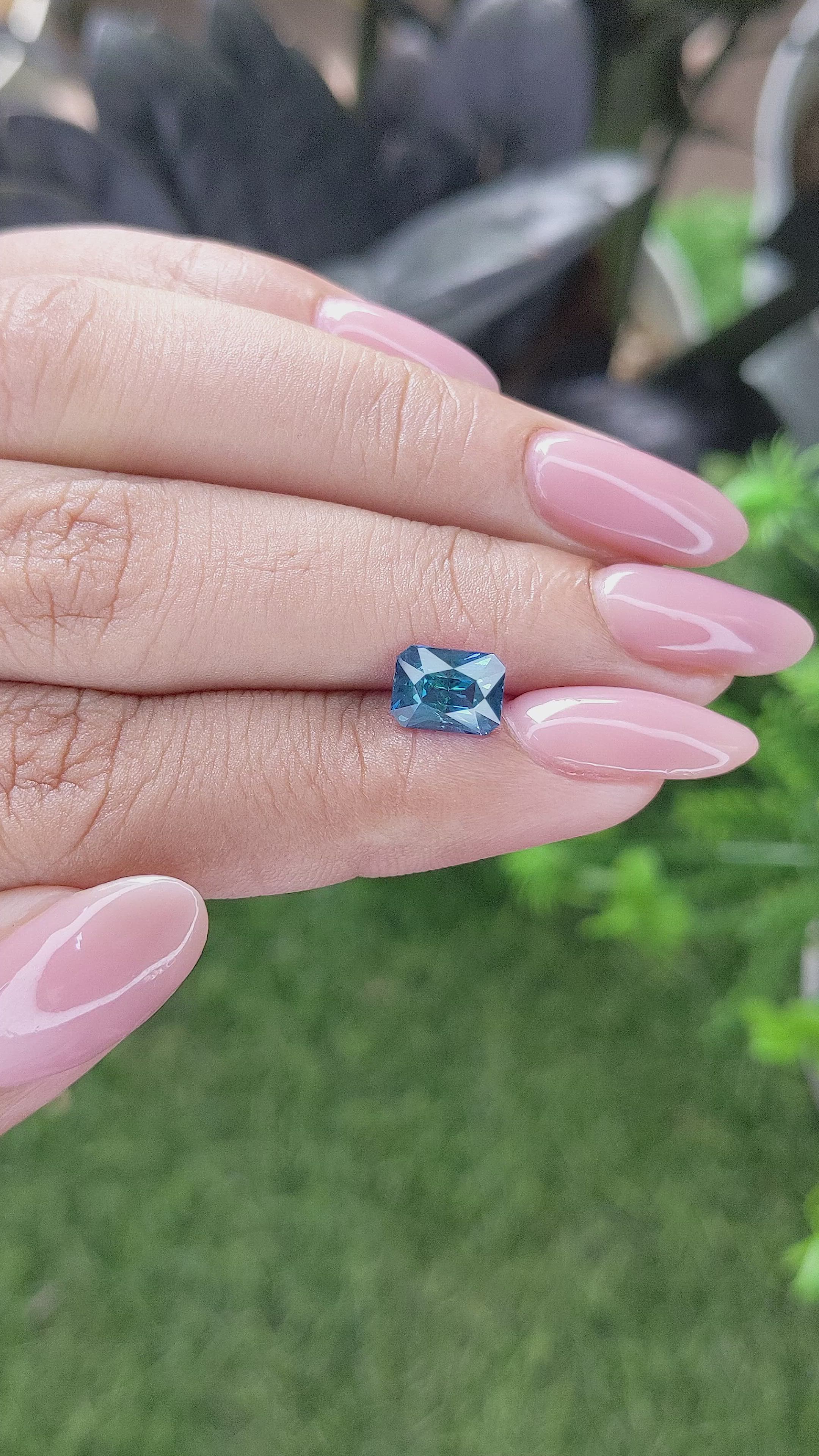
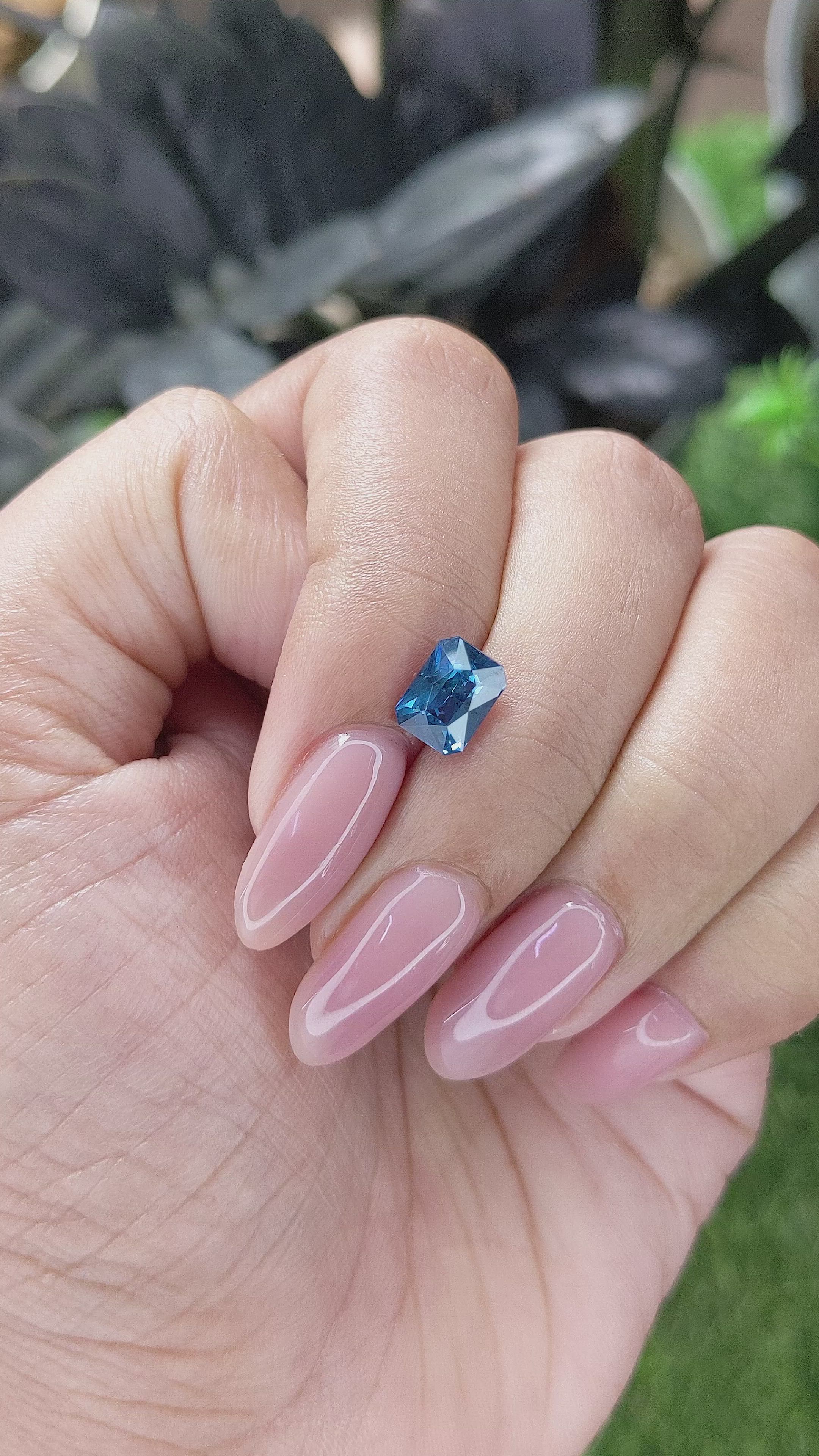
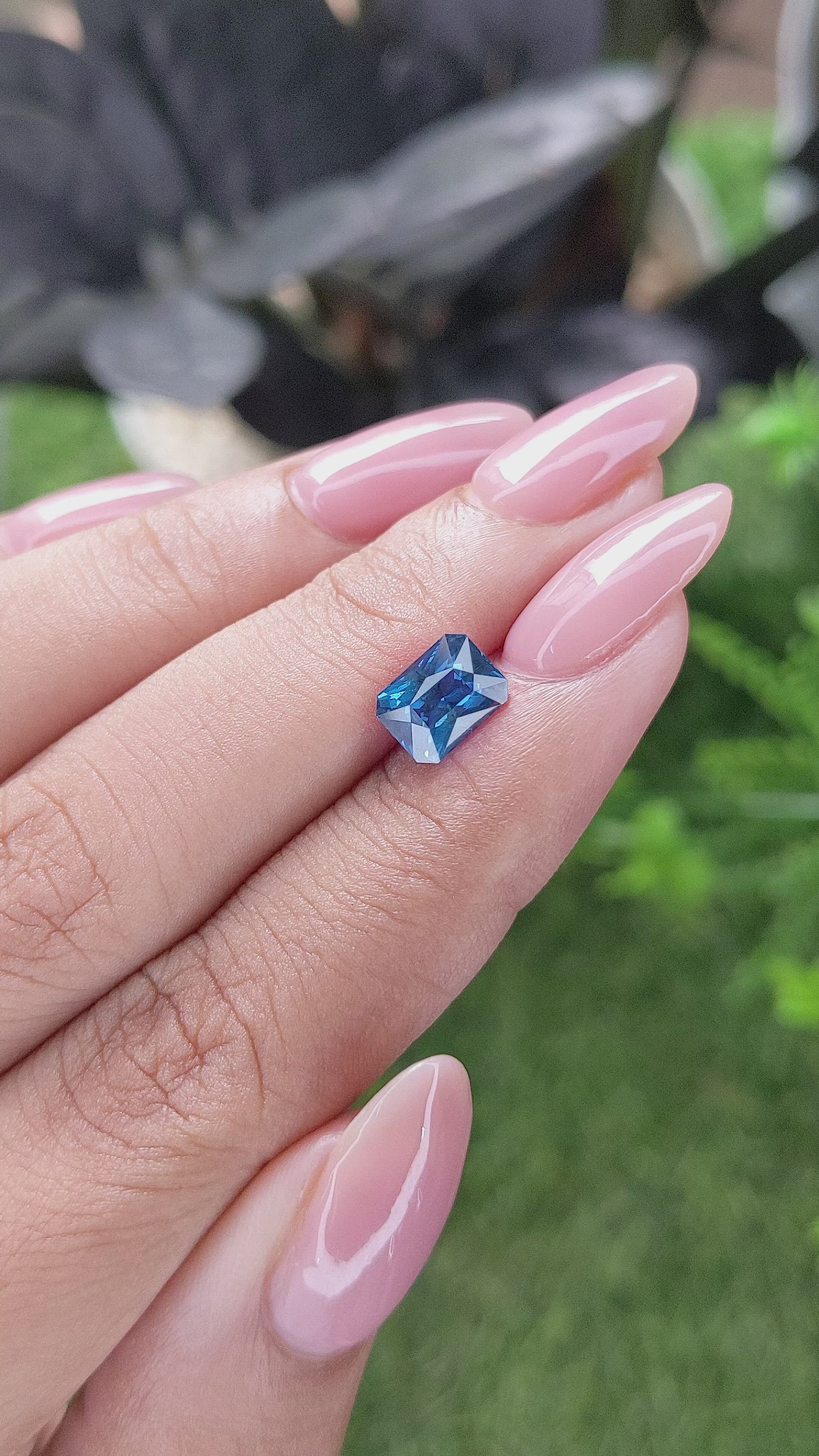


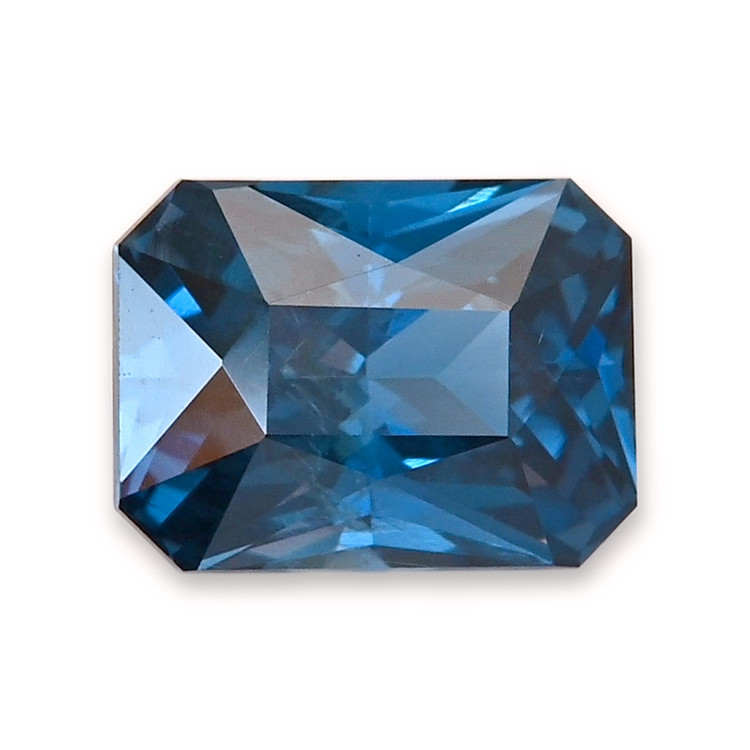
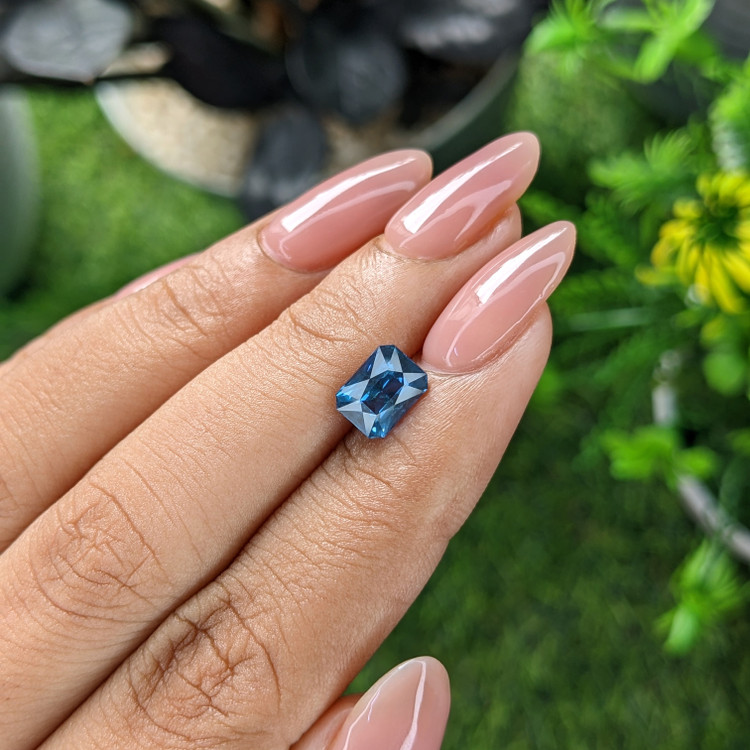
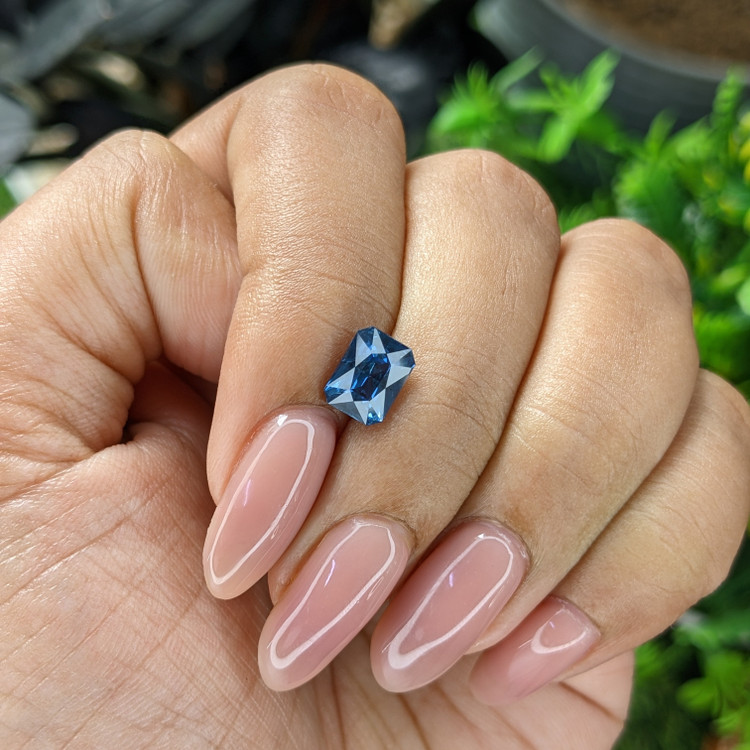


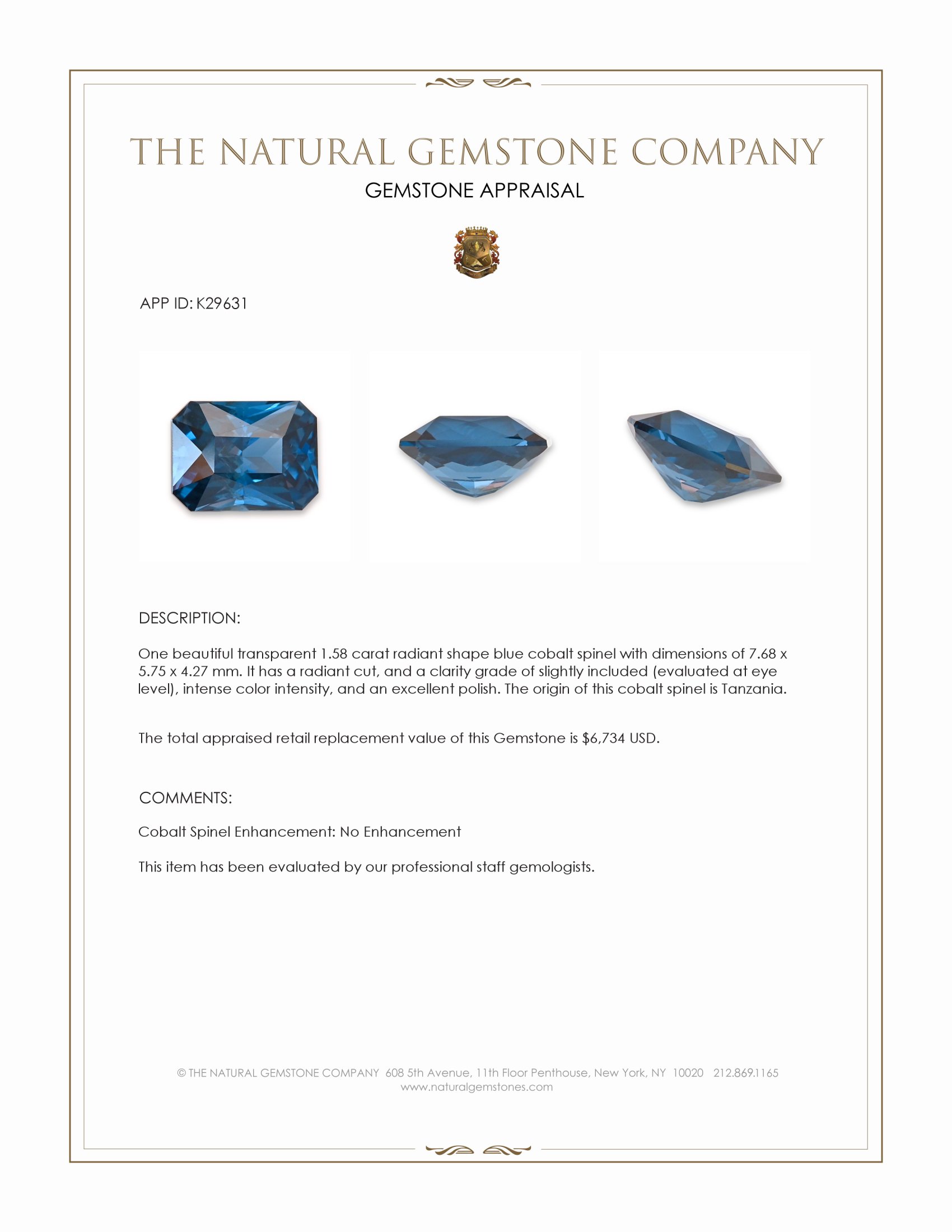
1.58 Ct. Blue Cobalt Spinel from Tanzania
Item ID: | K29631 |
|---|---|
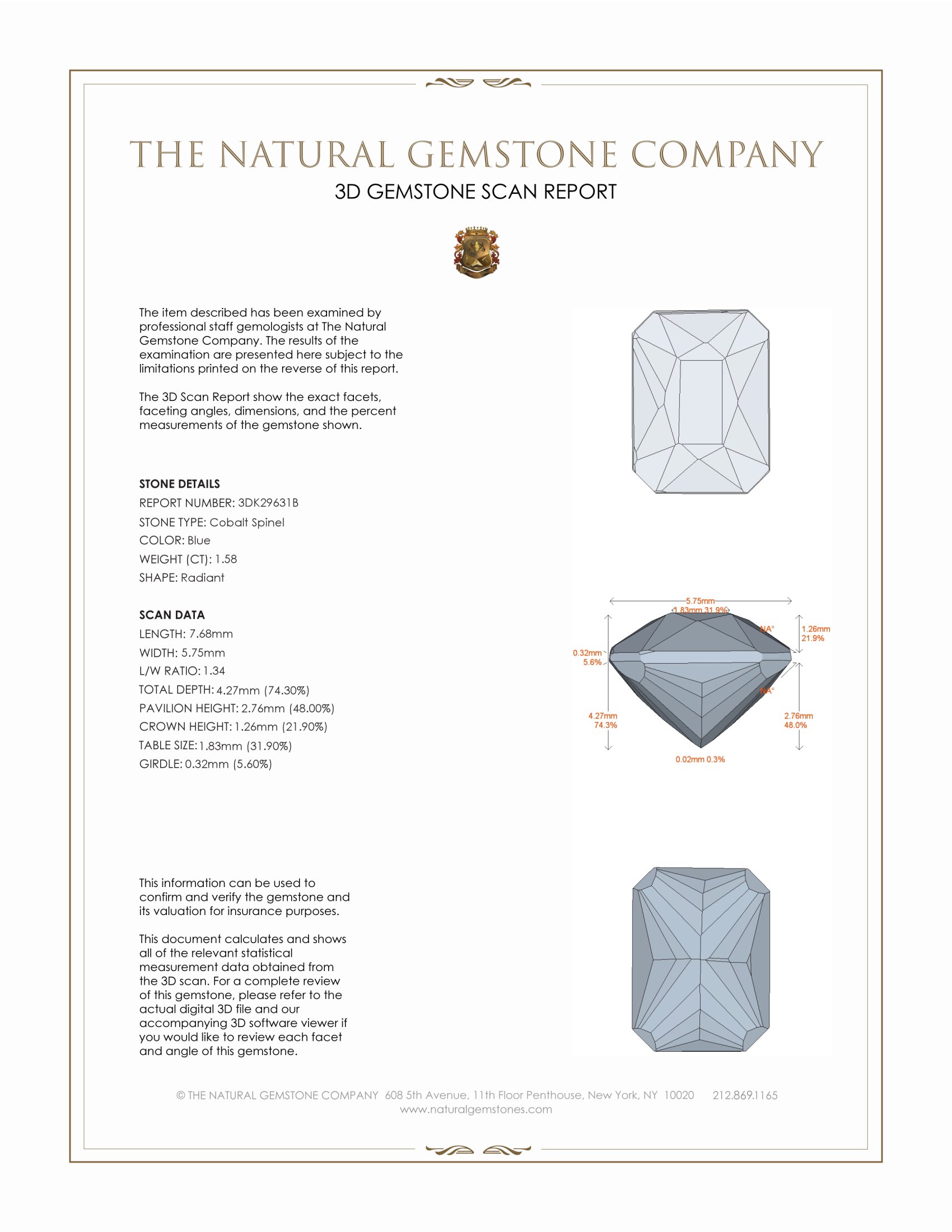
Dimensions (MM): help | Length: 7.68 Width: 5.75 Height: 4.27 |
Weight: | 1.58 Ct. |
Color: help | Blue |
Color intensity: help | Intense |
Clarity: help | Slightly Included |
Shape: help | Radiant |
Cut: | Radiant Cut |
Cutting style: | Faceted |
Enhancements: help | No Enhancement |
Origin: help | Tanzania |
Per carat price: help | $4,262 |
This is a transparent 1.58 carat cobalt spinel, cut in a radiant shape, measuring 7.68 by 5.75 by 4.27 millimeters, originating from Tanzania, and offered by The Natural Gemstone Company. The gem is faceted with a classic radiant cut, combining trimmed corners and a hybrid facet arrangement that balances step style planes and brilliant style facets. The clarity is graded slightly included at eye level, indicating small internal characteristics that are visible only under careful scrutiny and that do not materially interfere with the gem's overall transparency and light return. The color is intense, exhibiting a deep, saturated blue that is uniform across the pavilion and crown, and the polish is excellent, producing sharp facet edges and crisp facet junctions that maximize scintillation. No enhancement has been performed, so the color and optical qualities are entirely natural, which is a critical attribute for connoisseurs seeking provenance and integrity in a collector quality stone.
From a cutting and proportion standpoint this radiant cobalt spinel demonstrates technical refinement. The length to width ratio is approximately one point three four, creating a slightly elongated rectangular outline that reads elegant in ring and pendant designs. The measured depth relative to the average of the length and width works out to approximately sixty four percent, a depth that supports a full pavilion and a crown geometry tuned to light retention rather than mere dispersion. Radiant cuts rely on an intricate pavilion facet scheme to return light through the crown, and in this stone the pavilion angles and crown heights have been optimized to produce a lively balance of face up brilliance and internal contrast. The isometric crystal system of spinel means the material is singly refractive, so the stone does not display pleochroism, and the optical behavior is characterized by uniform color and stable saturation from all viewing angles. With a refractive index close to one point seven one eight and a specific gravity near three point six, spinel exhibits solid heft and a dense optical feel that contributes to perceived value. The hardness of spinel is eight on the Mohs scale, providing robust wearability for everyday jewelry, while the dispersion is modest which favors a velvety, saturated blue rather than an overly brilliant, flashy appearance.
The intense blue color of this cobalt spinel is the product of transition metal chromophores, principally cobalt ions substituting into the spinel lattice, producing a vivid hue that is both deep and clean. Unlike some blue gemstones that achieve their tone through heat treatment or diffusion, this gem is untreated, so the cobalt induced color is intrinsic to the crystal chemistry and lattice configuration. Eye level assessment of the slightly included clarity grade indicates that the inclusions are small, well distributed, and often positioned such that they serve to accent rather than diminish the stone by breaking up light in a controlled manner, adding to the classic character of a natural gem. The excellent polish enhances facet reflectivity and ensures that any light entering the crown is efficiently returned, emphasizing the saturated blue and the internal depth. For settings, the stone benefits from protective prong architecture on the corners given the radiant outline, or a bezel design that secures the trimmed corners while preserving the table and crown presentation.
When comparing this cobalt spinel to historically famous gemstones, it is informative to consider both spinel and sapphire traditions in royal and collector circles. Historical spinels such as the Black Prince Ruby that sit in European crown jewels demonstrate that spinel was prized by royalty long before modern gemology separated it from ruby, and those examples help to underscore the cultural and collector value of natural, well cut spinel. In technical terms, spinel differs from corundum in refractive and hardness properties, so a cobalt spinel will present a different optical expression than a Kashmir or Ceylon sapphire. Kashmir sapphires are renowned for a velvety cornflower blue produced by specific iron titanium interactions and tight silk inclusions, while this cobalt spinel achieves an intense blue saturation without pleochroism and with a cleaner field, resulting in a more uniformly deep tone across the table. Compared to famous diamonds such as the Hope Diamond, which derives part of its renown from high dispersion and strong fire, cobalt spinel is appreciated for color saturation and depth rather than dispersion. The untreated, natural origin from Tanzania places this stone in a lineage of notable East African gems that have entered important collections, and the combination of a classical radiant faceting scheme with an intense cobalt derived blue creates a profile that is technically distinct and readily comparable to elite, historic examples of blue gemstones.
The unique value of this Tanzanian cobalt spinel lies in the convergence of natural origin, technical cutting, and the rarity of strongly saturated blue in untreated spinel material. For collectors who prioritize natural color and traceable provenance, the absence of enhancement is a decisive attribute. For designers and jewelers who focus on craft, the radiant cut proportions and the excellent polish ensure precise facet meet and return, allowing the gem to perform optimally in both solitaire and multi stone settings. From a care and longevity perspective, the material offers excellent durability for daily wear when set with appropriate protection for the corners, and its isometric structure reduces risks related to directional cleavage. The Natural Gemstone Company stands behind the gemology and provenance, providing detailed measurements, accurate clarity description, and clarity to the craftsmanship applied to the cut. For buyers seeking a blue gemstone that blends historical resonance with modern cutting precision and natural, cobalt induced color, this one point five eight carat radiant cobalt spinel from Tanzania represents a technically interesting and collectible specimen that bridges the worlds of historical gem appreciation and contemporary jewelry craft.


