
- Pair13
- Reports4


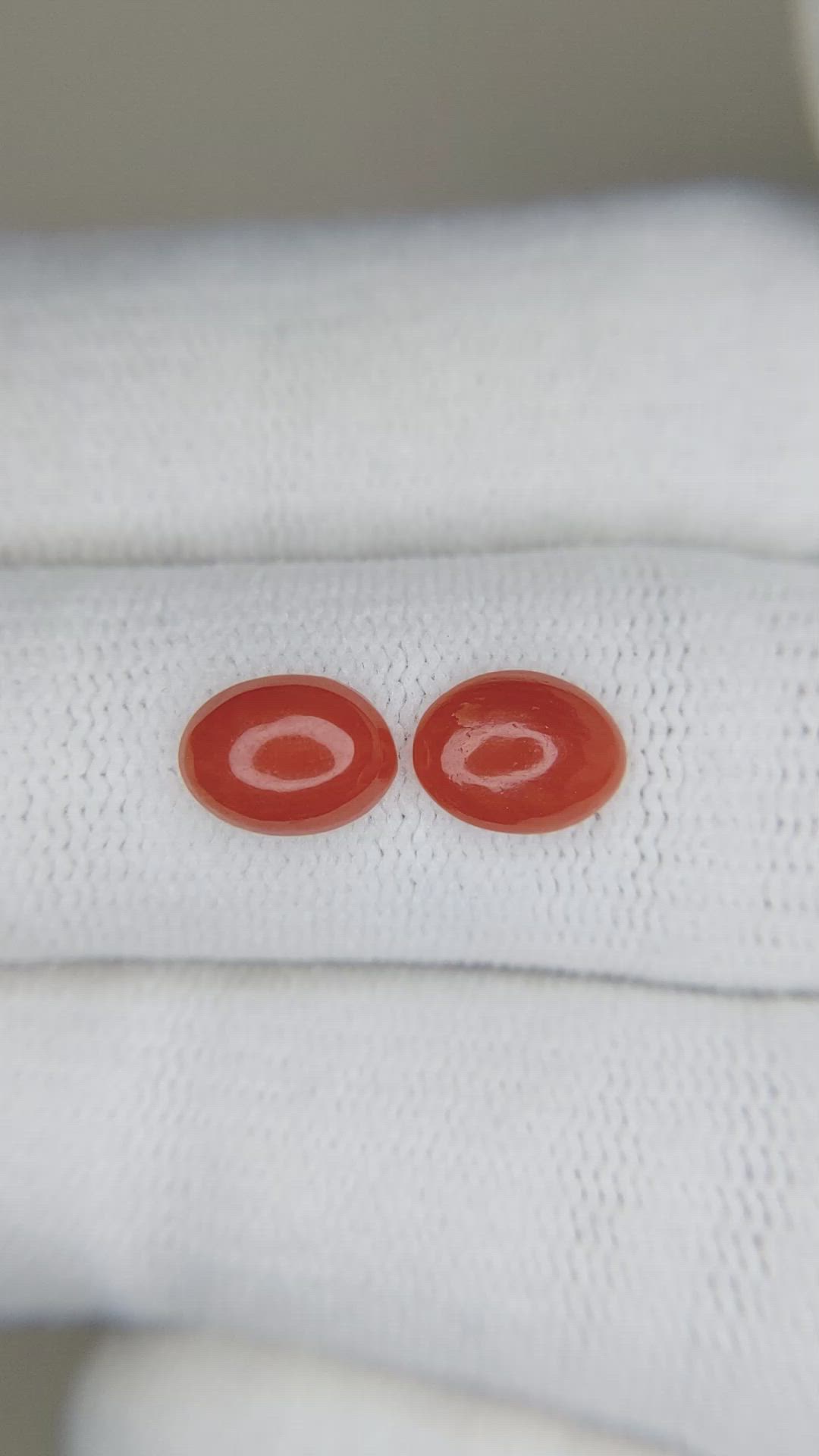
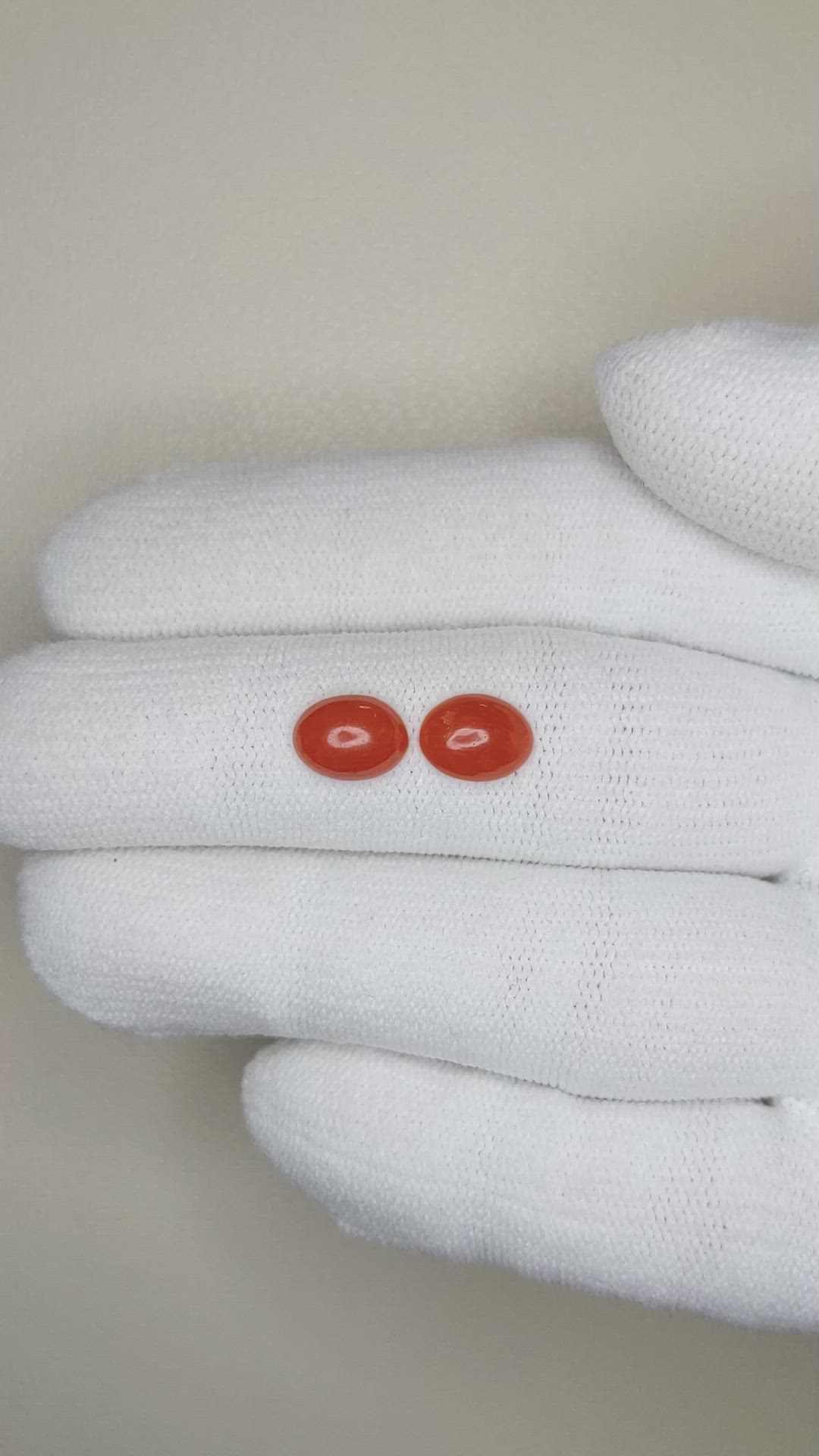
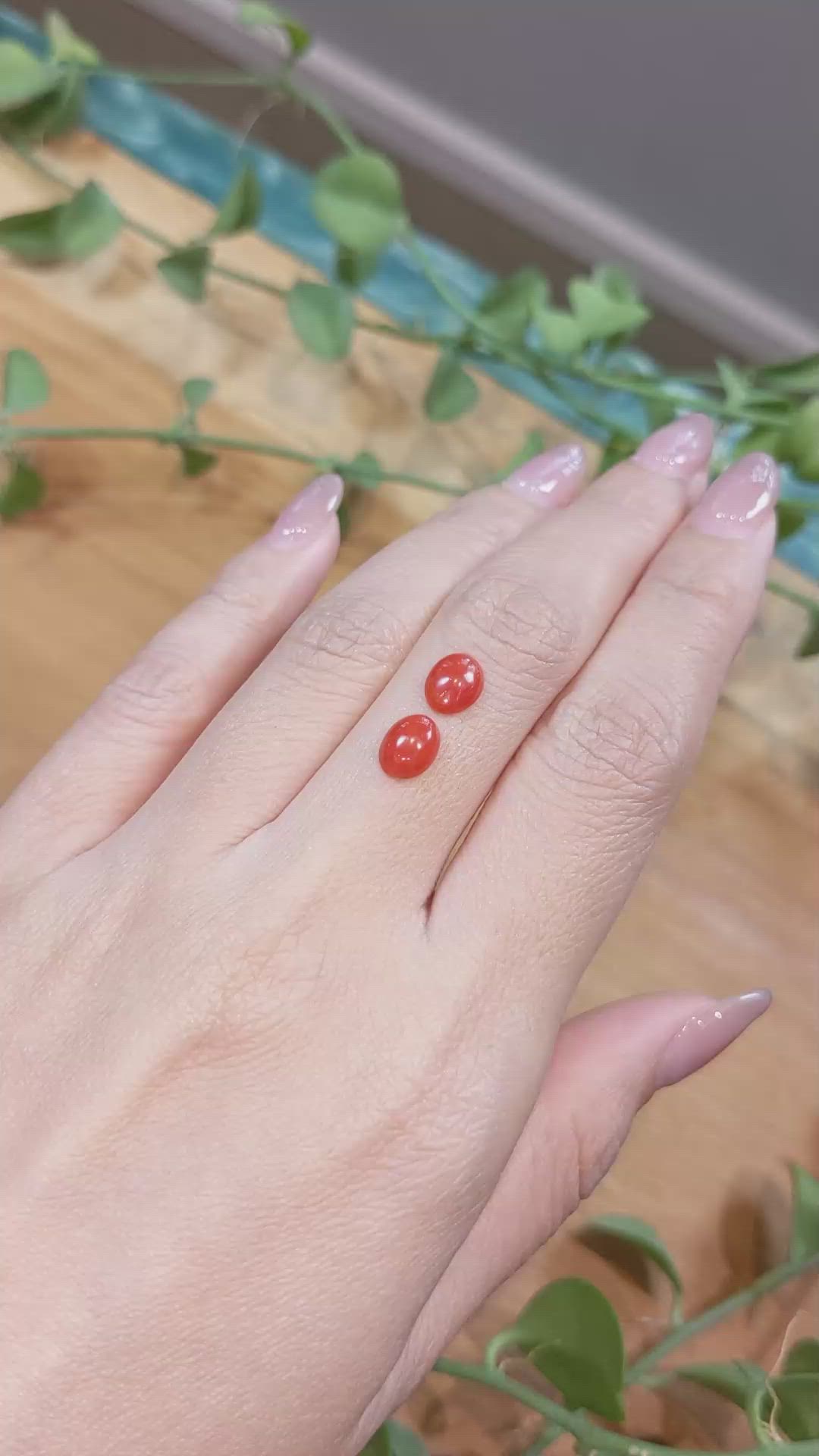
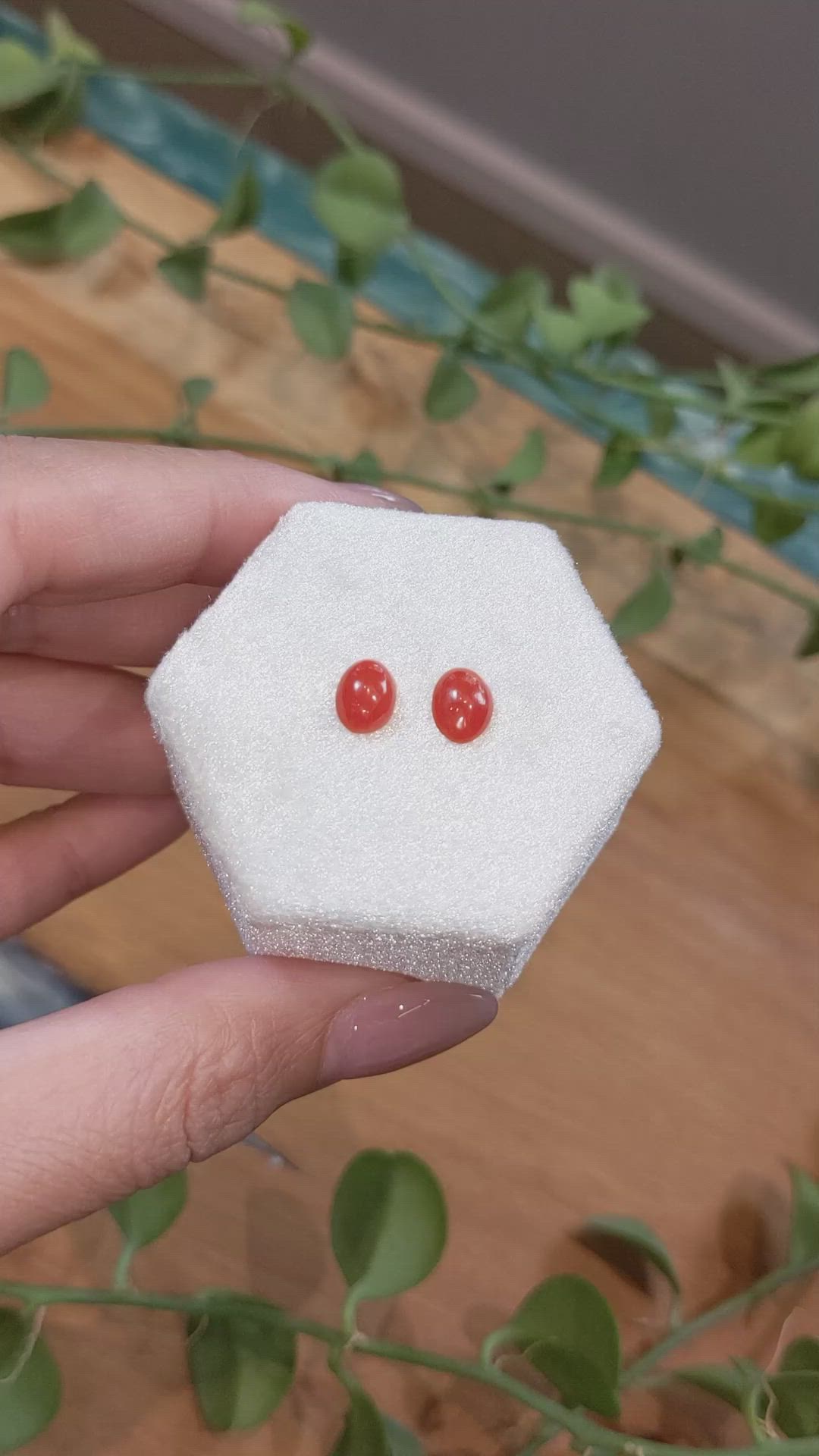


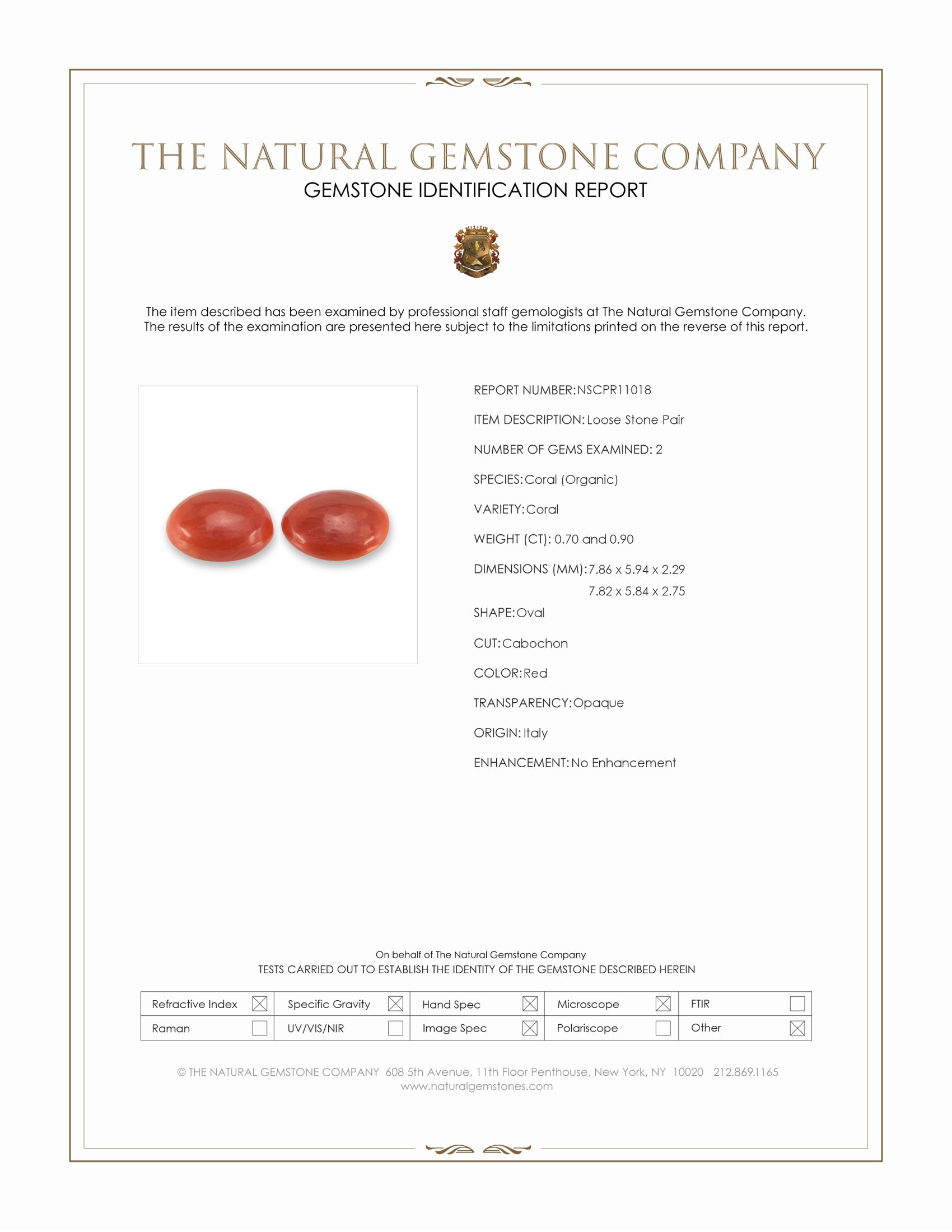
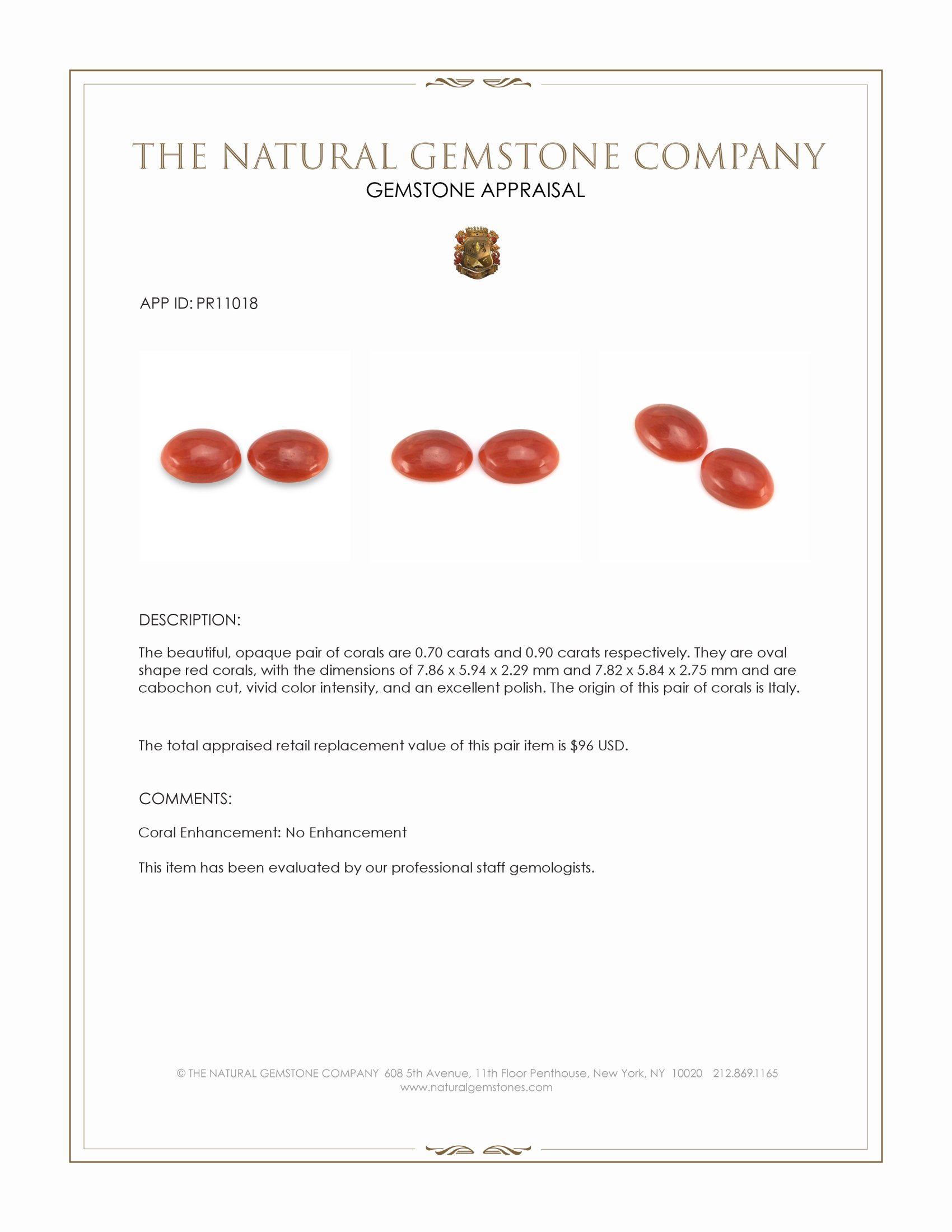
1.60 Ct.Tw.Total Carat Weight Cabochon Coral Pair from Italy
Stone type: | Coral | Coral |
|---|---|---|
Item ID: | PR11018 | PR11018 |
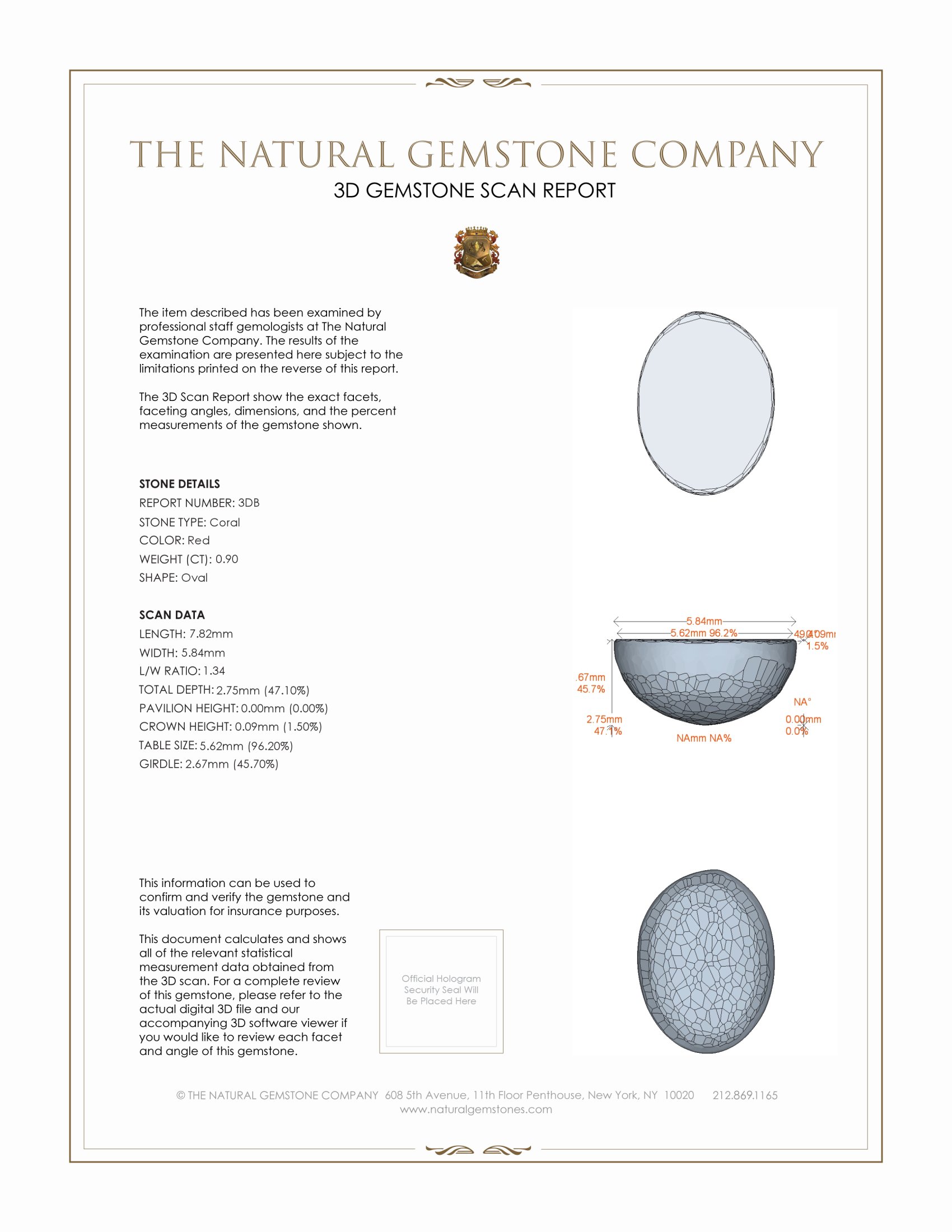
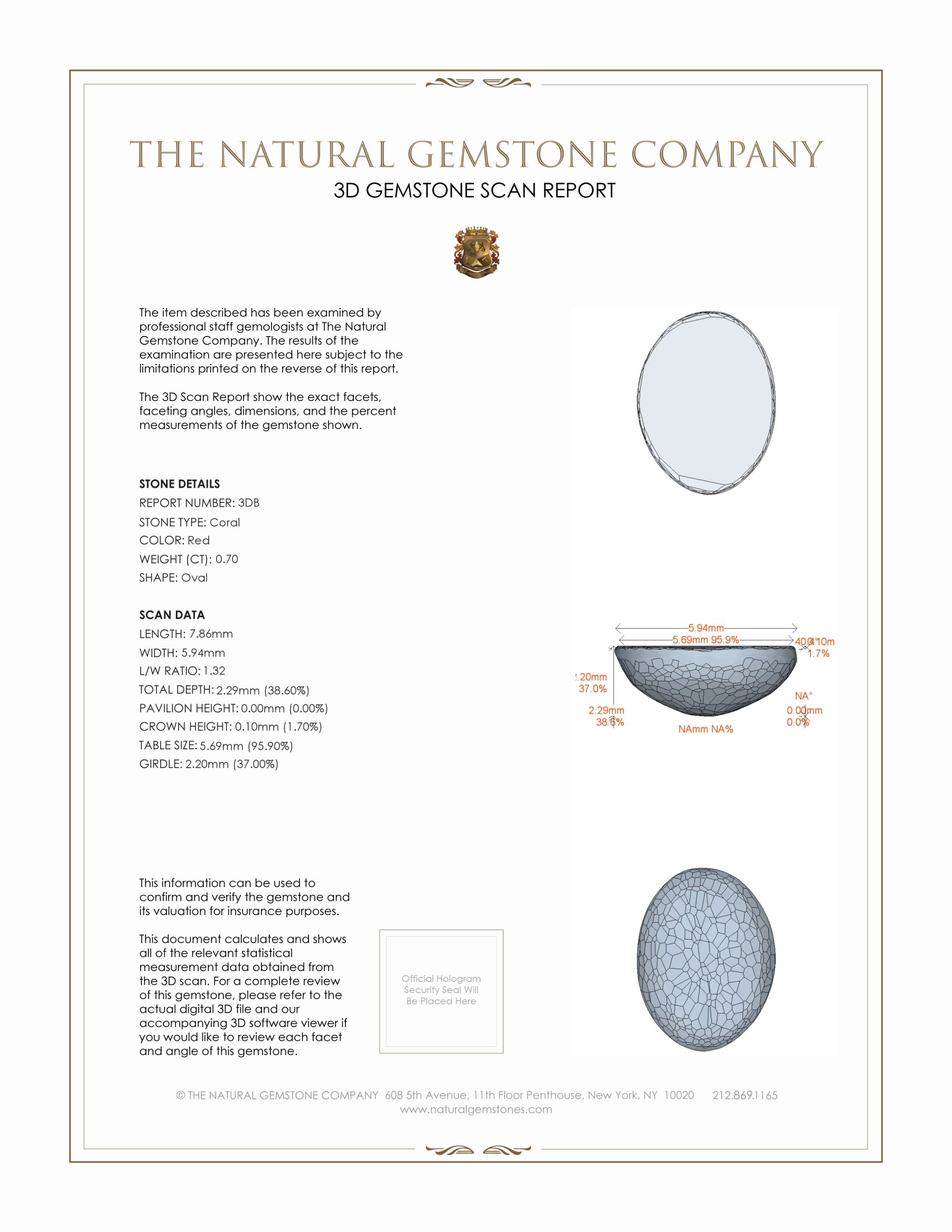
Dimensions (MM): help | Length: 7.86 Width: 5.94 Height: 2.29 | Length: 7.82 Width: 5.84 Height: 2.75 |
Weight: | 0.70 Ct. | 0.90 Ct. |
Color: help | Red | Red |
Color intensity: help | Vivid | Vivid |
Clarity: help | Not Applicable | Not Applicable |
Shape: help | Oval | Oval |
Cut: | Cabochon | Cabochon |
Cutting style: | Cabochon | Cabochon |
Enhancements: help | No Enhancement | No Enhancement |
Origin: help | Italy | Italy |
Per carat price: help | $60 | $60 |
This pair of natural Mediterranean red corals presents a balanced combination of size, color, and finish, suitable for a range of fine jewelry applications. The stones weigh 0.70 carats and 0.90 carats respectively, and their oval cabochon shapes measure 7.86 by 5.94 by 2.29 millimeters and 7.82 by 5.84 by 2.75 millimeters. Both pieces are opaque, displaying a vivid color intensity and an even saturation that is characteristic of well selected Italian coral. The cutting is cabochon to emphasize the uniform surface color and to provide a smooth domed profile, and the polish is described as excellent, producing a soft reflective sheen without the play of brilliance seen in transparent faceted gems. No enhancements have been applied, and the origin is Italy, factors that are relevant to both valuation and to expectations for appearance and handling.
When compared with similar but non matching gemstones, the physical and aesthetic differences are instructive for design and conservation choices. Against transparent red stones such as ruby, spinel, and garnet, these corals are fundamentally different in optical behavior and hardness. Transparent stones refract and facet to produce brightness and dispersion. These corals, by contrast, offer solid color and surface luster without internal light return, which can be preferable in settings that emphasize color mass rather than scintillation. In hardness terms corals are softer and more susceptible to abrasion than ruby and spinel, so they require protective mounting and gentler care. Compared with other opaque red materials such as carnelian and red jasper, Mediterranean coral typically offers a warmer, more organic hue and a finer, more homogenous texture. Carnelian often shows bands or translucency in parts, and jasper frequently exhibits mottling or patterning, whereas these Italian corals present a consistent, broadcast color. Against treated or synthetic red imitations, the lack of enhancement is significant, because many imitations rely on dyeing or stabilization. The natural origin and untreated status of these corals make them desirable for collectors and for settings that call for authentic material, even when the pair is not weight matched to the exact hundredth of a carat.
Practical considerations for use and maintenance follow directly from the stones properties. The cabochon shape and moderate dimensions make the pair well suited to small pendants, stud earrings, or accent stones in multi stone compositions, where the organic color can be a focal element or a complementary accent. For settings, bezel mountings or protective galleries are advisable to reduce the risk of chip or wear, and metals that complement the warm red tone include yellow gold and rose gold, though silver can also be appropriate when a brighter contrast is desired. Care instructions include avoiding ultrasonic cleaning and steam, protecting the stones from prolonged exposure to strong acids, household chemicals, and heat, and cleaning with a soft cloth and mild soapy water followed by thorough drying. Storage should keep the corals separate from harder gemstones to prevent scratching. The Natural Gemstone Company provides these specifications to aid designers and collectors in making informed choices, and the untreated Italian origin of this pair supports their use where natural, intact material is a priority.


