
- Pair16
- Reports4


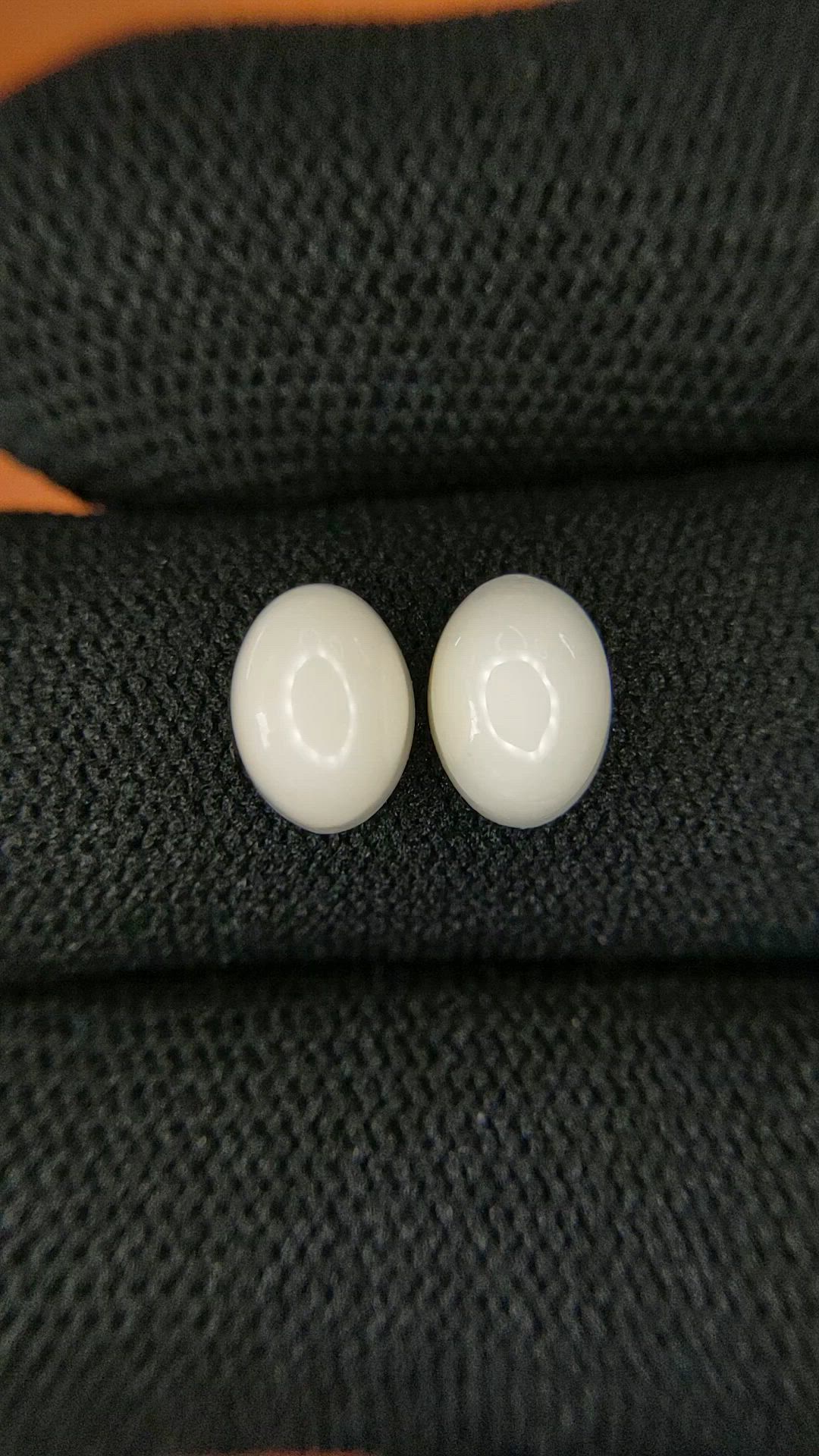
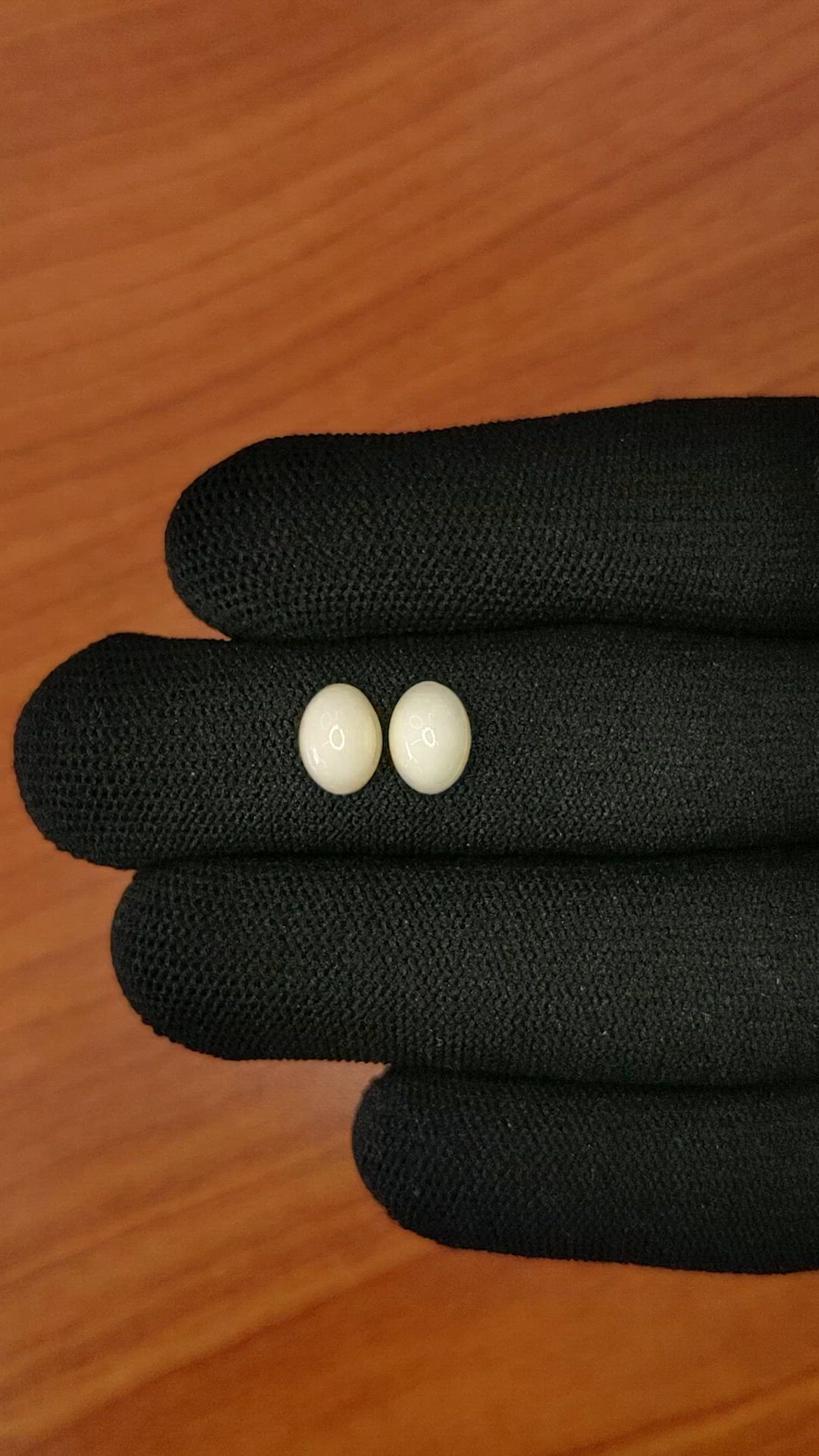
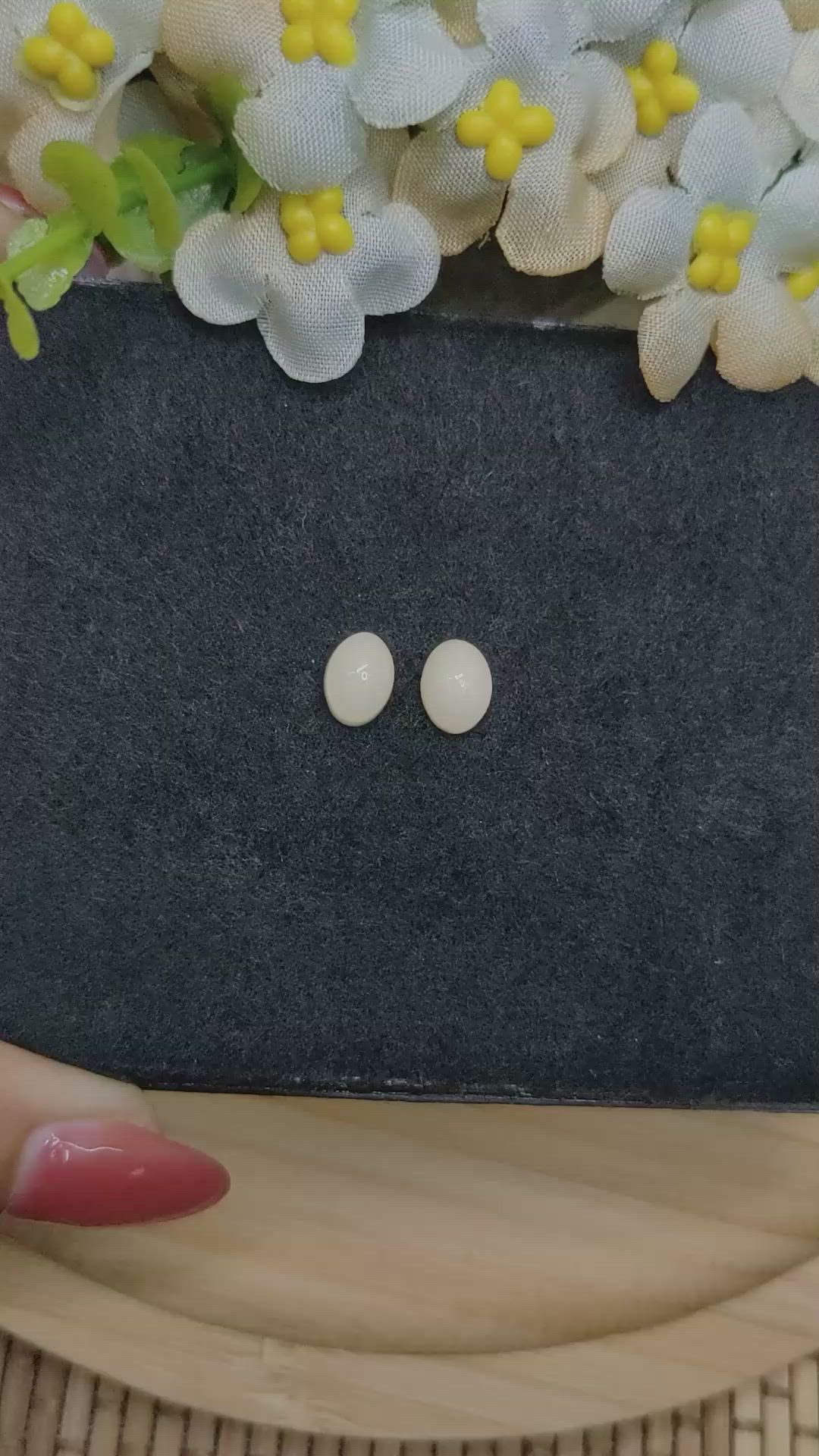
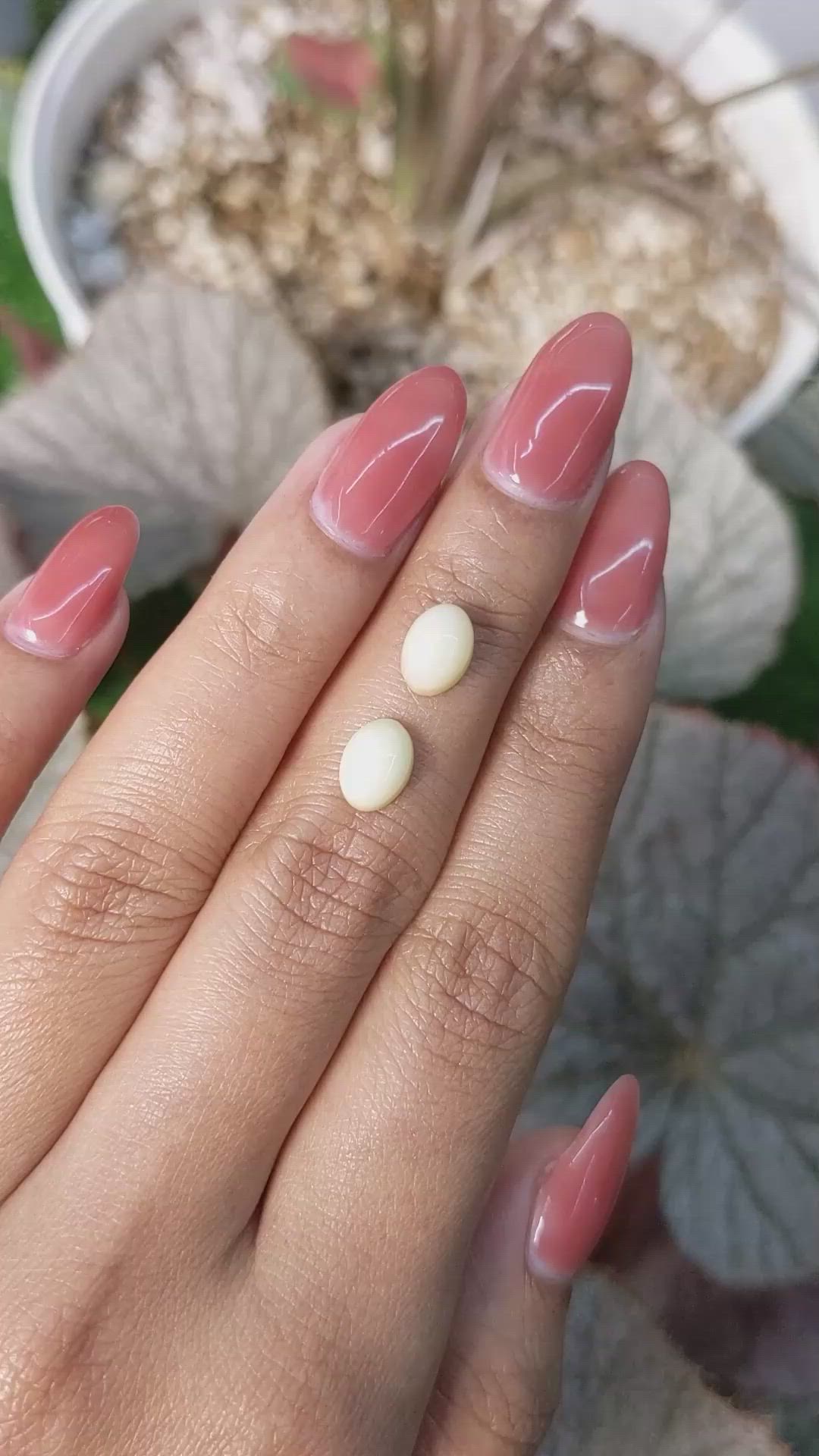




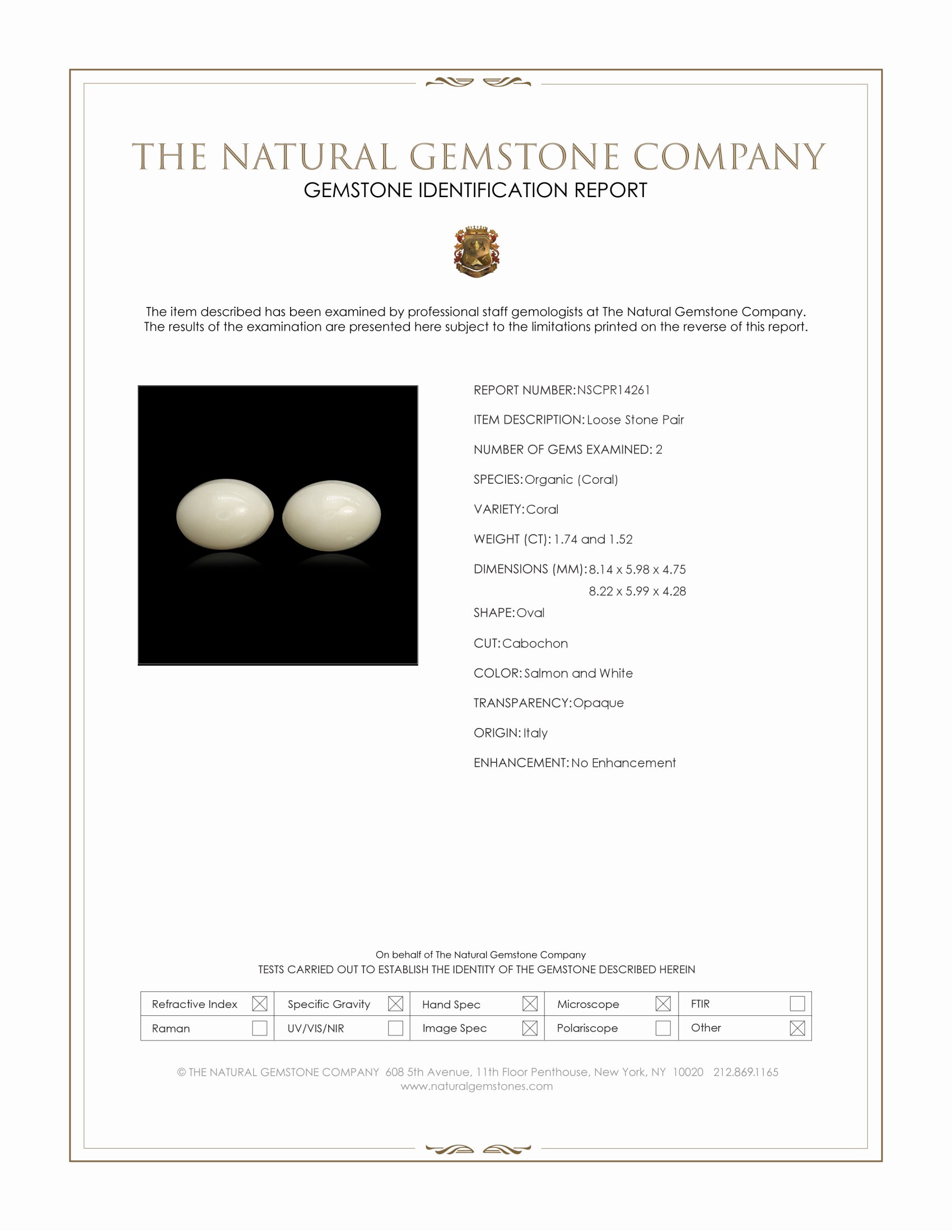
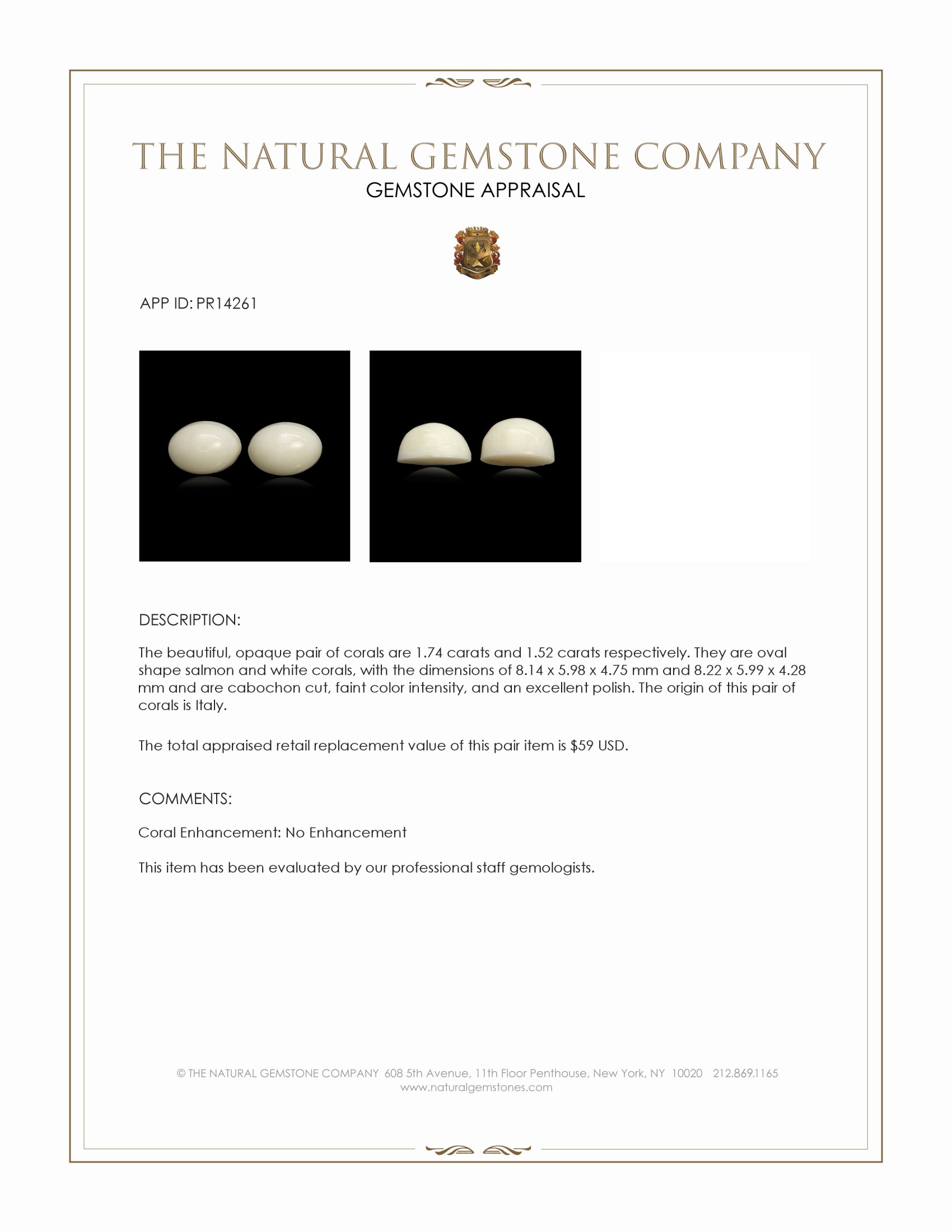
3.26 Ct.Tw.Total Carat Weight Salmon and White Cabochon Coral Pair from Italy
This pair of stones is available to ship now
Stone type: | Coral | Coral |
|---|---|---|
Item ID: | PR14261 | PR14261 |
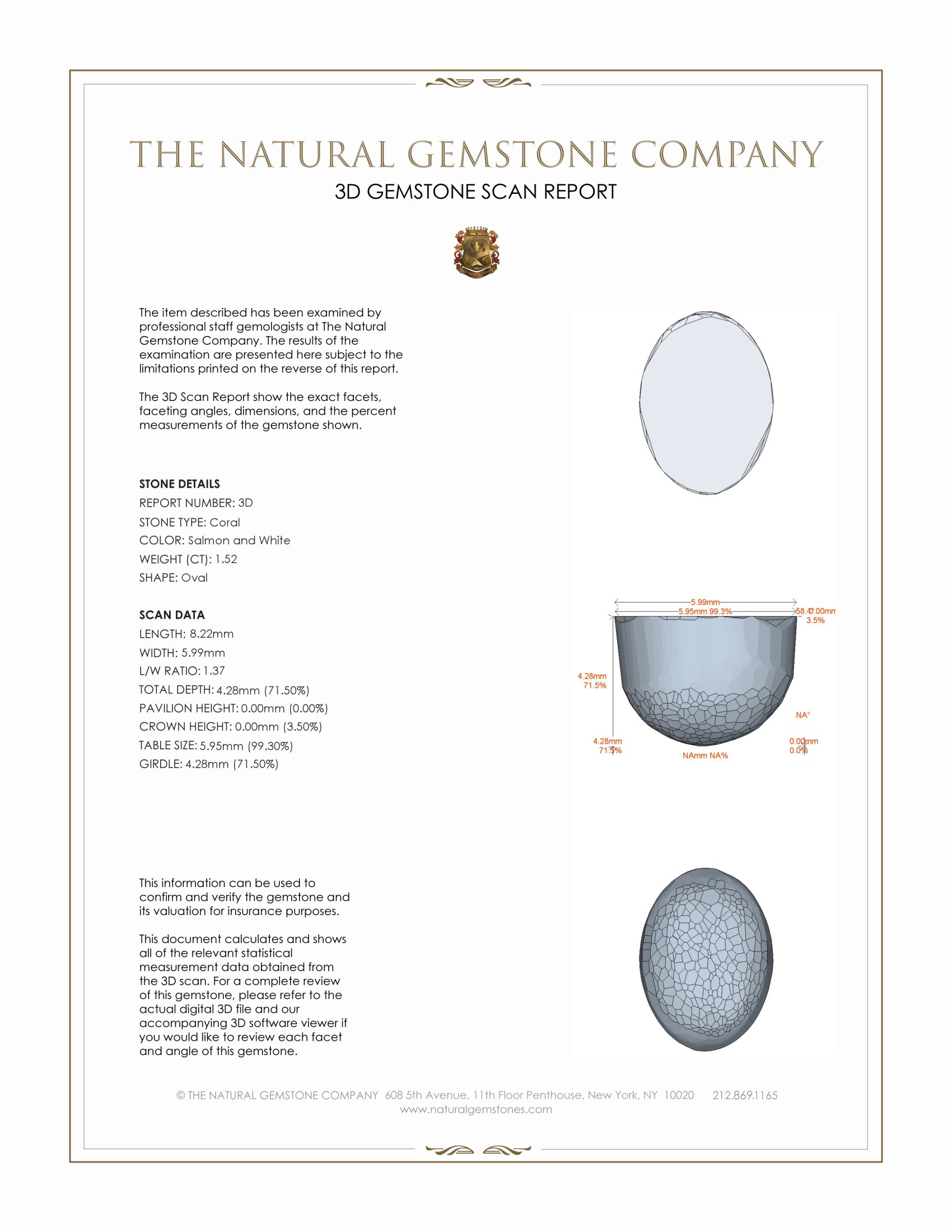
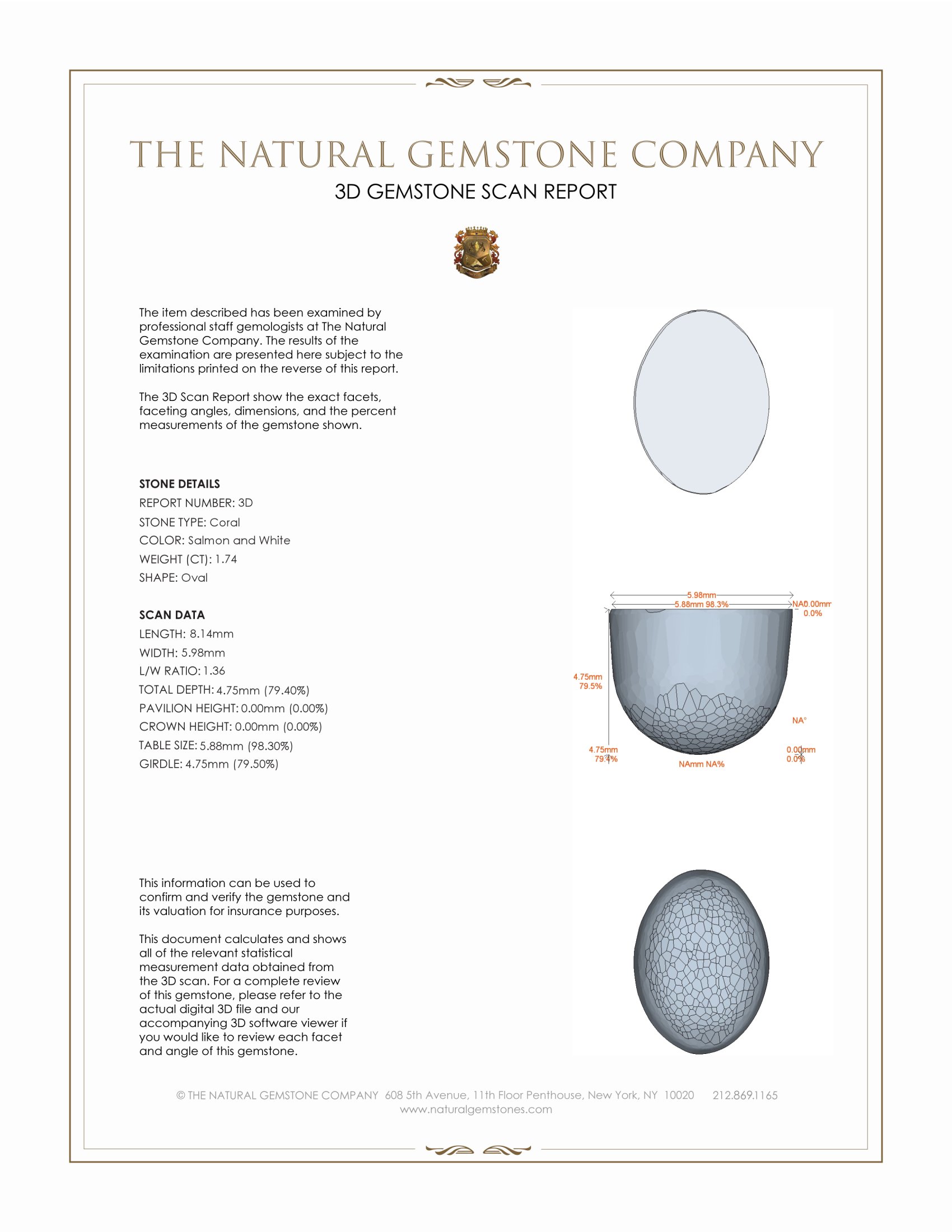
Dimensions (MM): help | Length: 8.14 Width: 5.98 Height: 4.75 | Length: 8.22 Width: 5.99 Height: 4.28 |
Weight: | 1.74 Ct. | 1.52 Ct. |
Color: help | Salmon and White | Salmon and White |
Color intensity: help | Faint | Faint |
Clarity: help | Not Applicable | Not Applicable |
Shape: help | Oval | Oval |
Cut: | Cabochon | Cabochon |
Cutting style: | Cabochon | Cabochon |
Enhancements: help | No Enhancement | No Enhancement |
Origin: help | Italy | Italy |
Per carat price: help | $18 | $18 |
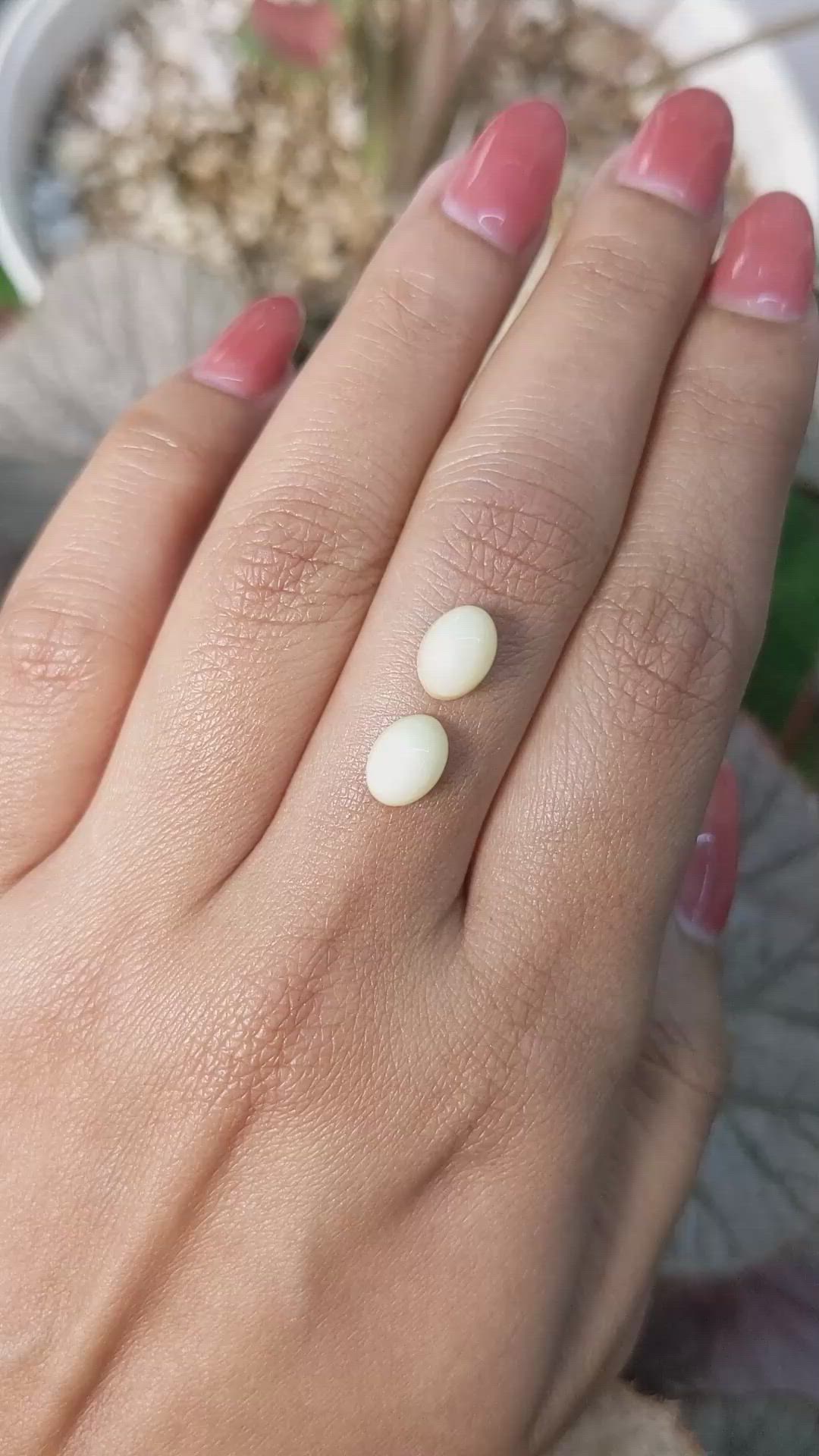
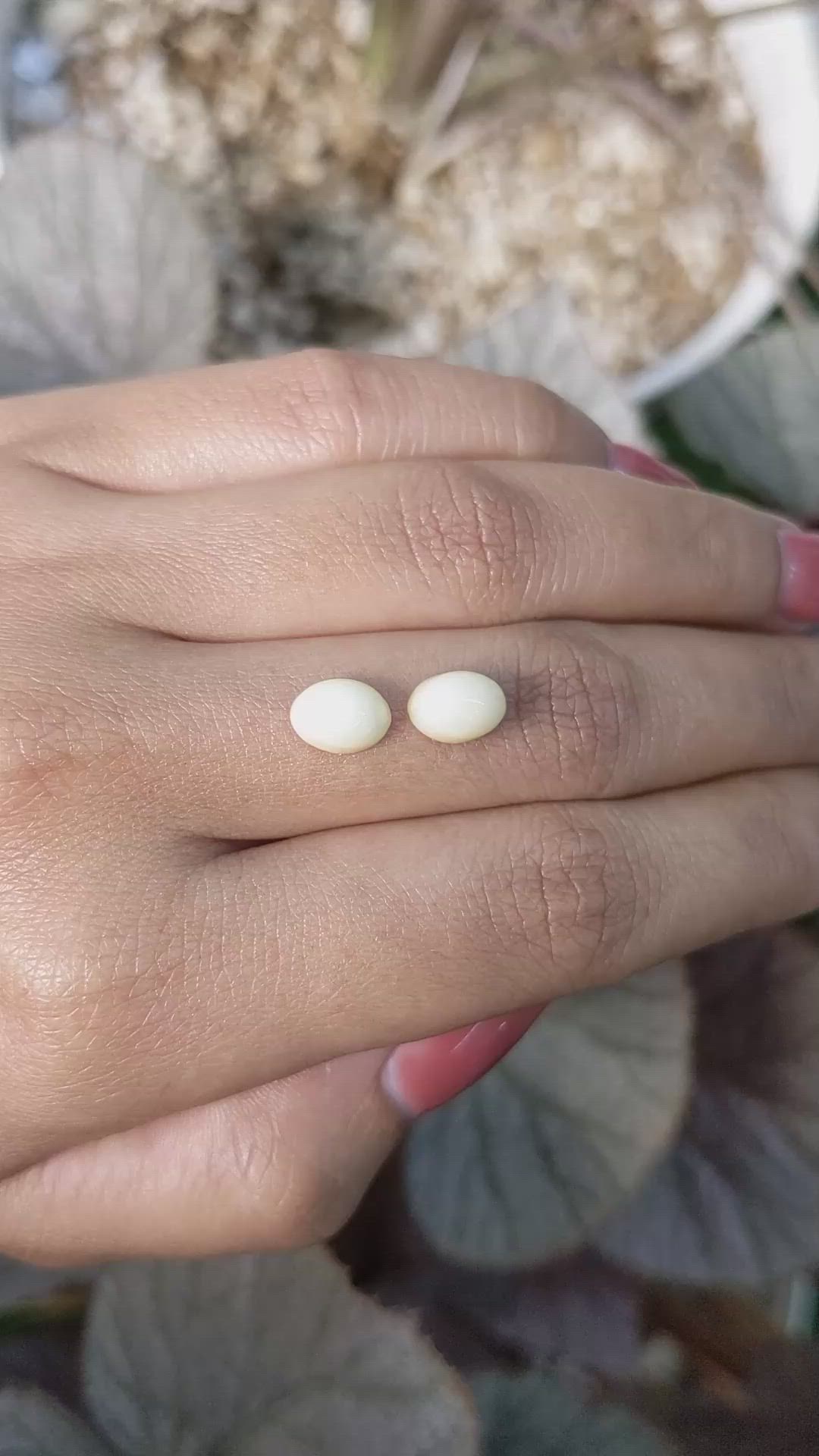
This pair of Mediterranean corals from Italy exemplifies the quiet elegance of organic gemstones, and they arrive to you from The Natural Gemstone Company as a matched set ready for refined jewellery design, or individual use where balanced proportions are required. The two stones weigh 1.74 carats and 1.52 carats respectively, and their oval shapes are disciplined, measured, and well matched in size and profile, with dimensions of 8.14 by 5.98 by 4.75 millimeters and 8.22 by 5.99 by 4.28 millimeters. These are opaque corals with a faint color intensity, one presenting a subtle salmon tone and the other a creamy white tone, a combination that reads as sophisticated and versatile in both contemporary and classic settings. From a gemological perspective the clarity is per the nature of coral, inherently opaque and free from the kinds of internal crystal clarity grades that apply to mineral gems, yet surface condition and homogeneity of color are critical, and these pieces show an even body color and very consistent texture, attributes that raise their desirability for buyers who appreciate natural, untreated material.
In grading terms we describe these corals by carat weight, shape, cut style, color intensity, polish quality, and treatment status. Carat weights are 1.74 and 1.52 carats, shapes are oval, and the cut style is cabochon cut, which is the historically appropriate and most flattering form for coral. Color intensity is faint, which in coral collecting can be highly desirable because it offers a restrained, wearable tone that complements skin rather than overpowering it. The polish is excellent, producing a soft satiny luster that is characteristic of well finished coral cabochons, and the surface shows no signs of stabilization or dyeing, indicated by the uniform absorption of light and the lack of surface films or anomalous color concentrations. Enhancement status is no enhancement, which means the material is untouched by heating, dyeing, bleaching, or resin impregnation. In the market for natural gemstones, especially organic ones, the absence of treatment combined with Italian origin contributes strongly to both aesthetic and collector value.
The cabochon cutting technique used on these examples highlights the craftsmanship that distinguishes fine lapidary work from basic mass produced pieces. Cabochon cutting is an art that requires careful decision making about dome height, curvature, and back thickness in order to maximize color, optimize durability, and ensure symmetrical appearance when set. These coral cabochons display an even, low to medium dome that suits their modest sizes, with well centred apices and smoothly contoured rims, a sign of deliberate hand finishing. When comparing cutting techniques, faceting is aimed at optical refraction and scintillation, while cabochon work is aimed at surface luster and color presentation. A high quality cabochon like these will have precise symmetry, consistent thickness along the profile, and a polished surface free of nicks or polishing pits, whereas a poorly executed cabochon can be uneven, lopsided, and dull. In addition, traditional Italian coral cutters bring generations of experience in selecting orientation within the raw branch, placing the most attractive, least veined portions on the table, and preserving enough thickness to prevent chipping, all of which is evident in the uniform texture and clean edges of these stones.
For the educated buyer these corals offer multiple points of value. Their provenance from Italy places them within the Mediterranean coral tradition, a history that includes careful harvesting and skilled lapidary practices that prioritize natural color and structure. The matched nature of the pair is valuable for earrings or matched set conversion, and the slightly different carat weights give a natural look should a designer intentionally offset the stones for modern asymmetric pieces. The fact that they are untreated adds to longevity and resale value, because untreated organic gems retain predictable behaviour and age with an even patina rather than change due to incorporated resins or dyes. Practical considerations include recommended settings that protect the base and rim, such as bezel or flush settings that take advantage of the cabochon profile while minimizing exposure to knocks. Cleaning is simple, with gentle wiping and avoidance of ultrasonic or steam cleaners recommended for organic material. At The Natural Gemstone Company we present these corals with full disclosure of weight, dimensions, cut, polish, enhancement status, and origin, so that connoisseurs and jewellers alike can make an informed choice about how best to showcase this quiet, classic material.


