
- Pair14
- Reports4


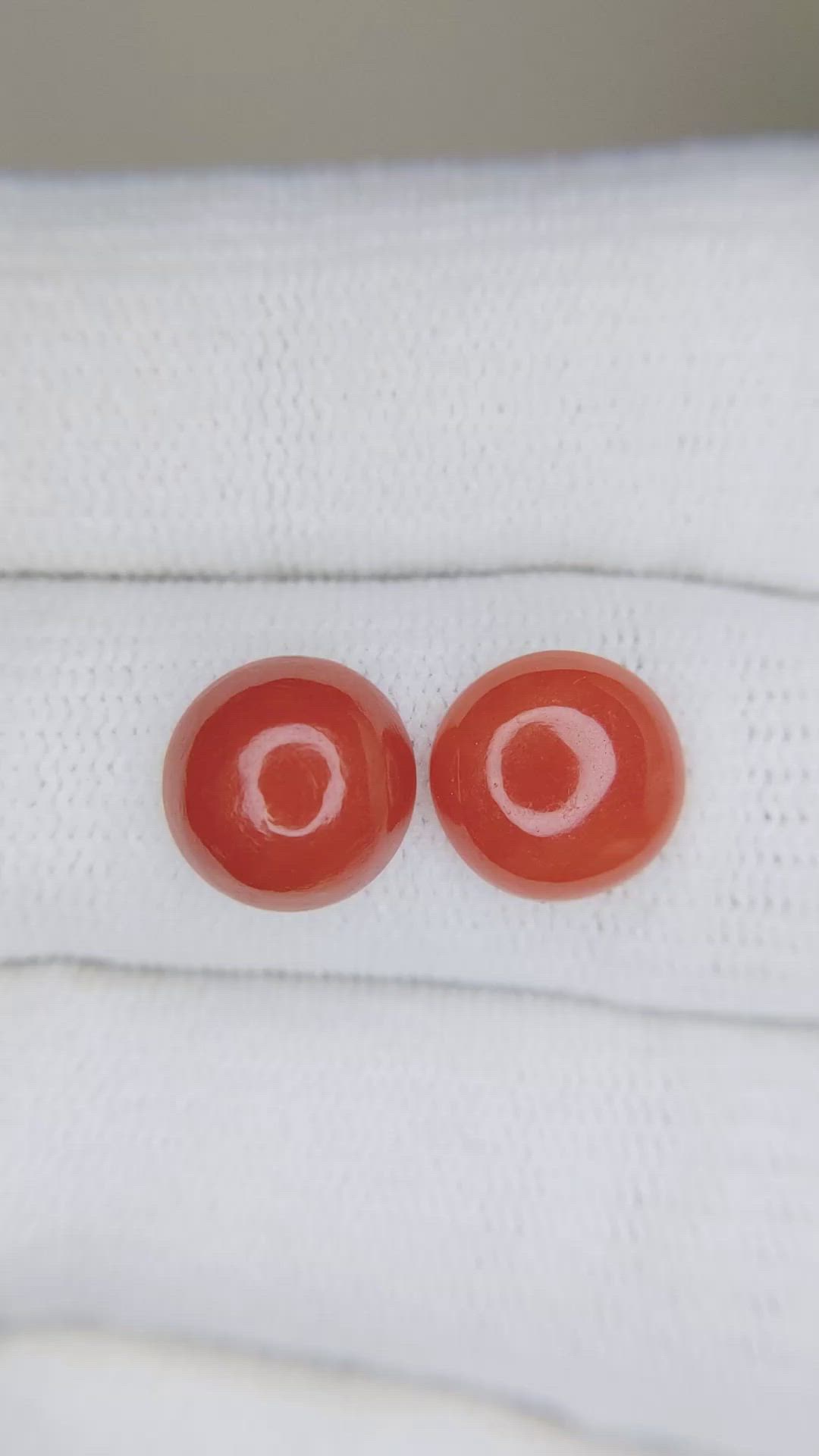
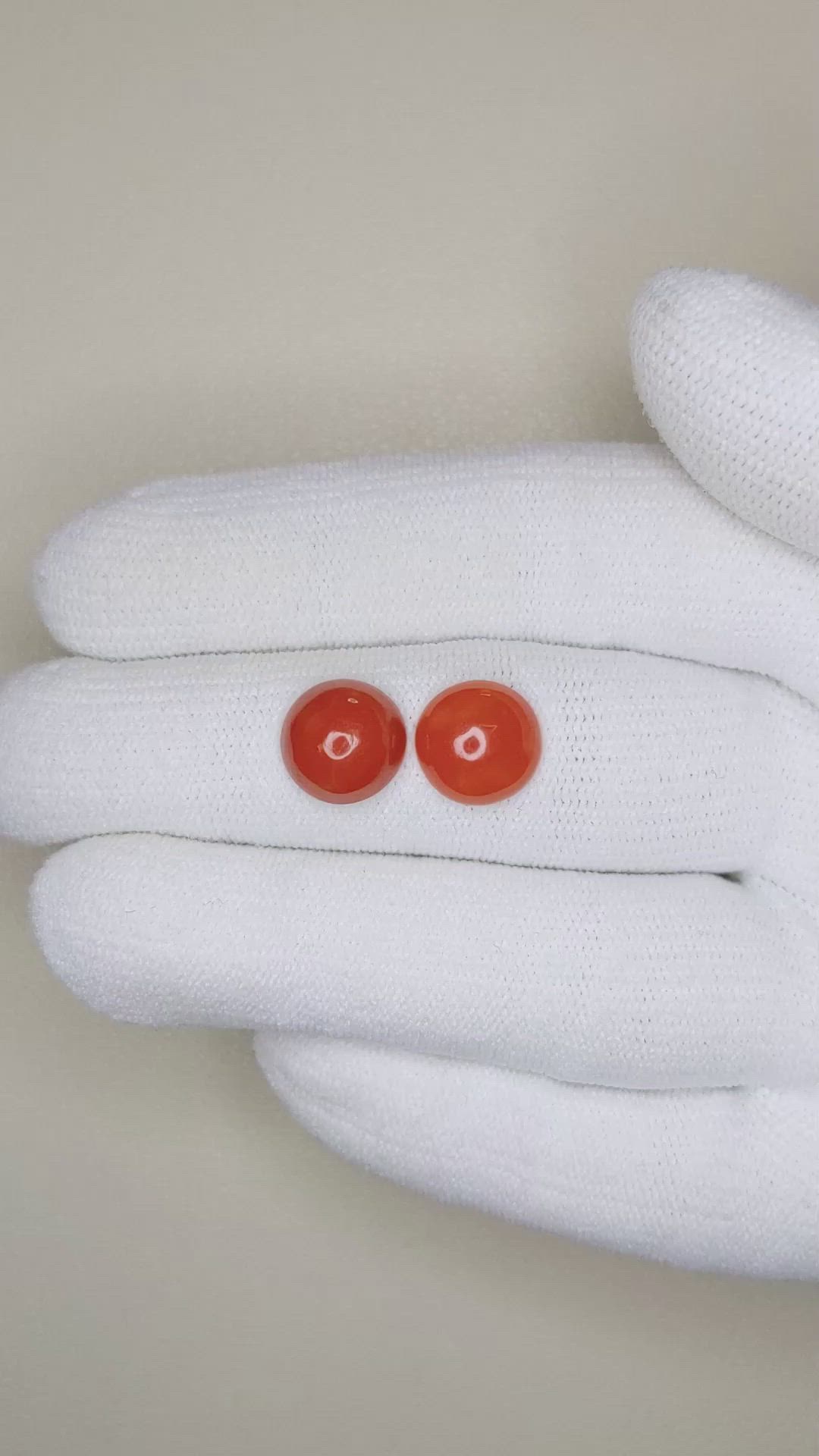
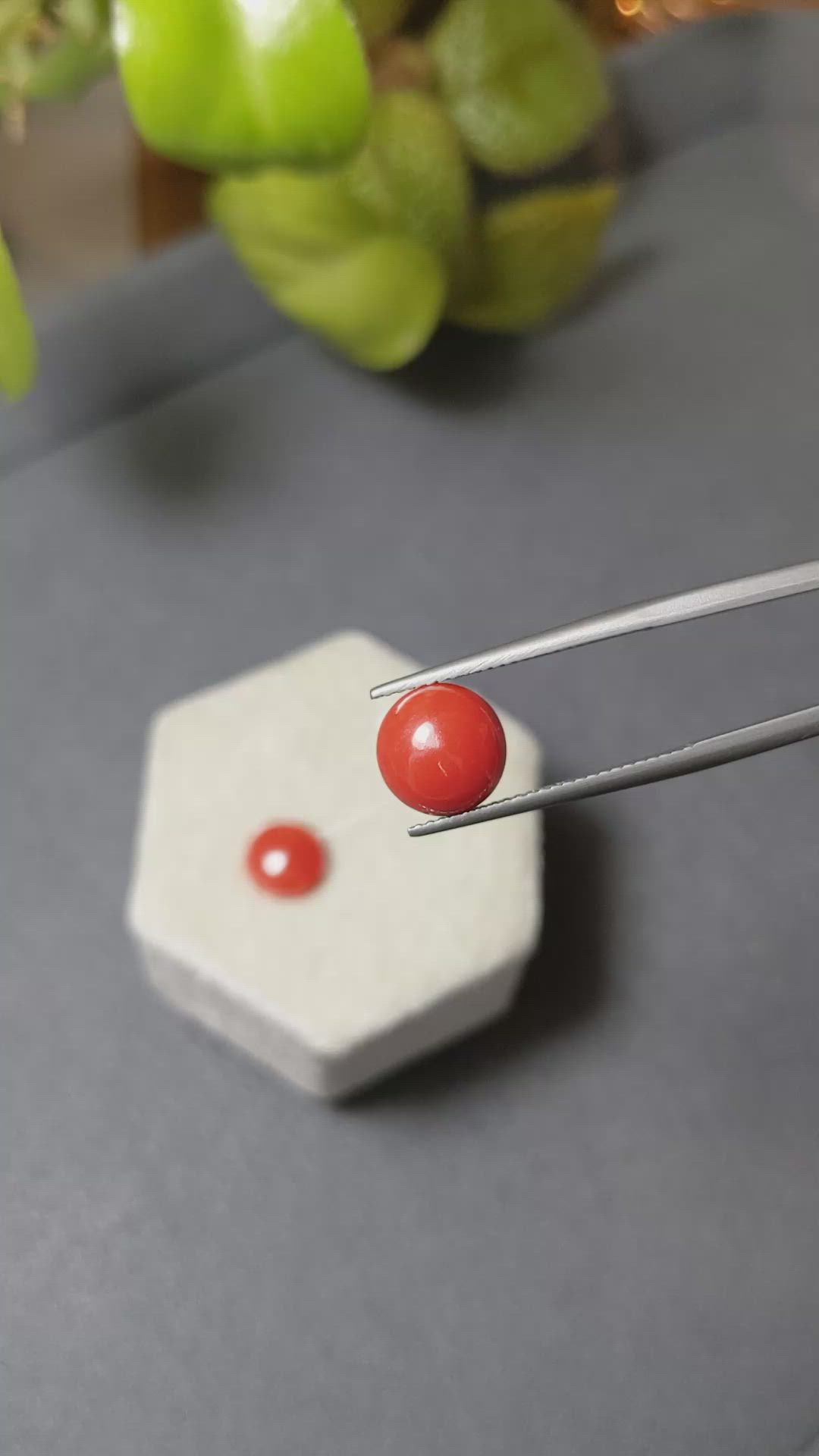
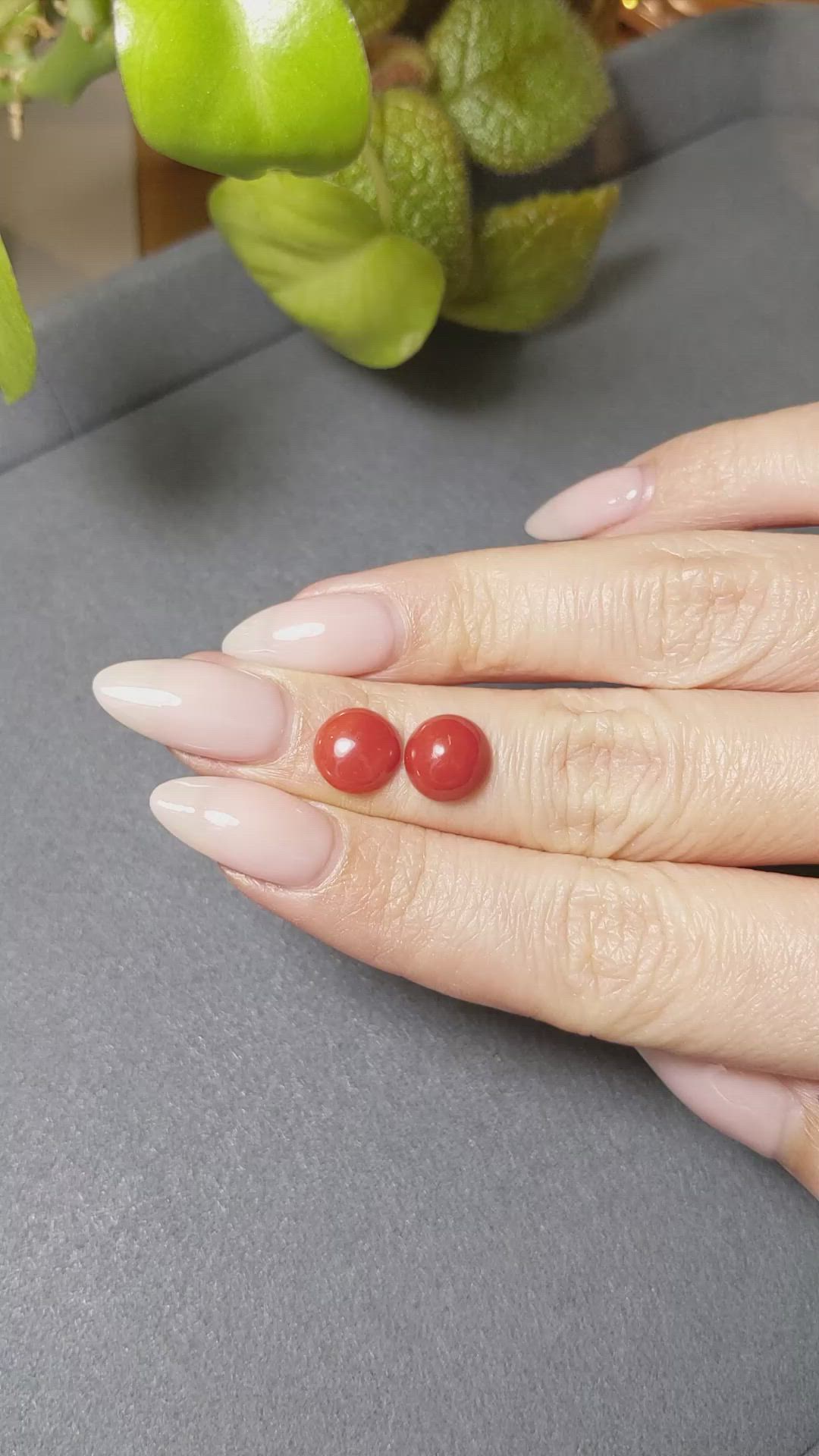




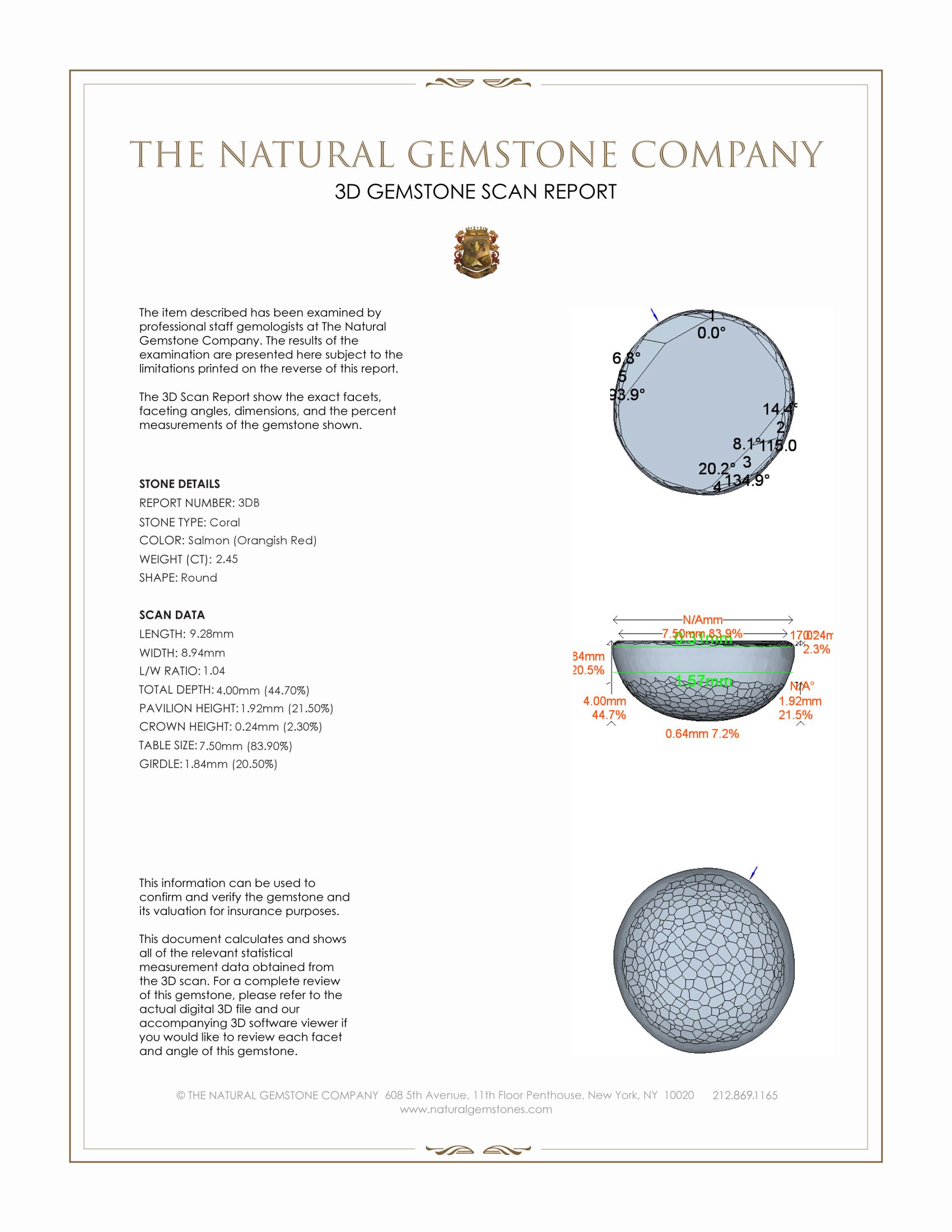
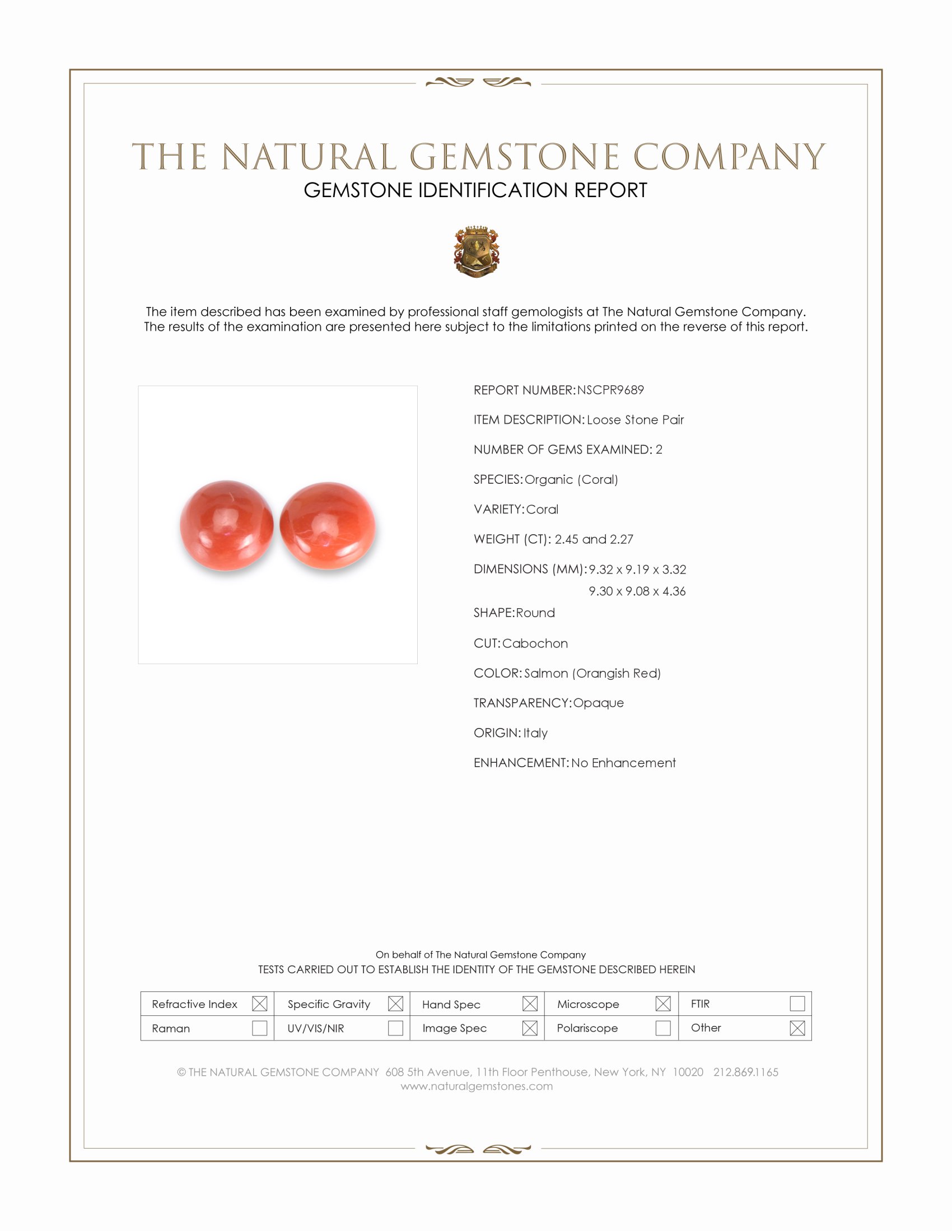
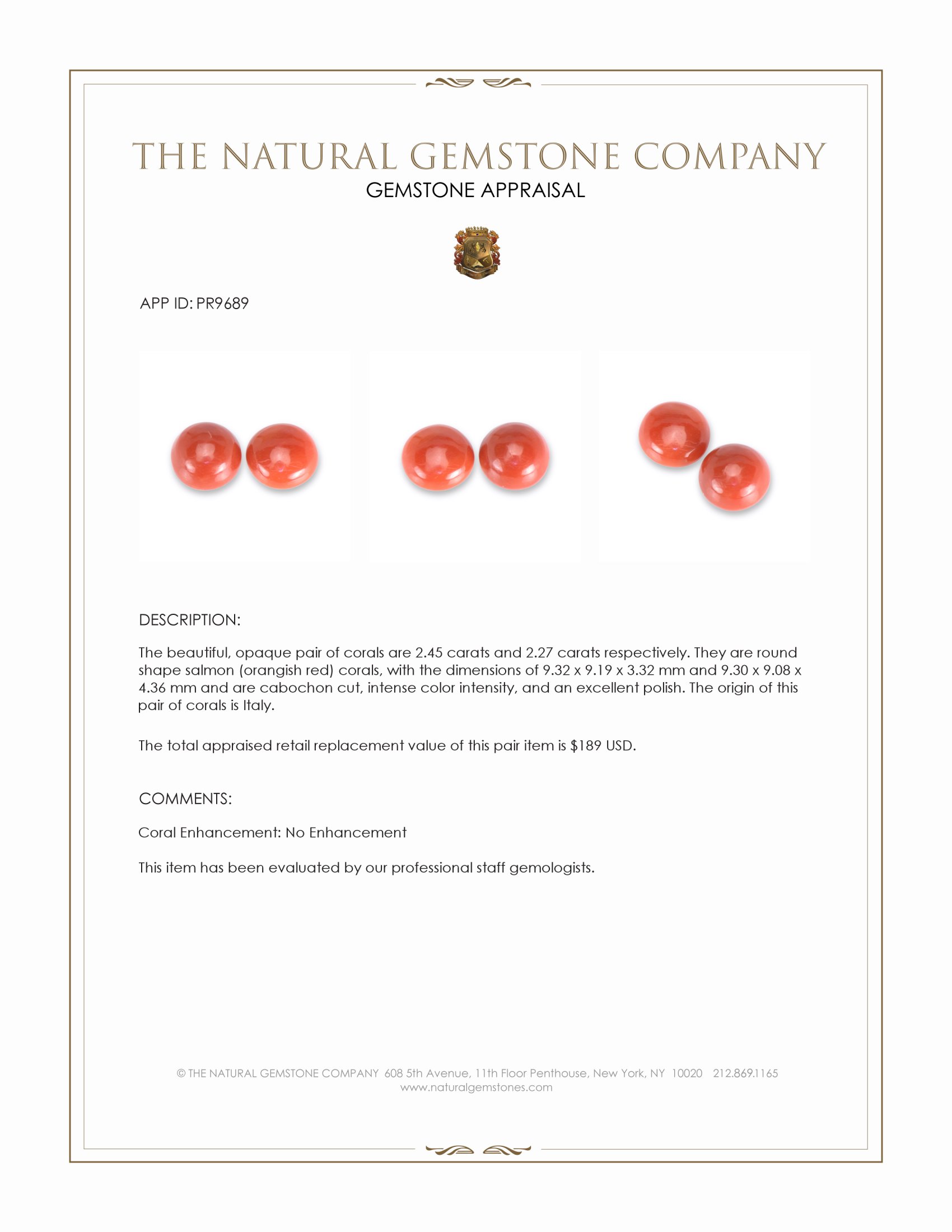
4.72 Ct.Tw.Total Carat Weight Salmon (Orangish Red) Cabochon Coral Pair from Italy
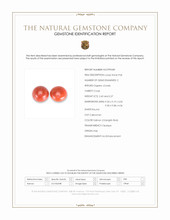
Stone type: | Coral | Coral |
|---|---|---|
Item ID: | PR9689 | PR9689 |
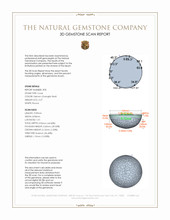
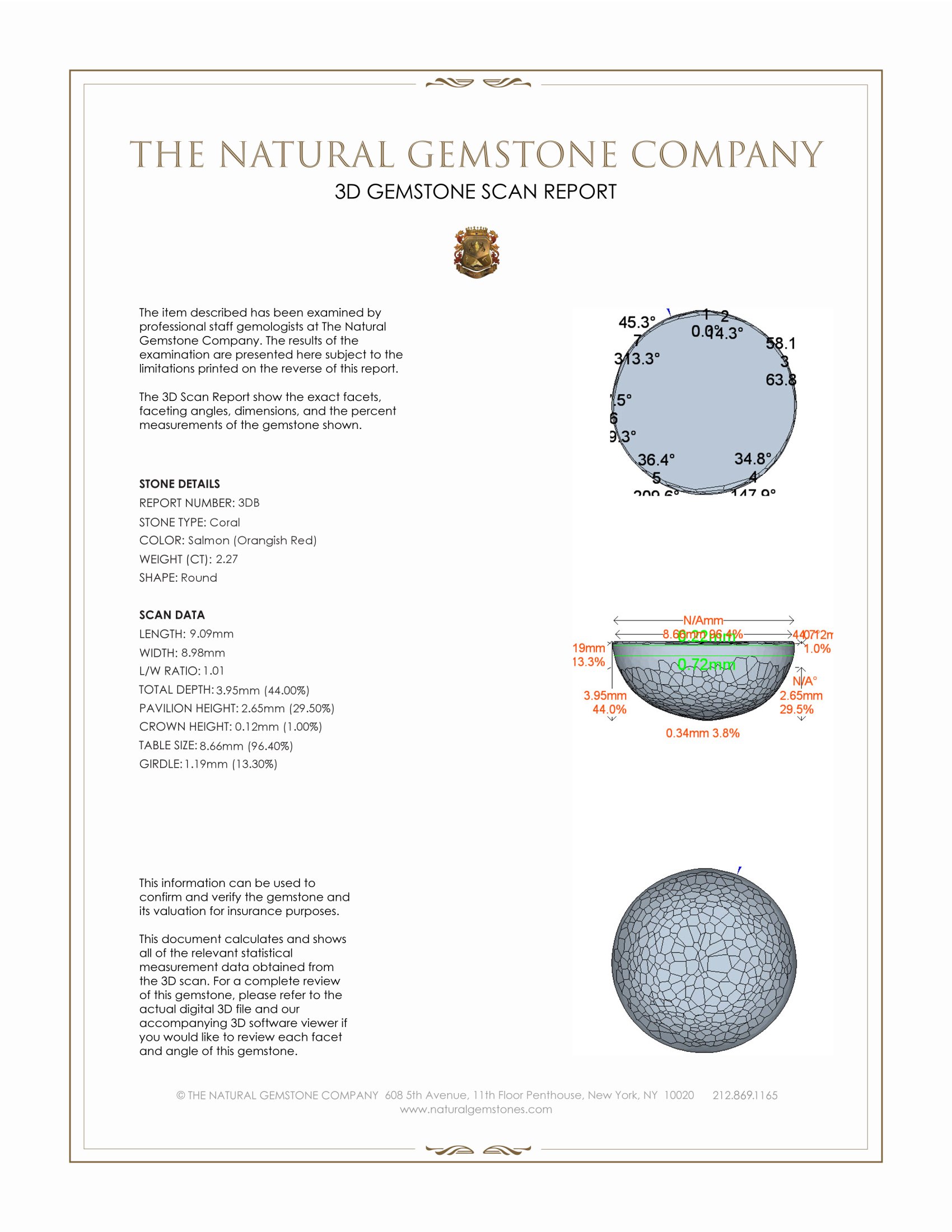
Dimensions (MM): help | Length: 9.32 Width: 9.19 Height: 3.32 | Length: 9.3 Width: 9.08 Height: 4.36 |
Weight: | 2.45 Ct. | 2.27 Ct. |
Color: help | Salmon (Orangish Red) | Salmon (Orangish Red) |
Color intensity: help | Intense | Intense |
Clarity: help | Not Applicable | Not Applicable |
Shape: help | Round | Round |
Cut: | Cabochon | Cabochon |
Cutting style: | Cabochon | Cabochon |
Enhancements: help | No Enhancement | No Enhancement |
Origin: help | Italy | Italy |
Per carat price: help | $40 | $40 |
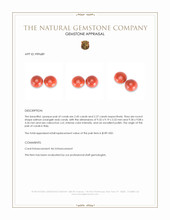
This matched pair of natural coral cabochons, offered by The Natural Gemstone Company, is a fine example of classic Mediterranean coral, originating from Italy. Individually they weigh 2.45 carats and 2.27 carats, with measurements of 9.32 by 9.19 by 3.32 millimeters and 9.30 by 9.08 by 4.36 millimeters respectively. They are round in shape, cabochon cut, and display a salmon orangish red hue with intense color intensity and an excellent polish. As naturally opaque organic gems, these corals exhibit the uniform, saturated tone collectors and designers prize, without any enhancements or treatments, a key factor that enhances their desirability and market integrity. The cabochon cut is the traditional and optimal cutting style for coral, enhancing the depth and evenness of color while preserving the material through minimal material loss during cutting, and the excellent polish indicates skilled lapidary work that produces a smooth surface with minimal surface imperfections, important for wearable pieces like earrings where comfort and appearance matter.
From a grading and clarity perspective, coral is assessed differently than crystalline minerals. Instead of clarity grades based on transparent inclusion types, coral assessment focuses on overall color saturation and uniformity, surface condition including nicks or natural pitting, absence of fillers, and the quality of polish. These two pieces show intense, even saturation across their domes, with no visible dye concentrations or surface-filled cavities in the images, and only minimal natural texture consistent with high quality natural coral. The lack of enhancement, confirmed in the product details, raises their value relative to heat treated, stabilized, or dyed corals, since untreated Mediterranean coral is both rarer in the current market and highly sought after for historically informed and museum quality jewelry. The origin from Italy increases their provenance value, Mediterranean red coral historically and presently carries a premium among connoisseurs for its traditional use, stable color range, and cultural associations with fine craftsmanship.
Comparing this matched pair to similar, non-matching gemstones clarifies why matched corals are especially valuable for certain buyers. Consider corals that do not match, where one stone may be slightly darker, more orange, or larger than its mate. Even small discrepancies in hue or saturation are highly visible when set as a pair in earrings, diminishing the visual harmony and perceived craftsmanship. Similarly, compare these corals to other salmon colored materials such as pink spinel, tourmaline, or carnelian. Spinel and tourmaline typically offer transparent to translucent properties and higher refractive indices, producing more internal brightness and dispersion than opaque coral, and they are harder on the Mohs scale, giving superior resistance to abrasion. Carnelian is a chalcedony variety that shares an orange to reddish palette, but it is microcrystalline silica with a different luster, slightly higher durability, and often displays banding or translucency not present in coral. These distinctions matter to educated buyers who weigh optical behavior, durability, and how a material will sit in different mounting styles.
There is also a practical distinction between natural, untreated Mediterranean coral and treated or synthetic lookalikes. Dyed or stabilized coral, reconstructed coral, and imitations in glass or resin can mimic the color but lack the same organic texture, provenance, and long term value. Treated pieces can fade, react to solvents, or reveal treatment lines under magnification, and reconstructed coral will often show fine particle matrix under loupe inspection. In contrast, this pair demonstrates the solid, homogeneous color typical of quality natural coral, and the absence of enhancement reduces the risk of unexpected color change or surface deterioration. For a buyer focused on longevity and authenticity, the documented origin in Italy and the absence of treatments are decisive, especially for museum quality restoration work, bespoke antique style settings, or collectors aiming to preserve material provenance.
Finally, the consideration of wearability and care is an important part of the valuation conversation. Coral is an organic gem with a Mohs hardness around 3.5 to 4, softer than most silicate gemstones, which mandates protective settings and thoughtful care. These cabochons, with their well matched sizes and excellent polish, are ideal for bezel set earrings or pendants where the bezel protects the girdle and edges, and the cabochon dome displays color without exposing corners to wear. Buyers should be advised to avoid exposure to strong acids, household chemicals, ultrasonic cleaners, and high heat which can damage coral or alter its surface. Compared to harder gems like spinel or garnet, coral requires more conservative daily wear practices, but for many collectors the unique organic warmth, historical resonance, and the rarity of untreated Italian coral more than justify the extra care. In summary, this pair from The Natural Gemstone Company offers a compelling combination of excellent color, close matching, traditional cabochon cutting, verified Italian origin, and no enhancement, characteristics that make it particularly attractive to educated buyers seeking authentic, collectible, and wearable organic gems.


