
- Stone14
- Reports3


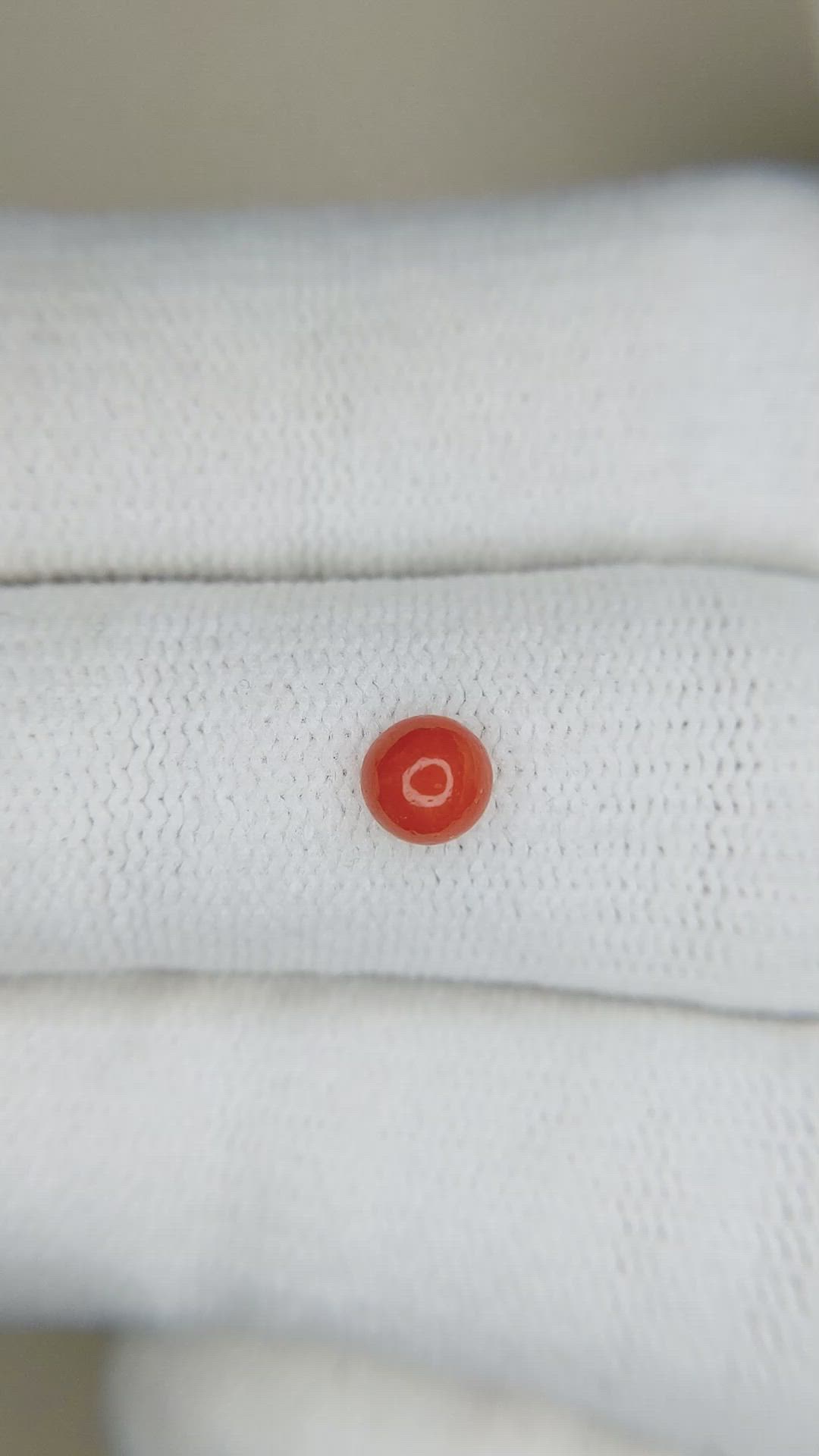
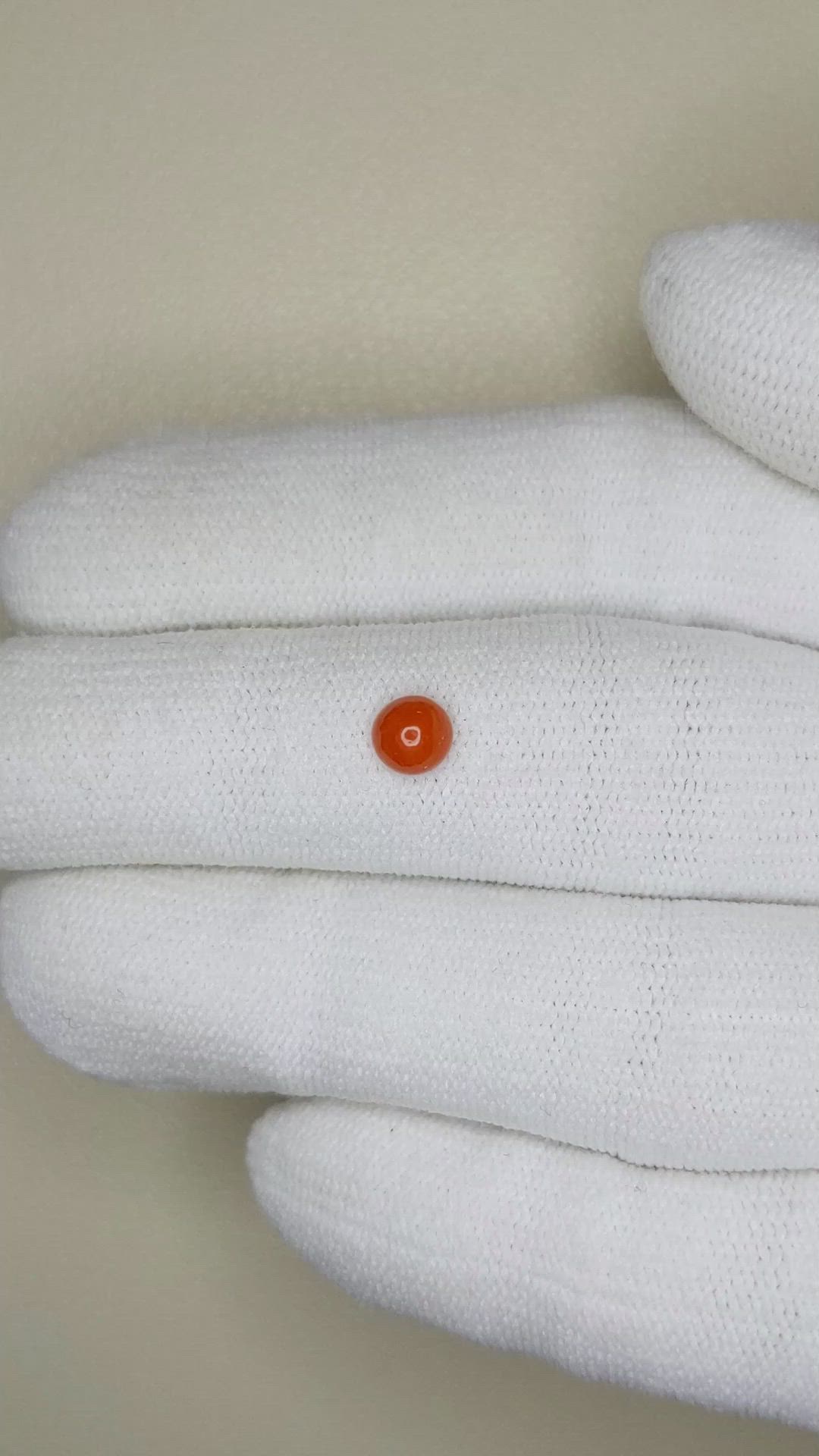
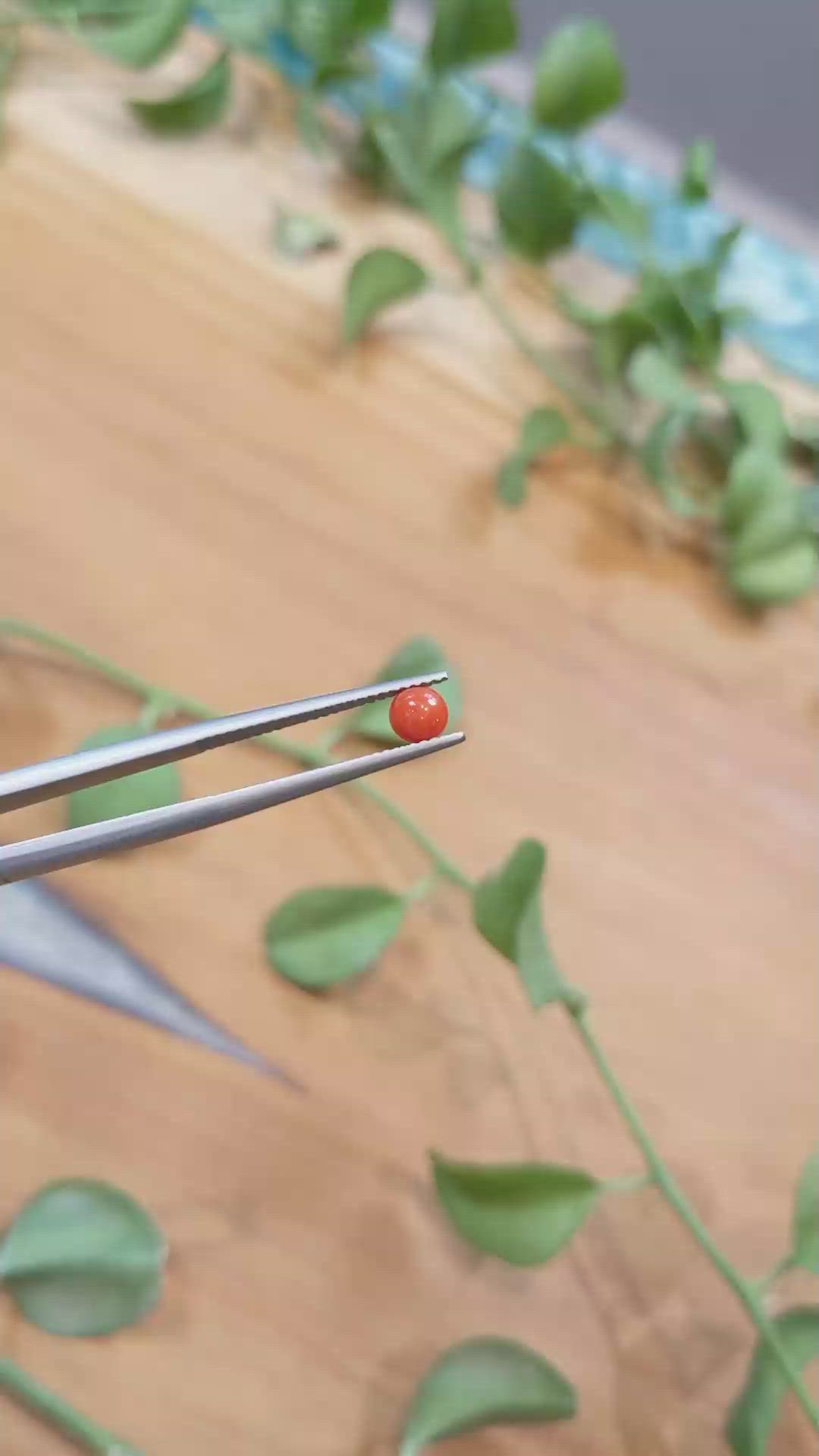
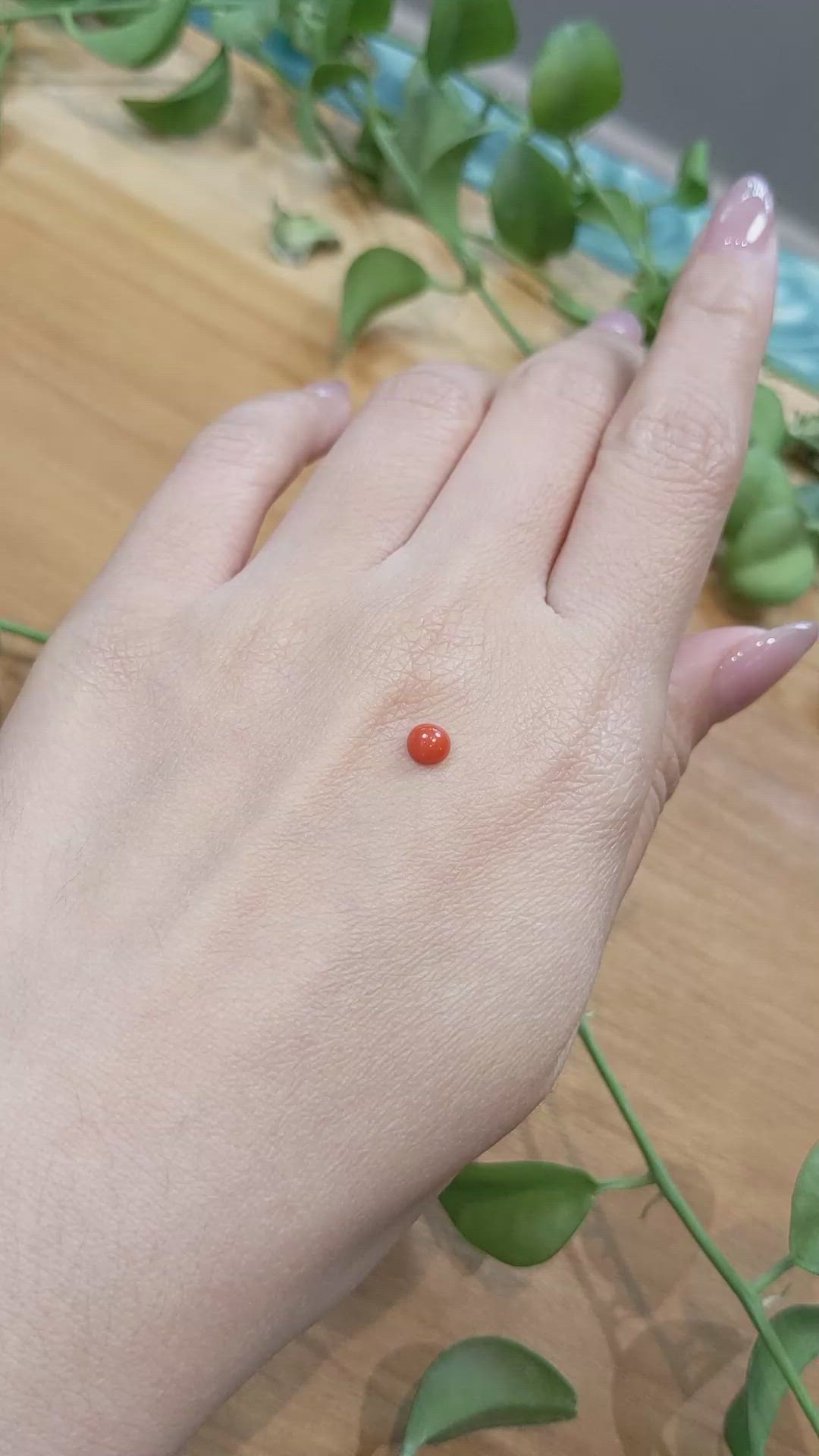
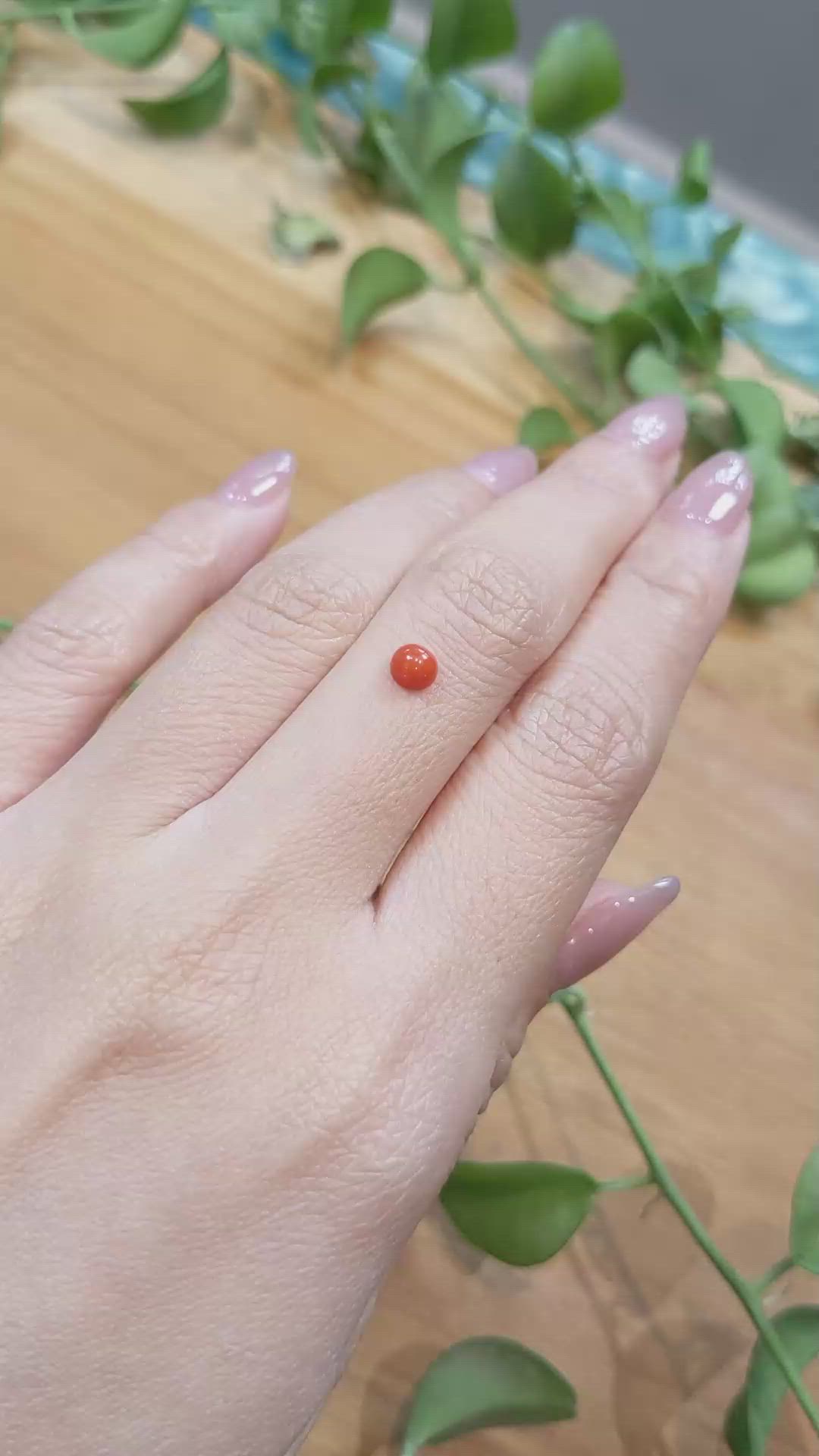




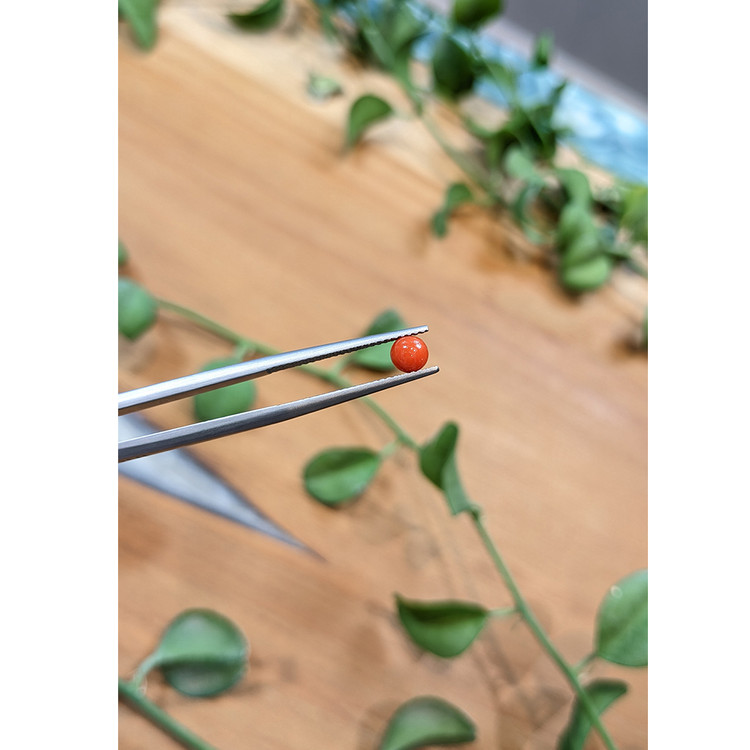


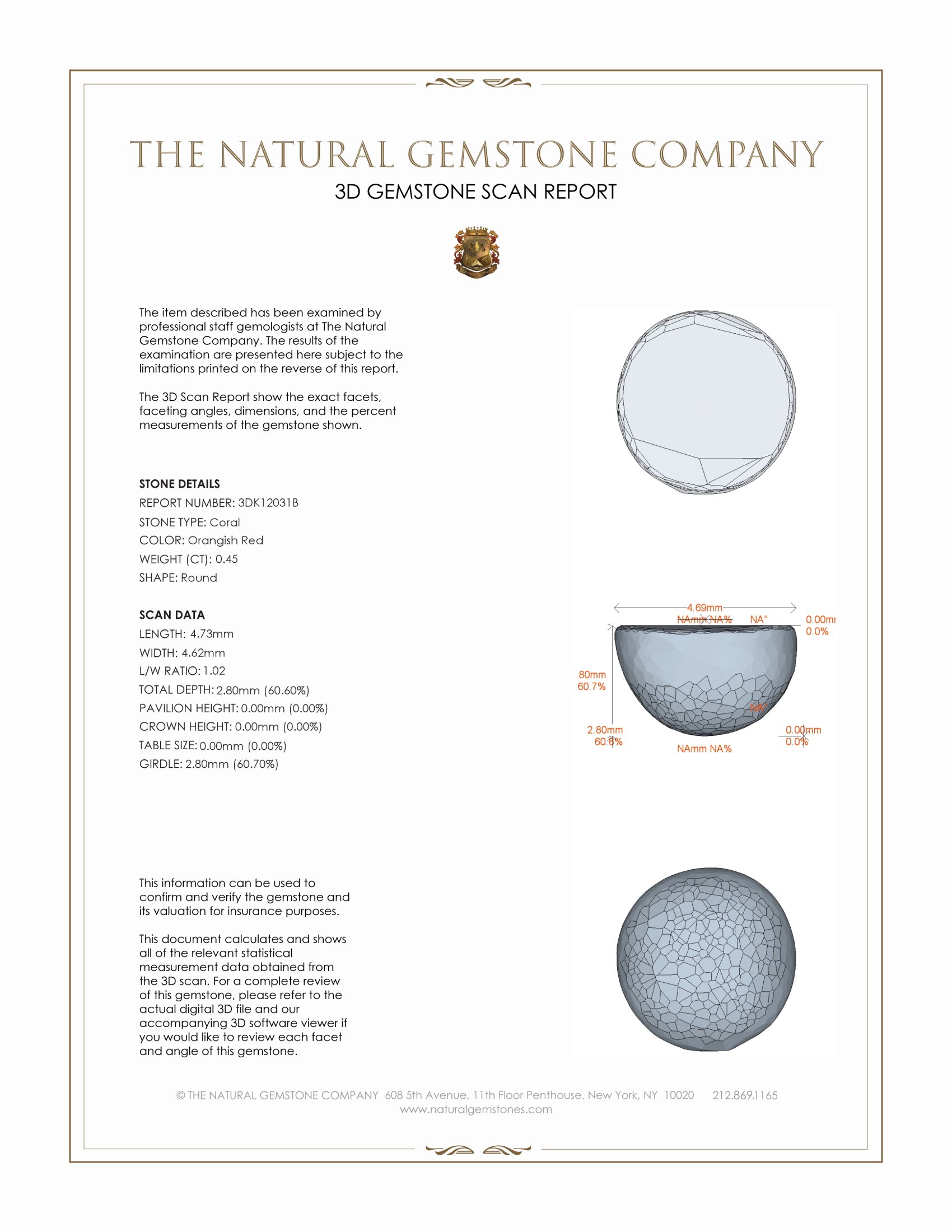
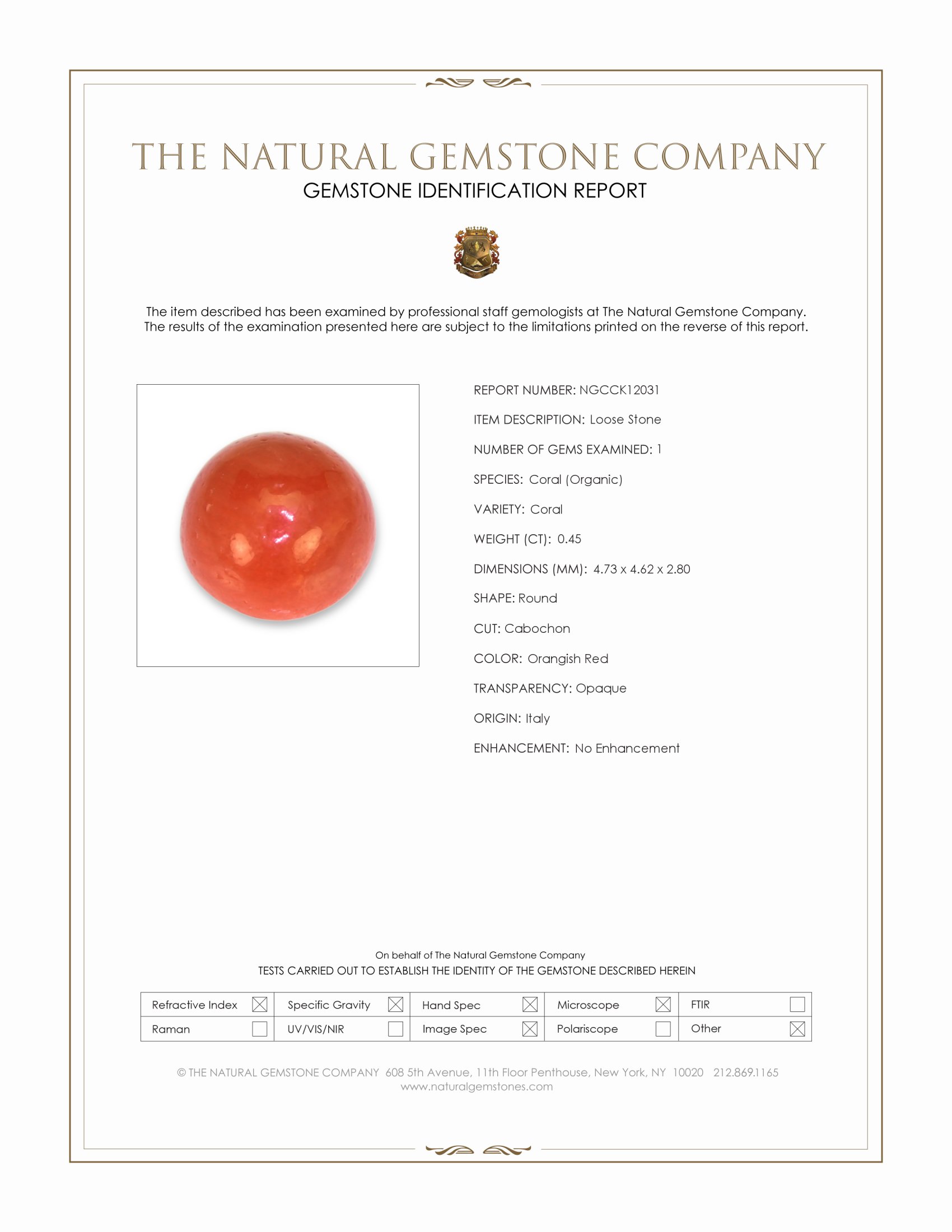
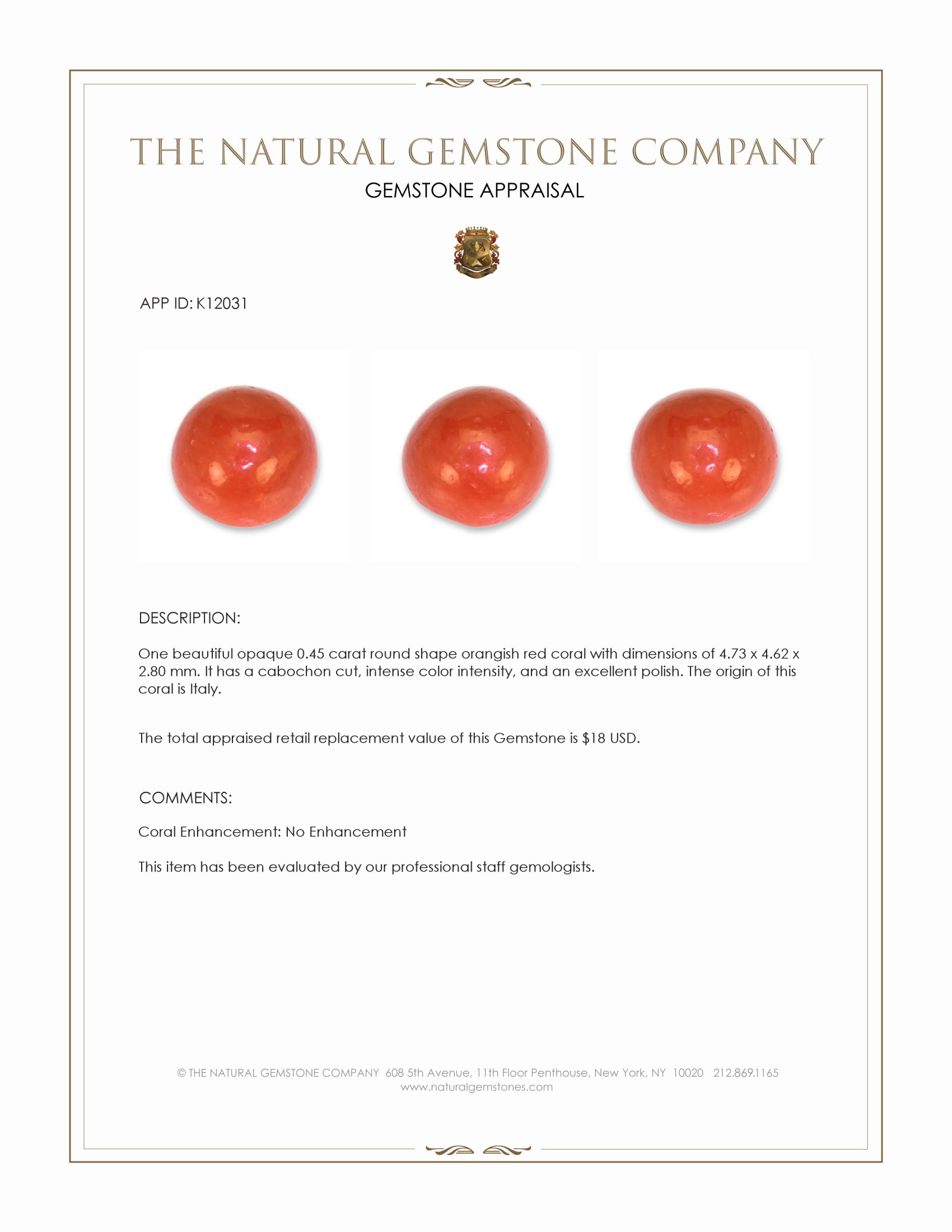
0.45 Ct. Cabochon Coral from Italy
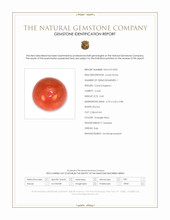
Item ID: | K12031 |
|---|---|
Dimensions (MM): help | Length: 4.73 Width: 4.62 Height: 2.8 |
Weight: | 0.45 Ct. |
Color: help | Orangish Red |
Color intensity: help | Intense |
Clarity: help | Not Applicable |
Shape: help | Round |
Cut: | Cabochon |
Cutting style: | Cabochon |
Enhancements: help | No Enhancement |
Origin: help | Italy |
Per carat price: help | $40 |
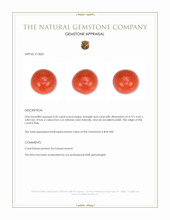
This piece from The Natural Gemstone Company is a fine example of Mediterranean Corallium rubrum, presented as a round cabochon weighing 0.45 carat, with precise dimensions of 4.73 x 4.62 x 2.80 mm. The stone has been expertly shaped into a true round cabochon, exhibiting a symmetrical dome profile that reaches a controlled height to maximize surface color and luster while maintaining structural integrity for mounting. The cut emphasizes an even curvature and clean girdle, attributes that are critical in cabochon work to avoid weak points and to present a stable contact area for bezel setting or inlay work. Color grading for this specimen registers as intense, with a vivid orangish red saturation across the dome, and the polish is excellent, producing a smooth, almost creamy specular reflection. As a natural organic gem with no enhancement, this coral retains its original pigmentation and surface character, and it carries the provenance of Italian waters, a region long regarded for producing premium red coral with consistent hue and density. The material has a Mohs hardness in the range of approximately 3.5, which informs both handling and setting choices, and its specific gravity and tactile density are typical of high quality Mediterranean coral, lending an immediate impression of substance despite the small carat weight.
The internal structure and inclusions of this coral serve as unique identifiers and are integral to its aesthetic and forensic profile. Coral is an organic skeletal material composed primarily of calcium carbonate in crystalline form, and its growth history is recorded as a combination of banding, fine stromatoporoid like growth lines, microscopic pores, and occasional minute calcitic filaments. Under loupe magnification the piece reveals subtle linear growth patterns and localized pigment concentration zones that do not detract from the uniformity of color but rather authenticate the natural formation process. Surface features such as tiny pits and shallow grain related voids are consistent with the species and are often sealed and minimized during polishing without being artificially filled or stabilized in this specimen. These inclusions act much like a fingerprint, allowing experienced gemologists to correlate textural signatures with Mediterranean origin, and when documented they provide a reliable record for provenance and for future matching in bespoke pieces. The absence of dye, resin, or any other enhancement means the observed inclusions are original, unaltered features, and they contribute both to identification and to the individual character that collectors and connoisseurs prize.
From a lapidary and design perspective the cabochon presents numerous opportunities for fine jewelry while imposing specific technical considerations. The even dome and excellent polish allow the orangish red color to be read consistently face up, which makes the material ideal for solitary bezels, halo settings when combined with accent stones, or finely executed inlays where the round shape and small dimensions can be set with minimal removal of surrounding metal. Given the relatively low hardness, a bezel mount is recommended to protect the girdle and edges from abrasion and impact, and prong settings should be designed with robust seat geometry to avoid stress concentrations. Setting artisans will appreciate the stable profile for glue free mounting when a mechanical seat is used. Care instructions for long term preservation are straightforward and built around the material chemistry, avoid ultrasonic and steam cleaning, avoid exposure to strong acids and prolonged contact with solvents, remove jewelry prior to activities that could expose the coral to hard knocks or chemical cleaners, and clean gently with a soft cloth and mild soapy water when required. The Natural Gemstone Company supplies this coral as a certified unenhanced item with documented measurements and origin, and for clients seeking a naturally occurring specimen with verifiable character and technical quality this piece represents a compact but authentic example suitable for museum level documentation or for integration into refined, thoughtfully engineered jewelry.


