
- Stone8
- Reports2
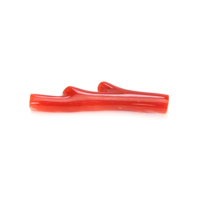

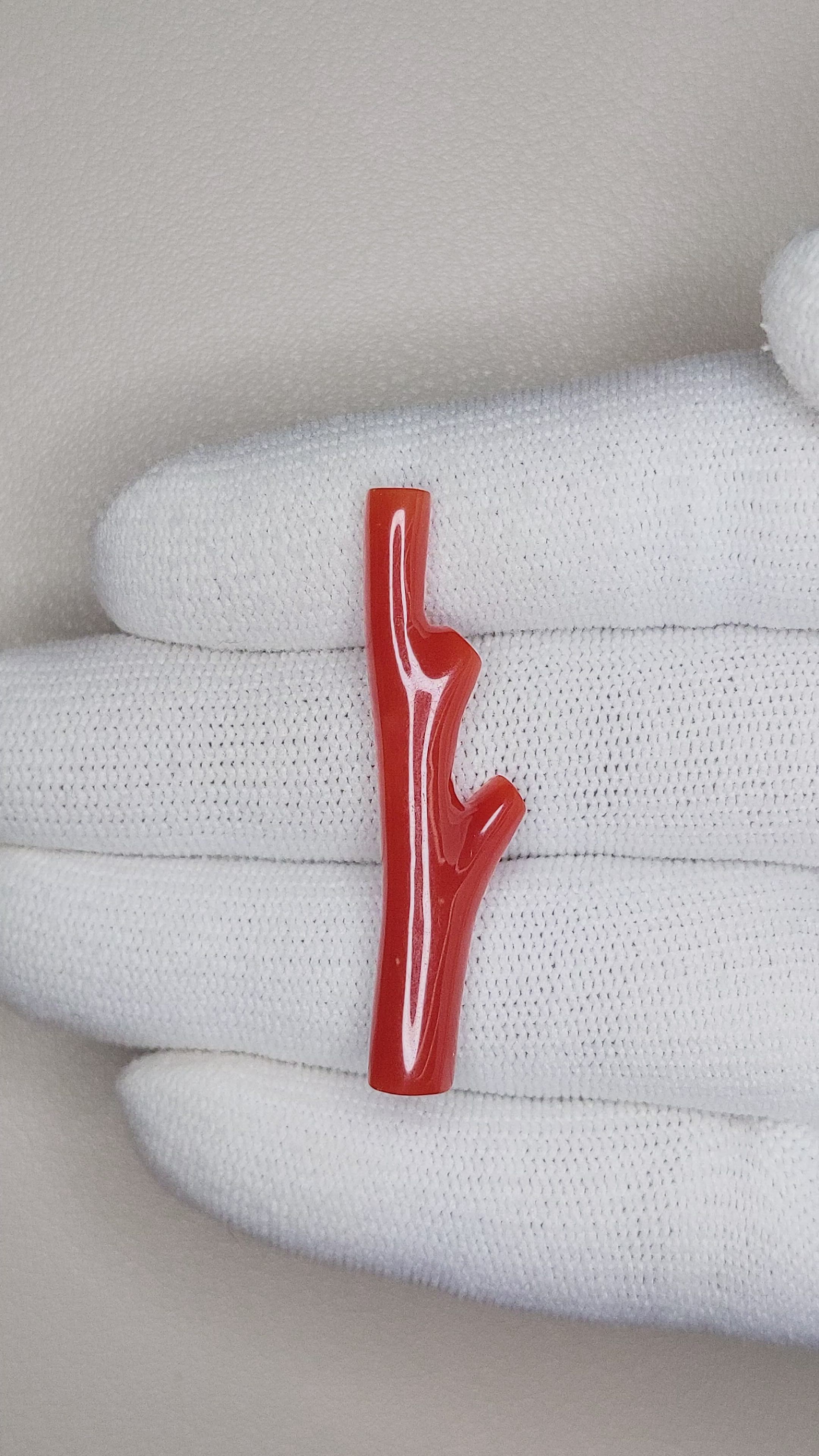


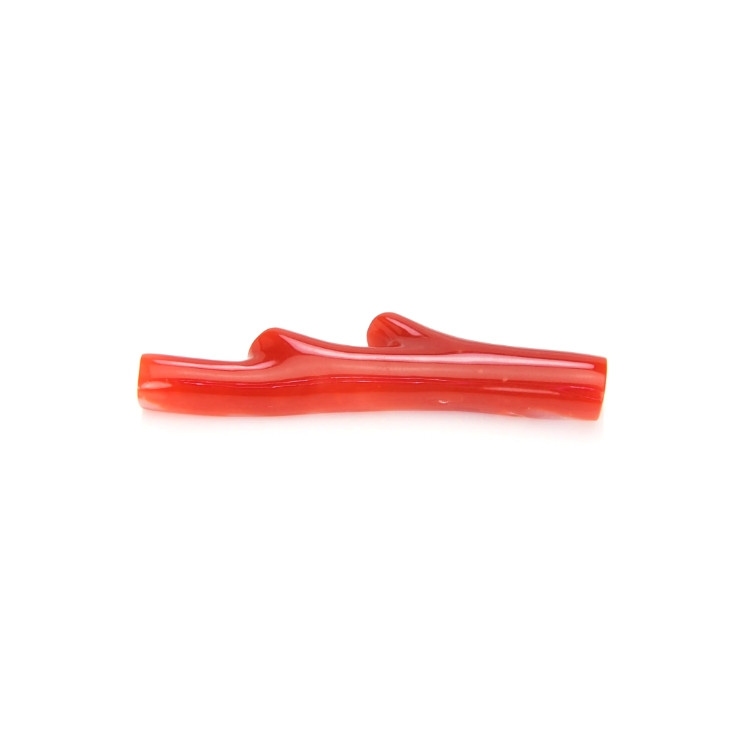
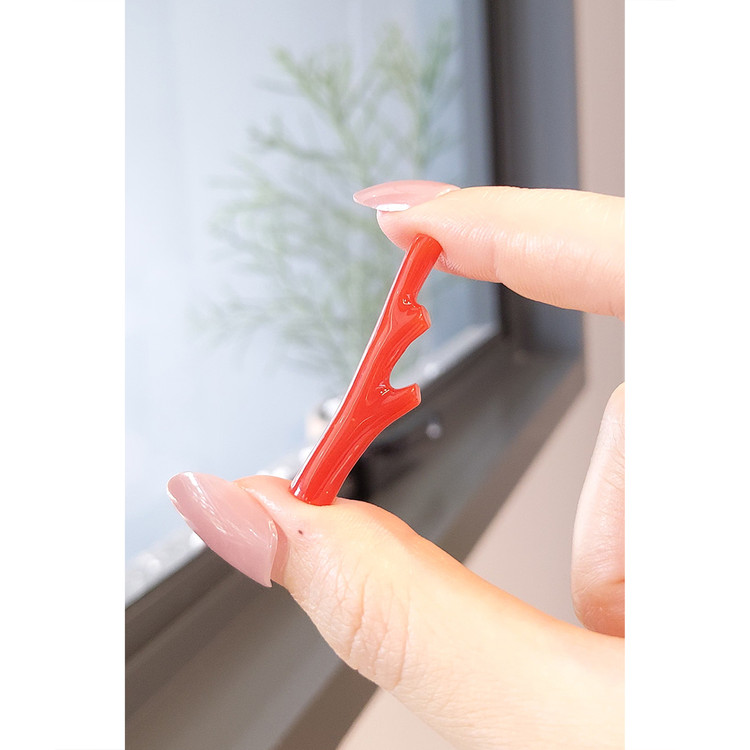


12.50 Ct. Salmon (Orange) Coral from China
This loose stone is available to ship now
Item ID: | K2300 |
|---|---|
Dimensions (MM): help | Length: 39.2 Width: 10.4 Height: 5.2 |
Weight: | 12.50 Ct. |
Color: help | Salmon (Orange) |
Color intensity: help | Intense |
Clarity: help | Not Applicable |
Shape: help | Freeform |
Cut: | Polished |
Cutting style: | Carving |
Enhancements: help | Dyed |
Origin: help | China |
Per carat price: help | $6 |
One exceptional piece from The Natural Gemstone Company, this specimen is a translucent 12.50 carat freeform salmon orange coral, presented in a long, slender branch like morphology with dimensions 39.20 by 10.40 by 5.20 mm. The material displays an intense color intensity and an excellent polish, characteristics that are emphasized by its polished cut. Origin China, enhancement dyed. The freeform shape departs from faceted geometry and is intentionally preserved to maintain the natural growth contours of the coral, allowing the collector or jeweler to exploit organic line and form rather than conforming to a conventional faceted silhouette. The visual character is governed by its translucency and the high degree of surface finish, creating a visual depth that reads as a uniform salmon to orange saturation with minor tonal variation along the length that enhances its natural, branch like appeal.
From an optical and technical perspective, the polished freeform cut optimizes light interaction through a combination of specular surface reflection and controlled subsurface scattering. Unlike faceted gemstones where discrete planar facets create internal total reflection and directional brilliance, this coral relies on curved, continuous surfaces to produce a soft luminous glow, sometimes described as an internal sheen. The excellent polish reduces micro surface scattering, increasing specular reflection and creating crisp highlights along the convex surfaces. Meanwhile, the thin profile and variable thickness across the length permit differential light transmission, so that light entering thinner regions transmits and exits with warmer tone and higher translucency, while thicker sections convey greater optical depth and richer saturation. The result is a nuanced interplay between surface gloss and optical depth, controlled primarily by sculpting and final lapidary polishing protocols rather than facet geometry. The polishing work also refines the surface microtopography to a low roughness state, which is critical for organic materials where luster is derived from surface continuity and subsurface uniformity rather than refractive index contrast.
Craftsmanship and treatment considerations are equally important for technicians and discerning buyers who will integrate this coral into wearable designs or collections. The freeform polished cut requires precise handling during setting, because its slender dimensions and branch like form benefit from supportive settings that protect slender termini and distribute mechanical stress. Bezel or custom supportive mountings that follow the curvature will preserve the surface polish and prevent point loading that might lead to fracture, while a translucent backing or an open back orientation can be chosen to maximize the intrinsic glow produced by subsurface scattering. The enhancement by dyeing delivers the intense uniform tone seen in this example, and should be considered in design and care protocols. Dyeing increases spectral saturation and uniformity but requires avoidance of aggressive solvents, prolonged exposure to elevated temperatures, and ultrasonic cleaning, all of which can affect dye stability. For those evaluating provenance and trade practices, the origin China is documented, and The Natural Gemstone Company is prepared to provide handling recommendations and certification statements regarding treatment disclosure. For gemologists and experienced jewelers, this specimen offers a predictable and controllable optical behavior, ideal for designs that exploit gradient translucency and polished surface highlights, while also presenting a mature example of lapidary skill in preserving organic morphology for contemporary jewelry applications.


