
- Stone14
- Reports3






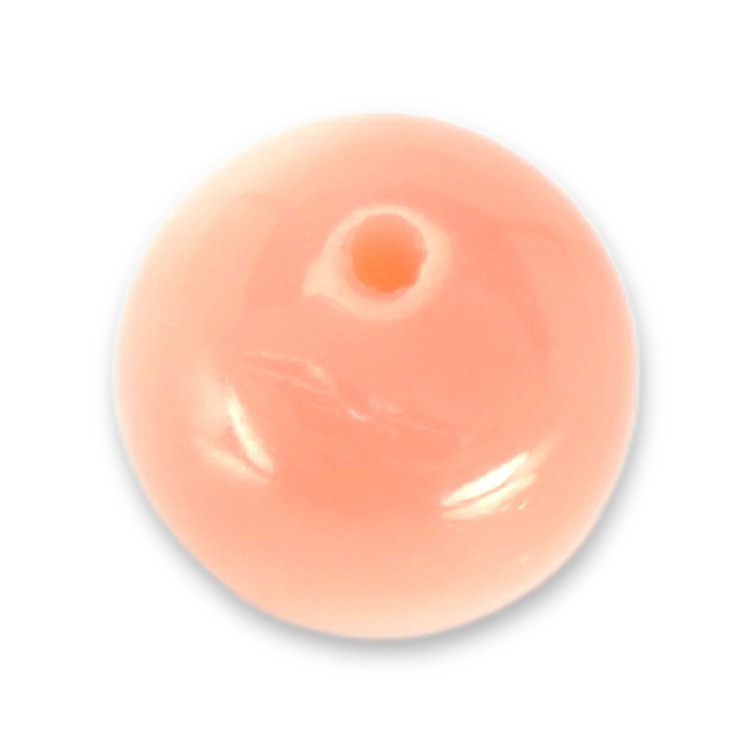


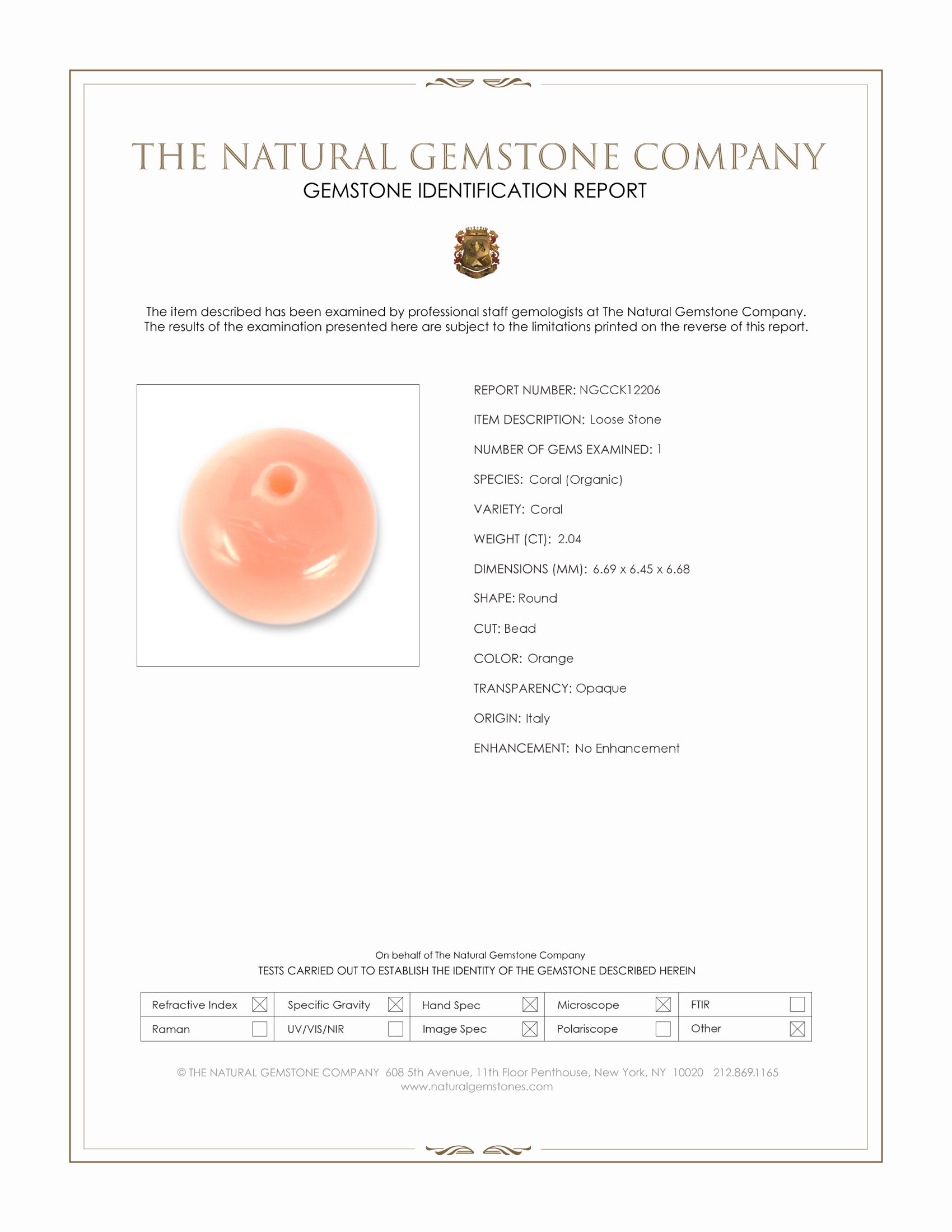
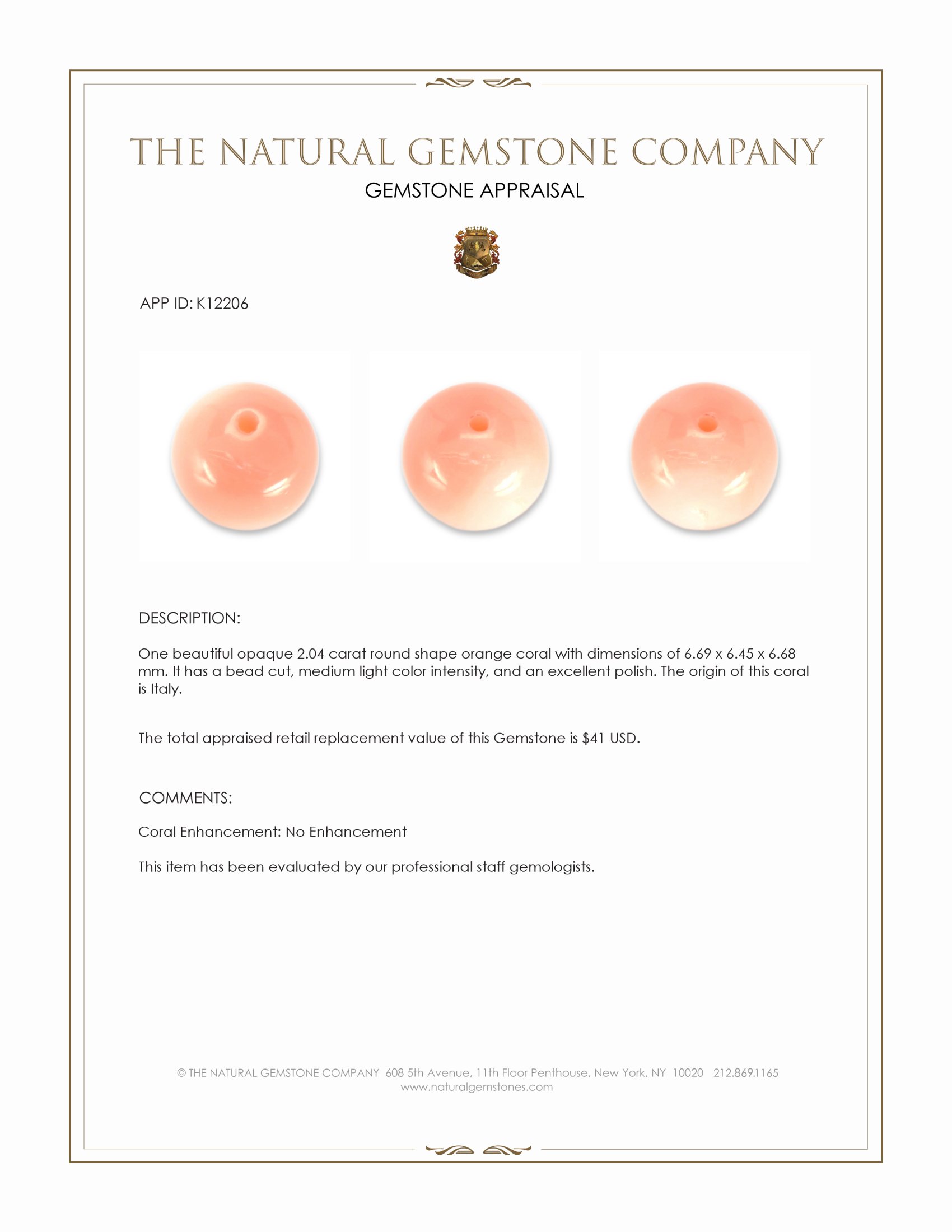
2.04 Ct. Coral from Italy
Item ID: | K12206 |
|---|---|
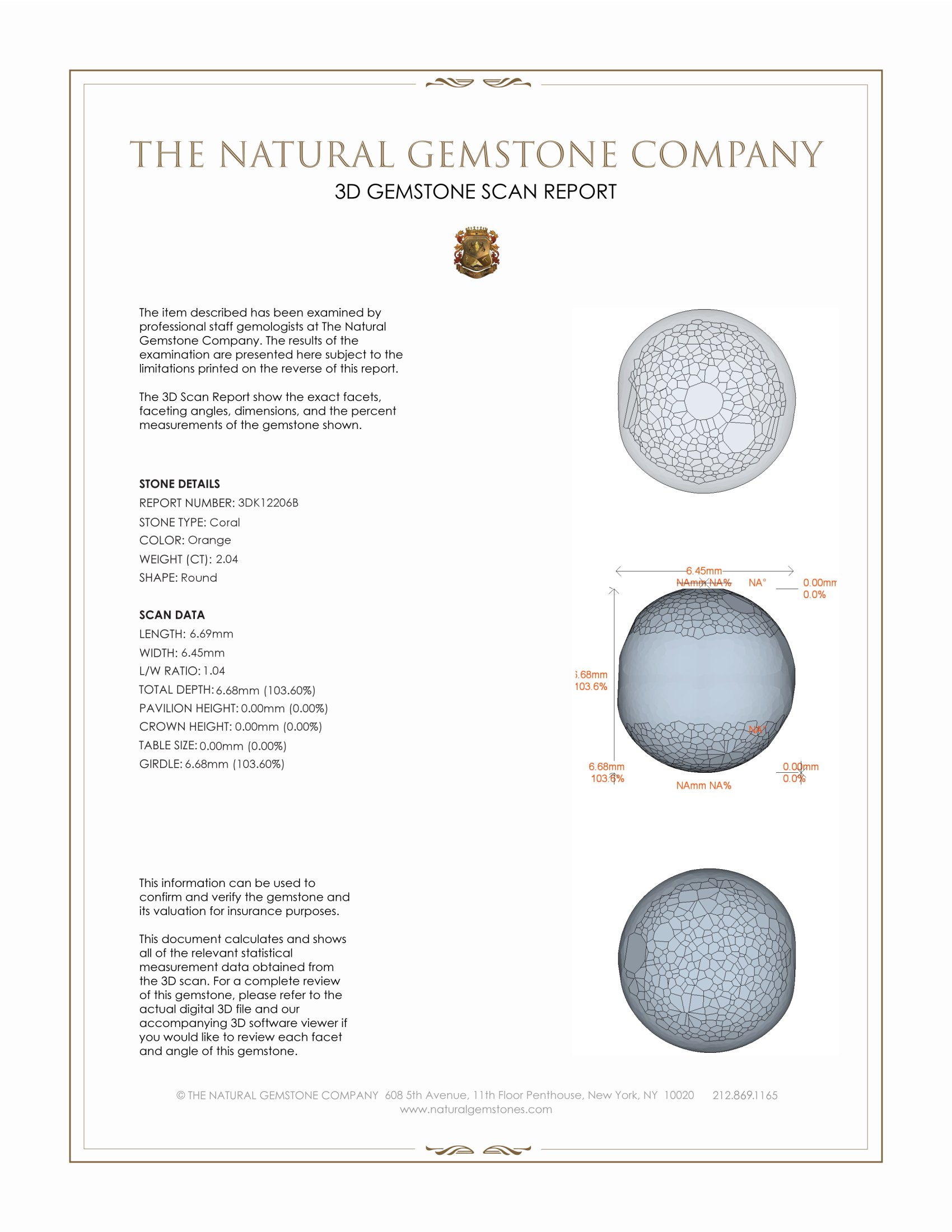
Dimensions (MM): help | Length: 6.69 Width: 6.45 Height: 6.68 |
Weight: | 2.04 Ct. |
Color: help | Orange |
Color intensity: help | Medium Light |
Clarity: help | Not Applicable |
Shape: help | Round |
Cut: | Bead |
Cutting style: | Bead |
Enhancements: help | No Enhancement |
Origin: help | Italy |
Per carat price: help | $20 |
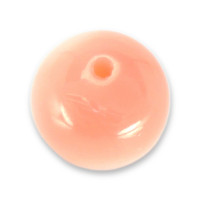
This specimen is a precisely worked 2.04 carat Italian coral bead, presented in a true round form with measured dimensions of 6.69 x 6.45 x 6.68 mm. The cutting style is bead cut, which in this context denotes a three dimensional spherical shaping derived from a whole coral branch, and subsequent drilling to create a bead hole that is clean and centrally located. The material is opaque, consistent with the natural aragonitic skeletal structure of coral, and the surface exhibits an excellent polish that enhances the interface between light and the organic microstructure. The bead shows no evidence of enhancement, dye, stabilization, or thermal treatment, attributes that are critical when evaluating provenance and long term value. The Italian origin is significant from a gemological perspective, as Mediterranean coral has a distinct skeletal density and hue range that experienced lapidaries recognize, and this geographic provenance is a key datum for collectors and high end jewelry makers alike.
Color evaluation for this coral bead falls into a medium light intensity class, with a dominant orange hue that leans toward a warm peach or salmon tone under standard daylight grading conditions. Color saturation is moderate, producing an even visual field without dramatic zonation, which is typical for well selected Mediterranean specimens. The tone and saturation balance permits the bead to read consistently in various mounting contexts, from close set bead stringing to single point settings on a ring or pendant. Surface luster is high due to the excellent polish, which creates soft specular highlights rather than bright refractive return, a behavior consistent with an organic origin and an isotropic microstructure. When assessing matching potential for multi bead designs, this piece serves as an excellent reference point, given its symmetry and stable color plane.
From a craftsmanship and finishing perspective the precision in roundness is notable, both in macroscopic symmetry and in the micrometric control of the drilled aperture. Achieving this level of spherical uniformity in coral requires careful orientation of the coral branch to minimize natural voids and growth interruptions, followed by progressive shaping through abrasive stages to preserve the integrity of the aragonitic layers. The drill work is performed with specialized tools to prevent heat buildup and to maintain the original material density around the aperture, thereby limiting microfractures and preserving polish. The excellent polish reflects a controlled sequence of increasingly fine abrasives and finishing compounds that remove tool marks while enhancing natural surface sheen. For designers and craftsmen, this bead offers reliable handling properties, predictable wear characteristics, and a surface that accepts traditional jewelry adhesives and mountings without the need for chemical stabilization.
Regarding investment potential and future appreciation, this untreated Italian coral bead occupies a favorable position in both the collector and designer markets. Natural, unenhanced coral from historically recognized sources is increasingly constrained by regulatory controls and supply limitations, factors that exert upward price pressure on material of verified origin and high finish quality. The absence of enhancement is a substantial positive from an investment standpoint, as treated or dyed coral typically depreciates relative to natural material. The bead size and round shape provide versatility, improving liquidity because it can be incorporated into a range of high value objects from single stone bespoke pieces to matched strand creations. Market data over recent years show sustained interest in Mediterranean corals among collectors who value documented provenance and fine craftsmanship. For clients seeking to allocate capital into tangible natural gems, acquisition through an established house such as The Natural Gemstone Company supplies both curatorial assurance and access to provenance data, which together support long term appreciation without speculative risk language. Prospective buyers should consider obtaining photographic provenance and an independent gemological statement when purchasing for investment, as certified documentation enhances resale prospects and contributes to the asset narrative over time.


