
- Stone13
- Reports2

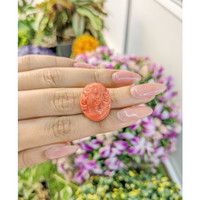
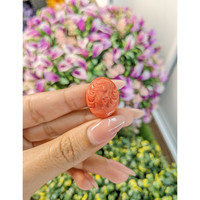
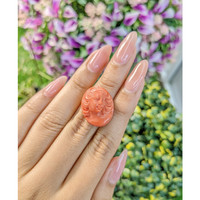
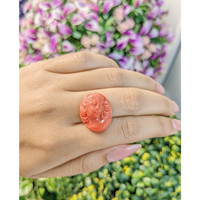



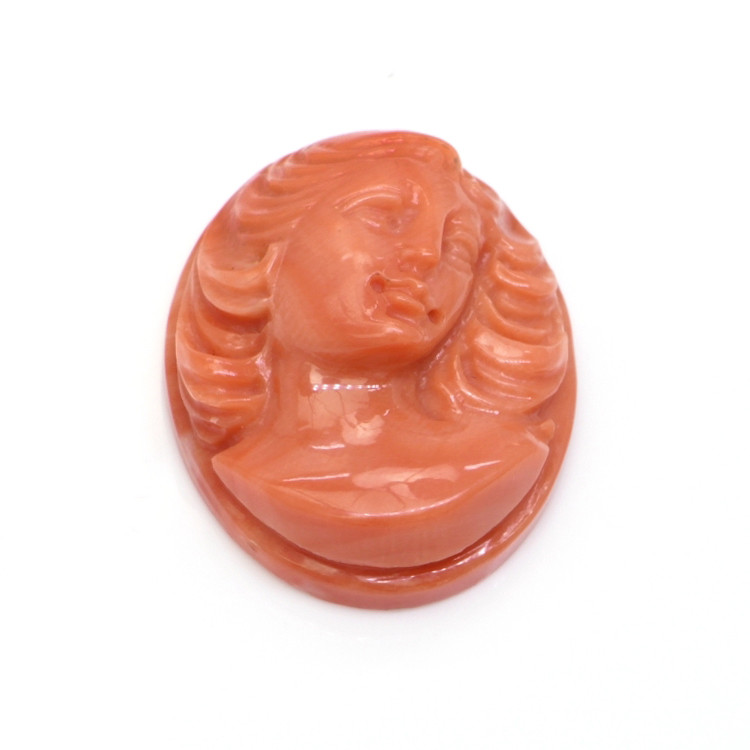
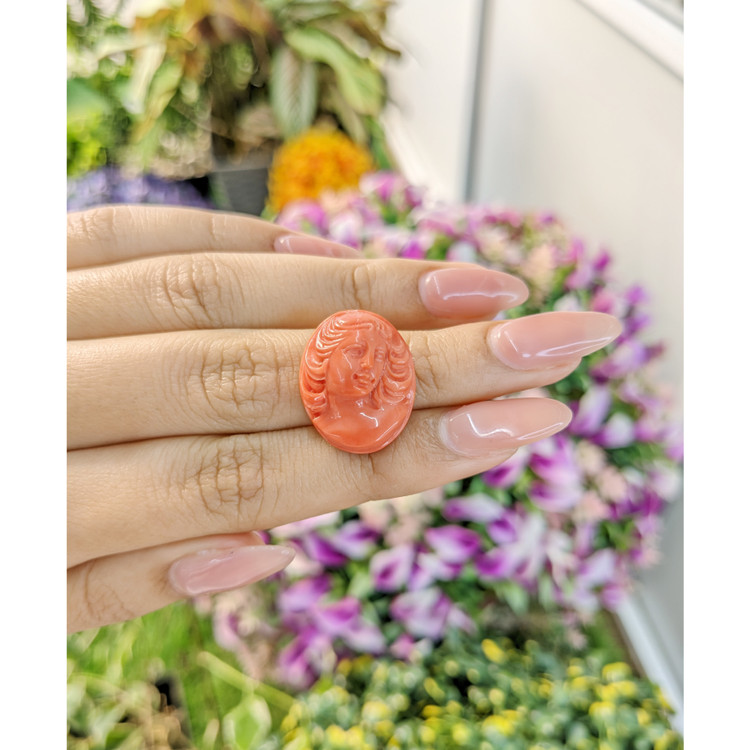
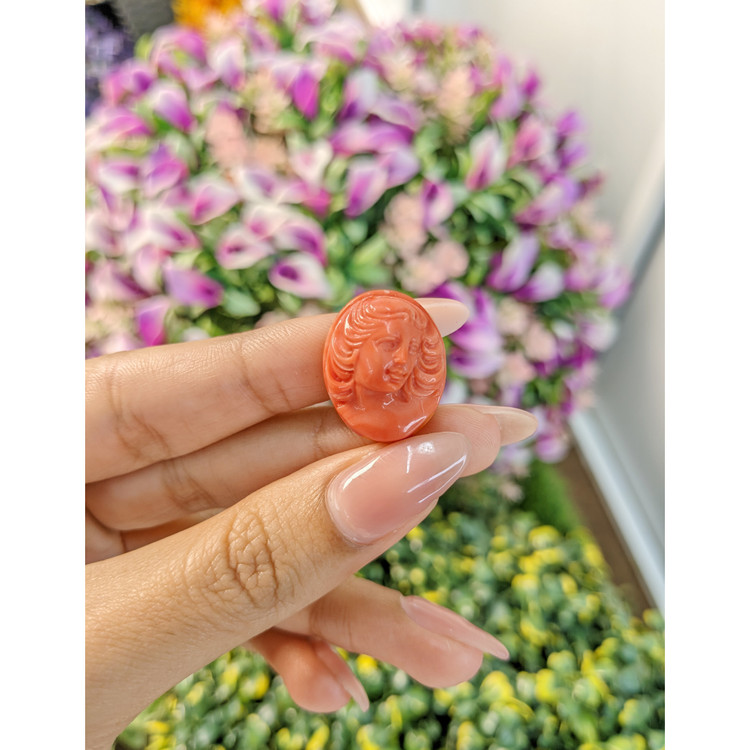
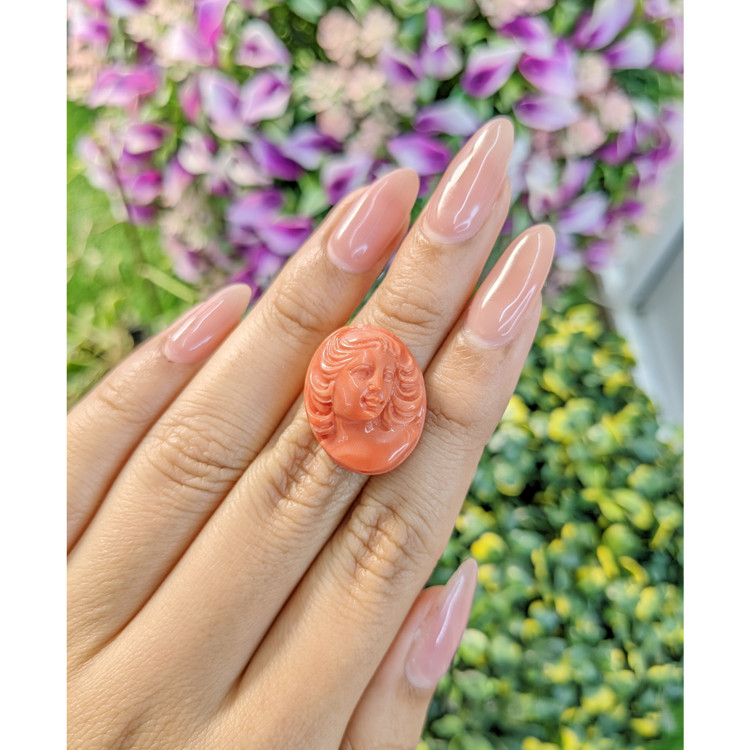
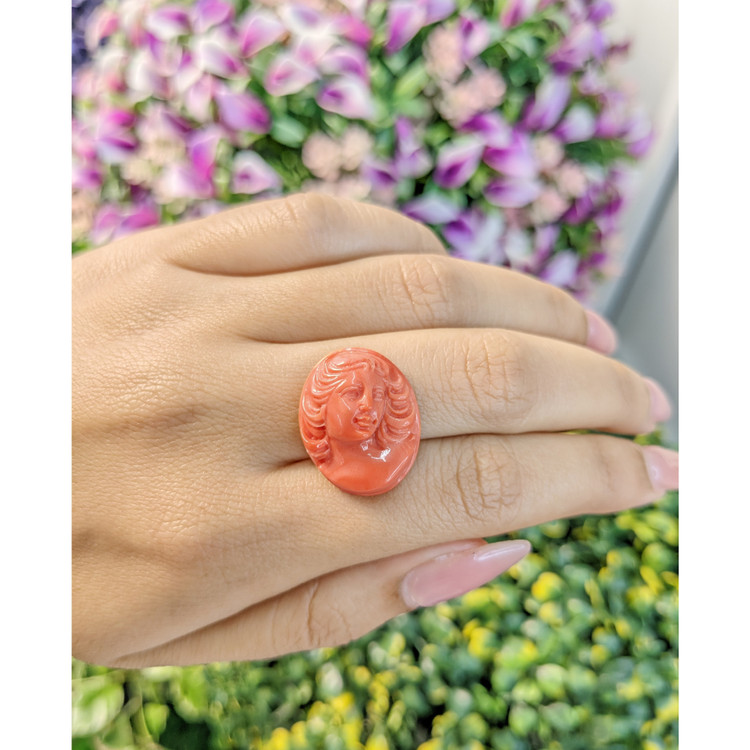


35.93 Ct. Salmon (Orange) Coral from Australia
This loose stone is available to ship now
Item ID: | K3680 |
|---|---|
Dimensions (MM): help | Length: 24.52 Width: 17.31 Height: 8.11 |
Weight: | 35.93 Ct. |
Color: help | Salmon (Orange) |
Color intensity: help | Medium |
Clarity: help | Not Applicable |
Shape: help | Oval |
Cut: | Carving |
Cutting style: | Carving |
Enhancements: help | No Enhancement |
Origin: help | Australia |
Per carat price: help | $20 |
A single sunlit secret rests within the palm of your hand, a 35.93 carat oval shape salmon orange coral that seems to hold an entire sunset. Born in the clear southern waters of Australia, this opaque treasure carries a medium color intensity that blushes with warmth, like the first light on a lover's skin. The carving style invites the eye to linger, each curve and contour catching the light with an excellent polish that feels like satin beneath the fingertips. From The Natural Gemstone Company this coral arrives untamed by treatment, no enhancement, simply the honest voice of the ocean shaped by expert hands into a delicate cameo of human presence and quiet narrative.
Look closer and the soul of the carving reveals itself, a gentle visage captured within an oval of 24.52 x 17.31 x 8.11 mm, a scale that balances intimacy with presence. The artist carved each lock of hair, each soft tilt of the head, into a shallow relief that plays with shadow and shine, making the figure appear to breathe as light passes across the surface. The cut is a carving, the polish is excellent, and the tactile finish invites a thousand small caresses. This is a stone that tells stories when worn, a personal talisman that will age with memory rather than manufacture. Because it is unenhanced, its color feels honest, sincere, and true, a warm coral that links the wearer to sea and sun and the patient craft of those who coax beauty from rough material.
Imagine this oval carved coral transformed into a variety of jewelry expressions, each setting a new stanza in its unfolding poem. As a centerpiece set in a hand carved gold bezel it will read as vintage romance, the carved edges embraced by warm metal that echoes the coral hue. Mounted as a statement ring the 35.93 carat weight will command attention, the oval profile sitting elegantly upon a slender band for courtly glamour, or perched on a wider cuff for a bold, modern pronouncement. For those who dream of suspended movement, choose a delicate pendant suspended from silk like a secret kept close to the heart, the back left open to allow light to breathe, or closed and protected if you prefer a more sheltered glow. A pair of matching or complementary carved corals would become heirloom earrings, balanced in a halo of small diamonds or pearls, soft lights that frame the coral and heighten its romantic hue.
The versatility of this carved coral is its truest romantic promise, it accepts many languages of design and answers each with grace. Picture an Art Nouveau inspired mount where flowing lines echo the carving, the metal wrapping like vines around the oval form. Envision a minimalist gold bezel that celebrates the material honesty, or a mixed metal composition that contrasts coral warmth with cool platinum accents. Consider bespoke combinations, a half halo of tiny diamonds to catch light, a surround of seed pearls for vintage softness, or a pavé band that transforms the piece into celebratory sparkle for an engagement set that is singular and intimate. For everyday elegance choose a low profile bezel that protects the carving while inviting frequent wear, or choose a more open gallery setting when the piece is destined for ceremonial evenings. Whatever the direction, The Natural Gemstone Company will collaborate with you to suggest alloys and profiles that honor coral stability, and to design prongs, bezels, and backings that cradle the carving with both security and poetry, ensuring your creation can be cherished for generations.


