
- Stone10
- Reports2


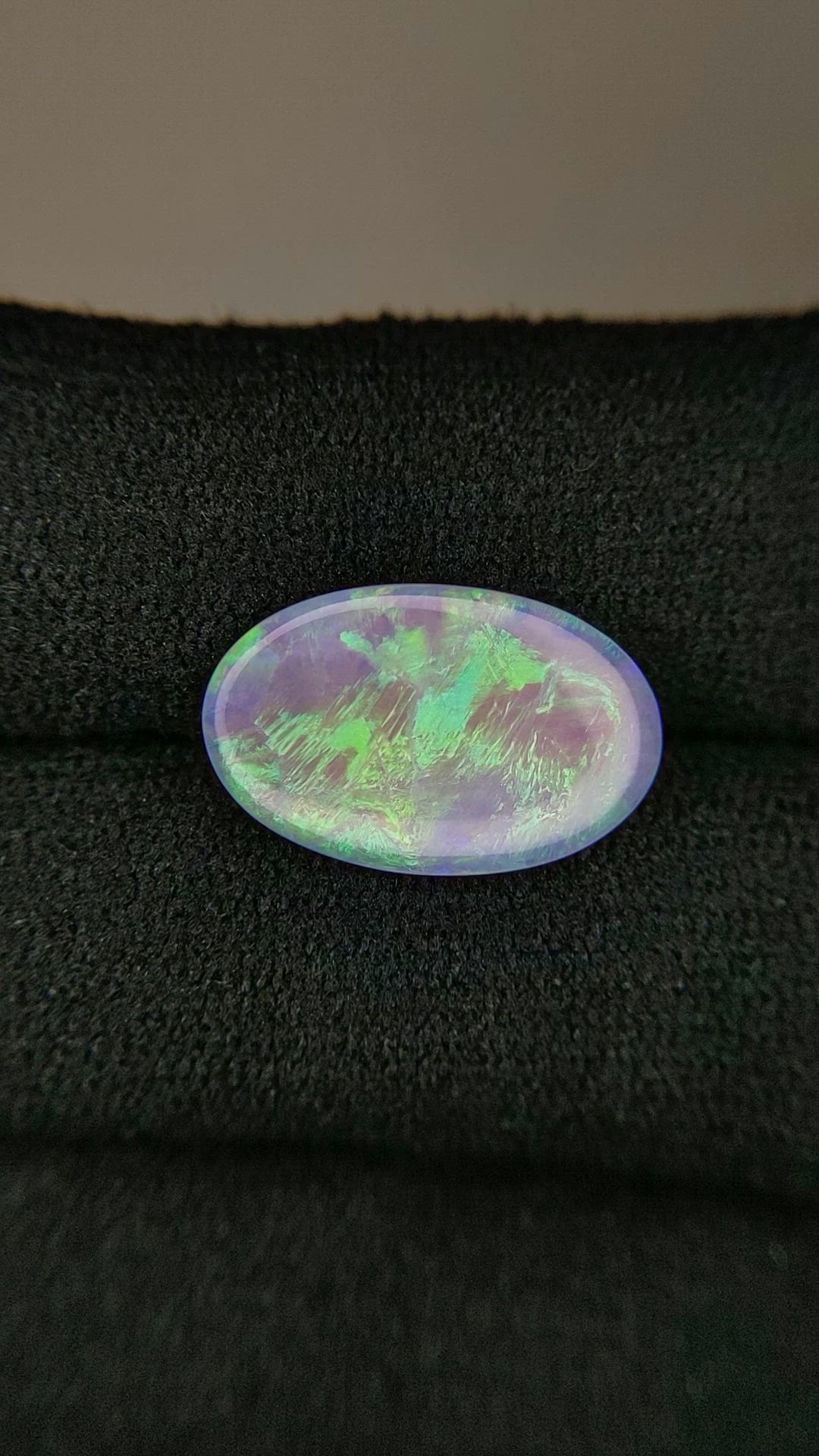
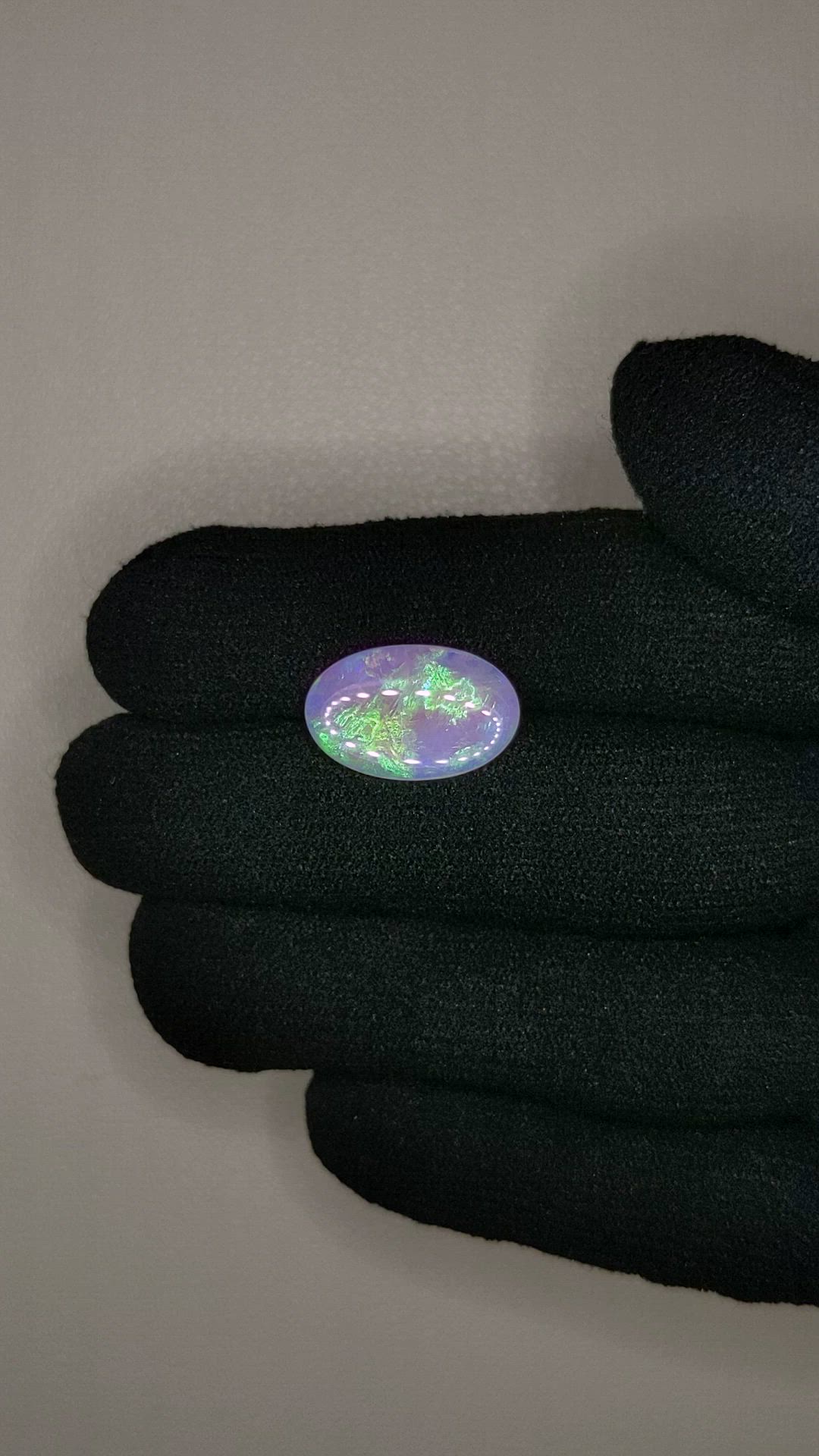
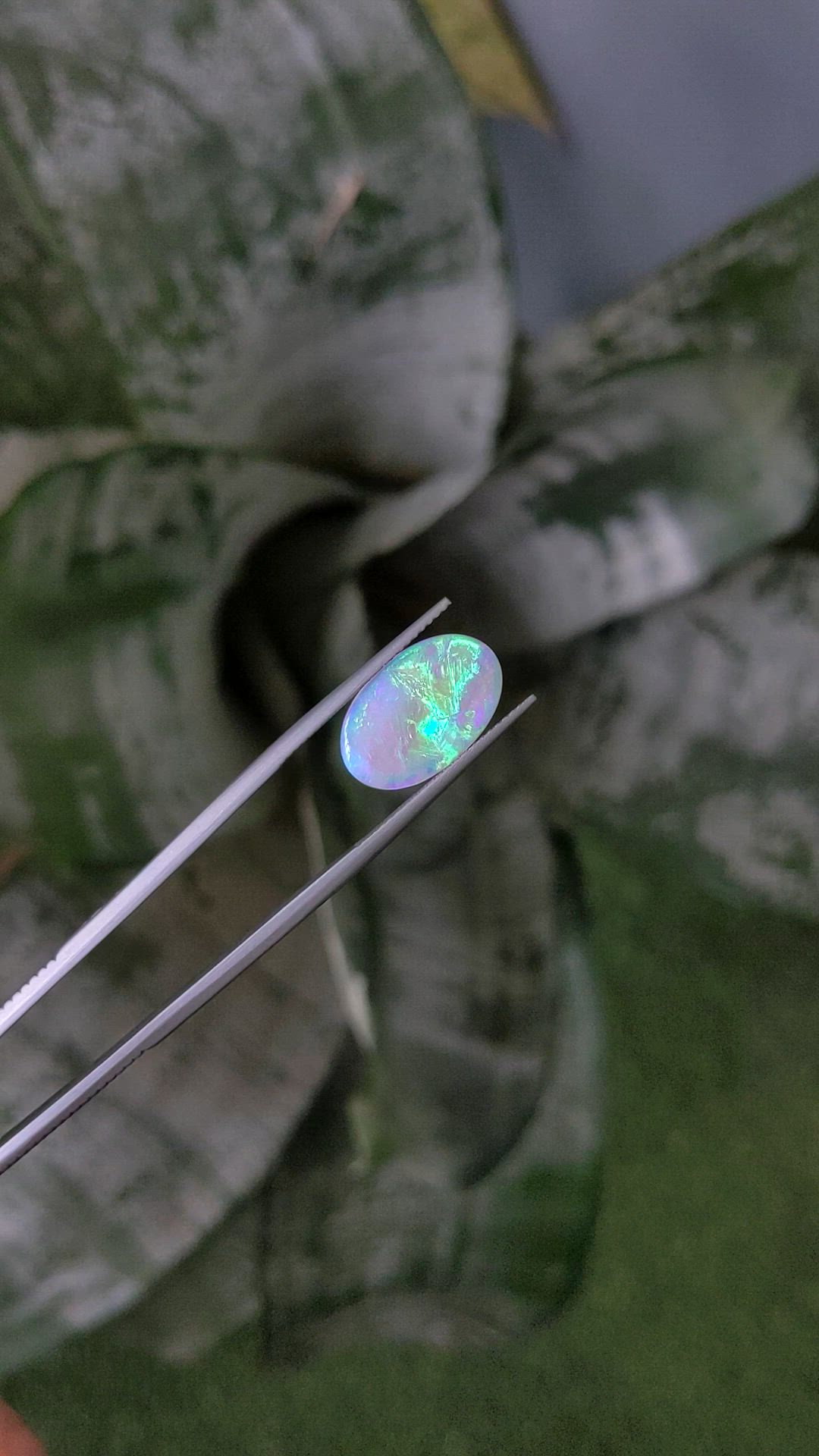
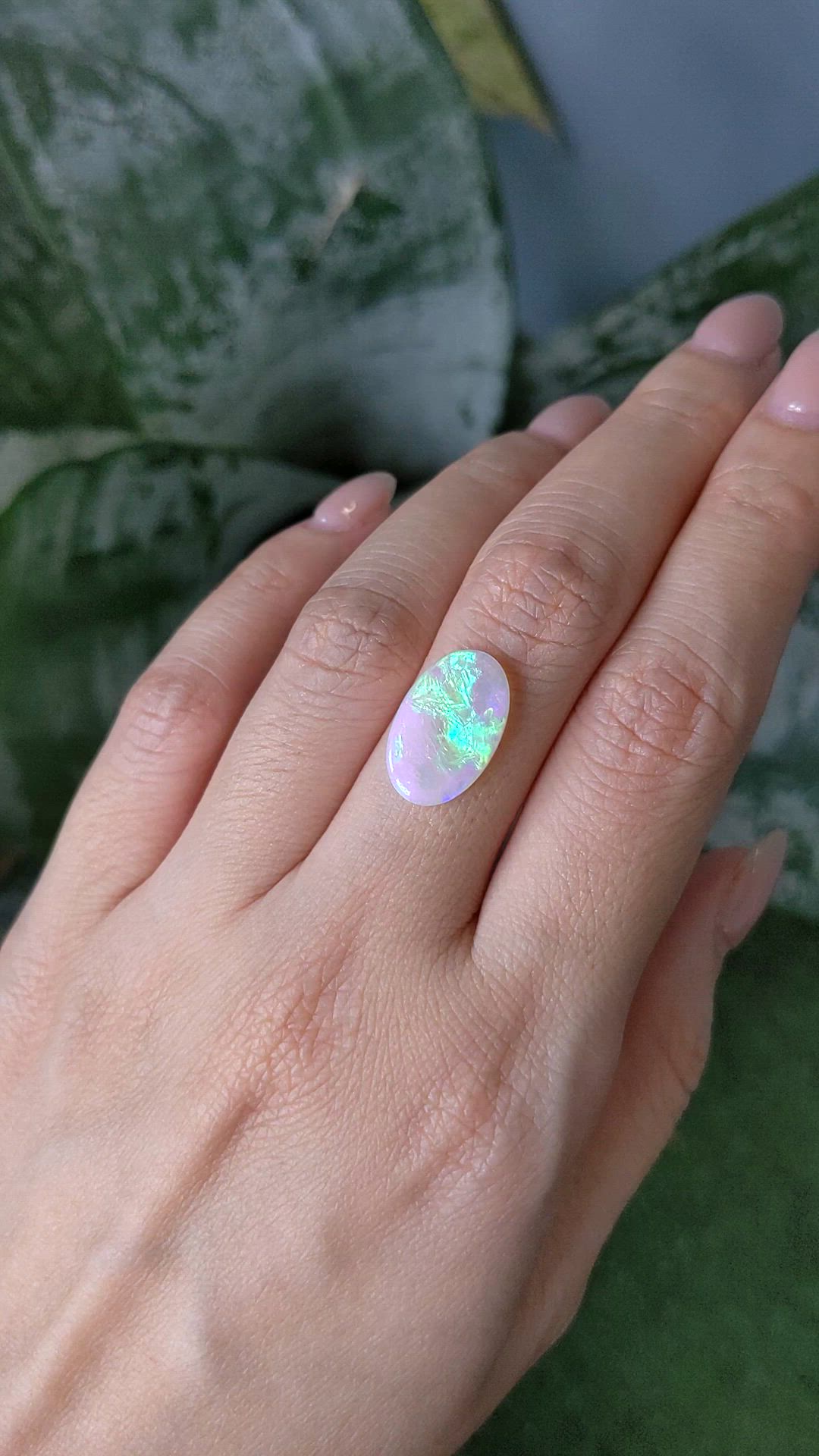


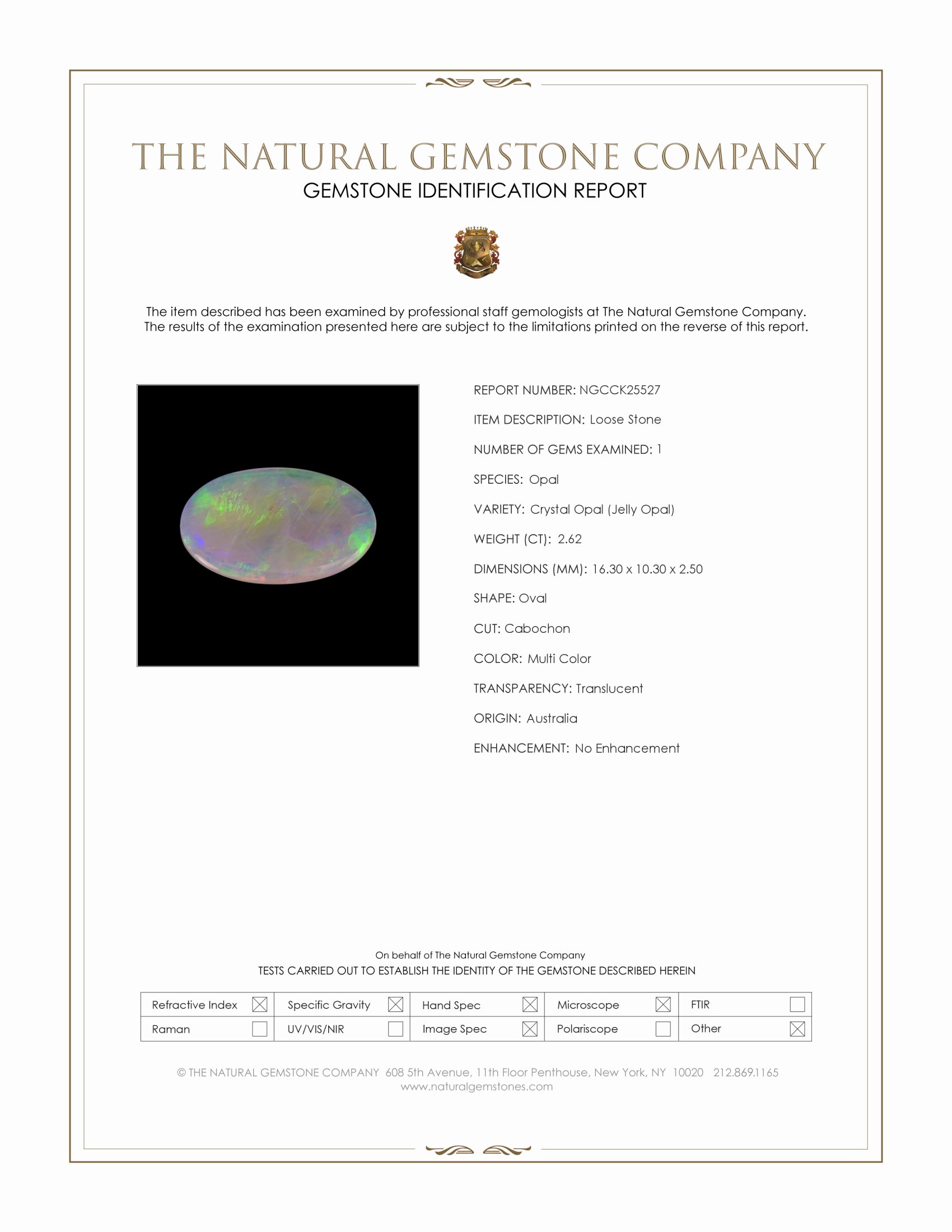
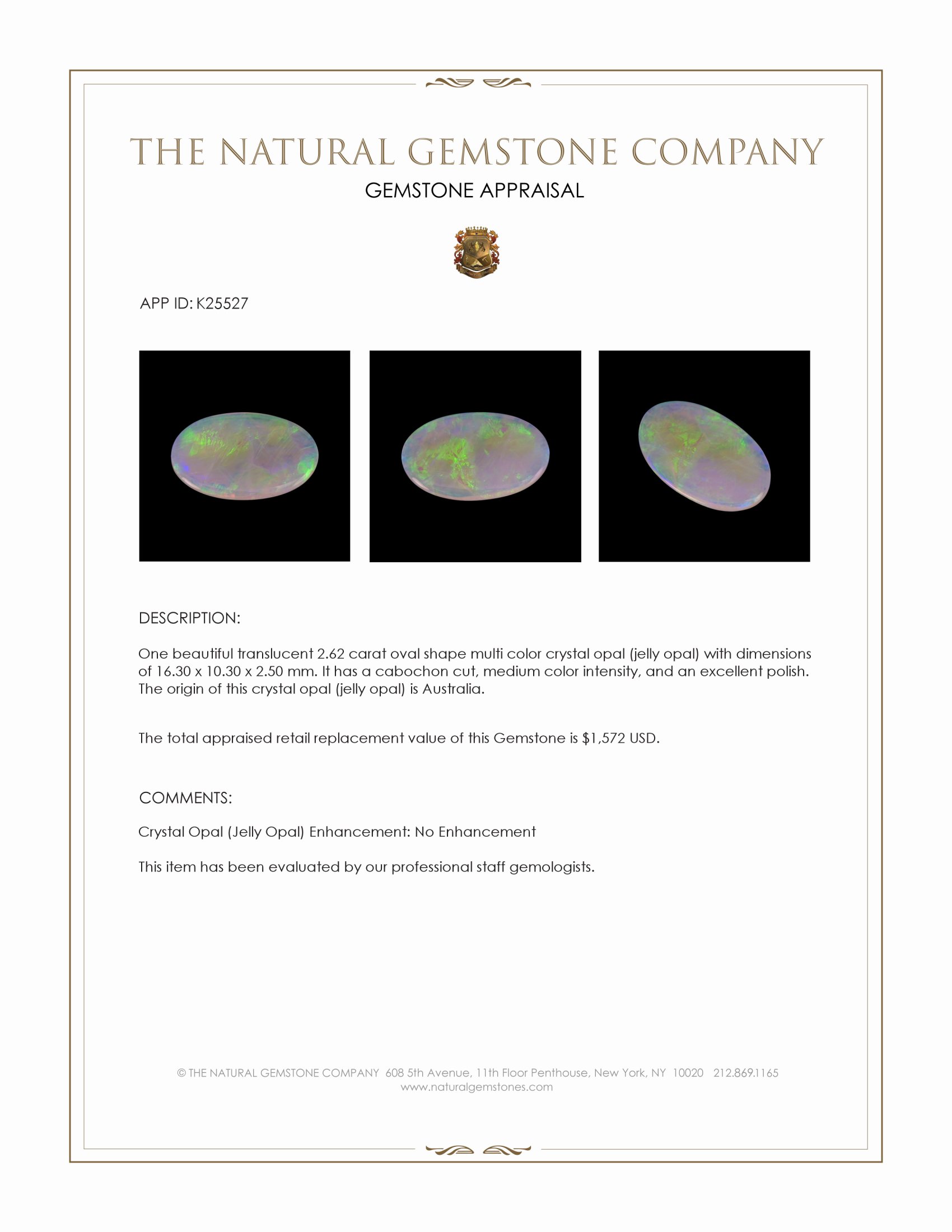
2.62 Ct. Multi Color Cabochon Crystal Opal (Jelly Opal) from Australia
This loose stone is available to ship now
Item ID: | K25527 |
|---|---|
Dimensions (MM): help | Length: 16.3 Width: 10.3 Height: 2.5 |
Weight: | 2.62 Ct. |
Color: help | Multi Color |
Color intensity: help | Medium |
Clarity: help | Not Applicable |
Shape: help | Oval |
Cut: | Cabochon |
Cutting style: | Cabochon |
Enhancements: help | No Enhancement |
Origin: help | Australia |
Per carat price: help | $600 |
This specimen is a translucent Crystal Opal, Jelly Opal, weighing 2.62 carats, presented in an oval shape with dimensions 16.30 x 10.30 x 2.50 millimeters, cut as a cabochon, with medium color intensity, excellent polish, no enhancement, and Australian origin. The cabochon cutting style has been executed to a precise oval symmetry, with a low to moderate domed profile that measures 2.50 millimeters in thickness at the apex, a profile chosen to optimize internal light transmission and to preserve the integrity of the play of color inherent to crystal opal material. The polish is described as excellent, indicating that the lapidary achieved a smooth, high lustre surface free of micro abrasions that could scatter light and diminish the clarity of the internal spectral effects. The medium color intensity designation reflects a balanced body tone, sufficient to provide contrast for internal color flashes while maintaining the characteristic jelly clarity that allows colors to appear suspended within the matrix rather than confined to surface reflections.
From an optical and gemological perspective this crystal opal generates brilliance by a mechanism fundamentally different from that of faceted gem materials, the opal produces a dynamic play of color through the diffraction and interference of light by an ordered array of silica spheres within the hydrated amorphous silica structure. Sphere packing periodicity controls the dominant wavelengths observed, with smaller ordered domains favoring blue and violet, and larger domains producing green, orange and red. In this particular stone the predominant spectral response manifests as lively green flashes with complementary pastel violet and pink tones, a palette that benefits from the translucent jelly base because internal light paths are long enough to interact with multiple diffracting domains. By contrast, diamonds display brilliance through high refractive index and faceting that maximize internal reflection and dispersion, sapphires and emeralds rely on strong absorption and saturated body color, and faceted gems create scintillation by geometric facet junctions that reemit light in discrete flashes. The cabochon form of this opal is the optimal cutting style to reveal continuous, angular dependent play of color, the curved surface allowing variable viewing geometry so that color patches and broad flashes are visible across multiple orientations, a quality that a faceted conversion would destroy. The medium body tone plays a critical role, because a too dark body in crystal opal can mask delicate internal hues, while a too pale body can wash out intensity, therefore this specimen strikes a technical equilibrium where internal diffraction efficiency and visual contrast are maximized.
Craftsmanship factors that distinguish this piece include precise orientation during preforming to align the dominant color patches with the oval long axis, careful dome profiling to avoid light pooling or dead spots, and meticulous polishing using progressively finer abrasives to secure a defect free surface that transmits light into the internal silica lattice with minimal scattering. The absence of enhancements confirms that the opal retains natural hydration and internal microstructure, variables that influence stability and optical performance, and provenance from Australia adds geological context because Australian crystal opal deposits are known for consistent sphere ordering and durable matrix consolidation. For application in fine jewelry, settings that protect the rim and crown while exposing the dome to undirected ambient light will maximize the gemological spectacle, bezels with low walls or semi open settings will preserve the cabochon profile while providing mechanical security. When comparing brilliance and visual appeal to more common gemstones collectors and connoisseurs should recognize that the opal offers a different category of optical complexity, it does not compete with diamonds on single point brilliance measured by refractive index, nor does it conform to color saturation scales used for corundum or beryl, instead it delivers a three dimensional, angle dependent spectral display that is tactilely intimate and visually variable, qualities that appeal to knowledgeable buyers who value optical uniqueness and lapidary precision. The Natural Gemstone Company documents this piece with full technical data for appraisal and setting advice, and the combination of exact dimensions, cabochon cutting, medium color intensity, excellent polish, no enhancement, and Australian origin make this Crystal Opal, Jelly Opal a compelling specimen for connoisseurs seeking an objectively characterized and exquisitely finished opal.


