
- Stone16
- Reports3
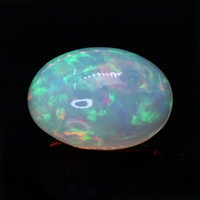
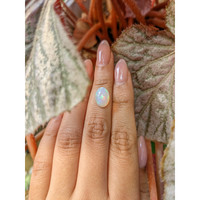
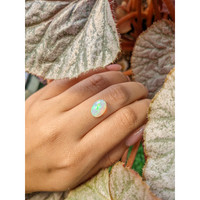
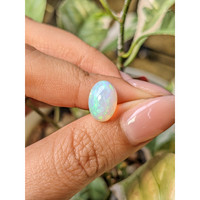

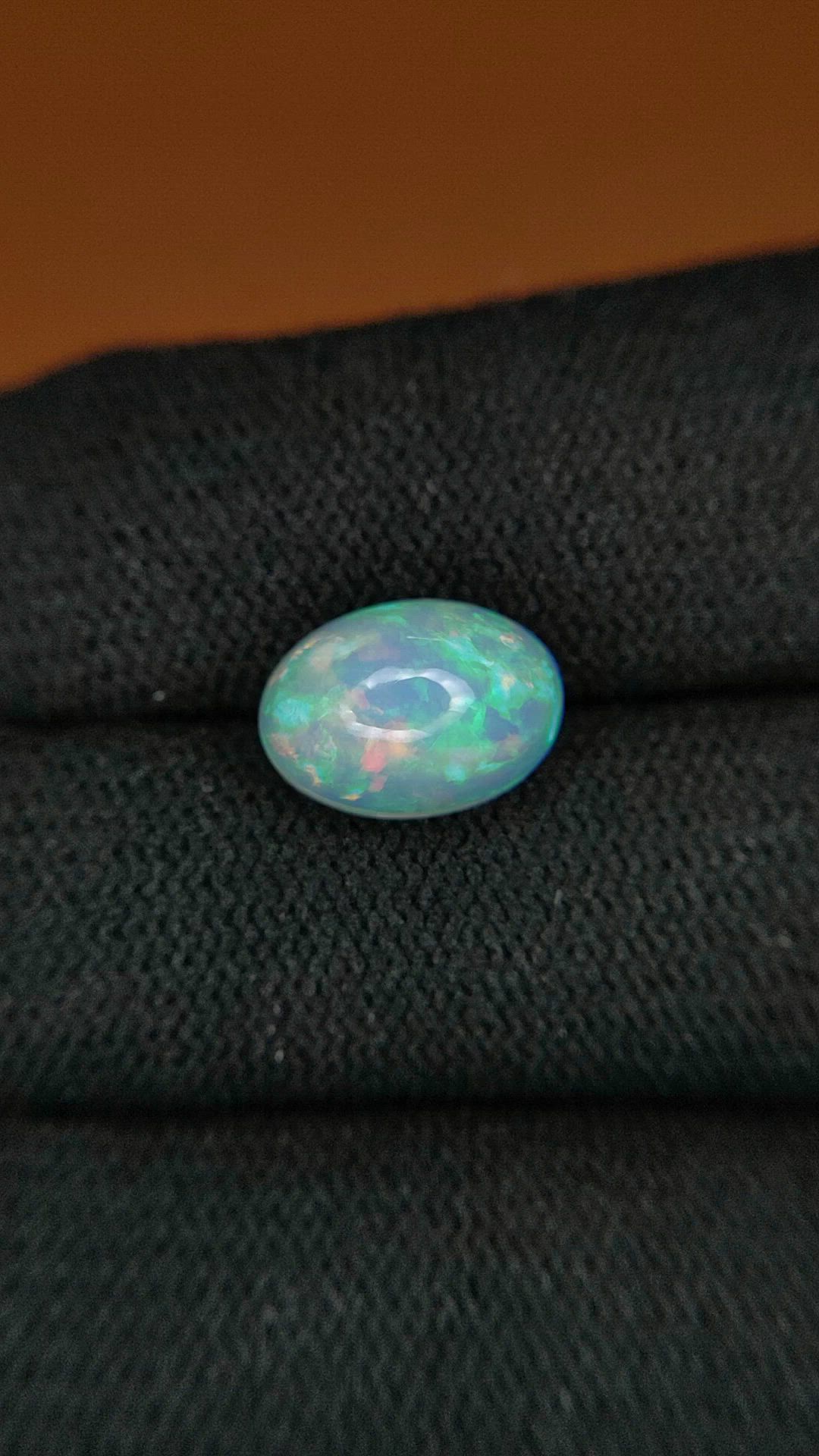
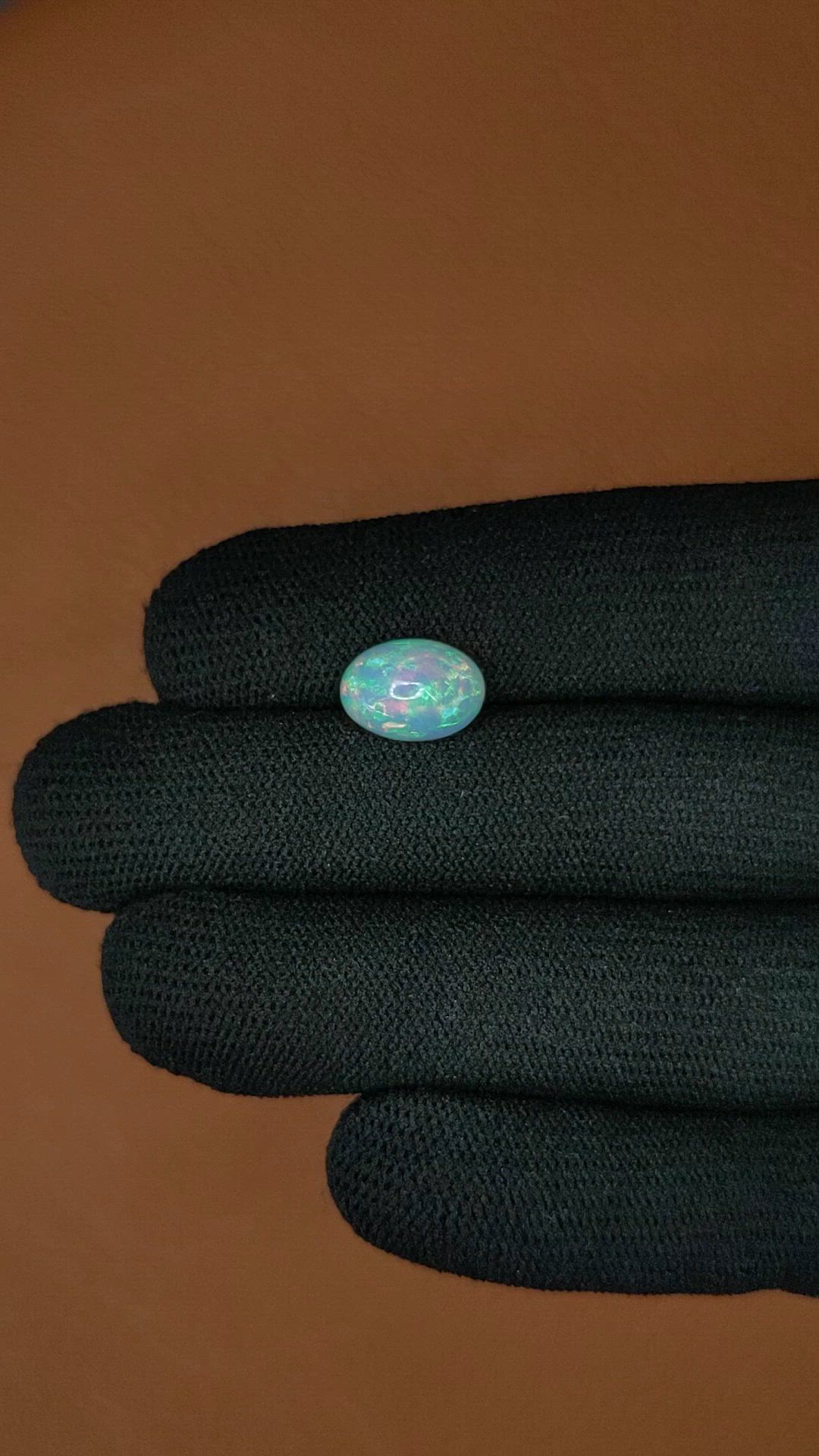
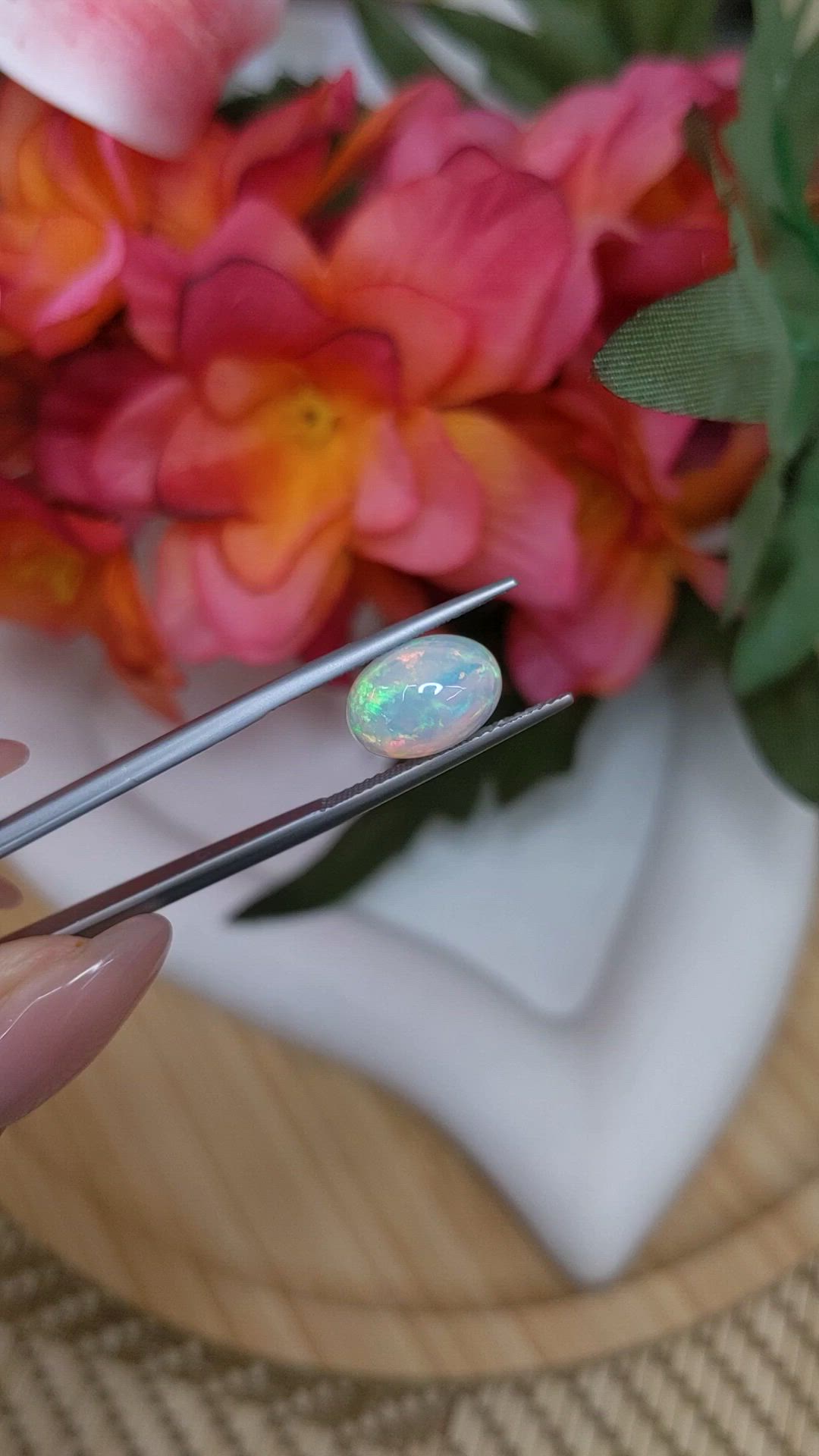
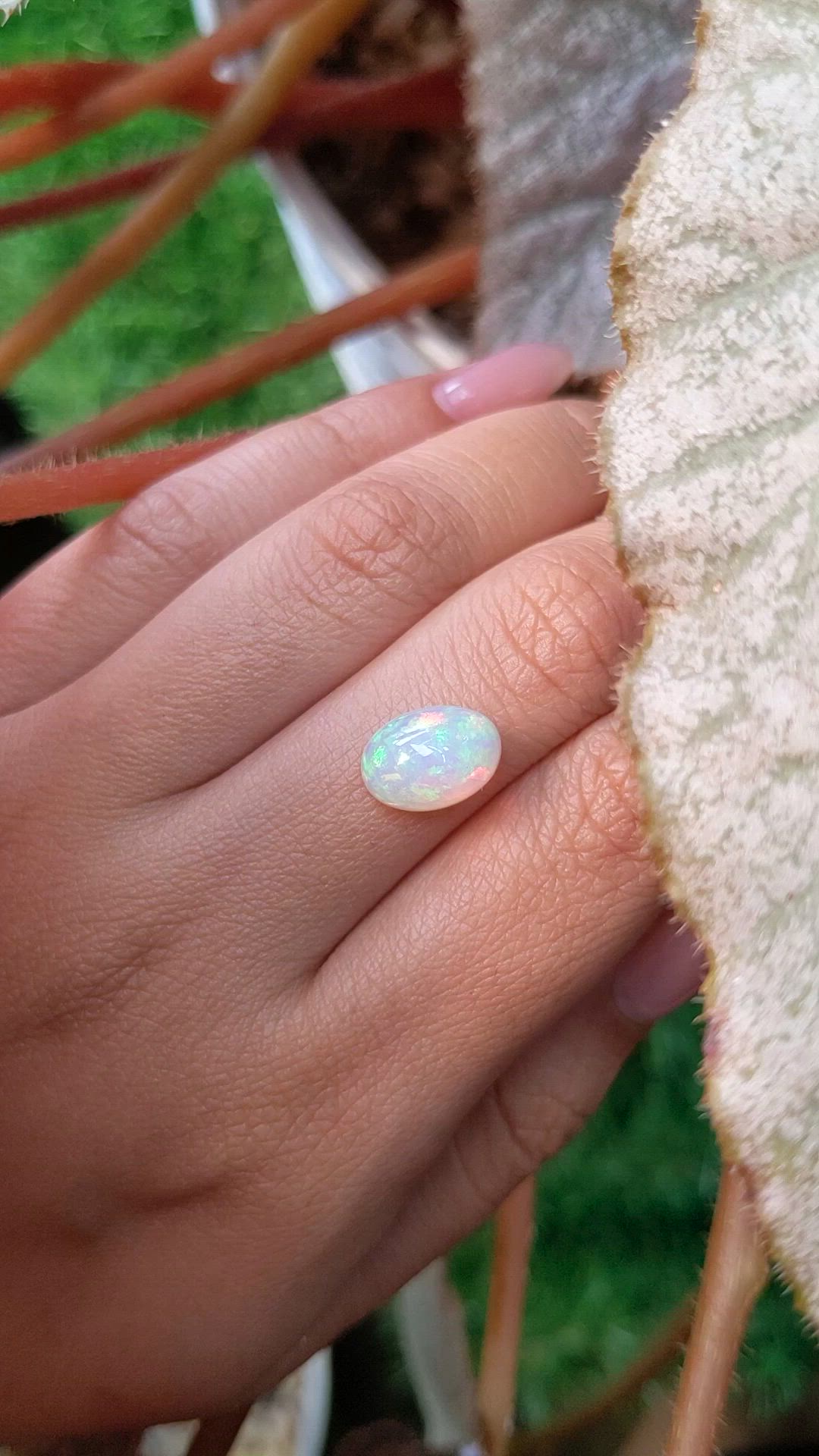



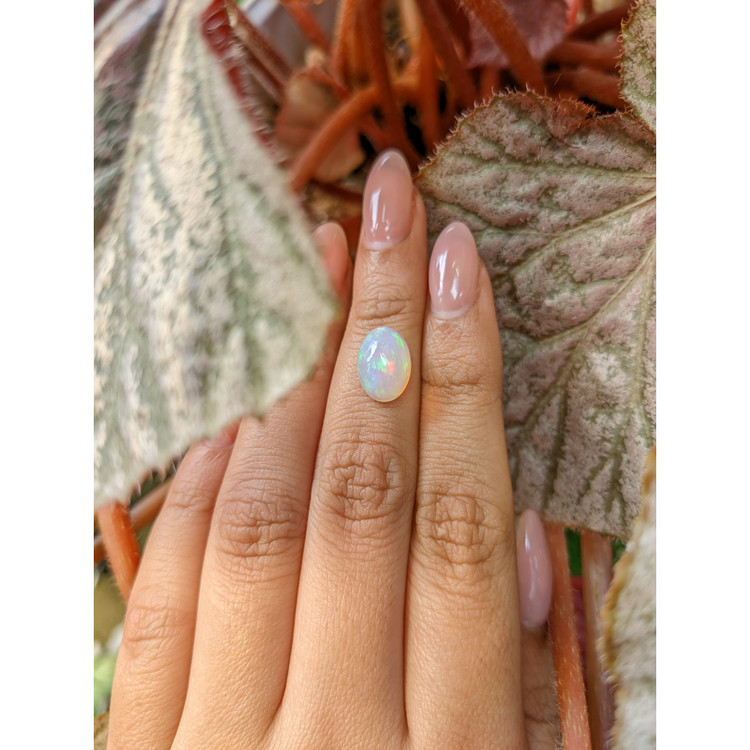
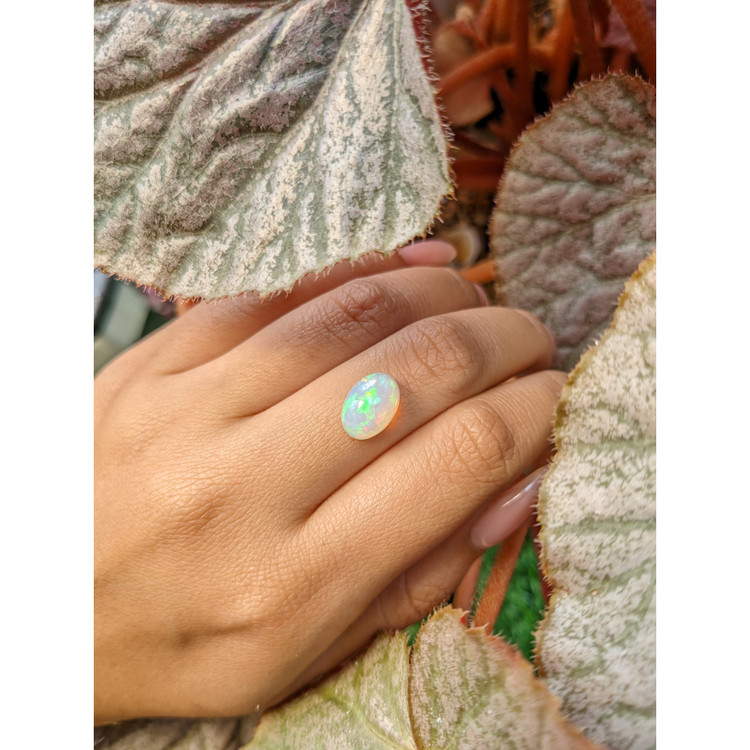
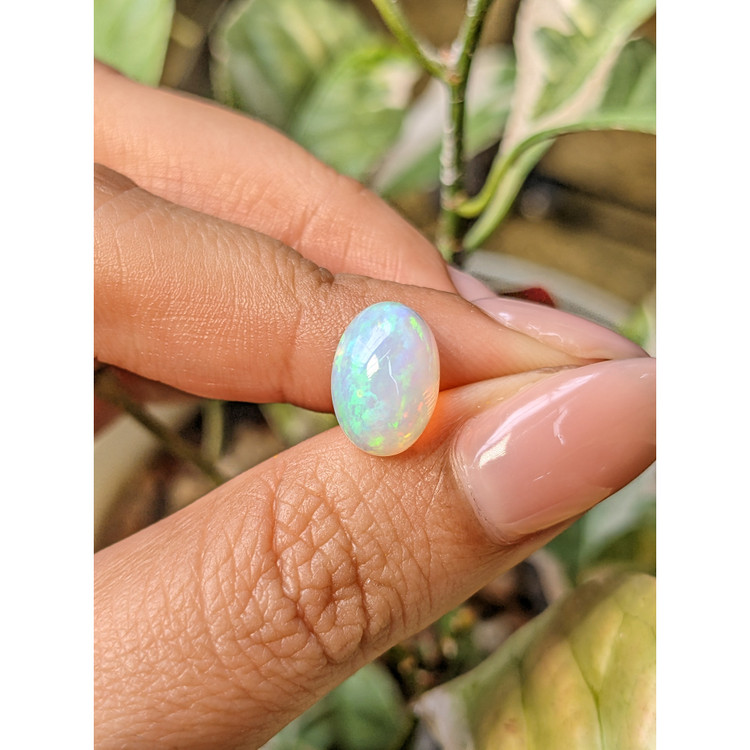
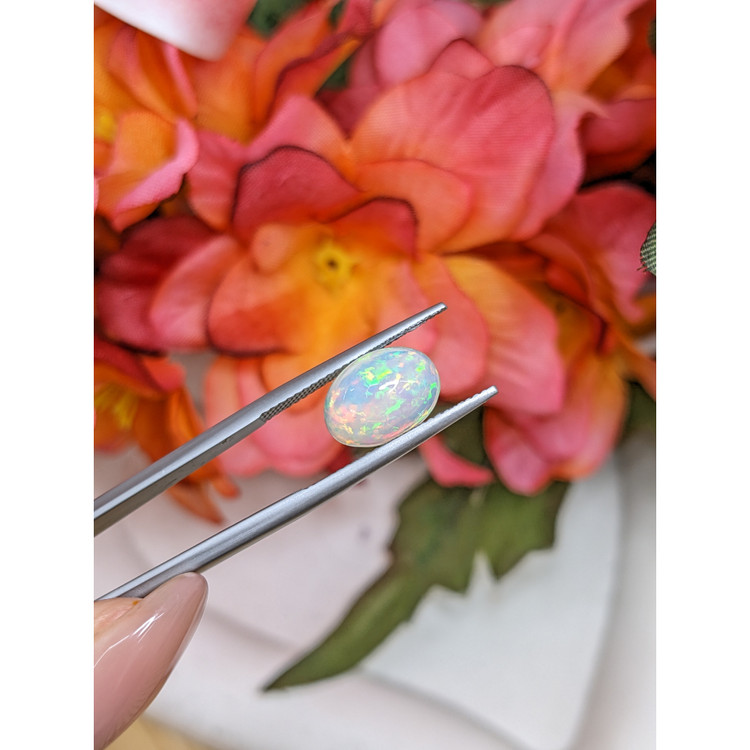


2.62 Ct. Multi Color Cabochon Crystal Opal (Jelly Opal) from Ethiopia
This loose stone is available to ship now
Item ID: | K31183 |
|---|---|
Dimensions (MM): help | Length: 11.6 Width: 8.19 Height: 5.78 |
Weight: | 2.62 Ct. |
Color: help | Multi Color |
Color intensity: help | Medium |
Clarity: help | Very Slightly Included |
Shape: help | Oval |
Cut: | Cabochon |
Cutting style: | Cabochon |
Enhancements: help | No Enhancement |
Origin: help | Ethiopia |
Per carat price: help | $300 |
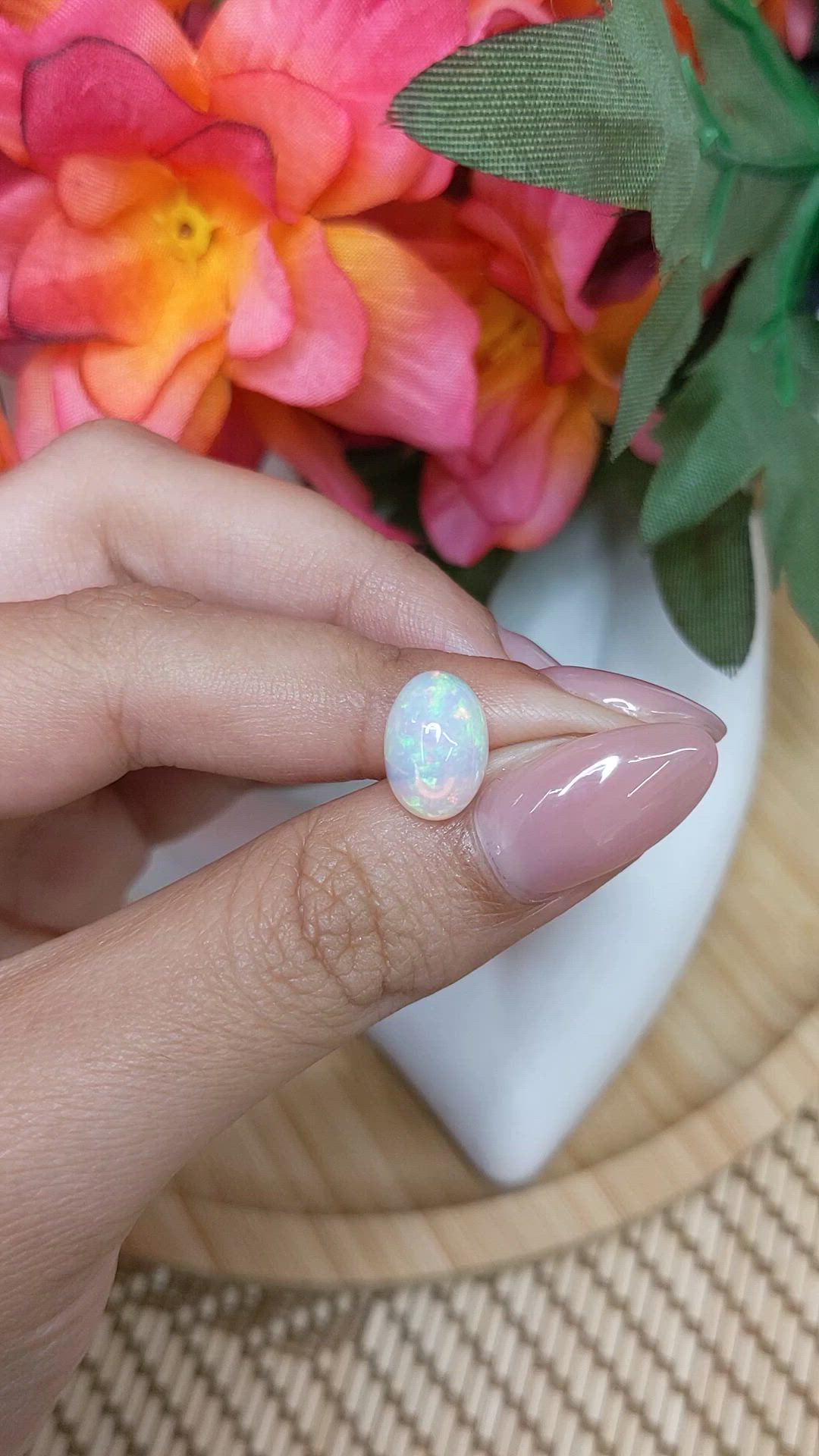
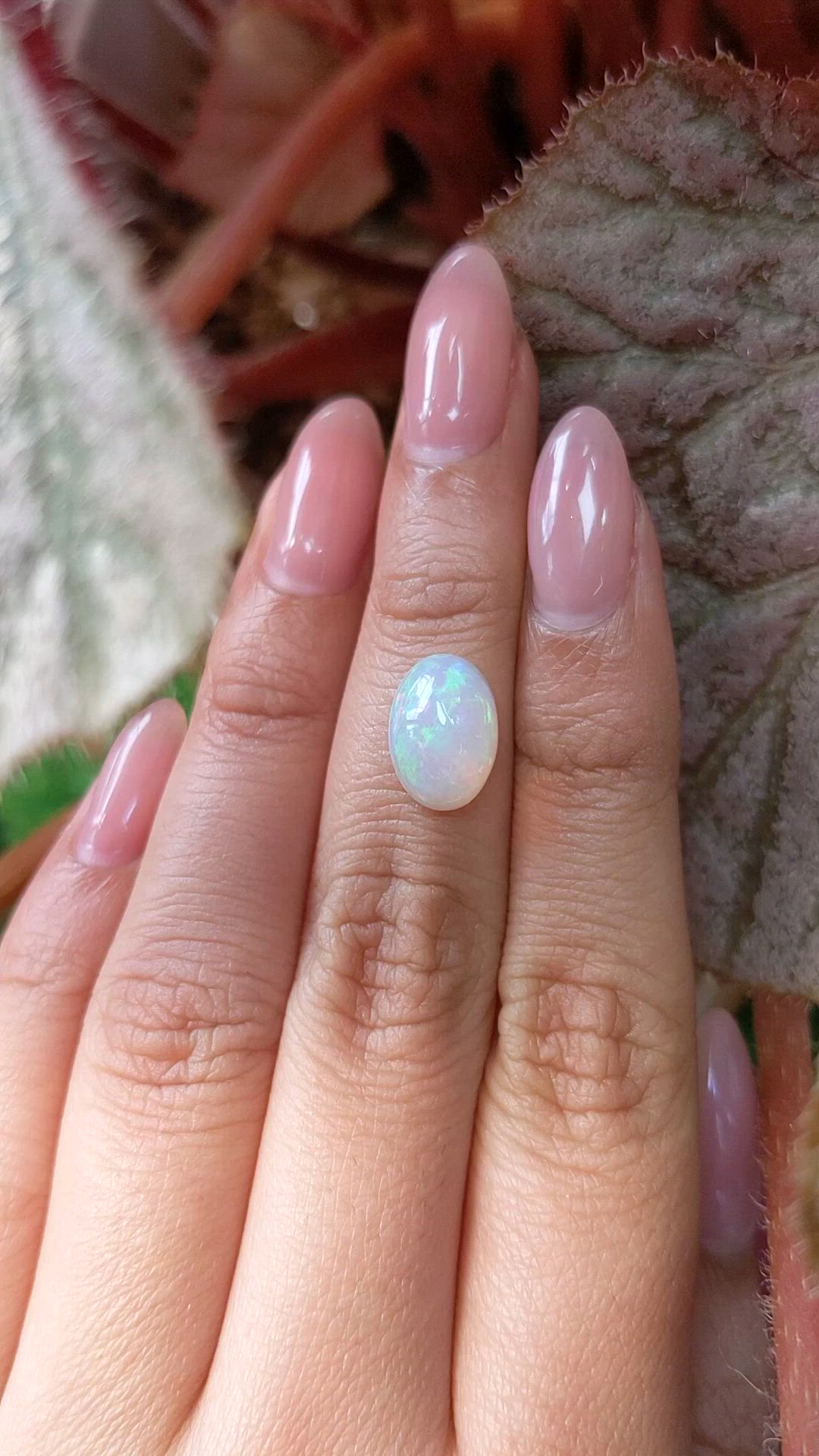
This specimen is a 2.62 carat translucent crystal opal, presented in an oval cabochon measuring 11.60 x 8.19 x 5.78 mm. Classified within the fire opal family and commonly described as a jelly opal due to its clear, glassy body, it exhibits a lively multi color play of color across the surface when viewed under varied lighting. The cabochon cutting style emphasizes the internal color dynamics, and the excellent polish delivers a smooth, reflective finish that enhances visual depth. Clarity is graded as very slightly included at eye level, which does not interfere with the overall transparency or the display of color. Color intensity is medium, providing a balanced and versatile appearance suitable for a range of jewelry designs. There are no enhancements applied to this stone, and its origin is Ethiopia, a source known for producing high quality crystal and fire opals. The Natural Gemstone Company presents this piece as an unaltered natural example that highlights the characteristic translucency and color play of crystal fire opals.
On the Mohs hardness scale this opal is in the approximate range of 5.5 to 6.5, which indicates moderate hardness relative to common gem materials. For comparison, diamond is 10, sapphire and ruby are 9, and quartz is 7. The lower hardness means the opal is more susceptible to scratching and abrasion than those harder gem species, and it is also more sensitive to sharp blows or sudden impacts. Despite its durable polish and stable cabochon shape, practical care considerations are advised, such as avoiding exposure to harsh chemicals, extreme temperature changes, ultrasonic cleaning, and prolonged abrasive contact. For jewelry use, protective settings such as bezels or frames and placement in items that are less subject to daily wear are recommended to preserve the stone. The lack of enhancement reduces the need for special treatment considerations, but normal opal precautions remain prudent. The Natural Gemstone Company can provide additional guidance on setting and care to ensure longevity and continued aesthetic appeal.


