
- Stone16
- Reports3


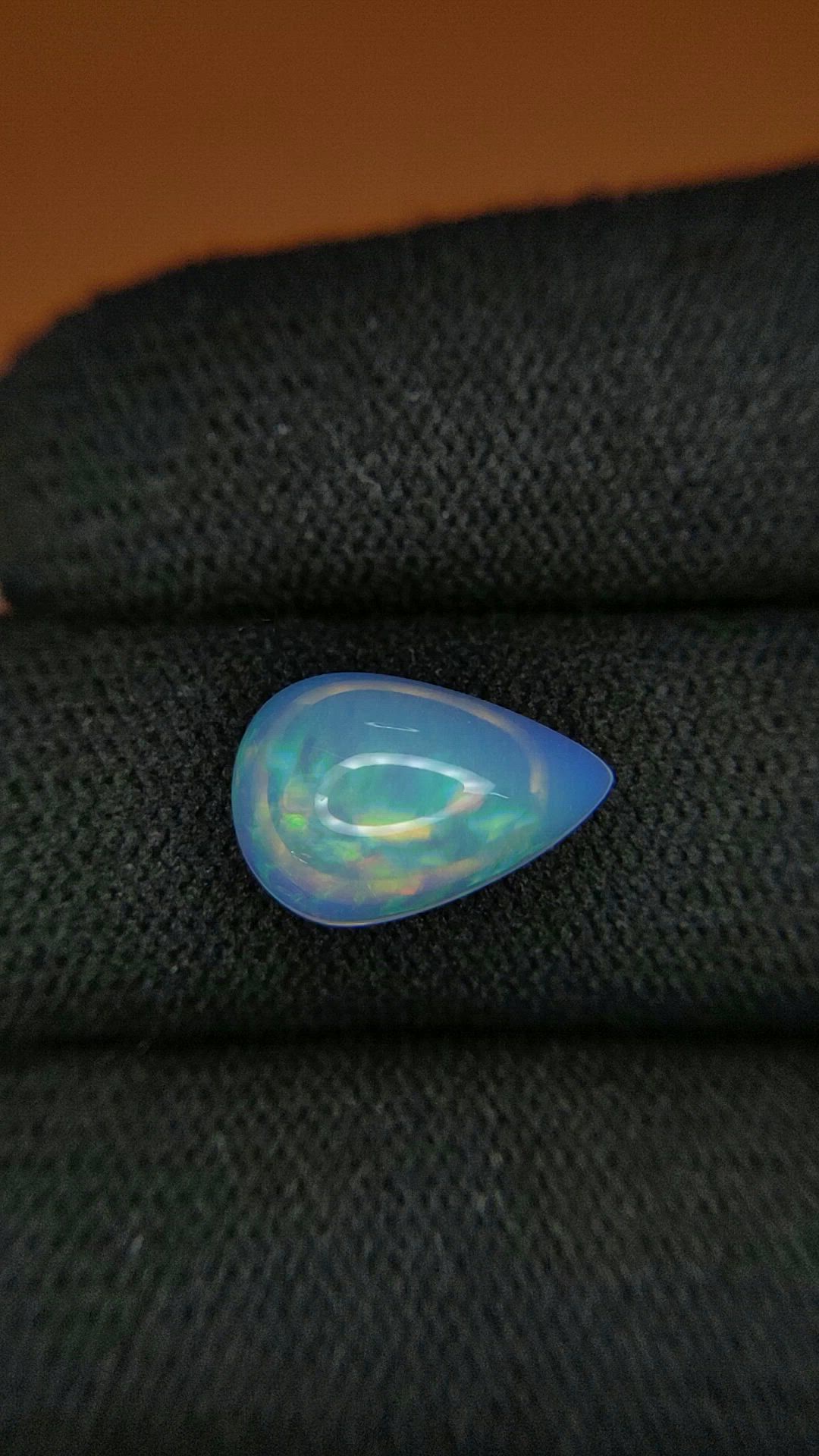
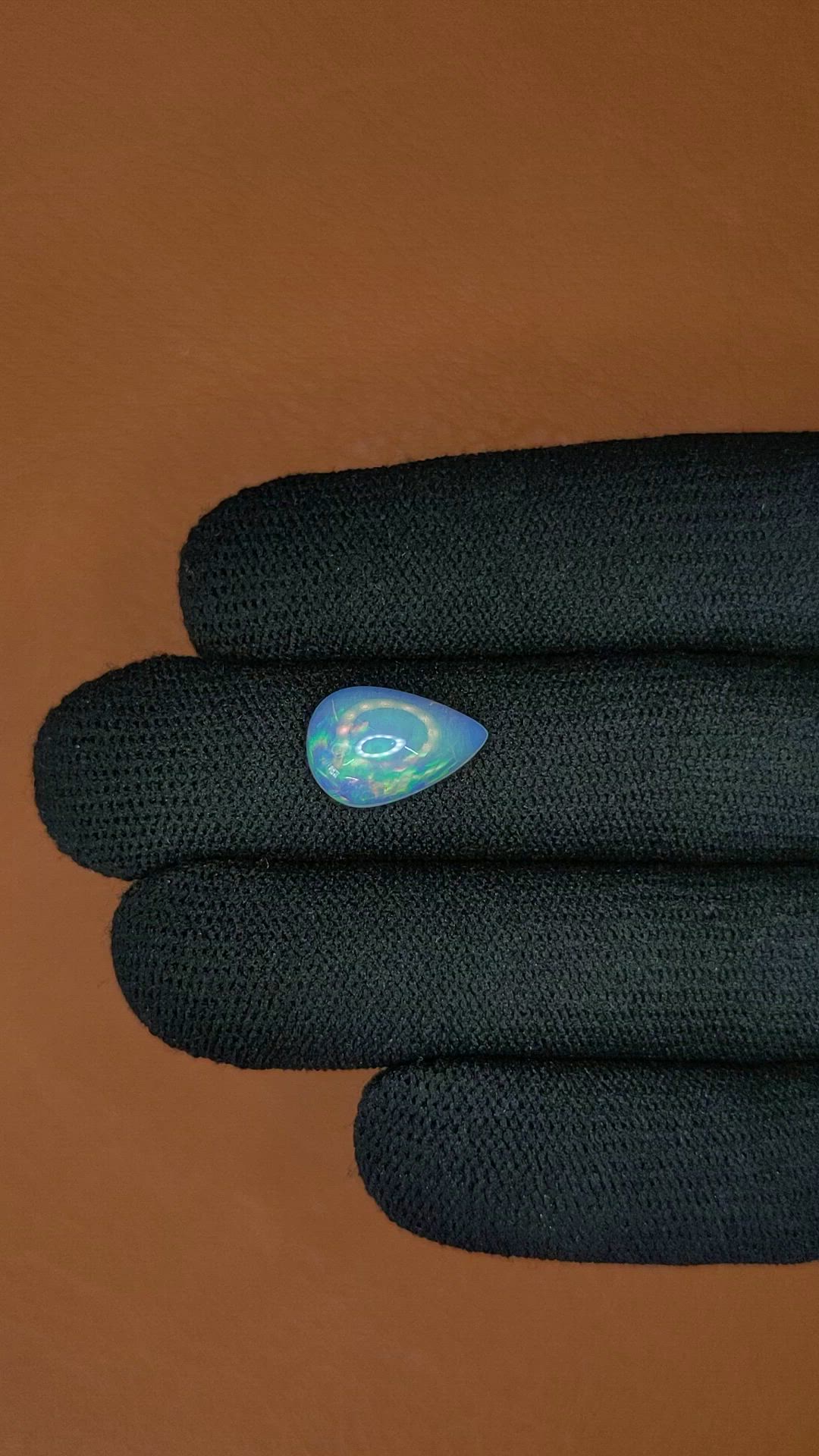
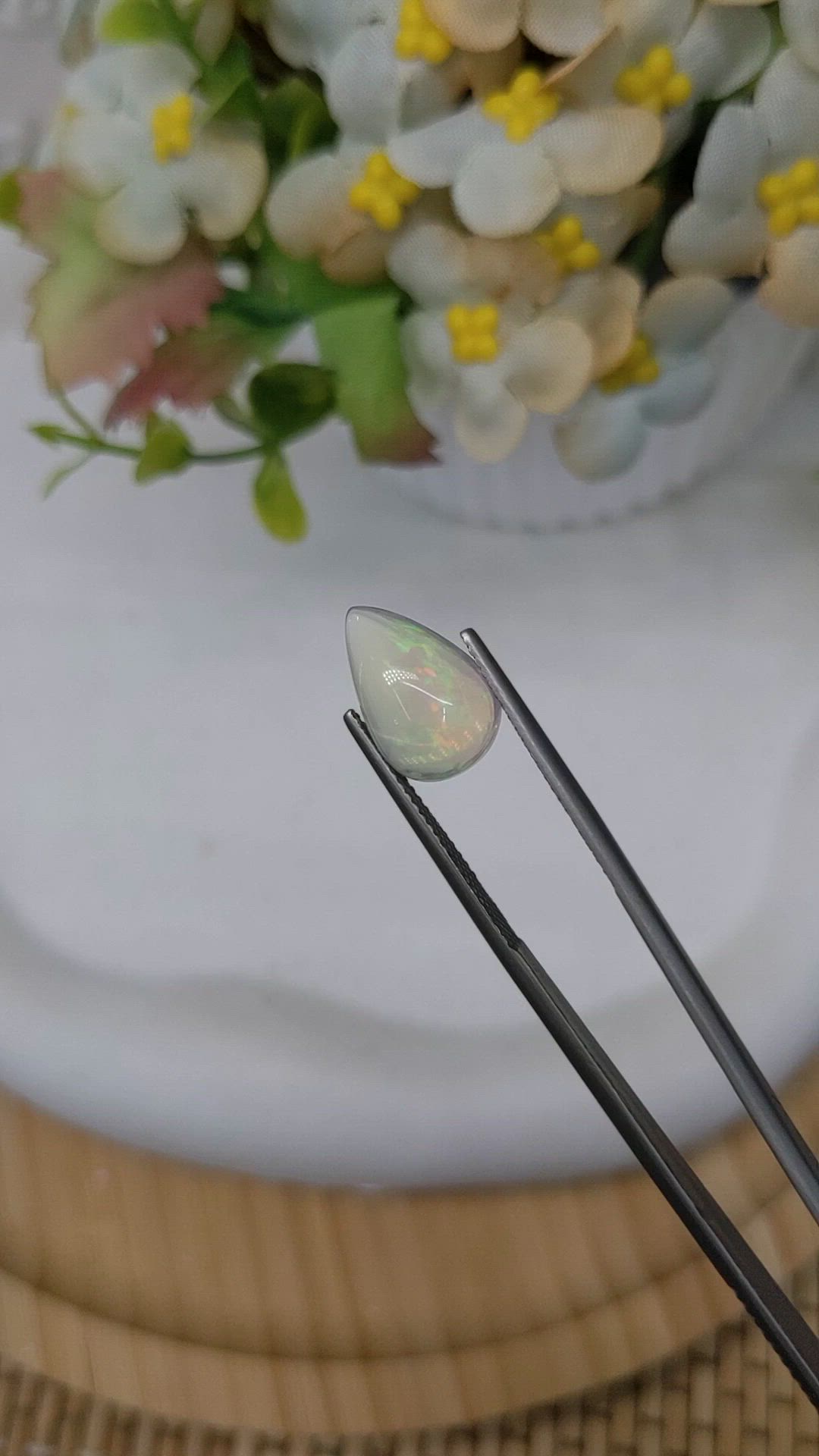
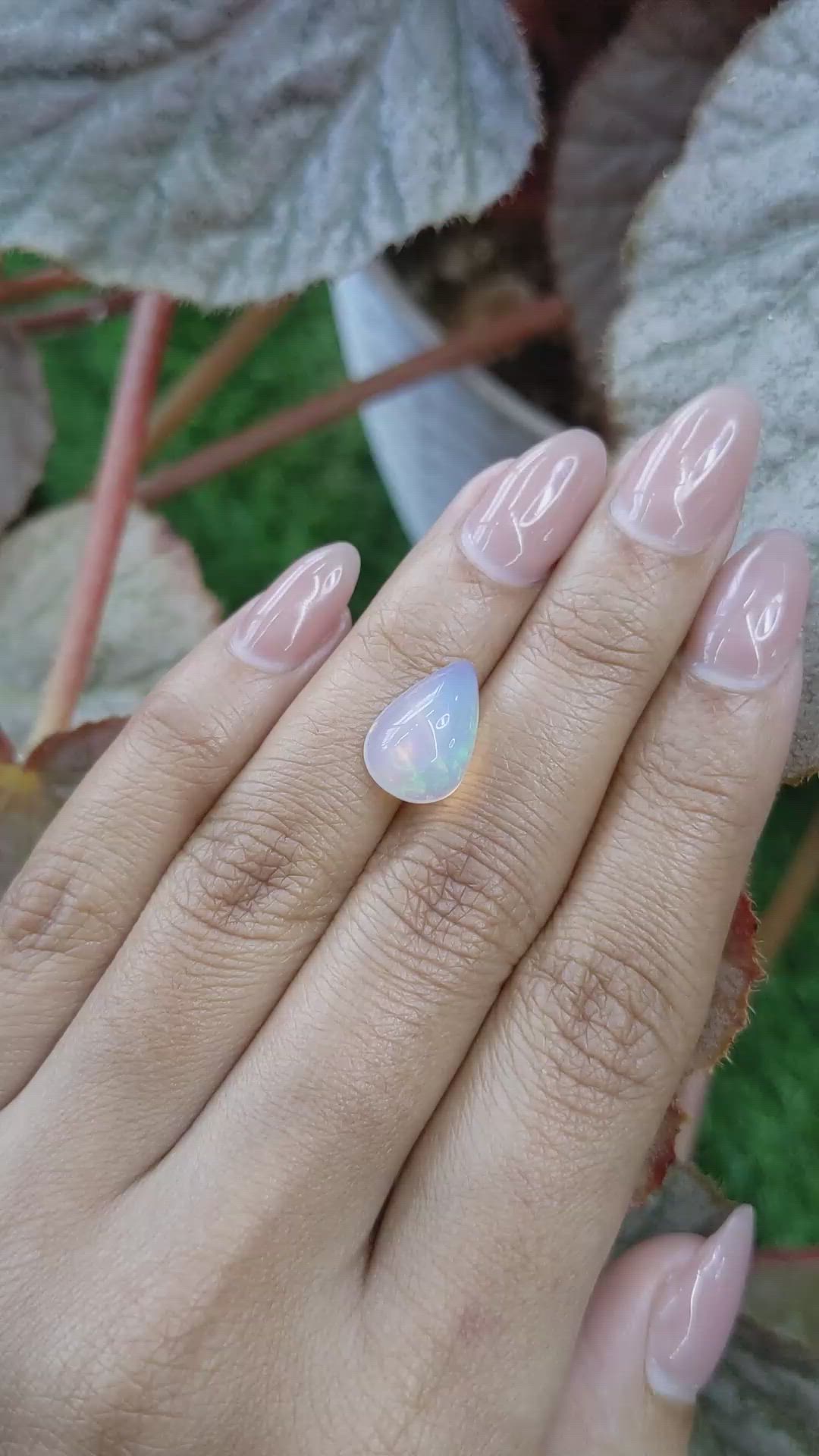



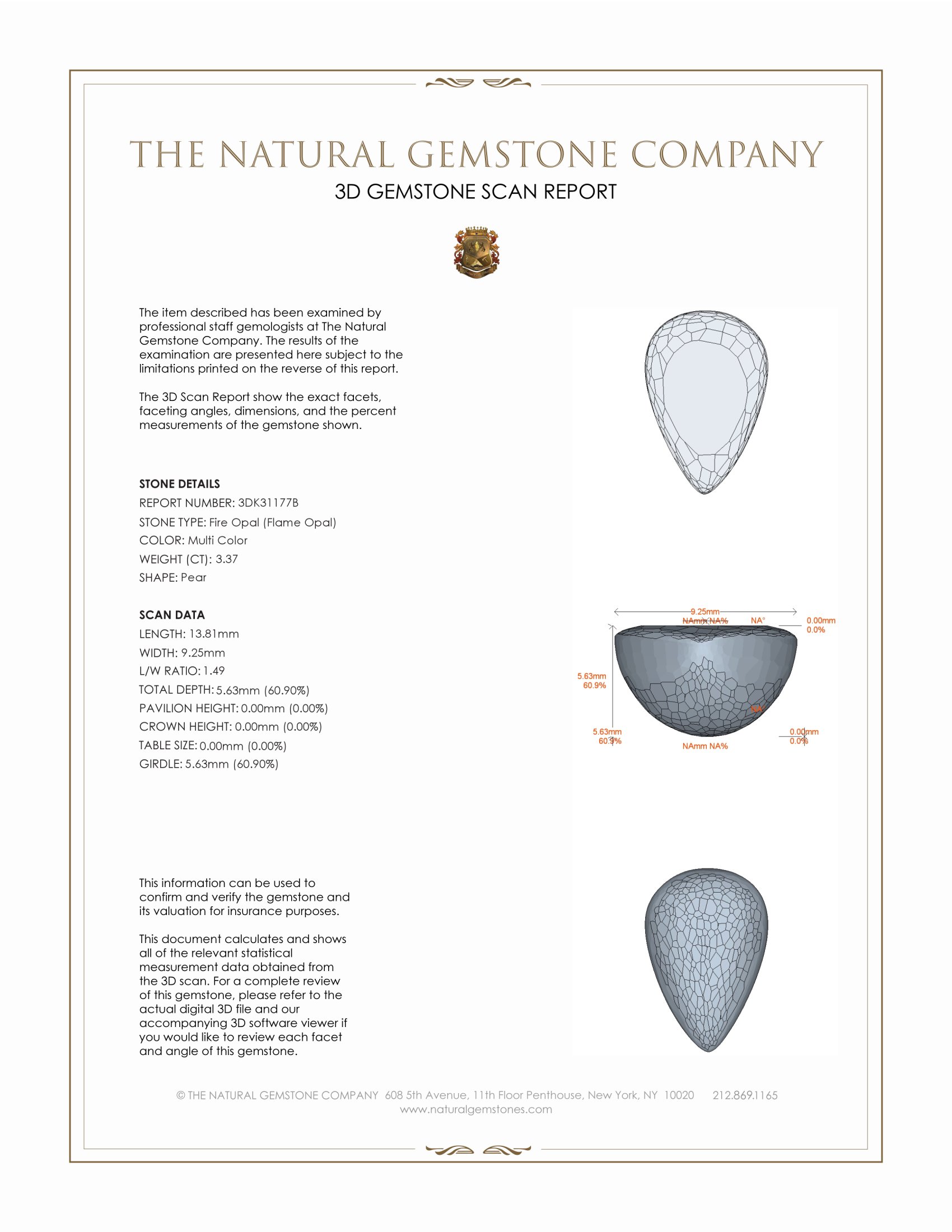
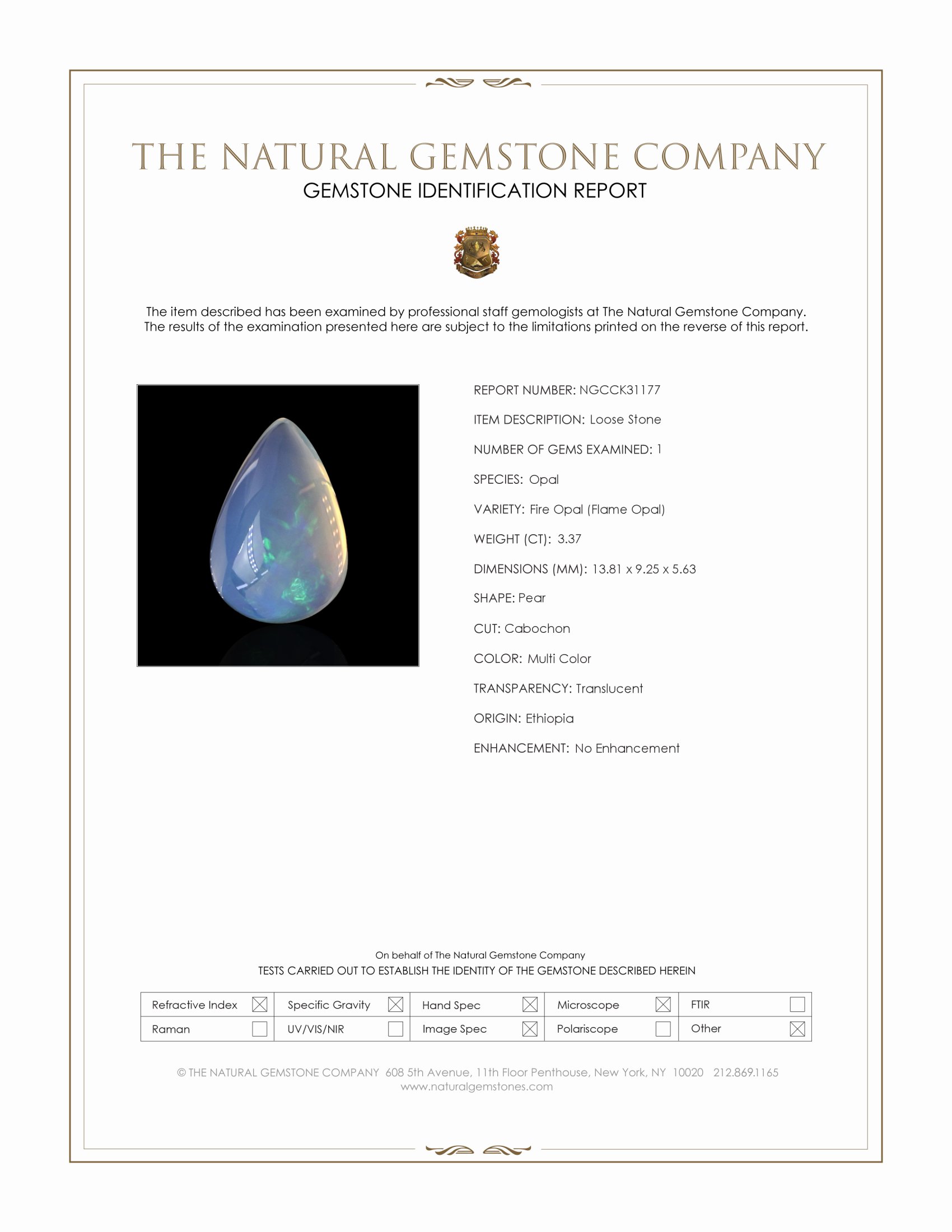

3.37 Ct. Multi Color Cabochon Fire Opal (Flame Opal) from Ethiopia
This loose stone is available to ship now
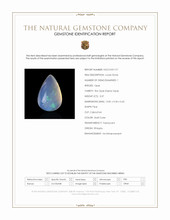
Item ID: | K31177 |
|---|---|
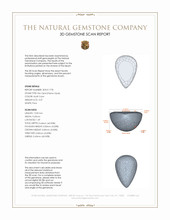
Dimensions (MM): help | Length: 13.81 Width: 9.25 Height: 5.63 |
Weight: | 3.37 Ct. |
Color: help | Multi Color |
Color intensity: help | Light |
Clarity: help | Eye Clean |
Shape: help | Pear |
Cut: | Cabochon |
Cutting style: | Cabochon |
Enhancements: help | No Enhancement |
Origin: help | Ethiopia |
Per carat price: help | $300 |
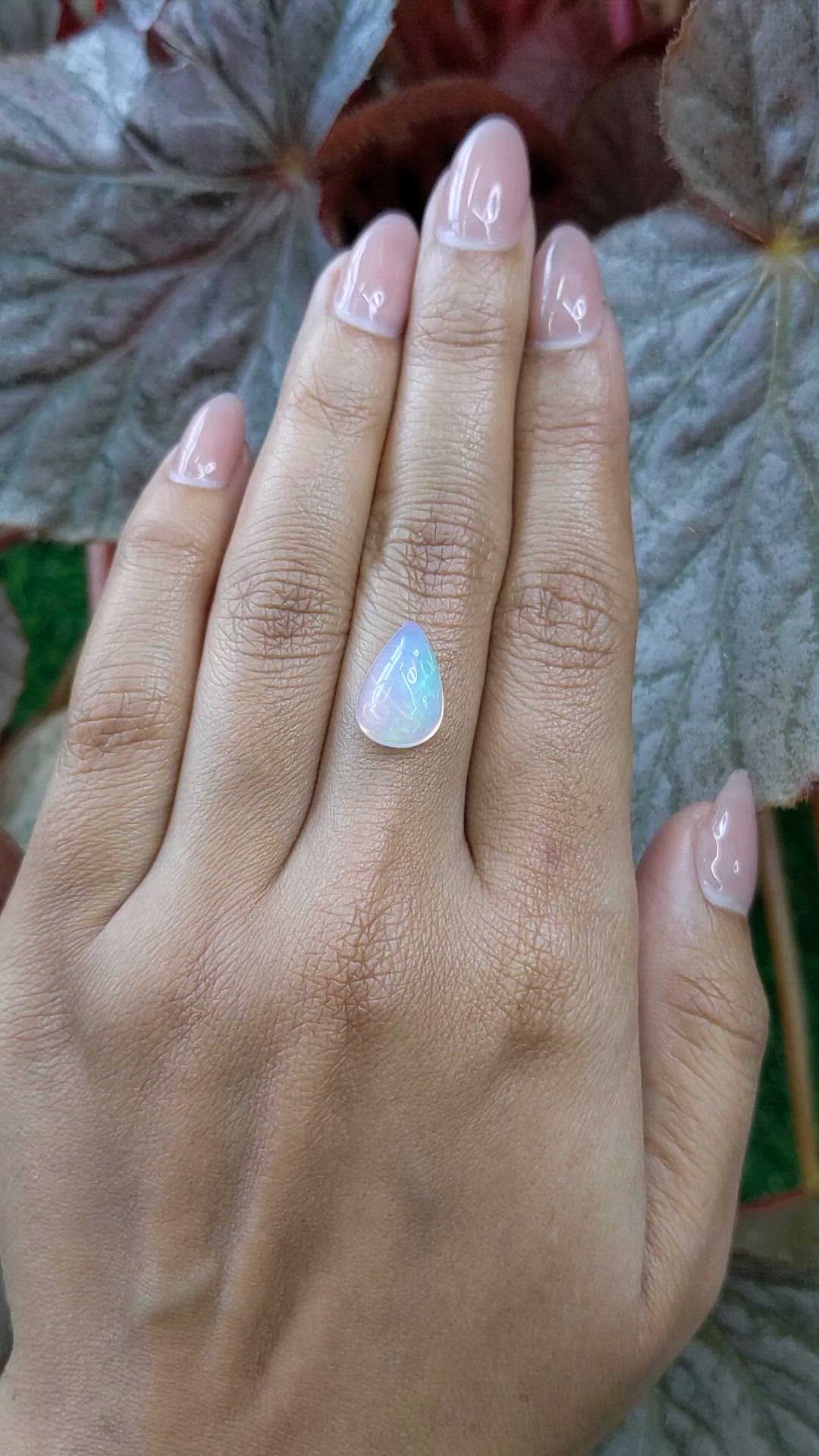
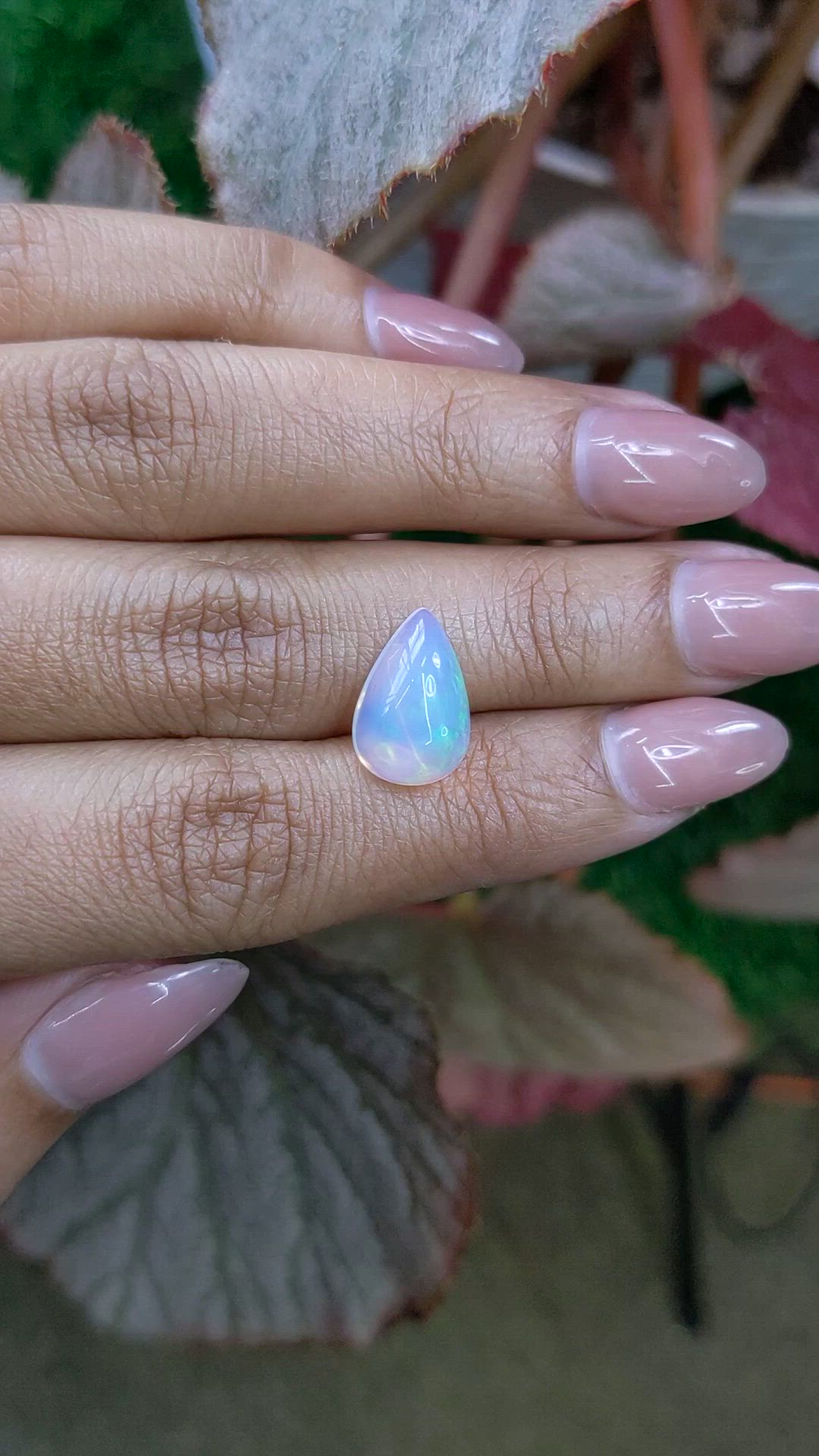
This Fire Opal, also known as Flame Opal, is a translucent 3.37 carat pear shape cabochon, with dimensions 13.81 x 9.25 x 5.63 mm, presented by The Natural Gemstone Company. The gem is cut as a cabochon rather than being faceted, a deliberate choice informed by the material properties of opal and the desire to maximize play of color. The cabochon profile is a classic teardrop form, with a balanced dome to width ratio that preserves structural thickness at the apex and along the lower girdle area. Clarity is graded as eye clean when evaluated at typical viewing distances, which means there are no inclusions or matrix interruptions that disrupt the transmission of light through the body. Color intensity is described as light, and despite that grade this specimen exhibits distinct multi color play that can be seen across the surface when the stone is rotated under directional lighting. The surface finish is an excellent polish, free of lapping marks and microabrasions, which enhances both the perceived translucency and the contrast of the internal color flashes. Enhancement is none, the stone is offered untreated, and provenance is Ethiopian, a factor that contributes to the specimen s technical and market value.
The cabochon cutting technique applied here reflects precise control of preforming, dome shaping, and final polishing stages, each calibrated to the opal s microstructure and to the orientation of color play. During preforming the cutter established the pear outline with symmetry tolerances that optimize visual balance, ensuring the apex aligns with the centerline of the body so that light interaction is even across the length. Dome curvature was set to a medium high profile to enhance viewing angles of the internal diffraction planes without introducing excessive thickness that would reduce overall brilliance. The underside was appropriately flattened to permit secure bezel seating in jewelry without sacrificing backlight that contributes to internal color. Fine abrasives were employed progressively through multiple grades until spherulitic surface features were removed, followed by a final buff polish that yields the high gloss needed to minimize surface scatter and to allow the intrinsic opalescence to dominate. All cutting choices were made with one objective, to balance durability and optical performance so the cabochon can be set in wearable designs while retaining maximum color play.
Optically, this multi color fire opal demonstrates the interplay between body translucency, internal diffraction domains, and surface geometry. The light body tone classified as light produces a delicate backdrop against which discrete patches of green and orange play are rendered with clarity. The opal s internal structure consists of submicron silica spheres arranged in domains that diffract white light into spectral colors, and the visibility of these colors is dependent on sphere size uniformity and domain continuity. In a gem graded eye clean, the absence of macroscopic fissures and foreign mineral inclusions improves the efficiency of internal light paths, permitting cleaner, sharper color patches. The pear cabochon with its controlled dome height allows multiple viewing facets of the same color patches as the stone is rotated, a desirable effect for collectors and designers who value dynamic color change. Because the stone is untreated, the color and translucency are native material properties rather than artifacts of stabilization or dyeing, which preserves both the gem s integrity and its long term conservation profile. For practical handling and setting recommendations, the stone responds best to bezel or partial bezel settings that protect the edges and apex, while allowing surface exposure for maximum color spectacle.
The Ethiopian origin of this fire opal carries important technical and market implications that enhance its value. Ethiopian opals commonly form within silica rich volcanic tuffs, where hydrated silica gels solidify into opal nodules and seams, a geological pathway that produces the distinctive play of color and often a hydrophane character. While hydrophane tendency can be variable, it is a diagnostic trait linked to the porosity and water content of the silica matrix, and provenance information allows buyers and lapidaries to anticipate handling and setting behaviors. Ethiopian material has become highly regarded for its vivid internal colors and the unique way that those colors interplay with body translucency, making well cut cabochons from this origin especially sought after. From a market perspective, documented origin and absence of enhancement increase buyer confidence, as the gem s physical attributes are attributable to natural formation processes rather than laboratory treatment. The Natural Gemstone Company provides this specimen with full disclosure of weight, dimensions, cut style, clarity grade, polish quality, enhancement status, and origin, enabling technical buyers to assess suitability for specific applications. In use, this pear cabochon is ideal for high end pendant designs and for rings where protective mounting ensures longevity, offering a balance of optical nuance, material authenticity, and craftsmanship that a specialist collector or designer will appreciate.


