
- Stone14
- Reports3


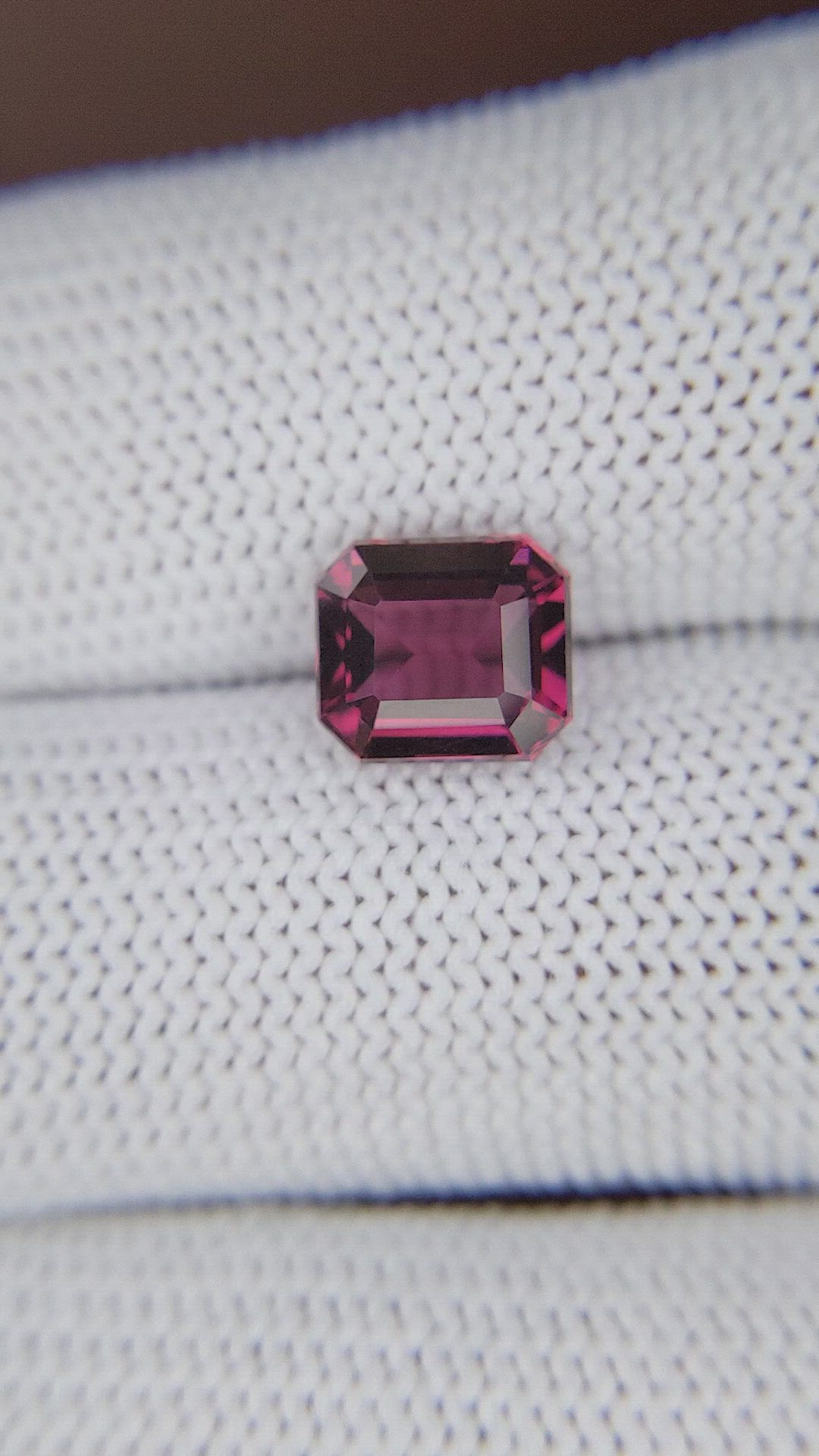
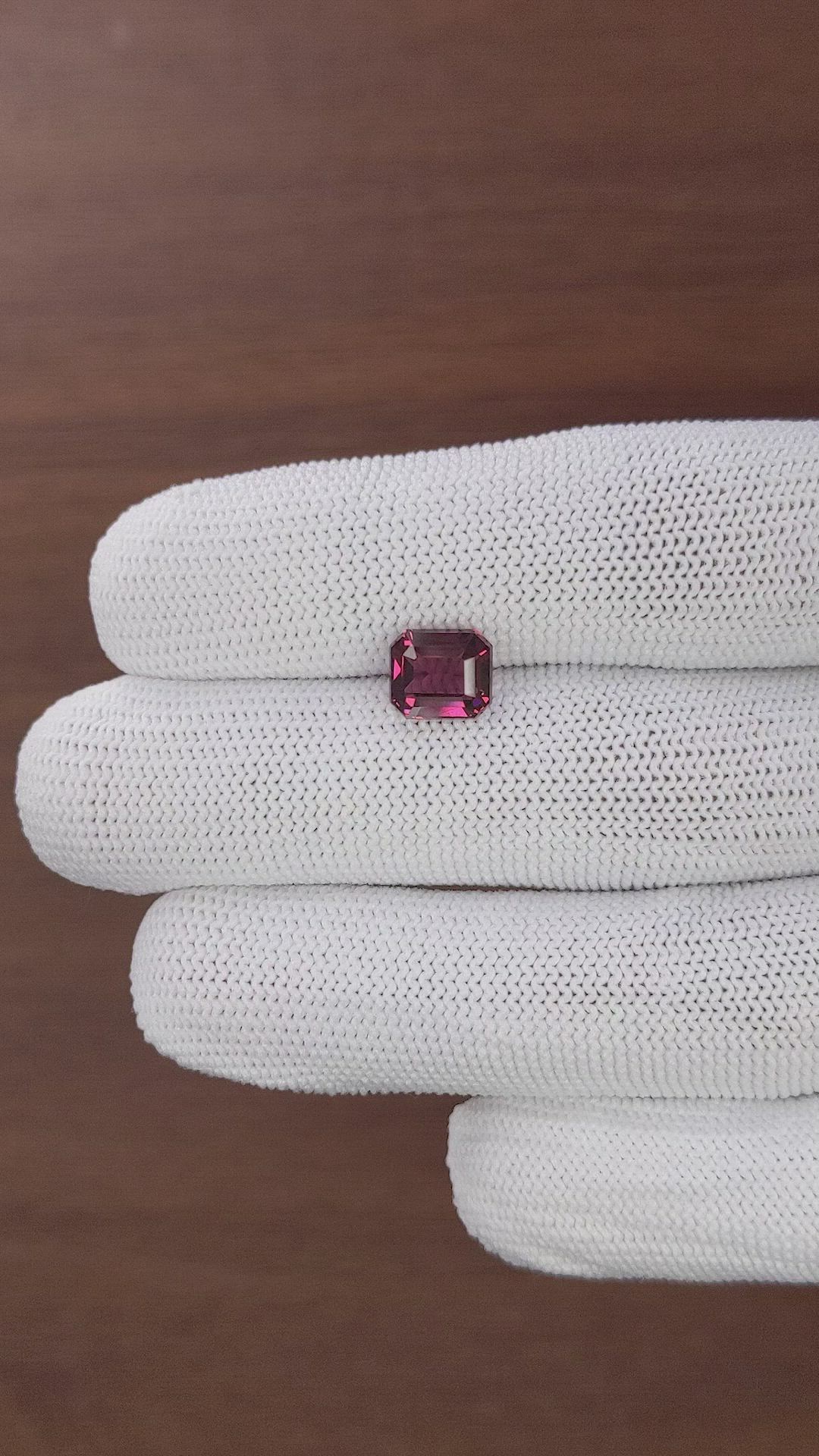
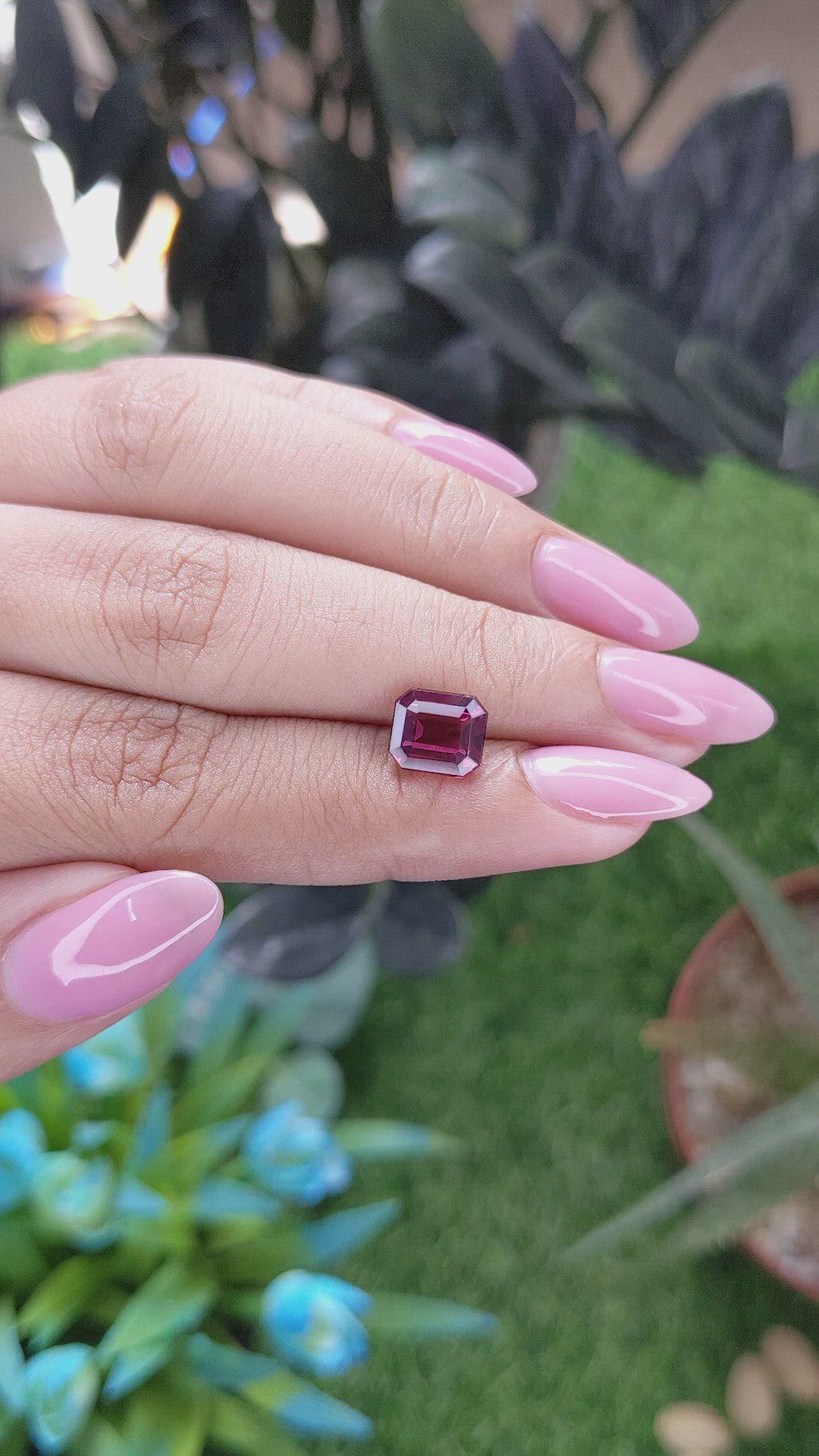
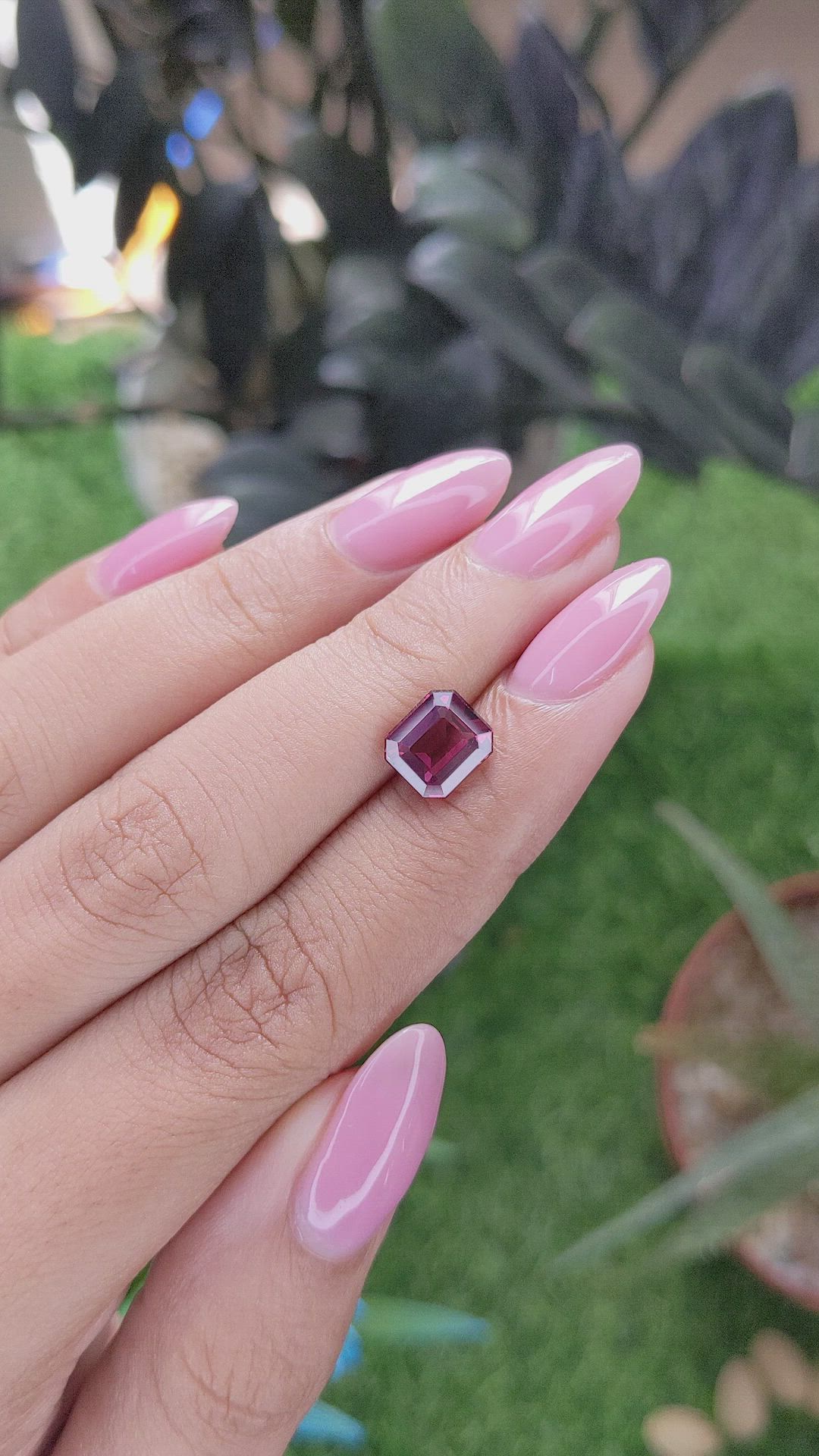
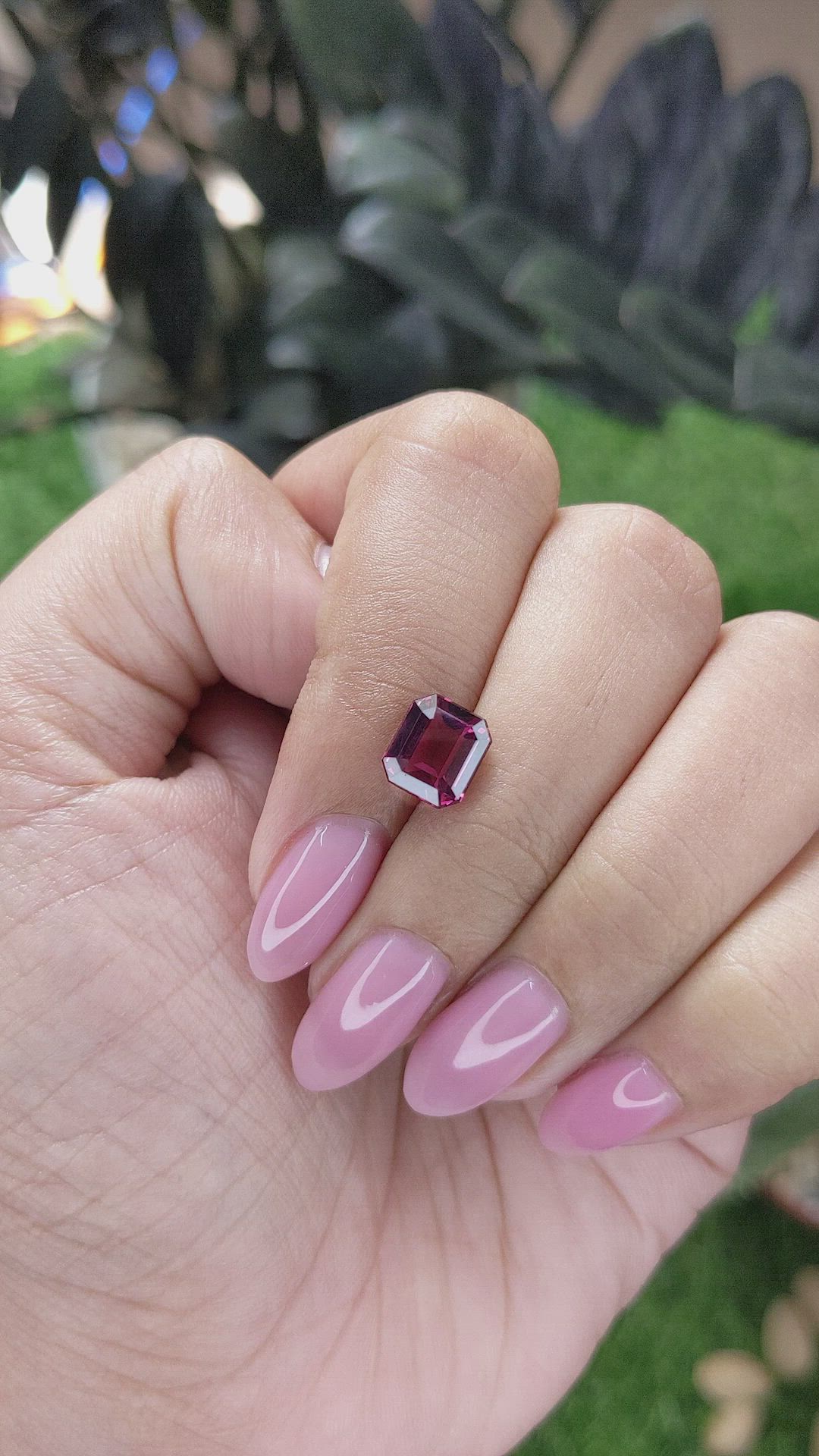





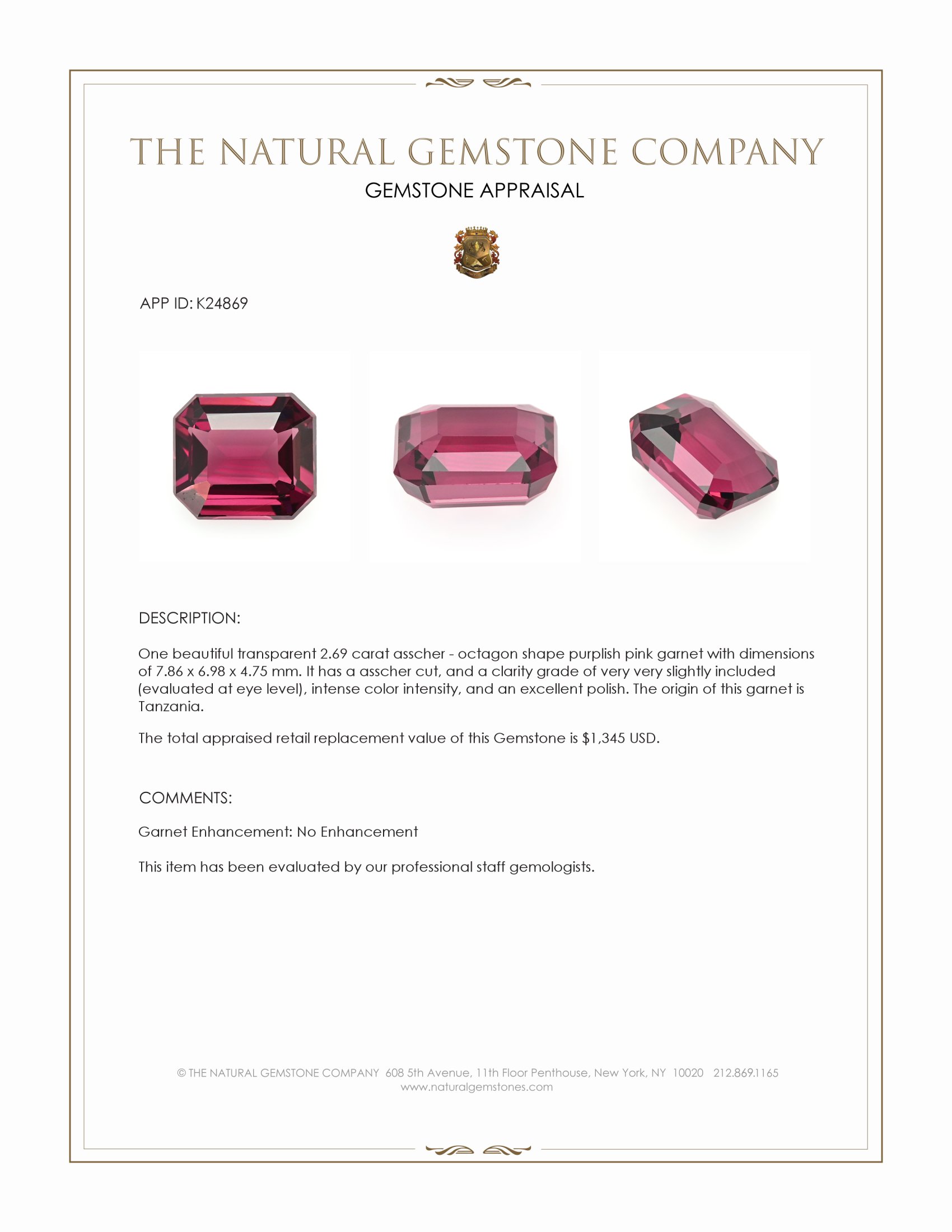
2.69 Ct. Purplish Pink Garnet from Tanzania
This loose stone ships by Aug 7
Item ID: | K24869 |
|---|---|
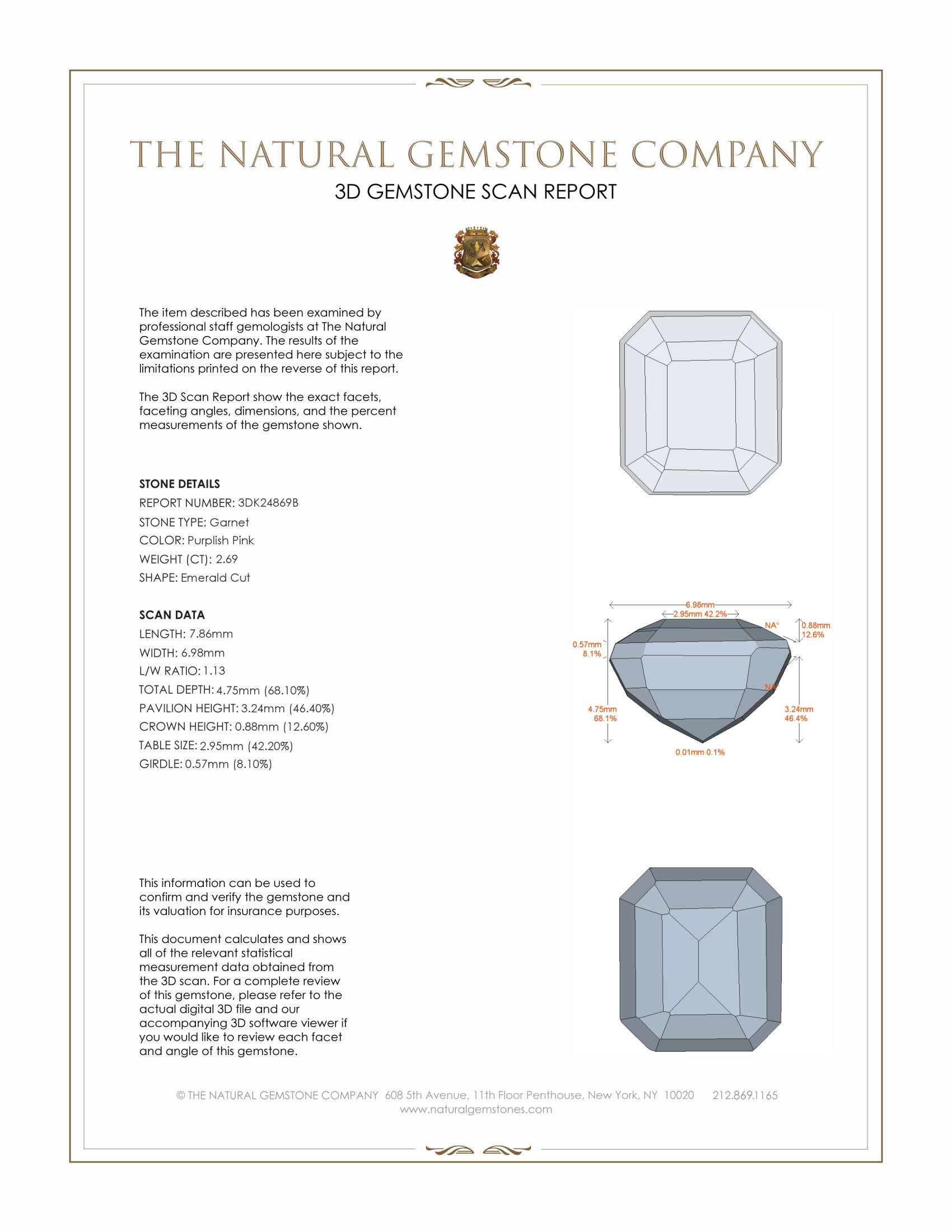
Dimensions (MM): help | Length: 7.86 Width: 6.98 Height: 4.75 |
Weight: | 2.69 Ct. |
Color: help | Purplish Pink |
Color intensity: help | Intense |
Clarity: help | Very Very Slightly Included |
Shape: help | Asscher - Octagon |
Cut: | Asscher Cut |
Cutting style: | Faceted |
Enhancements: help | No Enhancement |
Origin: help | Tanzania |
Per carat price: help | $500 |
This listing presents a single transparent purplish pink garnet weighing 2.69 carats, with exact dimensions of 7.86 by 6.98 by 4.75 millimeters. The stone is fashioned in a classic asscher octagon, a stepped pavilion and crown arrangement that produces a disciplined hall of mirrors and concentric facet reflections. The asscher cut emphasizes symmetry and proportionality, and in this example the finished stone exhibits an internal depth of approximately sixty four percent, a proportion that balances color saturation with optimal light return for garnet material. Clarity is graded as very very slightly included when evaluated at eye level, indicating only minor inclusions that do not interrupt the geometry of the step facets. Color intensity is described as intense, with an even distribution across the table and through the girdle, and polish is excellent, with sharp facet junctions and minimal surface abrasions. The piece is natural with no enhancement, and provenance is Tanzania, a region known for producing richly colored garnets with consistent crystal quality.
From a colorimetric standpoint the purplish pink hue of this garnet occupies a position between classic rhodolite garnet and the pink to purplish rubellite class of tourmaline. Compared with Burmese ruby, which is characterized by a dominant red chroma and high saturation, this garnet reveals a stronger purple component and a slightly cooler red bias, translating to a pink that reads more lavender at certain angles. Compared with Sri Lankan pink sapphires, which often display a lighter tone and a more pastel pink due to lower saturation, the Tanzanian garnet shows more intensity and depth, allowing the color to read boldly even under subdued lighting. Compared with Mozambican rubellite tourmaline, which can exhibit strong dichroism and color zoning, this garnet provides a more uniform hue across viewing facets because garnet species are singly refractive and do not display pleochroism. These comparative observations are relevant to connoisseurs who make decisions based on hue position, tone depth, and saturation stability in different gem species.
To further contextualize the hue and tone against famous gem localities, consider spinel examples from Myanmar and Sri Lanka, and tourmaline from Brazil and Madagascar. Myanmar spinel often shows a pure, vivid pink to red with a crystalline, high dispersion luster, whereas this Tanzanian garnet presents a denser body color with a richer purple overlay, and with refractive properties that yield a distinct, warm brilliance rather than a high dispersion sparkle. Rubellite from Brazil and Madagascar, known for intense pinks with a red lean, can appear warmer or more magenta under incandescent light, whereas the garnet’s purplish pink maintains consistency across daylight and incandescent sources, due to its intrinsic absorption bands. Compared to Sri Lankan padparadscha sapphire, which carries a unique pink orange nexus, the garnet’s hue is unequivocally cool relative to that warm, sunset spectrum. These contrasts are important for gem buyers who prioritize consistent hue and predictable visual behavior in wearable designs.
From the perspective of lapidary craftsmanship and optical performance, the asscher faceting executed on this stone demonstrates an intent to maximize color saturation without sacrificing scintillation. The step facet arrangement yields larger, planar facets on both crown and pavilion, creating broad reflective planes that accentuate the stone’s intense body color and allow internal clarity characteristics to be assessed easily. The choice of an octagonal outline with trimmed corners reduces risk of chipping during setting and aligns with design preferences for geometric jewelry. The excellent polish produces crisp facet edges and clear, uninterrupted reflection patterns, promoting strong face up color and a clean window free from significant light leakage. The clarity grade being very very slightly included at eye level enables the asscher layout to produce deep mirrored vistas while maintaining gemological transparency. Trace element contributions that influence purplish pink tones in garnets are typically manganese and sometimes chromium or iron, and the Tanzanian origin is consistent with geological environments that can yield these trace element profiles.
For buyers who demand technical specificity and provenance clarity, this 2.69 carat Tanzanian asscher garnet is a compelling option. The combination of measured proportions, intense purplish pink hue, uniform tone, high clarity at eye level, and no enhancement yields a natural specimen suitable for precision settings where color fidelity and optical performance matter. Compared once more to renowned gemstones from classic localities, the garnet’s cooler purple bias distinguishes it from Burmese ruby redness and Sri Lankan pastel pinks, and its stable hue differentiates it from dichroic tourmaline that can shift perceptibly with angle. If you prefer a stone that presents a deep, saturated, and consistently purplish pink face up appearance with reliable brilliance and precise asscher geometry, this garnet should be considered. For inquiries about mounting recommendations, gemological reporting, or viewing under controlled lighting, contact The Natural Gemstone Company for further technical documentation and secure purchasing options.


