
- Stone10
- Reports2
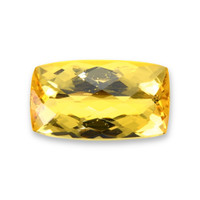
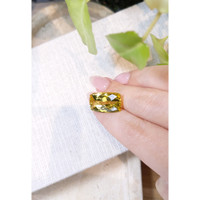
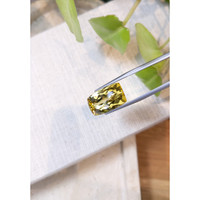
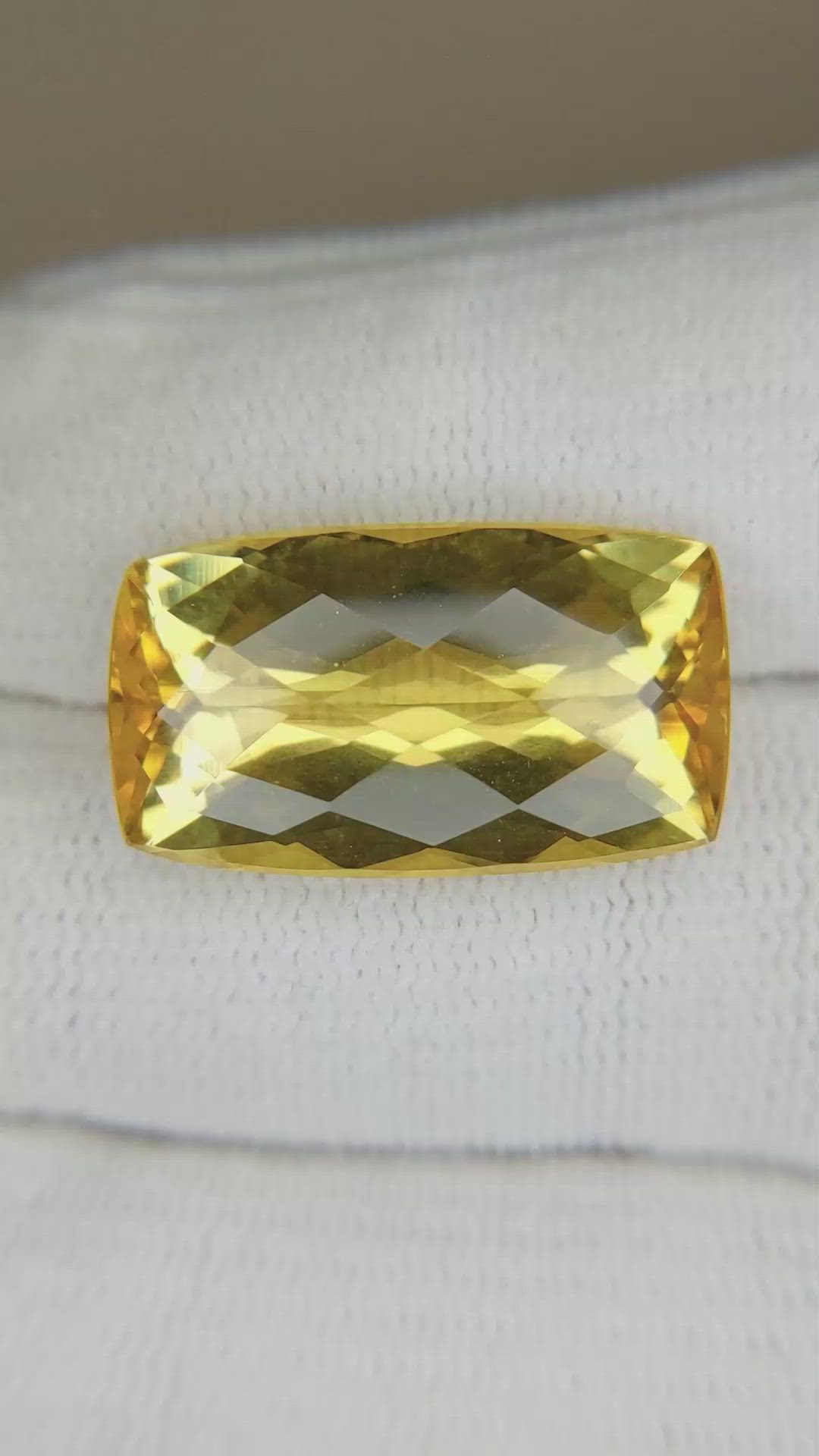
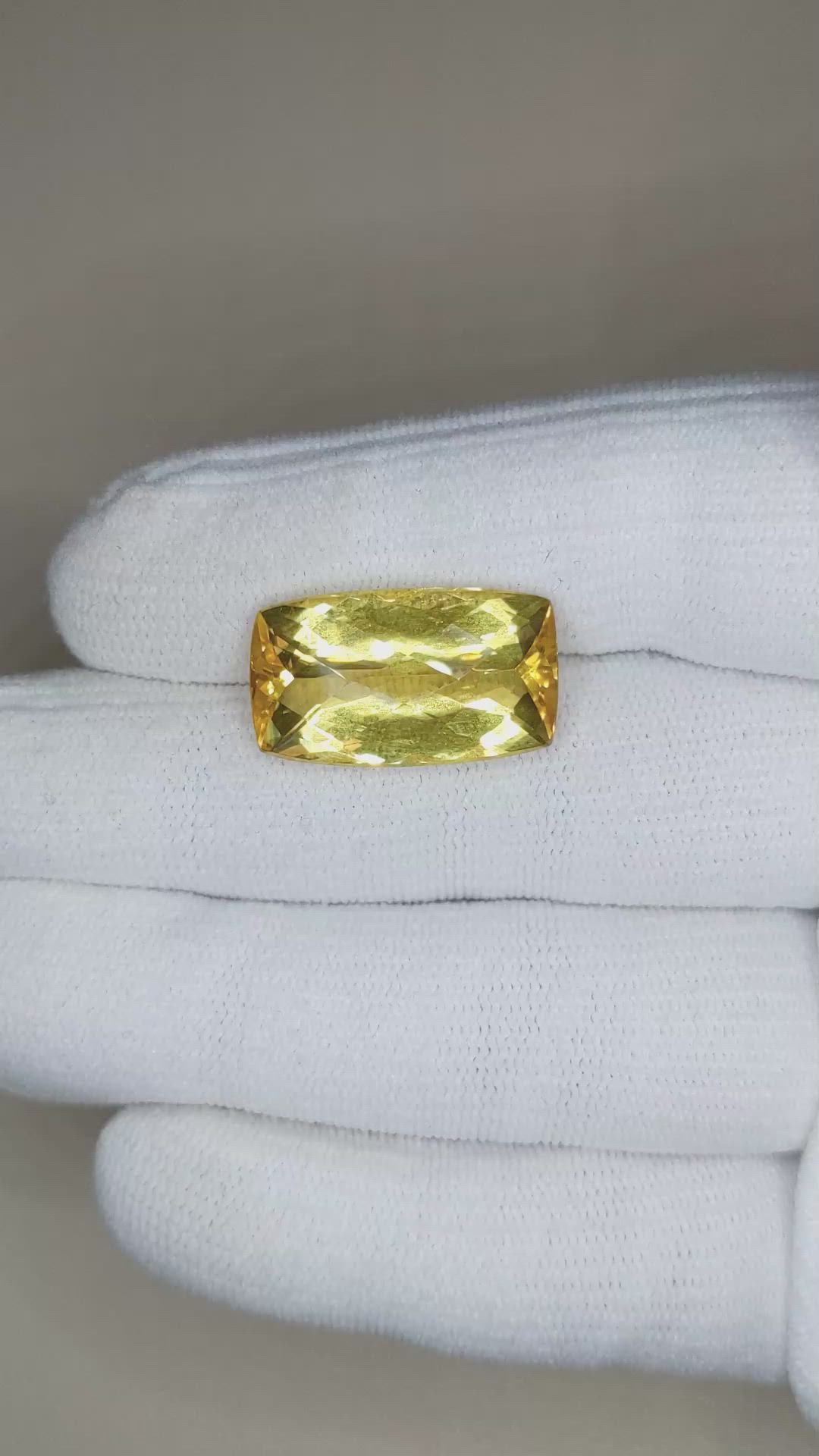
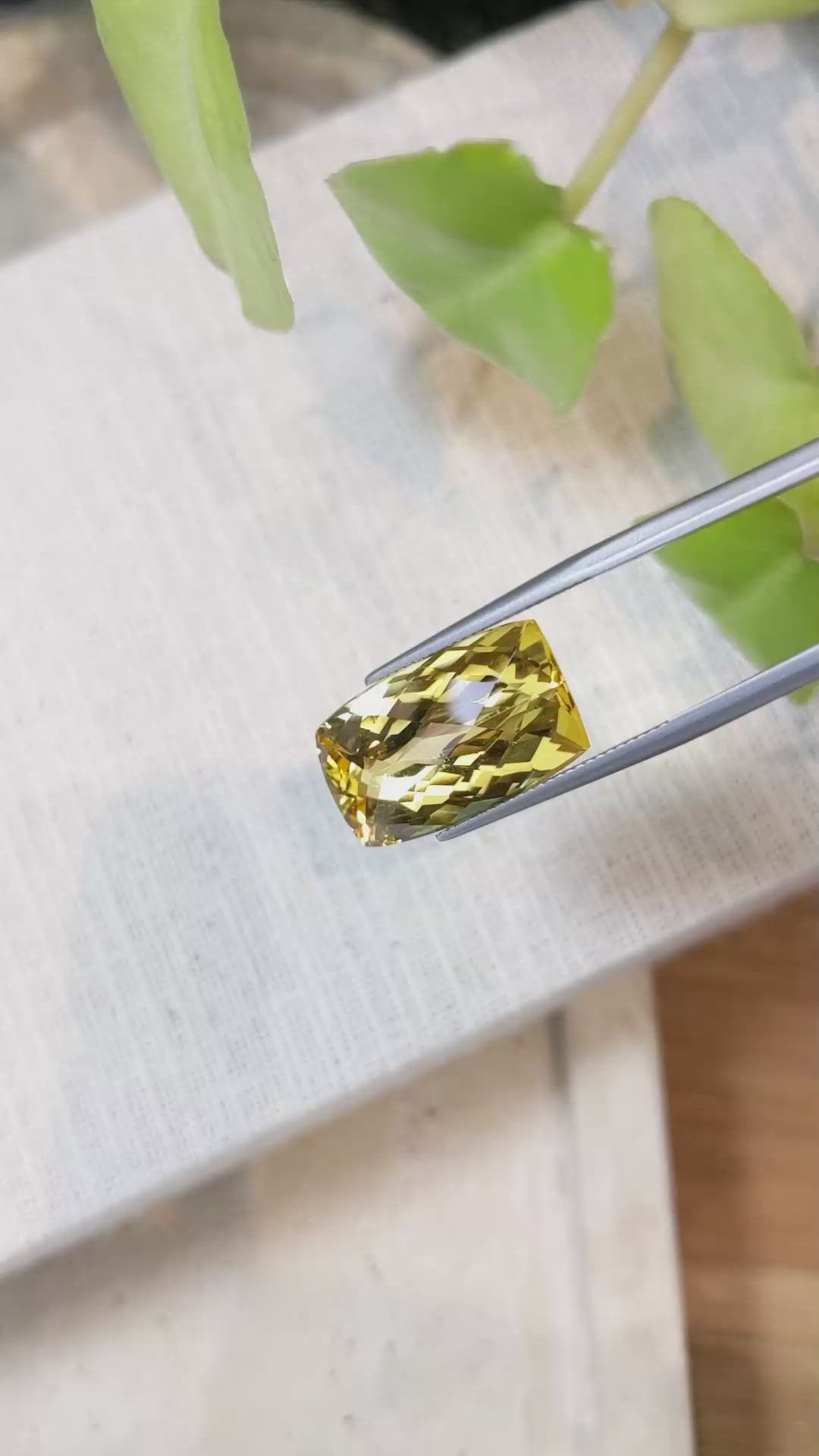
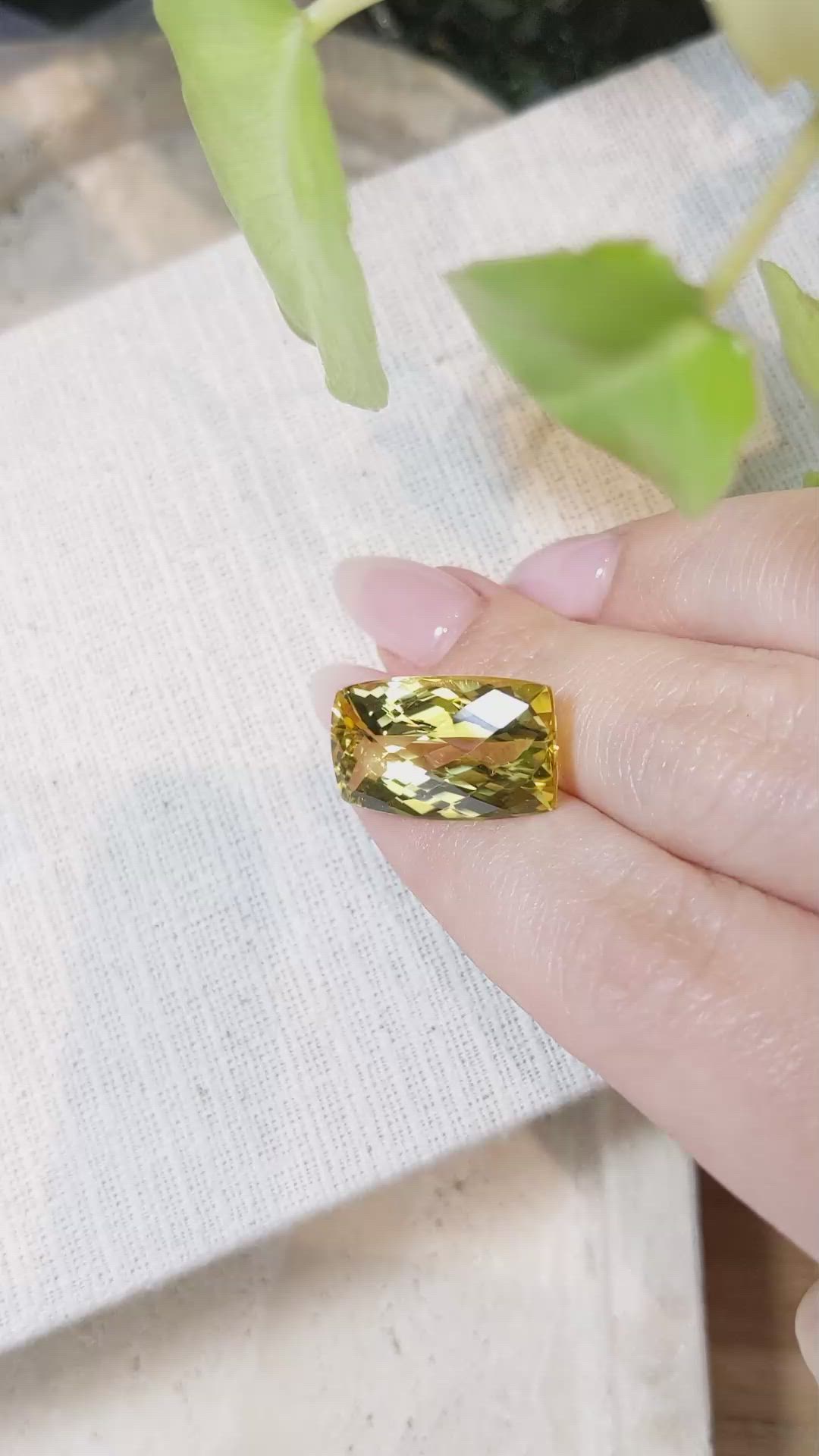
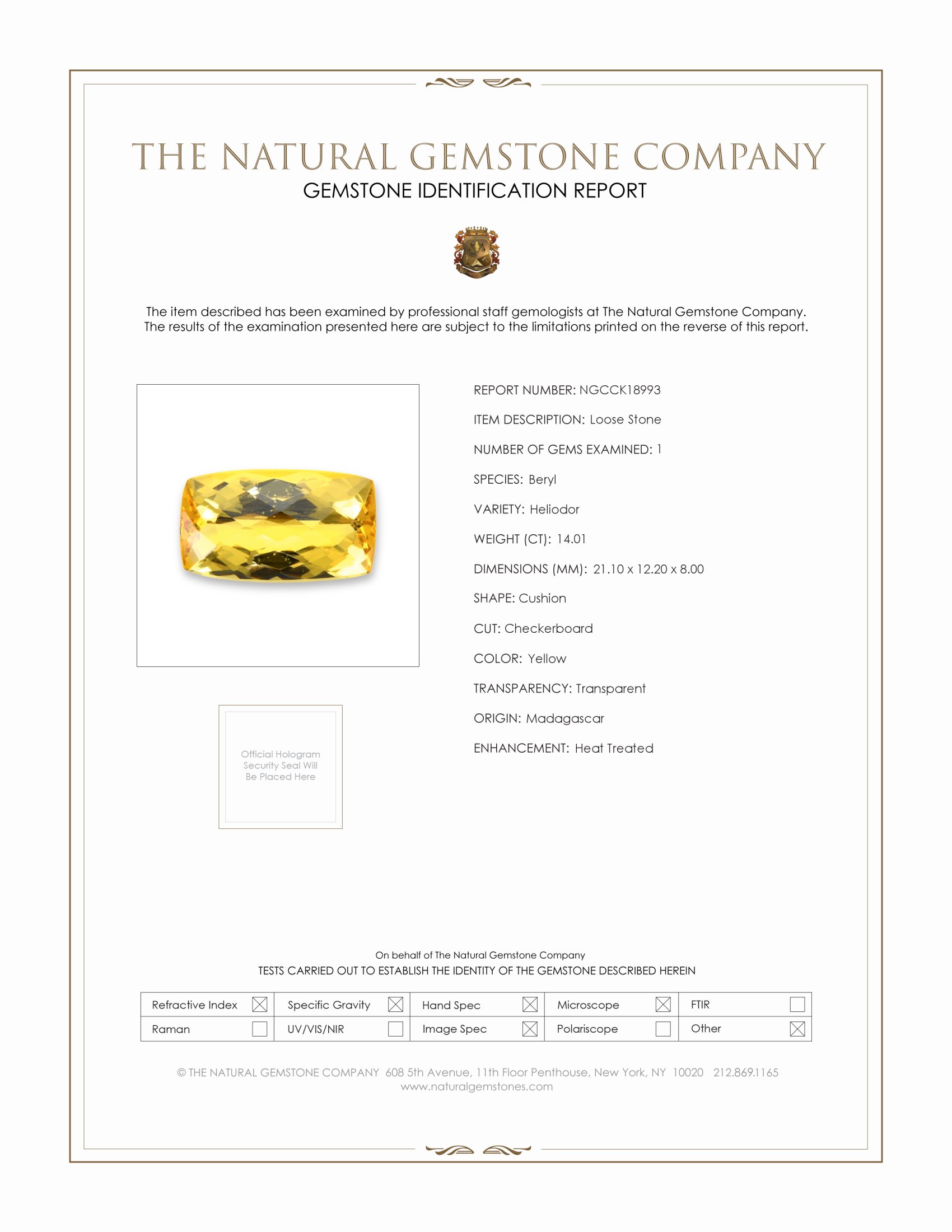
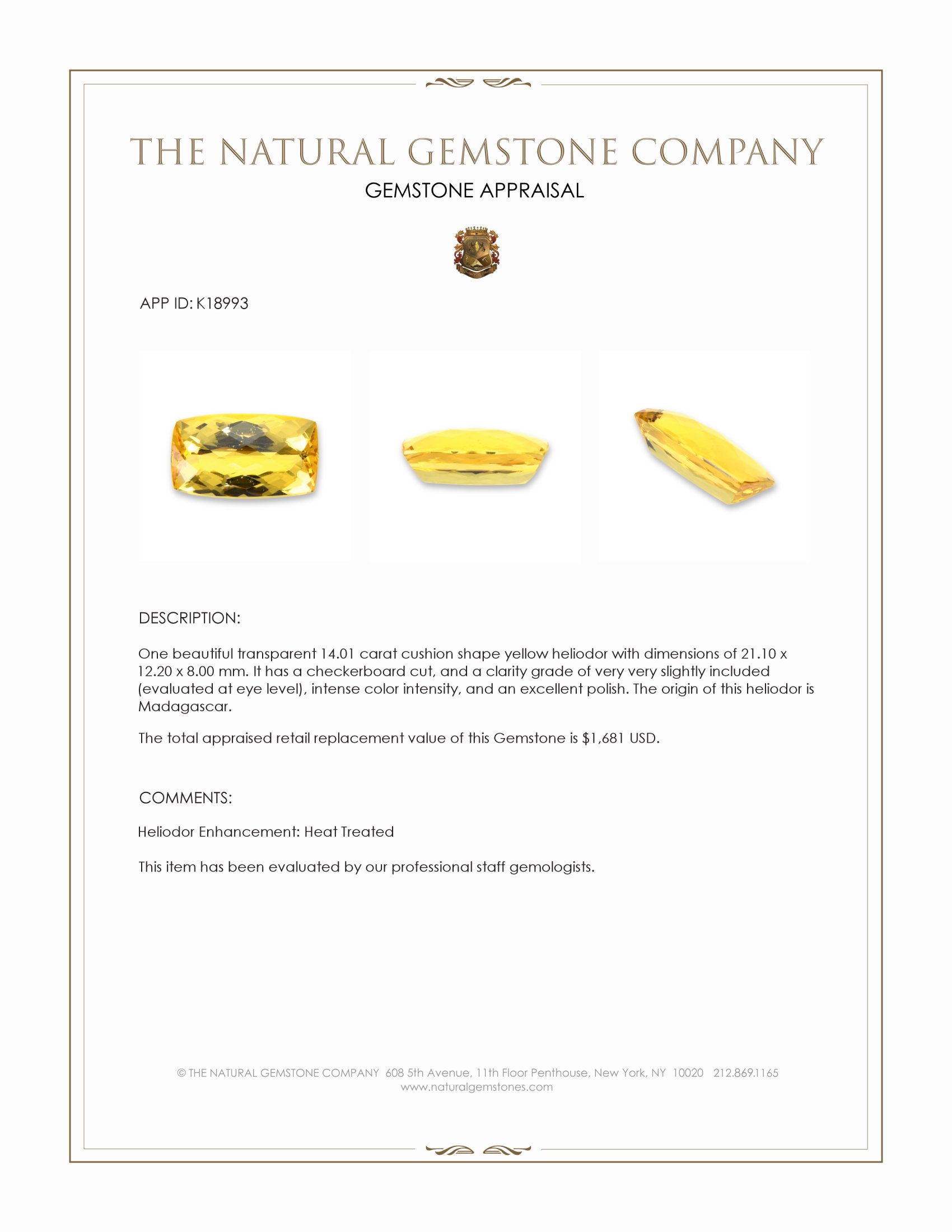
14.01 Ct. Heliodor from Madagascar
This loose stone is available to ship now
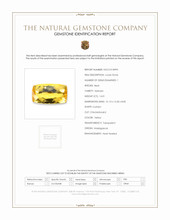
Item ID: | K18993 |
|---|---|
Dimensions (MM): help | Length: 21.1 Width: 12.2 Height: 8 |
Weight: | 14.01 Ct. |
Color: help | Yellow |
Color intensity: help | Intense |
Clarity: help | Very Very Slightly Included |
Shape: help | Cushion |
Cut: | Checkerboard |
Cutting style: | Faceted |
Enhancements: help | Heat Treated |
Origin: help | Madagascar |
Per carat price: help | $120 |
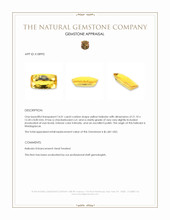
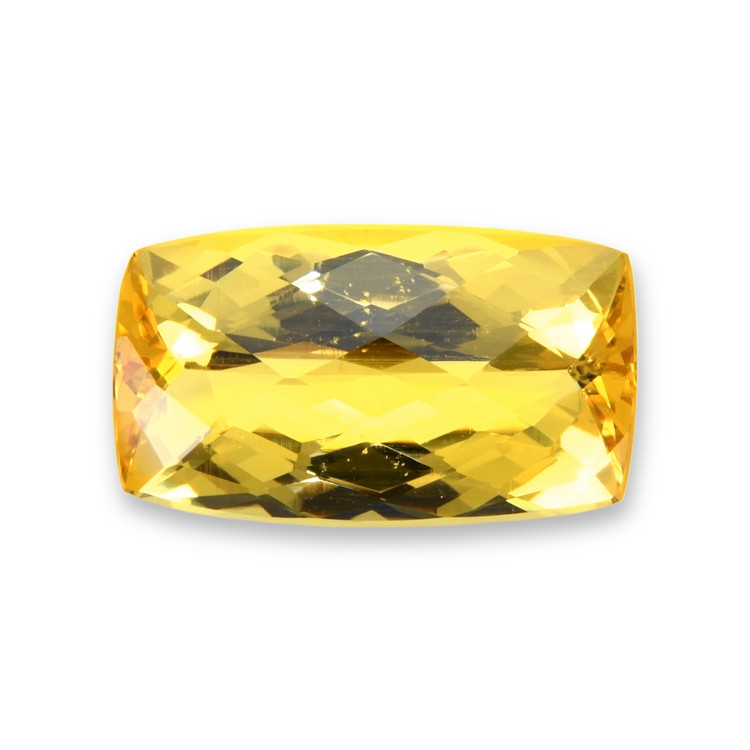
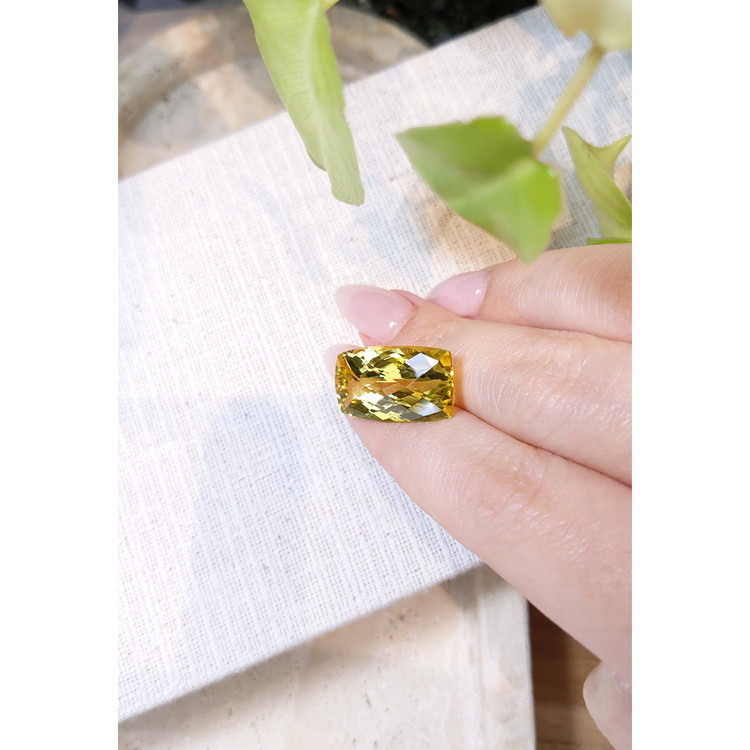
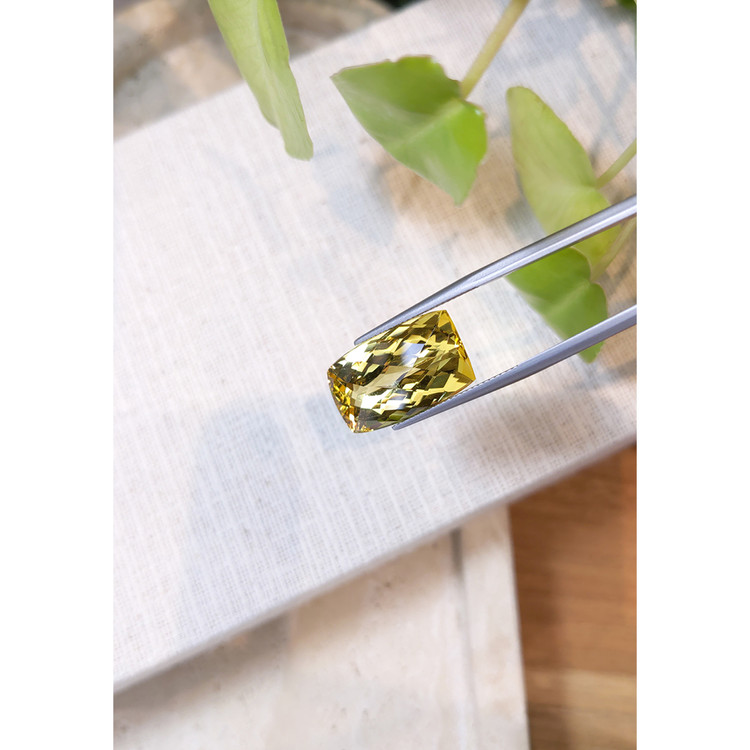
This listing describes a single, transparent 14.01 carat cushion shape yellow heliodor, measuring 21.10 x 12.20 x 8.00 millimeters, precision cut with a checkerboard faceting scheme, clarity graded as very very slightly included at eye level, color intensity noted as intense, and an excellent polish, originating from Madagascar, offered by The Natural Gemstone Company. The cushion outline is elongated, producing a length to width ratio close to 1.73, and the measured depth yields a depth proportion of about 48 percent, parameters that balance color saturation and light return for a large weighted beryl. The checkerboard treatment on the crown comprises a dense grid of small, regularly proportioned facets, while the pavilion maintains complementary geometry to support broad flash return, a design selection intended to minimize windowing and to unify the golden hue across the table and crown. The stone has been heat treated to stabilize and intensify the color, a conventional and permanent enhancement for beryl when performed correctly, and the polish is executed to a level that produces crisp facet junctions and high contrast between broad and scintillating light effects.
From a faceting and optical performance perspective, the checkerboard cut on a cushion outline modulates both the distribution of color and the character of scintillation, creating a surface that presents multiple microfacets to the viewer, each contributing to small, controlled flashes rather than a single dominant table reflection. This approach is particularly effective for a large, transparent heliodor because it reduces broad light leakage through internal windows and enhances perceived saturation without deepening tone to the point of appearing brownish. The proportions here, with an average depth around 48 percent, preserve strong internal reflection and refractive interplay across the pavilion facets, while the elongated cushion geometry emphasizes directional light play along the length of the stone. The polish quality is excellent, which is evident in tight facet junctions and minimal surface abrasion, and the cut symmetry supports consistent light return across the major facet planes. The very very slightly included grade, evaluated at eye level, indicates inclusions are minimal, typically minute two phase or wispy needle characteristics in beryl, and these do not disrupt the optical pathways or compromise durability, permitting confident use in everyday jewellery settings.
Color analysis for this Madagascar heliodor emphasizes a primary hue of golden yellow with a subtle warm overtone, and a slight, almost imperceptible greenish secondary that is characteristic of many Madagascan beryls. The tone is best described as medium to medium deep, sufficient to read as a saturated golden presence without tipping into dark honey or brown. Saturation is intense, with chroma that remains lively under both natural daylight and incandescent illumination. When compared to heliodors from other famous localities, this specimen presents important distinctions. Brazilian golden beryls often exhibit a lighter, lemon yellow hue with lower saturation, making them appear more pastel in direct comparison, while Ural and historic European sources traditionally yield honeyed to amber tones with stronger brownish influence and deeper tone. Namibian or East African golden beryls can trend toward greener or more olive aspects, particularly when traces of iron contribute to a cooler yellow green cast, whereas Sri Lankan yellow sapphires, being corundum and therefore possessing a higher refractive index, display more vivid brilliance and often a cleaner, cooler pure yellow hue with greater sparkle and a different depth of color. Citrine, chemically distinct as quartz, lacks the same refractive intensity and typically shows more orange or smoky brown undertones. Against these references, the Madagascar heliodor offered here shows a bright, warm, saturated golden yellow that sits between the lemon clarity of many Brazilian examples and the deeper honey tones of Ural material, combining strong saturation with high transparency in a way that is distinctly luminous.
Practical considerations for this 14.01 carat Madagascar heliodor include the impact of the checkerboard cut and the stone proportions on setting design, wearability, and care. The stone’s large dimensions and elongated cushion profile are well suited to a prominent solitaire pendant, an east west or vertical ring that showcases the lengthwise scintillation, or a bespoke high gallery setting that allows light to interact freely with the pavilion. Because the heat treatment applied is stable, routine exposure to normal ambient temperatures and light in jewellery wear will not alter the color, however extreme thermal shock and aggressive chemical cleaners should be avoided to protect the polish and any potential surface treatments incidental to final finishing. Cleaning by warm soapy water and a soft brush is recommended, and professional ultrasonic cleaning may be used with caution after consultation, given the presence of any microscopic inclusions that could be stress concentrators. The Natural Gemstone Company confirms the stated origin, treatment, and grading attributes, and we welcome inquiries for additional imaging, detailed proportion diagrams, and recommendations for mounting to optimize the visual performance of this intense golden heliodor in finished jewellery.


