
- Stone16
- Reports3


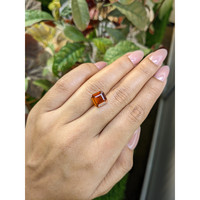
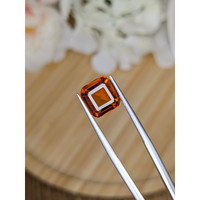
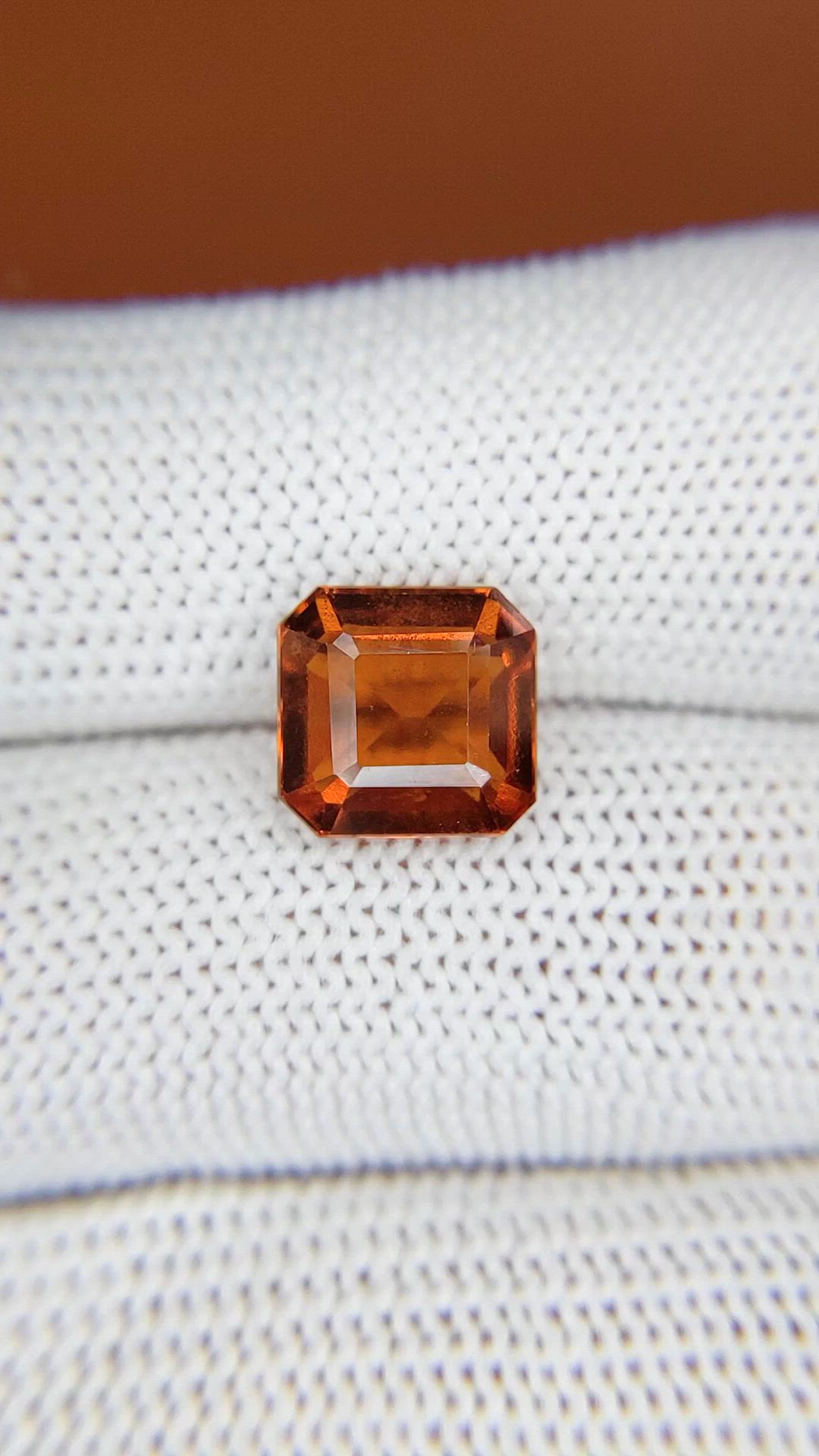
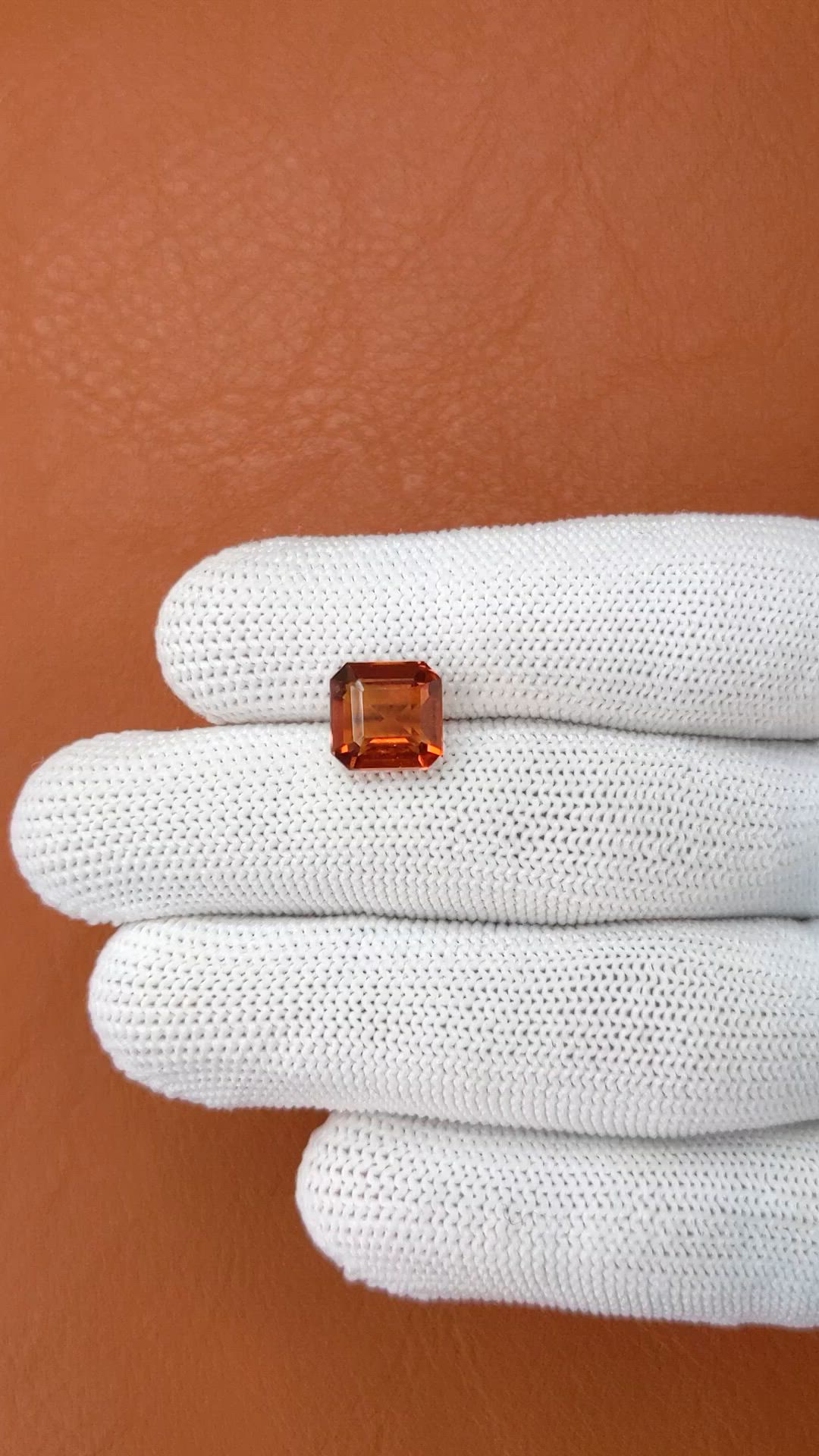
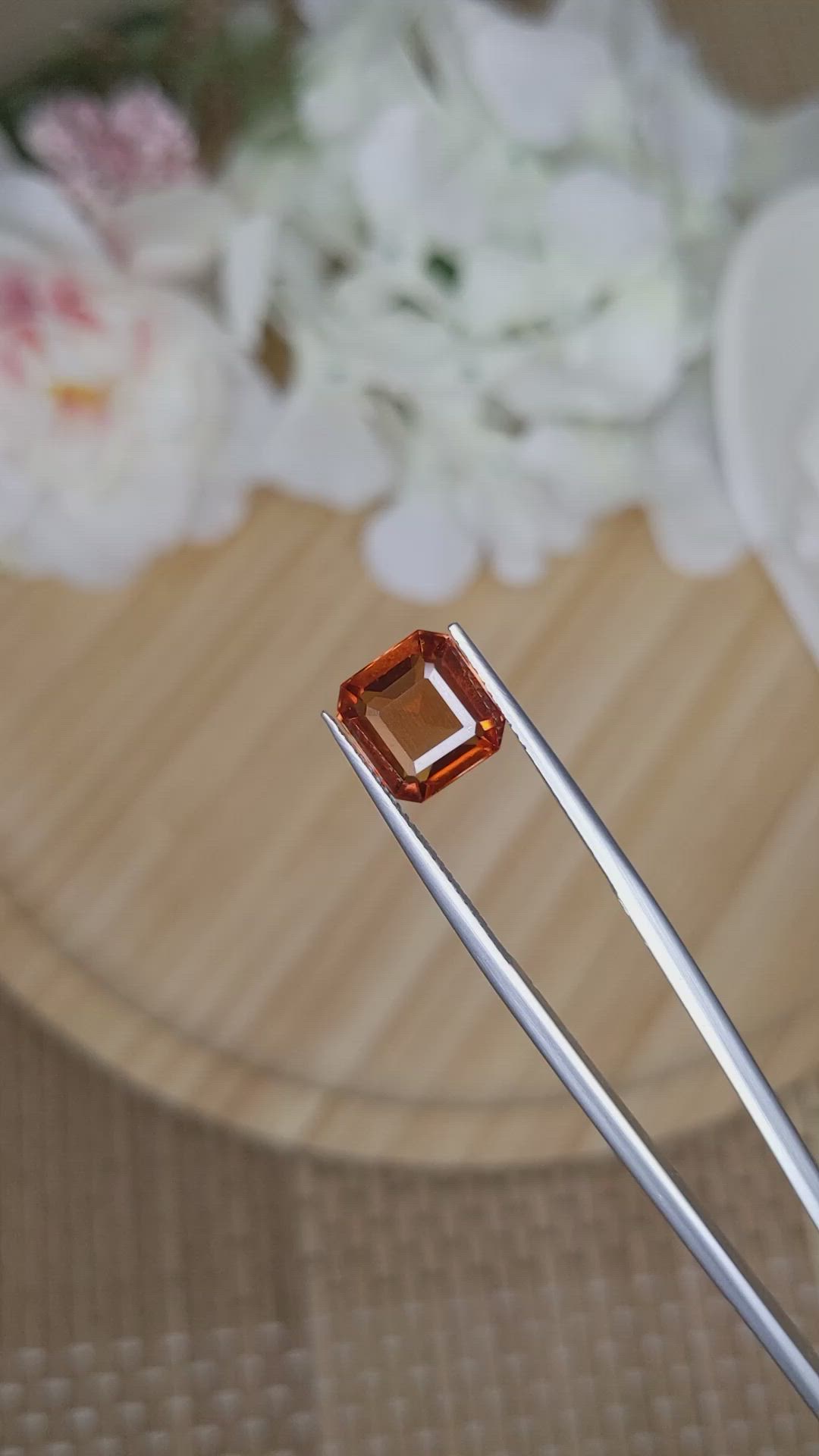
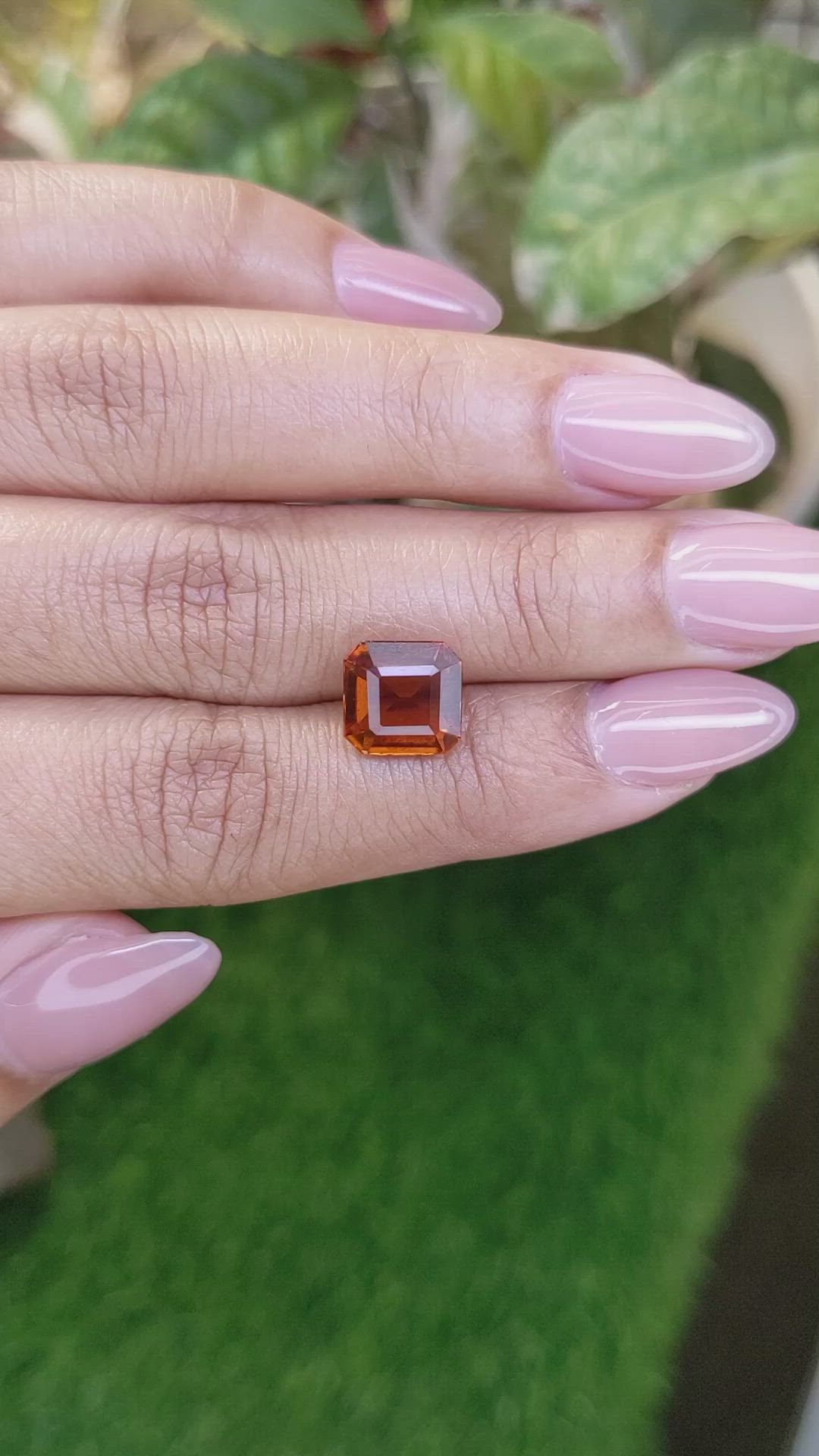
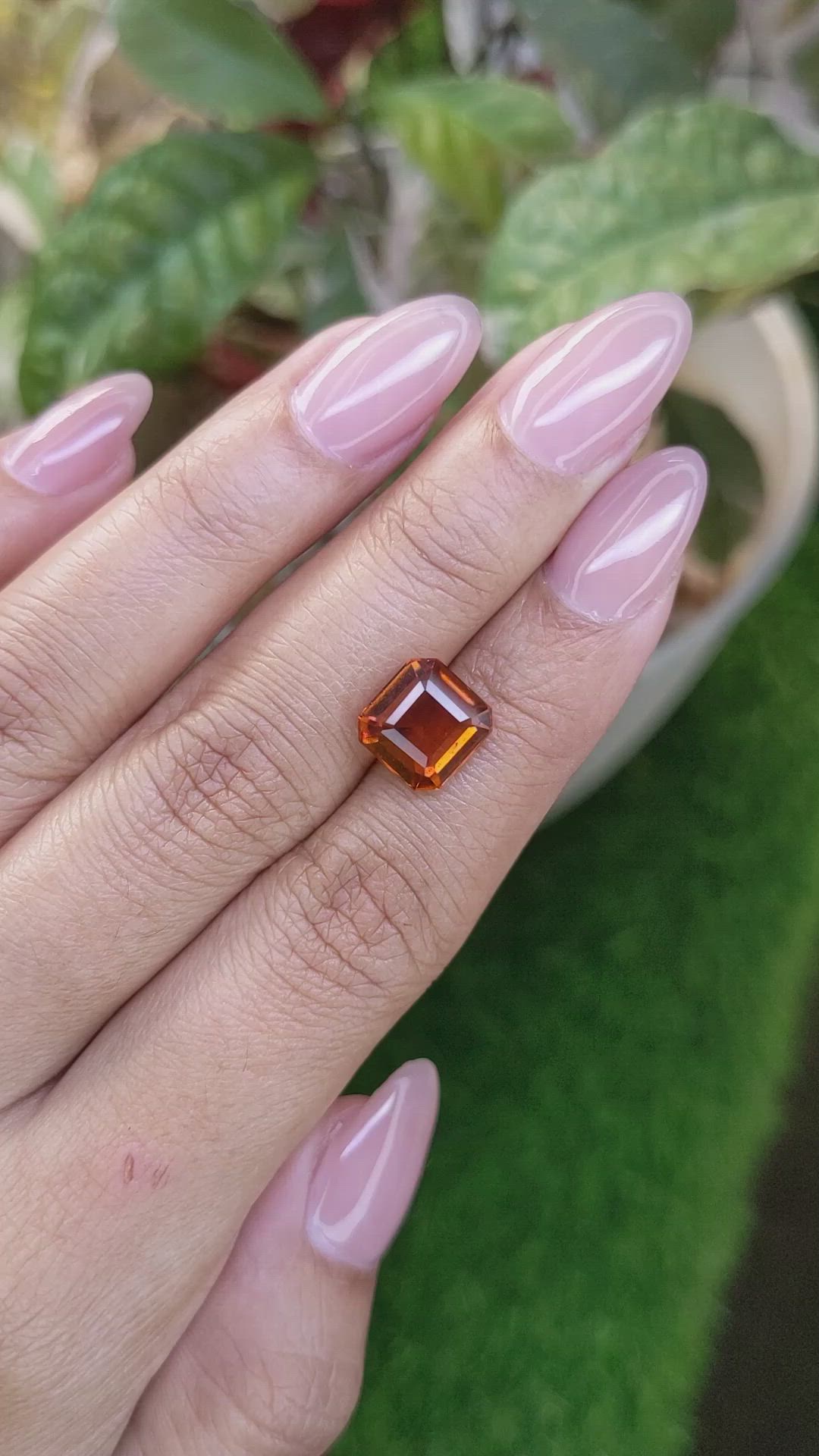
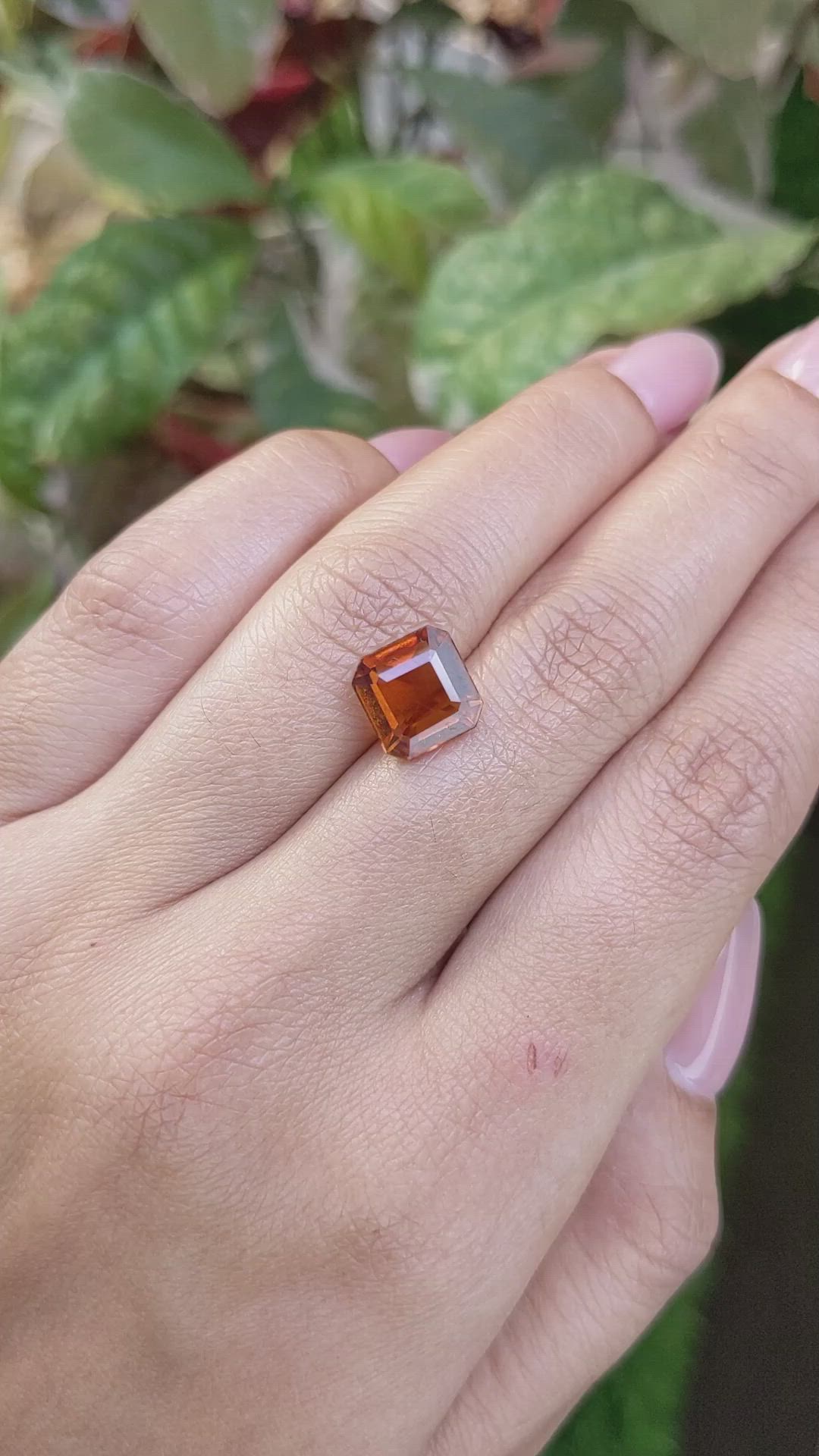





4.29 Ct. Reddish Orange Hessonite Garnet from Madagascar
This loose stone is available to ship now
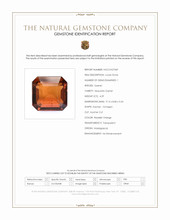
Item ID: | K27349 |
|---|---|
Dimensions (MM): help | Length: 9.14 Width: 8.84 Height: 5.24 |
Weight: | 4.29 Ct. |
Color: help | Reddish Orange |
Color intensity: help | Intense |
Clarity: help | Slightly Included |
Shape: help | Asscher - Octagon |
Cut: | Asscher Cut |
Cutting style: | Faceted |
Enhancements: help | No Enhancement |
Origin: help | Madagascar |
Per carat price: help | $100 |
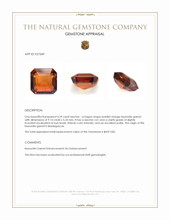
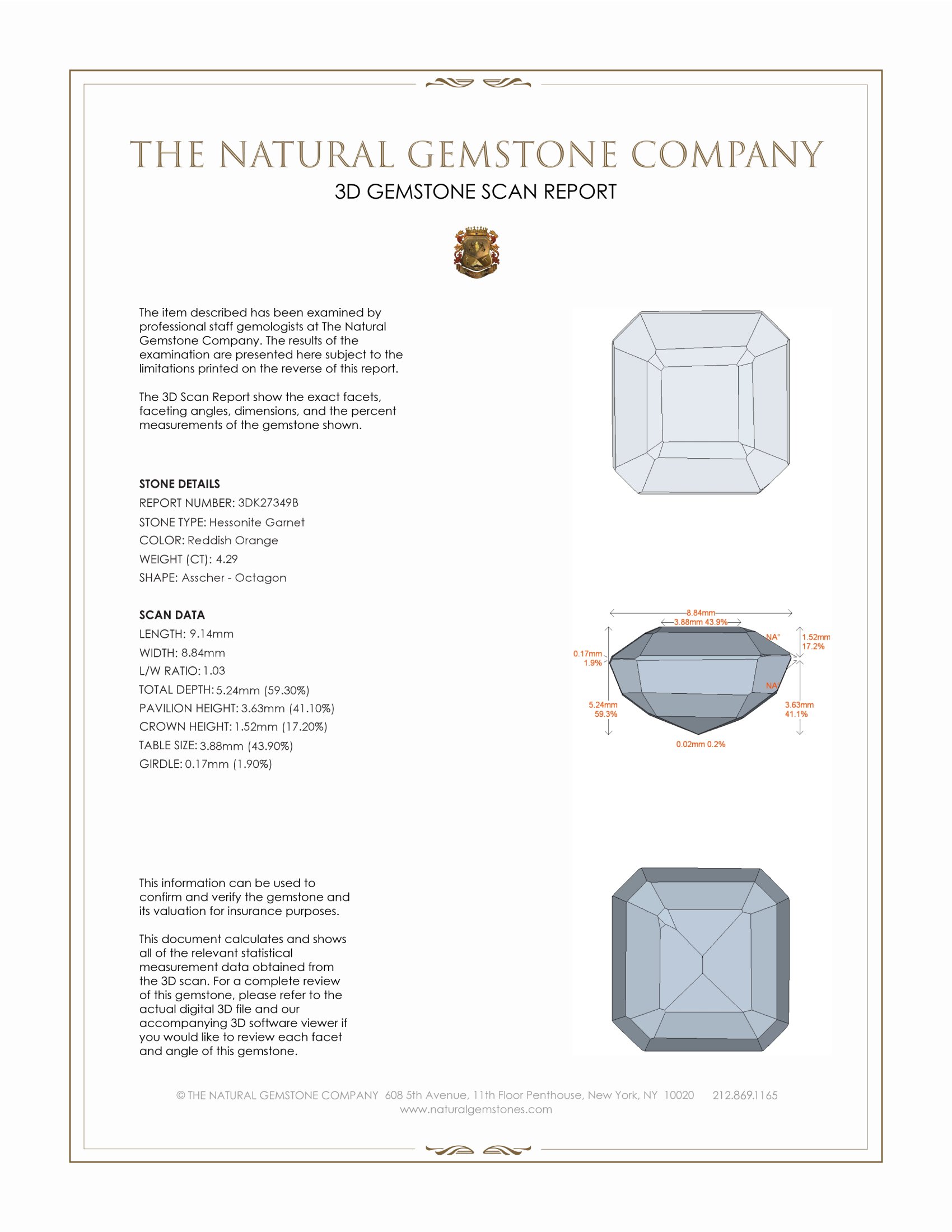
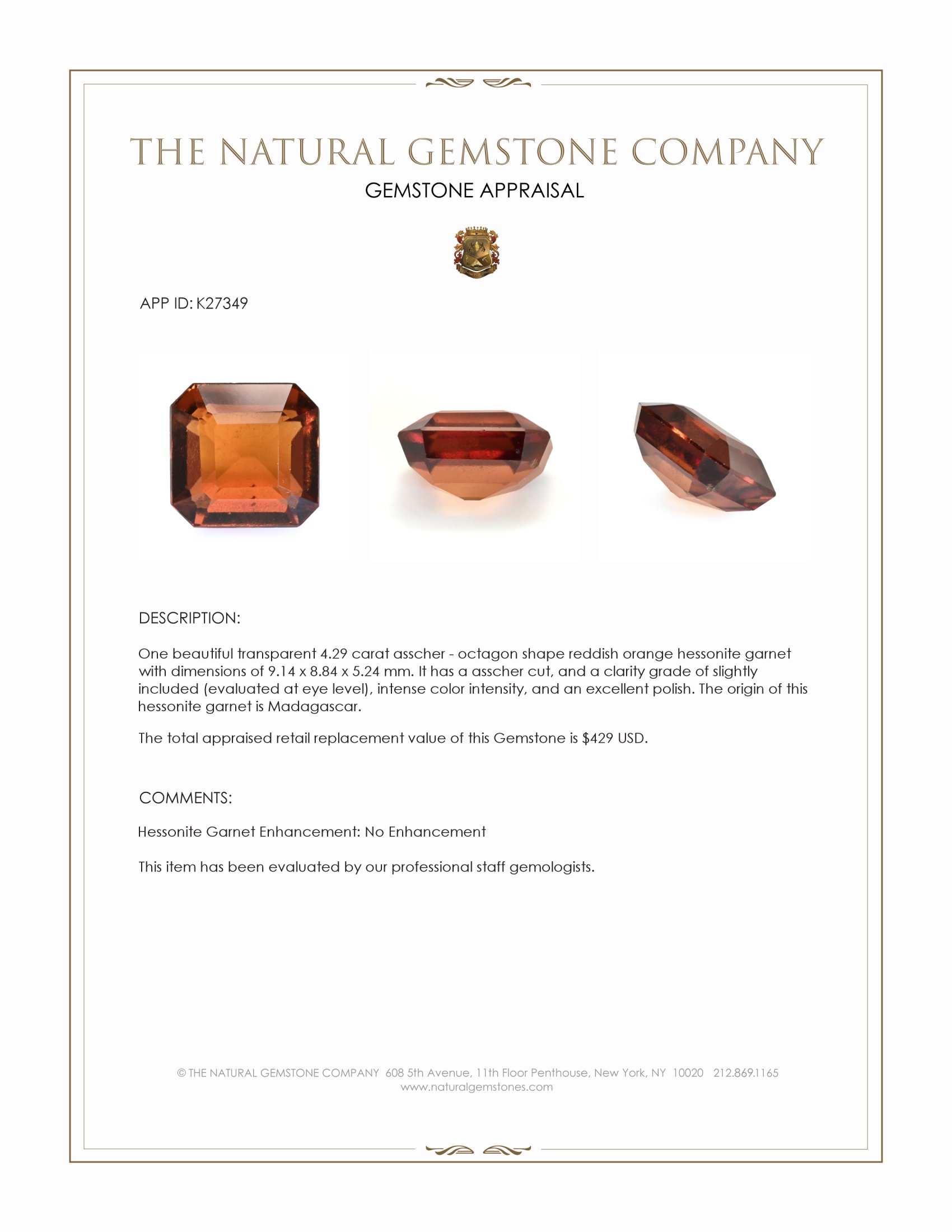
This transparent 4.29 carat hessonite garnet presents an asscher octagon outline with precise dimensions of 9.14 x 8.84 x 5.24 mm, yielding a depth percentage of approximately 58.3 percent. The stone has been fashioned in a classic asscher cut, featuring concentric step facets on the crown and pavilion, sharply defined facet junctions, and a high degree of symmetry. Excellent polish across all facets enhances light return and surface luster, while the slightly included clarity grade, evaluated at eye level, is consistent with natural hessonite material and does not detract from overall visual performance. Origin confirmed as Madagascar, and no enhancement has been applied, preserving the natural crystal habit and inherent inclusions that attest to its provenance.
Optically the gem displays an intense reddish orange hue with strong saturation and even color distribution across the table and pavilion, producing a warm, almost fiery presence under both daylight and incandescent illumination. The asscher cut geometry concentrates light in broad, mirrored flashes, creating a hall of light that accentuates the stone's brilliance and depth, while the stepped pavilion facets minimize windowing and promote face up color intensity. For collectors and connoisseurs seeking a centerpiece, this garnet offers museum quality faceting, reliable durability for everyday wear, and versatility for bespoke settings that emphasize the square octagon silhouette. The Natural Gemstone Company stands behind the description and origin of this specimen, and we recommend mounting practices that protect the corners and showcase the asscher table for maximum optical impact.


